
Cooking with hard water changes heat transfer because calcium and magnesium minerals can form scale on kettles, pans, steamers, and heating elements.
This mineral layer acts like insulation, slowing heat movement and making appliances work harder. In cooking, hard water can also affect boiling efficiency, texture, and flavour, especially with beans, tea, pasta, and steamed foods.
Imagine making your favorite stew, only to find it takes longer to cook than usual, or the bottom scorch marks seem worse.
This isn’t just you; it’s often a sign of hard water. Cooking With Hard Water: How Mineral Deposits Change Heat Transfer can significantly impact your kitchen results.
Understanding these changes helps you adjust cooking times, prevent sticking, and ensure your dishes turn out just right, leading to more successful meals and less frustration in the kitchen.
Key Takeaways
- Hard water contains dissolved minerals like calcium and magnesium.
- These minerals can form a layer on cookware, affecting heat conductivity.
- Mineral buildup can slow down heat transfer, increasing cooking times.
- Understanding these effects allows for better control over cooking processes.
- Simple steps can help mitigate the impact of hard water on your cooking.
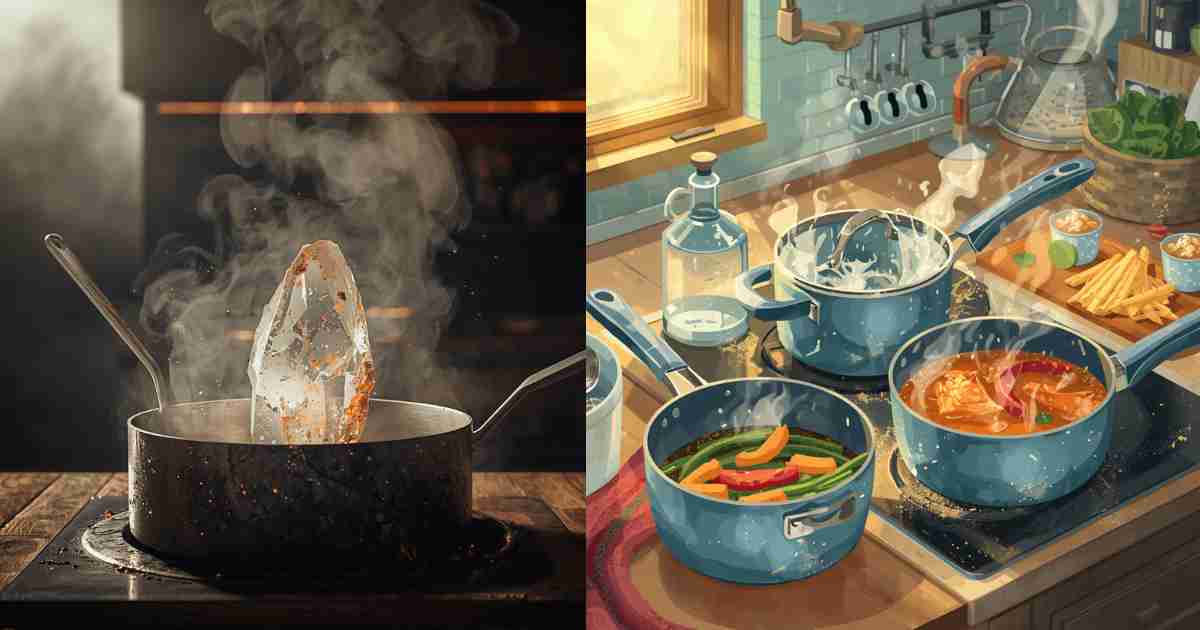
Understanding Hard Water Minerals
Hard water is simply water with a high concentration of dissolved minerals. The most common culprits are calcium and magnesium ions. These minerals are naturally present in the ground and dissolve into groundwater as it flows.
When this water is used for cooking, these minerals don’t just disappear. They can remain in the water and interact with your food and cookware.
The level of hardness varies greatly by region. Some areas have very soft water, while others have notoriously hard water. This difference is often determined by the geology of the local water source.
For example, areas with limestone or chalk deposits tend to have harder water because these rocks are rich in calcium carbonate.
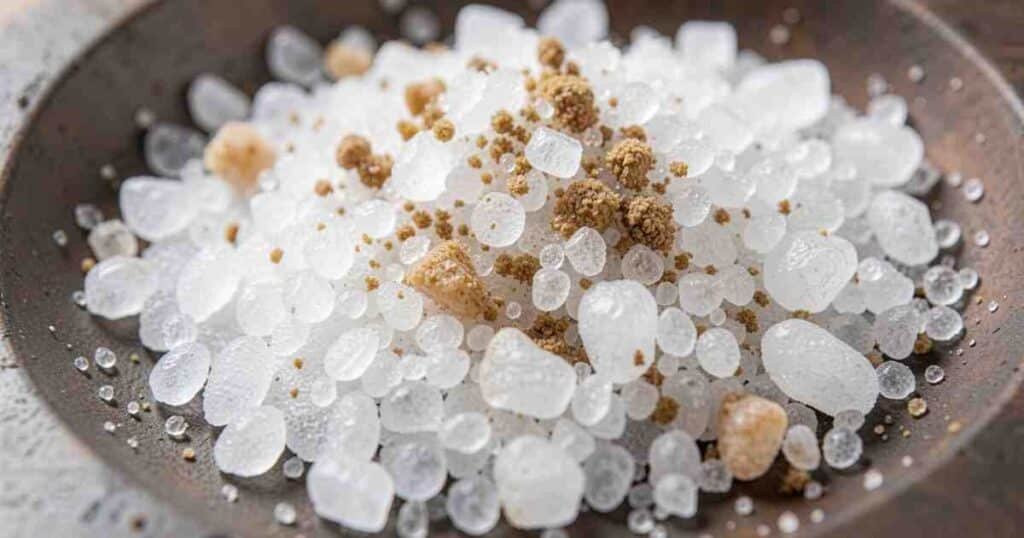
When you heat water containing these minerals, a chemical reaction can occur. The dissolved minerals can precipitate out of the solution and form solid deposits. This process is accelerated by heat.
This is why you often see white, chalky residue in kettles or on the inside of pots after boiling water.
How Mineral Deposits Impact Cookware
The minerals in hard water, particularly calcium and magnesium, can cling to the surfaces of your pots and pans. Over time, repeated use can lead to a buildup of these mineral deposits. This buildup isn’t just unsightly; it actively changes the way your cookware interacts with heat.
Think of it like adding a thin, insulating layer to your cookware. Instead of the metal directly transferring heat efficiently, the mineral layer acts as a barrier. This layer is less conductive than the metal of the pot itself.
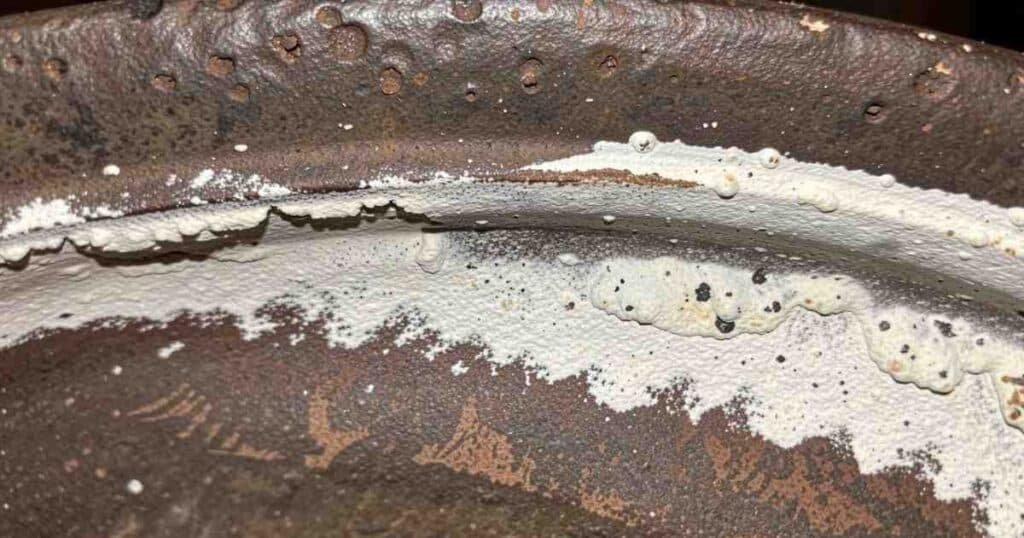
Therefore, heat has a harder time passing through the pan and reaching your food.
The type of cookware also plays a role. Materials like stainless steel are generally good conductors, but a significant mineral layer can reduce their efficiency. Cast iron, known for its heat retention, can also be affected.
Even non-stick surfaces can eventually accumulate mineral films, compromising their performance.
The Science of Heat Transfer in Cooking
Heat transfer is the movement of thermal energy from a hotter object to a cooler one. In cooking, this typically involves heat moving from the stovetop or oven to your food. There are three main ways heat transfers: conduction, convection, and radiation.
Conduction is direct heat transfer. When you place a pot on a burner, heat moves through the metal of the pot to the food inside. This is the primary way heat moves through solid cookware.
The speed of conduction depends on the material’s conductivity and its thickness.
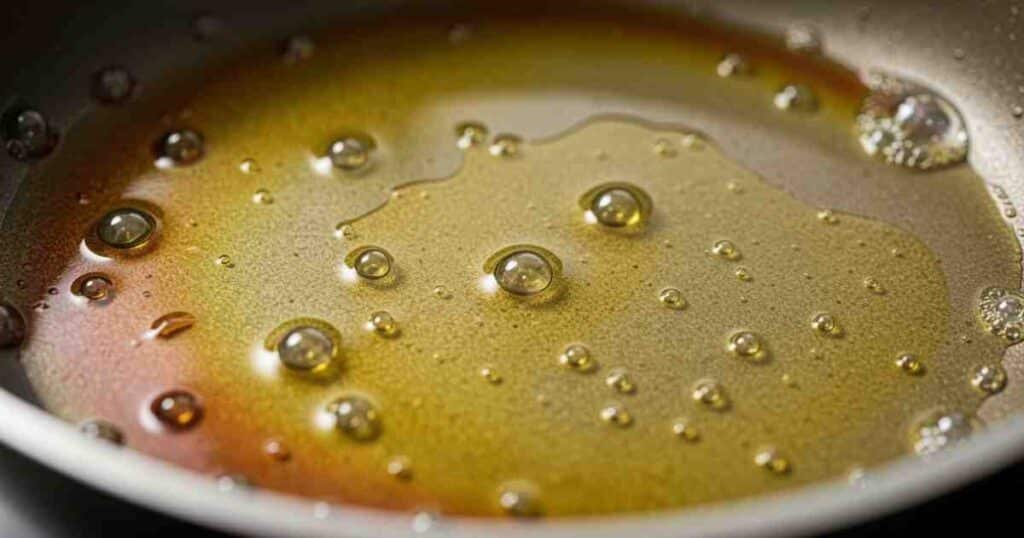
Convection is heat transfer through the movement of fluids, like water or air. When you boil water, the hot water at the bottom rises, and cooler water sinks, creating a cycle that distributes heat. In ovens, hot air circulates to cook food.
Radiation is heat transfer through electromagnetic waves, like the heat you feel from an open fire or a heating element. This is less direct than conduction or convection but still plays a role in cooking, especially in ovens and with grilling.
Mineral Buildup’s Effect on Heat Transfer
Now, let’s connect hard water minerals to this science. When mineral deposits form on cookware, they primarily affect conduction. The mineral layer acts as an insulator, slowing down the rate at which heat can pass from the heat source through the pan to the food.
This is a direct consequence of Cooking With Hard Water: How Mineral Deposits Change Heat Transfer.
Imagine trying to heat a metal rod. Heat travels quickly along it. Now imagine that rod is coated in a thick layer of chalk.
The heat will take much longer to reach the other end. The same principle applies to your pots and pans. The mineral coating impedes the direct flow of heat.
This reduced heat transfer means that it takes longer for your food to reach the desired cooking temperature. If a recipe calls for simmering for 30 minutes, and your pan is insulated by mineral deposits, it might actually take 40 minutes or more. This is a common, yet often overlooked, reason for inconsistent cooking times.
Practical Implications for Your Kitchen
The most immediate practical implication of Cooking With Hard Water: How Mineral Deposits Change Heat Transfer is increased cooking time. If you notice your water takes longer to boil or your food seems to cook slower than usual, mineral buildup could be the cause. This can be frustrating, especially when you’re trying to follow a recipe accurately.
Another issue is uneven heating. While the overall heat transfer is slowed, the mineral layer might not be perfectly uniform. This can lead to hot spots and cold spots on the cooking surface.
Food in the hot spots might scorch, while food in the cold spots remains undercooked. This is particularly problematic for delicate dishes or when trying to achieve a uniform sear.
Mineral deposits can also affect the longevity and performance of your cookware. They can make surfaces stickier, even on supposedly non-stick pans. The constant exposure to heat and minerals can also, over time, degrade the materials of the cookware itself, leading to premature wear and tear.
Understanding Cooking With Hard Water: How Mineral Deposits Change Heat Transfer empowers you to adapt. You can start by adjusting your cooking times. If you know your water is hard and your pans have buildup, add a little extra time to recipes.
You might also need to use a slightly higher heat setting, but be cautious not to scorch your food.
Comparing Cookware Performance
The impact of hard water minerals on heat transfer can be observed across different types of cookware. While all cookware can be affected, some materials are more susceptible to mineral buildup and its insulating effects than others. Understanding these differences helps in managing the problem.
| Cookware Type | Impact of Hard Water Minerals | Heat Transfer Note |
|---|---|---|
| Stainless Steel | Minerals can adhere, forming a film that reduces conductivity. Can lead to uneven heating if buildup is patchy. | Good conductor initially, but mineral layer significantly slows heat. |
| Cast Iron | Minerals can build up on the seasoned surface. May slightly alter seasoning effectiveness and heat distribution. | Excellent heat retention, but mineral layer can make it slower to heat up and cool down. |
| Copper | Minerals can form deposits that mar the surface. Copper is a fast conductor, so even a thin layer of minerals has a noticeable effect. | Best conductor, but mineral buildup is highly visible and impacts its efficiency. |
| Aluminum | Minerals can stick, especially to anodized aluminum. Can affect the evenness of heat distribution. | Good conductor, but mineral layer can lead to slower and less uniform heating. |
| Non-stick (PTFE/Ceramic) | Minerals can form a layer on top of the non-stick coating, reducing its effectiveness and potentially damaging it over time. | The coating itself is an insulator; mineral buildup adds another insulating layer. |
As the table shows, even materials renowned for their heat conductivity can be hampered by mineral deposits. The key takeaway is that the mineral layer itself is the insulating factor, regardless of the base material. Recognizing this allows for more informed decisions about cookware care and cooking adjustments.
Mitigating the Effects of Hard Water
Fortunately, there are several ways to minimize the impact of hard water on your cooking. Proactive cleaning and maintenance are your best allies. Understanding Cooking With Hard Water: How Mineral Deposits Change Heat Transfer means you can take steps to prevent or remove these insulating layers.
Regular Cleaning Practices
The most effective strategy is to prevent mineral buildup in the first place. After each use, wash your cookware thoroughly. Use a good dish soap and a non-abrasive scrubber to remove any food residue.
Prompt cleaning prevents minerals from drying onto the pan and becoming harder to remove.
First, rinse your cookware immediately after cooking. This removes loose food particles and some of the dissolved minerals before they can adhere strongly. Second, wash with warm, soapy water.
Pay attention to the cooking surface and the exterior, as mineral deposits can form anywhere.
Next, dry your cookware completely after washing. Moisture left on the surface can contribute to mineral spotting and buildup. Using a soft cloth to dry ensures no water spots are left behind, which can be the start of mineral accumulation.
This simple step significantly reduces the chances of a hard water film forming.
Deep Cleaning Methods
For stubborn mineral deposits, you’ll need more than just soap and water. Several household items can help dissolve these mineral films.
These methods are crucial for restoring your cookware’s heat transfer efficiency and preventing further issues related to Cooking With Hard Water: How Mineral Deposits Change Heat Transfer.
One effective method is using vinegar. White vinegar is acidic and can break down calcium and magnesium deposits. You can create a cleaning solution by mixing equal parts white vinegar and water.
Bring this solution to a simmer in the affected pot or pan for about 15-30 minutes. The acid will help loosen the mineral buildup.
Then, after simmering, let the solution cool slightly. Use a non-abrasive sponge or cloth to scrub away the loosened deposits. You might need to repeat this process for very thick buildup.
Rinse the cookware thoroughly with plain water afterward to remove any vinegar residue.
Another option is using baking soda. Make a paste of baking soda and water. Apply this paste to the mineral deposits and let it sit for a while.
Baking soda is a mild abrasive and can help scrub away softened minerals. For extremely tough stains, you might combine the vinegar and baking soda methods, but be cautious as they can react.
Water Softeners and Filters
For a more comprehensive solution, consider treating your water supply. Installing a water softener can remove the calcium and magnesium ions before they enter your home. This benefits not just your cooking but also your plumbing, appliances, and skin.
A water filter, such as a faucet filter or a pitcher filter, can also reduce mineral content. While not as comprehensive as a whole-house softener, these filters can make a noticeable difference in the water used for cooking and drinking. This directly addresses the root cause of mineral buildup and its impact on Cooking With Hard Water: How Mineral Deposits Change Heat Transfer.
Using filtered or softened water for cooking means your pans will accumulate fewer mineral deposits. This leads to more consistent cooking, faster heat transfer, and less need for intensive cleaning. It’s a long-term investment in your kitchen’s efficiency and your culinary success.
Frequently Asked Questions Of Cooking With Hard Water: How Mineral Deposits Change Heat Transfer
Question: Does hard water make my pots and pans rust faster?
Answer: While hard water minerals themselves don’t directly cause rust (which is iron oxidation), the residue they leave can trap moisture. This trapped moisture can then accelerate rusting, especially on cast iron or carbon steel cookware.
Question: Can hard water affect the taste of my food?
Answer: Yes, hard water minerals can subtly alter the taste of food and beverages. Some people find that the increased mineral content makes water taste “flat” or metallic, which can transfer to dishes cooked in it.
Question: How can I tell if my water is hard?
Answer: You can often tell by looking for soap scum that doesn’t rinse away easily, dull-looking dishes after washing, or mineral buildup in appliances like kettles and coffee makers. You can also purchase a home water testing kit.
Question: Should I always use filtered water for cooking if I have hard water?
Answer: It’s highly recommended if you want to maintain optimal cookware performance and consistent cooking times. Understanding Cooking With Hard Water: How Mineral Deposits Change Heat Transfer makes this a practical step.
Question: Does boiling water in hard water remove the minerals?
Answer: No, boiling does not remove the dissolved minerals. In fact, it often causes some minerals to precipitate out and form scale or residue on the pot and in the water itself.
Question: Are there any benefits to cooking with hard water?
Answer: While mineral buildup causes issues, some minerals like calcium are essential nutrients. However, the quantities involved in hard water are usually not significant enough to be a primary dietary source, and the negative cooking impacts often outweigh any minor nutritional benefit.
Final Thoughts
Understanding how mineral deposits from hard water affect heat transfer is key to better cooking. By cleaning cookware regularly and using methods to remove buildup, you ensure efficient heat distribution. This leads to more predictable cooking times and better meal results.

Leave a Reply