
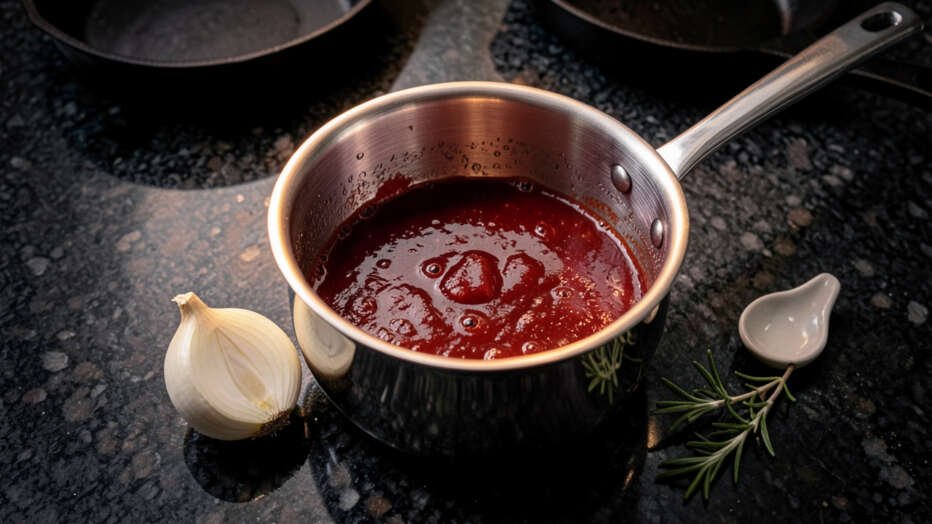
Tri-ply construction matters for even sauce reduction because its aluminum core sandwiched between stainless steel layers eliminates hot spots that cause scorching and uneven reduction. This even heat distribution allows sauces to reduce at a consistent simmer without scorching or breaking emulsions, preserving both flavor and texture. The responsive temperature control of a fully clad tri-ply pan enables immediate heat adjustment, preventing delicate reductions from burning or separating.
A thin, cheap pan can ruin a delicate wine reduction in seconds. This article explains exactly why tri-ply construction matters for even sauce reduction through even heat distribution and responsive temperature control.
Quick Verdict: Simply put, tri-ply construction sandwiches a thick aluminum core between two layers of stainless steel. This bonding eliminates hot spots by spreading heat uniformly across the pan. For even sauce reduction, this means your liquids thicken smoothly without scorching. You keep the responsive temperature control necessary to prevent delicate emulsions from breaking.
Key Takeaways
- Tri-ply construction prevents hot spots by combining the rapid heat conduction of an aluminum core with the durability and non-reactivity of stainless steel.
- Even heat distribution allows sauces to reduce at a consistent simmer without scorching, resulting in better flavor and texture.
- The responsive temperature control of tri-ply pans lets you quickly turn down heat to prevent a delicate emulsion from breaking.
- A fully cladded tri-ply pan ensures even heat not just on the bottom, but also along the walls, preventing burning at the liquid line.
- Investing in tri-ply cookware reduces cooking failures and frustration, particularly for techniques like pan sauces, beurre blanc, and tomato reductions.
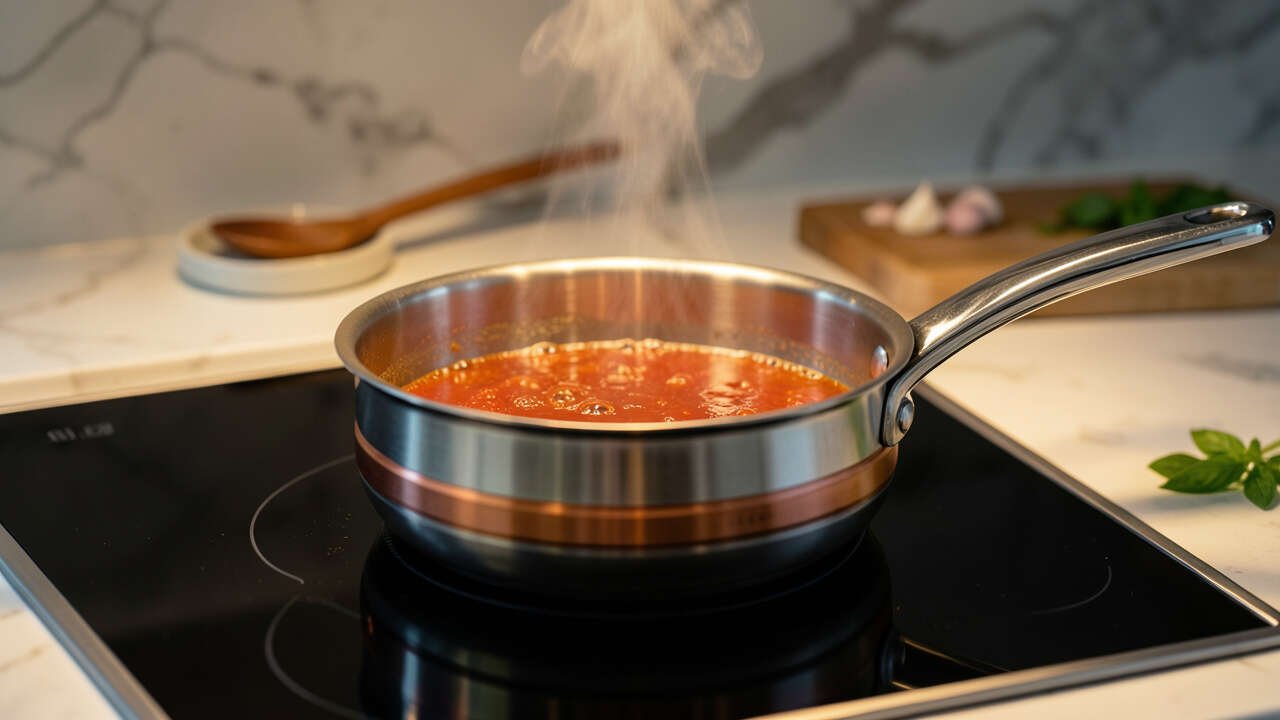
The Science of Even Sauce Reduction
Sauce reduction is a test of heat control. You need to concentrate flavors and thicken liquids without damaging the proteins or emulsifiers inside the sauce.
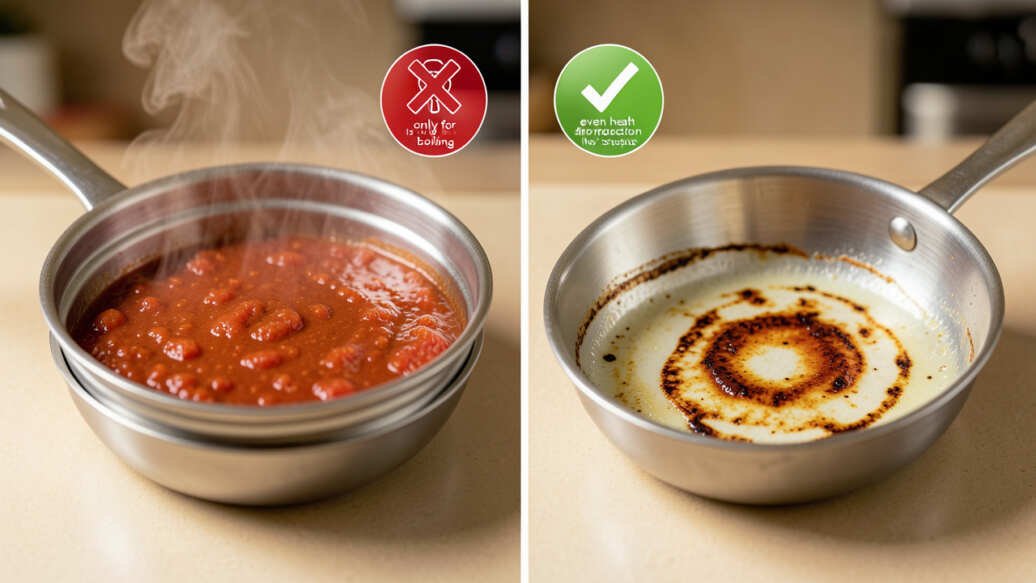
Standard cookware creates “hot spots.” These are areas of the pan that get much hotter than others. A sauce sitting over a hot spot breaks. The emulsion separates. The milk solids scorch. Your careful work turns into a greasy, bitter mess.
Tri-ply construction solves this at a material level. The aluminum core is a rapid heat conductor. It pulls heat from the burner and spreads it across the entire surface instantly. According to independent testing by America’s Test Kitchen, a quality tri-ply pan heats over 15 times more evenly than a single-ply stainless steel pan.
This uniform heating changes how you cook. You no longer need to constantly swirl the pan to stop a sauce from burning. The pan does the work for you.
Why Aluminum Is the Ideal Core Material
Different metals have different thermal conductivity rates.
- Copper is excellent but reacts with acidic foods and is expensive.
- Aluminum conducts heat almost as well as copper but is lightweight and affordable.
- Steel is durable but conducts heat terribly on its own.
Tri-ply takes the best of both worlds. It uses the aluminum core for heat and the stainless steel for the cooking surface. Common kitchen science references state that aluminum conducts heat roughly 10 times faster than stainless steel. This means energy moves sideways in the pan instead of just going straight up.
Tip: To test your pan for hot spots at home, sprinkle a layer of flour across the bottom and heat it on medium. If the center burns before the edges, your pan does not distribute heat evenly. A tri-ply pan will brown the flour uniformly.
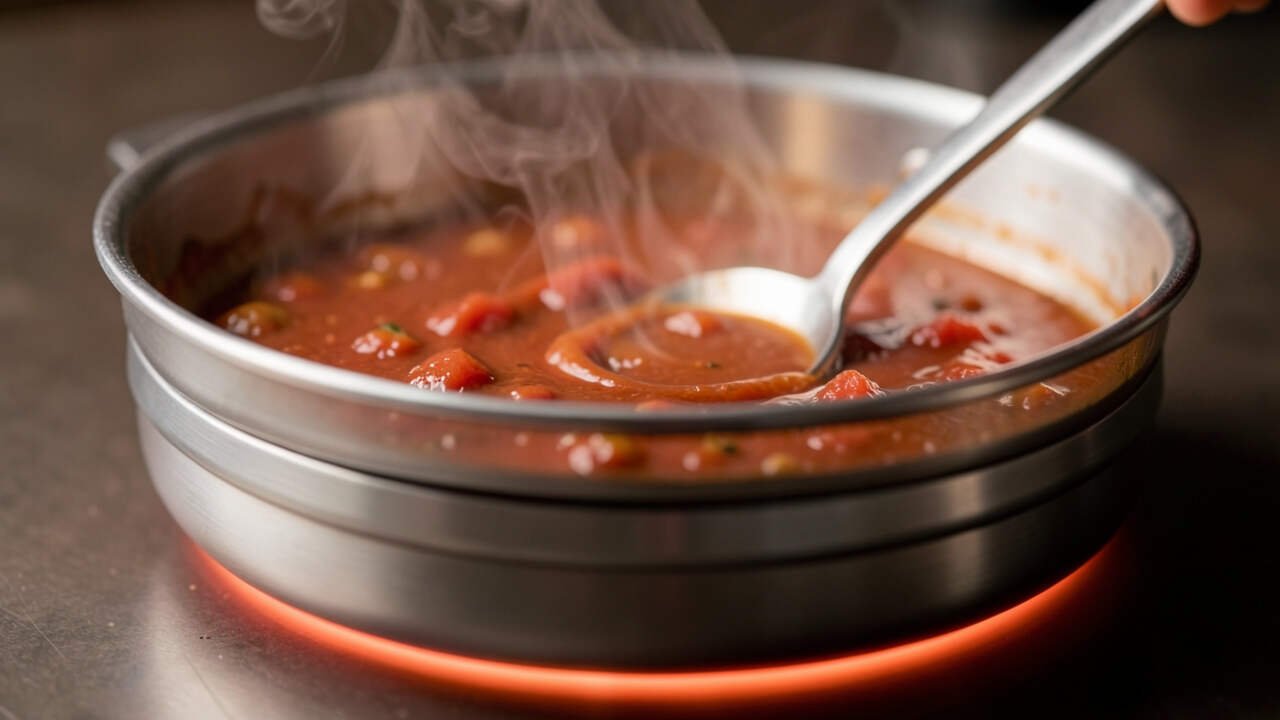
How Tri-Ply Construction Prevents Scorching and Breaking
Scorching happens when localized heat exceeds the boiling point of liquid at the bottom of the pan. The water evaporates rapidly, leaving solids to burn against the metal.
Breaking happens when an emulsion (like butter or cream sauce) heats too fast. The fat separates from the liquid. You cannot fix a broken sauce easily. Even heat prevents both problems.
| Feature | Single-Ply Stainless Steel | Tri-Ply Stainless Steel |
|---|---|---|
| Heat Distribution | Poor with distinct hot spots | Excellent and fully uniform |
| Risk of Scorching | High | Low |
| Temperature Response | Slow and inconsistent | Fast and responsive |
| Emulsion Stability | Often breaks | Usually stable |
| Durability | Prone to warping | Very durable, resists warping |
The table above shows a clear difference. If you frequently make sauces, the choice becomes obvious. A single-ply pan forces you to work harder. A tri-ply pan supports your technique.
Warning: Do not use high heat to speed up a reduction in a single-ply pan. The rapid heat will destroy the sauce structure before you can stir it. Tri-ply cookware allows you to use medium heat confidently for faster, safer reductions.
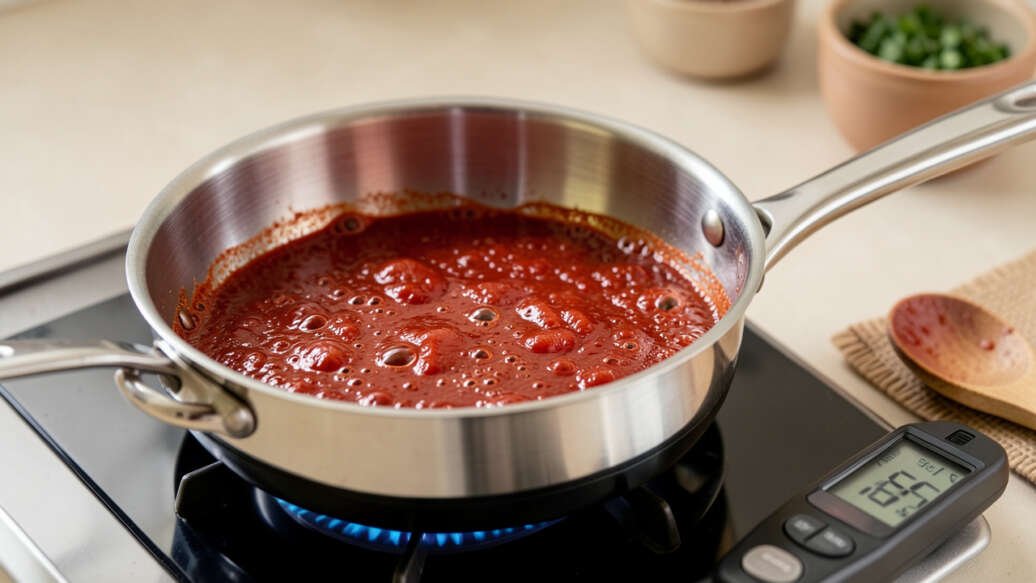
Why Responsive Temperature Control Is Crucial for Delicate Sauces
Some sauces are more sensitive than others. Beurre blanc, hollandaise, and cream reductions require immediate heat adjustments. If the pan gets too hot, the sauce breaks. If the pan cools too slowly, the sauce overcooks.
A tri-ply saucepan gives you instant feedback. Turn the dial down, and the pan responds immediately. The heat stops building immediately because the aluminum core does not retain as much temporary energy as cast iron or stainless steel alone. This thermal agility is the secret to perfect sauces.
Professional chefs often test new pans by making a beurre blanc. This is a butter emulsion that is notorious for breaking. The test demands patience and control. A pan with hot spots fails every time. A good tri-ply construction turns a difficult recipe into a reliable one.
Understanding the Maillard Reaction and Fond
The ability to sear meat and then deglaze the pan requires even heat. You need a strong, consistent sear to build the “fond” (brown bits stuck to the bottom). The fond contains the flavor base for your sauce.
If the pan has hot spots, the protein burns in one area and does not brown in another. The burnt taste goes into your sauce. A tri-ply pan gives you an even, golden-brown fond. When you add wine or stock, the deglazing process lifts those flavors without scorching.
Common Myths vs. Facts About Tri-Ply Cookware for Sauces
Many home cooks avoid tri-ply cookware because of persistent myths. Understanding the truth helps you make a better choice.
- Myth: Tri-ply pans are too heavy to use every day. Fact: Modern tri-ply pans are well-balanced. Brands like All-Clad and Demeyere design their handles to offset the weight. Most home cooks find them comfortable for daily use.
- Myth: Stainless steel is bad for non-stick cooking. Fact: It has a learning curve. Once you master preheating and using enough fat, stainless steel provides a natural release. It performs better than non-stick for creating fond.
- Myth: You need expensive copper pans for professional sauce results. Fact: High-quality tri-ply pans offer 95% of the performance of copper at a fraction of the cost. Copper also requires polishing and reacts with acidic foods. Tri-ply is easier to maintain.
What You Need to Know Before Buying Tri-Ply Cookware for Sauces
Not all tri-ply pans are the same. The quality of the construction directly affects your sauce making.
Fully Clad vs. Impact Bonded
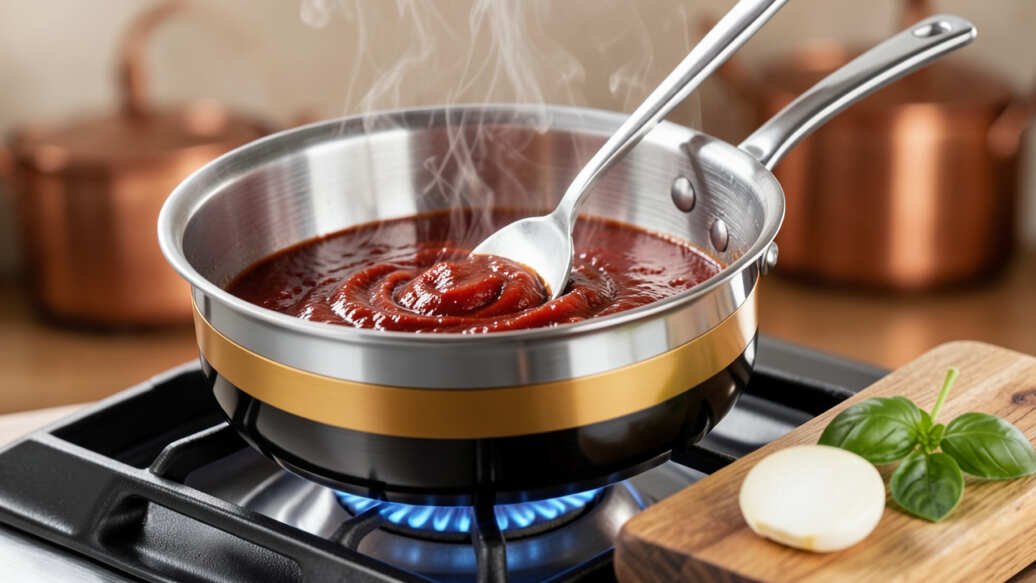
Fully clad means the three layers run across the bottom and up the sides of the pan. This is essential for sauce reductions because the liquid climbs the sides. If the sides are thin, the sauce burns at the liquid line.
Impact bonded only has a thick disc on the bottom. The sides are usually single-ply stainless steel. These are cheaper, but they do not perform well for sauce reductions. You lose control as soon as the liquid level rises above the disc.
Gauge Thickness Matters
The thickness of the layers changes how the pan behaves.
- 1.5mm to 2mm: Lightweight but prone to hot spots. Not ideal for sauces.
- 2.5mm to 3mm: Optimal for even heating and responsive control. This is the standard for professional cookware.
- 4mm or above (5-ply): Very heavy but extremely stable. Some chefs prefer this for reducing large volumes of stock.
For most home cooks, a 2.5mm tri-ply pan offers the best balance. It heats quickly, responds well, and remains easy to lift when full.
Step-by-Step Process for Perfect Sauce Reduction in a Tri-Ply Pan
Understanding the theory is important. Applying it in the kitchen gets you results. Follow these steps for a flawless pan sauce. Following safe cooking temperature guidelines ensures your pan sauces are both delicious and safe.
- Preheat the pan correctly. Set your tri-ply pan over medium heat for 60 to 90 seconds. Add a drop of water. If it beads up and skates across the surface, the pan is ready. This is the “Leidenfrost effect” and indicates even heat.
- Sear your protein. Add oil with a high smoke point. Pat the protein completely dry. Place it in the pan and leave it alone. A proper sear develops the fond.
- Remove the protein and add aromatics. Lower the heat to medium-low. Add shallots, garlic, or herbs. Sweat them gently in the remaining fat for 30 seconds.
- Deglaze the pan. Pour in wine, stock, or vinegar. Use a wooden spoon to scrape up the fond. The liquid will bubble and steam. The even heat of the tri-ply pan helps the alcohol cook off quickly.
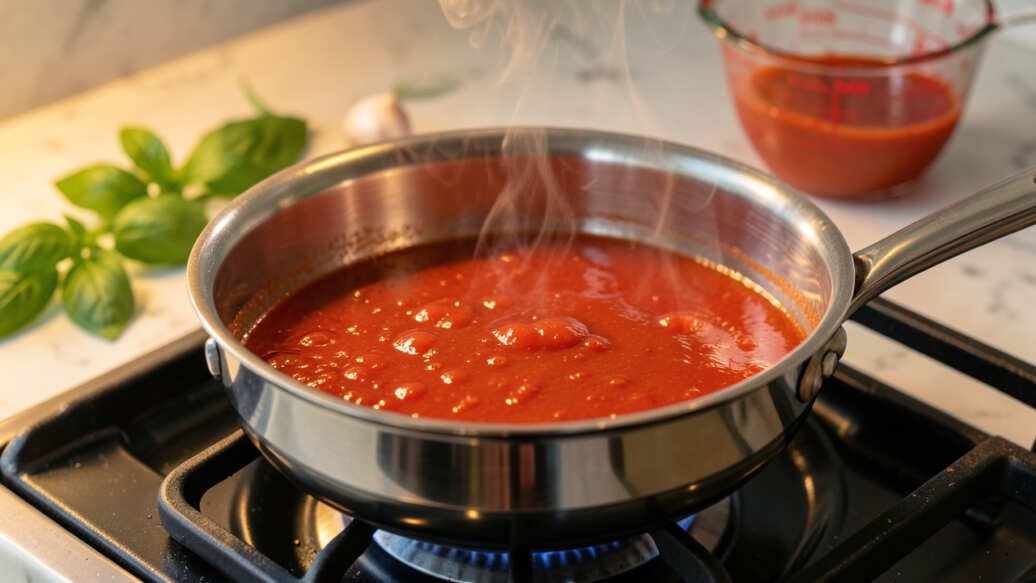
- Reduce the liquid. Turn the heat to medium-high. Watch the liquid closely. In a tri-ply pan, the bubbles will be small and uniform. Do not walk away. A reduction of a cup of liquid typically takes 4 to 5 minutes.
- Mount with butter (optional). When the sauce reaches the right consistency, turn off the heat. Whisk in cold butter cubes one at a time. The residual heat of the tri-ply pan is mild enough to emulsify the butter without breaking it.
- Season and serve. Taste the sauce. Add salt, pepper, or lemon juice. Pour over the protein immediately.
Important: Do not overcrowd the pan when searing. Adding too much cold protein drops the pan temperature rapidly. Even a tri-py pan needs room to maintain steady heat. Sear in batches if needed.
Troubleshooting Common Sauce Problems
Even with great cookware, mistakes happen. Here is how to fix them. The Leidenfrost effect in cooking confirms even heat distribution in tri-ply pans.
- Sauce is too thin: Increase heat slightly and reduce longer. A tri-ply pan handles high heat without scorching the existing fond.
- Sauce looks greasy (broken): Remove from heat immediately. Whisk in a tablespoon of cold water or an ice cube. The shock can bring the emulsion back together.
- Sauce tastes metallic: This happens when you use low-quality cookware. Your tri-ply stainless steel pan is non-reactive. It should not impart metallic flavors. If it does, reduce acidic ingredients or switch to a different brand.
- Fond is burning: Your heat is too high. Lower the heat and add a splash of water to the pan. Deglaze immediately to save the flavor.
Frequently Asked Questions
What does “tri-ply” mean in cookware construction?
Tri-ply means the cookware is made of three layers of metal bonded together under extreme pressure and heat. Standard tri-ply uses an aluminum core sandwiched between two layers of stainless steel. The aluminum provides even heating, while the steel provides durability.
Is tri-ply cookware worth the investment for home cooks who make sauces?
Yes. If you enjoy making pan sauces, gravy, or emulsions, the investment pays for itself. The even heat distribution reduces the risk of failure. According to America’s Test Kitchen, a well-made tri-ply pan is the top recommendation for a versatile, long-lasting kitchen tool.
Can I use high heat on my tri-ply saucepan?
You can, but it is rarely needed. Tri-ply conducts heat so efficiently that medium heat is usually enough for searing and boiling. Using high heat can cause oil to smoke quickly. For delicate sauce reductions, stick to medium or medium-low heat.
How do I clean my tri-ply pan after making a reduction?
Let the pan cool completely. The baked-on fond usually lifts easily if you deglaze the pan with liquid during cooking. For stubborn stains, boil a small amount of water and baking soda in the pan. Brands like All-Clad recommend using a cleaner like Bar Keepers Friend to restore the shine.
What is the difference between tri-ply and 5-ply cookware for sauce making?
Tri-ply uses three layers, while 5-ply uses five layers (alternating steel and aluminum). 5-ply is heavier and more expensive. It retains heat slightly better, making it ideal for slow cooking. Tri-ply is more responsive and lighter, making it better for quick reductions and emulsified sauces.
Final Thoughts
Mastering even sauce reduction comes down to managing heat. Tri-ply construction gives you that control with uniform heating and an immediate response to temperature changes. It reliably transforms a frustrating technique into a simple, repeatable process. Choosing quality tri-ply cookware directly improves your ability to create silky, flavorful sauces every time. Understanding how cooking fond for sauces develops is key to mastering reduction techniques.

Leave a Reply