
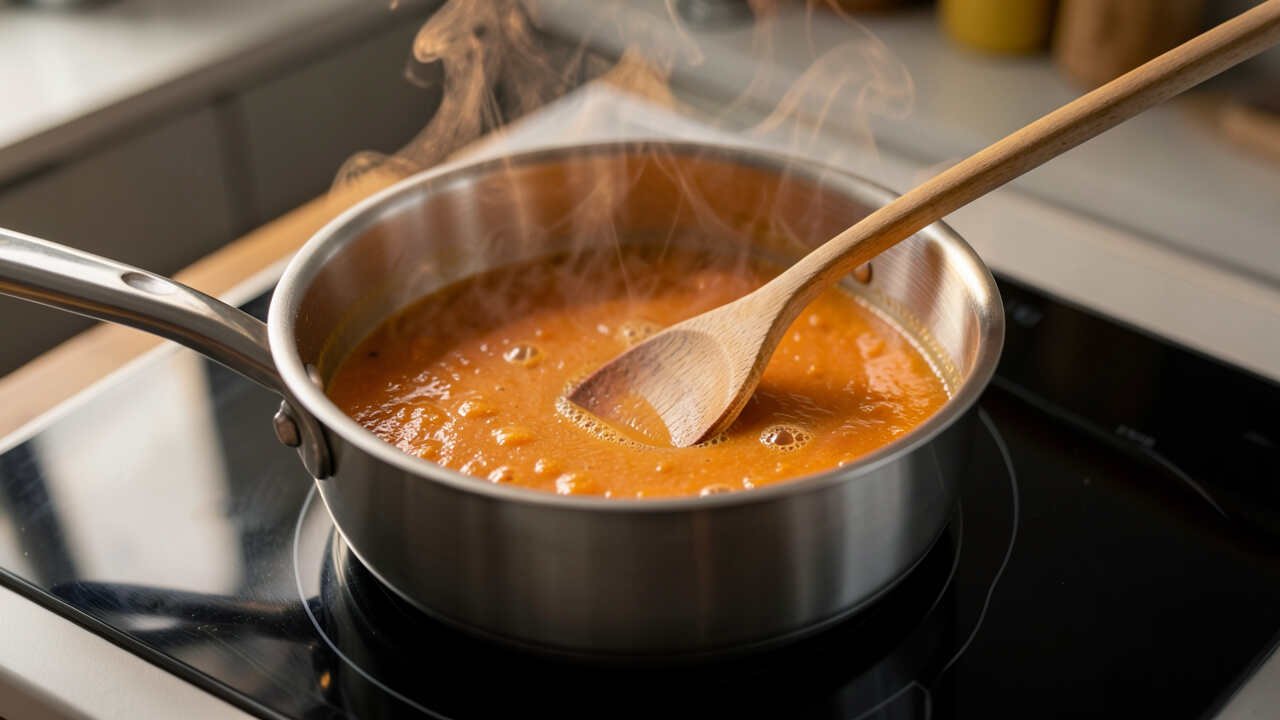
To avoid scorching when reheating soup, choose a saucepan with a heavy, multi-clad base at least 3 to 4 millimeters thick, such as tri-ply stainless steel or enameled cast iron, which eliminates hot spots and distributes heat evenly. Thin pans like single-ply aluminum create uneven heat that burns dairy and starch solids before the rest of the soup is warm. Using low to medium heat and stirring occasionally further prevents sticking and scorching, making the pan’s material and thickness the most critical factors for success.
Few kitchen moments ruin a meal faster than tasting a metallic burnt flavor in your reheated soup.
This guide explains exactly how to pick a saucepan for reheating soup without scorching, covering the materials, techniques, and tools that prevent burning.
Quick Verdict: Simply put, preventing scorched soup requires a heavy-bottomed saucepan with a thick, multi-clad base. Look for tri-ply stainless steel or enameled cast iron. Avoid thin aluminum, use low to medium heat, and stir occasionally to stop dairy solids and starches from sticking and burning.
Key Takeaways
- A heavy, multi-clad base (3 to 4 mm thick) is the most important feature of a saucepan for reheating soup without scorching.
- Thin pans create hot spots that burn soup before the rest of the pot is warm to the touch.
- Tri-ply stainless steel offers the best balance of heat control and durability for reheating creamy or starchy soups.
- Using low to medium heat instead of a high flame significantly reduces the risk of scorching dairy-based and tomato-based soups.
- Stirring the soup frequently and using a pan with flared sides helps prevent food solids from settling and burning on the bottom.
The Science of Scorching
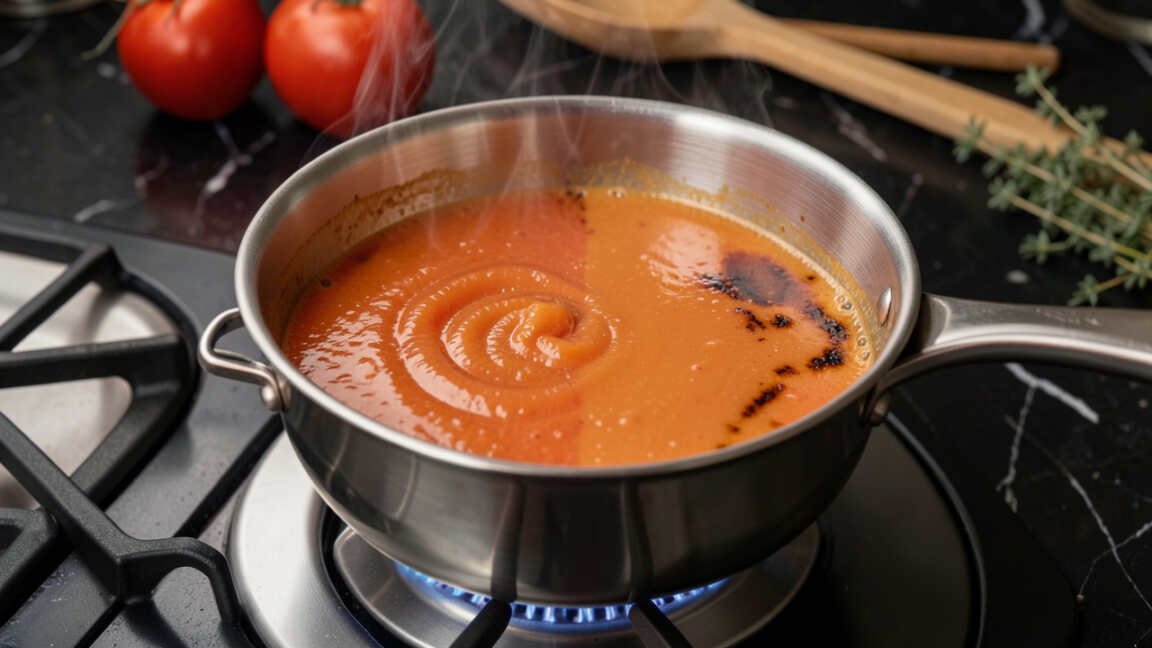
Scorching happens when food solids stick to a pan surface that is too hot. Dairy proteins and starch granules are the main culprits. They burn at lower temperatures than water boils.
Thin pans made of single-layer stainless steel or aluminum heat up fast. They also develop uneven hot spots. These hot spots concentrate heat on the bottom center of the pan.
- Single-layer aluminum pans warp over time, creating permanent uneven surfaces.
- Thin stainless steel pans lack a conductive core to spread heat to the sides.
- High heat pushes the surface temperature past the burning point of milk solids and starch.
- Rough pan surfaces (like cheap bare aluminum) give food more places to stick.
Warning: Never use a pan with a warped bottom for soup. The gap between the burner and the pan surface creates severe hot spots that guarantee scorching.
How to Choose a Saucepan for Reheating Soup
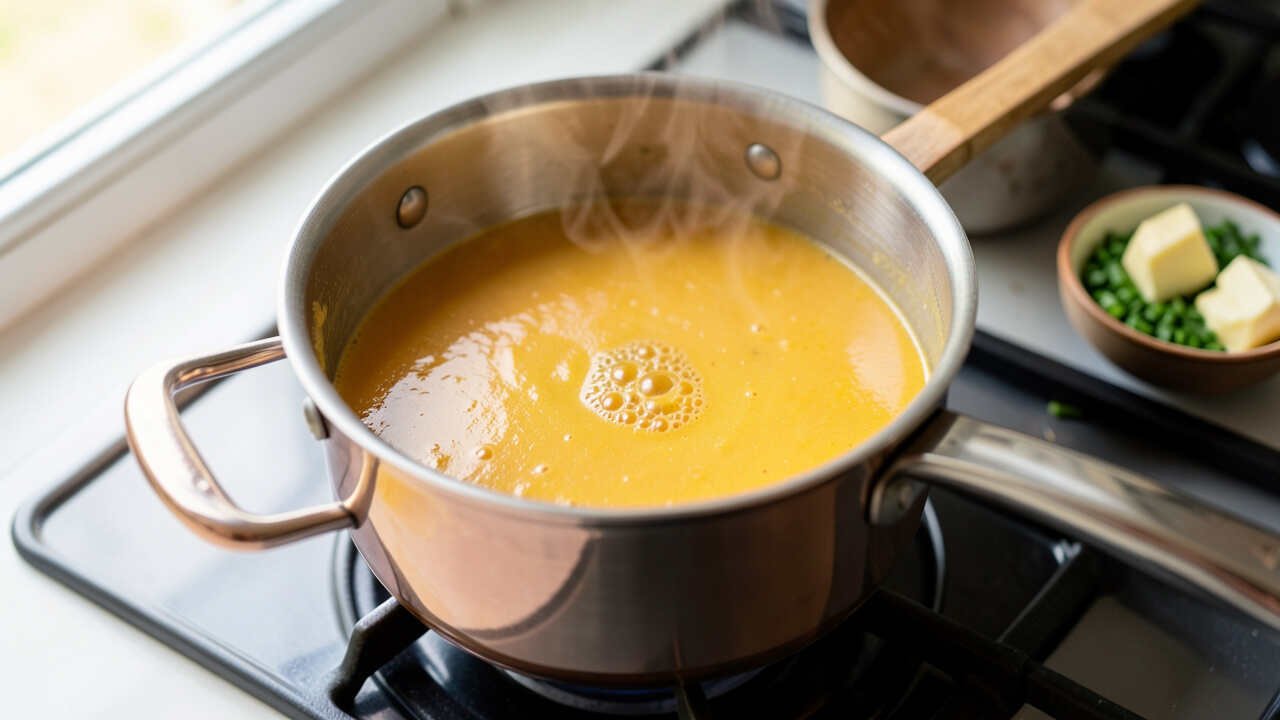
Picking the right pan is your first line of defense against scorching. You need a pan that distributes heat evenly and holds it without spiking.
According to America’s Test Kitchen, pans with a fully encapsulated aluminum core heat 15 percent more evenly than pans without one. This is the gold standard for soup reheating.
| Feature | Why It Matters | What to Look For |
|---|---|---|
| Material | Determines heat conductivity and resistance to burning. | Tri-ply stainless steel or enameled cast iron. |
| Base Thickness | Thicker bases store heat and prevent sudden temperature spikes. | At least 2.5 mm, ideally 3 to 4 mm. |
| Shape | Flared sides allow steam to escape, reducing the heat on the liquid surface. | Slightly wider that the base. |
| Weight | Heavy pans sit flat on the burner and resist hot spots. | A 2-quart pan should weigh at least 2.5 pounds. |
Best Saucepan Materials for Scorch-Free Reheating
Not all pans are created equal when it comes to soup. The material of your pan determines how heat travels from the burner to the soup.
Tri-Ply Stainless Steel
This is the best all-around material for a saucepan for reheating soup. Tri-ply pans have an aluminum core sandwiched between two layers of stainless steel.
- Aluminum spreads heat quickly and evenly across the pan.
- Stainless steel on the inside is non-reactive with acidic soups like tomato or lemon.
- Stainless steel on the outside works on all cooktops including induction.
- Pans from All-Clad and Cuisinart are reliable choices in this category.
Tip: Look for the term “fully clad” or “encapsulated bottom” on the packaging. This means the aluminum core runs up the sides of the pan, not just the bottom.
Enameled Cast Iron
Enameled cast iron is the heavyweight champion of even heating. It holds heat longer than any other material. Brands like Le Creuset and Staub make excellent options.
- It distributes heat perfectly with zero hot spots.
- The smooth enamel interior prevents food from sticking.
- It is very heavy and slow to heat up, which requires patience.
- It is not ideal for fast reheating of small portions.
Non-Stick Coated Pans
Non-stick pans are popular for reheating creamy soups like chowders because nothing sticks to them. However, they have downsides for soup reheating.
- Most non-stick pans have a thin aluminum base that heats unevenly.
- High heat can damage the non-stick coating and release fumes.
- You cannot use metal utensils to stir soup in a non-stick pan.
- Non-stick pans are best used only for delicate, dairy-heavy soups at low heat.
Copper Core
Copper offers the best heat conductivity of any cookware material. Brands like All-Clad Copper Core and Mauviel make top-tier pans.
- Copper responds instantly to changes in burner temperature.
- It is extremely expensive compared to other options.
- Copper must be lined with stainless steel to avoid reacting with soup.
- It requires special cleaning care to maintain its appearance.
How to Reheat Soup Without Scorching It
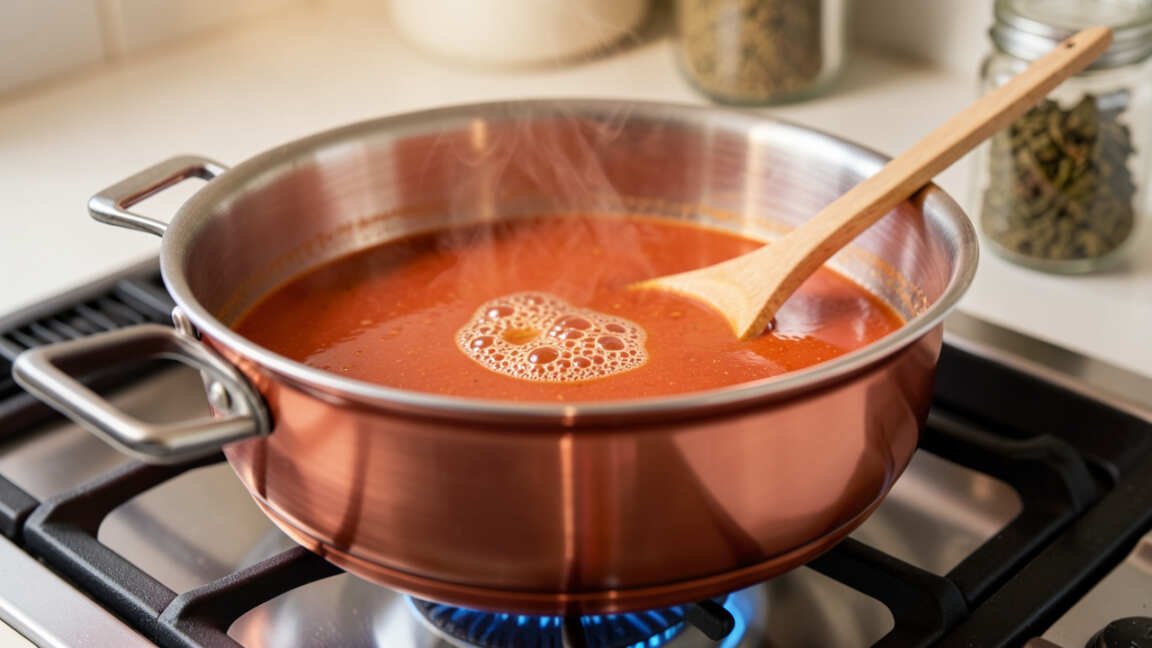
Even the best pan cannot fix bad technique. Follow these steps to reheat soup safely every time.
- Choose a saucepan that matches your soup volume. A 2-quart pan works for 1 to 3 servings.
- Place the pan on the burner and set the heat to low. Never start on high.
- Add a splash of cold water or broth to the soup. This lowers the overall density and prevents solids from settling immediately.
- Stir the soup every 60 seconds with a flat-bottomed spatula or wooden spoon. Scrape the bottom gently to lift any settling solids.
- Cover the pan with a lid to trap steam. Steam helps heat the soup from the top down, reducing the load on the bottom.
- If the soup is not hot enough after 5 minutes, increase the heat to medium-low. Stir more frequently at this stage.
- Remove the pan from the burner as soon as the soup simmers. Do not let it boil rapidly.
Tip: For frozen soup, thaw it in the refrigerator overnight before reheating. Thawing prevents thermal shock and reduces the time the pan spends on the burner.
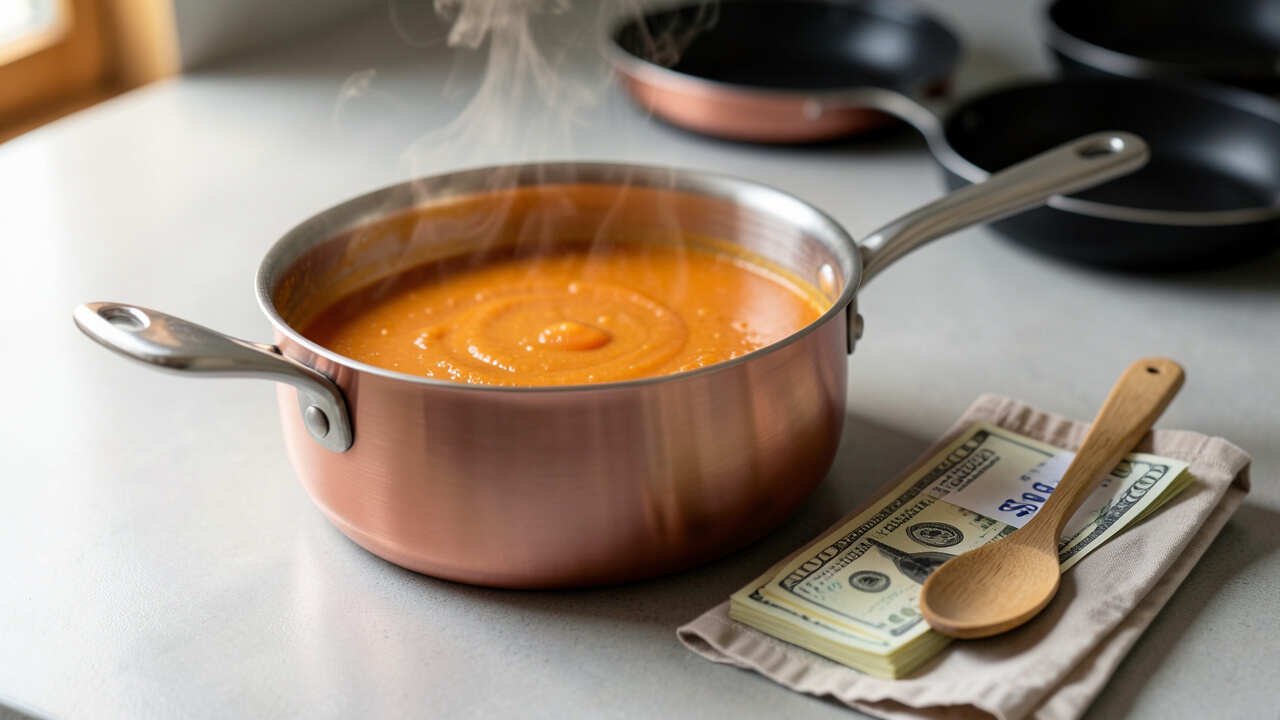
Cost of a Good Saucepan for Reheating Soup
You do not need a professional-grade pan to avoid scorched soup. Mid-range pans offer excellent performance at a fair price.
| Price Range | Typical Materials | Performance for Soup | Example Brands |
|---|---|---|---|
| $30 – $50 | Disc-bottom stainless, Basic non-stick | Requires careful low heat. Hot spots possible. | Tramontina, Cuisinart |
| $60 – $100 | Tri-ply clad stainless, Enameled cast iron | Excellent. Even heating with minimal effort. | Cuisinart MCP, Lodge |
| $100+ | Copper core, 5-ply stainless, Premium enameled iron | Superior. Professional grade heat control. | All-Clad, Le Creuset, Mauviel |
Common Myths vs Facts About Reheating Soup
Many home cooks follow well-meaning advice that actually leads to scorched soup. Here are three common myths debunked.
Myth 1 – Non-Stick Pans Always Prevent Scorching
Non-stick pans prevent food from bonding to the surface. They do not prevent the bottom layer of soup from overheating. Most non-stick pans have thin aluminum bases that create hot spots. The soup can still burn even if it does not stick.
Myth 2 – High Heat Reheats Soup Faster Without Damage
High heat shocks the soup. It causes the water to boil before the solids have a chance to warm up. This burns the solids while leaving the liquid cold in the center. Low heat is always the better choice.
Myth 3 – Any Pot Works If You Stir Constantly
Stirring does help distribute heat, but it cannot fix a bad pan. A thin pan concentrates heat on the bottom center. No amount of stirring can stop that heat from building up in one spot. You need a thick base to spread that heat around.
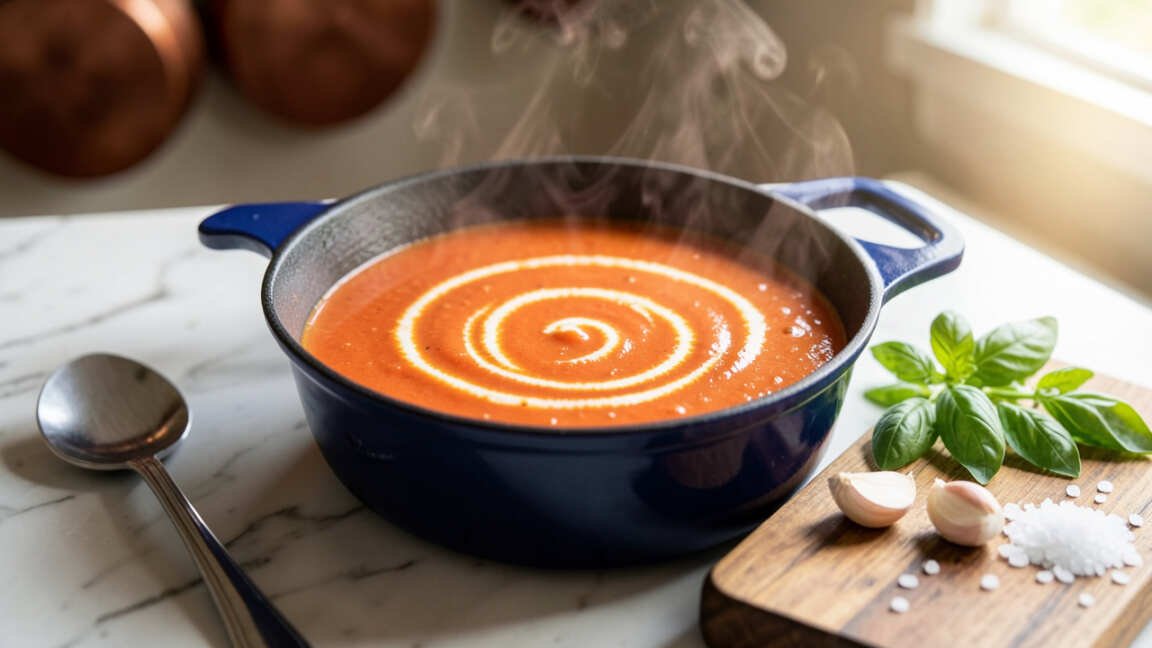
Pro Tips for Scorch-Free Soup Every Time
These tips go beyond basic pan selection. They are techniques that professional chefs use to reheat delicate soups.
- Use a pan with a diameter that closely matches the size of your burner. A small pan on a large burner heats the sides too fast and burns the soup line.
- Add your soup to the pan while the pan is still cold. This allows the soup and pan to heat up together, preventing sudden temperature shock.
- Use a flat-bottomed wooden spoon instead of a round one. Flat spoons contact the entire bottom surface and lift settled solids more effectively.
- Do not rush the process. Reheating soup on low heat takes 5 to 7 minutes. Rushing with high heat adds risk of scorching for little time savings.
- Reserve a small portion of the soup and add it after the main batch is hot. This technique lowers the overall temperature and gives you a buffer against burning.
Important: If you are reheating a soup that contains pasta or noodles, reheat the broth separately. Add the pasta or noodles at the very end. This prevents them from overcooking and breaking down into starchy sludge that burns on the bottom.
Frequently Asked Questions
Can I use a cheap aluminum saucepan to reheat soup without burning?
Cheap aluminum pans have thin bases that warp easily and create severe hot spots. They are not recommended for reheating soup. If you must use one, keep the heat on low and stir constantly.
Is stainless steel or non-stick better for reheating creamy soups like chowder?
Non-stick is easier to clean with creamy soups because the milk solids slide off. However, tri-ply stainless steel gives you much better heat control. The best approach is to use stainless steel at a low temperature.
Why does my soup burn when I reheat it in the same pot I originally cooked it in?
Residual starches and dairy proteins from the first cooking session settle into the pores and scratches of the pan. When you add heat again, these residues burn quickly. Wash the pot thoroughly with hot water and soap before reheating.
What size saucepan is best for reheating 2 cups of soup?
A 2-quart saucepan is ideal for 2 cups of soup. A pan that is too large causes the liquid to spread thinly across the bottom. This thin layer heats too fast and increases the chance of scorching.
How does the shape of the pan affect soup reheating?
A saucepan with flared sides allows steam to escape more easily than a straight-sided pot. This reduces the heat trapped at the liquid surface. Flared sides also make it easier to stir the bottom corners of the pan.
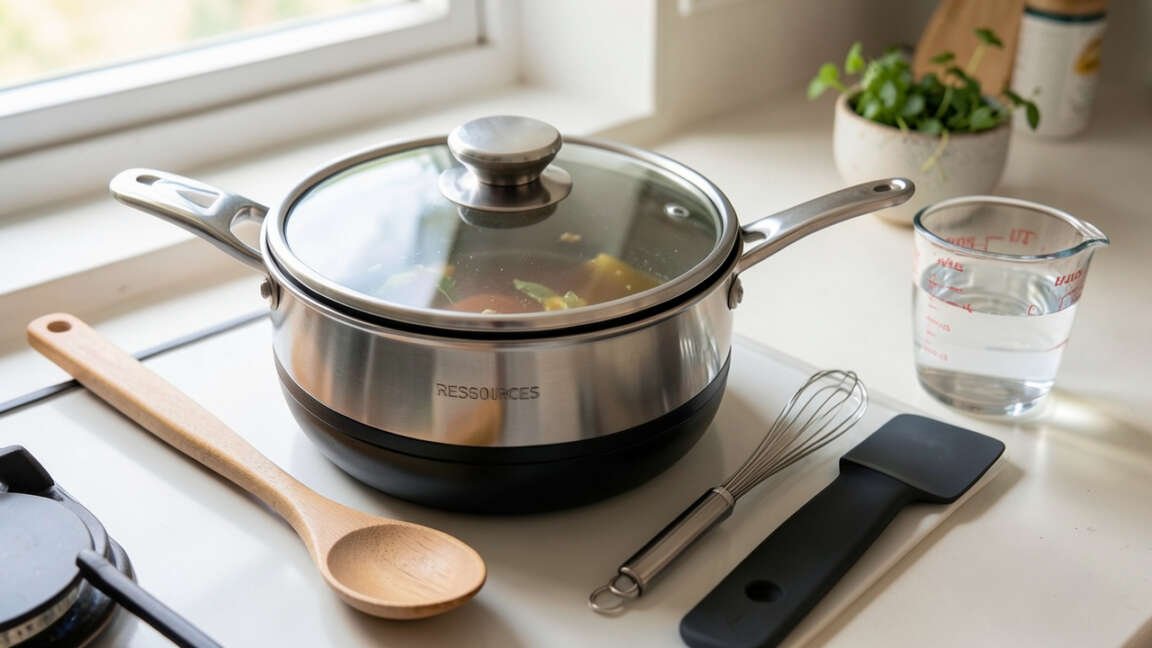
Resources and Tools
These tools and resources can help you find and maintain the perfect saucepan for soup. Always follow official food safety guidelines for reheating leftovers to ensure proper temperature and handling.
All-Clad D3 Tri-Ply Saucepan – A professional-grade 2-quart pan with even heat distribution and a lifetime warranty. Visit Site
Cuisinart MultiClad Pro – A more affordable tri-ply option that still offers full aluminum core encapsulation for even heating. Visit Site
Le Creuset Enameled Cast Iron – Perfect heat retention for large batches of soup, with a smooth interior that resists sticking. Visit Site Reheating soup on low heat is a proven technique to avoid scorching, as described in the simmering article.
America’s Test Kitchen Cookware Reviews – Independent, unbiased testing of saucepans and other cookware for performance and value. Visit Site
Final Thoughts
Choosing the right saucepan for reheating soup comes down to one thing: a thick, multi-clad base that distributes heat evenly. Tri-ply stainless steel is the most versatile and reliable choice for most home cooks. Pair a quality pan with low heat and regular stirring to eliminate scorching entirely. For a detailed explanation of why a thick multi-clad base distributes heat evenly, refer to the Wikipedia article on saucepans.

Leave a Reply