
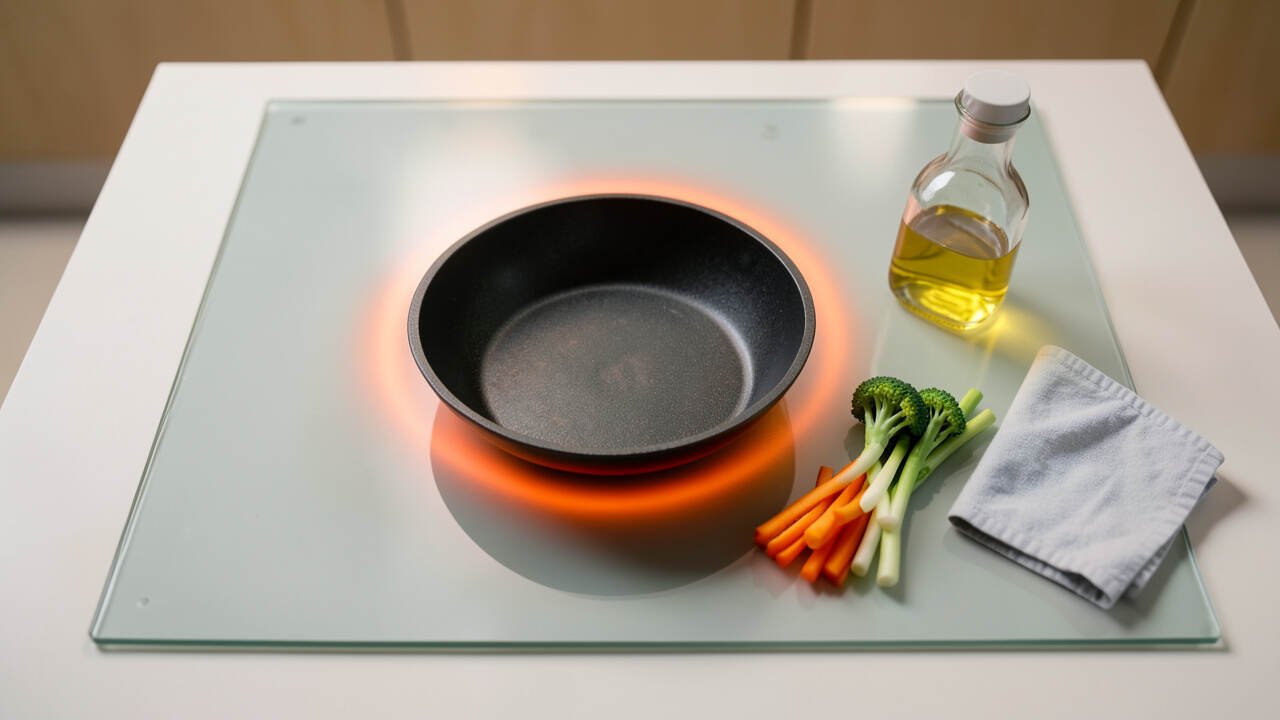
Using a wok on a glass-top electric hob without damage requires a flat-bottomed wok made of carbon steel or stainless steel, gentle placement on a clean surface, and slow preheating on medium heat. Always lift the wok instead of sliding it to prevent scratches, and deglaze with liquid to avoid thermal shock that could crack the glass. The takeaway is that gradual temperature changes and high-smoke-point oils like avocado or peanut oil protect both the cooktop and the wok.
Your glass-top electric hob heats differently than a gas flame, which can crack the surface or warp your wok if you are not careful. This guide shows you exactly how to use a wok on a glass-top electric hob without damage.
Quick Verdict: In short, using a wok on a glass hob is safe if you choose a flat-bottomed wok made of carbon steel or stainless steel, never slide or drop it on the surface, and avoid rapid temperature changes. Preheating slowly on a medium setting and using the right cooking oil will protect both your cooktop and your wok.
Key Takeaways
- Using a flat-bottomed wok is essential for stability and even heat distribution on a glass electric hob.
- Lifting the wok instead of sliding it prevents scratches and damage to the glass surface.
- Preheating your wok gradually on medium heat prevents warping and glass cracking.
- Oils with a high smoke point, like avocado or peanut oil, work best for stir-frying on electric hobs.
- Cleaning the glass cooktop with a specialized ceramic cooktop cleaner after each use prevents permanent stains and micro-scratches.
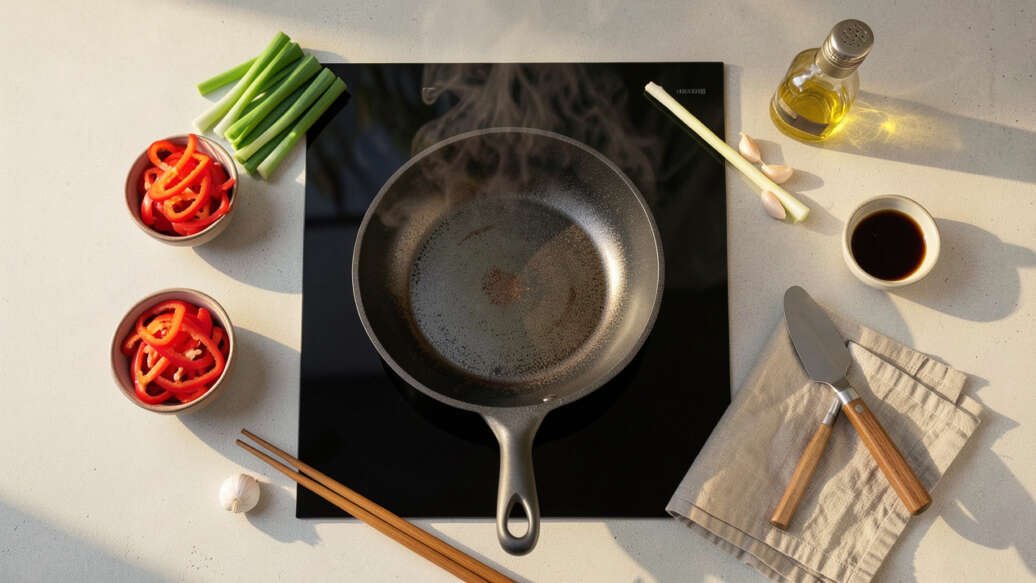
What You Need for a Perfect Stir-Fry Setup
Before you start cooking, you need the right tools. Using the wrong wok or accessories is the main reason people damage their electric hobs. The most important rule is to avoid a round-bottom wok.
Important: According to the Association of Home Appliance Manufacturers (AHAM), electric smoothtop ranges currently account for over 60% of new range sales in the United States. Most homeowners are unaware that using the wrong cookware can void their cooktop warranty.
Choosing the Right Wok Material
The material of your wok determines how it interacts with a glass surface. Some materials distribute heat evenly, while others can scratch or crack your hob. According to a study in the Journal of Food Engineering, carbon steel offers 15 times faster thermal response than cast iron, making it ideal for electric hob stir-frying.
| Wok Material | Heat Conductivity | Weight | Scratch Risk | Best For |
|---|---|---|---|---|
| Carbon Steel | Excellent | Light-Medium | Low | Stir-frying, seasoning |
| Cast Iron | Poor | Heavy | High | Deep-frying, braising |
| Stainless Steel | Medium | Medium | Medium | Versatile cooking |
| Non-Stick | Good | Light | Low | Low-oil cooking |
A flat-bottom carbon steel wok is the top choice for most home cooks. It heats fast, responds quickly to temperature changes, and is light enough to lift easily. According to Cook’s Illustrated, a flat-bottom wok provides approximately 40% more surface area contact on an electric hob compared to a round-bottom wok resting on a ring.
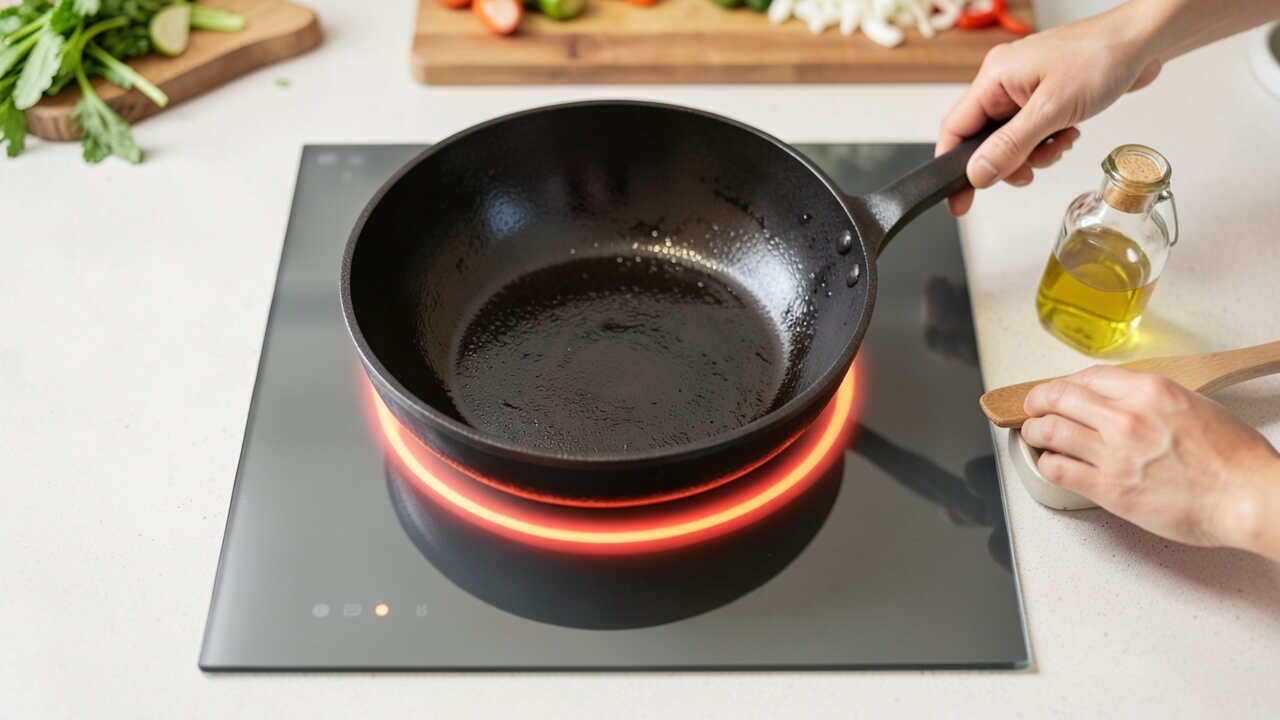
How to Use a Wok on a Glass Top Stove: Step-by-Step Process
Follow these steps every time you cook. This routine will protect your wok and your glass hob from thermal shock and physical damage. Do not skip the preheating stage.
Step 1: Choose the Right Flat-Bottom Wok
Measure the bottom of your wok. It should sit flat on the burner element without wobbling. A wok that rocks can cause point contact, which concentrates heat and cracks the glass.
Step 2: Clean the Glass Hob Surface
Check the cooktop for debris, sugar spills, or grit. According to manufacturers like Cerama Bryte, even a single grain of salt under a wok can scratch the ceramic surface when the wok expands from heat. Wipe the area clean before placing your wok down.
Step 3: Place the Wok Gently on the Center
Do not drop the wok onto the glass. Set it down slowly and center it over the heating element. Lifting it fully prevents scratches.
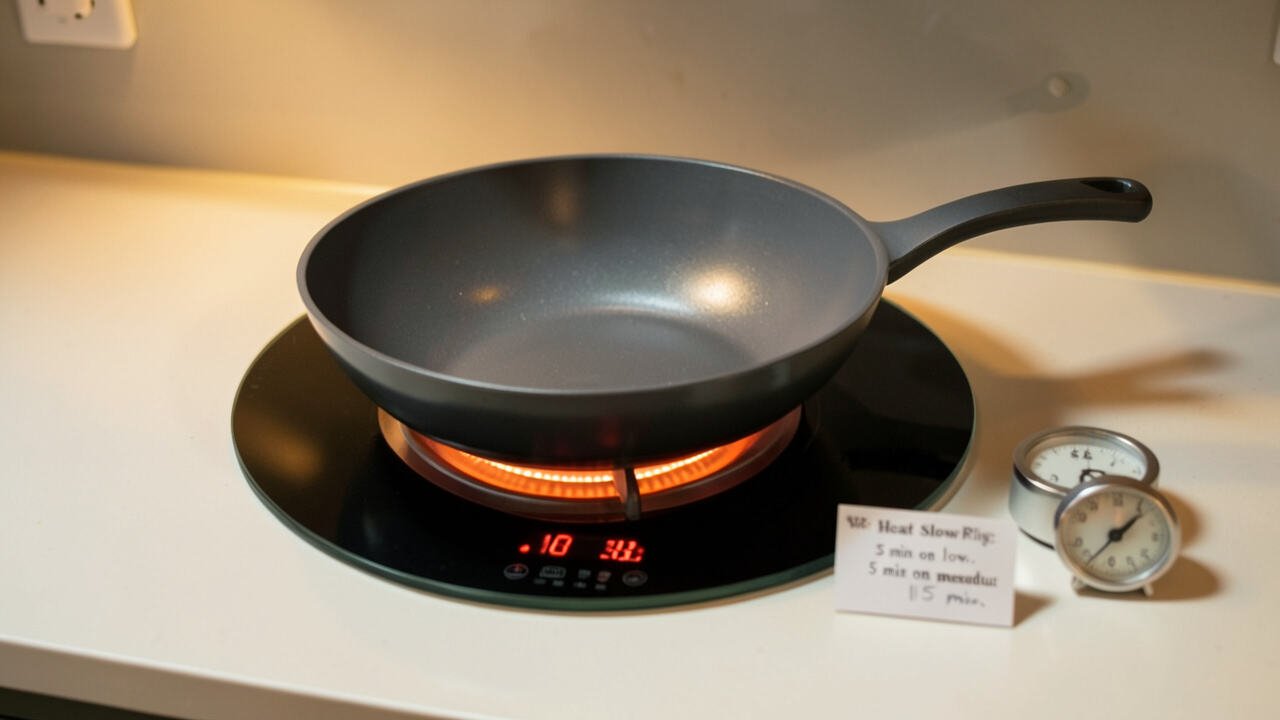
Step 4: Preheat Slowly on Medium Heat
Turn the burner to a medium setting (around 4 or 5 out of 10). Wait 3 to 5 minutes for the wok to heat up gradually. Rapid heating on high causes thermal shock, which can warp a carbon steel wok or crack the glass top.
Warning: Never preheat an empty wok on high heat. The American Society for Testing and Materials (ASTM) notes that glass-ceramics used in modern cooktops have a thermal expansion coefficient of nearly zero, but they are still vulnerable to point impact and rapid thermal stress. A sudden temperature spike can cause immediate and irreparable damage.
Step 5: Add Oil and Start Cooking
Once the wok is hot, add oil with a high smoke point. Swirl the oil to coat the bottom and sides. The oil acts as a heat transfer buffer between the wok and the glass. Maintain the burner at medium-high, not high, for consistent results.
Step 6: Use Liquid to Deglaze (Avoid Thermal Shock)
When adding soy sauce, wine, or broth, pour it along the sides of the wok, not directly into the bottom center. Cold liquid hitting a hot metal spot creates steam that can buckle the wok bottom. Always lift the wok off the glass when adding large amounts of liquid.
Step 7: Lift, Don’t Slide, the Wok
When you need to toss ingredients or flip food, lift the wok completely off the glass surface. Sliding or dragging the wok across the glass grinds in microscopic debris and creates long scratches. These scratches can eventually become cracks from repeated heating cycles.
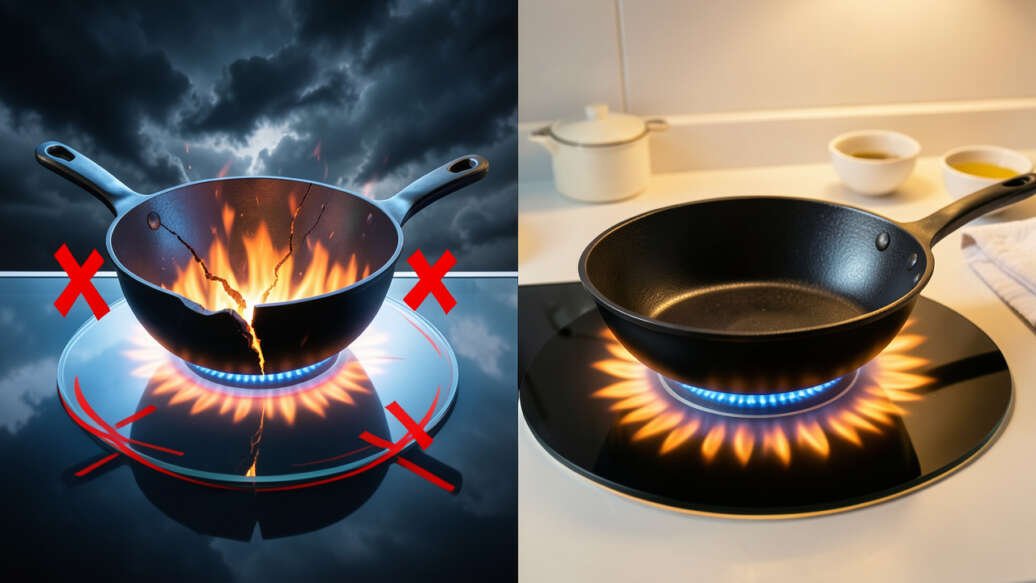
Common Myths vs Facts About Woks and Glass Hobs
There is a lot of bad advice online about using woks on electric stoves. Let’s clear up the most common misconceptions.
- Myth: You need a special wok ring to use a round-bottom wok.
Fact: Wok rings trap heat under the wok and reflect it back onto the glass surface. This concentrated heat can crack the cooktop. According to GE Appliances, using a wok ring on a glass hob may void your warranty. Always use a flat-bottom wok instead. - Myth: You must cook on the highest heat setting to get wok hei.
Fact: Electric hobs can get hotter than gas flames in some cases. Cooking on high heat without proper preheating burns the oil and warps the metal. Medium-high heat combined with a well-seasoned carbon steel wok delivers excellent results without damage. - Myth: A cast iron wok is too heavy and will break the glass.
Fact: Glass hobs are designed to hold heavy cookware like Dutch ovens. A cast iron wok won’t crack the glass from weight alone. The real risk is dropping it onto the glass or dragging it across the surface. Lift carefully, and cast iron is safe to use.
What to Expect: Timeline and Costs
Switching from a gas stove to an electric hob for wok cooking involves a slight learning curve. Here is a breakdown of what you can expect in terms of time and money. Understanding energy transfer efficiency helps you choose cookware that heats faster and more evenly.
| Item | Estimated Cost | Time Involved | Notes |
|---|---|---|---|
| Flat-Bottom Carbon Steel Wok | $30 – $60 | 1 day (seasoning) | Seasoning is required before first use. |
| Glass Cooktop Cleaner Kit | $10 – $20 | 2 minutes per use | Use after every cooking session. |
| High Smoke Point Oil | $8 – $15 | Ongoing | Avocado, peanut, or grapeseed oil. |
| Preheat Time Adjustment | Free | 3-5 extra minutes | Adds time compared to gas cooking. |
Important: Research from Whirlpool Corporation shows that using the wrong cookware reduces energy transfer efficiency by up to 30%. A flat-bottom wok that fully contacts the burner element will heat faster and cook more evenly than a warped or round wok.
Pro Tips for Getting That Wok Hei Flavor
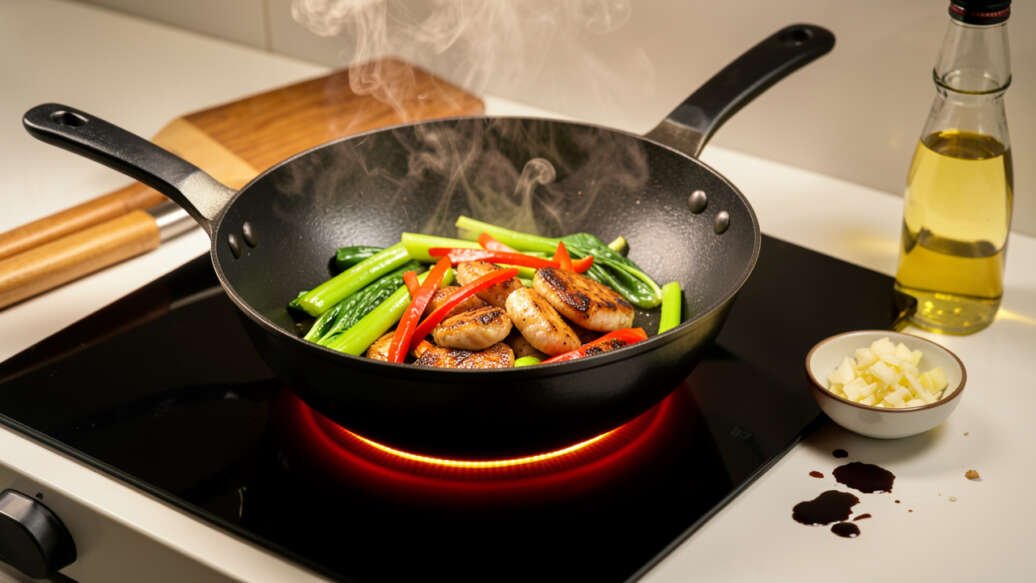
Wok hei is the smoky, charred flavor you get from restaurant stir-fries. You can achieve a similar effect on a glass hob if you adjust your technique. Here are the most effective methods. To get the best results, it is important to season your wok correctly before the first use.
- Season your wok correctly. A proper patina layer protects the metal and acts as a non-stick surface. It also prevents rust. Season your wok at least 2-3 times before the first big cook.
- Use a metal spatula. A metal wok spatula helps scrape fond (browned bits) from the bottom, mixing it into the food. Plastic or wood spatulas are too soft to do this effectively on a well-seasoned wok.
- Cook in small batches. Overloading the wok lowers the temperature of the metal. The food steams instead of searing. Cook meat in batches of 6-8 ounces for the best browning.
- Keep ingredients dry. Wet ingredients cool the wok instantly and create steam. Pat your meat and vegetables dry with a towel before adding them to the hot oil.
- Lift the wok to add liquids. When deglazing, lift the wok off the glass surface before pouring in the liquid. This prevents thermal shock and protects the cooktop.
Frequently Asked Questions
Can I use a round-bottom wok on a glass top stove?
No, you should not use a round-bottom wok on a glass-top electric hob. The instability causes the wok to rock, which can crack the glass. If you use a wok ring, it traps heat and can damage the cooktop. A flat-bottom wok is the only safe choice.
Will a wok scratch my glass cooktop?
A wok can scratch a glass cooktop if you drag it across the surface or if debris is trapped under it. Always lift the wok to move it. According to Cerama Bryte cleaner manufacturers, cleaning the glass before each use prevents micro-scratches from grit.
What is the best wok for a glass top stove?
Carbon steel is the best material for a glass top stove. It is lightweight, heats up fast, and has a smooth flat bottom that won’t scratch the glass. A 14-inch flat-bottom carbon steel wok from brands like Craft Wok or Joyce Chen is a great choice.
Do I need a special wok ring for an electric hob?
No. Wok rings are designed for gas stoves to stabilize round woks. On an electric hob, a wok ring creates a gap that reduces heat transfer and can cause the glass to overheat. Use a flat-bottom wok without any ring.
How do I clean the glass after using a wok?
Allow the glass hob to cool completely. Spray a ceramic cooktop cleaner onto the surface. Wipe with a non-abrasive cloth or a razor blade scraper held at a 45-degree angle to remove burnt oil. Finish with a dry microfiber cloth for a streak-free shine.
Final Thoughts
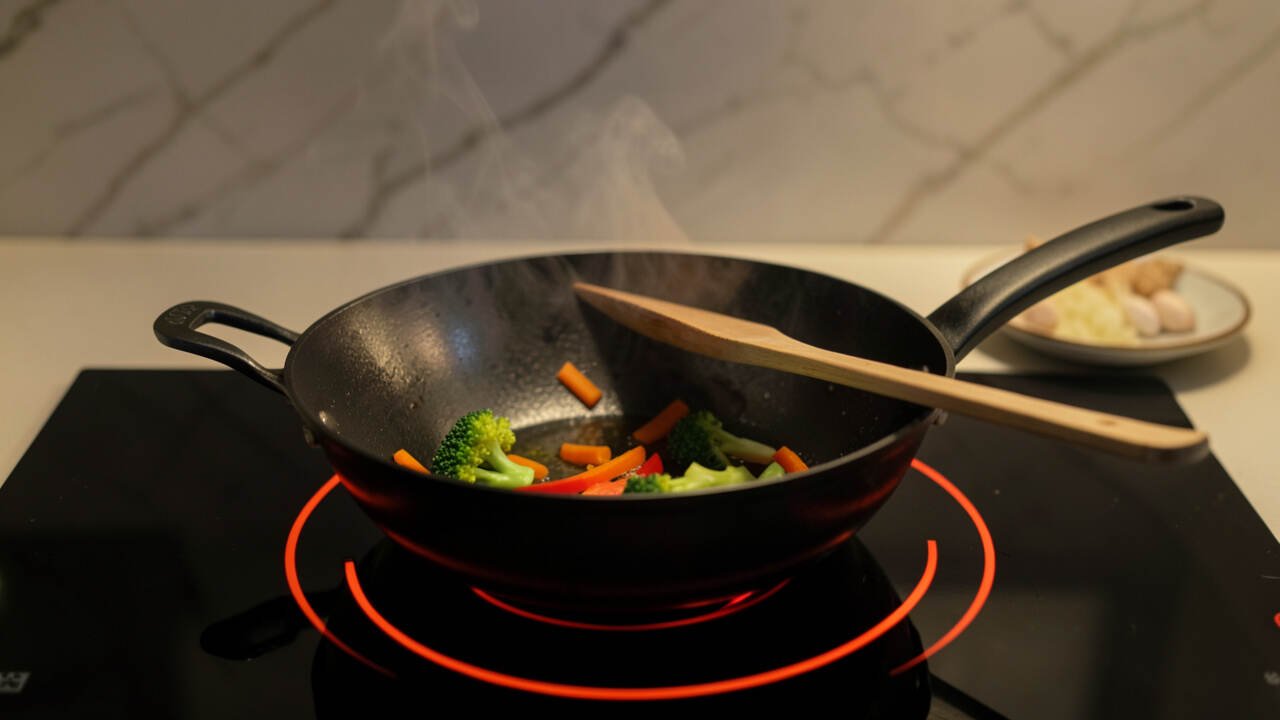
A glass-top electric hob does not mean you have to give up stir-fry. A flat-bottom carbon steel wok, gentle heating habits, and careful lifting will keep both your wok and cooktop in top shape. Master these techniques to cook delicious meals without costly damage. The key is patience and preparation. Lifting the wok before adding liquids prevents thermal shock that could crack the glass top.

Leave a Reply