
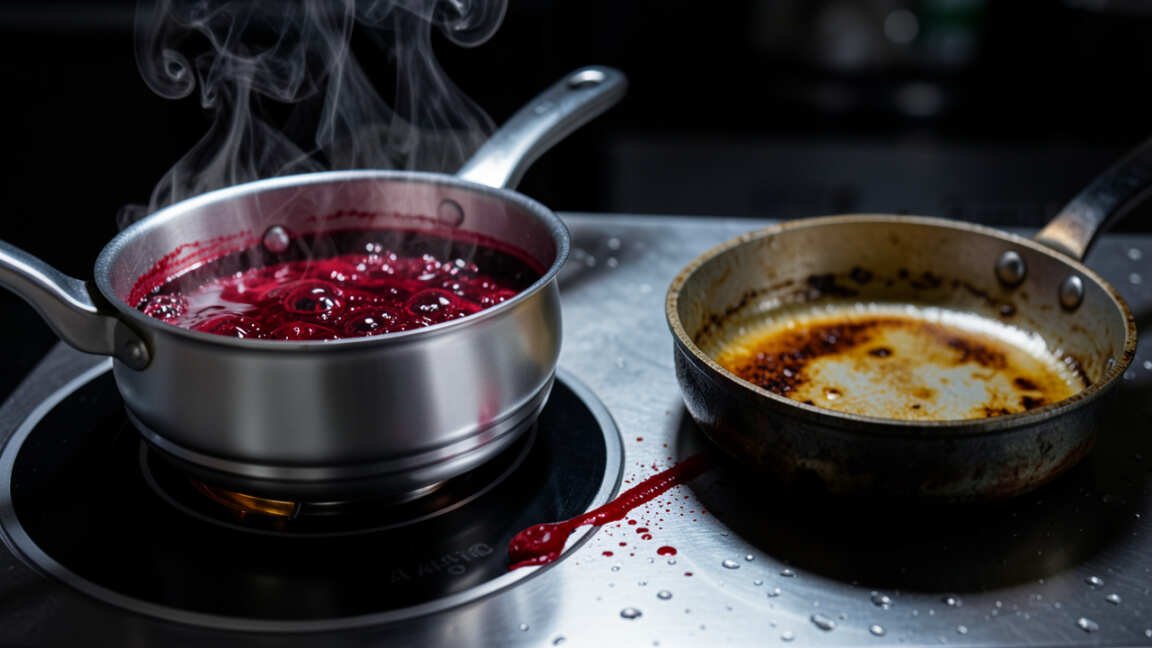
Clad-bottom saucepans outperform disk-bottom designs for quick reduction because their fully bonded construction distributes heat evenly across the base and sides, preventing the hot spots that scorch sauces. This uniform heat transfer allows for rapid, controlled evaporation without burning, while disk-bottom pans concentrate heat in the center, leading to uneven reduction. The aluminum core in quality clad pans is up to ten times more conductive than stainless steel alone, providing instant temperature response and faster reduction results.
A slow, uneven simmer ruins a reduction and wastes your time. This article explains why the construction of your saucepan makes or breaks the process for fast, consistent results.
Simply put, Why Clad-Bottom Saucepans Beat Disk-Bottom for Quick Reduce comes down to thermal physics. Fully clad pans distribute heat evenly across the base and sides, enabling rapid, uniform evaporation. Disk-bottom pans concentrate heat in the center, creating hot spots that scorch sauces before the liquid reduces evenly.
Key Takeaways: Clad vs Disk for Reduction
- Clad-bottom saucepans provide full-surface heat distribution, which prevents scorching during rapid reduction.
- Disk-bottom saucepans concentrate heat in the center, creating a “hot spot” that can burn sauces before the rest of the liquid reduces.
- Fully clad pans respond to temperature changes instantly, giving you precise control over the simmer rate.
- The aluminum core in quality clad pans is up to 10 times more conductive than stainless steel alone, speeding up the reduction process significantly.
- Investing in a clad saucepan means less stirring and monitoring, making your time in the kitchen more efficient.
What Is a Clad-Bottom Saucepan?
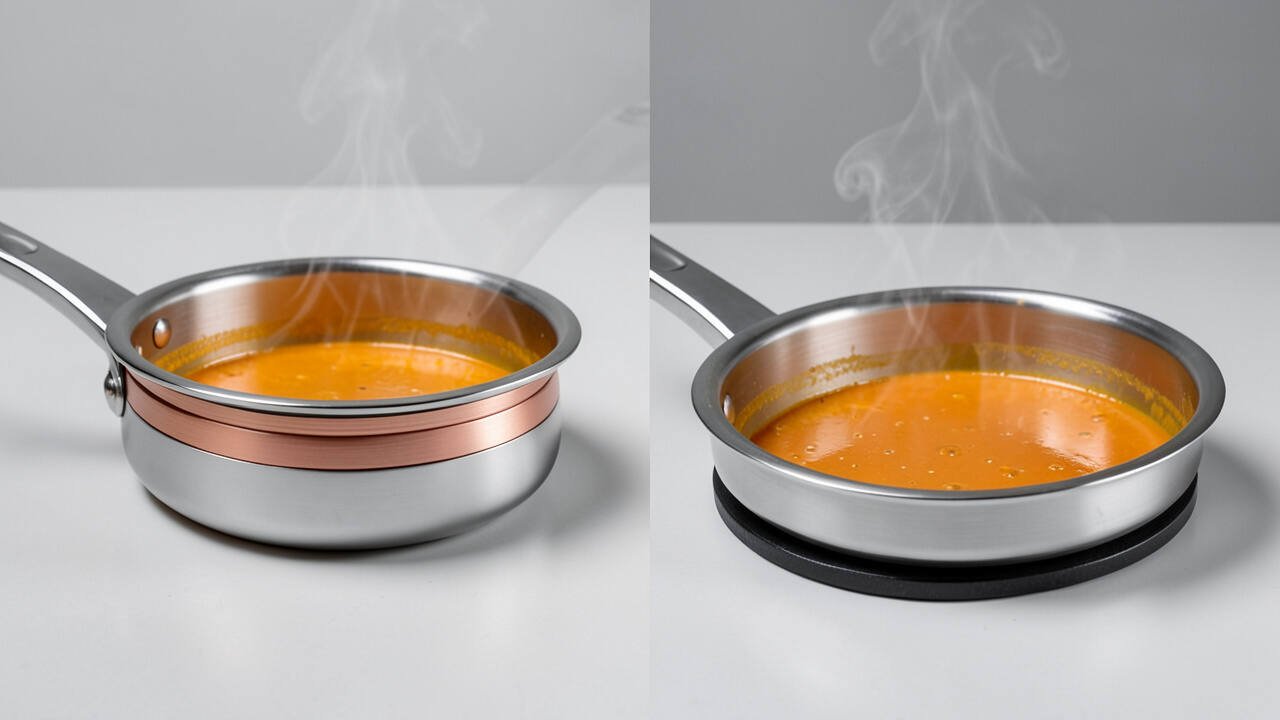
A clad-bottom saucepan is made from multiple layers of metal bonded under high heat and pressure. This process, often called roll bonding, creates a single sheet of material. The most common configuration for premium brands like All-Clad is a magnetic stainless steel exterior with a thick aluminum core.
This construction covers the entire pan, including the sides. This means the sidewalls conduct heat almost as well as the base. For a task like quick reducing, this vertical heat transfer is a major advantage. It allows the liquid to evaporate from the entire surface area, not just the bottom.
Important: The term “clad” refers to the full wrap of layers. If you look at the rim of a true clad pan, you will see the distinct layers of metal (usually two layers of stainless steel surrounding a core of aluminum or copper).
How Does a Disk-Bottom Saucepan Compare?
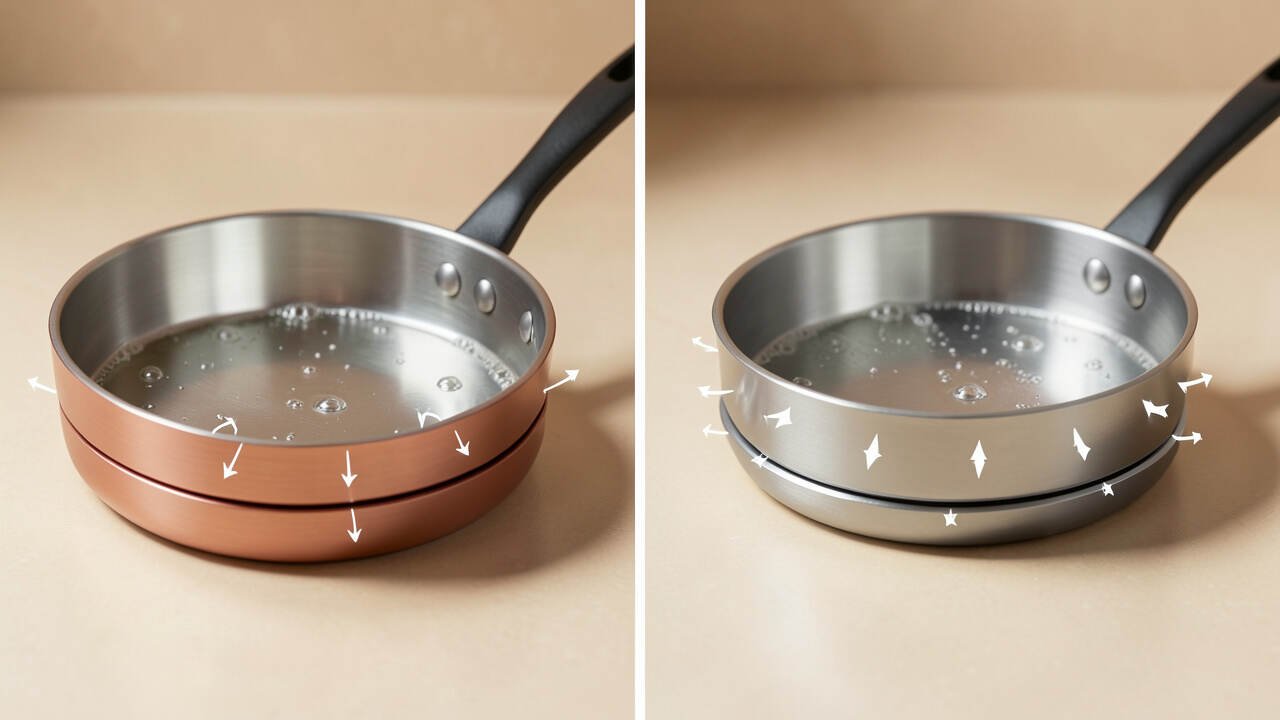
A disk-bottom saucepan is typically a stainless steel pot with an aluminum or copper disc attached to the outside of the base. This design is common in mid-range cookware sets. The goal of the disk is to add heat capacity and conductivity to the base of the pan.
However, the heat transfer stops at the base. The stainless steel sides conduct heat very poorly. During a quick reduce, only the bottom of the liquid pool is actively heating. This creates a temperature gradient in the liquid, which slows down the overall evaporation rate.
Warning: Disk-bottom pans often develop a convex warp over time. This happens because the aluminum disk expands at a different rate than the stainless steel sides. A warped pan spins on the cooktop and creates even more severe hot spots.
The Science of Heat Transfer in Saucepans
The core reason for Why Clad-Bottom Saucepans Beat Disk-Bottom for Quick Reduce lies in thermal conductivity. Aluminum has a thermal conductivity of roughly 205 W/mK. Stainless steel is around 16 W/mK. A disk bottom blocks this conductive path at the sidewalls.
According to America’s Test Kitchen, clad pans heat up roughly 30% faster than disk-bottom pans of the same overall weight. This speed is critical for quick reducing. A fast evaporate means you concentrate flavors without over-extracting bitter compounds.
Here is a direct comparison of the two constructions:
| Feature | Clad-Bottom (Fully Clad) | Disk-Bottom |
|---|---|---|
| Heat Distribution | Even across entire pan (base + sides) | Concentrated only on the base |
| Evaporation Speed | Fast (uses full surface area) | Moderate (center craters) |
| Temperature Control | High (responsive core) | Low (lags significantly) |
| Risk of Scorching | Low (even heat, no hot spots) | High (hot ring in center) |
| Weight Balance | Balanced (light sides) | Top Heavy (heavy base) |
Common Myths About Saucepan Construction
Myth 1: A heavy disk is the same as clad.
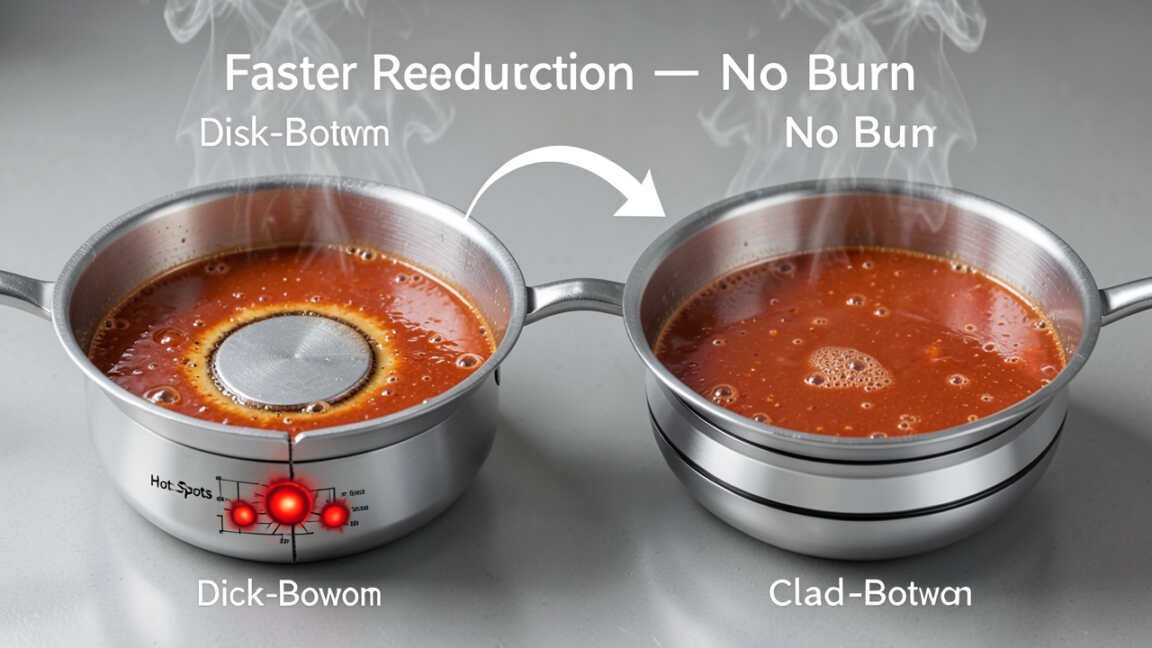
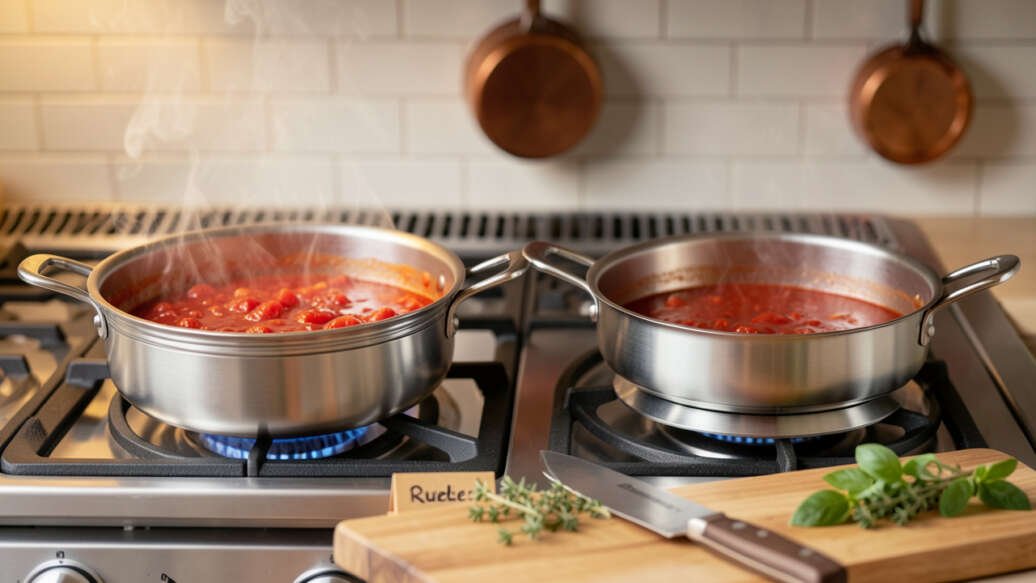
Many home cooks believe a thick disk bottom offers the same performance as a fully clad pan. This is not true. The disk adds thermal mass, but it does not help the sides conduct heat. The liquid above the disk remains cooler, which actually slows down the reduction process. Only the center of the liquid range boils aggressively.
Myth 2: Clad pans are too fragile for daily use.
Fully clad pans are highly durable. The bonded single piece of metal resists warping very well. Disk bottoms, especially on induction cooktops, are more likely to develop a convex base over time. This happens because the stainless steel and the aluminum disk expand at different rates, causing physical stress on the weld.
Myth 3: You need a thick disk to avoid hot spots.
A thick disk does absorb heat, but it releases it in a concentrated circle. Clad construction spreads the heat evenly across the entire cooking surface. According to Serious Eats, clad pans eliminate hot spots entirely, while disk bottoms always have a measurable temperature difference between the center and the edge.
How to Choose the Right Saucepan for Quick Reducing
Choosing the right pan is simple once you know what to look for. First, check the rim. If you see layers of metal (like a sandwich), it is fully clad. If the rim is a single smooth piece of stainless steel, it is a disk bottom.
Here are the key features to evaluate when buying a clad saucepan:
- Layer Count: Tri-ply (three layers) is the standard. Five-ply adds more stability but is heavier. For reducing, tri-ply offers the best balance of speed and weight.
- Core Material: Aluminum is the best all-around core. Copper is more conductive (400 W/mK) but expensive and reactive. Avoid pans with a pure stainless steel core for reducing tasks.
- Rim Design: Look for a rolled or sealed rim. This prevents the layers from separating and makes cleaning easier. Some budget clad pans have sharp rims that can dent.
- Handle Construction: A solid stainless steel handle with a comfortable grip is best. It should be riveted, not welded. Avoid handles that conduct too much heat to the touch.
- Induction Compatibility: If you have an induction cooktop, fully clad is mandatory. Disk bottoms on induction stoves are highly prone to warping and uneven heating due to the rapid magnetic cycling.
Tip: For the best results, buy a saucepan that is wide and short rather than tall and narrow. A wider surface area increases the evaporation rate. A 3-quart wide saucier is the perfect shape for quick reducing.
Top Brands for Clad Saucepans
Several manufacturers produce high-quality clad cookware that excels at reducing. The main difference between them is the number of layers and the price point.
| Brand | Layers | Core | Best For |
|---|---|---|---|
| All-Clad D3 | 3 | Aluminum | Professional durability |
| Demeyere Industry 5 | 5 | Aluminum | Induction cooking |
| Made In Cookware | 5 | Aluminum | Balance of price and quality |
| Cuisinart MultiClad Pro | 3 | Aluminum | Budget-friendly performance |
Step-by-Step Guide to the Perfect Quick Reduce
Using a clad saucepan changes your technique. You do not need to guard the pan as closely. Follow these steps for a perfect reduction every time.
- Choose the right pan. Select a fully clad saucier or saucepan with a wide base. A 3-quart size gives you enough surface area without spreading the liquid too thin.
- Preheat the pan dry. Heat the clad pan over medium heat for 60 seconds. The even conductivity of the clad core means the entire base heats up uniformly.
- Add your liquid. Pour in your stock, wine, or sauce. In a clad pan, you will hear an even sizzle across the entire bottom, not just a focused hiss in the center.
- Crank the heat. Set the burner to high. The wide, even heat distribution of the clad pan allows you to use high heat without burning the sides.
- Watch for the shimmer. The entire surface of the liquid should shimmer and bubble evenly. If you see intense bubbling only in the center, the pan is not distributing heat properly.
- Swirl occasionally. A quick swirl every 30 seconds keeps the liquid moving. In a disk-bottom pan, you would need to whisk constantly to avoid scorching.
- Monitor the volume. A reduction of 50% should take about 5-8 minutes in a quality clad pan. In a disk-bottom pan, the same reduction can take 12-15 minutes and requires constant attention.
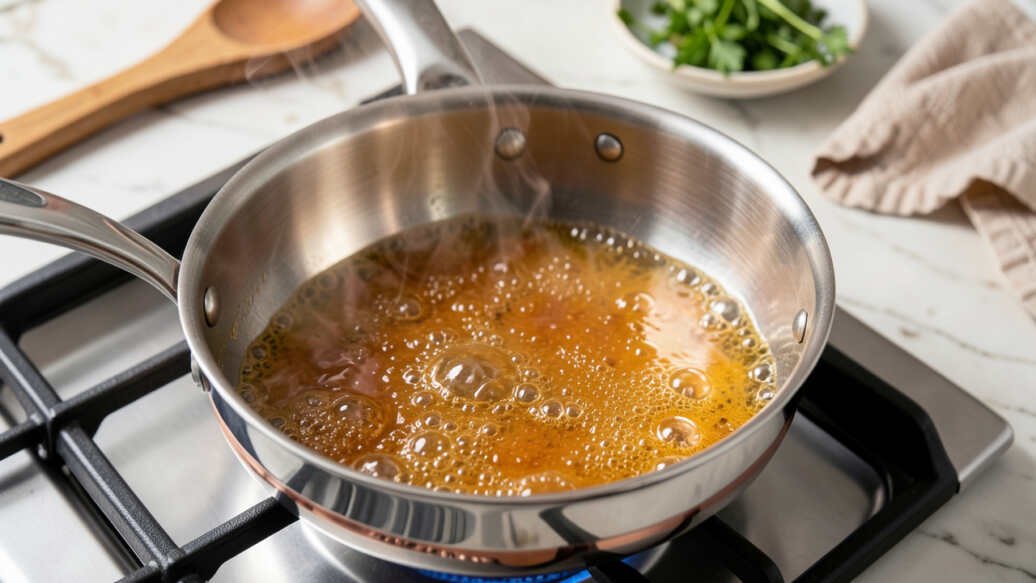
Tip: For a balsamic reduction, use a wide clad saucier. The even heat allows the sugar to caramelize uniformly without burning. You will get a glossy, syrupy result in half the time it takes in a disk-bottom pan.
Cost-Benefit Analysis: Clad vs Disk
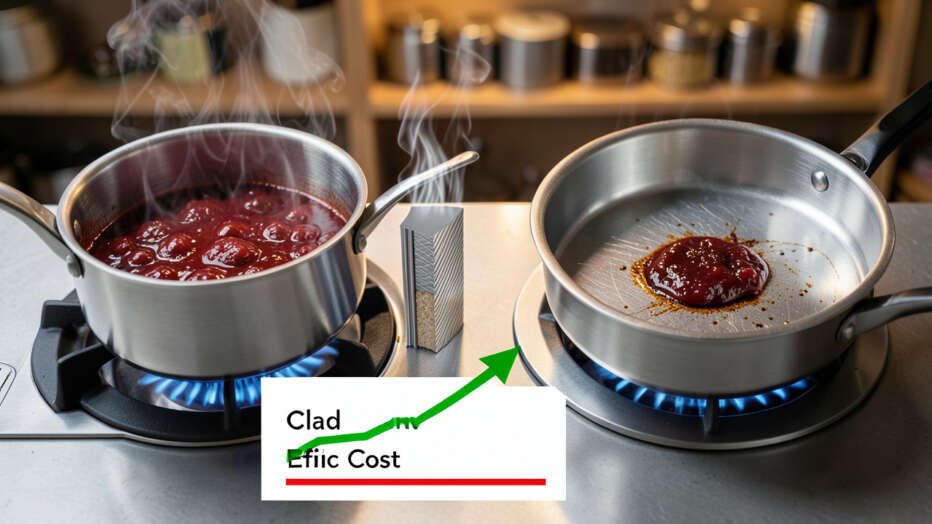
The upfront cost of a fully clad saucepan is higher. However, the performance benefit for tasks like reducing is dramatic. A disk-bottom pan might cost $30-$50. A quality clad pan from Cuisinart or All-Clad costs $80-$150. The key advantage of clad cookware is even heat distribution across the entire surface.
Consider the time you save. According to ChefSteps, a chef spends about 15% of their active cooking time reducing sauces. If you reduce a sauce three times a week, a clad pan saves you roughly 20-30 minutes per week compared to a disk bottom. Over a year, that is over 20 hours of reclaimed time. Clad pans lower your energy consumption per cooking session, as confirmed by energy efficiency research.
Here is a breakdown of the long-term value:
- Durability: Clad pans last 20+ years. Disk bottoms often warp within 5 years. The replacement cost negates the initial savings.
- Energy Efficiency: Clad pans heat up faster and hold temperature better. This lowers your energy consumption per cooking session.
- Food Quality: Even reduction means better texture and flavor concentration. You will waste fewer ingredients from scorched batches.
- Versatility: A clad saucier works perfectly for risotto, curries, and custards. A disk bottom is only passable for simple stock heating.
Pro Tips for Maintaining Your Clad Saucepan
Clad pans require a little care to keep them performing at their best. Follow these tips to maintain the even heating properties of your investment.
- Avoid high heat on empty pans. While clad pans are durable, extreme heat can cause discoloration or slight warping. Always preheat with a little oil or liquid.
- Use the right utensils. Stainless steel clad pans are scratch-resistant, but metal utensils can leave marks. Use silicone or wood utensils to keep the surface smooth for even heat transfer.
- Clean burnt food immediately. If you scorch a sauce, fill the pan with water and a splash of vinegar. Boil it for 5 minutes. The stuck food will release without scrubbing the clad surface.
- Avoid dishwasher detergents. Harsh dishwasher detergents can pit the stainless steel surface over time. Hand washing with warm soapy water keeps the thermal properties of the clad core intact.
- Store with protection. Stacking pans can scratch the interior. Place a paper towel or pan protector between stacked clad pans to preserve the smooth cooking surface.
Important: Never use oven cleaner on a clad pan. The chemicals can attack the bonding agent between the layers. Stick to gentle cleaners like Bar Keepers Friend for polishing the exterior.
Frequently Asked Questions
How do I know if my pan is clad or disk bottom?
Look at the rim of the pan. If you see a distinct seam or different layers of metal (like a sandwich), it is fully clad. If the rim is a single continuous sheet of stainless steel with no visible layers, it is a disk bottom.
Is clad worth the extra money for home cooks?
Yes, especially if you make sauces or reductions regularly. The speed and control of a clad pan justify the cost. For occasional use, a disk bottom might suffice, but the frustration of scorching often makes the upgrade worth it.
Can I use a disk bottom for reducing stocks?
You can use a disk bottom for stocks, but you must stir much more frequently. The hot spot in the center can cause the proteins and solids in the stock to burn and stick. A clad pan reduces this risk significantly.
Why does my disk bottom pan burn tomato sauce?
The high sugar and acid content in tomato sauce sinks to the bottom. In a disk bottom pan, this sits directly on the concentrated hot spot. It quickly caramelizes and burns before the rest of the liquid reaches an even temperature. Clad pans spread this heat out, preventing the burn.
What size clad saucepan is best for quick reducing?
A 3-quart saucepan with a wide base (often called a saucier) is the best shape for quick reducing. The wide diameter increases the surface area for evaporation. The gently sloping sides make it easy to whisk and swirl the liquid.
Final Thoughts
Clad-bottom saucepans win for quick reducing because they distribute heat evenly across the entire cooking surface. This eliminates hot spots and speeds up evaporation significantly. If you value consistent results and faster cooking times, a fully clad pan is the only logical choice for your kitchen.

Leave a Reply