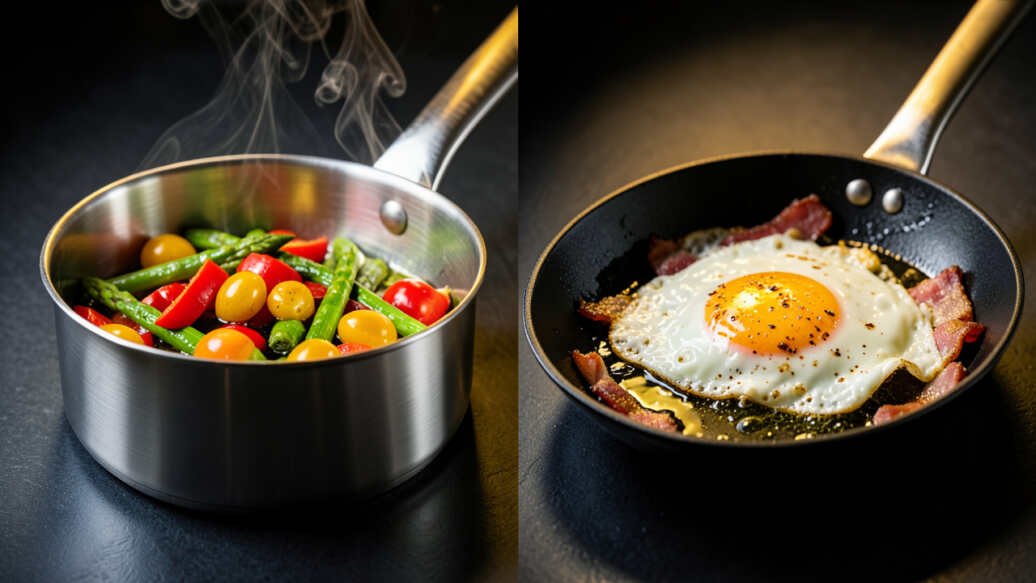
A sauté pan’s high, straight sides hold liquid and reduce splatter, making it the superior choice for braising, searing, and one-pan meals, while a frying pan’s sloped sides favor quick tossing and delicate foods like eggs and pancakes. The sauté pan typically offers one to two quarts more capacity than a same-diameter frying pan, giving it greater versatility for everyday cooking with sauces or larger portions. For most daily tasks, the sauté pan outperforms the frying pan, though owning both provides the greatest flexibility for specialized techniques.
Choosing between a saute pan and a frying pan often comes down to how you cook daily.
This guide compares their designs to help you pick the right tool for your kitchen.
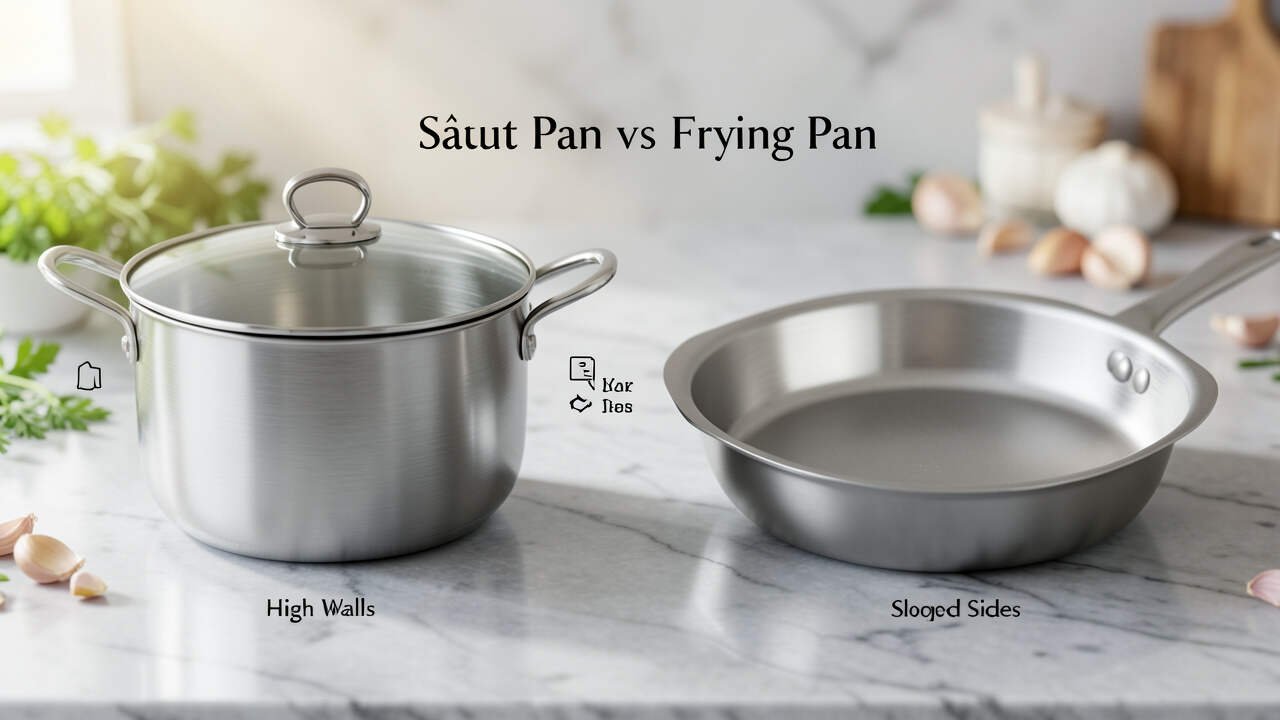
Quick Verdict: A saute pan has high, straight sides that hold liquid and prevent splatter. A frying pan has sloped sides for easy flipping and tossing. For versatility across braising, searing, and one-pan meals, the saute pan wins daily. Choose a frying pan for delicate eggs and pancakes.
Understanding the saute pan vs frying pan difference starts with their walls.
Key Takeaways
- A saute pan’s high walls make it ideal for cooking with liquids, sauces, and braising meats.
- A frying pan’s sloped edges allow for quick tossing and easy access with spatulas for delicate foods.
- Saute pans typically have a larger cooking surface and capacity than frying pans of the same diameter.
- The type of cooktop you use can determine which pan performs best due to weight and material differences.
- Owning both pans gives you the most flexibility, but a saute pan works well as a primary everyday tool.
Quick Comparison Table
| Feature | Saute Pan | Frying Pan |
|---|---|---|
| Wall Design | High, straight sides (2.5 – 3 inches) | Low, sloped sides (1 – 1.5 inches) |
| Volume | Higher capacity, holds 1-2 quarts more | Lower capacity, spills easily |
| Best Techniques | Braising, steaming, sauteing with liquid | Frying, searing, flipping, deglazing |
| Ease of Tossing | Difficult due to straight walls | Easy, natural for wrist flicks |
| Weight | Heavier, holds more food | Lighter, easy to manipulate |
Important: The type of material matters. Stainless steel, cast iron, and non-stick coatings behave differently in each pan design. Check your cooktop requirements before buying.
What Is a Saute Pan?
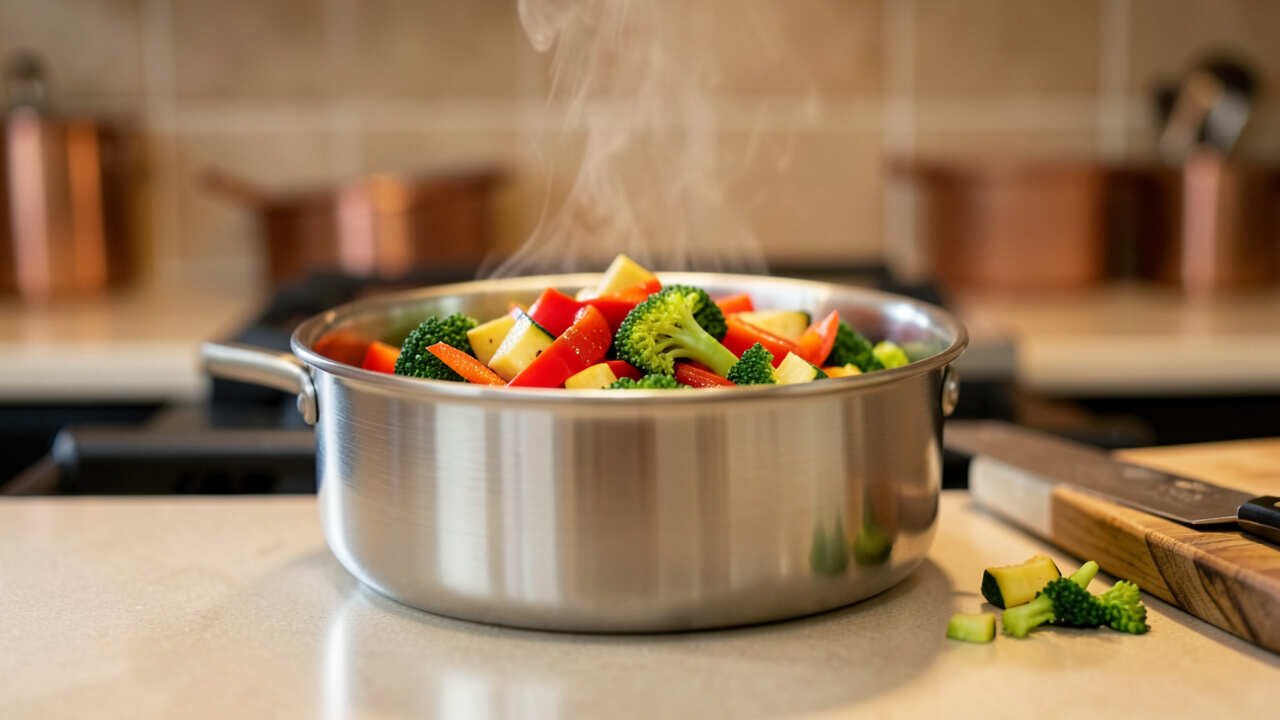
A saute pan has a wide base and tall, straight sides. This design lets you sear meat and then add liquids without worry. The surface area on the bottom matches the surface area across the top. This gives you even heat for browning.
According to Serious Eats, the straight walls of a saute pan are built for volume. You can cook large batches of onions or braise a whole chicken. The high sides reduce splatter on your stovetop.
Saute Pan Best For
- One-pan meals like chicken thighs with rice or pasta dishes.
- Braising and stewing meats in broth or wine.
- Cooking for a family or meal prepping large portions.
- Recipes that need a lid, as saute pans come with tight covers.
What Is a Frying Pan?
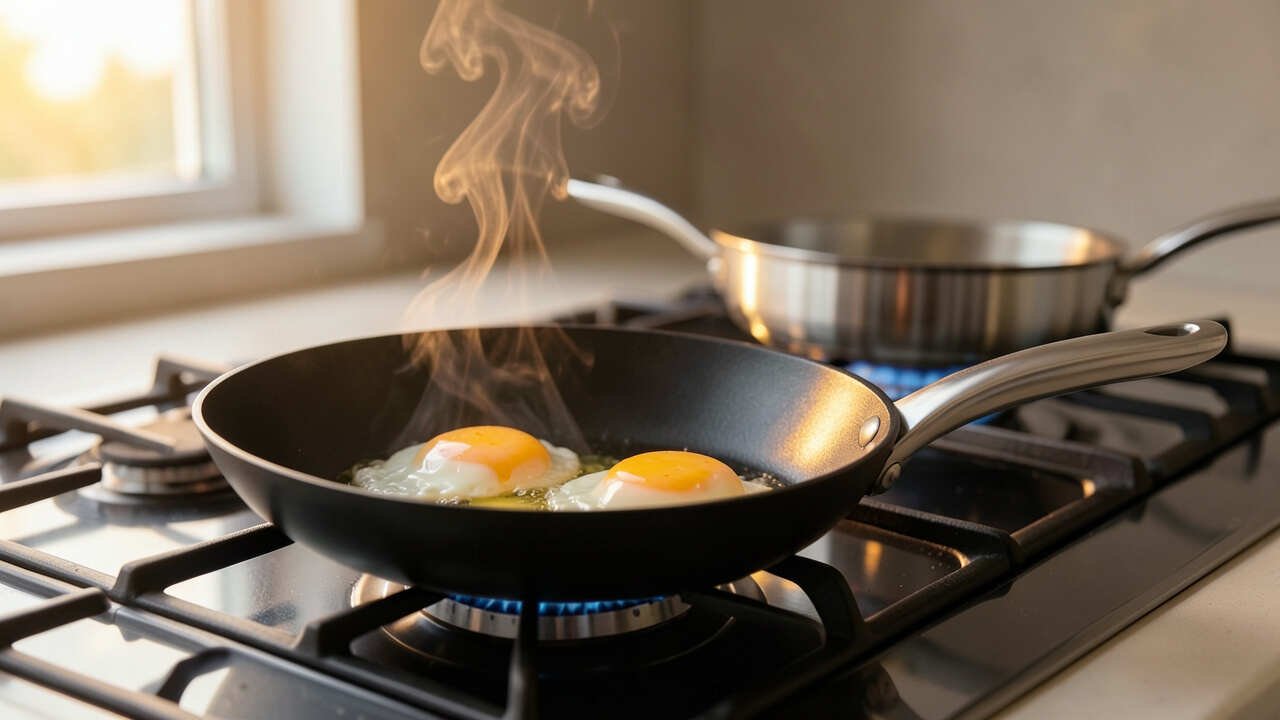
A frying pan, also called a skillet, has low sloped sides that flare outward. This shape makes it easy to slide food onto a plate. The sloped sides let you flip pancakes, eggs, and sauteed veggies with a simple flick of the wrist.
America’s Test Kitchen explains that the frying pan’s open design is excellent for high-heat searing. Liquid evaporates quickly, which helps build a strong crust on steak. However, the low sides make it tricky to cook dishes with sauce.
Warning: Using a frying pan for large amounts of liquid can lead to spills and burns. The sloped sides offer no barrier. Stick to saute pans for recipes with more than a cup of liquid.
Frying Pan Best For
- Delicate foods like fried eggs, crepes, and fish fillets.
- High-heat searing of steaks and chops with easy flipping.
- Quick sautes where you toss ingredients in the pan.
- Pancakes, grilled cheese, and other flat-surface cooking.
Head-to-Head Comparison
Design and Construction
The core difference between a saute pan and a frying pan is the wall angle. Saute pans use straight sides. This gives you more usable space. A 12-inch saute pan has a 12-inch cooking surface on the bottom. A 12-inch frying pan has a much smaller bottom surface. Most of its diameter comes from the flared rim.
Frying pans are lighter and easier to store. Saute pans are heavier and sit flush on the burner. This makes them better for even heat distribution.
Volume and Capacity
Volume is where the saute pan shines. High walls let you pile in ingredients. You can cook a whole meal in one saute pan. Frying pans force you to cook in batches. Adding too much food to a frying pan lowers its heat. You lose the sear and create steam instead.
Cooking Techniques
Different cooking methods need different pans. The Maillard reaction needs high, dry heat. A frying pan gives you this easily. But if you want to deglaze and make a pan sauce, a saute pan contains the liquid. You can simmer without losing half the sauce over the edge.
| Technique | Best Pan | Why |
|---|---|---|
| Searing steak | Frying pan | Better moisture evaporation for crust |
| Chicken marsala | Saute pan | Holds the wine and broth for sauce |
| Stir-fry veggies | Frying pan | Easy tossing and quick cooking |
| Pasta bolognese | Saute pan | Large volume for simmering sauce |
| Braised short ribs | Saute pan | Straight sides hold liquid and lid |
Cleaning and Maintenance
Saute pans are usually dishwasher safe if made from stainless steel. Frying pans with non-stick coating need hand washing. The sloped sides of a frying pan make it easier to wipe down. But the straight sides of a saute pan are simple to scrub with a brush. Both are easy to maintain if you avoid overheating.
According to Le Creuset, high-quality pans need gentle handling to prevent staining. Their saute pans require mindful cleaning to keep them looking new.
Why High Walls Beat Sloped Daily
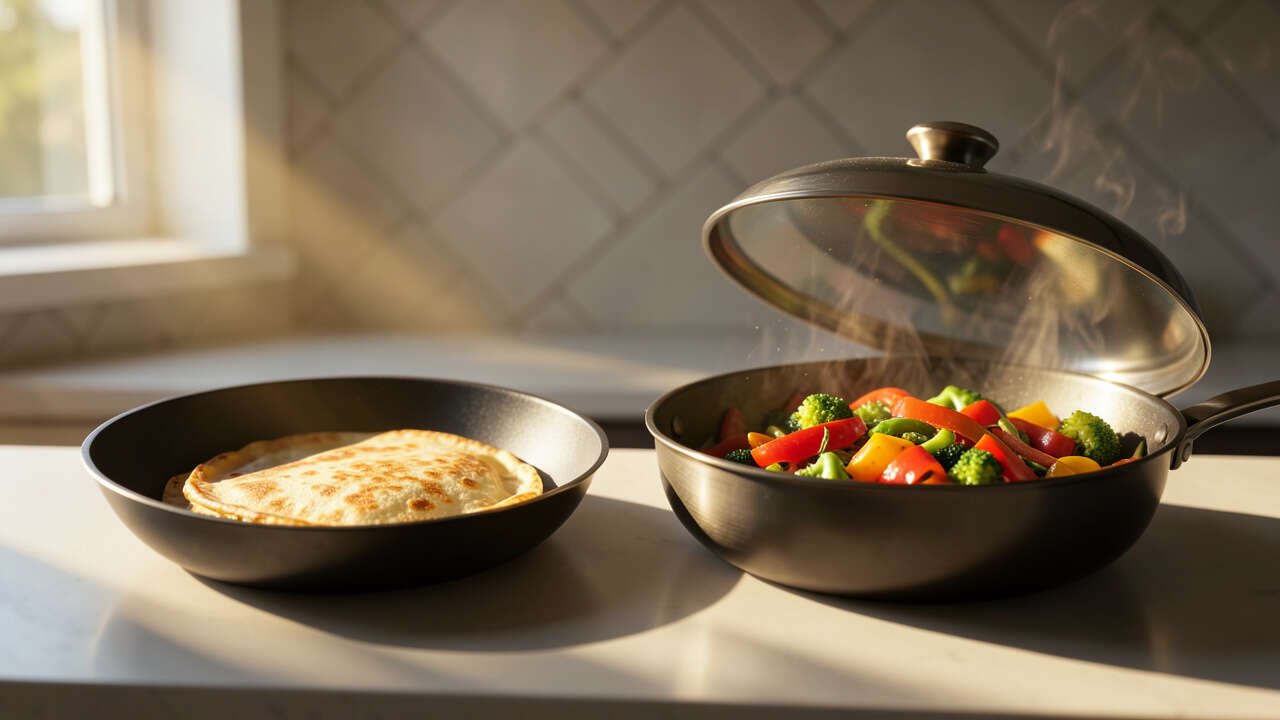
Most home cooks find the saute pan more practical for daily use. The versatility is unmatched. You can sear a chicken breast. Then you add broth and vegetables to make a complete meal. The high walls keep everything inside.
With a frying pan, you are limited to quick tasks. You cannot build a stew or braise greens easily. The sloped sides are great for diner-style flipping. But the straight walls of a saute pan support more cooking styles.
According to the International Housewares Association, home cooks value cookware that does multiple jobs. A saute pan handles the tasks of a saucepan and a frying pan in one tool.
Tip: If you had to pick one pan for a small kitchen, choose a 12-inch saute pan with a lid. It replaces a frying pan and a small dutch oven for most recipes.
How Lids Change the Game for Saute Pans
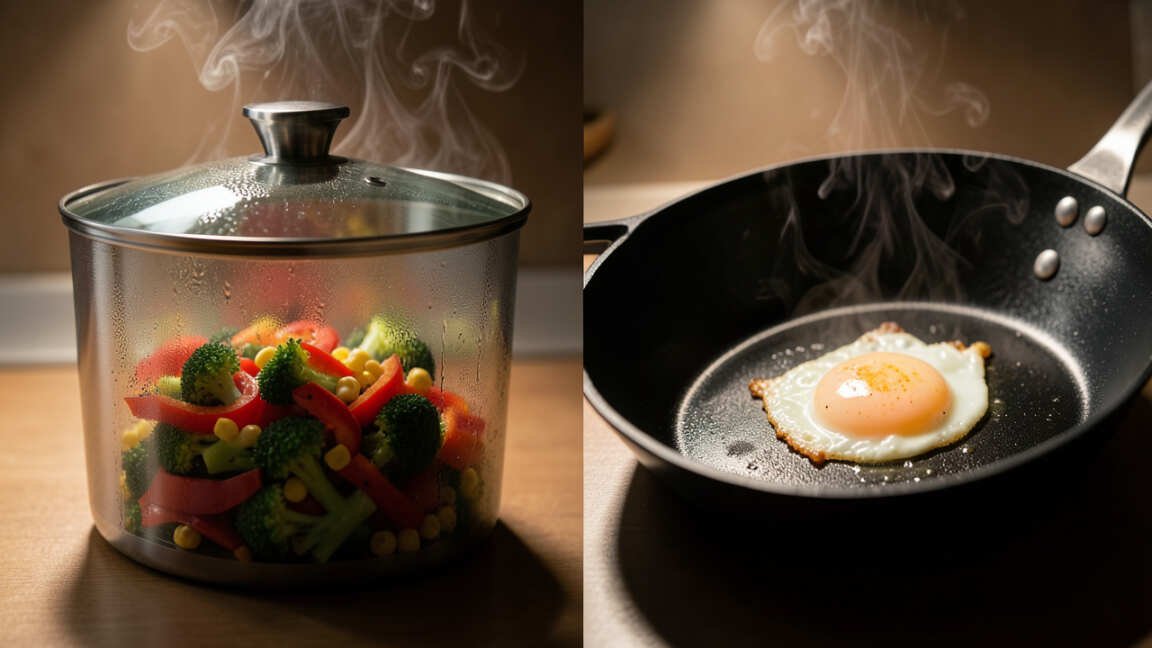
Almost every saute pan comes with a tight-fitting lid. This is not always true for a frying pan. The lid turns your saute pan into a small braiser. You can steam vegetables, finish cooking meat, and simmer sauces with confidence.
Frying pans rarely include lids. You can buy a universal lid. But it never fits as well. A tight seal keeps moisture inside. This is needed for tender meat and fluffy rice. Without a lid, a frying pan loses most of its cooking options.
Deglazing: Why High Walls Make It Easier
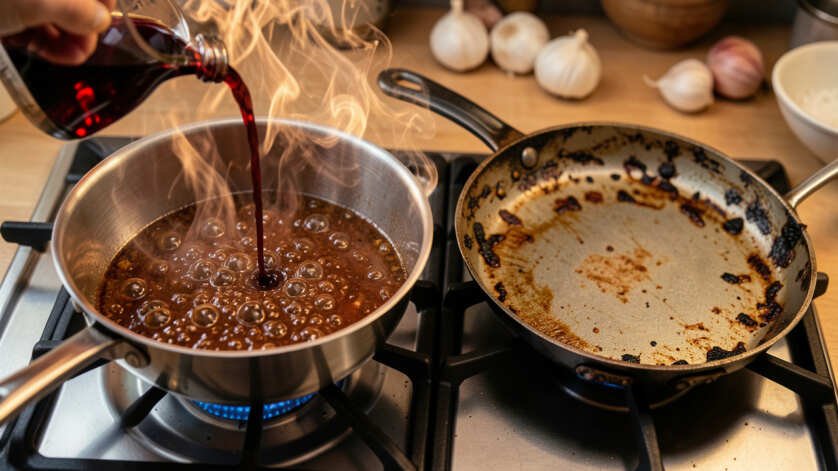
Deglazing is the process of adding liquid to a hot pan to lift up browned bits. These bits are full of flavor. With a frying pan, you must be careful. The liquid can spill over the low sides.
A saute pan gives you room to work. You add wine or broth without fear. The high sides keep the liquid in. You can reduce the sauce right in the pan. This is a key reason why chefs prefer saute pans for pan sauces.
- Cook your meat and remove it from the pan.
- Pour out excess fat, leaving browned bits on the bottom.
- Add a cup of broth or wine to the hot pan.
- Scrape the bits with a wooden spoon.
- Let the liquid simmer and reduce to a sauce.
Material Matters: Choosing Your Pan Construction
The material of your pan impacts its performance more than the shape. A saute pan made of stainless steel is different from one made of non-stick. Here is how material interacts with the saute pan vs frying pan choice.
Stainless Steel
Stainless steel is the best material for a saute pan. It handles high heat. You can use metal utensils. It is safe for the oven. The weight helps it sit flat on the burner. A stainless steel frying pan works well too. But the sloped sides do not match the durability of the steel. For high-heat cooking, a stainless steel saute pan offers excellent durability and even heating.
Non-Stick
Non-stick is best for low-heat cooking. A non-stick frying pan is great for eggs. A non-stick saute pan is less useful. You cannot get a good sear. The coating limits oven use. Stick to a non-stick frying pan for delicate foods.
Cast Iron and Carbon Steel
Cast iron is heavy and retains heat. A cast iron frying pan is a classic tool. It sears better than almost anything. A cast iron saute pan is very heavy. Carbon steel is lighter. It behaves like cast iron. Both are good for frying pans. They are less practical as saute pans due to weight.
| Material | Best Pan Type | Oven Safe To | Durability |
|---|---|---|---|
| Stainless Steel | Saute Pan (Best) | 500F or higher | Very High |
| Non-Stick | Frying Pan (Best) | 350F – 400F |

Leave a Reply