
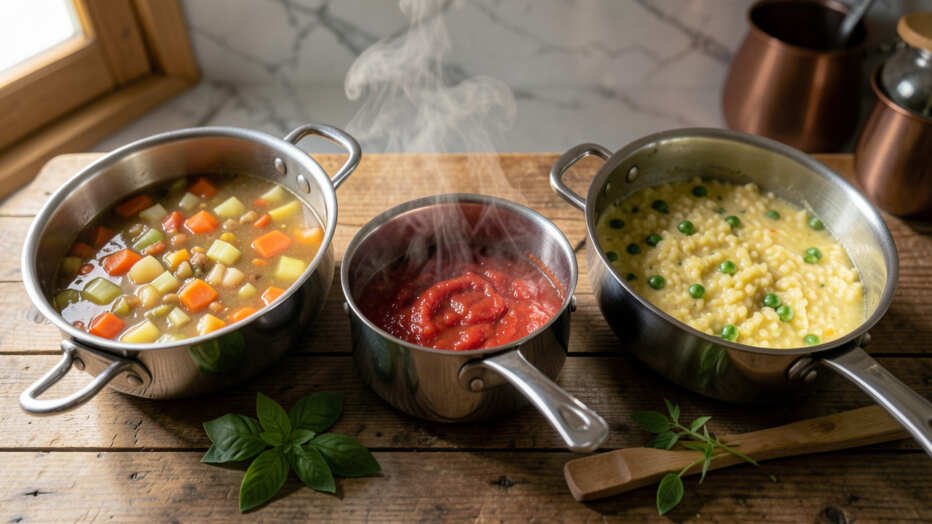
The 2-quart saucepan is the most practical size for everyday cooking, handling roughly 85% of common tasks like reheating soup, cooking rice, and making small sauces for households of two to four people. A 1-quart saucepan works best for single servings and warming small amounts of liquid, while a 4-quart option suits large families and batch cooking that requires extra room for stirring and simmering. For most kitchens, owning a 2-quart saucepan for daily use and a 4-quart for larger jobs provides complete versatility without unnecessary extras.
Choosing the right what size saucepan do you actually need can feel confusing with three common sizes on the market. This guide compares 1qt, 2qt, and 4qt saucepans head-to-head so you can pick the perfect one for your kitchen.
Quick Verdict: Simply put, a 2qt saucepan is the best all-around choice for most home cooks. It handles everything from reheating soup to cooking rice and making small batches of sauce. The 1qt size works well for single servings and warming milk. The 4qt size suits large families and meal preppers who cook big batches.
Key Takeaways
- A 2qt saucepan is the most versatile size for households of 2-4 people and handles 85% of daily cooking tasks.
- A 1qt saucepan is ideal for single servings, heating small amounts of liquid, and making kids’ meals.
- A 4qt saucepan is best for large families, batch cooking, and recipes that need extra room for stirring and simmering.
- Most home cooks need only two saucepans: a 2qt for everyday use and a 4qt for bigger jobs.
- Material and construction matter as much as size when choosing a saucepan that cooks evenly and lasts.
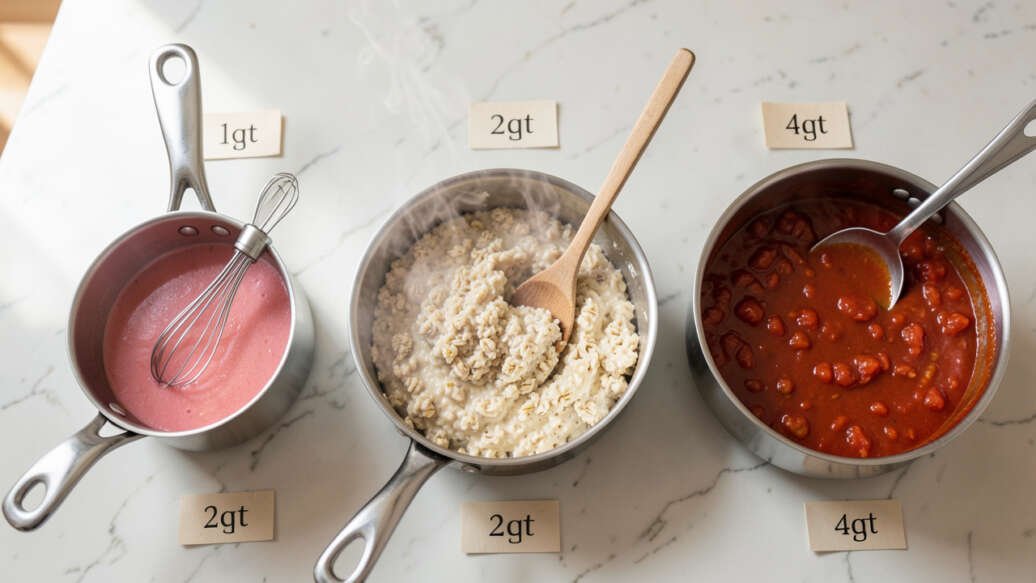
Quick Comparison: 1qt vs 2qt vs 4qt Saucepans
| Feature | 1qt Saucepan | 2qt Saucepan | 4qt Saucepan |
|---|---|---|---|
| Capacity | 4 cups (32 oz) | 8 cups (64 oz) | 16 cups (128 oz) |
| Best uses | Warming milk, melting butter, single servings | Sauces, rice, oatmeal, reheating soup | Stews, chili, stock, large batches of pasta sauce |
| Ideal household size | 1 person | 2-4 people | 4+ people |
| Diameter | 5.5 – 6 inches | 6.5 – 7 inches | 8 – 8.5 inches |
| Weight (typical) | 1.5 – 2.5 lbs | 2.5 – 3.5 lbs | 4 – 5.5 lbs |
| Average price range | $20 – $60 | $30 – $90 | $40 – $130 |
1qt Saucepan Overview: When Small Works Best
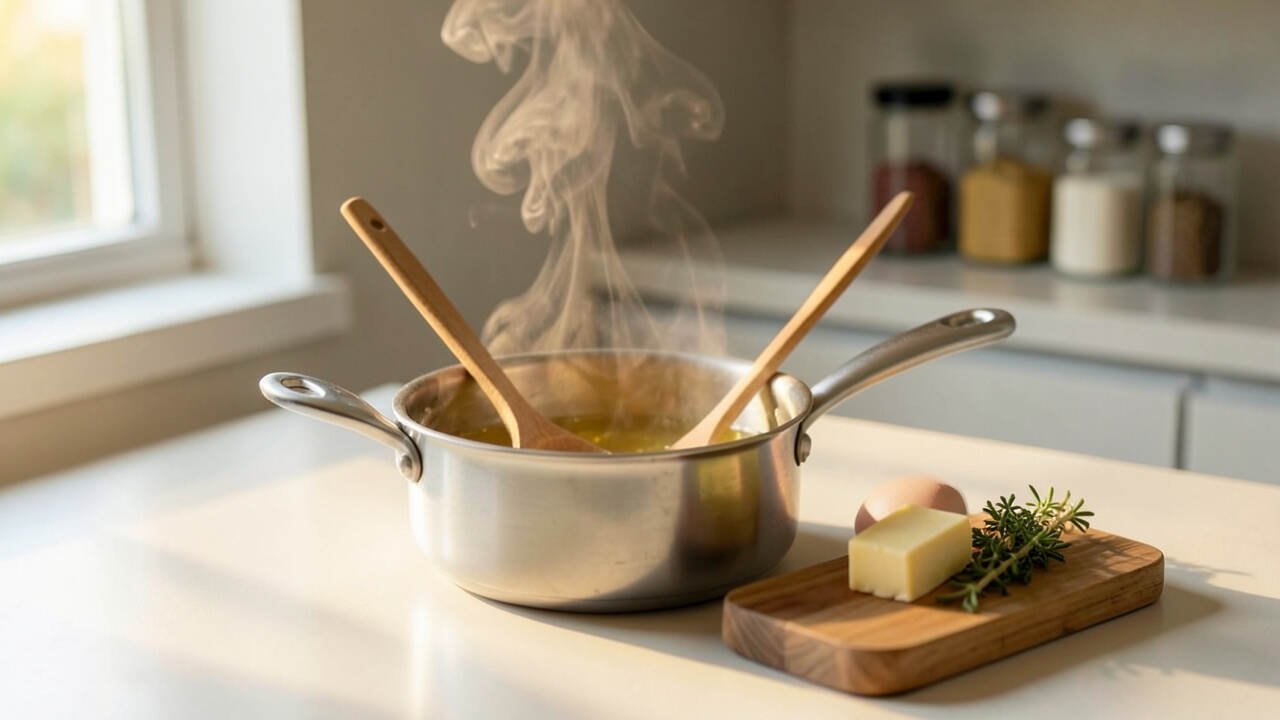
A 1qt saucepan is the smallest standard size you will find in most cookware sets. It holds 4 cups of liquid, which is enough for one generous serving of soup or a single portion of hot cereal. This size is often overlooked by home cooks, but it serves several specific purposes very well.
The 1qt saucepan shines for tasks that involve small amounts of liquid. Warming milk for coffee or tea is one of its best uses. It is also perfect for melting butter, chocolate, or cheese without burning. If you cook for yourself most of the time, this size reduces cleanup and heats up fast.
Important: A 1qt saucepan is not ideal for cooking rice or pasta. These foods need more water and room to expand. Using a pot that is too small leads to spills and uneven cooking.
Best Uses for a 1qt Saucepan
- Heating up single servings of canned soup or leftovers
- Warming milk for coffee, tea, or hot chocolate
- Melting butter, chocolate, or coconut oil for baking
- Cooking small portions of oatmeal, cream of wheat, or grits
- Making individual ramen noodles or instant meals
- Preparing baby food or small kids’ portions
- Blanching a single vegetable like asparagus or green beans
Pros and Cons of a 1qt Saucepan
Pros: The 1qt saucepan heats quickly due to its small size and light weight. It takes up very little storage space in your cabinet. It is also easy to handle with one hand when pouring liquids. Many models cost less than $40, making them a budget-friendly addition to your kitchen.
Cons: The 1qt saucepan is too small for most family-sized recipes. You cannot cook rice, pasta, or grains in it because there is not enough room for expansion. It also has a narrow bottom, which means it may not heat evenly on large burners. The small diameter makes stirring with a whisk or spatula awkward at times.
2qt Saucepan Overview: The All-Around Workhorse
What size saucepan do you actually need for daily home cooking? Most professional chefs and home cooks agree that a 2qt saucepan is the answer. According to America’s Test Kitchen, the 2-quart saucepan is the single most versatile size for home cooks. It holds 8 cups of liquid, which is enough for 2-4 servings of most recipes.
The 2qt saucepan handles a wide range of tasks without being too large or too small. You can cook rice, quinoa, and other grains in it with room to spare. It works well for making gravies, marinara sauce, and béchamel. It is also the perfect size for reheating leftover soup or chili for two people.
Best Uses for a 2qt Saucepan
- Cooking rice, quinoa, couscous, and other small grains for 2-4 servings
- Making sauces such as marinara, alfredo, gravy, and béchamel
- Reheating soup, chili, or stew for two adults
- Boiling small amounts of pasta like macaroni or small shells
- Steaming vegetables with a collapsible steamer basket
- Making oatmeal or hot cereal for a family of 3-4
- Heating canned beans or preparing boxed meal mixes
Pros and Cons of a 2qt Saucepan
Pros: The 2qt saucepan is incredibly versatile and fits most everyday cooking needs. It has a wide enough bottom for even heat distribution without wasting burner space. The 2qt size is also the most common size included in high-quality cookware sets from brands like All-Clad and Cuisinart. It stores easily and does not take up too much cabinet room.
Cons: The 2qt size is not large enough for batch cooking or feeding 5-6 people. It cannot handle large volumes of liquid for stocks or stews. If you cook for a large family, you will need to supplement it with a larger pot.
Tip: Choose a 2qt saucepan with a tight-fitting lid and a helper handle opposite the main handle. These features make pouring and lifting much easier, especially when the pot is full of hot liquid.
4qt Saucepan Overview: Big Enough for Large Batches
A 4qt saucepan holds 16 cups of liquid, which is twice the capacity of the 2qt model. This size is sometimes called a “saucepot” rather than a saucepan because of its larger volume. It is the right choice for home cooks who prepare meals for 4-6 people or who like to batch cook on weekends.
The 4qt saucepan works well for making large batches of soup, chili, or stew. It is also excellent for cooking dried beans after soaking, making stock from vegetable scraps, or preparing a full pound of pasta. The extra height and width give you room to stir without splashing.
Best Uses for a 4qt Saucepan
- Making big batches of soup, chili, or stew for 4-6 servings
- Cooking dried beans, lentils, or chickpeas after soaking
- Boiling a full pound of pasta or potatoes for mashing
- Preparing large quantities of rice for meal prep or parties
- Making homemade stock or bone broth from vegetable scraps
- Blanching vegetables for freezing or canning
- Cooking sauces that simmer for long periods without splashing
Pros and Cons of a 4qt Saucepan
Pros: The 4qt saucepan holds enough food for large families or weekly meal prep. The larger surface area allows for faster evaporation, which helps thicken sauces. It also works as a small stockpot for many tasks.
Cons: The 4qt saucepan is heavy, especially when full of liquid. It takes more time to heat up compared to smaller sizes. It also takes up more cabinet and stovetop space. If you heat a small amount of food in a large pot, you risk burning it because the food spreads thin across the bottom.
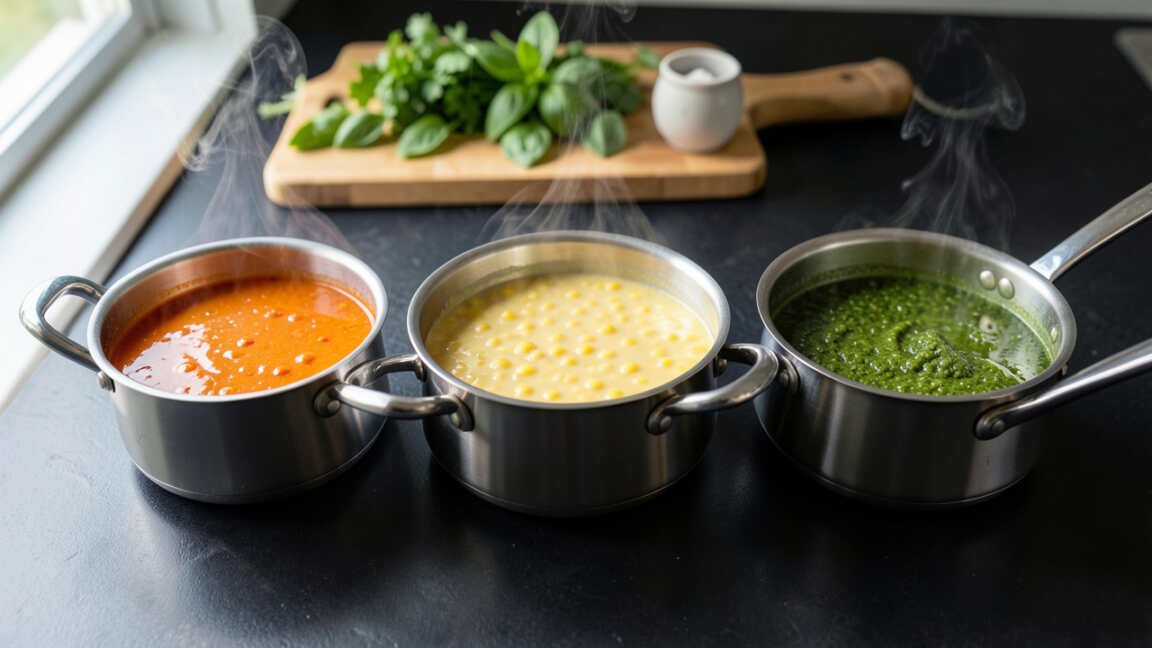
Head-to-Head Comparison
Capacity and Portions
Capacity is the most important factor when choosing a saucepan size. A 1qt saucepan holds enough liquid for one generous serving of soup or one serving of hot cereal. A 2qt saucepan holds enough for 2-4 servings, which covers most weekday meals. A 4qt saucepan holds enough for 4-6 servings and handles large batches easily.
According to the Cookware Manufacturers Association, the average American household owns 3 saucepans but regularly uses only two. The 2qt size is the most frequently used, followed by the 4qt size. The 1qt size often sits unused in the back of cabinets.
Warning: Never fill a saucepan more than two-thirds full with liquid. Food and liquid expand as they heat, and overfilling leads to dangerous boil-overs that can cause burns on your stovetop.
Versatility and Use Cases
Versatility varies significantly between the three sizes. The 2qt saucepan can handle roughly 80% of common cooking tasks. The 1qt saucepan handles only about 20% of tasks because it is too small for grains, pasta, and most sauces. The 4qt saucepan handles about 60% of tasks but is overkill for small jobs like warming milk.
If you can own only one saucepan, choose the 2qt size. It is the closest thing to a universal pot for everyday cooking. If you can own two, pair a 2qt with a 4qt to cover both daily meals and batch cooking.
Storage and Kitchen Space
Small saucepans are easier to store. A 1qt saucepan fits in tight cabinets and narrow drawers. A 2qt saucepan stacks well inside larger pots for compact storage. A 4qt saucepan takes up significant space and may crowd your cabinet if you have limited room.
Consider your kitchen layout before choosing. If you have deep cabinets with pull-out shelves, a 4qt saucepan is fine. If you have shallow cabinets or limited space, stick with a 2qt as your largest saucepan and use a stockpot for big batches.
Heating Performance and Efficiency
Smaller saucepans heat faster but require careful heat management. A 1qt saucepan can go from cold to boiling in under 3 minutes on a standard gas burner. This is great for speed but bad for foods that need gentle simmering. The narrow bottom also means it may create hot spots on large burners.
A 2qt saucepan provides the best balance of heat-up speed and temperature control. A 4qt saucepan takes 5-7 minutes to boil water but holds heat well for long simmers. The larger diameter distributes heat more evenly across the base, which reduces scorching.
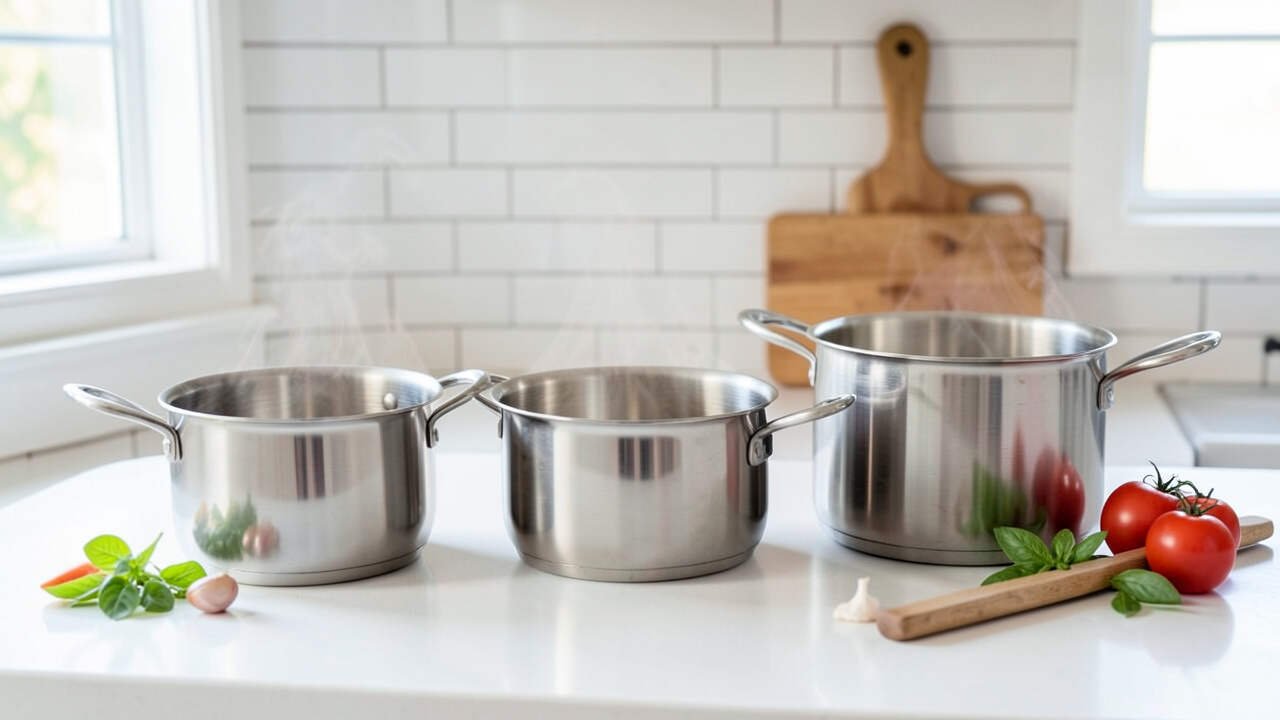
How to Choose the Right Saucepan Size for Your Kitchen
To determine what size saucepan do you actually need, ask yourself three questions. First, how many people do you cook for most of the time? Second, what types of food do you cook most often? Third, how much storage space do you have in your kitchen?
Use this decision guide based on your household size:
- Single person: A 1qt saucepan is useful for small tasks, but a 2qt is still your best primary saucepan. The 1qt works for reheating one portion, but you will need the 2qt for cooking rice or pasta.
- Couple or small family (2-3 people): Choose a 2qt saucepan. It covers almost all your daily cooking needs. Add a 4qt if you like to make big batches of soup or chili.
- Family of 4 or more: Start with a 4qt saucepan as your main pot. Add a 2qt for smaller tasks like making sauce or heating leftovers.
- Meal prepper: A 4qt saucepan is essential. You need the extra capacity to cook large quantities of grains, beans, and soups for the week ahead.
Important: Consider the material of your saucepan as well. Tri-ply stainless steel offers even heating and works on all cooktops, including induction. Nonstick saucepans are easier to clean but do not sear or brown food well.
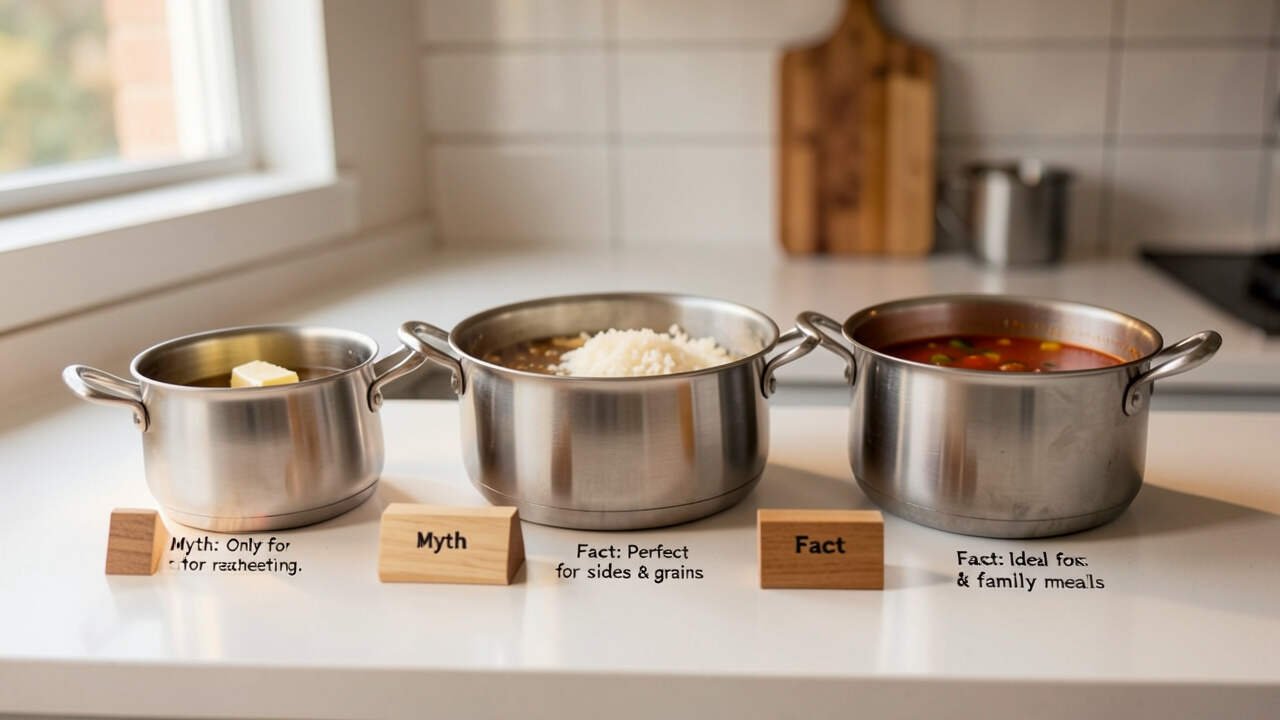
Common Myths vs Facts About Saucepan Sizes
Myth 1: Bigger is always better
Many home cooks assume a larger saucepan is more useful. In reality, a 4qt saucepan is less efficient for small jobs. Heating a cup of milk in a big pot takes longer and wastes energy. It also increases the risk of scorching because the liquid spreads too thin across the bottom.
Myth 2: You need all three sizes
Cookware brands often sell saucepans in sets of three. Most home cooks need only two sizes: a 2qt and a 4qt. The 1qt size is a nice extra but not essential. If you are building your first cookware collection, skip the 1qt and invest in better quality for the two larger sizes. Knowing typical cookware set sizes helps you choose which saucepans to include in your collection.
Myth 3: Saucepan size does not affect cooking results
Size directly affects how your food turns out. A saucepan that is too small leads to overflow and uneven cooking. A pan that is too large causes liquid to evaporate too fast. Using the what size saucepan do you actually need for each recipe gives you better texture, flavor, and consistency. For precise cooking, refer to official volume measurements like those from NIST to understand saucepan capacities.
Frequently Asked Questions
Is a 2qt saucepan big enough for cooking rice?
Yes, a 2qt saucepan is perfect for cooking 1-2 cups of uncooked rice, which yields 3-4 cups of cooked rice. This is enough for 3-4 people as a side dish. For larger batches, use a 4qt saucepan or a dedicated rice cooker.
Can I use a 1qt saucepan to boil pasta?
No, a 1qt saucepan is too small for boiling pasta. Pasta needs plenty of water to prevent sticking and cook evenly. Use at least a 4qt saucepan or stockpot for 8 ounces of pasta. The 1qt is better for heating prepared pasta sauce or leftovers.
What is the difference between a saucepan and a saucepot?
A saucepan is shorter and wider, with one long handle. A saucepot is taller with two short handles. Saucepans are better for tasks that need stirring and pouring. Saucepots are better for soups and stocks that simmer for a long time.
How do I clean a burned saucepan?
Fill the saucepan with water and add 2 tablespoons of baking soda or white vinegar. Bring it to a boil and let it sit for 15 minutes. Scrub with a non-abrasive sponge. For stubborn stains, use a commercial cleaner made for your pan’s material.
Which saucepan material heats the most evenly?
Tri-ply stainless steel, which has an aluminum core sandwiched between stainless steel layers, provides the most even heating. Copper-core pans heat even faster but cost more and require more maintenance. According to Cook’s Illustrated, tri-ply stainless steel is the best choice for most home cooks.
Final Thoughts
Choosing the right saucepan size comes down to your household size and cooking habits. The 2qt saucepan is the most versatile option and works well for most home cooks. If you cook for a large family or batch prep meals, add a 4qt saucepan to cover bigger recipes. Focus on quality materials like tri-ply stainless steel and buy the best saucepan you can afford for the sizes you actually use. Understanding common saucepan sizes can help you decide which ones to buy for your kitchen.

Leave a Reply