
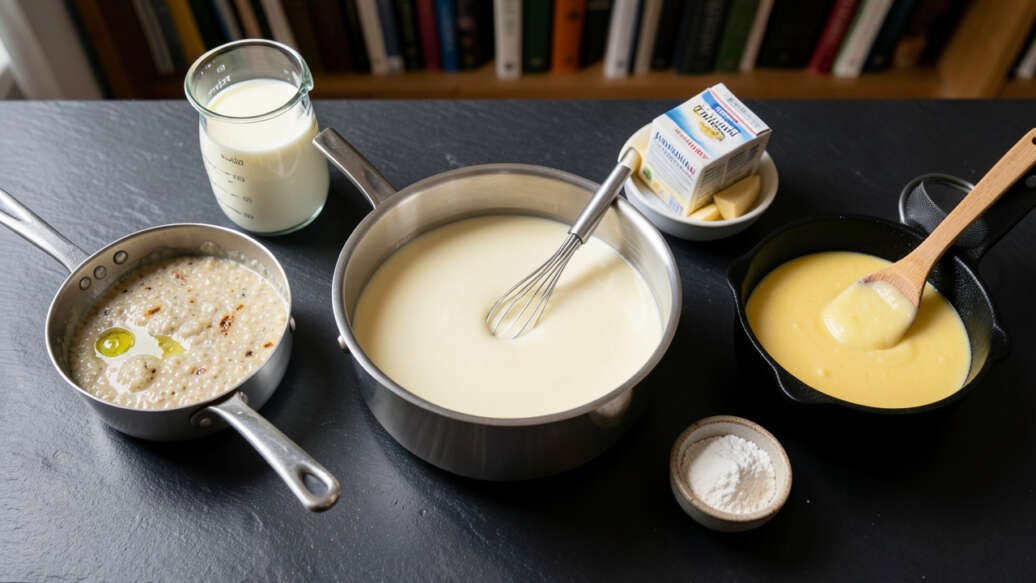
The material of a saucepan directly determines béchamel smoothness by affecting heat distribution and reactivity with milk. A thick, tri-ply stainless steel pan is the best choice, as its even heating prevents hot spots that scorch the roux and create lumps. For reliable results, choose a heavy-bottomed pan with good heat retention, and avoid thin aluminum or uncoated copper, which cause uneven temperatures and metallic off-flavors.
Béchamel is a simple white sauce. It combines butter, flour, and milk. Getting a smooth result depends on your technique and the tools you choose. This guide explains how saucepan material affects béchamel smoothness outcome.
Quick Verdict: A thick stainless steel pan is your best choice for smooth béchamel. It heats evenly and stops hot spots that scorch milk and flour. Non-stick pans work well for beginners. Avoid thin aluminum pans. They create uneven heat and lead to lumps.
Key Takeaways
- Tri-ply stainless steel distributes heat more evenly than single-ply pans, which directly prevents lumps in béchamel.
- Non-stick pans provide an easier stirring experience but can still scorch the roux if you use high heat.
- Uncoated copper and aluminum react with milk and can change the color and taste of your final sauce.
- The physical weight and thickness of your saucepan matter more than the brand or the specific material type.
- A heavy-bottomed pan maintains a steady temperature, which allows starch molecules to thicken without breaking down.
Why Saucepan Material Matters for Béchamel
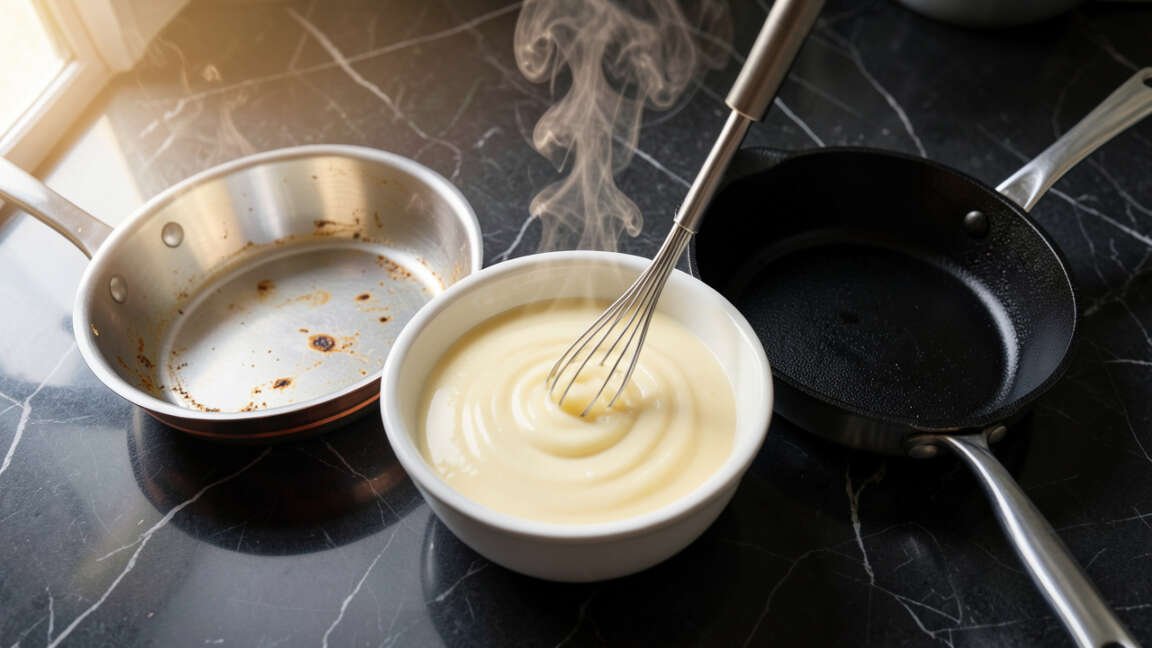
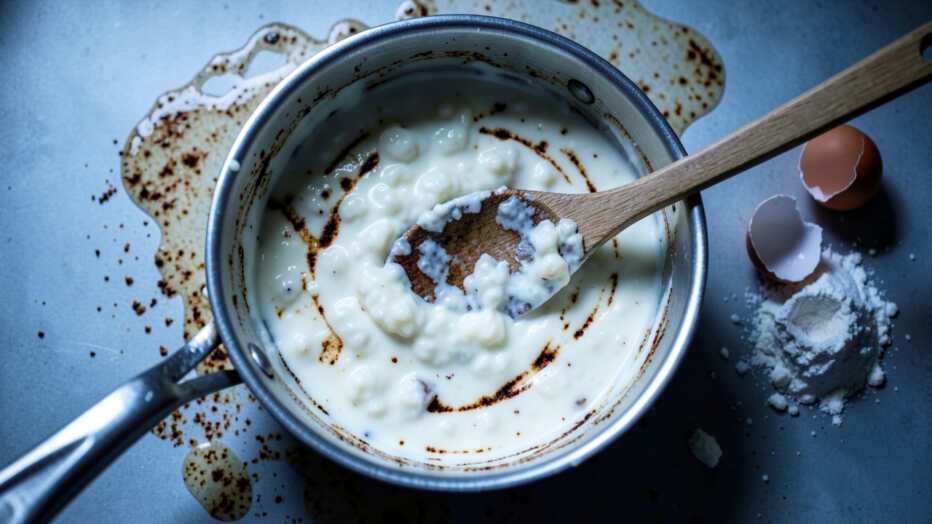
Béchamel is one of the five mother sauces in French cuisine. It requires gentle and consistent heat. Your pan acts as the bridge between your stove and the ingredients in the pot. The wrong pan will create hot spots. Hot spots cause milk proteins to scorch and stick to the bottom of the pan. Scorched bits create lumps in your final sauce.
According to the Institute of Food Technologists, milk proteins begin to scorch at temperatures above 180F. A good pan keeps the temperature steady across the entire cooking surface. A thin or reactive pan allows the temperature to spike in certain areas.
Important: Food scientist Harold McGee explains that starch granules need a stable temperature to swell and thicken a liquid. Fluctuating heat causes the starch walls to rupture too early. This results in a thin and watery sauce instead of a creamy béchamel.
The best pan material handles heat in three key ways:
- Thermal Conductivity: How fast the material transfers heat from the stove to the sauce.
- Heat Capacity: How well the material holds onto heat once it gets hot.
- Reactivity: Whether the metal interacts with acidic or alkaline ingredients like milk.
What Is the Best Saucepan Material for Béchamel?
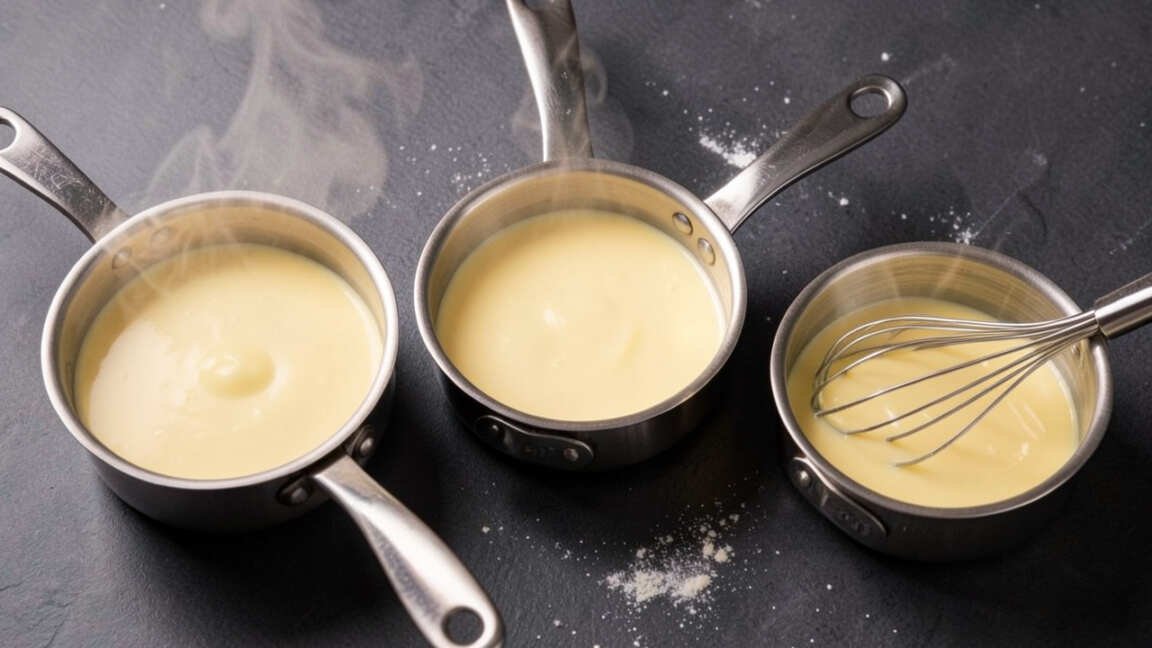
Each material has distinct strengths and weaknesses for sauce making. Your choice should match your experience level and how much control you want over the heat.
Tip: Look for pans that say fully clad or tri-ply on the label. These pans have an aluminum core sandwiched between stainless steel. This construction gives you excellent heat distribution without the reactivity of raw aluminum.
Stainless Steel (Tri-Ply Clad)
Stainless steel is the standard choice for most home cooks and professional chefs. The best versions have a multi-layer base. An aluminum or copper core is sandwiched between stainless steel layers. This design gives you the fast and even heating of aluminum. The stainless steel outer layer keeps the pan non-reactive with your ingredients. According to Cook’s Illustrated, tri-ply pans distribute heat 30% more evenly than single-ply stainless steel pans.
- Heats evenly across the entire cooking surface.
- Does not react with milk, wine, or acidic ingredients.
- Requires a bit of fat or liquid to prevent sticking at the bottom.
- Works on all stove types including induction.
Non-Stick Coated Pans
Non-stick pans are popular for beginners. The coating prevents the roux from sticking to the bottom during the early stages. You can stir less aggressively. This helps you avoid breaking the butter emulsion. However, most non-stick pans have an aluminum base that does not distribute heat well. You still need to monitor the heat level closely.
- Food slides right off the surface for easy cleanup.
- Requires lower heat to avoid damaging the coating.
- Can still scorch the milk if you use a thin pan.
- Not ideal for searing or browning ingredients before adding milk.
Copper
Copper is the ultimate heat conductor. It responds instantly to changes in your stove settings. This gives you precise control over the temperature of your sauce. However, raw copper reacts with dairy and acidic foods. It can turn your creamy béchamel a dull grey color. It can also leave a metallic taste in the sauce. Most copper pans are lined with tin or stainless steel to prevent this reaction.
- Provides the most responsive heat control of any material.
- Lined copper is excellent for delicate sauces.
- Unlined copper ruins the appearance and flavor of béchamel.
- Requires polishing and special care to maintain.
Aluminum
Uncoated aluminum is lightweight and very affordable. It conducts heat well but has major drawbacks for sauce making. Like copper, it reacts strongly with milk. This reaction discolors the sauce and adds an unpleasant metallic flavor. Thin aluminum pans also create severe hot spots very quickly.
- Inexpensive and heats up fast.
- Reacts with dairy and acidic ingredients.
- Thin aluminum warps over time and creates uneven surfaces.
- Anodized aluminum is a safer option but still less consistent than tri-ply.
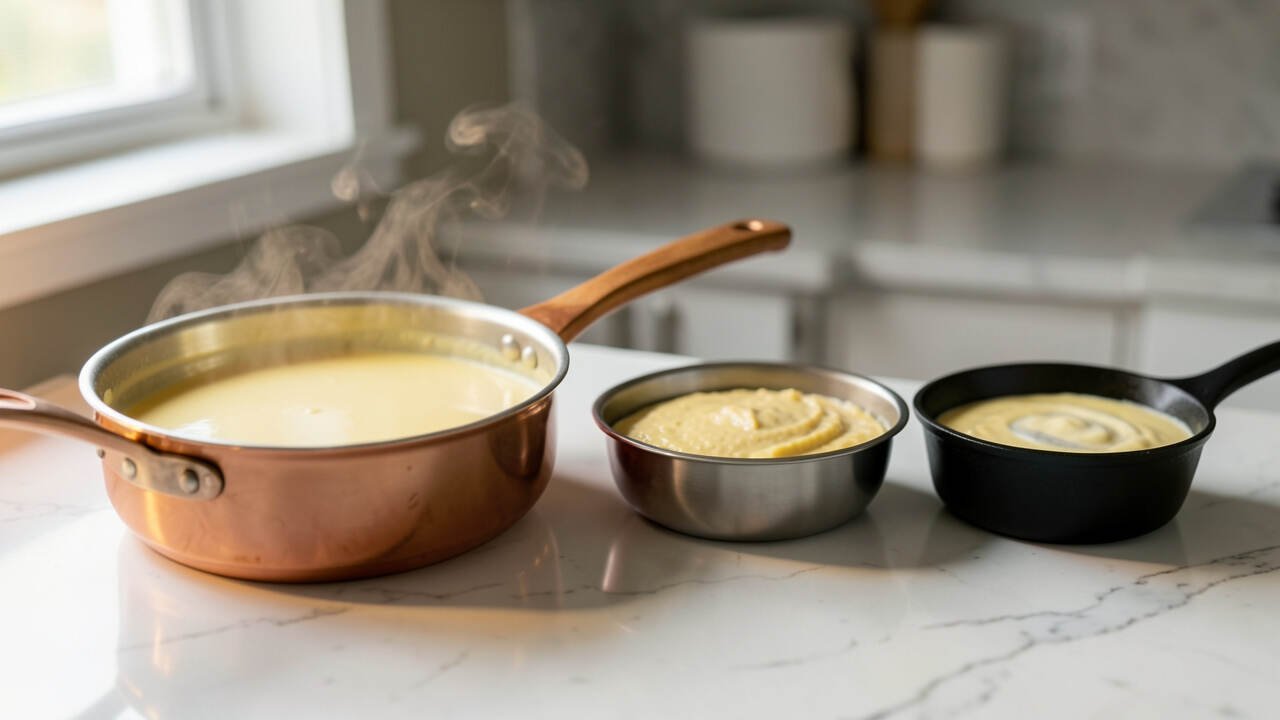
Quick Comparison Table: Saucepan Materials for Smooth Béchamel
| Material | Heat Distribution | Reactivity | Scorching Risk | Best For |
|---|---|---|---|---|
| Stainless (Tri-Ply) | Excellent | None | Low | Daily Use |
| Non-Stick | Good | None | Very Low | Beginners |
| Copper (Lined) | Excellent | Low | Medium | Expert Control |
| Aluminum (Uncoated) | Poor | High | High | Not Recommended |
How Does Saucepan Thickness Affect Smoothness?
The thickness of your pan is just as important as the material. A thick base acts like a heat battery. It stores thermal energy and releases it slowly to the food. This prevents sudden temperature drops when you add cold milk to the roux. It also stops the pan from getting too hot in one spot.
Warning: Thin pans that cost under $30 often have a disc bottom that does not extend up the sides. The heat concentrates only on the bottom circle. This creates a ring of scorched milk around the edge of the pan.
When you look for a pan, turn it over and check the base. A good pan for béchamel has a heavy bottom that is at least 4 millimeters thick. Fully clad pans extend this thickness up the side walls. This gives you consistent heat not just on the bottom but also along the sides where milk splashes.
Common Mistakes to Avoid When Choosing a Pan for Béchamel
- Using thin stainless steel pans. Single-ply stainless steel heats unevenly. It creates small hot spots that burn the flour before it dissolves into the milk.
- Buying unlined copper or aluminum. Reactive metals change the color and taste of your béchamel. Always choose tin-lined copper or anodized aluminum.
- Cranking the heat on a non-stick pan. High heat damages non-stick coatings. It also defeats the purpose of even cooking because the aluminum base still develops hot spots.
- Choosing based on looks alone. A shiny mirror finish does not mean good performance. Focus on the weight and the internal layers of the pan.
- Using a pan that is too large. A wide shallow pan spreads the roux too thin. This causes the butter to brown quickly and creates a lumpy texture.
Common Myths vs Facts
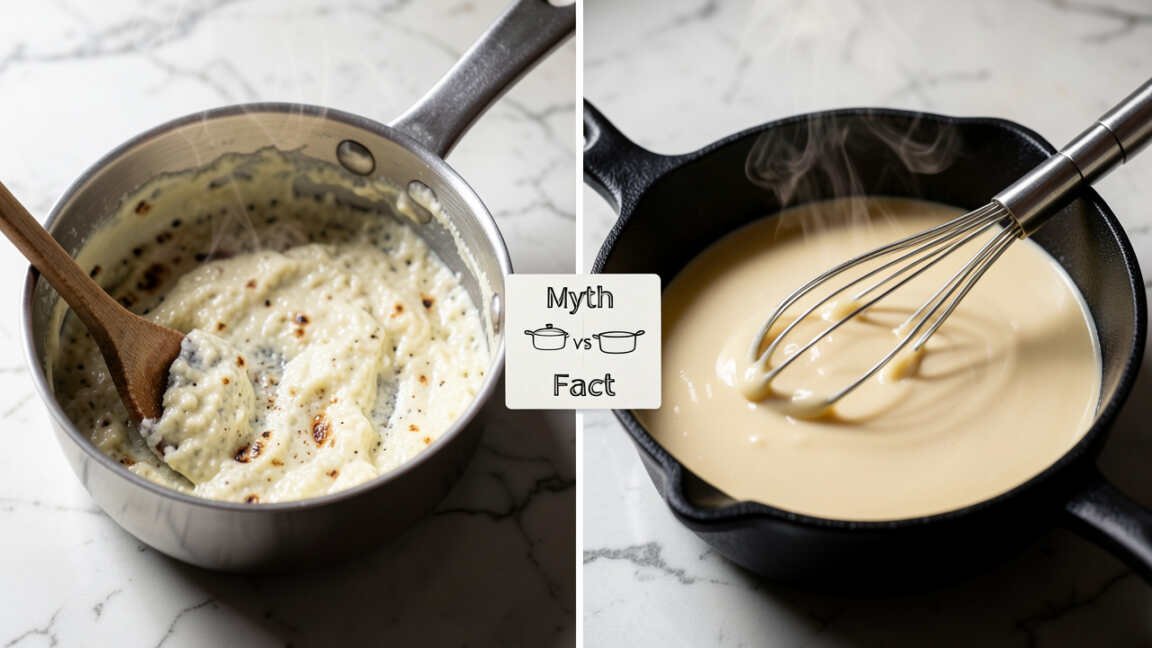
Many cooks believe certain rules about saucepans that are not always true. Here are the most common myths about making béchamel.
Myth 1: You must use a copper pan for a mother sauce like béchamel.
Copper was the standard in classical French kitchens because it was the best available material at the time. Modern tri-ply stainless steel provides the same heat distribution without the reactivity problems. You do not need copper to make a smooth béchamel.
Myth 2: Non-stick pans guarantee a lump-free sauce.
Non-stick only prevents sticking. It does not fix heat distribution. A thin non-stick pan still creates hot spots that scorch the milk. You still need to stir constantly and watch the temperature. The pan coating is just one small factor.
Myth 3: A lighter pan is better for quick sauces.
A lightweight pan heats up fast but also cools down fast. This leads to temperature swings that break the starch structure in béchamel. A heavier pan maintains a steady temperature. This helps the sauce thicken evenly without sudden changes. The impact of different materials is covered in the Wikipedia article on saucepan material selection.
Pro Tips for a Lump-Free Béchamel
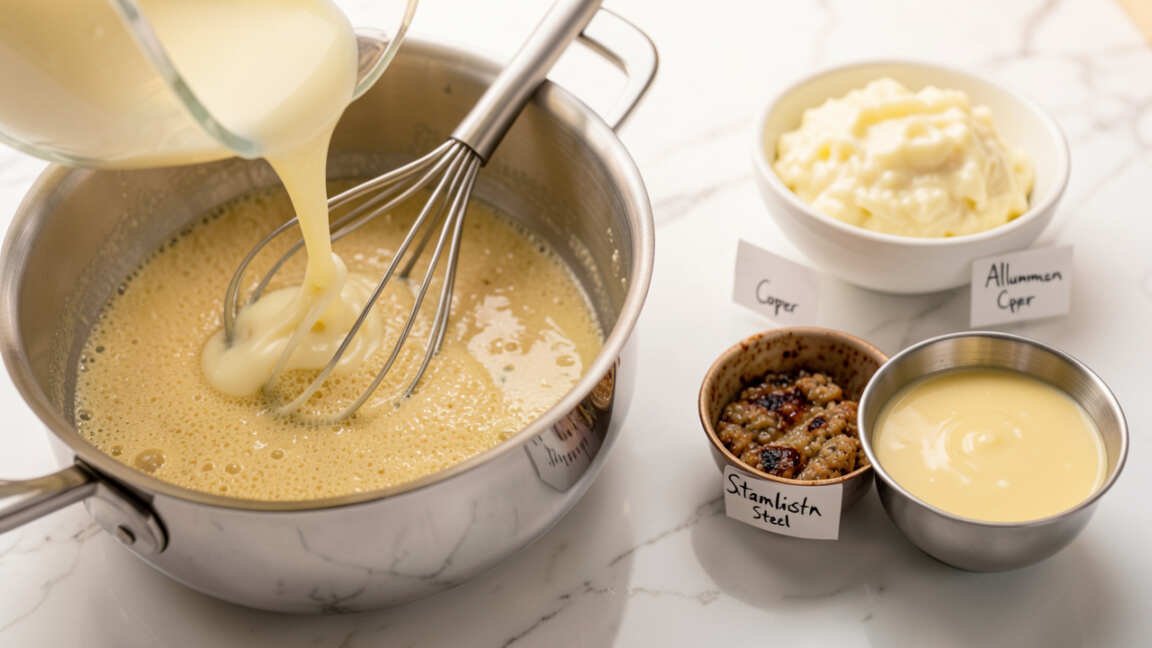
- Use a thermostat or thermometer. Keep the milk between 180F and 190F. This range thickens the starch without scorching the milk proteins.
- Warm your milk before adding it. Cold milk lowers the pan temperature too fast. This forces you to turn up the heat, which can create hot spots. Warm milk keeps the temperature steady.
- Choose the right pan size. Use a 2-quart saucepan for 1 cup of milk and 2 tablespoons each of butter and flour. This gives the sauce enough depth to stir properly without splashing.
Frequently Asked Questions
Can I use a cast iron skillet for béchamel?
Cast iron is great for searing but not ideal for delicate sauces. It takes a long time to heat up and retains heat too aggressively. This makes it very easy to scorch the milk and create lumps. Stick to stainless steel for this particular sauce.
Does the brand of the pan really matter?
Brand matters less than the construction. A high-quality tri-ply pan from All-Clad performs essentially the same as a well-reviewed house brand from a major retailer. The key factors are the number of layers and the total thickness of the base.
What pan do professional chefs recommend for béchamel?
Most culinary schools recommend a medium-weight stainless steel saucepan with a heavy cladded bottom. According to Le Cordon Bleu, this type of pan provides the best balance of heat control, durability, and weight for daily kitchen use.
Can I fix a béchamel that has scorched bits in it?
You can strain the scorched bits out through a fine-mesh sieve into a clean pot. However, the smoky flavor from the burnt milk will remain in the sauce. The best fix is to start fresh with a better pan and lower heat.
Is an enameled cast iron Dutch oven a good choice?
Enameled cast iron distributes heat very evenly and holds temperature well. It works decently for béchamel if you use a low heat setting. The main downside is that the sides of a Dutch oven are often too high, which makes it awkward to whisk the sauce effectively.
Final Thoughts
Your saucepan material directly controls the smoothness of your béchamel sauce. Thick stainless steel offers the best heat distribution and requires no special care. Avoid thin aluminum and unlined copper to prevent off-flavors and scorching. Choose a sturdy pan and you will get reliable results every time. For a comprehensive guide, refer to the Wikipedia entry on making béchamel sauce.
For official recommendations on safe cookware use, consult the government’s cookware safety guidelines.

Leave a Reply