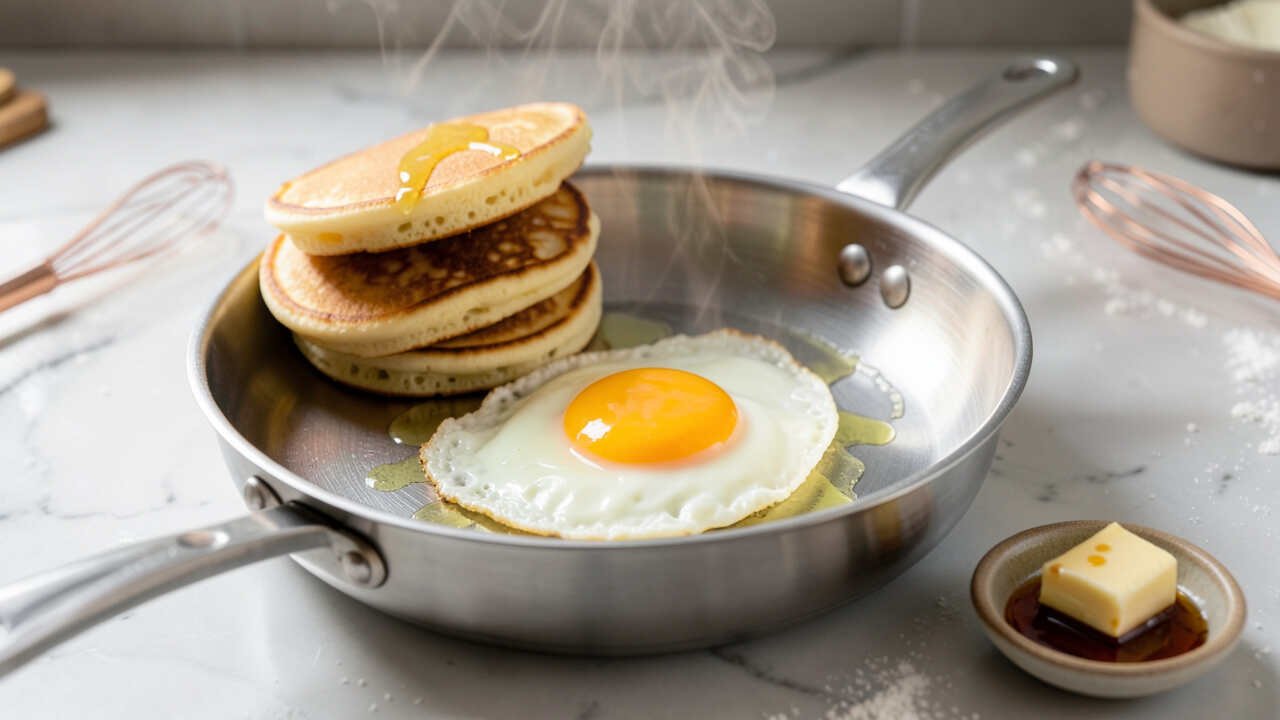
Heavy-bottom frying pans win for eggs and pancakes because their thick construction distributes heat evenly, eliminating hot spots that cause sticking and burning. This consistent heat allows eggs to cook gently without overcooking the edges, while pancakes develop an even golden crust and fluffy interior. Choosing a pan with ample mass and a conductive core, such as stainless steel with aluminum or cast iron, directly improves temperature control and yields reliable, professional-quality results every time.
Many home cooks struggle with eggs sticking and pancakes burning unevenly. The problem is often the pan, not the cook. Understanding Why Heavy-Bottom Frying Pans Win for Eggs and Pancakes helps you get better results with less effort.
You will learn how pan thickness affects heat control and why this matters for delicate foods. The right pan makes cooking easier and food taste better every time.
Key Takeaways
- Heavy-bottom pans spread heat evenly across the whole cooking surface.
- Thicker pans hold steady temperature so eggs and pancakes do not burn.
- Even heat stops sticking and gives you golden, fluffy pancakes every time.
- Pan material matters a lot for how well heat flows and stays consistent.
- Choosing the right pan saves you time, frustration, and wasted food.
- Simple cooking tips help you get the most out of your heavy-bottom pan.
How Heat Distribution Affects Eggs and Pancakes
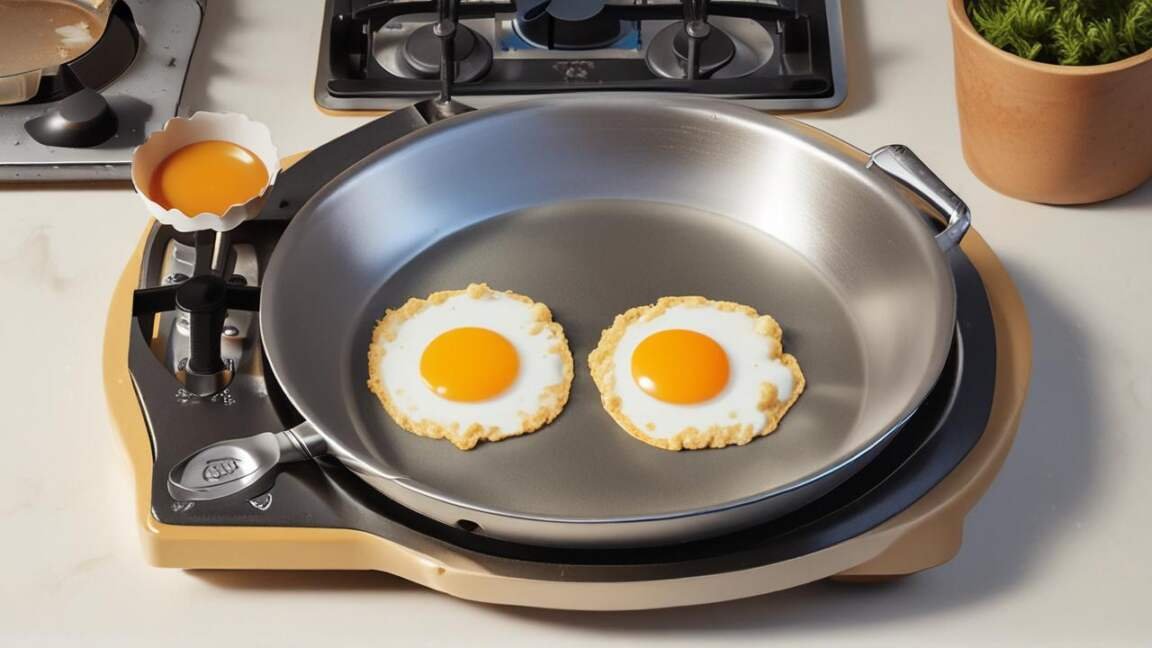
Heat distribution is the main reason Why Heavy-Bottom Frying Pans Win for Eggs and Pancakes. When you place a pan on the stove, heat moves from the burner into the pan bottom. Thin pans heat up fast in some spots and stay cool in others.
This creates hot zones that burn food quickly. Heavy-bottom pans use more metal to spread heat out evenly across the whole surface.
Eggs need gentle, even heat to cook without turning brown or sticking. Pancakes need steady heat to rise and brown evenly on both sides. A thin pan cannot give you this kind of control.
The heat jumps up and down as you adjust the burner. This makes it hard to get consistent results. A heavy-bottom pan absorbs heat slowly and releases it steadily.
This gives you a stable cooking surface that responds well to small changes in temperature.
The science behind this is simple. Heat travels through metal at different speeds. Thicker metal takes longer to heat up but holds heat much better.
Thin metal heats fast but cools down just as fast. For foods like eggs and pancakes that need steady low to medium heat, thick metal is the clear winner. You get fewer burnt spots and more even cooking from start to finish.
Why Even Cooking Matters for Delicate Foods
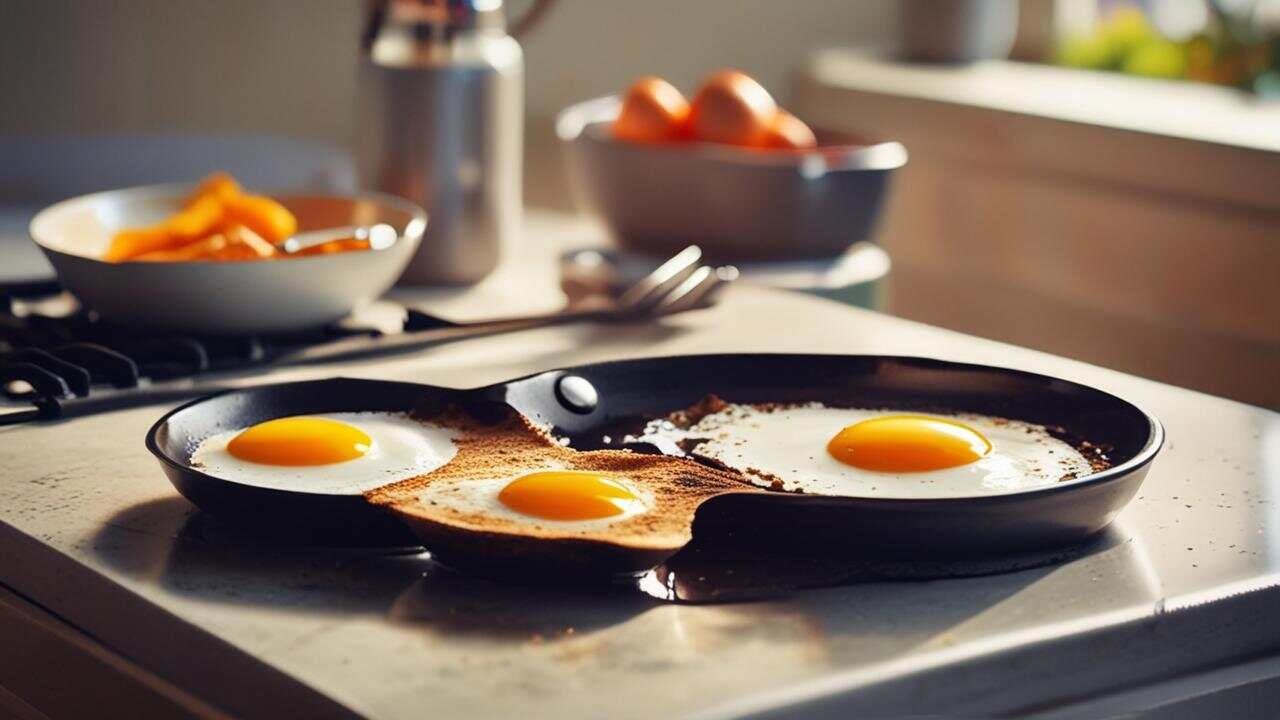
Delicate foods like eggs and pancakes do not handle temperature swings well. When heat is uneven, some parts cook faster than others. This leads to dry edges runny centers and burnt bottoms.
Why Heavy-Bottom Frying Pans Win for Eggs and Pancakes becomes obvious when you see the difference in texture and color.
Eggs Need Gentle Heat
Eggs are mostly water and protein. When heat hits them too fast, the protein tightens up and sticks to the pan. This makes scrambled eggs dry and fried eggs tough.
A heavy-bottom pan gives you a soft steady heat that cooks eggs slowly. The whites set evenly without browning. The yolks stay runny or firm depending on what you want.
You also use less butter or oil because the pan does not need extra help to release the food.
Pancakes Need Steady Heat
Pancakes are a test of how well your pan holds temperature. When you pour batter onto a hot surface, the pan cools down a little. A thin pan cools too much and takes time to heat back up.
This makes the first side cook slowly and the second side burn. A heavy-bottom pan stays hot even after you add cold batter. The first pancake comes out just as good as the last one.
You get the same golden brown color and fluffy texture every time. This is why professional cooks always choose thick pans for breakfast foods.
Even cooking also means less stress in the kitchen. You do not have to watch the pan constantly or move food around to avoid burning. You can focus on timing your meal and enjoying the process.
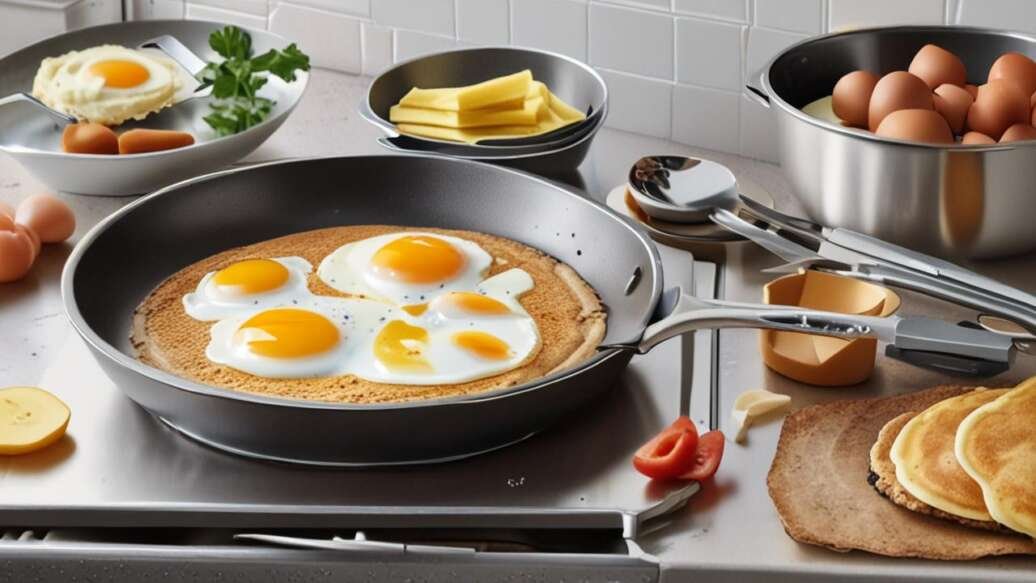
How Pan Thickness Prevents Burning
Pan thickness is the main factor that stops burning. Thin pans transfer heat directly from the burner to the food with almost no buffer. This means high heat goes straight to your eggs or pancakes.
Heavy-bottom pans use extra material to slow down and spread out that heat. The food gets a steady even temperature instead of a direct blast.
Here is a simple comparison to show the difference between pan types.
When you use a heavy-bottom pan, you can set the heat to medium and leave it there. The pan does the work of keeping the temperature right. This is why Why Heavy-Bottom Frying Pans Win for Eggs and Pancakes is a lesson every home cook should learn early.
You save time food and frustration with just one simple change in your cookware.
Thick pans also resist warping over time. Thin pans bend when they get too hot. This creates uneven surfaces that make cooking even harder.
A heavy-bottom pan stays flat for years. This gives you reliable performance every time you cook.
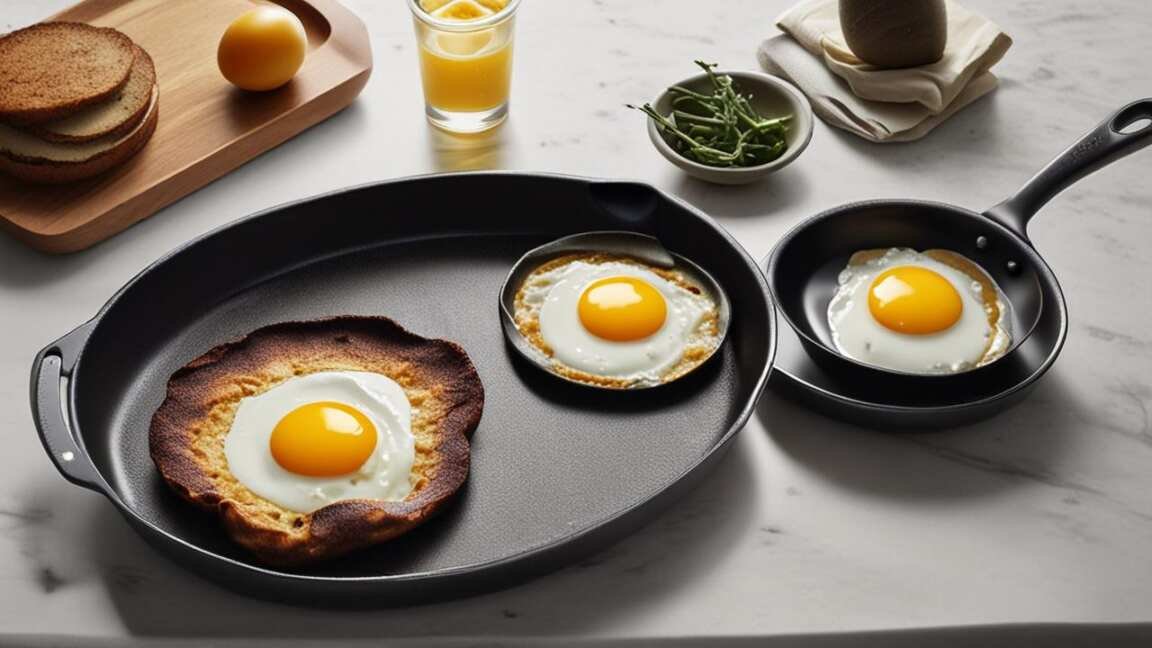
The Best Materials for Heavy-Bottom Pans
Not all heavy-bottom pans are the same. The material matters a lot for how the pan performs. Different metals conduct heat differently.
Some hold heat better than others. Here are the most common materials and how they work for eggs and pancakes.
Stainless Steel with Aluminum Core
This is one of the best choices for even heat. Stainless steel alone does not conduct heat well. But when it has an aluminum or copper core inside, the pan heats up evenly.
The stainless steel surface does not react with food. It is durable and easy to clean. Many professional cooks prefer this type for eggs and pancakes because it gives great control.
The only downside is that food can stick if you do not use enough fat. But with proper heat and a little butter, it works very well.
Cast Iron
Cast iron is the classic heavy-bottom material. It holds heat better than almost anything else. Once it gets hot it stays hot for a long time.
This is great for pancakes because the pan does not cool down when you add batter. Cast iron also adds a small amount of iron to your food which some people like. The main downside is weight.
Cast iron pans are very heavy to lift and move. They also need seasoning to stay non-stick. If you take care of them they last a lifetime.
Hard-Anodized Aluminum
Hard-anodized aluminum is lightweight but thick. It heats up faster than cast iron but still holds heat well. The surface is non-stick and does not react with food. Hard-anodized aluminum cookware meets strict FDA cookware safety guidelines for non-reactive surfaces.
This material is very popular for egg cooking because food slides right off. The anodized layer makes the surface hard and scratch resistant. It is easier to handle than cast iron and gives similar heat control.
Many home cooks find this is the best balance of performance and convenience.
Copper Core
Copper is the best conductor of heat among common pan materials. Pans with a copper core heat up fast and spread heat perfectly. They respond quickly when you adjust the burner. This gives you very precise control for delicate foods. The downside is cost. Copper core pans are expensive. They also Copper’s superior cookware material heat conductivity explains its quick response and even heat.
Final Thoughts
A heavy-bottom frying pan delivers steady, even heat that prevents scorching and ensures golden, fluffy eggs and pancakes every time. Its superior heat retention stops cold spots and hot spots, giving you consistent, reliable results without guesswork. The frying pan design and materials directly influence heat distribution and cooking performance.

Leave a Reply