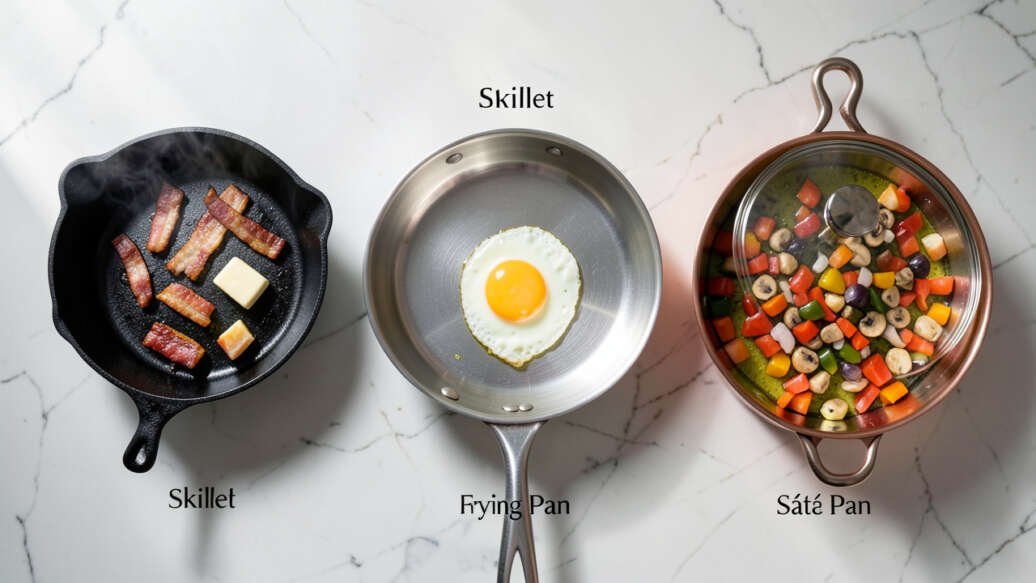
A skillet and frying pan are essentially the same cookware with sloped sides designed for flipping and high-heat searing, while a sauté pan has straight sides and a larger surface area for browning and deglazing without spillage. The side angle directly affects oil depth and steam retention, making skillets ideal for shallow frying and sauté pans better for techniques requiring liquid reduction. Choosing between them depends on whether your cooking priorities favor quick, high-heat tasks or more controlled, one-pan stovetop to oven meals.
Navigating the world of cookware can often feel like learning a new language, especially when three seemingly similar pans-the skillet, frying pan, and sauté pan-frequently appear in recipes and kitchen discussions. While the terms are often used interchangeably in casual conversation, each piece of cookware has distinct design features that directly influence cooking techniques, heat distribution, and the final outcome of your dish. Understanding these differences is crucial for both novice home cooks and seasoned culinary enthusiasts aiming to elevate their cooking efficiency. This guide will dissect the anatomy, intended uses, materials, and practical applications of each pan, settling the debate once and for all. By the end, you will not only know what sets them apart but also which one deserves a permanent spot in your kitchen arsenal.
Anatomy of Design: Decoding Sides, Shapes, and Angles
The most definitive way to distinguish a skillet from a sauté pan is by looking at the walls. A classic skillet, also universally called a frying pan, is characterized by its flared, sloped sides. This angle is not arbitrary; it is engineered for quick evaporation and easy flipping. The wide, open surface area maximizes contact with the heat source, while the slope allows a spatula to slide effortlessly under foods like eggs, pancakes, or delicate fish fillets. Liquids in this pan spread thinly and evaporate rapidly, making it ideal for shallow frying and searing.
In contrast, a sauté pan features straight, vertical sides. This design choice is fundamental to its function. The tall walls provide significantly more volume and depth, allowing you to cook larger quantities of ingredients without spilling. More importantly, the straight sides trap moisture and steam. This makes the sauté pan the superior choice for cooking techniques that benefit from a controlled humid environment, such as braising, making pan sauces, and cooking down large volumes of leafy greens or onions without them escaping over the edge. The larger surface area of the flat bottom also ensures even browning before a liquid is added.
While a standard skillet typically has a single long handle, sauté pans almost always come with a long handle and a smaller helper handle, or “loop,” on the opposite side. This reflects the heavier nature of the food cooked in a sauté pan. When deglazing with wine or stock, the extra handle provides the stability needed to safely move a heavy, full pan. Skillets, being lighter and designed for quick tosses, usually rely on a single, sturdy riveted handle. The frying pan term itself is a subset of the skillet category, with the name highlighting its primary function.
Oil, Heat, and the Maillard Reaction: Performance Under Fire
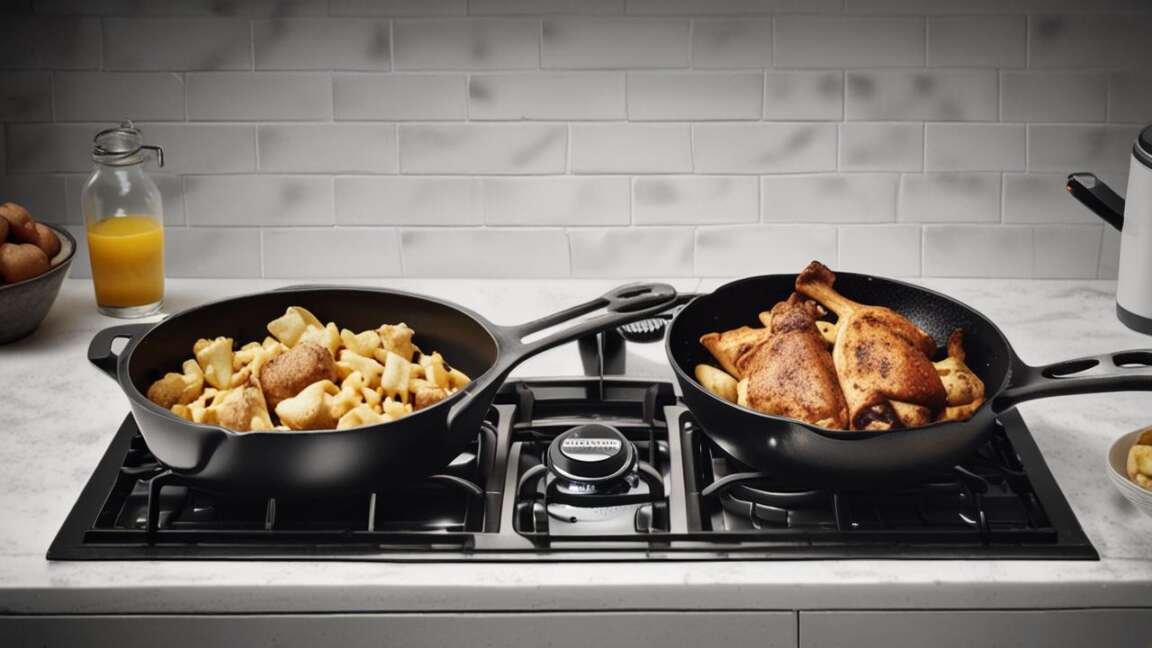
The cooking performance of each pan hinges on how they handle fat and high heat. The skillet or frying pan is the undisputed king of the Maillard reaction-the browning process that creates deep, savory flavors. Because of its low, sloped sides, a higher percentage of the cooking surface is exposed directly to the heat source. This allows for a thin, even layer of oil to reach a very high temperature quickly. When you place a steak or a piece of chicken in a screaming hot skillet, the moisture rapidly vaporizes, and the proteins begin to brown instantly. The lack of tall sides also means steam can escape, preventing the food from braising or steaming in its own juices.
The sauté pan operates differently. Its large, flat base is excellent for batching: browning meat in a single layer without overcrowding. However, once ingredients are added and heat builds, the tall sides act as a barrier. This creates a microclimate that retains heat and moisture. For techniques like “pan roasting” or “braising,” this is perfection. You can sear meat on the stovetop in a sauté pan, then add aromatics and broth directly into the same vessel without transferring to a Dutch oven. The straight sides prevent splattering during simmering, making cleanup easier. However, the high walls of a sauté pan make it a poor choice for tossing or flipping food, as the ingredients hit the walls rather than flipping gracefully.
Shallow frying is another area where the distinction is critical. A true frying pan, with its wide, sloped sides, allows oil to pool in a shallow layer while providing a large escape route for moisture. This is why it is the go-to for fried chicken, latkes, or crispy fish. The sauté pan’s straight walls make shallow frying less effective; while it holds more oil volume, the lack of evaporation can lead to soggy results. For tasks requiring a lot of liquid reduction, like a marinara sauce or risotto, the sauté pan is superior due to its high volume and controlled evaporation rate.
Materials and Construction: Choosing Your Core
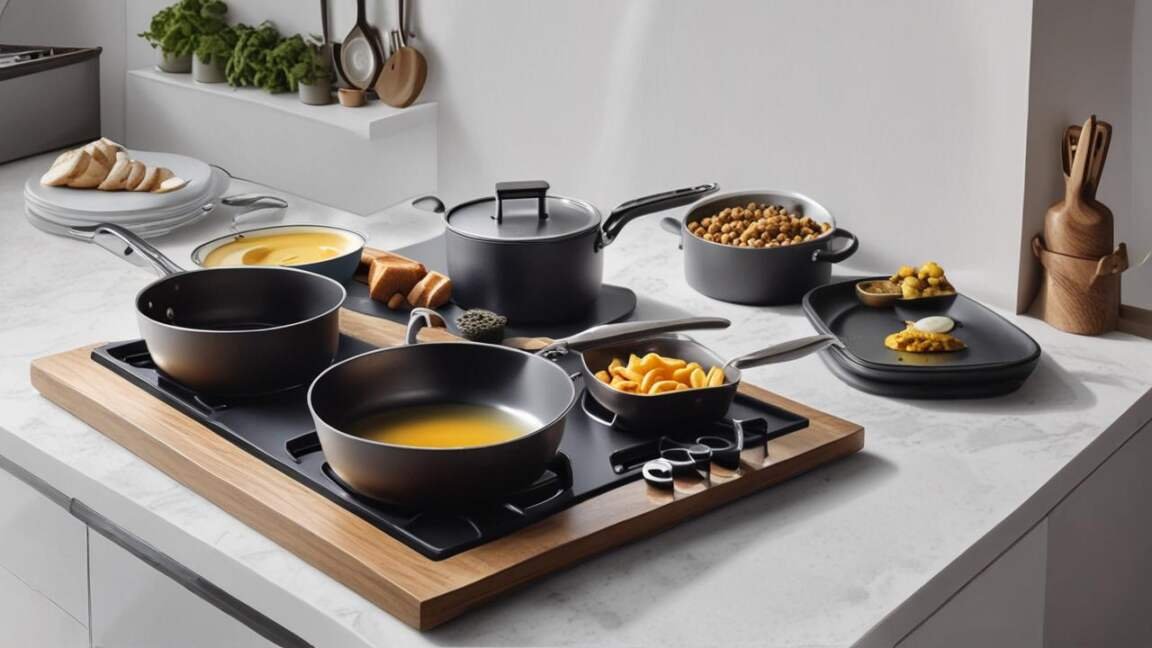
The material of the pan is just as important as its shape. Both skillets and sauté pans are available in similar materials, but the heat conductivity and weight requirements differ based on the intended use. Stainless steel with an aluminum or copper core is a favorite for sauté pans. The heavy, multi-ply construction ensures even heat distribution across the wide, flat base, which is crucial for browning vegetables or meat without hot spots. The non-reactive surface of stainless steel is also ideal for deglazing and making acidic pan sauces.
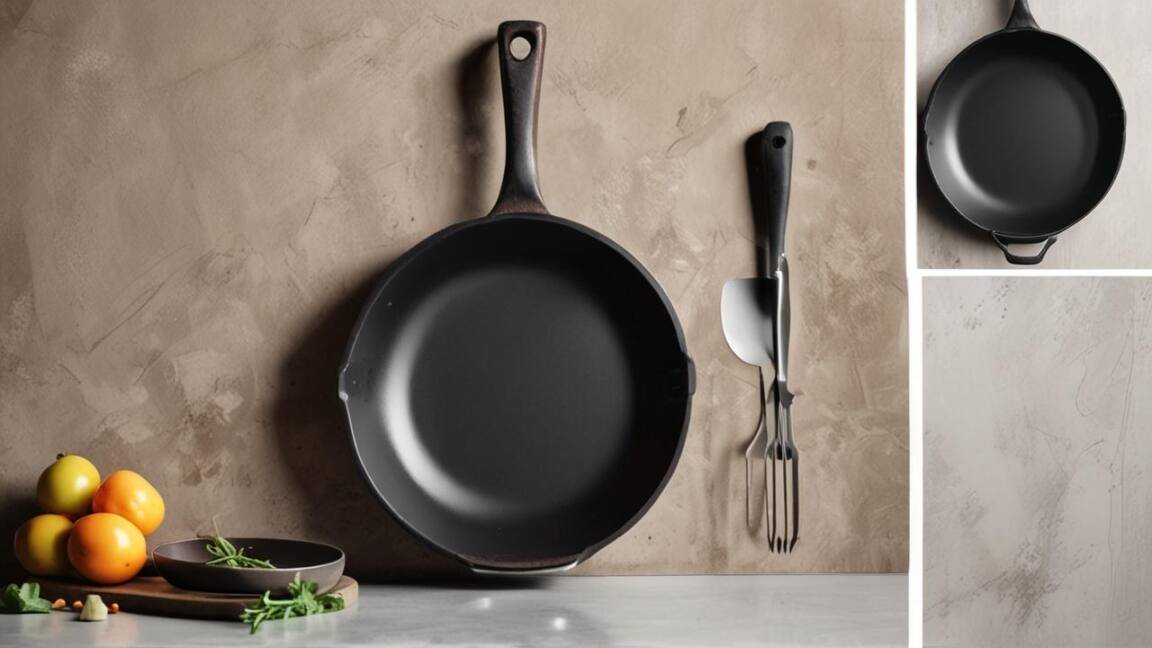
Cast iron is the classic material for skillets. Its superior heat retention and ability to reach very high temperatures make it perfect for deep searing. The heavy weight of a cast iron skillet is manageable for flipping, but a similarly sized cast iron sauté pan would be excessively heavy and difficult to handle due to the added weight of the tall sides. Carbon steel is a lighter alternative for skillets, offering the same fast heat response of cast iron with the lightweight maneuverability needed for tossing.
Non-stick coatings are common in frying pans for low-fat cooking of delicate items like eggs and fish. However, non-stick surfaces are typically not recommended for high-heat searing or deglazing, as high temperatures can damage the coating. Non-stick sauté pans exist but are less common because most sautéing techniques require high heat, which degrades the non-stick layer. When selecting a pan, match the material to the primary cooking style: a heavy stainless steel sauté pan for saucy, one-pot meals, and a responsive carbon steel or cast iron skillet for dry-heat methods.
When to Use Each Pan: A Practical Kitchen Guide
Knowing the technical definitions is one thing, but applying that knowledge to real cooking scenarios is where the difference truly shines. Here is a breakdown of specific dishes and the best pan for the job, along with what you should avoid with each.
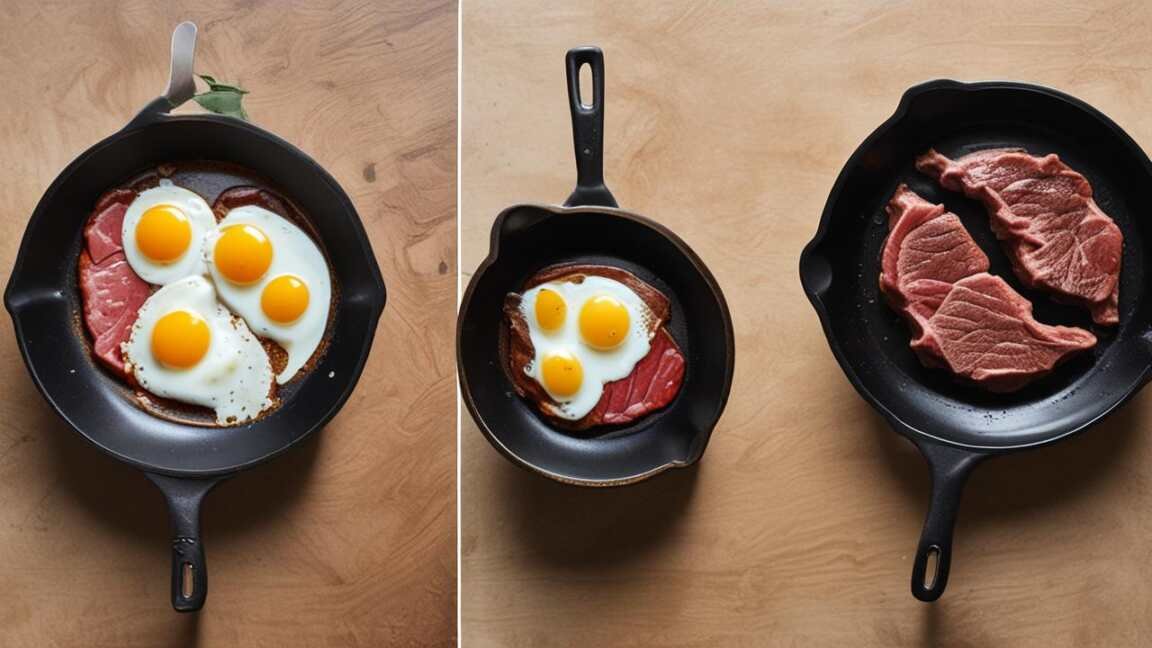
- Skillet (for eggs, pancakes, and crispy fish): The sloped sides of a skillet are perfect for sliding a spatula under a delicate crepe or sunny-side-up egg without breaking the yolk. Use an 8-inch skillet for a single serving of fried chicken.
- Skillet (for searing steak): The wide, open surface of a cast iron skillet allows maximum moisture evaporation. The high heat and minimal oil create a perfect crust. Never use a non-stick skillet for this task, as high heat destroys the coating.
- Sauté Pan (for one-pot pasta): With its tall sides and large flat bottom, a sauté pan is ideal for browning ground meat or sausage, then adding noodles, sauce, and water. The walls contain the liquid while it simmers, preventing boil-overs.
- Sauté Pan (for braised chicken or pot roast): The ability to sear meat, add vegetables, and then deglaze with wine in a single vessel makes the sauté pan perfect for braising. The lid (which often comes with sauté pans) seals in moisture.
- Avoid using a skillet for: Cooking large quantities of liquid-based dishes like soup or stock. The sloped sides will cause liquid to spill over during boiling.
- Avoid using a sauté pan for: Shallow frying large batches of food. The tall walls trap steam, making food soggy and preventing a crisp crust. Also, flipping food is nearly impossible.
Cost, Versatility, and Kitchen Space
From a financial perspective, both types of pans come in a wide range of prices. A basic non-stick skillet can cost as little as $20, while a high-end copper sauté pan can run over $300. The price is often driven by the metal core and the quality of the handle and lid. For most home kitchens, the skillet or frying pan is the more versatile workhorse. It handles the vast majority of daily tasks: eggs, veggies, pancakes, burgers, and quick searings. Because of its lighter weight and simpler design, it is often the first pan a new cook purchases.
The sauté pan, while less versatile for basic tasks, is far more specialized and efficient for certain complex techniques. If you frequently cook one-pot meals, stews, or dishes that require a hard sear followed by a long simmer, a sauté pan will serve you better than a standard pot or a skillet. Many cooks find that a 12-inch skillet and a 4-quart sauté pan cover 90% of their cooking needs. When considering storage, the sloped sides of a skillet allow it to nest neatly, while the straight sides of a sauté pan take up a bit more vertical space. The helper handle on a sauté pan also makes it a bit more cumbersome to store in a standard cabinet. A skillet or frying pan is the more versatile workhorse for daily cooking tasks.
In a professional kitchen, you will almost always find both. A line cook might use a 10-inch skillet for individual orders of fish or eggs, while a sauté cook uses a larger sauté pan for big batches of risotto or braised greens. For the home cook, the choice comes down to your cooking style. If you cook eggs, pancakes, and quick stir-fries daily, a skillet is non-negotiable. If you love hearty stews, curries, and braised meats, the sauté pan will quickly become your favorite. The best approach is to buy a high-quality skillet first, then add a sauté pan to your collection as your cooking repertoire expands.
Frequently Asked Questions
Can I use a skillet instead of a sauté pan?
Yes, but with limitations. For shallow frying, eggs, or steaks, a skillet is better. For braising or large volumes of liquid, the skillet’s sloped sides will cause spillage and reduce the efficiency of the cooking method. The sauté pan’s high, straight sides are necessary for containing steam and liquid.
Is a frying pan exactly the same as a skillet?
Yes, the terms “frying pan” and “skillet” are used interchangeably in the United States. Both refer to a pan with sloped sides, a long handle, and a flat bottom. The term “frying pan” emphasizes its function, while “skillet” is a more general, traditional name. However, neither term refers to a pan with straight sides (which is a sauté pan).
What size skillet or sauté pan should I buy first?
For most households, a 10-inch or 12-inch skillet is the best starting point. For a sauté pan, a 3.5 to 4-quart capacity is ideal for cooking for two to four people. A 12-inch skillet offers more surface area for browning, while a 10-inch is easier to handle for everyday tasks like eggs.
Can I use a sauté pan for deep frying?
No, a sauté pan is not recommended for deep frying. The tall, straight sides can make it unstable when filled with a large volume of hot oil. For deep frying, a dedicated deep fryer, a wok, or a heavy-bottomed pot with a stable base and tall, straight sides is much safer and more effective.
Why do sauté pans have two handles?
Sauté pans have a long handle and a helper handle because they are heavier when full of food and liquid. The second handle provides extra stability and safety when lifting the pan, especially when moving it off the stove or transferring it to the oven. This design reflects the pan’s primary use for larger, liquid-heavy dishes.
Which pan is better for making sauce: skillet or sauté pan?
A sauté pan is generally better for making sauce. Its straight sides trap moisture, allowing you to deglaze with liquid and create a rich, flavorful sauce without it splattering everywhere. The flat bottom also ensures even browning of the fond (the browned bits) that form the base of the sauce.
Can I use a non-stick skillet for sautéing vegetables?
Yes, a non-stick skillet works well for sautéing vegetables, especially delicate ones like mushrooms or zucchini. However, for a deep, caramelized char, a stainless steel or cast iron skillet is superior because it can reach higher temperatures without damaging the non-stick coating.
Final Thoughts
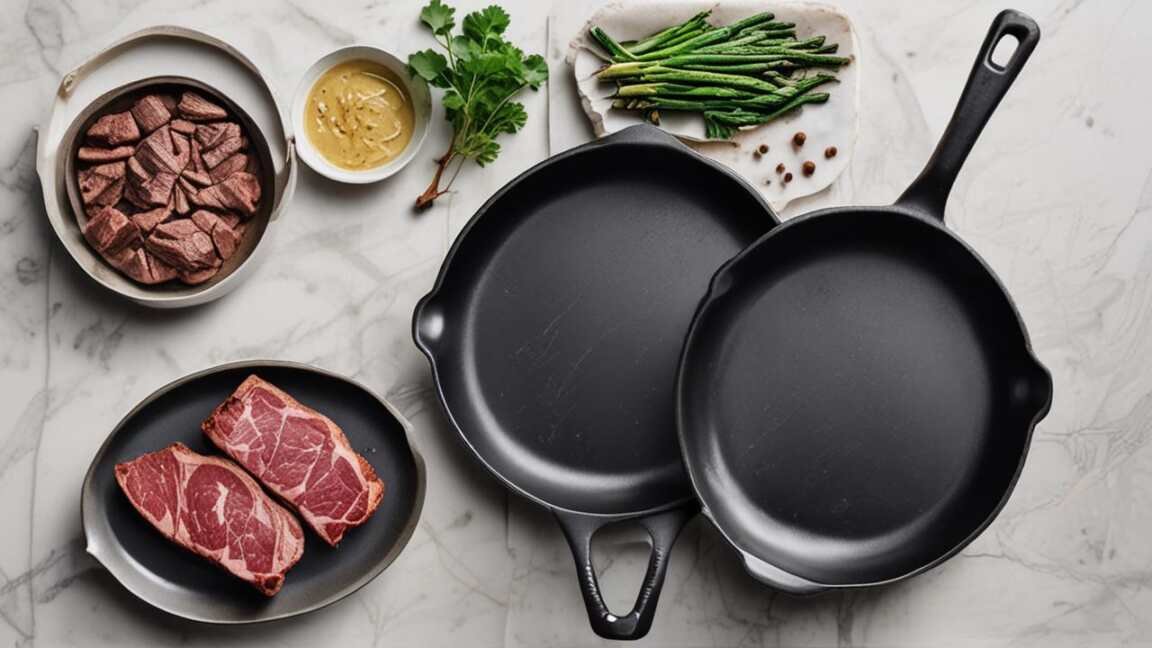
Ultimately, the choice between a skillet and a sauté pan comes down to your primary cooking style. The skillet excels at dry-heat, high-temperature cooking like searing and shallow frying, while the sauté pan is the master of one-pot, liquid-based dishes like braises and stews. Owning both provides the ultimate kitchen flexibility. A cast iron skillet provides excellent heat retention for searing steak to create a perfect crust.

Leave a Reply