
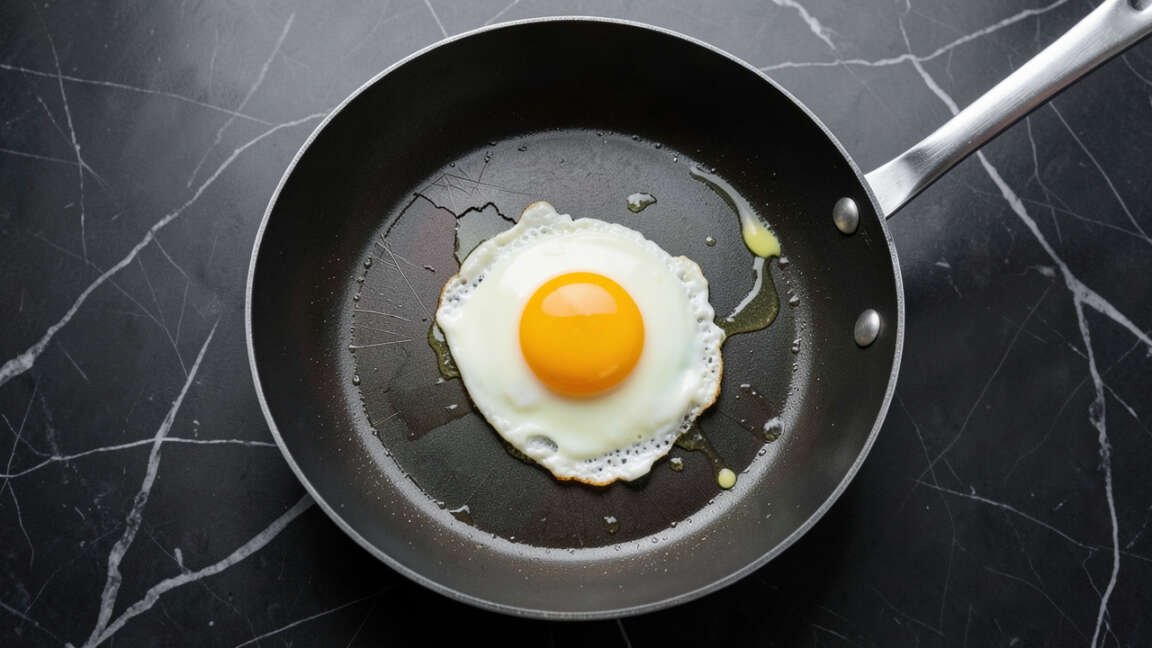
Eggs stick to non-stick pans primarily because of improper heat control, insufficient or incorrect oil use, and the gradual degradation of the pan’s coating over time. The most common mistakes include starting with a cold pan, overheating the surface which causes proteins to bond, and using oil past its smoke point or in too small a quantity. To prevent sticking, consistently preheat the pan at a moderate temperature, use an oil with a high smoke point in adequate amounts, and maintain the coating by avoiding abrasive cleaning methods.
Eggs are one of the trickiest foods to cook without sticking. Even on pans labeled non-stick, eggs can leave a mess that ruins both the meal and the pan. Understanding Why Eggs Stick to “Non-Stick” Pans: The Real Causes Explained helps you fix this problem for good.
When you know what causes the sticking, you can adjust your heat, oil, and cooking method to get perfect eggs every time. This saves you from scrubbing pans and wasting food.
Key Takeaways
- Heat control is the most important factor in preventing eggs from sticking to non-stick pans.
- The type and amount of oil you use directly affects how eggs release from the pan surface.
- Pan age and coating wear change how non-stick your pan really is over time.
- Preheating correctly makes a big difference in whether eggs stick or slide right off.
- Cleaning method affects how well your pan stays non-stick for future use.
Why Non-Stick Pans Lose Their Slip
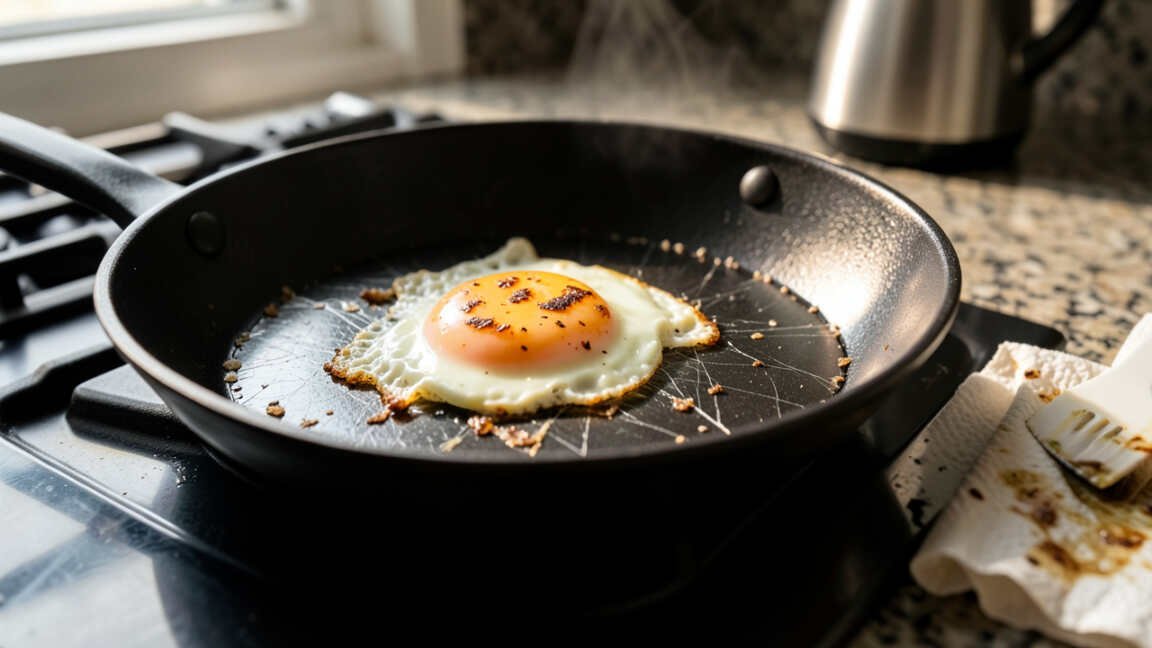
Non-stick pans have a special coating that helps food slide off. This coating is usually made from PTFE or ceramic materials. When the coating is new, eggs barely touch the pan.
But over time, things change. The coating can break down, get scratched, or lose its smoothness. That is when sticking starts.
Many people blame the pan right away. But the truth about Why Eggs Stick to “Non-Stick” Pans: The Real Causes Explained often comes down to how you use the pan. Heat, oil, and cooking method all play a big role.
Even a brand new pan can stick if you use it wrong.
The coating on non-stick pans works best at low to medium heat. High heat can damage the coating. Once the coating is damaged, food will stick more easily.
This is why following the pan instructions matters so much.
Heat works against the coating
Non-stick coatings are not made for high heat. When you turn the burner up too high, the coating starts to change. It can break down slowly over time.
Once that happens, tiny gaps form in the surface. Eggs then get into these gaps and stick.
The best temperature for non-stick pans is medium or lower. This keeps the coating safe and working well. High heat is the number one reason pans stop being non-stick.
Oil matters more than you think
Oil creates a barrier between the egg and the pan. Even on non-stick pans, this barrier helps. Without enough oil, the egg touches the pan directly.
This direct contact can cause sticking. The right amount of oil makes a huge difference.
Butter, cooking oil, and cooking spray all work. Some oils are better for high heat than others. Oils with a high smoke point like avocado or canola oil work well.
Butter adds flavor but can burn quickly. Pick the right fat for your cooking method.
How Pan Temperature Affects Egg Sticking
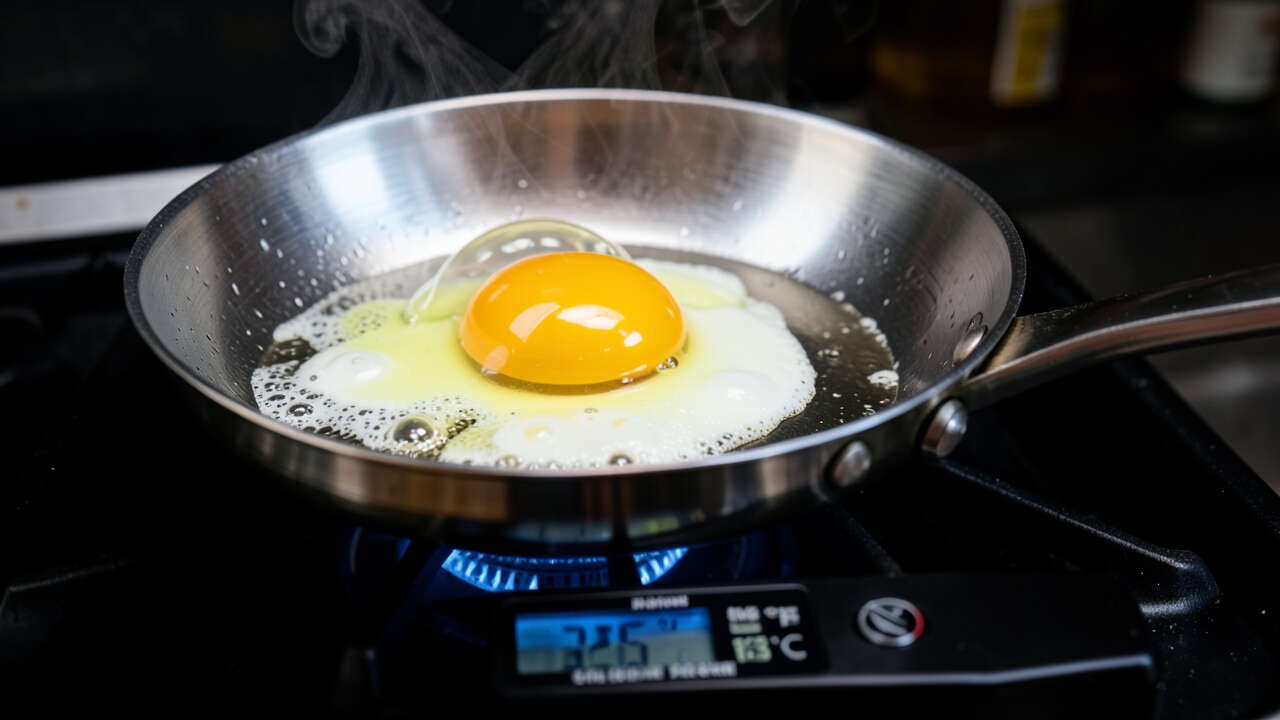
Temperature is one of the biggest reasons eggs stick. The pan needs to be at the right heat before you add eggs. If the pan is too cold or too hot, eggs will stick.
Getting the temperature right takes practice, but it is easy once you know what to look for.
Understanding Why Eggs Stick to “Non-Stick” Pans: The Real Causes Explained starts with heat. Heat changes how proteins in the egg behave. When the pan is too cold, the egg spreads out slowly.
It seeps into tiny scratches or pores in the pan. When the pan is too hot, the egg proteins bond hard to the surface.
Cold pan problems
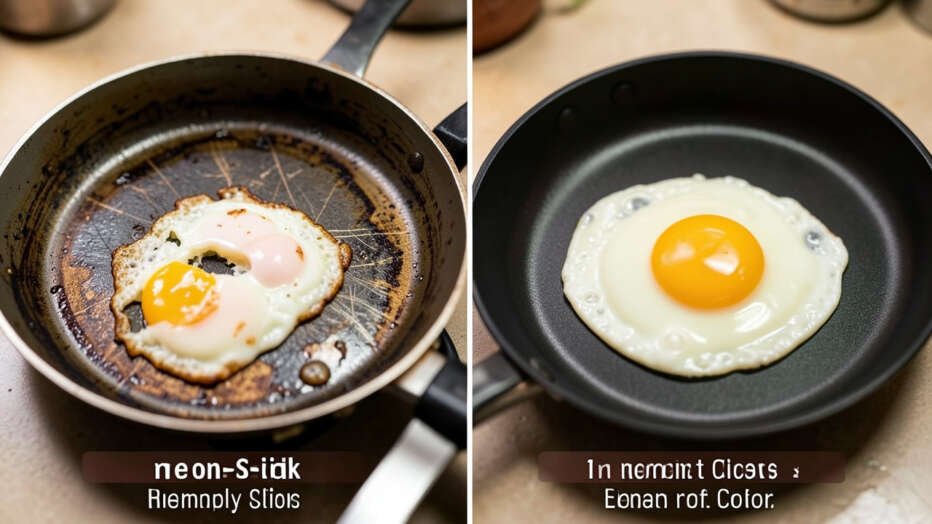
Putting eggs into a cold pan is a common mistake. The egg spreads out and takes too long to cook. During this time, the egg seeps into every tiny gap in the pan.
By the time the egg cooks, it is stuck in those gaps. This makes cleanup very hard.
First, always preheat your pan before adding any fat or eggs. Give the pan time to warm up evenly. A cold pan will almost always cause sticking.
Too hot creates a bond
High heat makes egg proteins tighten up fast. They form strong bonds with the pan surface. This is the same process that makes eggs cook solid, but it also makes them stick.
The hotter the pan, the stronger the bond.
Medium heat is the sweet spot for eggs. The pan should be warm but not smoking. If you see smoke when you add oil, the pan is too hot.
Let it cool down a bit before adding eggs.
What Your Cooking Oil Does For Eggs
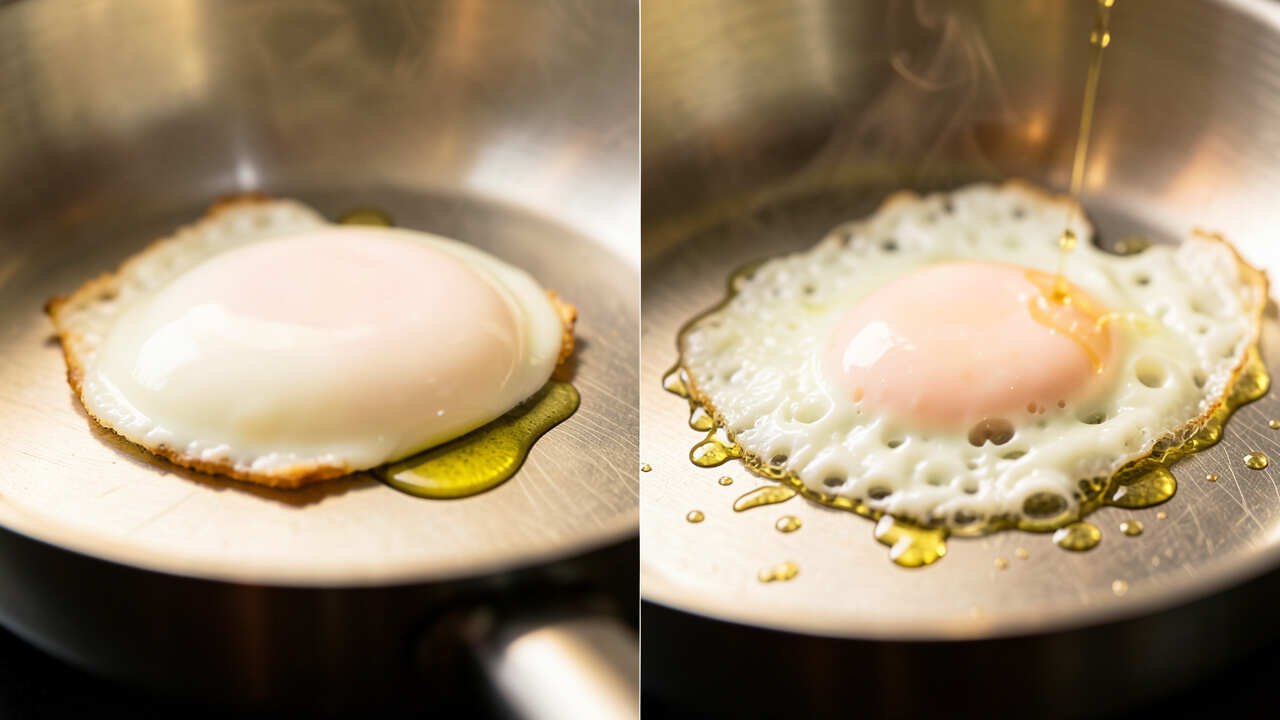
Oil does more than just add flavor. It fills in the tiny bumps and gaps on the pan surface. This creates a smooth layer that eggs can slide on.
Without oil, the egg touches the pan directly. Direct contact leads to sticking.
The amount of oil you use matters too. A thin layer of oil is usually enough. But if the pan is older or damaged, you may need more oil.
The oil acts as a cushion between the egg and the pan.
Smoke point and sticking
Every oil has a smoke point. This is the temperature where the oil starts to burn. When oil burns, it breaks down.
It no longer works as a non-stick barrier. Burnt oil also leaves a sticky residue on the pan.
Use oils with a medium to high smoke point for eggs. Butter has a lower smoke point but works fine on low heat. For medium heat, try canola, vegetable, or avocado oil.
These oils stay stable at the temperatures you need for eggs.
How much oil is enough
You do not need a lot of oil. About one to two teaspoons is enough for a single egg. Coat the bottom of the pan evenly.
Swirl the oil around so it covers the whole cooking surface. If you see dry spots, add a little more oil.
Some people use cooking spray. Cooking spray works well but can leave a sticky film over time. This film builds up and makes eggs stick later.
If you use spray, clean the pan well after each use.
How Pan Age Changes Cooking Results
Non-stick pans do not last forever. Most last about two to five years with normal use. Over time, the coating wears down.
This is a normal part of using a non-stick pan. As the pan ages, you may need to adjust how you cook.
This is another key part of Why Eggs Stick to “Non-Stick” Pans: The Real Causes Explained. An old pan may need more oil, lower heat, or shorter cooking times. If your pan is more than three years old, it may be time for a new one.
Coating wear over time
The non-stick coating gets thinner with each use. Scrubbing, high heat, and metal utensils all speed up this process. As the coating gets thinner, more of the pan surface is exposed.
This makes eggs more likely to stick.
You can test your pan by cooking a plain egg with a little oil. If it sticks even with proper heat and oil, the coating may be worn out. It might be time to replace the pan.
Scratches and damage
Scratches in the coating create places for eggs to grab onto. Even small scratches can cause sticking. Use wooden, silicone, or plastic utensils to protect the coating.
Never use metal utensils on non-stick pans.
Stacking pans on top of each other can also cause scratches. Place a soft cloth or paper towel between pans when storing them. This keeps the coating smooth and working well.
Simple Steps To Keep Eggs From Sticking
Now that you know the causes, here are the steps to fix them. These steps work for any non-stick pan. Follow them every time you cook eggs.
They will help you get perfect, slide-off eggs every time.
Preheat the right way
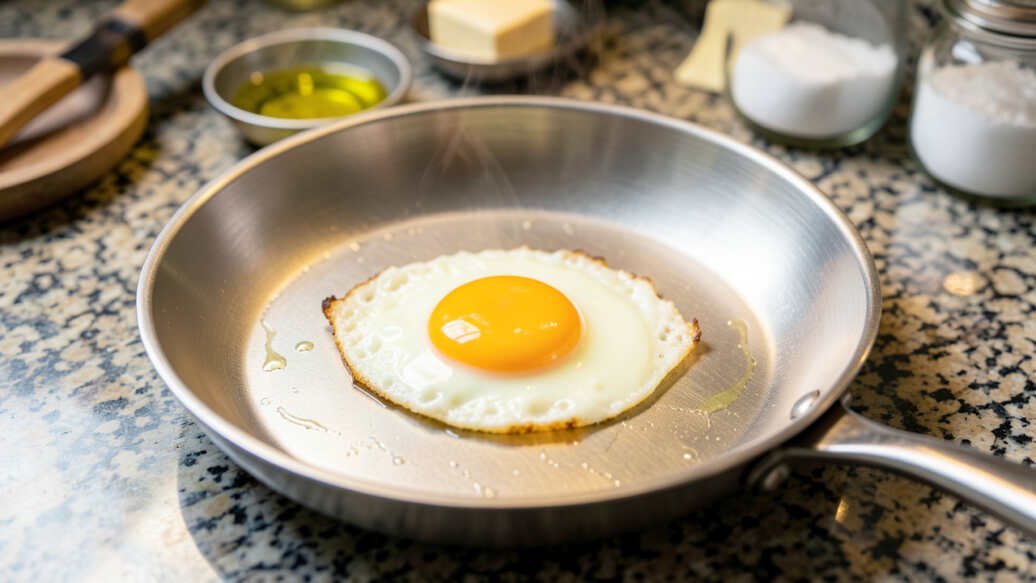
Place the pan on the burner over medium heat. Let it warm up for one to two minutes. The pan should be warm but not hot enough to smoke.
Test by sprinkling a few drops of water on the pan. If they sizzle and dance, the pan is ready.
Then, add your oil or butter. Swirl it around to coat the pan. Wait a few seconds for the oil to warm up.
Now add your eggs. This sequence helps prevent sticking.
Use the right fat
Butter gives eggs great flavor. Use about one tablespoon for two eggs. Let the butter melt and bubble but not brown. If it turns brown, the
Final Thoughts
Non-stick pans fail when the coating wears out, heat is too high, or you skip fat. Even quality pans need gentle heat, proper preheating, and a little oil to keep eggs from bonding. Understanding these real causes helps you fix sticking issues and extend your pan’s life.

Leave a Reply