
Cast iron does not heat evenly because it conducts heat slowly compared with aluminium or copper, so hot spots form if it is rushed.
It compensates via mass: a thick, heavy pan stores heat and resists temperature drops when food is added. Slow preheating, burner matching, and occasional rotation create better browning.
You’ve probably experienced it: a perfectly seared steak with a beautiful crust on one side, but a slightly less browned patch on the other. Or perhaps a simmering sauce that seems to have a hot spot, threatening to burn while the rest is just right. This inconsistency is a common observation with cast iron cookware.
However, the secret isn’t that cast iron is flawed; it’s that Cast Iron Does Not Heat Evenly It Compensates via Mass. Understanding this unique property will help you master your cast iron, leading to better cooking results and a more enjoyable time in the kitchen, ultimately keeping you engaged with your cooking projects.
Key Takeways
- Cast iron has low thermal conductivity, so heat spreads slowly across the surface, creating noticeable temperature differences at first.
- Its high thermal mass stabilizes cooking once heated, meaning it retains energy well and resists rapid temperature drops when food is added.
- “Even cooking” in cast iron comes from steadiness, not speed, as the pan evens out over time rather than distributing heat instantly like aluminum.
- Proper preheating is essential to performance, because once fully saturated with heat, cast iron’s mass helps maintain a consistent cooking environment despite initial unevenness.
![Cast Iron Does Not Heat Evenly It Compensates Via Mass[1]](https://kitchentipsdaily.com/wp-content/uploads/2026/06/Cast_Iron_Does_Not_Heat_Evenly_It_Compensates_Via_Mass1.jpg)
Mastering Cast Iron’s Unique Heat Distribution
Cast iron cookware is a beloved kitchen staple for many reasons. Its durability, longevity, and ability to retain heat are legendary. However, a frequent point of discussion among home cooks is how cast iron heats up.
Many observe that it doesn’t heat as uniformly as other materials like stainless steel or aluminum. This can lead to confusion and frustration when trying to achieve perfect cooking results. The key to understanding this phenomenon lies in the material’s inherent properties.
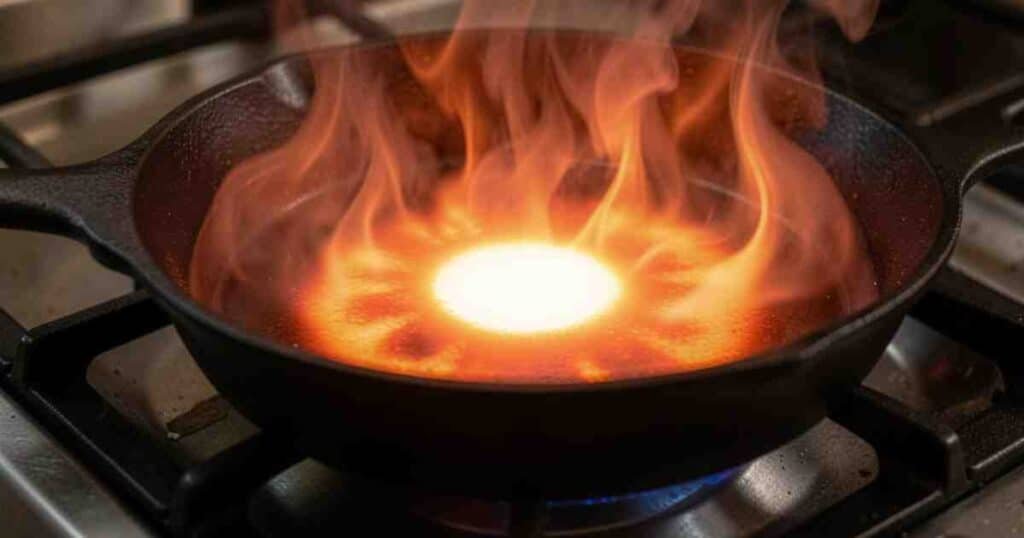
Instead of striving for perfect, instantaneous evenness, cast iron achieves its culinary prowess through a different mechanism: its incredible thermal mass.
When we talk about cookware heating evenly, we often think of materials that quickly distribute heat across their entire surface. This is typically achieved through high thermal conductivity. However, cast iron operates on a different principle.
While its thermal conductivity isn’t as high as some other metals, its thermal mass is exceptional. This means that once cast iron absorbs heat, it stores a significant amount of it. This stored heat is then released slowly and steadily, creating a cooking environment that is forgiving and consistently hot, even if the initial heat distribution isn’t perfectly uniform.
This characteristic is precisely why Cast Iron Does Not Heat Evenly It Compensates via Mass. The material itself acts as a heat reservoir. Imagine a stone wall that has been in the sun all day; it’s warm to the touch long after the sun has set.
Cast iron works similarly. It absorbs heat from the stovetop or oven and holds onto it. This stored heat then radiates outwards, gently and continuously, to the food being cooked.
This sustained heat release is what allows for that signature cast iron sear and prevents drastic temperature fluctuations that can occur with less massive cookware.
The Science Behind Cast Iron’s Heat Behavior
To truly appreciate how cast iron performs, it’s helpful to understand the basic principles of heat transfer. There are three primary ways heat moves: conduction, convection, and radiation. Cast iron excels in conduction and radiation due to its composition and density.
Conduction is the transfer of heat through direct contact. When you place cast iron on a hot burner, heat is conducted from the burner to the pan. Cast iron’s dense structure allows it to absorb this heat efficiently.
However, cast iron’s thermal conductivity is not as high as, say, copper or aluminum. This means heat doesn’t spread across its surface instantaneously. You might notice the part directly over the flame gets hotter faster than the edges.
This is the initial “uneven heating” that many people observe. But this is where the mass comes into play. Thermal mass refers to the ability of a material to absorb and store heat energy.
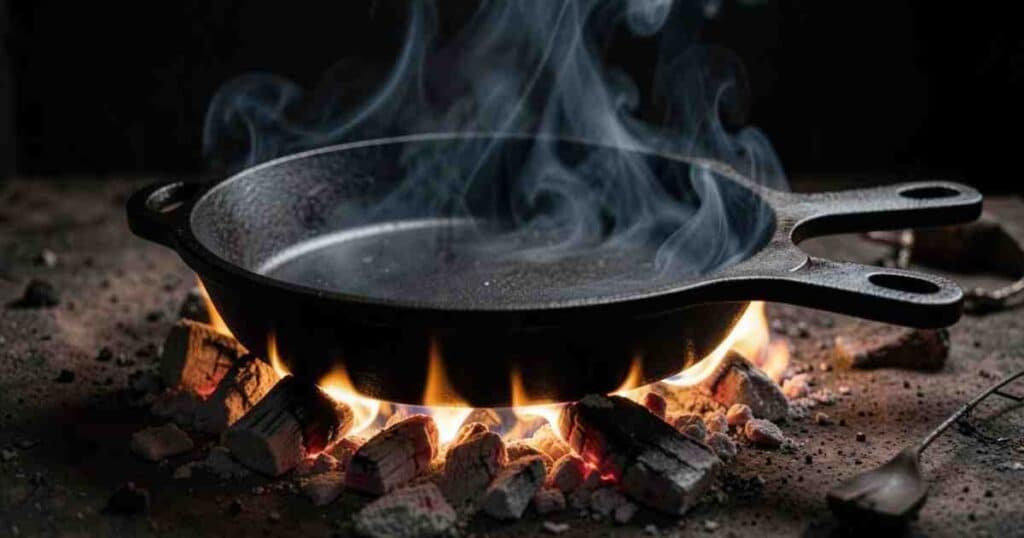
Once the cast iron has absorbed heat, its high thermal mass allows it to retain that energy for an extended period. This stored heat is then released gradually. This sustained heat release is crucial.
It provides a stable cooking temperature, which is ideal for achieving a good sear on meats, slow braising, or baking. The entire pan doesn’t need to be perfectly hot everywhere at once. Instead, the stored heat ensures that even cooler spots gradually receive enough warmth to cook food thoroughly and evenly over time.
This is the core of why Cast Iron Does Not Heat Evenly It Compensates via Mass.
How Mass Overcomes Initial Unevenness
The initial unevenness of heat in cast iron is a temporary state. As the pan continues to heat, the stored thermal energy begins to equalize. Heat will slowly conduct from the hotter areas to the cooler areas.
While this process takes longer than in highly conductive materials, the sheer volume of stored heat ensures that the entire cooking surface eventually reaches a high, consistent temperature. This sustained heat is far more important for many cooking tasks than rapid, but potentially fluctuating, evenness.
Think about baking bread in a cast iron Dutch oven. The thick walls and lid absorb a tremendous amount of heat from the oven. This heat is then radiated and conducted to the dough from all sides.
Even if the oven has slight hot or cool spots, the cast iron’s mass buffers these variations. The bread bakes evenly, developing a beautiful, crisp crust.
This is a prime example of how Cast Iron Does Not Heat Evenly It Compensates via Mass, providing a stable baking environment that other materials might struggle to replicate without constant temperature monitoring.
For searing, the high heat retention is key. You want a surface that can handle the rapid temperature drop when a cold piece of meat is introduced and then quickly recover.
Cast iron’s mass allows it to absorb the initial shock of the cold food, continue radiating heat, and then recover its temperature efficiently.
This results in that sought-after Maillard reaction – the browning that gives food its rich flavor and appealing appearance. The initial unevenness is quickly overcome by the persistent, stored heat.
Practical Applications and Cooking Techniques
Understanding that Cast Iron Does Not Heat Evenly It Compensates via Mass allows for specific cooking techniques that leverage its strengths. Preheating is paramount. Because cast iron takes time to absorb and distribute heat, a thorough preheating period is essential.
This ensures that the entire cooking surface has reached a consistent, high temperature before you add your food.
First, place your cast iron pan on the stovetop or in the oven at a medium-low heat. Allow it to heat up gradually for at least 5-10 minutes. You can test if it's ready by flicking a few drops of water onto the surface; they should evaporate almost instantly with a sizzle.If they dance around, it’s not hot enough yet.
Second, once preheated, you can add your cooking fat. A good quality oil or butter will help with both lubrication and further heat distribution. The fat will shimmer when the pan is at the correct temperature.
Next, add your food. For searing steaks, chicken, or fish, lay the food down carefully and resist the urge to move it immediately. Let the stored heat do its work, building a crust.
After a few minutes, you can flip it to cook the other side. The mass of the pan will help maintain a high surface temperature for a good sear on both sides.
Then, for dishes that require longer cooking times, like stews or braises, cast iron is exceptional. The slow, steady release of heat prevents scorching and ensures the food cooks gently and evenly over hours. This is where the “compensates via mass” aspect truly shines.
The evenness is achieved not through rapid conductivity, but through sustained thermal energy.
Finally, when baking, the dense material provides a stable environment that mimics a professional deck oven. This is why cast iron is so popular for baking pizzas, cornbread, and even cakes. The even distribution of heat from the mass ensures a consistent bake, preventing the dreaded soggy bottom or burnt edges.
Cast Iron vs. Other Cookware Materials
To further illustrate the unique properties of cast iron, let’s compare it to other common cookware materials. This comparison highlights why the principle that Cast Iron Does Not Heat Evenly It Compensates via Mass is so important to understand for optimal cooking.
| Heat Conductivity | Low to Moderate | Moderate | High | Very High |
| Thermal Mass (Heat Retention) | Very High | Low to Moderate | Moderate | Low |
| Initial Heat Distribution | Can be uneven | Generally even (with clad layers) | Very even | Extremely even |
| Heat Stability/Recovery | Excellent | Moderate | Good | Poor |
| Best For | Searing, braising, baking, frying | All-purpose cooking, sautéing | Quick cooking, sauces | Delicate sauces, precise temperature control |
| Durability | Extremely High | High | Moderate | Moderate |
As you can see from the table, stainless steel and aluminum offer faster heat distribution. This can be advantageous for quick tasks like making a delicate sauce where precise, immediate temperature control is needed. Copper is the champion of conductivity, reacting instantly to heat changes.
However, none of these materials possess the thermal mass of cast iron.
This means that while stainless steel might heat up quickly and evenly, it also loses heat quickly when you add cold ingredients. Aluminum is similar but can be prone to hot spots if not constructed with a thick base or clad layers. Copper, while magnificent for control, requires constant attention and can easily overheat or cool down too much.
Cast iron, on the other hand, provides a forgiving, stable cooking environment. The fact that Cast Iron Does Not Heat Evenly It Compensates via Mass means you get unparalleled heat retention, which is invaluable for achieving consistent results across a wide range of cooking methods.
Seasoning and Maintenance: Enhancing Heat Performance
The seasoning on a cast iron pan is more than just a non-stick coating. It's a layer of polymerized oils that actually enhances the pan's ability to conduct and distribute heat. A well-seasoned pan becomes smoother and develops a more uniform surface, which aids in the even distribution of the heat stored within its mass.
When you season cast iron, you’re essentially creating a natural, food-safe coating. This process involves heating oil until it breaks down and bonds to the metal. This layer fills in microscopic pores on the iron’s surface.
This smoother surface allows heat to transfer more efficiently from the pan to your food. While the fundamental property of Cast Iron Does Not Heat Evenly It Compensates via Mass remains, proper seasoning optimizes this process. The principle of thermal mass in buildings parallels how cast iron cookware stores and releases heat.
Regular maintenance is key to maintaining this seasoning. After cooking, wash your cast iron gently with hot water and a stiff brush or non-abrasive sponge. Avoid harsh detergents, which can strip the seasoning.
Dry the pan thoroughly immediately after washing, then place it back on a low heat for a minute or two to ensure all moisture is evaporated. Finally, apply a very thin layer of cooking oil to the entire surface, inside and out, and wipe off any excess. This simple routine protects your pan and ensures it performs at its best, leveraging its thermal mass effectively.
Troubleshooting Common Cast Iron Heat Issues
Even with an understanding of its properties, some common issues can arise. If you’re experiencing persistent hot spots or food sticking despite proper preheating, consider these points:
- Insufficient Preheating: This is the most common culprit. Remember, Cast Iron Does Not Heat Evenly It Compensates via Mass, but it needs time for that compensation to occur. Don’t rush the preheating process.
- Uneven Stovetop Heat: Some gas burners can create a very concentrated flame that heats only the center of the pan. If this is a persistent issue, try moving the pan around slightly during preheating or use a heat diffuser.
- Damaged Seasoning: If your seasoning is patchy or has worn away in spots, food will stick, and heat distribution will be compromised. Re-seasoning your pan can resolve this.
- Overheating: While cast iron retains heat well, it can also get excessively hot, leading to burning. Use medium heat for most cooking and only use high heat for short searing periods.
- Using the Wrong Utensils: Metal spatulas are generally fine for well-seasoned cast iron, but avoid scraping aggressively, which can damage the seasoning.
By addressing these potential problems, you can ensure your cast iron cookware is always performing optimally, allowing its unique thermal mass to work to your advantage.
Frequently Asked Questions Of Cast Iron Does Not Heat Evenly It Compensates Via Mass
Question: Does cast iron’s uneven heating mean it’s bad for delicate foods?
Answer: Not at all. While Cast Iron Does Not Heat Evenly It Compensates via Mass, its excellent heat retention and ability to recover temperature make it great for delicate foods once properly preheated. The stable, consistent heat prevents drastic temperature drops that can lead to sticking or uneven cooking.
Question: How long should I preheat cast iron?
Answer: For stovetop use, aim for at least 5-10 minutes on medium-low heat. For oven use, preheat the oven and the pan together for at least 15-20 minutes to ensure the mass has absorbed sufficient heat.
Question: Can I use cast iron on an induction cooktop?
Answer: Yes, most cast iron pans are induction-compatible because they are made of ferromagnetic material. The way cast iron heats up on induction is similar to other cooktops, relying on its mass for consistent cooking.
Question: Why does my cast iron seem to have a “hot spot”?
Answer: This is often due to the initial uneven heating. As the pan heats, the mass should help distribute the heat more evenly. If a persistent hot spot remains, it might be a stovetop issue or indicate damaged seasoning in that area.
Question: Is it true that cast iron’s mass makes it harder to control temperature?
Answer: It requires a different approach. Instead of instant control, you manage temperature by controlling the heat source and allowing the pan’s mass to stabilize. Understanding that Cast Iron Does Not Heat Evenly It Compensates via Mass helps you anticipate its behavior.
Question: How does seasoning affect the evenness of cast iron heating?
Answer: A good seasoning layer fills in microscopic pores, creating a smoother surface. This smoother surface aids in more uniform heat transfer from the pan to the food, complementing the heat distribution provided by its mass.
Final Thoughts
Cast iron’s unique cooking ability stems from its substantial thermal mass. While it may not heat up instantly or perfectly evenly, this characteristic is precisely what allows it to compensate and provide stable, consistent heat for superior cooking results. Master its preheating and maintenance, and you’ll unlock its full potential. The concept of thermal mass article explains why heavy cookware like cast iron retains heat so effectively.

Leave a Reply