
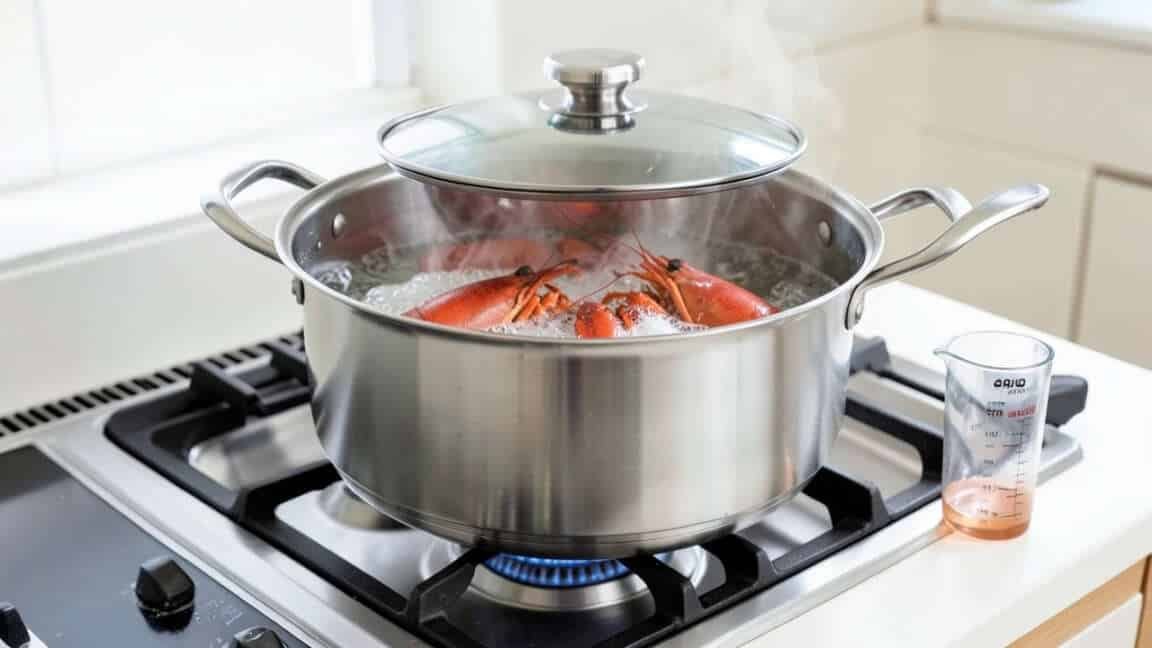
To pick a stockpot for boiling lobster without spillover, choose one with a minimum 20-quart capacity and a wide 12- to 14-inch diameter with tall straight sides to contain the rolling boil. Thick aluminum or tri-ply stainless steel ensures even heat distribution and prevents scorching, while a tight-fitting lid and riveted handles are essential for safe handling and spill prevention. These specifications directly eliminate overcrowding and boil-overs, delivering clean, perfectly cooked lobsters every time.
Choosing the right stockpot for boiling lobster is the single most important step to avoid messy spillover and ensure perfectly cooked seafood every time. A pot that is too small leads to overcrowding, uneven cooking, and dangerous boil-overs that can extinguish your burner. This guide covers the exact size, material, and design features you need to select a stockpot that handles lobsters cleanly and safely.
Simply put, your stockpot must hold at least 20 quarts, have a wide 12-14 inch diameter, and be made from thick aluminum or stainless steel with a tri-ply base. A tight-fitting lid and reinforced handles are non-negotiable for preventing spillover when boiling lobster.
Key Takeaways
- A stockpot for boiling lobster needs a minimum 20-quart capacity to prevent overcrowding and spillover.
- Opt for a 12 to 14-inch diameter with tall straight sides to keep boiling water contained.
- Thick aluminum or tri-ply stainless steel provides even heat distribution and prevents scorching.
- Features like a pasta insert, lid lock, and riveted handles improve safety and ease of use.
- Always fill the pot no more than two-thirds full to leave room for the lobsters and rolling boil.
Why Stockpot Size Matters for Boiling Lobster
Boiling lobster is not like simmering soup. The water must stay at a vigorous rolling boil even after you drop in cold lobsters. If your pot is too small, the temperature drops dramatically and never recovers, resulting in rubbery meat.
Worse, the water level rises rapidly when you add lobsters, forcing scalding water over the rim.
A proper stockpot for boiling lobster gives the water enough surface area and volume to maintain heat. According to the Lobster Institute at the University of Maine, each lobster needs at least 3 quarts of boiling water to cook evenly. For a standard 1.5 to 2-pound lobster, that means a family meal of four lobsters requires a 20-quart pot minimum.
Here is a quick capacity guide based on how many lobsters you plan to boil at once:
| Number of Lobsters | Minimum Pot Size | Water Volume Needed |
|---|---|---|
| 1-2 lobsters | 16 quarts | 8-10 quarts |
| 3-4 lobsters | 20 quarts | 12-14 quarts |
| 5-6 lobsters | 24-30 quarts | 16-20 quarts |
| 7-8 lobsters | 36+ quarts | 22+ quarts |
A pot that is too small forces you to crowd the lobsters, which leads to uneven cooking and a higher risk of spillover. Always size up if you are between sizes.
What is the Ideal Stockpot Capacity for Lobster?
The ideal stockpot for boiling lobster is 20 to 24 quarts for most home cooks. This size comfortably handles 3 to 4 lobsters at once, which covers a standard family dinner or small gathering. A 20-quart pot also leaves enough headspace so that when you add lobsters, the water level stays well below the rim.
Professional kitchens often use 40-quart or 60-quart pots, but those are impractical for home stoves. Most residential burners cannot heat a pot larger than 30 quarts efficiently. If you need to cook more than 6 lobsters, boil them in batches instead of buying an oversized pot that won’t heat evenly on your stove.
Consider these capacity-related tips when shopping:
- Choose 20 quarts as your baseline for 3-4 lobsters.
- Go up to 24 quarts if you cook lobsters larger than 2 pounds each.
- Never fill the pot more than two-thirds full with water before adding lobsters.
- A 16-quart pot works for 1-2 lobsters but leaves little margin for spillover.
- For crab or crawfish boils, step up to 30 quarts since those shells take more volume.
- Check your stovetop burner size matches the pot base width.
Warning: Do not use a pressure cooker or stockpot with a narrow base for boiling lobster. The narrow neck traps steam and forces water out explosively when you drop in the lobsters. Stick to straight-sided pots with even diameter from bottom to top.
How to Choose the Right Stockpot Diameter
Diameter is just as critical as volume. A tall, narrow pot may hold 20 quarts but its small surface area causes the water to foam and bubble up rapidly. Foam from lobster shells and released proteins builds pressure inside a narrow column and pushes water over the top.
A wider pot gives the foam room to dissipate.
Look for a stockpot with a diameter of 12 to 14 inches. This width provides enough surface area for the water to release steam without erupting. The height should be roughly equal to the diameter or slightly taller.
A 12-inch diameter paired with a 12-inch height is the classic lobster pot proportion.
Here are the recommended dimensions for a stockpot for boiling lobster without spillover:
| Pot Capacity | Recommended Diameter | Recommended Height |
|---|---|---|
| 16 quarts | 10-11 inches | 10-11 inches |
| 20 quarts | 12 inches | 12 inches |
| 24 quarts | 12-13 inches | 13-14 inches |
| 30 quarts | 13-14 inches | 14-15 inches |
Notice that the height is always close to the diameter. That ratio prevents the water column from becoming too tall and unstable. A pot that is much taller than it is wide will amplify boil-over problems.
What Stockpot Material Works Best for Lobster Boiling?
Material affects heat distribution, durability, and how easily the pot cleans up after a lobster boil. The three most common materials are aluminum, stainless steel, and anodized aluminum. Each has trade-offs for a stockpot for boiling lobster.
Aluminum is the best heat conductor. It heats quickly and evenly, reducing hot spots that can cause local boiling surges. However, uncoated aluminum reacts with acidic ingredients like lemon juice or vinegar.
Since many lobster recipes call for lemon or vinegar in the water, anodized aluminum is a better choice.
Stainless steel with a tri-ply or multi-clad base offers excellent durability and is non-reactive. The aluminum or copper core sandwiched between stainless steel layers provides even heating. These pots are heavier and more expensive, but they last for decades.
Fully clad stainless steel pots (not just a disk on the bottom) heat more evenly up the sides.
Here is a comparison of the common materials:
| Material | Heat Conductivity | Durability | Best For |
|---|---|---|---|
| Aluminum (uncoated) | Excellent | Moderate | Budget-friendly, light weight |
| Anodized Aluminum | Excellent | High | Non-reactive, even heating |
| Stainless Steel (tri-ply) | Very Good | Very High | Long-term investment, easy clean |
| Enameled Cast Iron | Good | Very High | Heat retention (but very heavy) |
For most home cooks, anodized aluminum or tri-ply stainless steel in the 20-24 quart range is the sweet spot. These materials heat evenly, resist corrosion, and clean up without staining from lobster shells.
Tip: If you have a glass-top electric stove, choose a tri-ply stainless steel pot with a flat, polished base. Uneven aluminum bottoms can scratch or damage glass cooktops. Stay away from warped or dented pots.
How to Prevent Spillover When Boiling Lobster
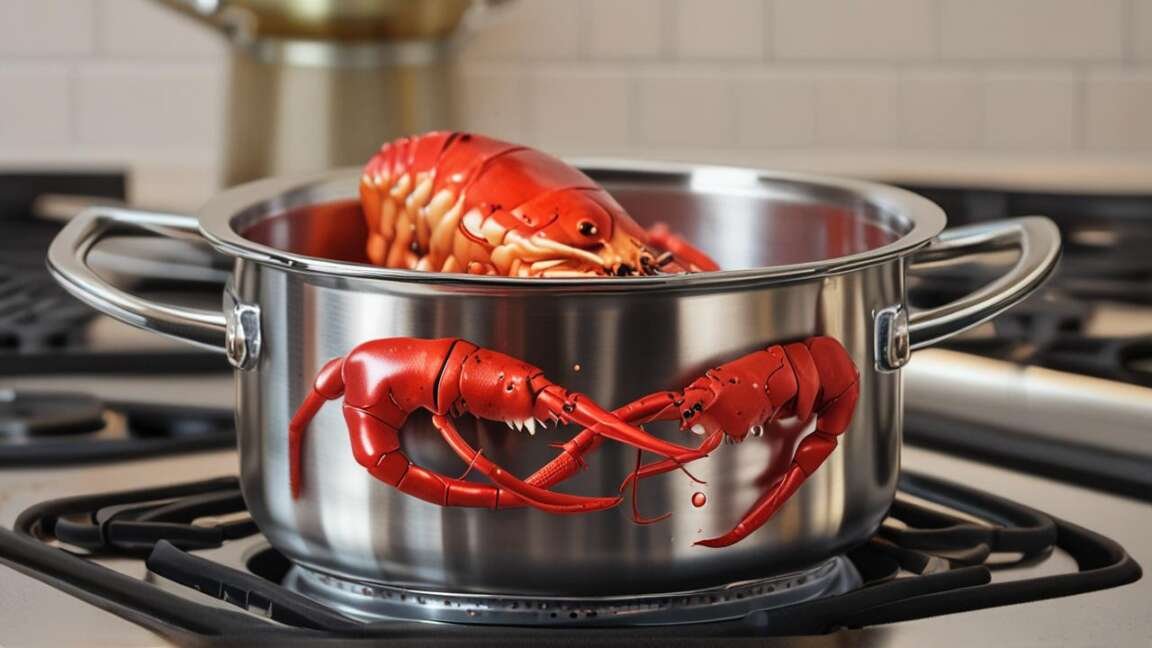
Spillover happens for two main reasons: the water level is too high, or the foam from lobster shells builds up and overflows. You can prevent both with proper technique and the right pot design. A good stockpot for boiling lobster has features that actively reduce boil-over risk.
First, never fill the pot more than two-thirds full with water. When you lower lobsters into the pot, the water level rises by about 2 to 3 inches. If you start at two-thirds full, the final water level stays about 2 inches below the rim.
That gap is your safety margin.
Second, add a tablespoon of salt and a splash of vinegar to the water. The vinegar helps coagulate proteins in the shell foam, making the foam less voluminous and easier to control. Some cooks also add a pat of butter to the water surface, which breaks surface tension and reduces bubble formation.
Here are proven techniques to minimize spillover:
- Place the pot slightly off-center on the burner to leave room for a spoon or skimmer.
- Lower lobsters head-first using tongs, not by dropping them from height.
- Reduce heat to medium-high after adding lobsters to prevent violent boiling.
- Keep a wooden spoon across the top of the pot to break foam bubbles.
- Use a pot with a pouring rim or spout to control draining later.
- Set a baking sheet under the pot to catch any small spills.
Important: A common mistake is turning the heat to maximum and leaving it there. Once the water returns to a boil after adding lobsters, turn the heat down to medium or medium-low. A gentle rolling boil cooks lobster perfectly without aggressive bubbling that causes spillover.
If you frequently cook lobster, consider a pot with a built-in strainer or pasta insert. The insert lifts the lobsters out of the water without you having to tip the heavy pot. This eliminates the most dangerous moment for spillover: pouring out the hot water.
Key Stockpot Features to Look For
Beyond size and material, specific design features make a stockpot for boiling lobster safer and more practical. Pay attention to handles, lid fit, and bottom construction when evaluating options.
Riveted handles are essential. Screwed-on handles can loosen over time and become a safety hazard. Look for two heavy-gauge stainless steel or cast iron handles welded or riveted to the side.
They should be angled outward so you can grip them with oven mitts even when the pot is full of boiling water.
The lid should fit snugly but have a small steam vent. A tight lid helps water come to a boil faster, but a tight seal can also trap pressure and cause spillover. A vented lid or one with a small hole releases steam gradually and reduces the chance of the lid lifting from internal pressure.
Here are the top features ranked by importance:
- Riveted handles — welded or riveted, not screwed, and heat-resistant.
- Thick base — at least 3mm thick for aluminum, or tri-ply for stainless steel.
- Flat bottom — essential for contact with induction or glass cooktops.
- Pouring spout — small lip on either side for controlled pouring.
- Measurement markings — etched or embossed inside the pot for water volume.
- Lid with steam vent — small hole or loose-fitting design to release pressure.
- Induction-compatible — magnetic base if you use an induction cooktop.
A pot with these features will serve you for years, whether you are boiling lobster once a month or hosting annual seafood feasts. Cheap pots with thin bases create hot spots that cause uneven boiling and more foam, increasing the chance of spillover.
Common Mistakes When Picking a Lobster Stockpot
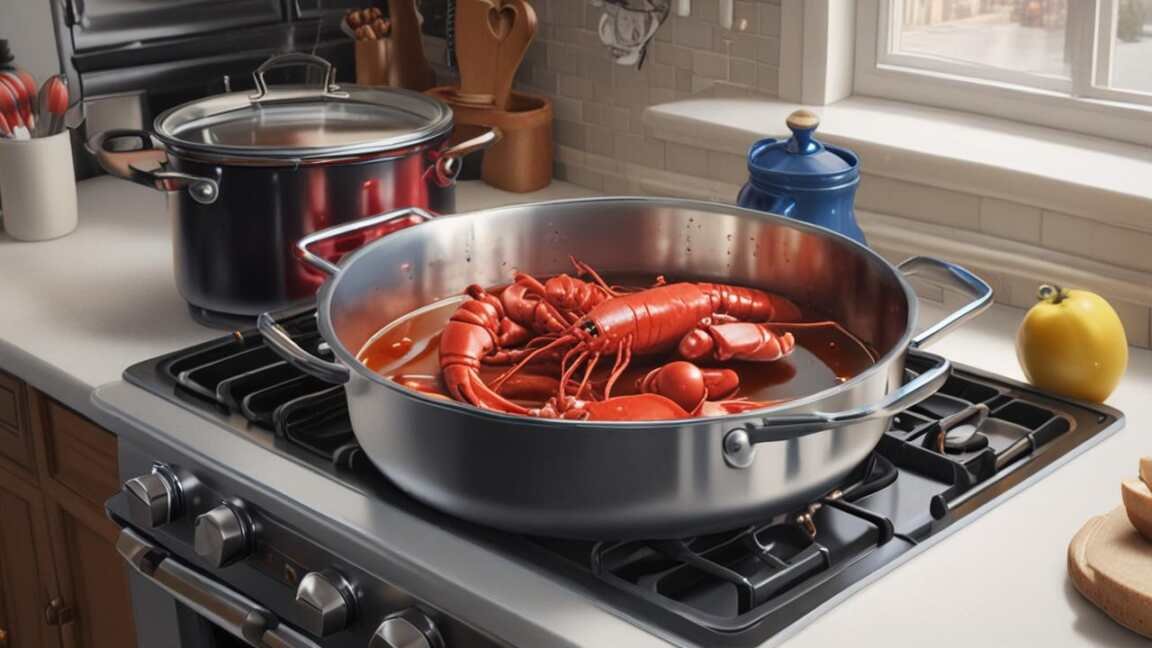
Shoppers often make errors that lead directly to spillover problems. Knowing these mistakes upfront helps you avoid wasting money on the wrong stockpot for boiling lobster.
The most common mistake is buying a pot that is too tall and narrow. A 20-quart stockpot that is 14 inches tall but only 9 inches in diameter will foam over violently. The narrow surface area traps steam and foam, sending water shooting upward.
Always prioritize diameter over height.
Another mistake is choosing a pot with a thin aluminum bottom. Thin pots heat unevenly, creating localized boiling zones. One spot may be bubbling furiously while another barely simmers.
That uneven boiling produces more foam and makes spillover unpredictable. Look for a pot with a thick, encapsulated base.
Here is a list of frequent mistakes and their solutions:
- Mistake: Buying a 16-quart pot for 4 lobsters. Solution: Go up to 20 quarts.
- Mistake: Choosing a pot with a narrow neck or tapered sides. Solution: Pick straight or slightly flared sides.
- Mistake: Overlooking handle quality. Solution: Test handles in-store for sturdiness and heat resistance.
- Mistake: Buying without a lid. Solution: Always get a tight-fitting lid with a vent.
- Mistake: Ignoring the weight of the pot. Solution: Ensure you can lift the pot with water and lobsters.
- Mistake: Forgetting about storage space. Solution: Measure your cabinet or shelf before buying.
Tip: Before purchasing, fill the pot with water at the store (if possible) and check the weight. A 20-quart pot filled with 14 quarts of water weighs over 30 pounds. If you cannot lift it comfortably, look for a lighter material like anodized aluminum.
Stockpot Maintenance Tips for Longevity
Even the best stockpot for boiling lobster will degrade if not maintained properly. Lobster shells contain calcium deposits and proteins that can stain and corrode certain metals. Routine care keeps your pot performing well for decades.
After each use, wash the pot with warm soapy water and a non-abrasive sponge. Do not use steel wool on stainless steel or anodized surfaces. The scratches create micro-crevices where food particles and minerals build up, leading to pitting over time.
Dry the pot immediately to prevent water spots.
If you notice white crusty deposits from boiling lobster, soak the pot in a solution of equal parts white vinegar and water for 30 minutes. The vinegar dissolves calcium carbonate from the shells. Rinse thoroughly and dry.
This also helps remove any lingering seafood odor.
Follow these maintenance steps to extend the life of your pot:
- Hand wash only — dishwasher detergents can discolor aluminum.
- Dry immediately after washing to avoid mineral deposits.
- Store with a paper towel inside to absorb humidity if the lid is sealed.
- Polish stainless steel with a dedicated cleaner every few uses.
- Check handle rivets annually for looseness and tighten if needed.
- Do not use the pot for deep frying — oil residue is hard to clean from lobster pots.
- Avoid stacking heavy pots inside your lobster pot to prevent dents.
A well-maintained stockpot retains its heating performance and reduces the risk of spillover because the base stays flat and the surface remains smooth. Warped or pitted bottoms cause uneven boiling, which increases foam production and spillover risk.
Frequently Asked Questions
Can I boil lobster in a regular pasta pot?
You can, but only if the pasta pot holds at least 16 quarts and has straight sides. Most pasta pots are narrower and taller, which increases spillover risk. If you use a pasta pot, fill it no more than halfway and watch the boil closely.
What size stockpot do I need for one lobster?
A 16-quart stockpot is sufficient for one or two lobsters. This gives you enough water volume to maintain a rolling boil and enough headspace to prevent foam from overflowing. For a single lobster, you could get away with 12 quarts, but that leaves very little margin.
How much water should I put in a stockpot for lobster?
Fill the pot no more than two-thirds full with water. For a 20-quart pot, that is roughly 13 to 14 quarts of water. The remaining headspace accommodates the lobsters and allows the water to bubble without spilling over the rim.
What is the best material to prevent lobster boil spillover?
Thick anodized aluminum or tri-ply stainless steel are the best materials. They heat evenly, which prevents localized aggressive boiling that causes foam and spillover. Avoid thin stainless steel or uncoated aluminum that heats unevenly.
Do I need a special pot for lobster or can I use any large pot?
Any large pot with at least 16-20 quarts capacity, straight sides, and a flat base will work. However, a dedicated lobster pot often has features like a pasta insert, pouring spouts, and reinforced handles that make the process safer and cleaner. If you boil lobster more than twice a year, invest in a proper stockpot.
Final Thoughts
Picking the right stockpot for boiling lobster comes down to three things: at least 20 quarts of capacity, a wide 12-14 inch diameter, and thick material that heats evenly. Avoid narrow, tall pots and always leave room for the water to bubble. With the correct pot and smart boiling technique, you will cook perfect lobsters without a dangerous spillover mess.
Invest in quality once and enjoy safe, effortless seafood boils for years.

Leave a Reply