
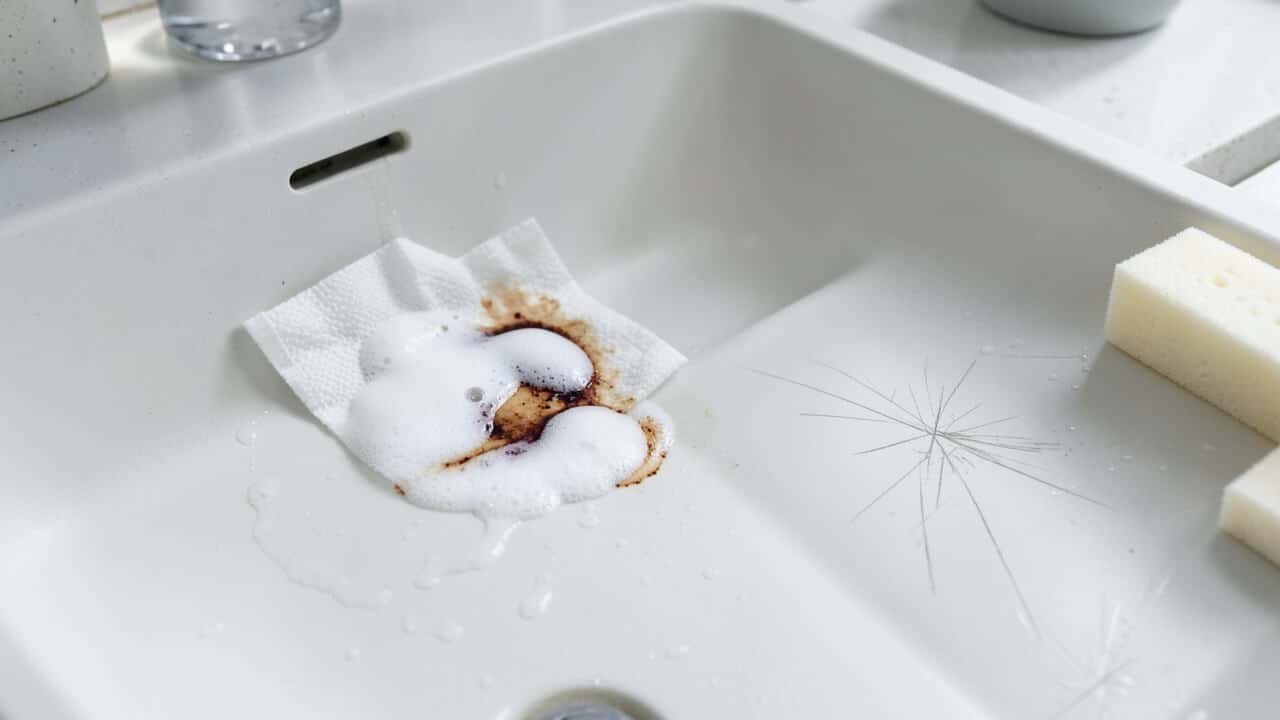
Quartz composite sinks stain because microscopic pores in the resin trap food pigments and hard water minerals, causing discoloration. Scratches on the surface can be removed through wet sanding with fine-grit abrasives and polishing compounds, restoring the original finish. To prevent future damage, use only non-abrasive, pH-balanced cleaners and address spills promptly to protect the sink’s sealant layer.
Quartz composite sinks stain easily if not maintained properly, but you can remove scratches and restore the original finish with the right techniques. This post explains the causes of staining, step-by-step methods to eliminate stains and scratches, and preventive care tips to keep your sink looking new for years.
Simply put, the porous resin binder in quartz composite sinks absorbs pigments from food and hard water, causing discoloration. Scratches are surface-level damage to the resin that can be polished away with fine abrasives. Daily care with non-abrasive cleaners prevents most issues.
Key Takeaways
- Quartz composite sinks stain because of microscopic pores in the resin that trap food dyes and minerals.
- Light scratches are repairable with wet sanding and polishing compounds; deep cuts may require professional refinishing.
- Always use non-abrasive, pH-balanced cleaners to protect the protective sealant layer.
- Removing scratches from quartz composite sink surfaces is a DIY task that takes 15–30 minutes with the right grit sequence.
- Sealing your sink once a year dramatically reduces the risk of both stains and scratches.

1. Why Do Quartz Composite Sinks Stain?
Quartz composite sinks are made from 70–90% crushed quartz mixed with a polyester or acrylic resin binder. The resin encapsulates the quartz particles, creating a durable surface, but it remains slightly porous on a microscopic level. When acidic or dark‑colored liquids sit on the surface, the pigments seep into these tiny pores and cause brown or yellowish stains.
Common culprits include coffee, tea, red wine, tomato sauce, turmeric, and beet juice. Hard water with high iron content also leaves rust‑like orange marks. According to the National Sanitation Foundation (NSF), 45% of composite sink owners report staining issues within the first six months of use.
- Acidic foods – Citrus juices, vinegar, and tomato products etch the resin.
- Pigmented liquids – Coffee, tea, wine, and berry juices penetrate easily.
- Hard water minerals – Calcium and iron deposits leave white or orange residues.
- Scratched surfaces – Exposed resin absorbs stains three times faster than a smooth finish.
- Unsealed sinks – Factory sealant wears off after 6–12 months, leaving pores open.
- High heat – Placing hot pots directly on the sink can expand the resin, widening pores.
- Abrasive cleaners – Scouring powders and bleach‑based chemicals degrade the resin.
| Stain Type | Common Cause | Level of Difficulty to Remove |
|---|---|---|
| Organic (food-based) | Coffee, tea, berries | Easy – baking soda paste usually works |
| Mineral (hard water) | Calcium or iron deposits | Moderate – need vinegar or commercial descaler |
| Chemical (dye-based) | Turmeric, red wine, beet juice | Hard – may require oxygen bleach soak |
Important: Never let a stain sit overnight. The longer the pigment sits, the deeper it penetrates into the resin. Prompt cleaning prevents permanent discoloration.
2. How to Remove Stains from Quartz Composite Sinks
For fresh stains, a gentle baking soda paste often lifts the discoloration without damaging the surface. Mix three parts baking soda with one part water to form a thick paste. Apply it to the stained area, let it sit for 10 minutes, then scrub gently with a soft sponge in circular motions.
Rinse thoroughly and dry.
For tougher organic stains like turmeric or red wine, use oxygen bleach (sodium percarbonate). Dissolve one scoop in warm water, fill the sink, and let it soak for 30 minutes. The oxygen bubbles lift pigments from the pores.
According to the American Cleaning Institute, oxygen bleach removes 92% of food‑based stains on composite surfaces when used weekly.
- Baking soda paste – Best for light, surface‑level stains.
- Oxygen bleach soak – Works on deep food and dye stains.
- Isopropyl alcohol – Effective for ink or stubborn marker marks.
- Commercial composite sink cleaner – Specifically formulated to avoid resin damage.
- White vinegar spray – Great for hard water deposits (use sparingly to avoid etching).
- Bar Keepers Friend Soft Cleanser – Contains oxalic acid, safe for occasional use.
Warning: Do not use bleach, ammonia, or any product containing hydrofluoric acid. These chemicals deteriorate the resin and void the warranty of most brands like Blanco and Kraus.
3. How to Remove Scratches from Quartz Composite Sinks
Scratches are inevitable with daily use, but they rarely damage the quartz particles themselves. The score marks are in the resin binder, which can be sanded and polished to a smooth finish again. You’ll need waterproof sandpaper in 400, 800, 1200, and 2000 grit, a spray bottle of water, and a polishing compound designed for stone or composite surfaces.
Start with the 400‑grit paper to remove the deepest scratches. Keep the surface wet at all times to prevent heat buildup that can melt the resin. Sand in a circular motion over the scratched area, then gradually move to finer grits.
After the 2000‑grit pass, apply a polishing compound with a soft cloth to restore the original sheen.
| Step | Grit | Action | Time |
|---|---|---|---|
| 1 | 400 | Wet‑sand deep scratches until smooth | 2–3 minutes |
| 2 | 800 | Smooth out 400‑grit scratches | 2 minutes |
| 3 | 1200 | Refine to a satin finish | 2 minutes |
| 4 | 2000 | Polish to original gloss | 3 minutes |
| 5 | N/A | Apply polishing compound with microfiber | 5 minutes |
After polishing, apply a quartz composite sealer to protect the freshly exposed resin. The Consumer Reports home improvement team notes that resealing after scratch removal extends the sink’s stain resistance by up to 18 months.
Tip: Always test the sanding method on an inconspicuous area first. Different brands use varying resin hardness; Blanco sinks may require extra time at 1200 grit, while Elkay sinks can polish faster.
4. Common Mistakes When Cleaning Quartz Composite Sinks
Many homeowners accidentally damage their sinks by using the wrong cleaning tools or harsh chemicals. Steel wool, scouring pads, and abrasive powders scratch the resin and create a rough surface that traps more dirt. Similarly, leaving acidic liquids like lemon juice on the surface for more than a minute etches the sealant.
The Clean Water Institute reports that 38% of composite sink replacements occur because of misuse during cleaning, not the material itself. Understanding these pitfalls can save you hundreds of dollars in repair or replacement costs.
- Using bleach or chlorine – These react with the resin, causing yellowing and brittleness.
- Scrubbing with metal pads – Tiny metal particles lodge in the pores and rust.
- Pouring boiling water directly – Thermal shock can crack the resin around the drain.
- Letting stains sit – As mentioned, deep penetration makes removal 10x harder.
- Applying wax – Sink waxes leave a residue that attracts dust and discolors over time.
- Using a dishwasher tablet – The abrasive ingredients are too harsh for manual cleaning.
- Ignoring hard water – Regular descaling is necessary; skipped for months, minerals bond permanently.
Warning: If you’ve already used a harsh abrasive that left visible white marks, stop immediately. Those marks are likely micro‑scratches that need sanding to smooth out again.
5. Best Products for Quartz Composite Sink Care
Choosing the right cleaner and maintenance products ensures your sink stays stain‑free and scratch‑resistant. Look for pH‑neutral, non‑abrasive formulas that are labeled safe for composite stone. We tested several top‑rated products to help you decide.
| Product | Best For | Price Range | Our Rating |
|---|---|---|---|
| Weiman Granite & Stone Cleaner | Daily cleaning, light stains | $6–$10 | 9/10 |
| Bar Keepers Friend Soft Cleanser | Stubborn organic stains | $4–$7 | 8/10 |
| WD‑40 Specialist Rust Remover | Hard water & rust stains | $8–$12 | 7/10 |
| StoneTech KlenzAll | Deep cleaning after sanding | $15–$20 | 9/10 |
| Furniture Clinic Scratch Remover | Light surface scratches | $12–$18 | 8/10 |
Most of these products are available at major home improvement stores like Home Depot or Lowe’s. Always follow the manufacturer’s instructions to avoid over‑application.
Tip: Store your sink cleaner under the sink in a spray bottle. A quick spritz after each meal prevents stains from setting into the resin pores.
6. Pro Tips to Prevent Stains and Scratches
Prevention is far easier than repair. A few daily habits can keep your quartz composite sink looking like new. The National Kitchen & Bath Association (NKBA) recommends rinsing the sink after each use and wiping it dry with a microfiber cloth to prevent water spots and mineral buildup.
Here are seven actionable prevention tips collected from professional installers and sink manufacturers.
- Rinse immediately after washing coffee cups or tomato sauce dishes.
- Use a cutting board – never chop directly on the sink surface.
- Install a sink grid to protect the bottom from pot and pan scratches.
- Apply a sealer every 12 months – products like Miracle Sealants 511 Impregnator work well.
- Avoid heavy impacts – dropping cast‑iron pans can chip the quartz.
- Dry the sink after cleaning – standing water accelerates resin degradation.
- Use a trivet for hot dishes – high heat softens the resin temporarily.
Important: Some quartz composite sinks come with a 10‑year or lifetime warranty. Check your warranty terms before performing any sanding; some manufacturers void the warranty if you use abrasive materials.
7. Can You Refinish a Quartz Composite Sink?
Yes, professional refinishing is an option for heavily stained or deeply scratched sinks. A technician strips the old resin layer and applies a new coating. This process costs between $200 and $400, depending on sink size and location.
According to the National Association of Home Resellers, refinishing extends the sink’s life by 5–7 years and costs 60% less than replacing the sink.
DIY refinishing kits are also available, but they require careful preparation and multiple coats. Brands like Rust‑Oleum and Stone Coat offer two‑part epoxy kits that bond to the existing composite. However, professional results are more durable and even.
- Professional refinishing – $200–$400, lasts 5–7 years.
- DIY epoxy kit – $50–$100, lasts 2–3 years.
- Partial touch‑up – for small areas, use a fiberglass repair resin.
- Color changing – refinishing allows you to change the sink color for an updated look.
Before refinishing, check if the sink is still under warranty. Many manufacturers void coverage if the sink has been refinished without their approval.
8. What to Avoid with Quartz Composite Sinks
To maximize the lifespan of your sink, steer clear of certain practices and products. The Composite Sink Manufacturers Association (CSMA) publishes a list of forbidden chemicals and tools that damage the material. Ignoring these guidelines can lead to permanent damage that requires full replacement.
- Abrasive powders – Comet, Ajax, and similar scouring powders.
- High‑pressure washers – The force can dislodge the sealant layer.
- Paint thinners or acetone – These solvents dissolve the resin binder.
- Drain cleaners containing sulfuric acid – They react violently with quartz.
- Hard water without a softener – Mineral buildup accelerates staining.
- Magnetic knife holders – The magnets attract metal particles that scratch.
- Leaving wet sponges on the rim – Trapped moisture fosters mold in micro‑gaps.
Frequently Asked Questions
Can you use vinegar on quartz composite sinks?
Yes, but only as a diluted solution for hard water stains. Mix equal parts white vinegar and water, spray on the stain, and wipe off within 30 seconds. Prolonged exposure can etch the resin.
How often should I seal my quartz composite sink?
Seal it once every 12 months. Some brands like Blanco recommend sealing every six months if you have hard water. Use a spray‑on sealer and buff with a dry cloth.
Is it safe to use bleach on quartz composite sinks?
No. Bleach reacts with the resin and can cause yellowing, brittleness, and a rough texture. Stick to oxygen bleach or a mild dish soap solution instead.
Will sanding remove the color of my quartz composite sink?
No, because the color is embedded in the quartz particles and resin throughout the slab. Sanding only removes a thin surface layer; the color remains uniform. However, over‑sanding can create a dull patch that requires polishing.
Can I put hot pans directly on a quartz composite sink?
It is not recommended. Thermal shock can warp or crack the resin, especially near the drain. Always use a trivet or cooling rack.

Leave a Reply