
To test if your oven thermostat is lying to you, place a reliable oven thermometer on the center rack, preheat to a set temperature, and compare the reading after 15–20 minutes.
Repeat at two or three temperatures. If readings are consistently off by more than about 25°F, the thermostat may need calibration or repair.
Your cake came out burnt on the edges and gooey in the middle. Your roast chicken is dry on the outside but still pink inside. These frustrating cooking failures often point to a common culprit: an inaccurate oven thermostat.
It’s like having a chef who can’t follow instructions! Learning How To Test if Your Oven Thermostat Is Lying to You is the first step to baking and roasting perfection.
This guide will equip you with simple, effective methods to check your oven’s true temperature, ensuring your meals are cooked just right and saving you from wasted ingredients and disappointment.
Key Takeaways
- You will learn simple methods to verify your oven’s actual temperature.
- You will understand why an inaccurate oven thermostat ruins your cooking.
- You will discover how to use common kitchen tools for testing.
- You will know when it’s time to consider thermostat repair or replacement.
- You will gain confidence in achieving consistent cooking results.
![How To Test If Your Oven Thermostat Is Lying To You[1]](https://kitchentipsdaily.com/wp-content/uploads/2026/06/How_To_Test_If_Your_Oven_Thermostat_Is_Lying_To_You1.jpg)
Why Oven Temperature Accuracy Matters for Your Cooking
Cooking is a science, and temperature is its most critical variable. When your oven’s thermostat is off, it throws off the entire cooking process. Baking, in particular, relies on precise heat.
Too hot, and your delicate cakes or cookies burn before they cook through. Too cool, and they might not rise properly or develop the right texture. Even savory dishes suffer.
A roast might be undercooked in the center while the exterior dries out, or a casserole might take far too long to heat through.
An inaccurate oven thermostat can lead to consistently disappointing results. You might find yourself constantly adjusting cooking times or temperatures, guessing what the oven is really doing. This leads to wasted food, wasted energy, and a lot of frustration.
Understanding How To Test if Your Oven Thermostat Is Lying to You helps you regain control in the kitchen. It ensures your recipes turn out as intended, every time.
Signs Your Oven Thermostat Might Be Off
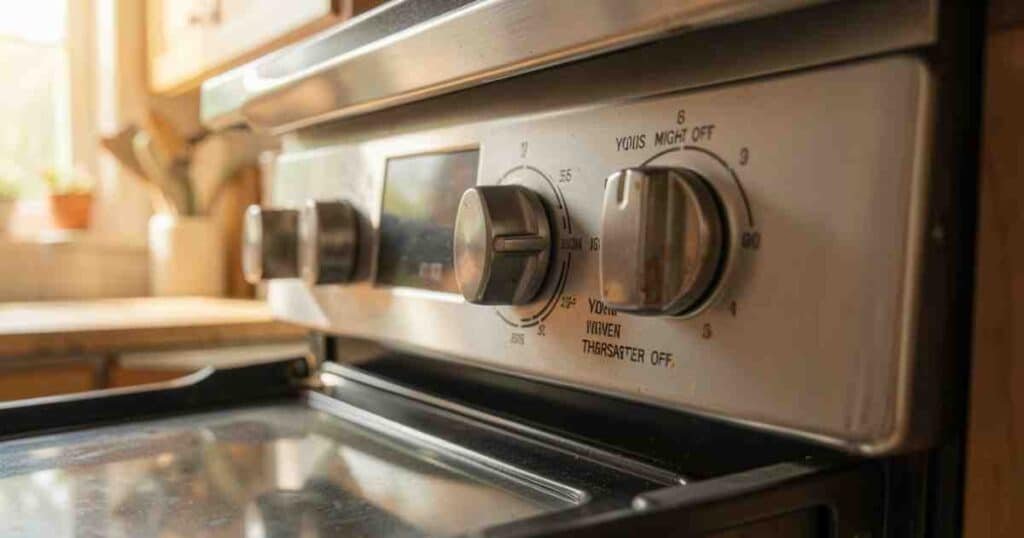
Before you grab your tools, look for tell-tale signs that your oven isn’t performing as it should. These are often the first indicators that it’s time to check How To Test if Your Oven Thermostat Is Lying to You.
Common Cooking Problems
- Uneven Baking: Cakes with burnt edges and raw centers, or cookies that are crisp on the outside and doughy within.
- Slow Cooking Times: Food takes significantly longer to cook than the recipe suggests, even at the correct temperature setting.
- Overcooked or Burnt Food: Recipes consistently turn out dry, tough, or burnt, even when you try to follow instructions carefully.
- Food Not Cooking Through: Meats or casseroles remain undercooked in the center while the outside appears done.
- Temperature Fluctuations: You notice significant temperature swings when the oven is supposed to maintain a steady heat.
Visual Clues
Sometimes, the oven itself gives hints. If you notice the oven door seal looks damaged or warped, it might be letting heat escape, affecting the internal temperature.
Also, if your oven takes an unusually long time to preheat, it could indicate an issue with the heating element or the thermostat’s ability to accurately sense and maintain temperature.
Essential Tools for Testing Your Oven Thermostat
You don’t need a professional toolkit to check your oven’s accuracy. Most of the items you’ll need are likely already in your kitchen.
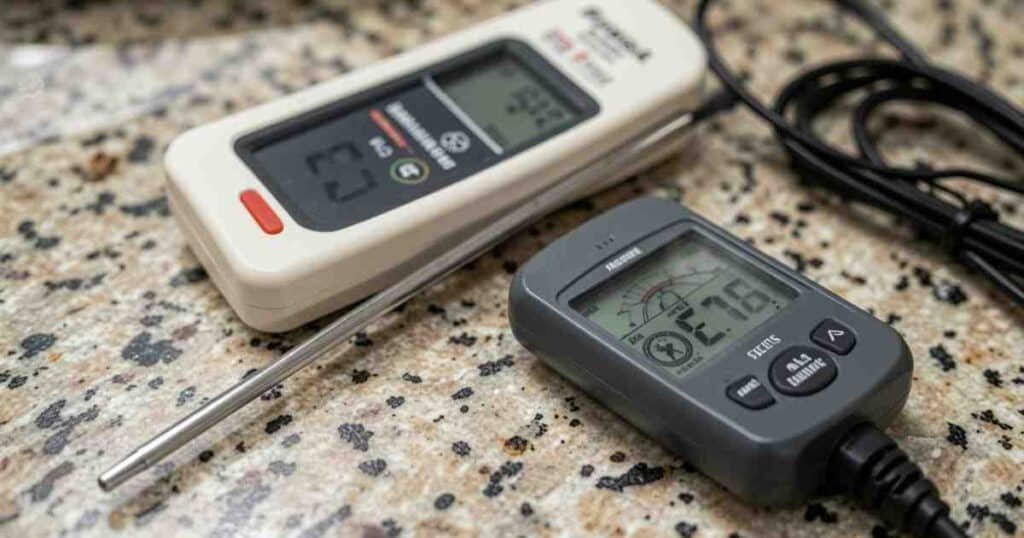
Knowing How To Test if Your Oven Thermostat Is Lying to You is made easy with these common tools.
- Oven Thermometer: This is your most important tool. An oven thermometer is designed to sit inside your oven and give you an independent reading of the actual temperature. They are inexpensive and readily available at grocery stores, department stores, and online.
- Reliable Recipes: Use recipes that you know work well and have clear temperature and time guidelines. This provides a baseline for comparison.
- Timer: To accurately track preheating and cooking times.
- Oven Mitts: For safely handling hot items and the thermometer.
- Patience: Testing takes time, so be prepared to let your oven run for a bit.
Method 1: The Oven Thermometer Test
This is the most straightforward and reliable way to determine How To Test if Your Oven Thermostat Is Lying to You. It involves using a separate, calibrated oven thermometer to get a true reading of the internal temperature.
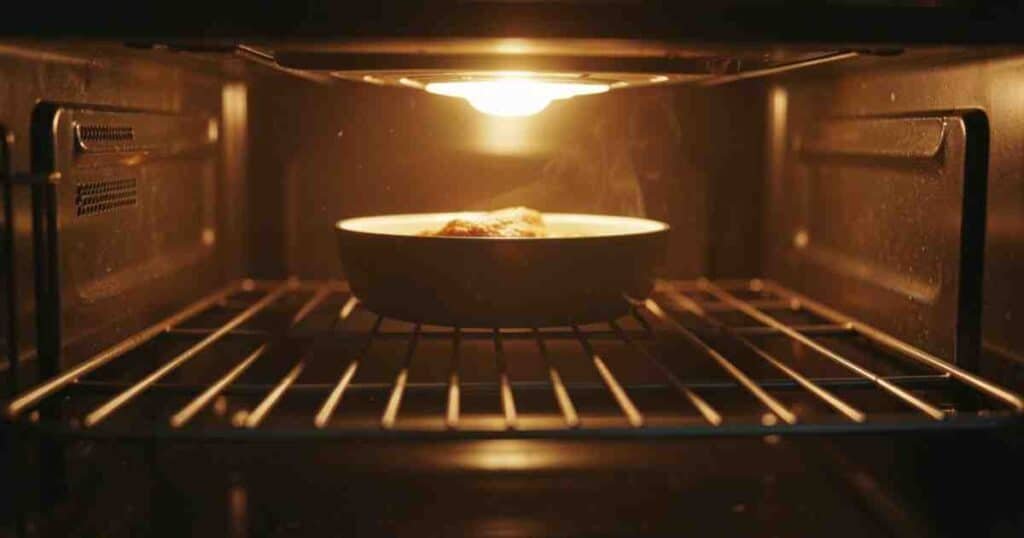
- Place the Oven Thermometer: Position your oven thermometer in the center of the oven rack. Avoid placing it directly on the oven floor or the top heating element. The center is usually the most representative spot for even cooking.
- Preheat Your Oven: Set your oven to a common baking temperature, such as 350°F (175°C). Allow the oven to preheat completely. Most ovens have an indicator light that turns off when the set temperature is reached, but it’s best to let it run for at least 15-20 minutes after that light goes off.
- Observe the Reading: After the oven has preheated and rested for a bit, check the temperature displayed on your oven thermometer.
- Compare and Record: Compare the oven thermometer’s reading to the temperature you set on your oven dial. Note down the difference. For example, if you set the oven to 350°F and the thermometer reads 325°F, your oven is running 25°F cooler.
- Test at Different Temperatures: Repeat this process at various temperature settings (e.g., 300°F, 400°F, 450°F). Ovens can be inaccurate at different points in their temperature range. This comprehensive check is key to understanding How To Test if Your Oven Thermostat Is Lying to You accurately.
Interpreting Your Results
A difference of 10-15°F is generally considered acceptable and within normal variance for most ovens. However, if your oven thermometer consistently reads 25°F or more above or below the set temperature, your thermostat is likely inaccurate. This significant discrepancy means your oven is not heating to the temperature you think it is.
Method 2: The Simple Baking Test
If you don’t have an oven thermometer handy, you can still get a good idea of your oven’s accuracy through a simple baking test. This method helps confirm if your thermostat is lying by observing how a familiar recipe behaves.
- Choose a Reliable Recipe: Select a recipe known for its sensitivity to temperature, like a simple sugar cookie or a basic cake. Ensure you have all the ingredients and follow the recipe precisely.
- Preheat Accurately: Set your oven to the temperature specified in the recipe. Preheat it for at least 20 minutes after the indicator light suggests it’s ready.
- Bake as Directed: Place your cookie dough or cake batter in the center of the oven. Set your timer for the minimum recommended baking time.
- Observe the Outcome: Carefully check the food when the timer goes off. Are the cookies golden brown and cooked through? Is the cake golden, springing back when lightly touched, and free of wet spots in the center? If the cookies are pale and underdone, or the cake is still gooey, your oven is likely too cool. If they are burnt on top but undercooked inside, it’s likely too hot.
- Adjust and Re-test (Optional): You can try adjusting the oven dial by a small increment (e.g., 10-15°F) and baking another batch or continuing to bake the original batch if possible. This helps you gauge How To Test if Your Oven Thermostat Is Lying to You by trial and error.
What to Look For
The results of this baking test can be very telling. If your baked goods are consistently undercooked or overcooked despite following the recipe perfectly, it’s a strong indication that your oven temperature is not what you’re setting it to. This method gives you practical feedback on your oven’s performance.
Method 3: The Water Boiling Test
This is a less common but still effective method for checking oven accuracy, especially for higher temperatures.
It relies on the scientific principle that water boils at a specific temperature under standard atmospheric pressure.
- Prepare Your Water: Fill a heatproof bowl or pot with about 2 cups of water.
- Place in Oven: Put the water-filled container in the center of your oven.
- Set Oven Temperature: Set your oven to 300°F (150°C). Let it preheat and then continue to run for at least 20 minutes.
- Observe Boiling: After 20 minutes, carefully open the oven door and observe the water. It should be at a rolling boil.
- High Temperature Check: For higher temperature checks, you can set the oven to 400°F (200°C) and place the water in. Water still boils around 212°F (100°C) at sea level, so if the water is not boiling vigorously at 400°F, it suggests the oven is running much cooler than indicated. This is another way to understand How To Test if Your Oven Thermostat Is Lying to You.
Interpreting the Boiling Test
If the water is boiling vigorously at 300°F, it suggests your oven is reaching at least 212°F. If it’s barely simmering or not boiling at all, your oven is significantly cooler than set. This test is a good starting point, especially if you suspect your oven is running very cold.
Comparing Oven Performance: Thermostat vs. Actual Temperature
Understanding the difference between what your oven says it’s doing and what it’s actually doing is crucial. The table below illustrates a common scenario where an oven thermostat might be inaccurate.
| 300°F (150°C) | 275°F (135°C) | -25°F (-15°C) |
| 350°F (175°C) | 320°F (160°C) | -30°F (-17°C) |
| 400°F (200°C) | 370°F (185°C) | -30°F (-17°C) |
| 450°F (230°C) | 415°F (213°C) | -35°F (-19°C) |
As you can see from the table, this particular oven consistently runs cooler than the dial indicates. This is a classic example of How To Test if Your Oven Thermostat Is Lying to You and the outcome you might discover. The consistent offset helps you compensate by turning the dial up higher than you normally would.
Oven Thermostat Accuracy: What is Acceptable?
For most home cooks, an oven that is within 10-15°F of the set temperature is considered accurate enough.
This small variance is unlikely to significantly impact most recipes. However, for precision baking, especially with delicate pastries or breads, tighter control is better.
If your oven consistently deviates by 25°F or more, it’s time to consider adjustments or repairs. Understanding How To Test if Your Oven Thermostat Is Lying to You empowers you to make informed decisions about your appliance. Consistent inaccuracy can lead to food waste and frustration, making the effort to test worthwhile.
When to Consider Repair or Replacement
After you’ve performed the tests and confirmed a significant temperature discrepancy, you have a few options. The decision often depends on the age and overall condition of your oven.
Minor Adjustments and Compensation
If the temperature difference is minor (e.g., 15-25°F), you can often compensate. Simply adjust your oven dial to a higher temperature than the recipe calls for. For instance, if your oven runs 25°F cool, set it to 375°F for a recipe that calls for 350°F.
Keep notes on your oven’s specific tendencies. This is a practical way to manage How To Test if Your Oven Thermostat Is Lying to You without immediate repair.
Thermostat Repair
For ovens that are relatively new or in good condition otherwise, repairing or replacing the thermostat might be a cost-effective solution. A faulty thermostat is a common issue. You can often find
When Replacement is Best
If your oven is very old, has other issues (like malfunctioning heating elements, broken door seals, or control panel problems), or if the cost of repair is close to the price of a new oven,
Frequently Asked Questions Of How To Test If Your Oven Thermostat Is Lying To You
Question: How often should I test my oven thermostat?
Answer: It’s a good practice to test your oven thermostat at least once a year, or whenever you notice consistent cooking problems. This helps ensure it remains accurate.
Question: My oven is only a year old, can the thermostat still be wrong?
Answer: Yes, even newer ovens can have thermostats that are slightly off. Manufacturing tolerances exist, and sometimes a thermostat can be miscalibrated from the factory. Learning How To Test if Your Oven Thermostat Is Lying to You is important for any oven.
Question: What is the acceptable temperature range for an oven?
Answer: Generally, an oven is considered accurate if it’s within 10-15°F of the set temperature. Larger deviations suggest a problem.
Question: Can a dirty oven affect temperature readings?
Answer: While a very dirty oven might slightly impact heat distribution, it typically doesn’t directly cause the thermostat to lie about the internal temperature. The thermostat’s accuracy is more about its internal calibration and any potential malfunctions.
Question: If my oven runs hot, what should I do?
Answer: If your oven consistently runs hotter than set, you can compensate by reducing the set temperature slightly for recipes. If the difference is significant, consider repair or replacement.
Question: How do I know if the oven thermometer itself is accurate?
Answer: You can test your oven thermometer by placing it in boiling water. It should read 212°F (100°C) at sea level. If it’s significantly off, you may need a new thermometer.
Question: Is it hard to replace an oven thermostat?
Answer: Replacing an oven thermostat can range from easy to moderately difficult depending on your oven model. If you’re not comfortable with appliance repair, it’s best to call a professional. This is a key step after you figure out How To Test if Your Oven Thermostat Is Lying to You.
Final Thoughts
Knowing How To Test if Your Oven Thermostat Is Lying to You is empowering. By using simple tools like an oven thermometer or familiar recipes, you can accurately gauge your oven’s true temperature. This prevents wasted ingredients and ensures your culinary creations turn out perfectly every time.
Don’t let an inaccurate thermostat frustrate you in the kitchen any longer.

Leave a Reply