
Pressure canning vs. pressure cooking has a clear safety boundary: pressure cooking prepares food to eat now, while pressure canning preserves low-acid foods for shelf storage.
Low-acid foods need a tested pressure canner, correct pressure, and processing time to control botulism risk. A normal pressure cooker is not a safe substitute for canning.
You’re standing in your kitchen, a basket full of garden-fresh tomatoes or a package of meat from a great sale. You want to preserve this bounty or cook a quick, hearty meal. Two appliances come to mind: the pressure cooker and the pressure canner.
They look similar, and both involve building up steam pressure. But understanding the critical differences between Pressure Canning vs. Pressure Cooking: The Safety Boundary is vital for food safety and successful results.
This post will clarify their distinct purposes, helping you choose the right tool and use it safely.
Key Takeaways
- Understand the fundamental purpose difference: canning for preservation, cooking for speed.
- Learn why pressure canners reach higher temperatures essential for killing spoilage microorganisms.
- Recognize that pressure cookers do not reach the specific temperatures needed for safe home canning.
- Identify the safety features and construction differences that make each appliance suitable for its intended use.
- Grasp the risks of using a pressure cooker for canning, which can lead to spoiled or dangerous food.
- Discover how choosing the correct appliance ensures food safety and quality.
![Pressure Canning Vs. Pressure Cooking The Safety Boundary[1]](https://kitchentipsdaily.com/wp-content/uploads/2026/06/Pressure_Canning_Vs._Pressure_Cooking__The_Safety_Boundary1.jpg)
The Core Difference: Preservation vs. Preparation
At its heart, the distinction between pressure canning and pressure cooking lies in their ultimate goals. Pressure cooking is about making food tender and flavorful in a fraction of the usual time. It’s a culinary shortcut for meals.
Pressure canning, however, is a method of food preservation. Its primary aim is to kill all spoilage-causing microorganisms and enzymes to keep food safe to eat for months or even years.
This fundamental difference in purpose dictates everything else about these appliances, from their design to their operating temperatures. Understanding this core purpose is the first step in grasping the Pressure Canning vs. Pressure Cooking: The Safety Boundary.
One is for your dinner tonight; the other is for your pantry tomorrow.
How Pressure Canning Achieves Safe Food Preservation
Safe home canning relies on reaching specific internal food temperatures that destroy harmful bacteria, yeasts, and molds. For low-acid foods like meats, vegetables, and poultry, this temperature must be at least 240°F (116°C). This is where the pressure canner truly shines.
A pressure canner operates by creating a sealed environment where steam builds up. This steam pressure raises the boiling point of water significantly. At 10 pounds per square inch (psi) of pressure, the temperature inside a pressure canner reaches 240°F (116°C).
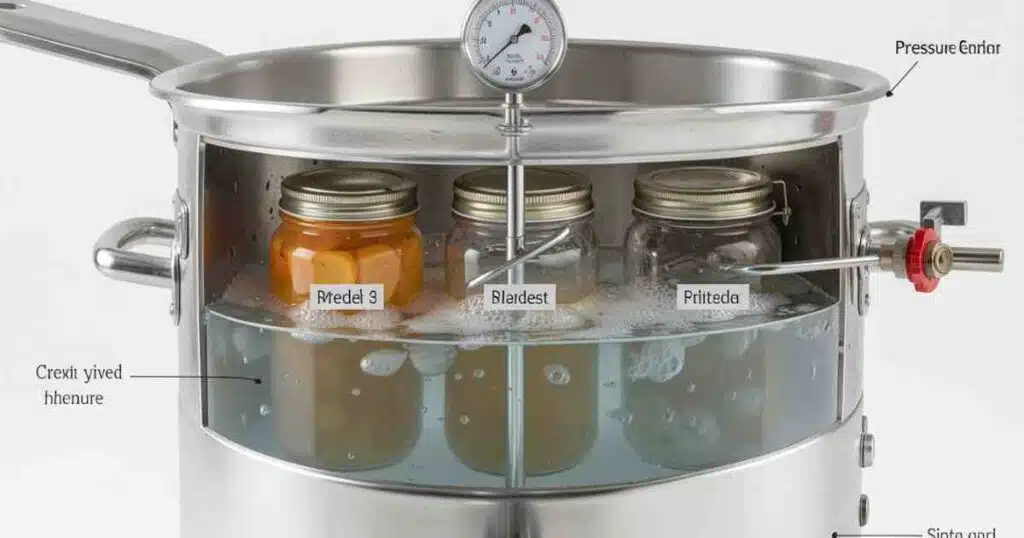
At 15 psi, it reaches 250°F (121°C). These higher temperatures are crucial for eliminating dangerous pathogens like Clostridium botulinum, the bacteria that causes botulism, a potentially fatal illness.
The long processing times at these elevated temperatures ensure that the heat penetrates the food thoroughly, making it shelf-stable.
Without this specific temperature and time combination, low-acid foods can remain susceptible to spoilage and dangerous microbial growth. This is the critical safety boundary that pressure canners are designed to maintain.
Why Pressure Cookers Fall Short for Canning
While pressure cookers also use steam pressure to speed up cooking, they are not designed for the high temperatures required for safe food preservation.
Most electric pressure cookers operate at a maximum of 12 psi, reaching temperatures around 230°F (110°C). Stovetop pressure cookers can often reach 15 psi, but their primary design is for cooking, not the extended, precise processing times needed for canning.
The key issue is that 230°F is not hot enough to reliably kill the spores of Clostridium botulinum in low-acid foods. Even if a pressure cooker could reach 240°F, its design and typically shorter cooking cycles are not calibrated for the sustained heat penetration necessary for safe canning.
Using a pressure cooker for canning is like trying to sterilize medical equipment with a hot water bath – it simply doesn’t reach the required thermal kill point.
This is a crucial point in understanding Pressure Canning vs. Pressure Cooking: The Safety Boundary. The temperature difference, though seemingly small, has enormous implications for food safety.
Food canned in a pressure cooker may appear sealed, but it can harbor dangerous bacteria that will multiply over time, leading to spoilage or, worse, foodborne illness.
Construction and Design Differences
The physical construction of pressure canners and pressure cookers highlights their distinct purposes. Pressure canners are built to be larger and more robust. They typically have a much heavier gauge metal construction to withstand prolonged use at high pressures and temperatures.
Key Construction Features of Pressure Canners:
- Larger Capacity: Designed to hold multiple Mason jars, allowing for batch processing of preserved foods.
- Thicker Walls: Made from heavy-duty aluminum or stainless steel to ensure even heat distribution and durability.
- Pressure Regulator/Weight: Uses a weighted gauge that jiggles or vents steam at a specific pressure (e.g., 10 or 15 psi). This is crucial for maintaining the exact pressure needed.
- Sealed Lid: The lid locks securely to create a steam-tight environment.
- Safety Valves: Multiple safety features are built in, including a vent pipe, a safety lock mechanism, and often an overpressure plug.
Pressure cookers, on the other hand, are designed for speed and convenience in everyday cooking. They are generally smaller and lighter.
Key Construction Features of Pressure Cookers:
- Smaller Size: Intended for cooking meals for a family, not for processing jars of food.
- Lighter Gauge Metal: Often made from thinner aluminum or stainless steel.
- Pressure Control Valve: Features a valve that releases steam to maintain a set pressure, often with a visual indicator.
- Locking Lid: Designed to seal tightly during cooking.
- Safety Features: Include steam vents and locking mechanisms, but are not designed for the sustained high-temperature, long-duration operation of canning.
These design differences are not arbitrary; they are engineered to meet the specific demands of their intended use and define the Pressure Canning vs. Pressure Cooking: The Safety Boundary. A canner is a precision tool for preservation; a cooker is an appliance for rapid meal preparation.
The Risks of Misusing a Pressure Cooker for Canning
Attempting to can low-acid foods in a pressure cooker is a dangerous practice that can have severe consequences. The primary risk is botulism, a severe form of food poisoning. Even if the food appears fine, Clostridium botulinum spores can survive the lower temperatures of a pressure cooker.
These spores then germinate in the anaerobic (oxygen-free) environment of the sealed jar.
As the bacteria multiply, they produce a deadly toxin. This toxin is odorless and tasteless, meaning you cannot detect its presence. Consuming food contaminated with botulinum toxin can lead to paralysis, respiratory failure, and death.
Even high-acid foods, while less risky, can still spoil if not processed at the correct temperatures and times, leading to mold and yeast growth.
Furthermore, pressure cookers are not built for the extended processing times required for canning. Their internal components and seals may not withstand hours of continuous high-pressure operation, potentially leading to equipment failure and safety hazards.
The danger of mistaking a pressure cooker for a canner underscores the importance of understanding the Pressure Canning vs. Pressure Cooking: The Safety Boundary. Always use the correct equipment for the task to protect yourself and your loved ones.
When to Use Which Appliance
Knowing the capabilities and limitations of each appliance is key to safe and effective food preparation and preservation.
Using a Pressure Cooker
A pressure cooker is your go-to for:
- Speedy Meal Preparation: Cooking dried beans in under an hour, tenderizing tough cuts of meat quickly, making stews, soups, and chilis faster.
- Convenience: Reducing cooking times for everyday meals, making weeknight dinners more manageable.
- Energy Efficiency: Because meals cook faster, they often use less energy than traditional stovetop or oven cooking.
Think of it as a kitchen accelerator for your daily cooking needs.
Using a Pressure Canner
A pressure canner is essential for:
- Preserving Low-Acid Foods: Safely canning vegetables, meats, poultry, fish, and combinations of these.
- Long-Term Food Storage: Creating shelf-stable foods that can be stored in your pantry for an extended period.
- Ensuring Food Safety: Reliably eliminating harmful microorganisms that can cause spoilage and illness.
- Water Bath Canning for High-Acid Foods: While some canners can also be used for water bath canning of fruits, jams, and pickles, their primary distinction is their ability to reach the higher temperatures needed for low-acid foods.
It’s the tool for building a safe and reliable food supply.
The Importance of Following Guidelines
Regardless of whether you are pressure cooking or pressure canning, following tested guidelines is paramount. For pressure cooking, this means adhering to recipes and recommended cooking times to ensure food is cooked through and safe to eat.
For pressure canning, this is even more critical. Reputable sources like the National Center for Home Food Preservation (NCHFP) and university extension offices provide scientifically tested recipes and processing times. These guidelines are based on extensive research to ensure the safety of the canned product.
First, always use the correct type of canner for the food you are preserving. Second, use up-to-date, tested recipes that specify the correct pressure and processing time for your altitude. Next, ensure your canner is in good working order, with properly functioning gauges and seals.
Then, inspect jars and lids for any defects. Finally, follow the processing instructions precisely, including venting the canner before starting the timer and cooling jars properly.
Deviating from these guidelines, especially when pressure canning, can compromise the safety of your food and lead to spoilage or dangerous contamination. The Pressure Canning vs. Pressure Cooking: The Safety Boundary is maintained through adherence to established safety protocols.
Pressure Canning vs. Pressure Cooking Comparison Table
To further clarify the differences, here is a comparison table:
| Primary Purpose | Speeding up cooking time for meals | Preserving food for long-term storage |
| Operating Temperature (approximate) | Up to 230°F (110°C) at 12 psi | 240°F (116°C) at 10 psi; 250°F (121°C) at 15 psi |
| Target Foods | Fresh ingredients for immediate consumption | Low-acid foods (vegetables, meats, poultry, fish) for shelf stability |
| Processing Time | Minutes to an hour | 30 minutes to several hours, depending on food and jar size |
| Construction | Lighter gauge metal, smaller capacity | Heavy gauge metal, larger capacity for jars |
| Pressure Regulation | Often automatic release valve | Weighted gauge or dial gauge calibrated for specific psi |
| Safety Risk if Misused for Canning | High risk of botulism and spoilage | Low risk when used correctly; potential for equipment damage if misused |
| Essential for Safe Canning of | Not suitable | Low-acid foods |
This table visually summarizes why understanding the Pressure Canning vs. Pressure Cooking: The Safety Boundary is so critical for home cooks and preservers.
Frequently Asked Questions Of Pressure Canning Vs. Pressure Cooking: The Safety Boundary
Question: Can I use my electric pressure cooker to can food?
Answer: No, electric pressure cookers are not designed to reach the necessary temperatures for safe home canning. They should only be used for cooking meals.
Question: What happens if I use a pressure cooker for canning low-acid foods?
Answer: You risk not killing harmful bacteria like Clostridium botulinum, which can lead to botulism, a dangerous and potentially fatal illness. The food may appear fine but be contaminated.
Question: How do I know if I have a pressure canner?
Answer: Pressure canners are typically larger, heavier, and designed to hold multiple canning jars. They have a weighted gauge or a dial gauge that indicates pressure in pounds per square inch (psi) and are specifically recommended for canning by manufacturers or reputable food preservation resources.
Question: Is it safe to can high-acid foods like tomatoes or fruits in a pressure cooker?
Answer: While high-acid foods are less prone to botulism, they can still spoil if not processed correctly. A pressure cooker does not guarantee the required temperature or time for safe preservation. It is best to use a water bath canner or a pressure canner for these items.
Question: What is the critical temperature difference between pressure cooking and pressure canning?
Answer: The critical difference is that safe pressure canning of low-acid foods requires temperatures of at least 240°F (116°C), which pressure cookers typically do not reach, while pressure cookers operate at lower temperatures intended for rapid cooking.
Question: Where can I find reliable recipes and guidelines for pressure canning?
Answer: Consult resources like the National Center for Home Food Preservation (NCHFP) or your local university extension office. These sources provide tested and safe canning methods.
Final Thoughts
Distinguishing between pressure canning and pressure cooking is not just about cooking speed; it’s about ensuring food safety.
Pressure canners reach the high temperatures needed to preserve low-acid foods safely, while pressure cookers are designed solely for faster meal preparation. Always use the correct appliance for its intended purpose to avoid dangerous foodborne illnesses and ensure your preserved foods are safe to enjoy.

Leave a Reply