
![What ‘Induction Compatible’ Actually Guarantees And What It Doesn’T[1]](https://kitchentipsdaily.com/wp-content/uploads/2026/06/What_‘Induction_Compatible_Actually_Guarantees_And_What_It_DoesnT1.jpg)
Induction compatible means cookware has a magnetic base that can work with an induction hob’s electromagnetic field. It guarantees the pan can heat on induction, but not that it will heat evenly, stay flat, resist warping, or perform well at high power. Base thickness, material quality, and full-contact design still matter.
You’ve just bought a sleek new induction cooktop, excited to try out its speed and precision. But then you look at your pots and pans, wondering if they’ll work. Will your favorite skillet heat up, or will it just sit there stubbornly?
Understanding What ‘Induction Compatible’ Actually Guarantees and What It Doesn’t is key to avoiding frustration and ensuring your kitchen tools perform as expected.
This guide will clarify what that label truly signifies, helping you make informed choices and get the most out of your induction cooking experience, ultimately saving you time and preventing unnecessary disappointment.
Key Takeways
- “Induction compatible” only guarantees magnetic compatibility, meaning the cookware can work on an induction cooktop—not that it will heat evenly or efficiently.
- Performance varies significantly between products, as cookware with weak or thin magnetic bases may heat slower and develop hot spots despite being induction-compatible.
- The label says nothing about overall cookware quality, including durability, non-stick performance, warp resistance, or long-term reliability.
- A strong, well-designed base matters more than the claim itself, so buyers should evaluate construction quality, base thickness, and materials rather than relying solely on the label.
![What ‘Induction Compatible’ Actually Guarantees And What It Doesn’T[1]](https://kitchentipsdaily.com/wp-content/uploads/2026/06/What_%E2%80%98Induction_Compatible_Actually_Guarantees_And_What_It_DoesnT1.jpg)
Decoding the Induction Compatibility Label
When a piece of cookware is labeled “induction compatible,” it means it has a specific property that allows it to work with induction stovetops. This property is magnetism. Induction cooking works by creating a magnetic field.
When a magnetic pot or pan is placed on the cooktop, this field causes the cookware itself to heat up rapidly. So, if your pot or pan sticks to a magnet, it’s likely induction compatible. This is the most basic and fundamental guarantee of the label.
However, simply being magnetic doesn’t tell the whole story. The effectiveness and efficiency of the heating can vary greatly. The label guarantees the potential for interaction, not necessarily optimal performance.
It’s like saying a car is “road legal”; it can drive on the road, but that doesn’t mean it’s the fastest or most comfortable car.
The Science Behind Induction Cooking
Induction cooktops use electromagnetic coils beneath the ceramic glass surface. When you turn on the cooktop, an alternating electric current flows through these coils. This creates a fluctuating magnetic field.
For a pot or pan to heat up, it needs to be made of a material that can be magnetized. This is typically ferrous metal, like cast iron or magnetic stainless steel. When a magnetic pot is placed on the surface, the magnetic field induces electrical currents within the base of the cookware.
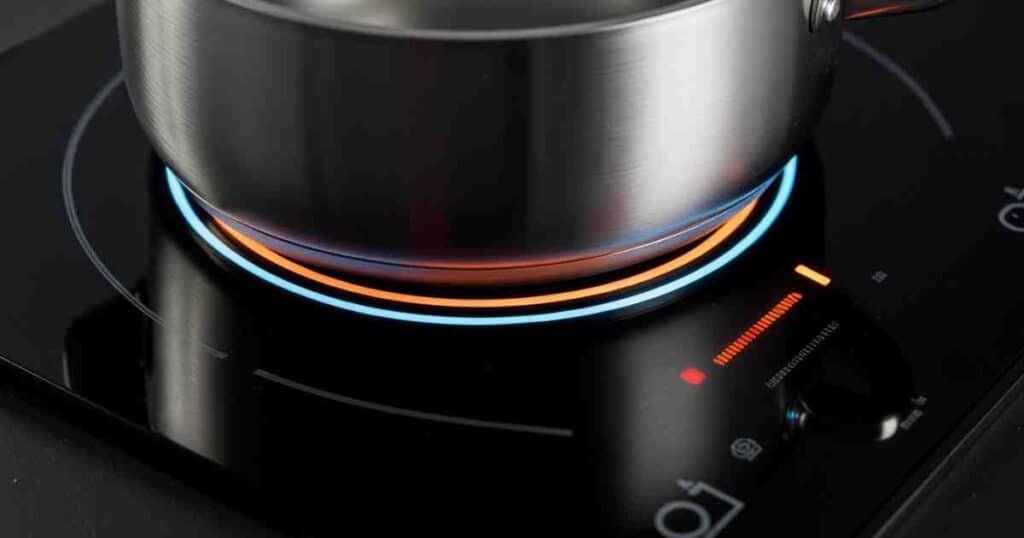
These currents, known as eddy currents, encounter resistance in the metal, generating heat directly in the pan.
The key here is the direct generation of heat within the pan itself. Unlike traditional electric or gas stoves that heat a burner or flame and then transfer that heat to the pan, induction heats the pan directly. This is why induction is so fast and energy-efficient.
It minimizes heat loss to the surrounding air.
What ‘Induction Compatible’ Guarantees
The primary guarantee of an “induction compatible” label is that the cookware has a ferromagnetic base. This means it will respond to the magnetic field generated by an induction cooktop. If you hold a magnet to the bottom of the pot or pan, and it sticks firmly, then it is induction compatible.
This is the most important takeaway from the label. It confirms that the cookware will engage with the induction element and begin to heat up.
This compatibility ensures that the cookware will function, preventing the common issue of a pot simply not heating at all on an induction surface. It’s the baseline requirement for any cookware intended for use with this technology. Without this magnetic property, the eddy currents cannot be induced, and no heat will be generated directly in the pan.
So, the label assures you of this fundamental interaction.
What ‘Induction Compatible’ Does NOT Guarantee
While the label guarantees magnetic interaction, it does not guarantee the quality or efficiency of the heating. Here’s what it doesn’t promise:
- Even Heating: A magnetic pot might heat up, but the heat distribution across its surface could be uneven. This can lead to hot spots and cold spots, resulting in unevenly cooked food. The quality of the metal and its construction play a huge role here, not just its magnetic properties.
- Fast Cooking Times: While induction is inherently fast, the speed at which your specific pan heats up depends on its material, thickness, and how well it conducts heat. A thin, magnetic pan might heat faster than a thick, less conductive one, even if both are labeled compatible.
- Durability and Longevity: The label doesn’t speak to how well the cookware will hold up over time, its resistance to warping, or the durability of its non-stick coating or handles. These are separate manufacturing considerations.
- Energy Efficiency: While induction cooking itself is efficient, the pan’s ability to transfer and retain heat impacts overall efficiency. A poorly designed magnetic pan might lose more heat than an optimized one.
- Specific Induction Features: Some induction cooktops have advanced features like precise temperature control or specific power levels. The “induction compatible” label doesn’t guarantee that your cookware will perfectly leverage these advanced settings.
Understanding What ‘Induction Compatible’ Actually Guarantees and What It Doesn’t is crucial for managing expectations. A pan can be technically compatible but still perform poorly.
Types of Materials and Their Induction Performance
The material of your cookware significantly impacts how it performs on an induction cooktop, even if it’s labeled “induction compatible.”
Ferrous Materials (Magnetic)
These are the core materials that make cookware induction-ready.
- Cast Iron: Excellent for induction. It’s naturally magnetic and heats evenly, though it can take a little longer to heat up initially. It retains heat exceptionally well. Seasoned cast iron is a popular choice for its non-stick properties.
- Enameled Cast Iron: Also works well. The enamel coating doesn’t affect the magnetic base. It offers the benefits of cast iron with easier cleanup.
- Magnetic Stainless Steel: Many stainless steel pots and pans are made with a magnetic layer in their base, often a disc of aluminum or copper sandwiched between layers of stainless steel, with the outer layer being magnetic. This is a very common and effective type for induction.
Non-Ferrous Materials (Non-Magnetic)
These materials, by themselves, do not work on induction cooktops.
- Aluminum: Pure aluminum is not magnetic. However, many aluminum pans have a magnetic stainless steel base added specifically for induction compatibility.
- Copper: Copper is an excellent heat conductor but is not magnetic. Like aluminum, copper cookware often has a magnetic stainless steel base to make it induction compatible.
- Glass and Ceramic: These materials are not magnetic and will not work on induction cooktops unless they have a magnetic insert in their base.
The “induction compatible” label on a pan made of aluminum or copper implies that it has this necessary magnetic base. It’s the base that matters most for the initial magnetic interaction.
Testing Your Cookware for Induction Compatibility
Before investing in new cookware, or to check your existing collection, there are simple ways to test for induction compatibility. The most straightforward method is the magnet test.
- Get a strong magnet: A refrigerator magnet might work, but a stronger magnet, like one from a hardware store, is more reliable.
- Test the base of your cookware: Place the magnet firmly against the bottom of the pot or pan.
- Check for adhesion: If the magnet sticks securely, the cookware is induction compatible. If it slides off easily or doesn’t stick at all, it is not.
This simple test can save you from purchasing cookware that won’t work on your induction stove. It’s a practical step when considering What ‘Induction Compatible’ Actually Guarantees and What It Doesn’t.
Common Misconceptions About Induction Cookware
Many people assume that “induction compatible” means their cookware will perform identically to how it did on a gas or electric stove, or that all induction-compatible cookware is created equal. This is not the case.
One common misconception is that any stainless steel pan will work. While many stainless steel pans are induction compatible, not all are. The key is the magnetic property of the base.
Another myth is that “non-stick” automatically means “induction compatible.” Non-stick refers to the coating, while induction compatibility refers to the pan’s material and construction. You can have a non-stick pan that works on induction, or one that doesn’t.
It’s also a mistake to assume that because a pan is heavy, it’s automatically good for induction. Weight can be an indicator of quality construction, but the magnetic property is the deciding factor for compatibility. Understanding What ‘Induction Compatible’ Actually Guarantees and What It Doesn’t helps to dispel these myths and make better purchasing decisions.
Benefits of Using Properly Matched Induction Cookware
When you use cookware that is not only induction compatible but also well-suited for your induction cooktop, you unlock the full potential of this cooking technology.
- Faster Cooking: Properly matched cookware heats up quickly, reducing cooking times and allowing you to get meals on the table faster.
- Precise Temperature Control: Induction allows for very fine adjustments to heat. Good cookware responds instantly to these changes, giving you greater control over your cooking.
- Energy Efficiency: Induction is already an efficient method. Using cookware that transfers heat effectively further maximizes this efficiency, saving energy and potentially lowering utility bills.
- Even Cooking Results: High-quality induction-compatible cookware distributes heat evenly, preventing burnt edges and undercooked centers. This leads to consistently better results for all your recipes.
- Safer Cooking Environment: Since the cooktop surface itself doesn’t get as hot as traditional burners, there’s less risk of accidental burns, especially with children or pets around. The cookware heats directly, and the cooktop stays cooler.
Investing in cookware that is truly optimized for induction, beyond just basic compatibility, enhances your entire cooking experience.
Choosing the Best Induction Cookware
When selecting cookware for your induction stove, look beyond just the “induction compatible” label. Consider these factors:
- Material: Opt for magnetic stainless steel, cast iron, or enameled cast iron. If choosing aluminum or copper, ensure it has a thick, magnetic base.
- Base Construction: A thick, flat, and solid base is ideal. This promotes even heating and ensures good contact with the cooktop. Avoid pans with warped or uneven bases.
- Brand Reputation: Reputable cookware brands often invest more in the quality of materials and construction, leading to better performance on induction.
- Weight and Balance: While not the sole indicator, a pan that feels substantial and well-balanced is often a sign of good quality.
- Read Reviews: Look for reviews that specifically mention performance on induction cooktops.
By considering these points, you can move beyond the basic guarantee of What ‘Induction Compatible’ Actually Guarantees and What It Doesn’t and select cookware that truly excels.
Comparison: Induction Compatible vs. Non-Induction Cookware
The difference between cookware that works with induction and cookware that doesn’t is fundamental. It all comes down to magnetism and how heat is generated.
| Magnetic Property | Yes – Has a ferromagnetic base (e.g., cast iron, magnetic stainless steel) | No – Made of non-magnetic materials like pure aluminum, copper, glass, or ceramic without a magnetic layer. |
| Interaction with Induction Cooktop | Responds to the magnetic field, causing the pan itself to heat up directly. | Does not respond to the magnetic field. The pan remains cold. |
| Heat Generation | Heat is generated directly within the pan’s base through eddy currents. | Heat must be transferred from a separate heat source (e.g., gas flame, electric element) to the pan. |
| Suitability for Induction Stoves | Works effectively, providing fast and efficient heating. | Will not work on an induction cooktop. |
| Typical Materials | Cast iron, enameled cast iron, magnetic stainless steel, or multi-clad with a magnetic base. | Pure aluminum, copper, glass, ceramic, or non-magnetic stainless steel. |
This table highlights the core difference: the ability to interact with the induction cooktop’s magnetic field. Without this interaction, the cookware is essentially useless on an induction stove, regardless of its other qualities.
Troubleshooting Common Induction Cookware Issues
Even with compatible cookware, you might encounter issues. Here are a few common problems and solutions.
- Pan not heating: First, re-check compatibility with the magnet test. Ensure the pan is centered on the burner. Some cooktops have minimum pan size requirements. Second, clean the bottom of the pan and the cooktop surface; debris can interfere.
- Uneven heating: This is often a cookware issue, not a cooktop problem. Try a pan with a thicker, multi-clad base. For cast iron, ensure it’s preheated evenly.
- Cookware is noisy: Some humming or buzzing is normal with induction. However, loud or excessive noise can sometimes indicate a poor connection or a pan that’s too thin.
- Pan wobbles: Ensure the cooktop surface is clean and the pan base is flat. Warped pans can cause wobbling and poor contact.
Addressing these issues often comes down to understanding the nuances of What ‘Induction Compatible’ Actually Guarantees and What It Doesn’t and the quality of your cookware. Perform a simple magnet test to verify if your cookware is induction compatible.
Frequently Asked Questions Of What ‘Induction Compatible’ Actually Guarantees And What It Doesn’T
Question: Does ‘induction compatible’ mean my pan will heat up instantly?
Answer: No, while induction cooking is very fast, the exact heating speed depends on the cookware’s material, thickness, and how well it conducts heat, not just its magnetic property.
Question: Can I use my old aluminum pots on an induction stove if they are labeled ‘induction compatible’?
Answer: Yes, if they are labeled ‘induction compatible,’ it means they have a magnetic base added, allowing them to work on induction cooktops.
Question: What is the best material for induction cookware?
Answer: Magnetic stainless steel, cast iron, and enameled cast iron are generally considered excellent for induction due to their magnetic properties and heat retention.
Question: Does the ‘induction compatible’ label guarantee even heat distribution?
Answer: No, the label only guarantees that the pan will respond to the magnetic field. Even heating depends on the pan’s construction and material quality.
Question: How do I know if my existing pots and pans will work on an induction cooktop?
Answer: The easiest way is to use a magnet. If the magnet sticks firmly to the bottom of the pan, it is induction compatible.
Question: What if my pan makes a lot of noise on the induction cooktop?
Answer: Some noise is normal, but excessive noise can sometimes indicate a pan that is too thin, warped, or not making good contact. Check the pan’s base for flatness and ensure it’s centered.
Question: Will all my stainless steel pans work on induction?
Answer: Not all stainless steel pans are induction compatible. Only those with a magnetic base will work. Always perform the magnet test or check the product description.
Final Thoughts
The “induction compatible” label is your signal that a pot or pan will magnetically engage with your cooktop. It guarantees functionality, not necessarily peak performance. By understanding what this label truly guarantees and what it doesn’t, you can choose cookware that enhances your induction cooking experience. The induction compatible label guarantees that the cookware will work on an induction cooktop.

Leave a Reply