
Altitude ruins your pressure cooker recipes because lower air pressure reduces the cooker’s absolute pressure and cooking temperature, so food softens more slowly.
Use this correction formula: adjusted time = recipe time × [1 + 0.05 × ((altitude in feet − 2,000) ÷ 1,000)]. Apply it above 2,000 feet and round up slightly.
You’ve planned a delicious meal, gathered all your ingredients, and excitedly set your pressure cooker. But when the timer goes off, something’s not right – your food is undercooked, or the liquid has evaporated too much. If you live in a place with higher elevation, this isn’t just bad luck; it’s a common cooking challenge.
Understanding Why Altitude Ruins Your Pressure Cooker Recipes and the Correction Formula is key to fixing these frustrating outcomes.
This guide will show you exactly what happens and how to adjust your cooking for perfect results every time, making your time in the kitchen more successful and less prone to errors.
Key Takeaways
- Higher altitudes lower the boiling point of water, affecting pressure cooker performance.
- This boiling point change means less steam pressure builds up in the cooker.
- Recipes designed for sea level will often require longer cooking times at high altitudes.
- You can adjust cooking time and liquid amounts to compensate for altitude effects.
- Specific formulas exist to help calculate these necessary adjustments.
![Why Altitude Ruins Your Pressure Cooker Recipes And The Correction Formula[1]](https://kitchentipsdaily.com/wp-content/uploads/2026/06/Why_Altitude_Ruins_Your_Pressure_Cooker_Recipes_And_The_Correction_Formula1.jpg)
How Altitude Changes Your Pressure Cooker’s Performance
Pressure cookers work by trapping steam. This steam builds up pressure. The pressure raises the boiling point of water.
Higher temperatures cook food faster. This is the basic science behind how they work so well. But this science changes when you go up in elevation.
As you climb higher, the air pressure drops. Think of it like less weight pushing down on everything. This lower air pressure affects how water boils.
At sea level, water boils at 212°F (100°C). This is where it turns into steam and starts creating pressure.
However, at higher altitudes, the air is thinner. Less air means less pressure on the water’s surface. Because there’s less pressure pushing down, water boils at a lower temperature.
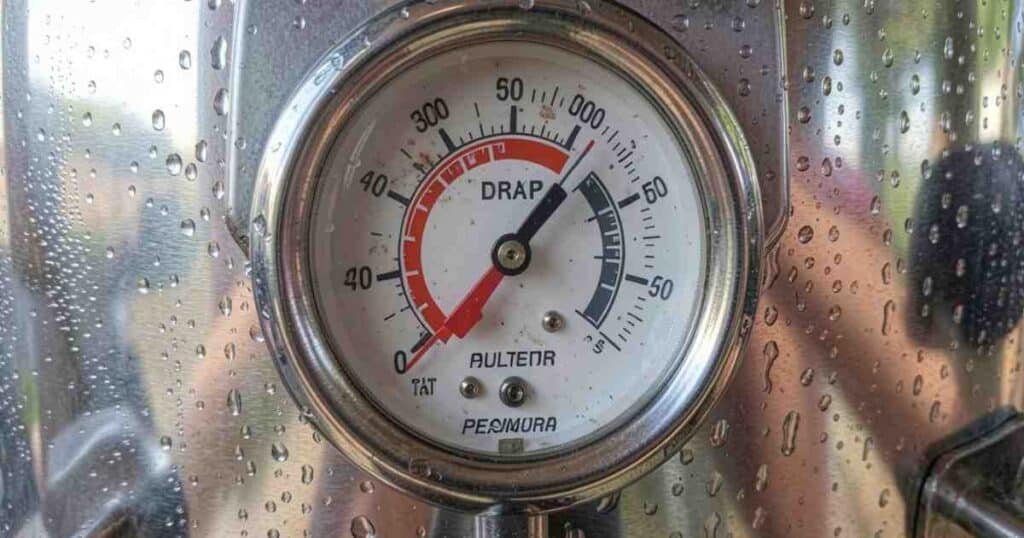
For example, in Denver, Colorado, which is about a mile high, water boils around 203°F (95°C).
This is the core reason Why Altitude Ruins Your Pressure Cooker Recipes and the Correction Formula is so important. The lower boiling point means less steam is generated for a given temperature setting inside the cooker. Less steam means less pressure.
Less pressure means the cooking temperature is lower than what the recipe expects.
The Impact on Your Favorite Recipes
When a recipe is written, it’s usually tested at sea level. The cooking times and liquid amounts are based on water boiling at 212°F and creating a specific amount of pressure. For most stovetop pressure cookers, this is around 15 psi (pounds per square inch).
Electric pressure cookers often operate at a slightly lower pressure, around 10-12 psi, but the principle remains the same.
If you use a sea-level recipe at high altitude, your pressure cooker won’t reach the intended cooking temperature. The food will take longer to cook. Sometimes, it might not cook thoroughly at all.
This is a common frustration for cooks living in mountainous regions.
You might notice your stews are watery, or your beans are still hard after the recommended cooking time. This happens because the lower temperature doesn’t break down tough ingredients as effectively. The food essentially simmers at a lower heat than intended.
Understanding Why Altitude Ruins Your Pressure Cooker Recipes and the Correction Formula helps you anticipate these issues. It’s not that your pressure cooker is broken; it’s just responding to a different environment. The recipe needs to be adapted to this new environment.
Common Problems You Might Encounter
Several issues can arise when pressure cooking at high altitudes without adjustments:
- Undercooked Food: This is the most frequent problem. Meats might be tough, vegetables firm, and grains still chewy.
- Excessive Liquid: Because the water boils at a lower temperature, it might take longer to evaporate. This can leave you with a soupier dish than desired.
- Flavor Development Issues: Some flavors develop best at higher temperatures. Lower temperatures might mean a less rich or nuanced taste.
- Longer Cooking Times: You’ll find yourself adding more time, which can be frustrating if you’re used to quick pressure cooking.
The Science Behind the Correction Formula
The key to adapting pressure cooker recipes for altitude lies in understanding how pressure and temperature relate. The U.S. standard for altitude cooking corrections suggests adjusting for every 1,000 feet above sea level.
For pressure cooking, this generally means increasing cooking time or pressure.
The most common recommendation for pressure cooking is to increase the cooking time by a certain percentage for every 1,000 feet of elevation. The exact percentage can vary slightly depending on the source and the type of food, but a common guideline is to add about 5% to the cooking time for every 1,000 feet above 2,000 feet elevation.
Let’s break down Why Altitude Ruins Your Pressure Cooker Recipes and the Correction Formula by looking at the numbers. If a recipe calls for 30 minutes of cooking at sea level and you live at 5,000 feet, you are 3,000 feet above the 2,000-foot mark. That’s three increments of 1,000 feet.
Using a 5% increase per 1,000 feet:
- First 1,000 feet (3,000 ft above sea level): 30 minutes * 0.05 = 1.5 minutes added.
- Second 1,000 feet (4,000 ft above sea level): 30 minutes * 0.05 = 1.5 minutes added.
- Third 1,000 feet (5,000 ft above sea level): 30 minutes * 0.05 = 1.5 minutes added.
Total added time: 1.5 + 1.5 + 1.5 = 4.5 minutes. So, your new cooking time would be approximately 30 + 4.5 = 34.5 minutes.
Some sources suggest a simpler rule of thumb: add 1 minute to the cooking time for every 1,000 feet above 3,000 feet. This is a more conservative approach but can still yield good results. For our 5,000-foot example, that would be adding 2 minutes (for 4,000 ft and 5,000 ft).
The total time would be 32 minutes.
The key is to find a method that works for you and your specific altitude. Experimentation is often part of the process when you first start adapting recipes. This adjustment is a direct response to understanding Why Altitude Ruins Your Pressure Cooker Recipes and the Correction Formula.
The Correction Formula: Adjusting Your Cooking
The correction formula isn’t a single, rigid equation for every situation. Instead, it’s a set of guidelines and adjustments you can make. The primary adjustments involve cooking time and sometimes liquid.
Pressure regulators are designed to maintain a certain pressure, but the boiling point of water at that altitude is the limiting factor.
Adjusting Cooking Time
This is the most common and straightforward adjustment. As discussed, you need to increase the time your pressure cooker operates under pressure.
General Guideline for Cooking Time Adjustment:
- Determine your elevation in feet.
- Subtract 2,000 feet from your elevation (if it’s below 2,000 feet, no adjustment is needed for this step).
- Divide the result by 1,000 to find the number of 1,000-foot increments.
- Multiply this number by the recommended percentage increase (e.g., 5%).
- Add the calculated extra cooking time to the original recipe’s cooking time.
For example, if a recipe takes 20 minutes at sea level and you are at 6,000 feet:
- Elevation: 6,000 feet
- Subtract 2,000: 6,000 – 2,000 = 4,000 feet
- Number of 1,000-foot increments: 4,000 / 1,000 = 4
- Percentage increase: 4 * 5% = 20%
- Additional cooking time: 20 minutes * 0.20 = 4 minutes
- New cooking time: 20 minutes + 4 minutes = 24 minutes
This method helps account for Why Altitude Ruins Your Pressure Cooker Recipes and the Correction Formula by directly addressing the temperature deficit.
Adjusting Liquid Amounts
While less common than time adjustments, you might also need to consider the liquid. At higher altitudes, water evaporates slightly faster due to the lower atmospheric pressure, even though the boiling point is lower. This means your dish could end up drier than expected.
However, for pressure cooking, the lid is sealed, which significantly reduces evaporation compared to simmering. Therefore, liquid adjustments are usually minor, if needed at all. If you’re making a very long-cooking item or a recipe that relies heavily on broth where evaporation is a factor, you might add an extra 1/4 to 1/2 cup of liquid for every hour of cooking time.
It’s often best to start with the original liquid amount and see how the dish turns out. You can always add more liquid and simmer uncovered at the end if it’s too thick. This is a practical way to manage the effects of Why Altitude Ruins Your Pressure Cooker Recipes and the Correction Formula.
When to Adjust and When Not To
Not every recipe needs drastic altitude adjustments. Here’s a general guide:
- Adjust for: Recipes with longer cooking times (over 20 minutes), tough cuts of meat, dried beans, whole grains, and recipes where precise texture is important.
- Less adjustment needed for: Quick-cooking items like fish or delicate vegetables, recipes with very short cooking times (under 10 minutes), or recipes where a slightly softer texture is acceptable.
Also, consider the type of pressure cooker. Electric pressure cookers are often more forgiving than stovetop models because they have more consistent temperature control. However, they still operate based on the physics of boiling water, so altitude still matters.
Comparing Altitude Adjustments
To better understand the impact, let’s compare how a recipe might perform at different altitudes without adjustments.
| Sea Level (0) | 212°F (100°C) | 15 psi (stovetop) | Recipe works as intended. |
| 3,000 (e.g., Denver outskirts) | 207°F (97°C) | ~13.5 psi | Food may take slightly longer to cook; results might be a little softer. |
| 5,000 (e.g., Denver) | 203°F (95°C) | ~12.5 psi | Food will likely be undercooked without time adjustments. Liquid may be more abundant. |
| 7,500 (e.g., Breckenridge) | 199°F (93°C) | ~11.5 psi | Significant undercooking likely; major adjustments needed. |
This table highlights the decreasing boiling point and pressure, directly illustrating Why Altitude Ruins Your Pressure Cooker Recipes and the Correction Formula is essential for cooks at higher elevations.
Tips for Success at High Altitude
Beyond the basic formula, a few practical tips can make your high-altitude pressure cooking experience smoother:
- Start with Tested Recipes: Look for recipes specifically developed for high altitudes if possible.
- Keep a Cooking Log: Note your altitude and the adjustments you made. Record what worked and what didn’t.
- Use a Reliable Altitude Chart: Many cooking resources provide charts for altitude adjustments.
- Don’t Be Afraid to Experiment: Small adjustments are often all that’s needed. It’s better to slightly overcook and adjust next time than to have an inedible meal.
- Check for Doneness: Even with adjustments, it’s wise to check your food for doneness when you think it’s ready.
- Understand Your Cooker: Get familiar with how your specific pressure cooker performs.
These tips will help you navigate the challenges and truly master Why Altitude Ruins Your Pressure Cooker Recipes and the Correction Formula.
Frequently Asked Questions Of Why Altitude Ruins Your Pressure Cooker Recipes And The Correction Formula
Question: Does altitude affect electric pressure cookers differently than stovetop ones?
Answer: Electric pressure cookers still operate based on the physics of boiling water, so altitude affects them. However, their temperature regulation can sometimes be more consistent, making them slightly more forgiving than stovetop models. Adjustments are still generally needed.
Question: How much extra time should I add for every 1,000 feet?
Answer: A common recommendation is to add about 5% to the cooking time for every 1,000 feet above 2,000 feet. Some prefer a simpler rule of adding 1 minute per 1,000 feet above 3,000 feet.
Question: Do I need to adjust liquid in my pressure cooker recipes at high altitude?
Answer: Generally, liquid adjustments are minor in pressure cookers due to the sealed environment. You might add a small amount (1/4 to 1/2 cup) for very long cooking times, but it’s often best to start with the original amount.
Question: What is the main reason Why Altitude Ruins Your Pressure Cooker Recipes and the Correction Formula is important?
Answer: The main reason is that lower air pressure at higher altitudes causes water to boil at a lower temperature, resulting in less steam pressure and a lower cooking temperature than recipes are designed for.
Question: Can I use a standard pressure cooker recipe without any changes if I live at 1,000 feet?
Answer: At 1,000 feet, the altitude effect is usually minimal, and most standard recipes can be used without adjustment. Significant adjustments are typically needed above 2,000-3,000 feet.
Question: How do I know if my food is cooked properly at high altitude?
Answer: Check your food for tenderness and doneness. If it’s not cooked enough, you may need to increase the cooking time on your next attempt, following the altitude correction formula.
Final Thoughts
Living at higher elevations doesn’t mean you have to give up on perfect pressure cooker meals. By understanding Why Altitude Ruins Your Pressure Cooker Recipes and the Correction Formula and applying simple adjustments to your cooking time, you can achieve delicious, well-cooked dishes every time. Start with these guidelines and don’t hesitate to experiment to find what works best in your kitchen. Cornell University provides reliable guidance on high altitude cooking for precise adjustments.

Leave a Reply