
Why Wok Ring Adaptors Are Mostly Useless On Domestic Gas Hobs
Wok ring adaptors are mostly useless on domestic gas hobs because they often lift the wok too far from the flame, reduce heat transfer, and make control weaker.
They may stabilise a round-bottom wok, but most home burners lack the intense upward heat needed for true wok cooking. A flat-bottom carbon-steel wok usually performs better indoors.
You’ve just bought a beautiful new wok, eager to try out some authentic stir-fry recipes. You notice your gas hob has a bit of a gap between the burner and the wok bottom. A quick online search leads you to wok ring adaptors, promising to solve this very problem.
However, after a few attempts, your food still isn’t cooking quite right, and you’re left wondering if there’s a better way. This article will explain why Why Wok Ring Adaptors Are Mostly Useless on Domestic Gas Hobs and guide you toward achieving perfect wok cooking at home, helping you spend more time enjoying delicious meals and less time troubleshooting your kitchen setup.
Key Takeaways
- Understand the fundamental design differences between professional and domestic gas hobs.
- Learn how wok ring adaptors fail to replicate the intense, even heat needed for true stir-frying.
- Discover the common issues and frustrations encountered when using wok ring adaptors.
- Explore effective alternative methods for achieving high heat and proper wok cooking on home stoves.
- Identify the specific features of a hob that make wok cooking successful.
![Why Wok Ring Adaptors Are Mostly Useless On Domestic Gas Hobs[1]](https://kitchentipsdaily.com/wp-content/uploads/2026/06/Why_Wok_Ring_Adaptors_Are_Mostly_Useless_On_Domestic_Gas_Hobs1.jpg)
The Ideal Wok Cooking Environment
Professional kitchens and true wok cooking rely on a specific type of heat. This heat comes from powerful burners designed to surround the wok’s base and sides. The flame is intense, reaching high temperatures quickly.
This intense, focused heat is crucial for achieving the characteristic “wok hei” – the smoky, seared flavor that defines great stir-fries.
The wok’s rounded bottom fits snugly into a deep well on the hob, ensuring maximum contact with the flame. This design is not accidental; it’s engineered for speed, heat, and control.
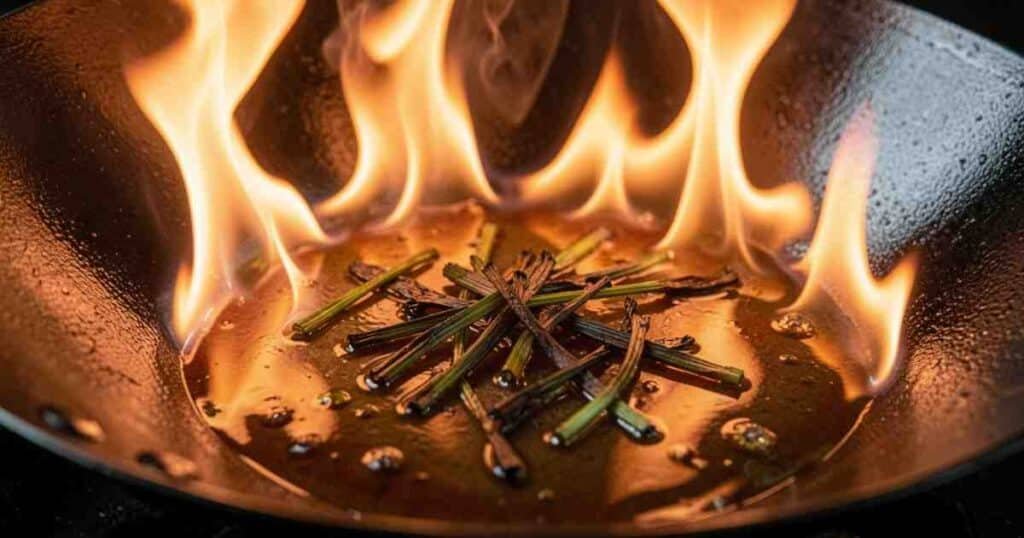
Domestic gas hobs, on the other hand, are built for general cooking. They typically have flat grates and burners that spread heat more broadly. The goal is even cooking for pots and pans that sit flat on the grate.
These hobs are designed with safety and versatility in mind for everyday tasks like boiling water, simmering sauces, or sautéing smaller ingredients. They are simply not built to deliver the extreme, concentrated heat that a wok demands for its best performance.
How Wok Ring Adaptors Fall Short
The idea behind a wok ring adaptor is to bridge the gap between the hob’s burner and the wok. It aims to stabilize the wok and bring it closer to the flame. However, Why Wok Ring Adaptors Are Mostly Useless on Domestic Gas Hobs becomes clear when you examine their limitations.
These adaptors often create a precarious platform. They lift the wok, but they rarely position it correctly to receive the intense, enveloping heat needed. Instead, the heat is often concentrated only on the very center of the wok’s base, leaving the sides cooler.
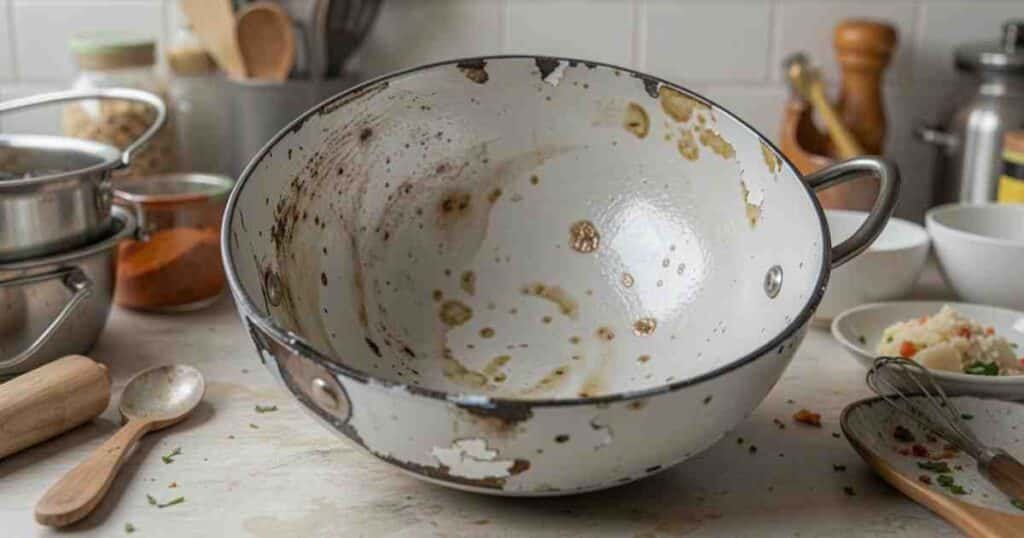
This uneven heating is a major problem. When you add ingredients to a wok that isn’t uniformly hot, they steam instead of searing. You lose the crucial browning and caramelization that builds flavor.
The food can become soggy and bland. The adaptor itself can also interfere with airflow, potentially causing incomplete combustion and reducing the burner’s efficiency. It’s a compromise that sacrifices the essential elements of wok cooking.
Common Frustrations with Wok Ring Adaptors
Many home cooks who try using wok ring adaptors report similar frustrations. One of the most common complaints is the instability of the setup. Woks are designed to be somewhat mobile in the kitchen, allowing for quick tossing of ingredients.
A metal ring on a flat grate can make the wok wobble or even tilt precariously. This makes confident cooking difficult and increases the risk of spills or accidents. This inherent instability is a key reason Why Wok Ring Adaptors Are Mostly Useless on Domestic Gas Hobs.
Another significant issue is the lack of sufficient heat. Even if the adaptor stabilizes the wok, it doesn’t magically increase the burner’s power. Domestic burners simply don’t produce the BTUs (British Thermal Units) required for true stir-frying.
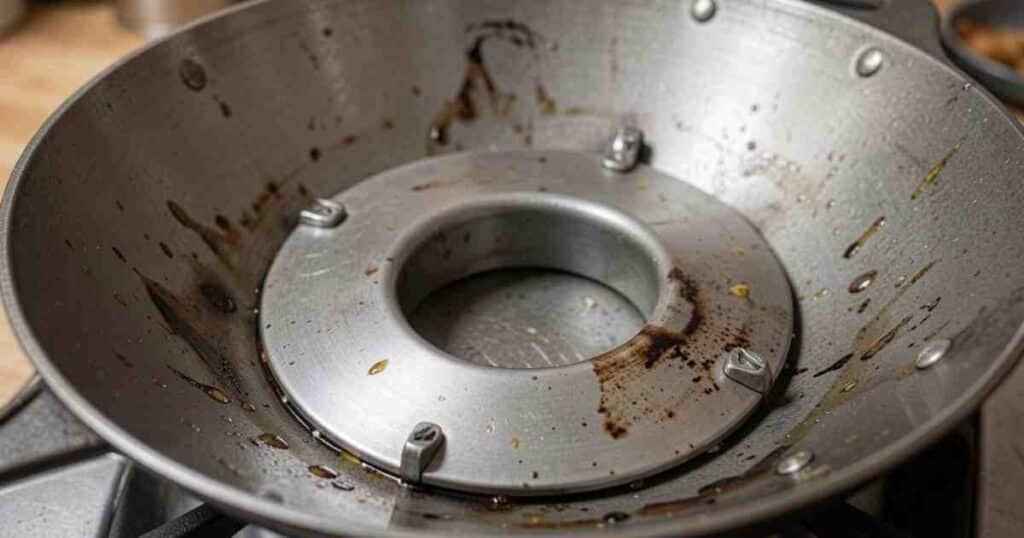
The adaptor might bring the wok closer, but the flame is still too weak and too spread out to heat the wok effectively. The result is food that cooks slowly, lacks that signature sear, and doesn’t develop the desired smoky aroma.
The Illusion of Stability
While adaptors promise stability, they often create a false sense of security. The wok can still shift on the ring, especially when you’re actively cooking and tossing ingredients. This is particularly true for traditional carbon steel woks, which have rounded bottoms and rely on a proper fit to stay put.
The adaptor might offer a flatter surface, but it doesn’t account for the wok’s natural shape or the dynamic movements of stir-frying.
Heat Distribution Problems
The core issue remains heat. A wok ring adaptor typically allows the burner's flame to lick up the sides of the wok. However, the critical area for stir-frying is the bottom and the lower sides.
If the adaptor doesn’t position the wok directly over the hottest part of the flame, or if the burner itself is not powerful enough, the heat won’t be concentrated where it’s needed most. This leads directly to the conclusion that Why Wok Ring Adaptors Are Mostly Useless on Domestic Gas Hobs is due to fundamental heat delivery problems.
Understanding Your Domestic Gas Hob’s Limitations
To truly understand Why Wok Ring Adaptors Are Mostly Useless on Domestic Gas Hobs, you need to appreciate the differences in hob design. Professional gas ranges often feature sealed, high-output burners designed to maximize BTU output and direct flames efficiently. They are built with heavy-duty cast iron grates that can support large, heavy pots and woks securely.
The burner grates are often shaped to cradle the wok’s curve, ensuring close contact and stability.
Domestic gas hobs are usually designed with open burners and flat grates. The burners are often less powerful, prioritizing fuel efficiency and safety for a wider range of cookware. The flat grates are excellent for pots and pans that sit evenly, but they do not accommodate the curvature of a traditional wok.
This fundamental design difference means that no adaptor can fully compensate for the hob’s inherent limitations when it comes to high-heat wok cooking.
BTU Output: The Power Factor
BTU output is a critical metric for cooking performance. Professional wok burners can deliver 65,000 BTUs or more. In contrast, a typical domestic gas hob might offer burners ranging from 9,000 to 15,000 BTUs.
This vast difference in power means a domestic burner, even with an adaptor, struggles to heat a wok quickly and intensely enough for proper searing. This is a primary reason Why Wok Ring Adaptors Are Mostly Useless on Domestic Gas Hobs.
Burner Design and Flame Shape
The shape and coverage of the flame also play a vital role. Professional wok burners often have a circular design that allows the flame to wrap around the wok’s base. This creates a consistent, high-temperature zone.
Domestic burners, especially those under flat grates, tend to produce a flame that spreads outwards. While this is fine for flat-bottomed pans, it doesn’t provide the concentrated heat needed for a rounded wok, even with an adaptor.
Effective Alternatives for Home Wok Cooking
Since wok ring adaptors are largely ineffective, what are the better options for achieving great wok cooking at home? The most direct solution is to use a flat-bottomed wok. These woks are designed to sit directly on the flat grates of a domestic gas hob.
While they don't offer the exact same cooking experience as a rounded wok on a powerful burner, they are a significant improvement over using a rounded wok with an adaptor. The flat base makes better contact with the hob's grates, providing more stable and even heating.Another excellent alternative is to invest in an electric wok. These appliances are specifically designed for wok cooking. They have a built-in heating element that surrounds the wok bowl, providing consistent and high temperatures.
Many electric woks can reach temperatures comparable to gas hobs, offering a convenient and effective way to achieve authentic stir-fry results without needing a specialized gas range. This bypasses the problem of Why Wok Ring Adaptors Are Mostly Useless on Domestic Gas Hobs entirely.
The Flat-Bottomed Wok Solution
A flat-bottomed wok is your best friend for a standard domestic gas hob. It features a flattened base that sits securely on the hob’s grates. This ensures the wok is stable and makes maximum contact with the heat source.
While it might not achieve the same intense heat wrap as a professional setup, it allows for much better heat distribution and searing than a rounded wok with an adaptor. You can still get a good sear and a flavorful stir-fry with practice.
Electric Woks: A Powerful Alternative
Electric woks are a fantastic option for those who love stir-frying but don’t have a powerful gas hob. They offer controlled, high heat that is often more consistent than what a domestic gas burner can provide. The heating element is integrated into the base, distributing heat evenly up the sides of the wok.
This makes them a much more effective tool for achieving good stir-fry results than relying on wok ring adaptors.
Induction Cooktops and Woks
For those with induction cooktops, a specific induction-compatible wok is necessary. These woks often have a flat, ferromagnetic base. Induction hobs offer rapid heating and precise temperature control, making them surprisingly good for wok cooking, provided you have the right wok.
They provide a direct transfer of energy, leading to efficient heating. This is another method that sidesteps the issue of Why Wok Ring Adaptors Are Mostly Useless on Domestic Gas Hobs by using a different, more suitable technology.
The Science of Wok Cooking: Heat Transfer and Wok Hei
Achieving “wok hei” is the holy grail of stir-frying. It’s the complex smoky aroma and flavor that comes from high-heat searing and caramelization. This requires more than just heat; it requires the right kind of heat transfer.
A traditional wok, with its rounded shape and carbon steel construction, heats up rapidly and evenly when exposed to intense, direct flame. The curved sides allow ingredients to be tossed and exposed to different heat zones within the wok.
When you use a wok ring adaptor on a domestic hob, you disrupt this ideal heat transfer. The adaptor can create air gaps, reducing efficiency. The flame might not envelop the wok properly.
The heat concentration is often limited to the small central area of the wok’s base. This prevents the rapid searing and caramelization that creates wok hei. Instead, ingredients are more likely to steam, leading to a less desirable texture and flavor.
This fundamental science explains Why Wok Ring Adaptors Are Mostly Useless on Domestic Gas Hobs.
Heat Zones in a Wok
A properly heated wok has distinct heat zones. The bottom is the hottest, ideal for searing. The sides are slightly cooler, good for simmering or keeping food warm.
The rim is the coolest. This allows a skilled cook to move ingredients around the wok to control their cooking. A wok ring adaptor on a weak hob often results in a wok that is only hot in a small central spot, eliminating these useful heat zones.
Why Even Heating Matters
Even heat distribution is paramount for stir-frying. When your wok heats evenly, all ingredients cook at a similar rate. This allows you to toss everything together in the final stages for a harmonious dish.
With an adaptor and a weak hob, you might have some ingredients overcooked while others are still raw. This inconsistency makes it very difficult to achieve the balanced flavors and textures of good stir-fry.
When Might a Wok Ring Adaptor Be Marginally Useful?
While the verdict is generally that Why Wok Ring Adaptors Are Mostly Useless on Domestic Gas Hobs, there are very specific, limited scenarios where they might offer a tiny benefit. If you absolutely must use a rounded wok on a hob with very wide, flat grates that are extremely far apart, an adaptor might provide a slightly more stable platform. It could prevent the wok from tipping or falling through the grates.
However, this is about stability, not about improving heat.
Even in these rare cases, the heat issue persists. The adaptor will not magically increase your hob’s BTU output. You will still struggle to achieve the high temperatures needed for authentic stir-frying.
Therefore, while it might prevent a minor accident, it won’t significantly improve your cooking results. It’s a workaround for a problem that has better solutions. It’s important to reiterate that Why Wok Ring Adaptors Are Mostly Useless on Domestic Gas Hobs remains the primary truth for most users.
Stability vs. Performance
It’s crucial to distinguish between stability and cooking performance. A wok ring adaptor might offer a marginal increase in stability on certain hob designs. However, it does nothing to enhance the wok’s ability to heat up quickly and intensely.
The core purpose of a wok is high-heat cooking, and adaptors do not facilitate this on domestic stoves.
The “Better Than Nothing” Argument
Some might argue that an adaptor is “better than nothing” if you have no other choice. While this might be true in terms of preventing the wok from becoming dangerously unstable, it sets a very low bar. The cooking results will still likely be disappointing.
It’s akin to using a small fan to cool down a room during a heatwave – it might move a little air, but it won’t solve the underlying problem.
Choosing the Right Wok for Your Home Kitchen
The most effective way to achieve great wok cooking at home is to select the right type of wok for your specific hob. For most domestic gas hobs, a flat-bottomed wok is the ideal choice. These are readily available and designed to work with the standard grate system.
They offer good stability and allow for decent heat transfer from the burner.
If you have a powerful gas hob with a deep wok well, a traditional rounded wok can be used effectively. The rounded bottom fits snugly into the well, providing stability and allowing the flames to surround the wok. For those with electric or induction cooktops, specialized electric woks or induction-compatible woks are the best options.
Understanding your hob type and choosing a complementary wok is key to successful cooking, far more so than using an adaptor.
Material Matters: Carbon Steel vs. Cast Iron vs. Non-Stick
Carbon steel woks are the traditional choice for stir-frying. They are lightweight, heat up quickly, and develop a natural non-stick surface (seasoning) over time. They require proper care and seasoning but offer the best performance for high-heat cooking.
Cast iron woks are heavier and retain heat well but take longer to heat up and cool down. They can be good for simmering or braising but are less ideal for the rapid cooking of stir-fries. Non-stick woks are convenient for everyday cooking but often cannot withstand the high temperatures required for true stir-frying and can degrade the non-stick coating.Size Considerations for Home Use
Wok size is also important. For most home kitchens serving 2-4 people, a 12-14 inch wok is usually sufficient. A larger wok can be harder to maneuver and may not heat as evenly on a domestic hob.
A smaller wok might be too crowded, preventing ingredients from searing properly. Choose a size that fits comfortably on your hob and suits your typical cooking needs.
Conclusion: Ditch the Adaptor, Embrace the Right Tool
The quest for perfect stir-fry at home is a worthy one, but the path is often paved with ineffective tools. While wok ring adaptors promise to solve a problem, they ultimately fall short. The inherent limitations of domestic gas hobs, coupled with the design of these adaptors, mean they rarely deliver the intense, even heat needed for authentic wok cooking.
This is why Why Wok Ring Adaptors Are Mostly Useless on Domestic Gas Hobs is a widely held and accurate conclusion among experienced cooks.
Instead of relying on an adaptor that compromises performance, focus on using the right equipment for your kitchen. Opt for a flat-bottomed wok for standard gas stoves, or explore electric woks for versatile, high-heat cooking. By matching your wok to your hob, you’ll find yourself achieving better results, enjoying more flavorful meals, and spending less time fighting with your cookware.
Embrace the simplicity of using the correct tool for the job.
Frequently Asked Questions Of Why Wok Ring Adaptors Are Mostly Useless On Domestic Gas Hobs
Why do professional woks need so much heat?
Professional woks need intense heat to achieve “wok hei,” the smoky flavor and perfect sear that defines stir-fried dishes. This high heat causes rapid searing and caramelization of ingredients.
Can a wok ring adaptor make my hob more powerful?
No, a wok ring adaptor cannot increase the BTU output or power of your domestic gas hob. It can only reposition the wok, which does not compensate for insufficient heat.
Is it safe to use a wok ring adaptor?
While many wok ring adaptors are designed for stability, they can sometimes create a precarious setup, especially with rounded woks. Always ensure the wok is secure before cooking.
What is the best type of wok for a standard home gas hob?
For most standard domestic gas hobs, a flat-bottomed wok is the best choice because it sits securely on the grates and provides better heat distribution.
Are there any situations where a wok ring adaptor is useful?
They might offer marginal stability on very wide grates, but they do not improve cooking performance. The primary reason Why Wok Ring Adaptors Are Mostly Useless on Domestic Gas Hobs is their inability to enhance heat.
What is “wok hei” and why is it important?
“Wok hei” refers to the smoky aroma and flavor imparted to food cooked over high heat. It’s achieved through rapid searing and caramelization, which is difficult with insufficient heat.
Can I still get good stir-fry results without a powerful wok burner?
Yes, by using a flat-bottomed wok on a gas hob, a specialized electric wok, or an induction-compatible wok on an induction cooktop, you can achieve excellent stir-fry results.
Final Thoughts
Wok ring adaptors often promise more than they can deliver on domestic gas hobs. They rarely solve the fundamental issue of insufficient heat needed for true stir-frying. For better results, choose a flat-bottomed wok for your home stove or explore dedicated electric woks.
This ensures your cooking is efficient and flavorful.

![What Actually Happens Inside A Pressure Cooker At 121°C[1]](https://kitchentipsdaily.com/wp-content/uploads/2026/06/What_Actually_Happens_Inside_A_Pressure_Cooker_At_121°C1-768x403.jpg)
![The Rice Cooker Specification Lie Cups Are Not Cups[1]](https://kitchentipsdaily.com/wp-content/uploads/2026/06/The_Rice_Cooker_Specification_Lie__Cups_Are_Not_Cups1-768x403.jpg)
![The Forgotten ‘Fireless Cooker’ Of 1910 Insulated Box Cooking Before Slow Cookers[1]](https://kitchentipsdaily.com/wp-content/uploads/2026/06/The_Forgotten_‘Fireless_Cooker_Of_1910__Insulated_Box_Cooking_Before_Slow_Cookers1-768x403.jpg)
![Why Altitude Ruins Your Pressure Cooker Recipes And The Correction Formula[1]](https://kitchentipsdaily.com/wp-content/uploads/2026/06/Why_Altitude_Ruins_Your_Pressure_Cooker_Recipes_And_The_Correction_Formula1-768x403.jpg)
![Convection Oven Vs. Air Fryer Same Physics, Different Geometry[1]](https://kitchentipsdaily.com/wp-content/uploads/2026/06/Convection_Oven_Vs._Air_Fryer__Same_Physics_Different_Geometry1-768x403.jpg)