
The cooker ventilation gap matters because hood height changes how quickly steam, smoke, grease, and aromas are captured.
If the hood sits too high, cooking vapours spread before extraction; too low, it can disturb burner flames or feel unsafe. Proper placement keeps heat, moisture, and odours controlled, helping delicate flavours stay cleaner.
Imagine finishing a dish, only to find it lacks that certain something. You followed the recipe perfectly, used fresh ingredients, but the taste just isn’t quite right. Often, the culprit isn’t the food itself, but how it was cooked.
The Cooker Ventilation Gap: Why Hood Placement Height Changes Flavour is a critical, yet often overlooked, factor in achieving culinary perfection.
Understanding this relationship will help you get the most out of your cooking, improving your results and making your meals more enjoyable.
Key Takeaways
- Proper hood placement is essential for effective ventilation.
- The distance between your cooker and exhaust hood impacts airflow.
- Incorrect hood height can lead to poor removal of cooking odors and grease.
- This poor ventilation can trap volatile compounds, altering the intended flavors of your food.
- Adjusting hood height can significantly improve the taste and aroma of your dishes.
![The Cooker Ventilation Gap Why Hood Placement Height Changes Flavour[1]](https://kitchentipsdaily.com/wp-content/uploads/2026/06/The_Cooker_Ventilation_Gap__Why_Hood_Placement_Height_Changes_Flavour1.jpg)
Understanding The Cooker Ventilation Gap
The space between your cooking surface and your range hood is more than just empty air. It’s a crucial area where airflow dynamics play a significant role in your kitchen’s environment. This gap, often referred to as the cooker ventilation gap, is where the magic of capturing smoke, steam, and odors happens.
When this gap is too large or too small, the effectiveness of your hood is compromised. This directly influences the air quality in your kitchen and, surprisingly, the final flavor of your food.
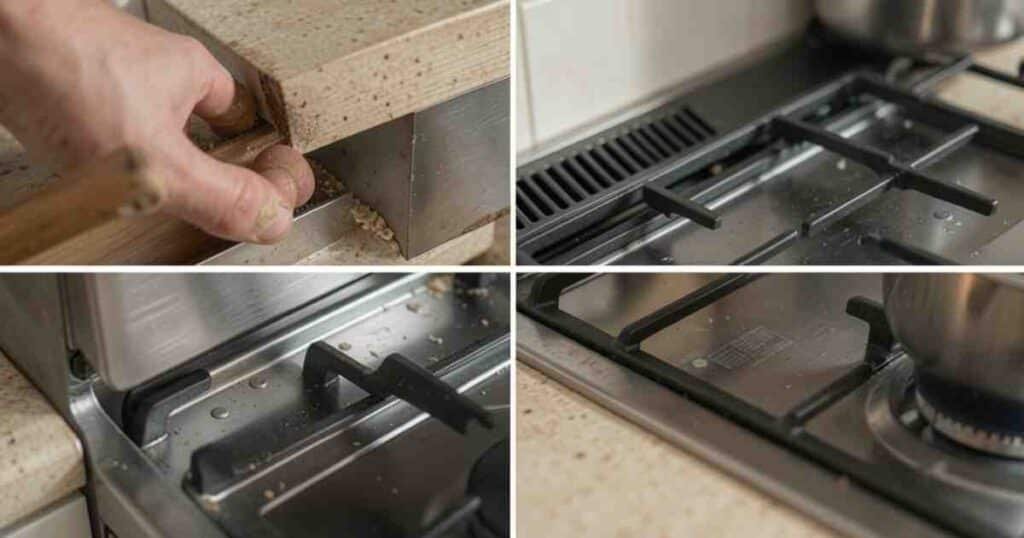
This ventilation gap is where the hood’s suction meets the rising plumes of cooking byproducts. The goal is to efficiently draw these elements away before they can spread and settle. If the hood is too far from the cooker, the plumes can disperse too widely.
This makes it harder for the hood to capture them effectively. Conversely, if the hood is too close, it can create turbulence and hinder the natural upward flow of air. Understanding The Cooker Ventilation Gap: Why Hood Placement Height Changes Flavour starts with appreciating these air movements.
How Hood Height Affects Airflow Dynamics
The height of your range hood directly dictates the volume and speed of air it can capture. A hood placed too high has a larger area to cover. This means its suction power is spread thin.
Think of it like trying to catch falling leaves with a small net from far away. Many leaves will escape. Similarly, cooking fumes, grease particles, and steam might not be fully captured by a hood that is too high.
When these airborne particles aren’t effectively removed, they linger in the kitchen air. They can settle on surfaces, including your food. This settling can impart unwanted flavors.
It can also reduce the clarity of the intended aromas. The ideal height ensures that the hood can create a strong, focused capture zone. This zone effectively engulfs the rising plumes of smoke and steam before they have a chance to dissipate widely.
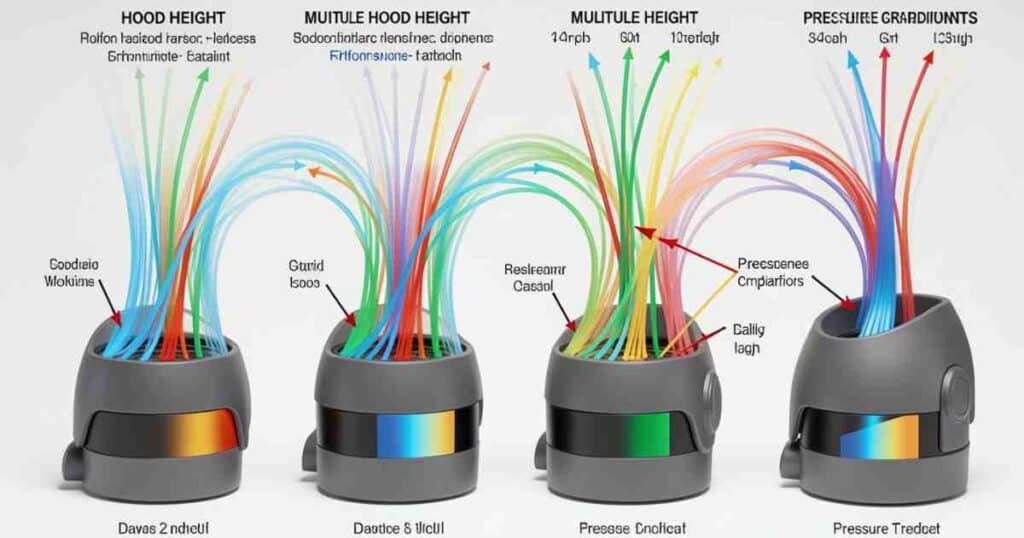
On the other hand, placing the hood too low can cause problems too. It might create a very narrow capture zone. This can lead to air turbulence.
The fast-moving air from the hood can actually push some of the cooking vapors sideways instead of pulling them up. This can be particularly noticeable when cooking with high heat or producing a lot of steam. The cooker ventilation gap, therefore, needs to be just right.
The Science Behind Flavor and Ventilation
Flavor is a complex interplay of taste and smell. While taste buds detect sweet, sour, salty, bitter, and umami, our sense of smell contributes a significant portion to what we perceive as flavor. Cooking processes release volatile aromatic compounds.
These compounds are what give food its characteristic smell and contribute to its overall taste experience. Effective ventilation removes unwanted odors and allows the desirable aromas to be appreciated.
When The Cooker Ventilation Gap: Why Hood Placement Height Changes Flavour is not optimized, unwanted airborne particles can affect this delicate balance. Grease particles, for instance, can carry stale odors. They can also have a slightly acrid taste.
If these particles settle on your food while it’s cooking, they can impart a metallic or “off” flavor. This is especially true for delicate dishes where subtle aromas are key.

Moreover, the steam produced during cooking carries water-soluble flavor compounds. If this steam is not efficiently removed, it can create a humid environment. This can dilute the intensity of these desirable aromas.
It can also lead to food becoming steam-logged, affecting texture and potentially muting subtle flavors. The cooker ventilation gap plays a vital role in managing this steam.
Impact on Different Cooking Methods
Different cooking methods produce varying amounts and types of airborne particles. This means the ideal hood placement might vary. For high-heat searing or frying, a lot of grease and smoke is produced.
A hood placed too high will struggle to capture all of it. This can lead to a greasy film in the kitchen and a lingering smell that can interfere with the taste of subsequent meals.
For simmering or braising, more steam is generated. If the hood is too high, this steam can fill the kitchen. It can lead to a damp atmosphere.
This might not directly impart a bad flavor, but it can make the overall cooking environment less pleasant. It can also dilute the steam-borne aromas that contribute to the richness of slow-cooked dishes.
Even simple boiling can produce steam that carries subtle aromas. If the cooker ventilation gap is too large, these delicate scents might escape. They may not reach your nose with the same intensity.
This can make the food seem less flavorful than it should be. Understanding The Cooker Ventilation Gap: Why Hood Placement Height Changes Flavour helps tailor your setup to your cooking style.
Recommended Hood Placement Heights
Manufacturers provide guidelines for optimal range hood installation. These are not arbitrary numbers; they are based on ensuring effective capture of cooking byproducts. Generally, the recommended height for a standard range hood is between 24 to 36 inches (approximately 60 to 90 cm) above the cooking surface.
| Electric Coil or Smooth Top Stove | 24 to 30 inches (60 to 75 cm) | Lower end of the range for efficient capture of heat and steam. |
| Gas Stove | 24 to 36 inches (60 to 90 cm) | Higher end may be needed to accommodate open flames and prevent heat damage to the hood. |
| Professional-Style Gas Range | 30 to 36 inches (75 to 90 cm) | Higher heat output and greater production of smoke and grease necessitate greater distance and stronger suction. |
It’s important to consult your specific hood’s manual. Some high-powered hoods require a greater distance to function safely and effectively. The design of the hood itself also plays a role.
A canopy hood might need to be placed higher than a sleek, under-cabinet model to achieve the same capture efficiency. Always prioritize safety and performance when determining the cooker ventilation gap.
Factors Influencing The Cooker Ventilation Gap
Several factors can influence the ideal cooker ventilation gap. The type of cooking appliance is a primary consideration. Gas stoves, with their open flames, produce more heat and can pose a fire risk if the hood is too close.
Electric stoves produce less direct heat but can still generate significant steam and grease.
The power of the exhaust fan is another critical element. A more powerful fan can compensate for a slightly larger gap. It can draw air from a wider area.
However, even powerful fans have limits. If the gap is too large, the air velocity at the cooking surface might be too low to effectively capture all fumes. This is where understanding The Cooker Ventilation Gap: Why Hood Placement Height Changes Flavour becomes crucial for optimization.
The physical layout of your kitchen also matters. Ceiling height and cabinet configurations can limit how high or low a hood can be installed. It’s a balance between optimal performance and practical installation.
Sometimes, compromises are necessary. However, knowing the ideal range helps make informed decisions. You want to get as close to that sweet spot as possible.
Troubleshooting Common Ventilation Issues
If you notice persistent cooking odors, greasy buildup on surfaces, or food that seems to taste "off," your ventilation might be an issue. The first thing to check is your hood's installation height. Is it within the manufacturer's recommended range?
Is it too high or too low?
First, inspect your range hood filters. Clogged filters drastically reduce airflow. Clean or replace them regularly.
This is a simple maintenance task that significantly impacts performance. A clean filter ensures the fan can draw air efficiently through the cooker ventilation gap.
Second, check the exhaust ducting. Ensure it’s not blocked or kinked. A clear path for the air is essential.
If the ducting leads outside, make sure the exterior vent cover is not obstructed by debris or nests.
Next, consider the fan speed. Are you using the appropriate speed for the type of cooking you’re doing? High-heat cooking requires a higher fan speed.
If you’re consistently using a low setting, you might not be effectively clearing the air. This directly relates to how well the cooker ventilation gap is being utilized.
Then, assess the hood’s capture area. Does it extend beyond the edges of your cooktop? A hood that is too narrow will miss a lot of the cooking vapors.
Ideally, the hood should be at least as wide as your cooktop, if not wider.
Finally, if problems persist after checking these points, you might need to consult a professional. They can assess your specific setup. They can determine if the hood is adequately powerful for your needs or if the installation height needs adjustment to optimize The Cooker Ventilation Gap: Why Hood Placement Height Changes Flavour.
Maximizing Flavor Through Proper Ventilation
Achieving the best possible flavor from your cooking involves more than just ingredients and technique. It also requires a well-functioning ventilation system. By paying attention to the cooker ventilation gap, you are actively managing the environment in which your food is prepared.
A properly placed hood ensures that unwanted odors are whisked away. This allows the natural, intended aromas of your food to shine through. It prevents cross-contamination of smells.
For example, the scent of fish shouldn’t linger and affect the taste of your dessert. Effective ventilation keeps these aromas separate.
Furthermore, by removing excess grease and steam, you maintain a cleaner cooking environment. This cleaner air contributes to a cleaner taste. It prevents subtle flavors from being masked by stale grease or overwhelming steam.
The cooker ventilation gap is a silent partner in culinary success. It ensures that what you smell and taste is precisely what you intended.
Frequently Asked Questions Of The Cooker Ventilation Gap: Why Hood Placement Height Changes Flavour
Question: What is the main problem if my range hood is too high?
Answer: If your range hood is too high, it struggles to capture smoke, steam, and grease effectively. This allows cooking odors and particles to spread throughout your kitchen, potentially affecting the flavor of your food and leaving a greasy residue.
Question: How does a hood that’s too close affect cooking flavors?
Answer: A hood that is too close can create air turbulence. This can push cooking vapors sideways instead of drawing them up. It can also make it difficult for the hood to capture plumes efficiently, and in extreme cases, it could pose a safety risk.
Question: Does The Cooker Ventilation Gap: Why Hood Placement Height Changes Flavour apply to all types of cookers?
Answer: Yes, the principles apply to all cookers, whether electric or gas. However, the ideal height might vary slightly due to differences in heat output and the nature of the airborne particles produced.
Question: Can a poorly ventilated kitchen really change how my food tastes?
Answer: Absolutely. Lingering grease particles, stale odors, or excessive steam can all impart unwanted flavors or mask the subtle, intended aromas of your dishes, thus altering the perceived taste.
Question: What’s the best way to ensure my cooker ventilation gap is correct?
Answer: Always refer to your range hood manufacturer’s installation manual for recommended height guidelines. Ensure the hood is wide enough to cover your cooktop and that the filters are clean and the ducting is clear.
Question: Is there a specific height for induction cooktops?
Answer: Induction cooktops generally produce less airborne grease than gas. However, they still produce steam. Refer to the manufacturer’s recommendations, but typically, a height similar to electric stoves is appropriate, focusing on steam capture.
Final Thoughts
Adjusting your range hood’s height is a simple yet powerful way to enhance your cooking. By optimizing The Cooker Ventilation Gap: Why Hood Placement Height Changes Flavour, you ensure efficient removal of cooking byproducts. This allows the true aromas and tastes of your ingredients to come through, making every meal more enjoyable.

Leave a Reply