
Using residual heat means finishing food with stored heat after the burner, oven, or pan is turned off. Professionals use it to prevent overcooking, save energy, and improve texture in eggs, pasta, rice, meat, sauces, and vegetables. Home cooks often ignore it, but resting time and carryover heat can make food softer, juicier, and more controlled.
Imagine pulling a perfectly cooked roast from the oven, only to find it’s a touch dry around the edges. Or perhaps you’ve meticulously timed your pasta, yet it comes out a little too soft. These common kitchen frustrations often stem from overlooking a fundamental cooking principle.
Many home cooks miss out on a powerful technique that chefs use daily. This article reveals the secrets of Using Residual Heat: The Professional Trick Home Cooks Ignore.
By mastering this simple concept, you’ll achieve more tender meats, perfectly cooked vegetables, and better overall results, significantly improving your dishes and boosting your cooking confidence.
Key Takeaways
- Understand how residual heat works in cooking to improve food texture and moisture.
- Learn to apply residual heat techniques to various cooking methods for optimal results.
- Discover how to prevent overcooking and achieve consistent doneness in your meals.
- Identify common cooking mistakes that waste residual heat and how to avoid them.
- Gain confidence in your cooking by leveraging a professional trick often overlooked by home chefs.
![Using Residual Heat The Professional Trick Home Cooks Ignore[1]](https://kitchentipsdaily.com/wp-content/uploads/2026/06/Using_Residual_Heat__The_Professional_Trick_Home_Cooks_Ignore1.jpg)
Why Residual Heat is Your Secret Weapon
Residual heat is the warmth that remains in food after the primary heat source has been removed. Think about it like this: when you bake a potato, it continues to cook for a few minutes even after you take it out of the hot oven. This carryover cooking is due to the stored heat within the potato itself.
Professional chefs understand this phenomenon intimately. They don’t just cook food; they manage its temperature throughout the entire process, including the crucial resting period. Using Residual Heat: The Professional Trick Home Cooks Ignore isn’t about magic; it’s about smart science.
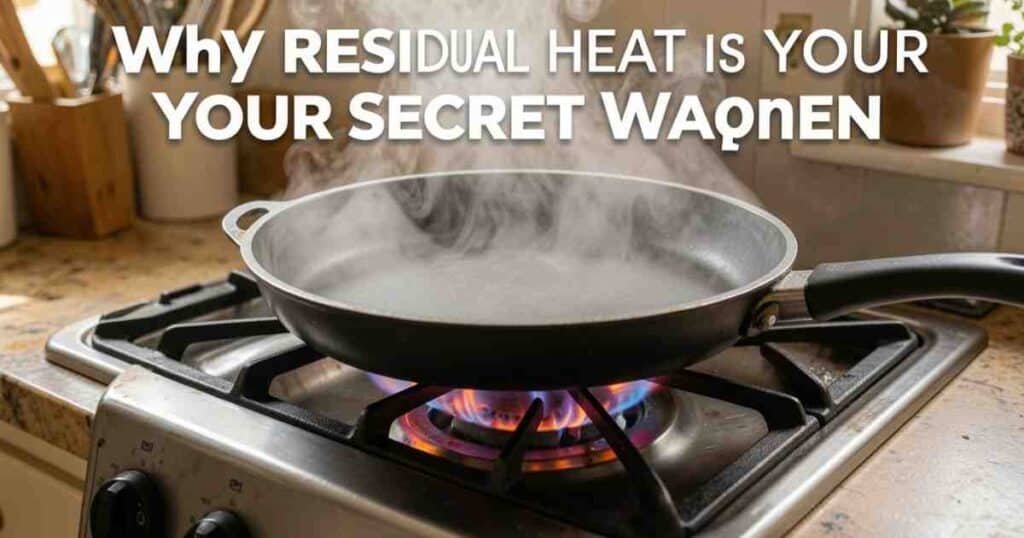
When you remove food from heat too early, it can be undercooked. When you remove it too late, it can become dry or tough. Residual heat allows for a gentle, continuous cooking process that often yields superior results.
It helps to equalize temperatures within the food, ensuring that the center is cooked through without the exterior becoming overdone. This is especially important for larger cuts of meat, dense vegetables, and even delicate items like fish.
How Residual Heat Works in Different Cooking Methods
The principle of residual heat applies across a wide spectrum of cooking techniques. Understanding its role in each can help you fine-tune your approach and achieve better outcomes. It’s a subtle but significant factor that separates good cooking from great cooking.
Oven Roasting and Baking
When you take a roast or a batch of cookies out of a hot oven, they don’t instantly stop cooking. The heat absorbed by the food and the pan continues to cook them. This is a prime example of Using Residual Heat: The Professional Trick Home Cooks Ignore.
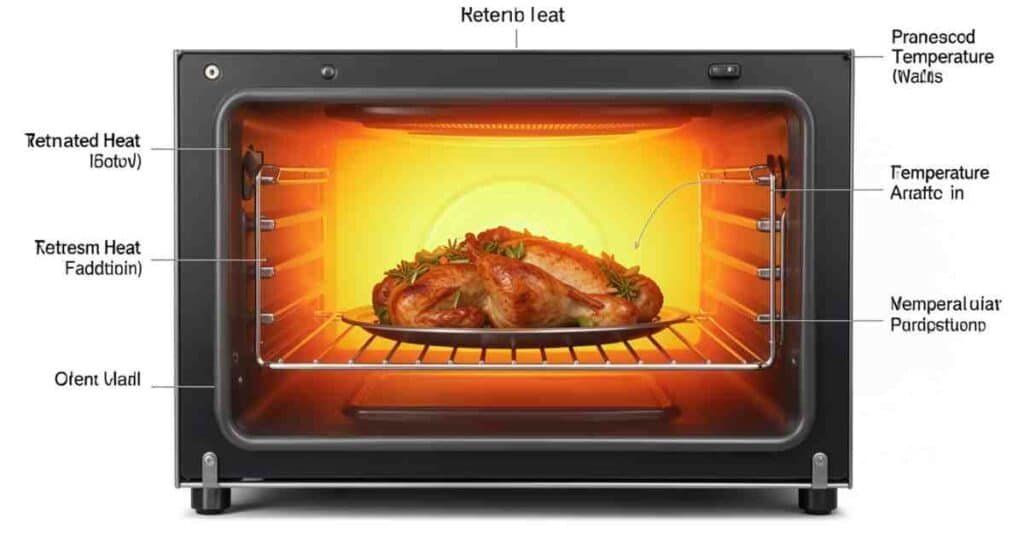
For roasts, this means you can often pull them from the oven a few degrees below your target temperature. The internal temperature will continue to rise as the food rests, reaching perfection without drying out.
For baked goods like cakes and cookies, residual heat helps them set. If you remove them the instant they look done, they might be too soft. Letting them cool on the baking sheet for a few minutes allows the residual heat to finish the job, ensuring they have the right texture and structure.
Grilling and Pan-Searing
Even with direct heat like grilling or pan-searing, residual heat plays a role. When you take a steak off the grill, the hot grill marks continue to radiate heat inwards. This is why resting a steak after grilling is so vital.
It allows the juices to redistribute and the internal temperature to stabilize. Overlooking this step means you lose precious moisture when you cut into it too soon.
For pan-seared items like chicken breasts or fish fillets, the hot pan itself retains a lot of heat. Once removed from the pan, the food continues to cook from its own internal warmth. This is a key aspect of Using Residual Heat: The Professional Trick Home Cooks Ignored by many home cooks who often serve food immediately off the heat.
Simmering and Braising
Stovetop methods like simmering and braising also benefit from residual heat. When you turn off the heat under a pot of stew or a braised dish, the liquid and the food remain hot for a considerable time. This slow cooling period allows flavors to meld and tenderize further.
It’s a gentle continuation of the cooking process.
This is particularly useful for dishes that benefit from longer, slower cooking. The extended time in a warm environment, even without direct heat, helps break down tough connective tissues in meats and allows vegetables to soften perfectly. It’s a form of passive cooking that enhances depth of flavor and texture.
The Art of Resting: Maximizing Residual Heat
Resting is not just for steaks. It’s a critical step for almost any protein cooked to a significant temperature. When meat cooks, the muscle fibers tighten, and the juices are pushed towards the center.
If you cut into it immediately, those juices spill out onto the plate, leaving the meat dry.
Allowing food to rest lets the muscle fibers relax. The heat that was concentrated in the center begins to equalize throughout the cut. This redistribution of moisture is what keeps your food succulent and tender.
This is where Using Residual Heat: The Professional Trick Home Cooks Ignore becomes most apparent. A well-rested piece of meat is a testament to understanding this principle.
How Long to Rest?
Resting times vary depending on the size and type of food. A small fish fillet might only need 5 minutes. A large roast beef could benefit from 15-20 minutes.
The general rule of thumb is about 10 minutes of resting for every pound of meat. This allows the internal temperature to rise by 5-10 degrees Fahrenheit, completing the cooking process gently.
Don’t be afraid of the waiting period. Cover your food loosely with foil to keep it warm without steaming. This is an active part of the cooking process, not downtime.
It’s the crucial moment where Using Residual Heat: The Professional Trick Home Cooks Ignore is actively managed for optimal results.
Preventing Overcooking with Residual Heat Management
One of the most common mistakes home cooks make is pulling food off the heat too early or leaving it on too long. Residual heat helps bridge this gap. By understanding how much carryover cooking occurs, you can adjust your initial cooking time.
For example, if you’re aiming for a medium-rare steak (130-135°F), you might pull it off the grill or pan when it reaches 125-130°F. The residual heat will then bring it up to the desired temperature during its rest. This precision is what Using Residual Heat: The Professional Trick Home Cooks Ignore offers.
It’s about working with the food’s natural properties, not against them.
Temperature Monitoring is Key
A good instant-read thermometer is your best friend when learning to manage residual heat. It allows you to accurately gauge the internal temperature of your food. This takes the guesswork out of knowing when to remove items from the heat source.
First, insert the thermometer into the thickest part of the food, avoiding bone or fat. Second, note the temperature. Next, remove the food from the heat source a few degrees below your target temperature.
Then, let it rest, allowing the residual heat to finish the cooking process. Finally, check the temperature again after resting to confirm it has reached your desired doneness.
Common Pitfalls: Where Home Cooks Lose Residual Heat
Many everyday cooking habits inadvertently lead to a loss of valuable residual heat. Recognizing these can help you reclaim this powerful cooking tool.
Cutting into Food Too Soon
As mentioned, the immediate urge to cut into a freshly cooked protein is a major culprit. This releases all the stored heat and moisture prematurely. Patience is key when Using Residual Heat: The Professional Trick Home Cooks Ignore.
Not Letting Pans and Ovens Cool Gradually
When you remove a dish from an oven, the oven itself is still hot. Likewise, a heavy cast-iron pan retains heat for a long time. Simply leaving food in a cooling oven or on a still-hot burner can continue the cooking process subtly.
However, actively removing food from these sources and allowing it to rest in a controlled environment is more predictable.
Overcrowding the Pan
When you overcrowd a pan, food steams rather than sears. This lowers the temperature of the pan and prevents proper browning. It also means less heat is retained by the food itself, and it cooks more through steaming than direct heat, diminishing the effect of residual heat.
Ignoring the “Carryover”
The most significant pitfall is simply not accounting for carryover cooking. Many recipes provide a cooking time, but this is often a guideline. Experienced cooks know to factor in the heat that will continue to work after the food leaves the direct heat.
This is the essence of Using Residual Heat: The Professional Trick Home Cooks Ignore.
Applying Residual Heat to Vegetables
Residual heat isn’t just for proteins. It can also improve the texture and flavor of vegetables. For instance, when roasting vegetables, pulling them from the oven slightly before they reach peak tenderness allows them to finish cooking as they cool.
This prevents them from becoming mushy.
Steamed vegetables also benefit. Once removed from the steamer, they remain hot and continue to soften. For a crisp-tender result, you might remove them when they feel slightly firmer than you prefer, knowing the residual heat will do the rest.
The Science Behind Even Cooking
When food is heated, the outer layers absorb heat much faster than the inner core. This creates a temperature gradient. Residual heat helps to equalize this gradient.
As the outer layers cool slightly, their heat transfers to the cooler center, bringing the entire piece of food to a more uniform temperature. This is why resting meat leads to a more consistent doneness from edge to center, a core benefit of Using Residual Heat: The Professional Trick Home Cooks Ignore.
This process also allows for better moisture distribution. The tight muscle fibers in meat, for example, relax and reabsorb some of the moisture that was pushed to the surface during the initial cooking. This results in a juicier, more tender final product.
Comparing Cooking Without and With Residual Heat Management
To truly appreciate the impact of residual heat, let’s compare how dishes turn out when this principle is applied versus when it’s overlooked.
| Meat Tenderness | Often dry or tough, especially at the edges. Juices can run out quickly when cut. | Juicier and more tender, with a more even texture throughout. |
| Vegetable Texture | Can be overcooked and mushy, or undercooked and hard. | Achieves a perfect crisp-tender texture, with even cooking. |
| Flavor Development | Flavors may not fully meld. | Flavors have more time to deepen and integrate. |
| Consistency | Results can be unpredictable. | More consistent and reliable outcomes. |
| Ease of Serving | Requires immediate serving, often leading to rushed plating. | Allows for a brief, controlled resting period before serving. |
As you can see from the table, actively managing residual heat leads to demonstrably better results. It’s not about adding more time; it’s about using the time wisely. This is precisely why Using Residual Heat: The Professional Trick Home Cooks Ignore is such a valuable insight.
Tips for Mastering Residual Heat
Learning to master residual heat takes a little practice, but the rewards are significant. Start by paying close attention to how your food behaves after it comes off the heat.
First, invest in a good instant-read thermometer. This is non-negotiable for precision. Second, start with forgiving cuts of meat or vegetables.
Don’t try to master a complex dish on your first attempt.
Next, observe the temperature rise during resting. You’ll be surprised how much it continues to cook. Then, adjust your initial cooking times based on your observations.
If your roast consistently rises 10 degrees during resting, pull it 10 degrees early next time.
Finally, be patient. The resting period is a vital part of the cooking process. Embrace it, and your food will thank you.
Frequently Asked Questions Of Using Residual Heat: The Professional Trick Home Cooks Ignore
Question: What is the most important part of using residual heat?
Answer: The most important part is understanding that food continues to cook after it’s removed from the heat source, and planning your cooking times accordingly.
Question: Does residual heat apply to boiling water?
Answer: While boiling water itself will cool down, the principle of residual heat is more about the heat retained within the food itself, which continues to cook it gently.
Question: How can I tell when my food is ready to come off the heat, considering residual heat?
Answer: Using an instant-read thermometer to check the internal temperature a few degrees below your target doneness is the most reliable method for Using Residual Heat: The Professional Trick Home Cooks Ignore.
Question: Is resting meat always necessary?
Answer: Yes, for most cooked meats, resting is crucial to allow juices to redistribute and the internal temperature to equalize, directly benefiting from residual heat.
Question: Can I use residual heat to cook things faster?
Answer: No, residual heat is about completing the cooking process gently and ensuring evenness, not about speeding things up. It’s about cooking smarter, not faster.
Question: What if I forget to rest my food?
Answer: If you forget to rest your food, it will likely be less juicy and tender. You can try to let it sit for a few minutes anyway, but the optimal results from Using Residual Heat: The Professional Trick Home Cooks Ignore will be diminished.
Final Thoughts
Mastering the art of residual heat transforms your cooking. By understanding and managing the warmth that remains in your food, you can achieve tender meats, perfectly cooked vegetables, and consistently delicious results.
Embrace this professional trick home cooks often ignore, and you’ll see a noticeable improvement in your kitchen creations.

Leave a Reply