Saucepans

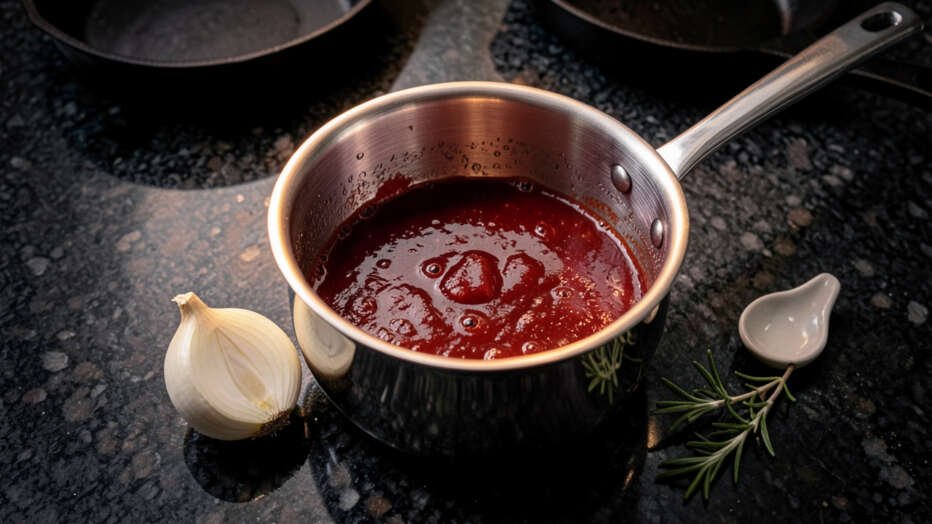
Why Tri-Ply Construction Matters for Even Sauce Reduction
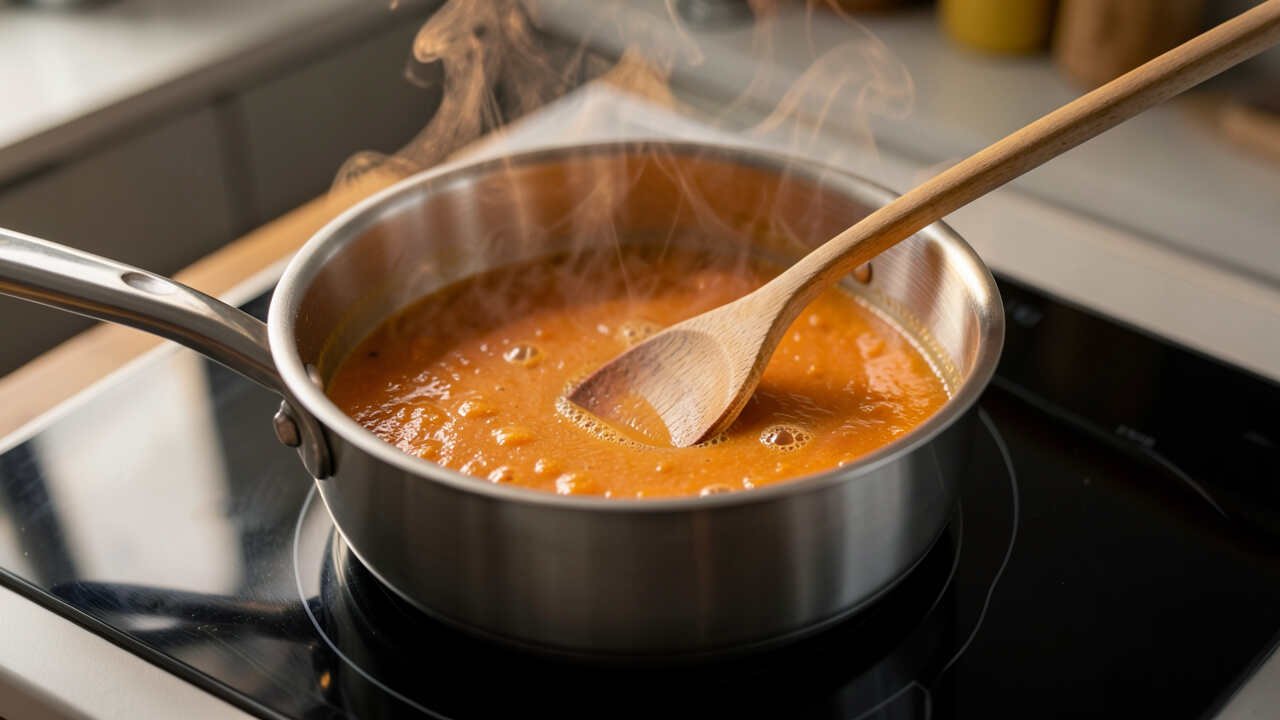
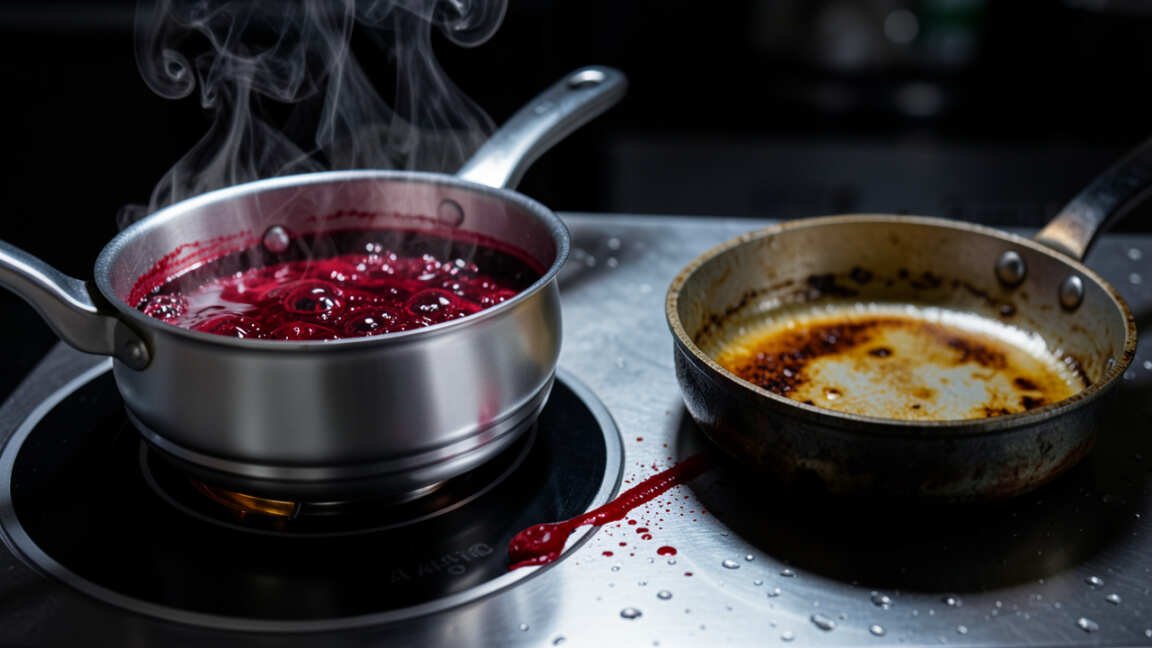
At a Glance Tri-ply construction matters for even sauce reduction because its aluminum core sandwiched between stainless steel layers eliminates hot spots that cause scorching and uneven reduction. This even heat distribution allows sauces to reduce at a consistent simmer without scorching or breaking emulsions, preserving both flavor and texture. The responsive temperature control of…

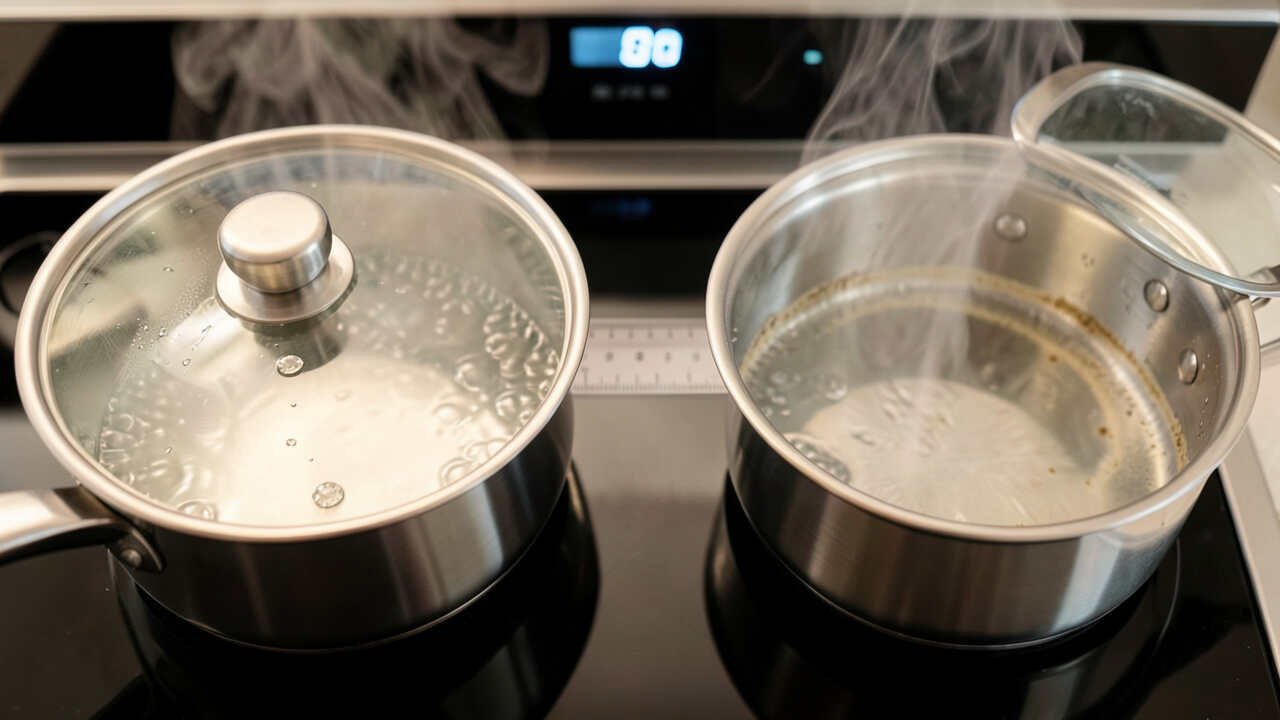
How Lid Fit Affects Saucepan Cooking Time and Water Loss
At a Glance A saucepan lid's fit directly determines cooking time and water loss because a tight seal traps steam, raising internal temperature and accelerating cooking. A loose or mismatched lid can increase cooking time by up to 30 percent and cause two to three times more water evaporation during simmering. For faster, more efficient…
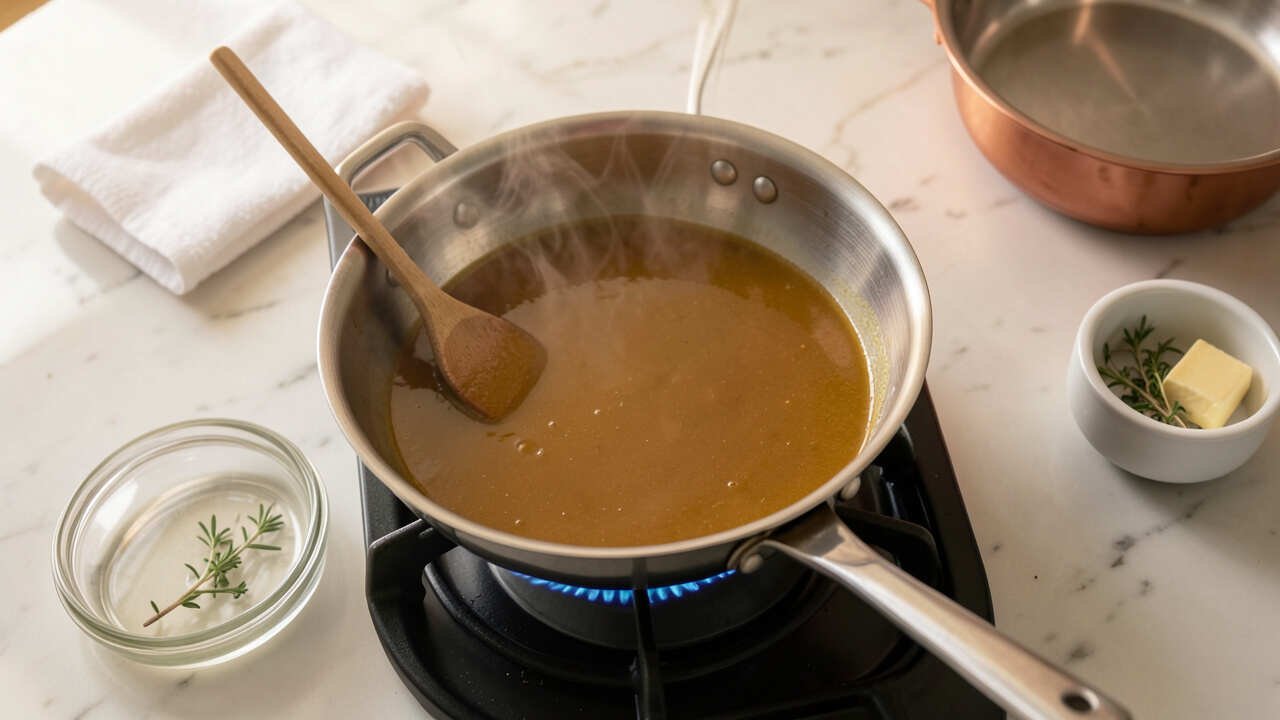
How to Avoid Hot Spots When Simmering in a Saucepan Daily
At a Glance Hot spots when simmering are prevented by using a heavy-bottomed saucepan with an aluminum or copper core, matching the burner size to the pan diameter, and stirring every two to three minutes. A diffuser plate placed between the burner and pan further spreads heat evenly, while keeping the lid slightly ajar helps…
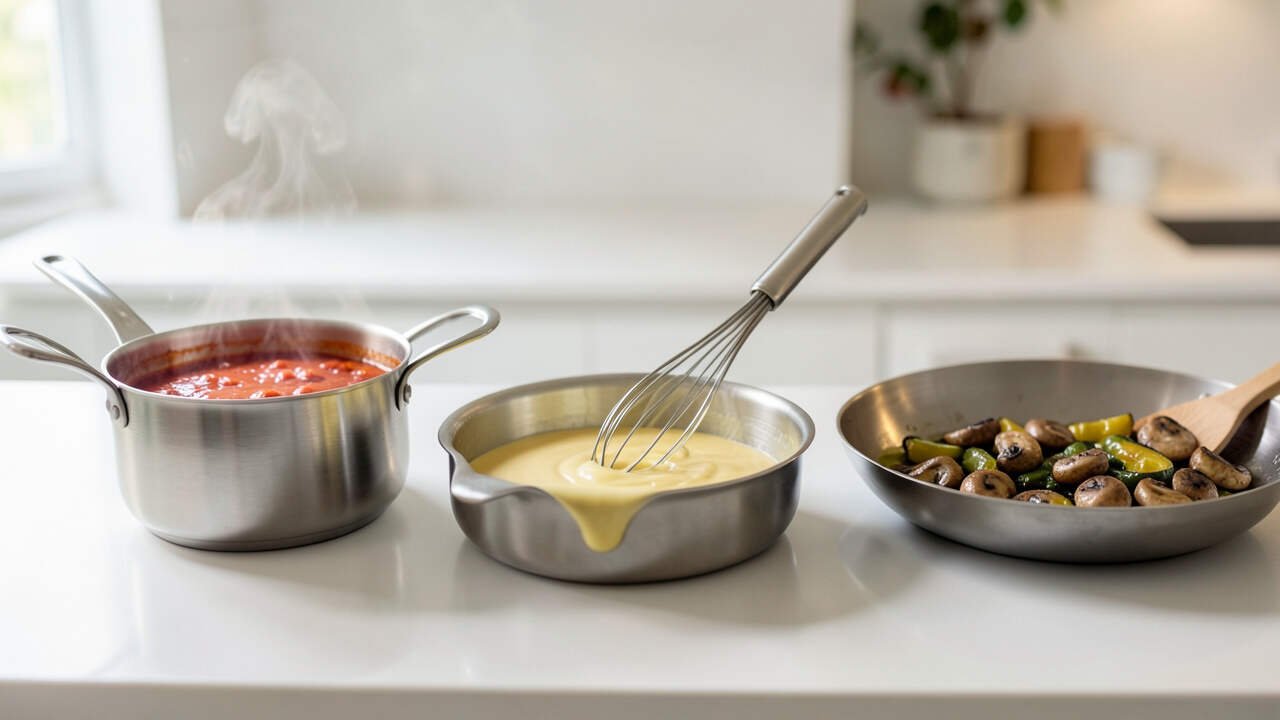
Saucepan vs Saucier vs Sauté Pan: When Each Shape Wins Out
At a Glance A saucepan, saucier, and sauté pan each excel in different cooking tasks because of their distinct shapes. The saucier's sloped sides make it ideal for stirring delicate sauces and risotto, the sauté pan's wide flat surface is best for searing and browning, and the standard saucepan handles boiling and soups at a…
What Size Saucepan Do You Actually Need: 1qt vs 2qt vs 4qt
At a Glance The 2-quart saucepan is the most practical size for everyday cooking, handling roughly 85% of common tasks like reheating soup, cooking rice, and making small sauces for households of two to four people. A 1-quart saucepan works best for single servings and warming small amounts of liquid, while a 4-quart option suits…

The Right Saucepan for Boiling Pasta in a Studio Apartment
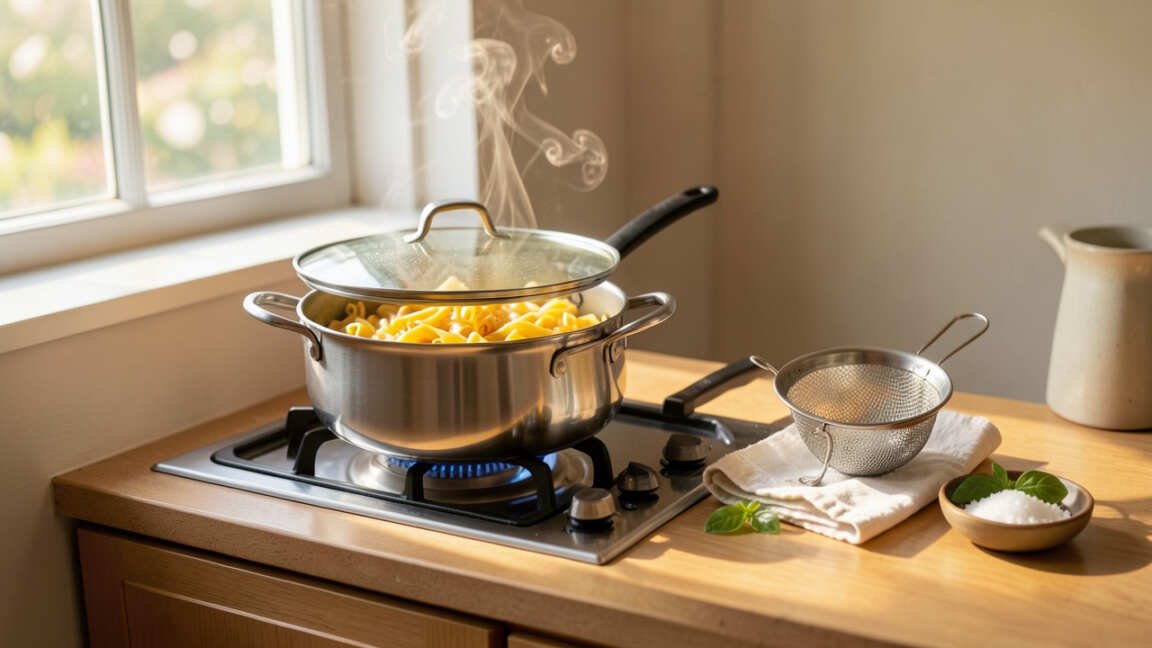
At a Glance The right saucepan for boiling pasta in a studio apartment is a 3-to-4-quart stainless steel or nonstick pan with a tight-fitting lid, a long stay-cool handle, and a flat, heavy bottom. This size works efficiently on any single burner, stores easily in limited cabinet space, and boils enough water for one to…
Why Stainless Steel Wins for Acidic Sauces Over Non-Stick
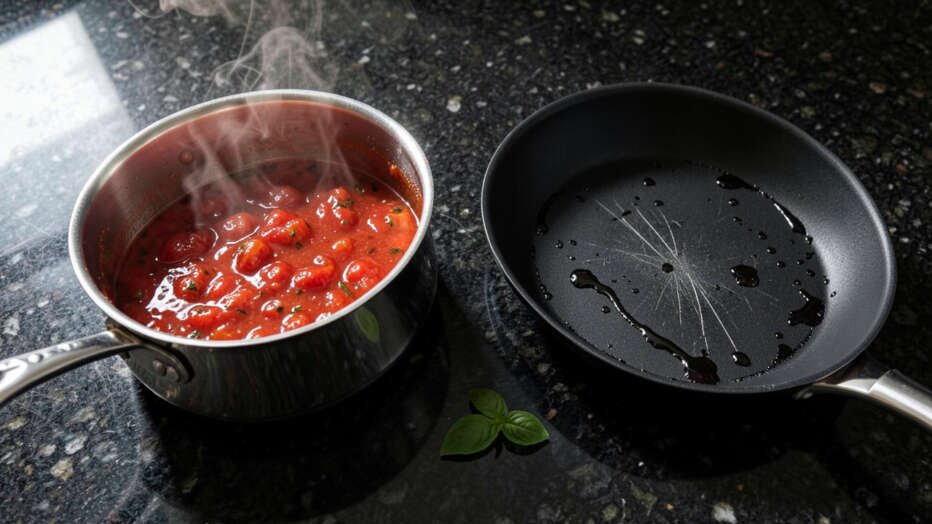
At a Glance Stainless steel wins for acidic sauces over non-stick because its chromium oxide layer resists acid reactions and prevents metal leaching. Non-stick coatings degrade when exposed to acids like tomato or citrus, causing flaking and potential chemical release even in PFOA-free varieties. For any acidic sauce, stainless steel provides superior chemical safety, heat…
How to Pick a Saucepan for Reheating Soup Without Scorching
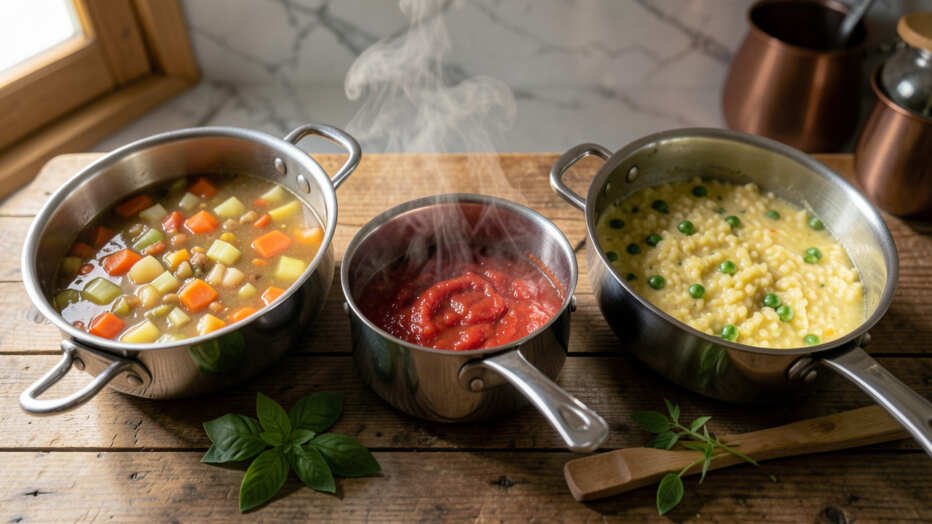
At a Glance To avoid scorching when reheating soup, choose a saucepan with a heavy, multi-clad base at least 3 to 4 millimeters thick, such as tri-ply stainless steel or enameled cast iron, which eliminates hot spots and distributes heat evenly. Thin pans like single-ply aluminum create uneven heat that burns dairy and starch solids…
The Saucier Pan Shape: Why Curved Sides Help Whisking Today
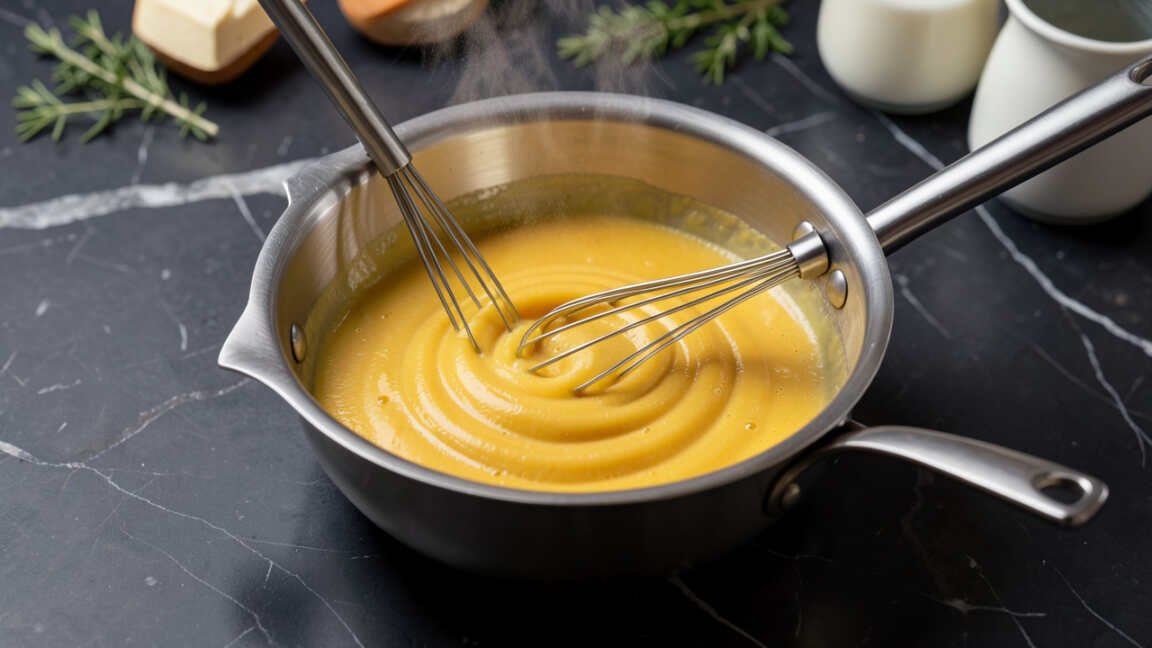
At a Glance A saucier pan's curved sides and rounded bottom allow whisk tips to reach every surface without leaving scorched bits, creating a natural vortex that blends sauces evenly and faster than a flat-bottom saucepan. This design prevents burning and reduces stirring time by up to 30 percent, making it essential for delicate sauces…

How Saucepan Material Affects Béchamel Smoothness Outcome
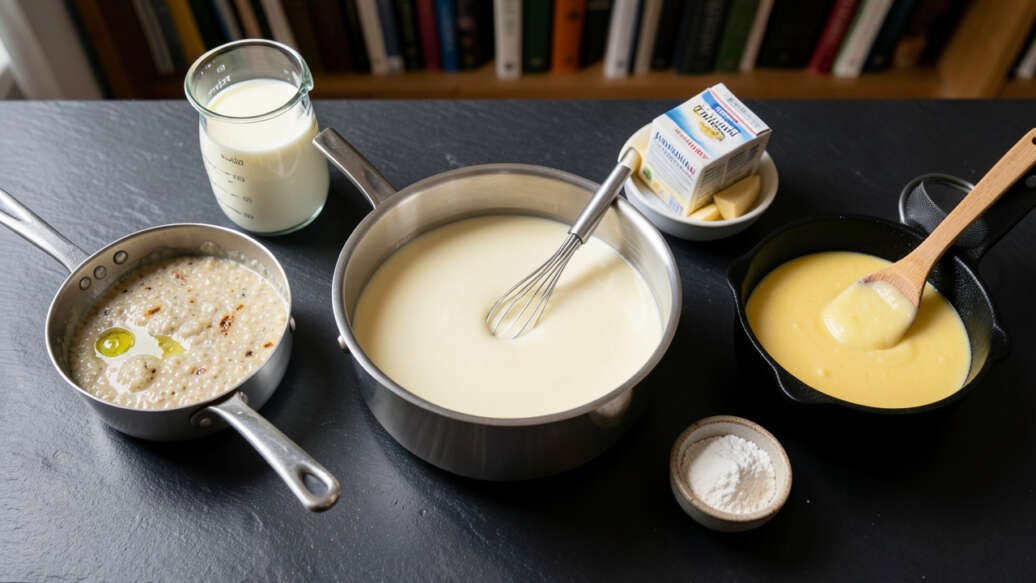
At a Glance The material of a saucepan directly determines béchamel smoothness by affecting heat distribution and reactivity with milk. A thick, tri-ply stainless steel pan is the best choice, as its even heating prevents hot spots that scorch the roux and create lumps. For reliable results, choose a heavy-bottomed pan with good heat retention,…
Saucepan Pour Spouts: Are They Worth the Premium Price Yes
At a Glance Premium saucepan pour spouts are worth the higher price because their sharp lip and precise angle reduce drips by up to 80% compared to standard rims. The heavier gauge metal and precision forming of premium models prevent warping and maintain a stable pour over years of use. Home cooks benefit from less…
Why Clad-Bottom Saucepans Beat Disk-Bottom for Quick Reduce
At a Glance Clad-bottom saucepans outperform disk-bottom designs for quick reduction because their fully bonded construction distributes heat evenly across the base and sides, preventing the hot spots that scorch sauces. This uniform heat transfer allows for rapid, controlled evaporation without burning, while disk-bottom pans concentrate heat in the center, leading to uneven reduction. The…