
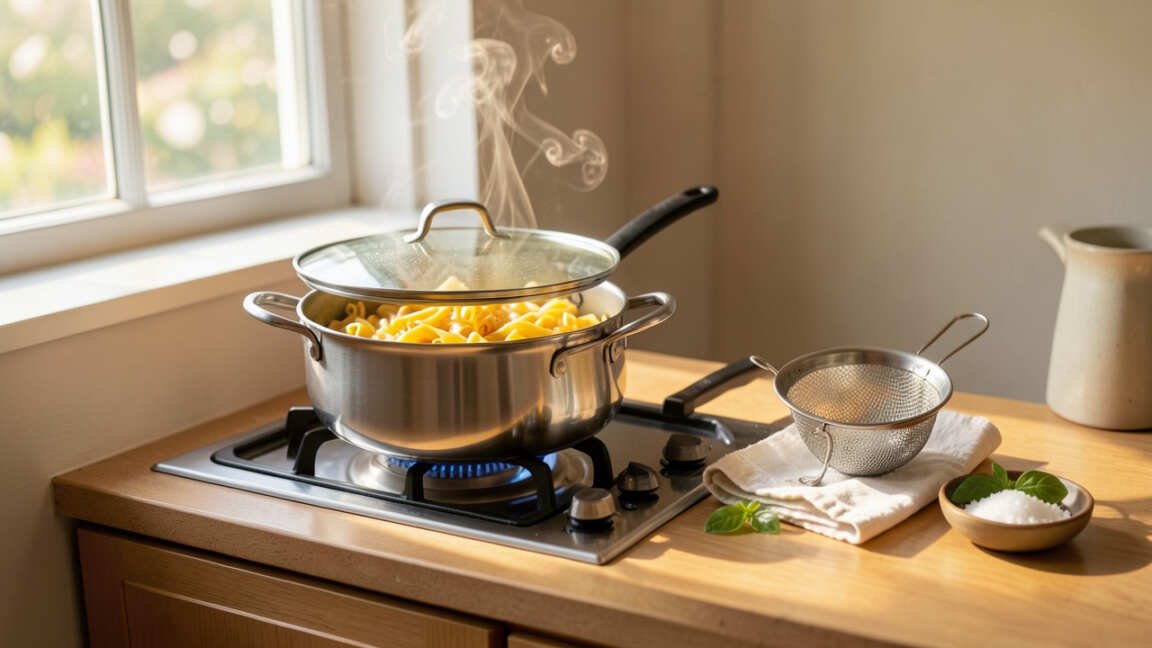
The right saucepan for boiling pasta in a studio apartment is a 3-to-4-quart stainless steel or nonstick pan with a tight-fitting lid, a long stay-cool handle, and a flat, heavy bottom. This size works efficiently on any single burner, stores easily in limited cabinet space, and boils enough water for one to two generous servings. A tri-ply stainless steel or thick-gauge hard-anodized aluminum construction provides even heat distribution and durability on common studio stovetops like electric or induction.
Boiling pasta in a studio apartment kitchen requires smart choices about space and cookware. This guide helps you find the right saucepan for boiling pasta in a studio apartment without sacrificing counter space or storage room.
In short, the right saucepan for a studio apartment is a 3 to 4-quart stainless steel or nonstick pan with a tight-fitting lid, a long stay-cool handle, and a flat, heavy bottom. This size works on any single burner, stores easily, and boils enough water for one to two generous servings of pasta.
Key Takeaways
- You do not need a giant 8-quart stockpot to boil pasta in a studio apartment; a 3 to 4-quart saucepan is sufficient for most meal servings.
- A tri-ply stainless steel or a thick-gauge hard-anodized aluminum saucepan provides the best heat distribution and durability for small electric or induction stoves commonly found in studio kitchens.
- Ergonomic handles that stay cool on the stove are critical in a small space where counter space is limited and you must maneuver the pan carefully.
- Investing in a saucepan with a steamer basket insert offers added versatility for a studio kitchen, allowing you to cook pasta and vegetables at the same time.
- Matching the pan base diameter to your single burner size maximizes energy efficiency and prevents scorching, which is a common issue in older apartment stoves.
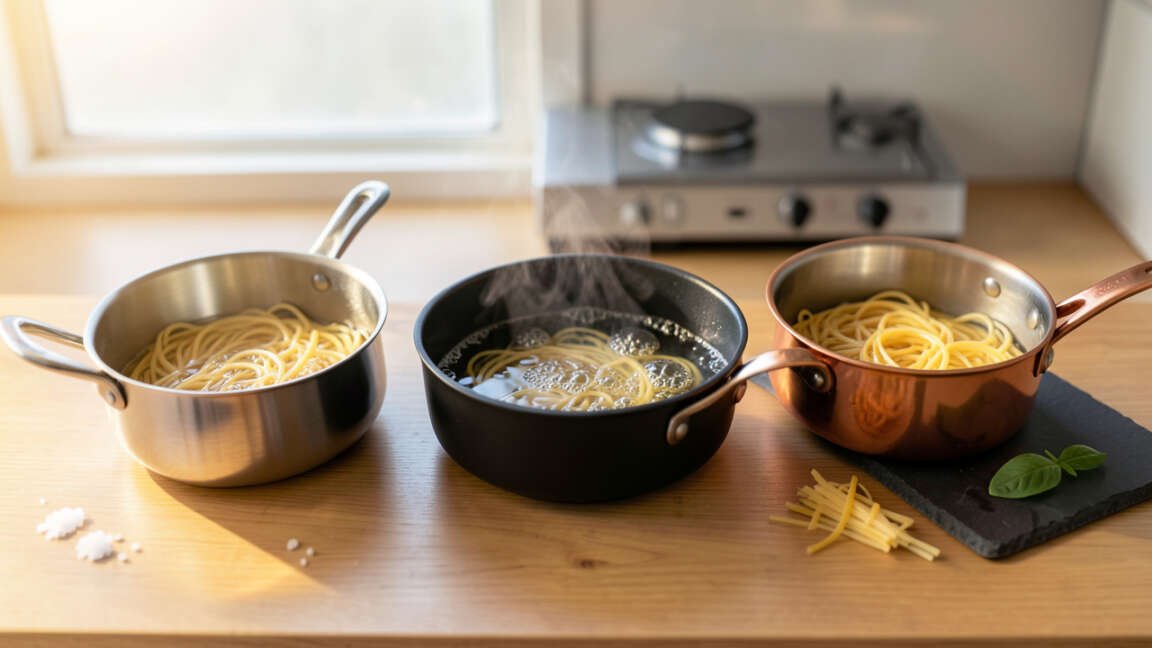
Quick Comparison of Pasta Saucepan Materials
| Material | Heat Distribution | Weight | Ease of Cleaning | Best For |
|---|---|---|---|---|
| Tri-Ply Stainless Steel | Excellent | Heavy | Moderate (requires scrubbing) | Induction, Gas, Electric |
| Hard-Anodized Aluminum | Very Good | Medium | Excellent (nonstick interior) | Gas, Electric, Ceramic |
| Thick-Gauge Ceramic | Good | Light | Excellent (easy wipe) | Electric, Gas |
| Enameled Cast Iron | Excellent | Very Heavy | Good (hand wash only) | Induction, Gas, Electric |
What Are the Key Features of the Right Saucepan?
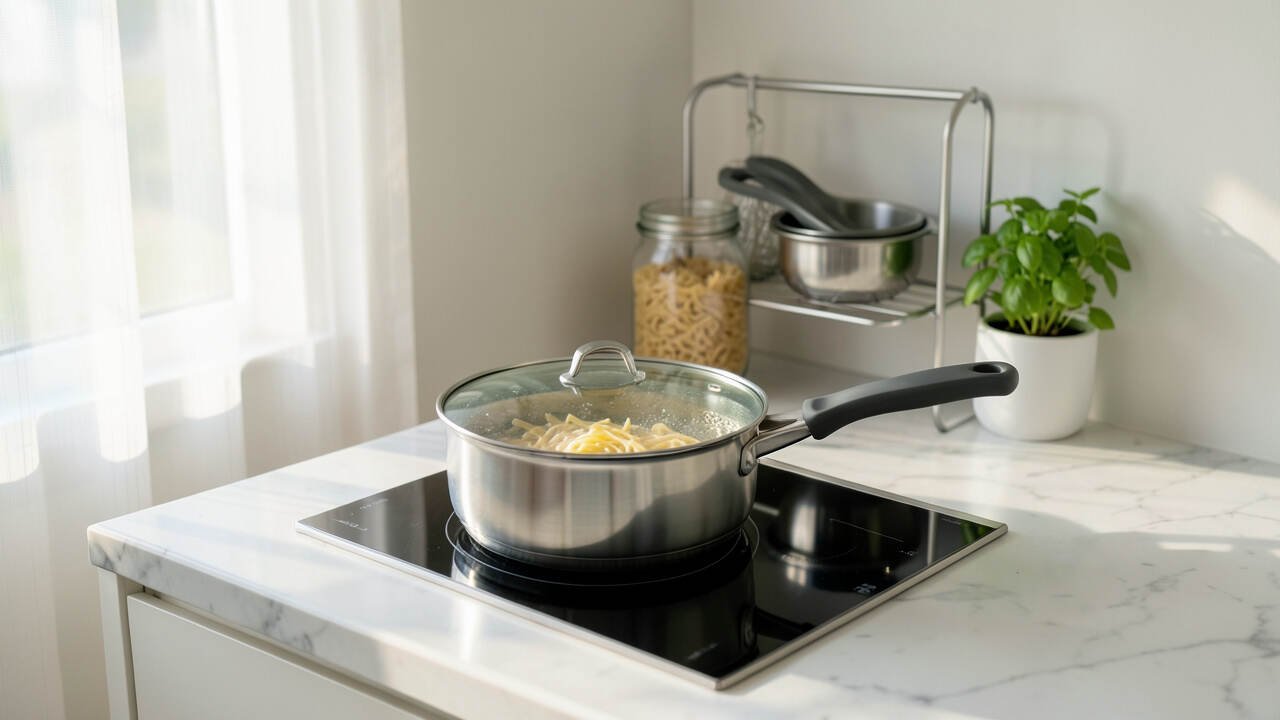
Finding the right saucepan for boiling pasta in a studio apartment comes down to four critical features. Each one affects how well the pan works in a small space.
Volume and Capacity
Volume is the most important factor. A 3-quart saucepan handles 6 to 8 ounces of dried pasta comfortably. This gives you one large dinner portion or two smaller servings. A 4-quart pan offers more room for soupier recipes or cooking slightly larger batches.
Important: A 5-quart or larger pot often does not fit well in a standard studio apartment cabinet. Stick with 3 to 4 quarts for the best balance of cooking capacity and storage practicality.
Base Diameter and Flatness
A flat, heavy base prevents scorching and ensures even heat transfer. Most studio apartments have compact two-burner stoves. The base of your saucepan should match the size of your largest burner. A base that is too wide overhangs the burner and wastes heat. A base that is too small loses efficiency.
Handle Design and Safety
In a cramped kitchen, a long handle can be a hazard. Look for a handle that stays cool on the stovetop and offers a secure grip. Silicone-coated handles are comfortable and heat-resistant. Stainless steel handles with a brushed finish resist heat well. Avoid short handles that force your hand too close to the steam.
Lid Fit and Material
A tight-fitting lid speeds up boiling time significantly. Tempered glass lids let you monitor the pasta without lifting the lid and releasing heat. Stainless steel lids are more durable but block visibility. A pan with a built-in strainer lid is a bonus for small kitchens with limited drawer space for colanders.
Top Material Options for Studio Kitchens
The material of your saucepan determines how it heats, how much it weighs, and how easy it is to clean. These are the best options for a small apartment kitchen.
- Tri-Ply Stainless Steel. This is the gold standard for durability and heat control. Brands like All-Clad and Calphalon make tri-ply pans that heat evenly across the bottom and sides. They are heavy but almost indestructible.
- Hard-Anodized Aluminum Nonstick. This material is lighter than stainless steel and heats very evenly. A durable nonstick coating makes cleanup effortless. T-fal and KitchenAid produce reliable hard-anodized pans with comfortable handles.
- Thick-Gauge Ceramic Nonstick. Ceramic pans are lightweight and free of PFAS. They do not conduct heat as efficiently as tri-ply stainless steel, but they are easy to handle and clean quickly by hand.
- Enameled Cast Iron. Le Creuset and similar brands make stunning enameled pans that hold heat exceptionally well. The major downside is weight. An enameled cast iron saucepan is heavy to lift and drain, especially for a small cooktop.
Tip: If you have an induction stovetop, choose tri-ply stainless steel or enameled cast iron. Hard-anodized aluminum and ceramic pans require a magnetic base to work on induction burners. Check the product specifications before buying.
Why Is Size So Important for a Studio Apartment?
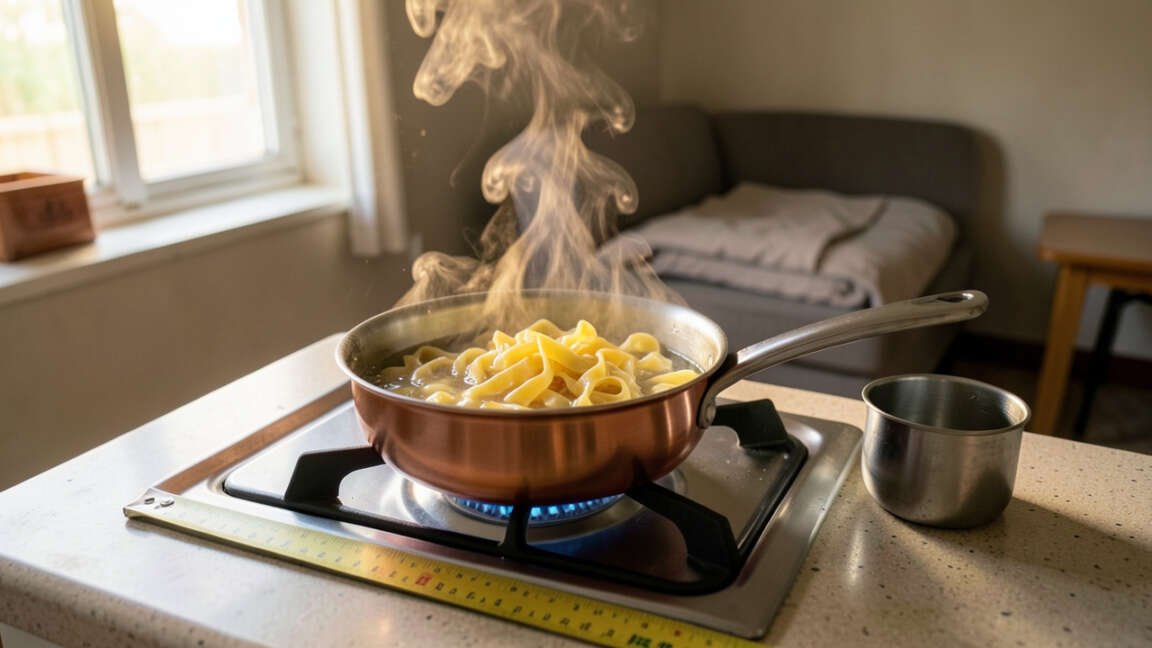
Space is the defining constraint of a studio apartment. The right saucepan for boiling pasta in a studio apartment must fit your cabinet, your sink, and your stove.
According to the U.S. Census Bureau, the average studio apartment measures around 500 to 600 square feet. The kitchen area in these units often takes up less than 70 square feet of floor space. That limited footprint means your countertop is small and your cabinets are narrow.
- Standard cabinets are 24 inches deep. A 3-quart saucepan with a 7 to 8-inch wide base fits comfortably with room to spare.
- An 8-quart stockpot requires 10 to 12 inches of clearance and often rests too close to neighboring burners or the edge of the counter.
- Draining pasta from a large pot over a small sink is awkward and risks splashing hot water on your walls or yourself.
Warning: Overfilling a small saucepan with pasta and water is a common mistake. The starchy foam can boil over quickly and create a mess on your stovetop. Always leave at least 2 inches of headspace between the water line and the rim of the pan.
How to Choose the Best Pan for Your Stove Type
Your stovetop type determines which saucepan materials and base shapes work best. Most studio apartments have one of four common stove types.
Induction Cooktops
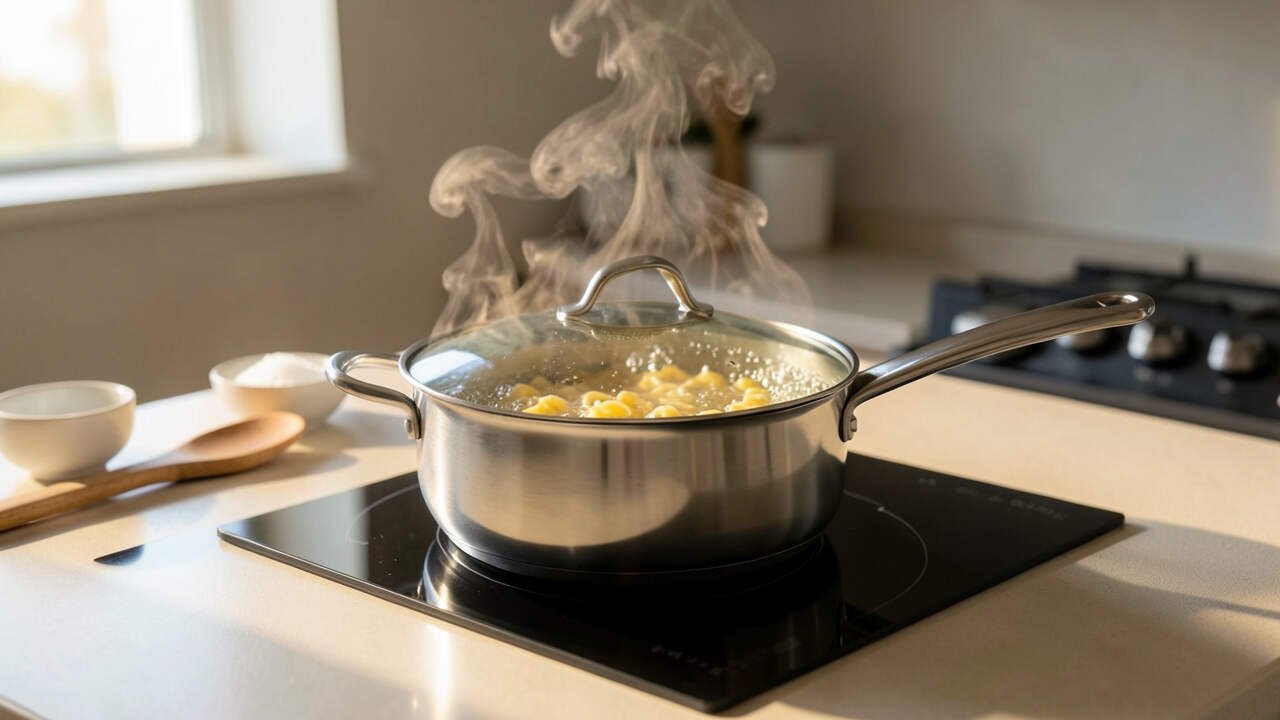
Induction cooking is gaining popularity in new apartment buildings. According to Energy Star, induction cooktops are 84 percent energy efficient. They require pans with a magnetic stainless steel or cast iron base. A tri-ply stainless steel saucepan is the best match for induction burners.
Electric Coil Stoves
Electric coils take longer to heat up and cool down than gas or induction. A heavy-bottomed hard-anodized aluminum pan works well here because it distributes heat evenly despite the uneven heating of the coil. Avoid thin-bottomed pans that cause hot spots and scorching.
Gas Stoves
Gas stoves provide instant heat control. Any medium-weight saucepan works on a gas burner. A tri-ply or hard-anodized pan gives you the best versatility if you move apartments frequently and encounter different stove types.
Ceramic Glass Stoves
Ceramic glass tops require flat-bottomed pans to prevent scratching and maximize contact. Nonstick hard-anodized aluminum pans slide easily and clean up without leaving residue. Avoid heavy cast iron pans that can scratch the glass surface if dragged across it.
| Stove Type | Best Saucepan Material | Key Consideration |
|---|---|---|
| Induction | Tri-Ply Stainless Steel | Must have magnetic base |
| Electric Coil | Hard-Anodized Aluminum | Thick base prevents hot spots |
| Gas | Tri-Ply or Hard-Anodized | Handle height is important for small grates |
| Ceramic Glass | Hard-Anodized Aluminum | Flat base is required to avoid scratching |
Common Myths About Boiling Pasta in a Small Kitchen
Myth: You absolutely need a large stockpot to boil pasta.
Many people believe you need gallons of water to boil pasta. In reality, a 3 to 4-quart saucepan holds enough water to cook 6 to 8 ounces of dried pasta perfectly. Cooking pasta in less water actually creates a starchier water that helps sauces cling better to the noodles.
Myth: Stainless steel is always the best material for pasta.
Stainless steel is durable and distributes heat well, but it can be sticky. Nonstick ceramic or hard-anodized aluminum pans are often better for limited kitchens because they are lighter and much easier to clean by hand if you do not have a dishwasher.
Myth: A bigger pot stores just as easily as a small one.
In a studio apartment, every inch of cabinet space matters. A 3-quart saucepan is significantly more compact than an 8-quart stockpot. It fits in tighter cabinets and on smaller shelves, making it a practical choice for small-space living.
Pro Tips for Cooking Pasta in a 3 or 4-Quart Saucepan
Using a smaller saucepan requires a slight adjustment in technique. These pro tips help you get perfect pasta every time. Proper pasta shape selection makes cooking in small saucepans easier with shorter noodles.
- Salt the water generously after it reaches a rolling boil. Use about 1 tablespoon of salt per 4 quarts of water to season the pasta from the inside out.
- Stir the pasta immediately after adding it to the boiling water. This prevents the noodles from sticking to each other or to the bottom of the pan.
- Use tongs instead of a colander to drain the pasta. Lifting the noodles out of the water leaves the starchy water in the pan, which you can use to thin your sauce.
- Reserve a cup of pasta water before draining. The starchy water helps emulsify sauces and creates a silkier texture on the plate.
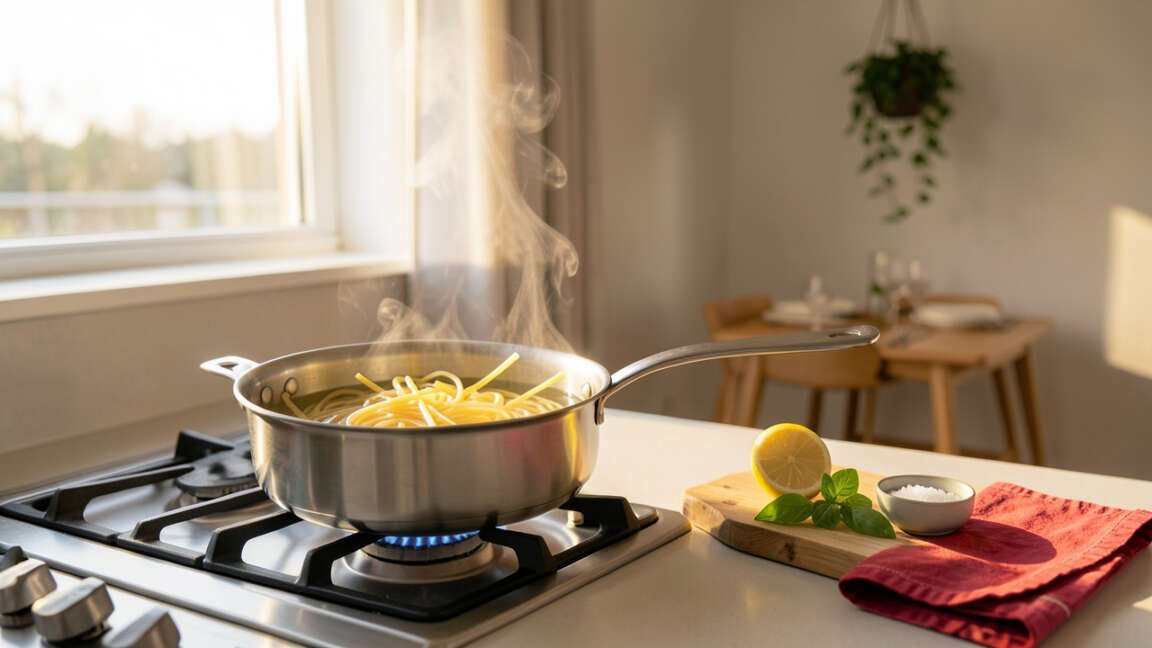
- Choose shorter pasta shapes like penne, fusilli, or farfalle for easier cooking and serving in a small saucepan. Long noodles like spaghetti require breaking in half to fit.
Tip: If you regularly cook pasta in a studio apartment, keep a silicone trivet on your counter. It gives you a safe place to rest the hot saucepan immediately after draining without damaging your countertop surface.
Resources and Tools
These brands and tools are widely trusted for producing high-quality saucepans that work well in small apartment kitchens. Following kitchen food safety practices ensures safe handling of hot pans and pasta water.
- All-Clad D3 Stainless Steel Saucepan – Tri-ply construction with even heat distribution and a tight-fitting lid. Visit All-Clad
- Calphalon Premier Hard-Anodized Nonstick Saucepan – Durable nonstick interior with a comfortable silicone handle. Visit Calphalon
- T-fal Ultimate Hard-Anodized Saucepan – Budget-friendly option with a thick base and tempered glass lid. Visit T-fal
- Oxo Good Grips Silicone Trivet – Heat-resistant trivet that protects countertops and tables. Visit Oxo
- KitchenAid Stainless Steel Saucepan – Magnetic stainless steel base compatible with induction cooktops. Visit KitchenAid
Frequently Asked Questions
Can I cook spaghetti in a 3-quart saucepan?
Yes. You can break the spaghetti in half to fit it into the saucepan, or you can gently push the noodles into the boiling water as they soften. A 3-quart pan is perfect for standard 8-ounce pasta boxes.
What is the best handle type for a small kitchen?
A long, stay-cool silicone or stainless steel handle is best. It gives you leverage when draining pasta and stays safe to touch near a hot burner. Avoid short handles that can easily get knocked into adjacent burners.
How does the saucepan material affect cooking time?
Heat conductivity matters. Tri-ply stainless steel or hard-anodized aluminum heats water faster and more evenly than single-ply stainless steel. This saves time and energy, which is a real benefit in an apartment where you pay for utilities.
Should I buy a saucepan with a lid for pasta?
Absolutely. A tight-fitting lid is essential for bringing water to a boil faster. Once you drain the pasta, you can use the lid to keep the finished dish warm while you prepare the sauce.
Is nonstick safe for boiling pasta?
Yes, nonstick pans are perfectly safe for boiling water and cooking pasta. High-quality nonstick coatings from brands like T-fal or Calphalon are PFOA-free and designed to withstand the high heat needed for boiling. Just avoid using metal utensils that can scratch the coating.
Final Thoughts
Choosing the right saucepan for boiling pasta in a studio apartment comes down to size, material, and burner compatibility. A 3 to 4-quart tri-ply stainless steel or hard-anodized nonstick pan gives you the best balance of cooking performance and storage efficiency. Focus on a flat base, a cool-touch handle, and a snug lid for the best results in a small kitchen. Your pasta nights will be faster, easier, and far more enjoyable with the right pan in your cabinet. Understanding saucepan cooking performance helps you select the right pan for boiling pasta.

Leave a Reply