
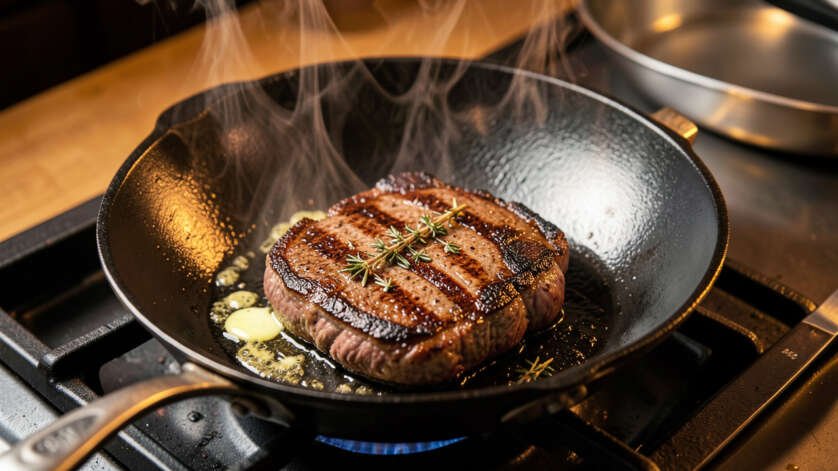
The weight of a frying pan determines its heat retention, which is the critical factor for achieving a consistent sear on meat. A heavy pan maintains its temperature when cold food is added, while a light pan loses heat rapidly and causes uneven browning. Home cooks can achieve excellent searing results with an affordable heavy pan, making weight a more reliable indicator of performance than brand name.
You want a perfect sear on your steak. Many home cooks think a famous brand guarantees that result. But the truth is simple: Why Frying Pan Weight Matters More Than Brand for Searing comes down to heat retention and even cooking.
A heavy pan holds steady heat. A light pan loses heat fast. In this post, you will learn exactly how to pick a pan based on weight, not label.
You will get better sears without spending extra on premium brands.
Key Takeaways
- Heavy pans store more heat, which gives you a better, consistent sear.
- Light pans lose heat quickly when you add cold food, causing uneven browning.
- Brand names often cost more but do not always deliver better searing performance.
- Pan weight is a simple, reliable way to judge heat retention without guessing.
- You can get excellent sears from an affordable heavy pan, not just expensive ones.
- Understanding heat transfer helps you cook meat with a crust you can be proud of.
Why Heavy Pans Hold Heat Better
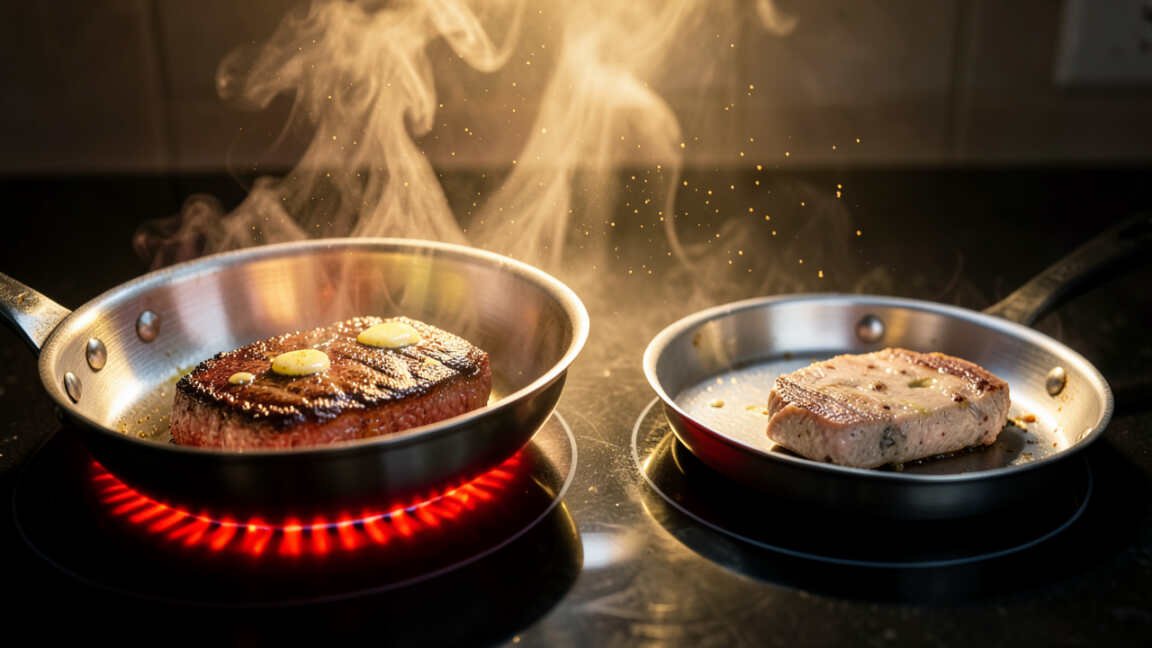
A heavy frying pan has more metal mass. That mass stores heat energy. When you place a cold steak into the pan, the pan keeps its temperature high.
The meat sears quickly without dropping the pan’s heat too much. This is why professional cooks often choose thick, heavy pans for searing.
Why Frying Pan Weight Matters More Than Brand for Searing becomes clear when you compare heat storage. A heavy pan acts like a heat battery. It stays hot even after you add food.
A light pan cannot store as much heat. The surface temperature drops sharply when you add the steak. The meat then simmers rather than sears.
The metal type also matters. Cast iron and stainless steel with an aluminum core are heavy options. They hold heat well.
Thin nonstick pans are light and lose heat fast. So pan weight directly tells you how well the pan will sear.
How Heat Retention Works in the Kitchen
Heat retention means the pan stays hot after you turn down the burner. A heavy pan holds that heat for a long time. This is great for searing because you need constant high surface temperature.
The pan weight is the main factor here. Brand has little to do with it.
When you sear a steak, the pan must stay above 400°F (204°C) to get a brown crust. A light pan will drop below that temperature fast. The meat then releases moisture and steams.
You lose the crisp crust you want. So focusing on weight gives you better control over your cooking results.
Why Light Pans Cool Down Too Fast for Searing
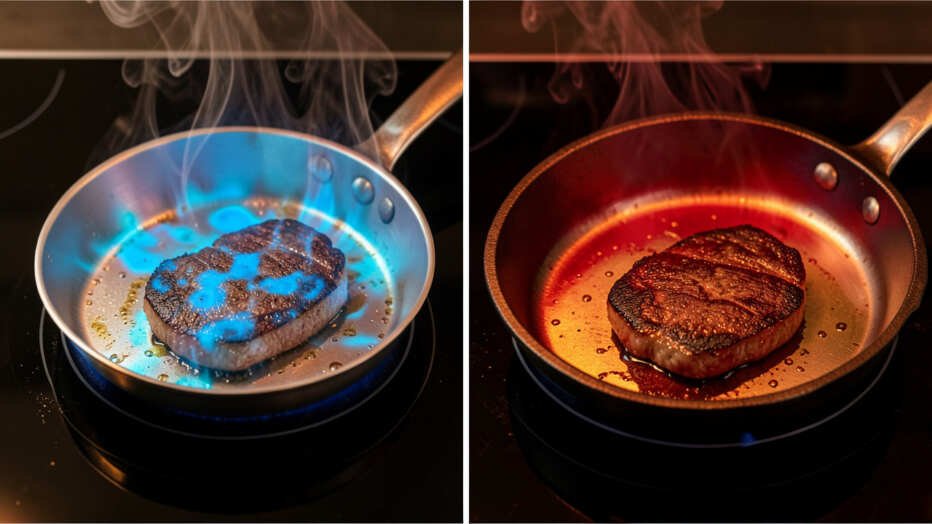
Light pans are easy to lift and toss. But that convenience hurts searing performance. When you add a room‑temperature steak to a light pan, the pan’s heat transfers to the meat.
The pan cools down quickly. It may take a long time to come back up to temperature. Meanwhile, your steak is not searing properly.
First, the surface temperature drops. Second, the food starts to steam instead of brown. Then, you end up with grey meat instead of a golden crust.
This is exactly why pan weight is more important than brand reputation. Many lightweight pans from famous brands still fail at searing because they lack mass.
Even a cheap heavy pan from an unknown brand can outperform an expensive light pan from a luxury brand. The weight does the work, not the logo.
Brand Name vs Real Performance: What Matters
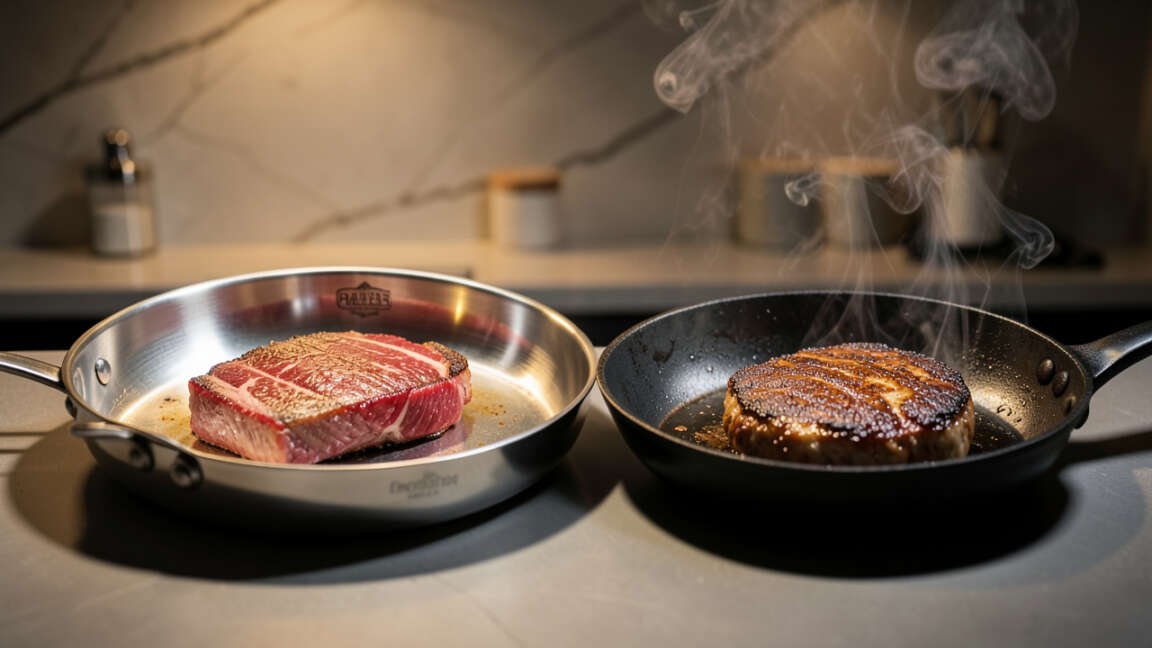
Brand names come with marketing, promises, and higher prices. But do they sear better? Not if the pan is light.
Many well‑known brands sell thin pans that are perfect for quick sautéing but terrible for steak searing. The weight is the key factor you should check before buying.
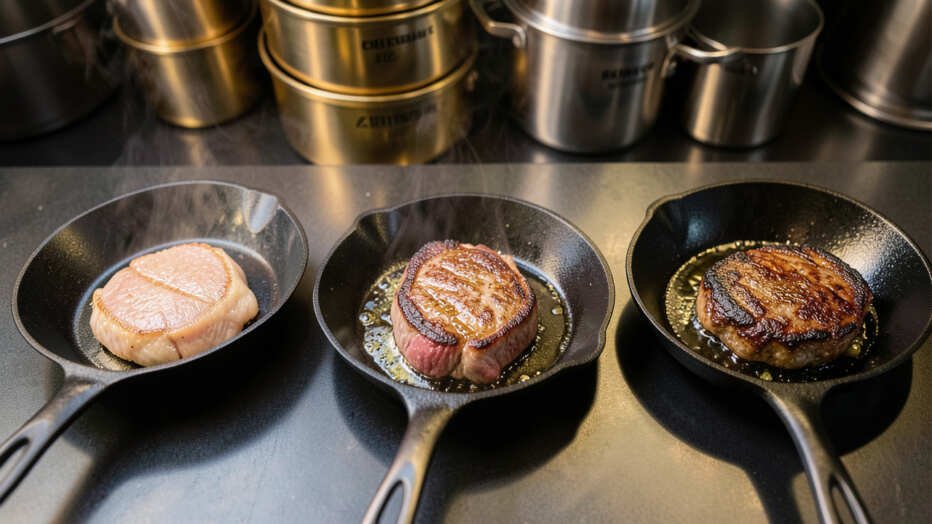
Below is a simple comparison table that shows how heavy and light pans differ in searing results.
The table shows that Why Frying Pan Weight Matters More Than Brand for Searing is not just opinion. It is based on heat physics. Heavy pans hold heat.
Light pans don’t. A brand name cannot change that fact.
What to Look for When Buying a Pan for Searing
Check the pan’s weight before you check the brand. Pick up the pan. If it feels very light for its size, it will not sear well.
A 10‑inch pan should weigh at least 3 pounds. A 12‑inch pan should be 4‑5 pounds. This rule works for cast iron, stainless steel, and carbon steel.
Why Frying Pan Weight Matters More Than Brand for Searing becomes easy to test. Place an empty pan on the stove over medium heat. Wait two minutes.
Sprinkle a few drops of water on the pan. If they sizzle and dance quickly, the pan is hot. But if the pan is light, that heat will vanish as soon as you add food.
So weight gives you a real advantage.
How to Choose the Right Pan Weight for Searing
You do not need to spend hundreds of dollars. A basic cast iron skillet from any store works great. It is heavy, holds heat, and costs much less than branded stainless steel pans.
The cast iron brand does not matter. The weight does.
If you prefer stainless steel, look for one with a thick base and an aluminum or copper core. These pans are heavier than all‑stainless pans. They heat evenly and sear well.
Again, check the weight in your hand, not the logo.
Next, think about your stovetop. Gas burners work well with any pan. Electric and induction stoves perform better with heavy, flat‑bottomed pans.
The weight helps the pan contact the burner evenly. A light pan may warp or have hot spots.
Finally, consider the pan size. A smaller pan heats faster but may not hold enough heat for a large steak. A larger, heavier pan gives you room and thermal mass.
This is why many cooks use a 12‑inch cast iron skillet for searing.
Myths About Pan Weight and Brand
Some people think expensive brands use special alloys that heat better. But the truth is that ordinary metals at the same weight perform almost identically. A cheap heavy pan from a store brand sears just as well as a premium brand heavy pan. Government resources on cookware material safety confirm that weight, not brand, is key.
The logo does not change the physics.
Another myth is that all nonstick pans are bad for searing. Some nonstick pans have a heavy aluminum base and do a decent job. But most nonstick pans are lightweight.
So the rule still holds: weight matters, not brand.
The main point is simple. Why Frying Pan Weight Matters More Than Brand for Searing is a practical tip that saves you money and improves your cooking. Do not let marketing tricks convince you otherwise. Understanding pan weight for searing helps cooks avoid marketing myths about brands.
Frequently Asked Questions
Does a heavier pan always sear better?
Yes, a heavier pan holds more heat and keeps a steady temperature. That steady heat creates a better sear than a light pan can produce.
Can a light pan sear well if I preheat it longer?
Preheating helps, but the pan still loses heat fast when you add cold food. A heavy pan recovers quickly. A light pan takes too long to come back to searing temperature.
Why does pan weight matter more than brand for searing?
Because searing depends on constant high heat. Weight gives you that constant heat. A brand name does not change the pan’s thermal mass or heat retention.
What is the best pan weight for searing a steak?
A 10‑inch pan should weigh at least 3 pounds. A 12‑inch pan should weigh 4‑5 pounds. Cast iron, carbon steel, or tri‑ply stainless steel are good choices.
Is cast iron the best choice for searing?
Cast iron is excellent because it is heavy and holds heat well. But a heavy stainless steel pan with a thick base also works very well. The weight matters more than the material type.
Do expensive brands use heavier pans?
Some do, but many premium brands sell thin pans that are easy to handle. Always check the actual weight in the store. Do not rely on the brand name alone.
Can I sear with an affordable nonstick pan?
Most nonstick pans are lightweight and lose heat quickly. They are not ideal for searing. Look for a cheap, heavy cast iron skillet instead.
It will outperform expensive nonstick pans.
Final Thoughts
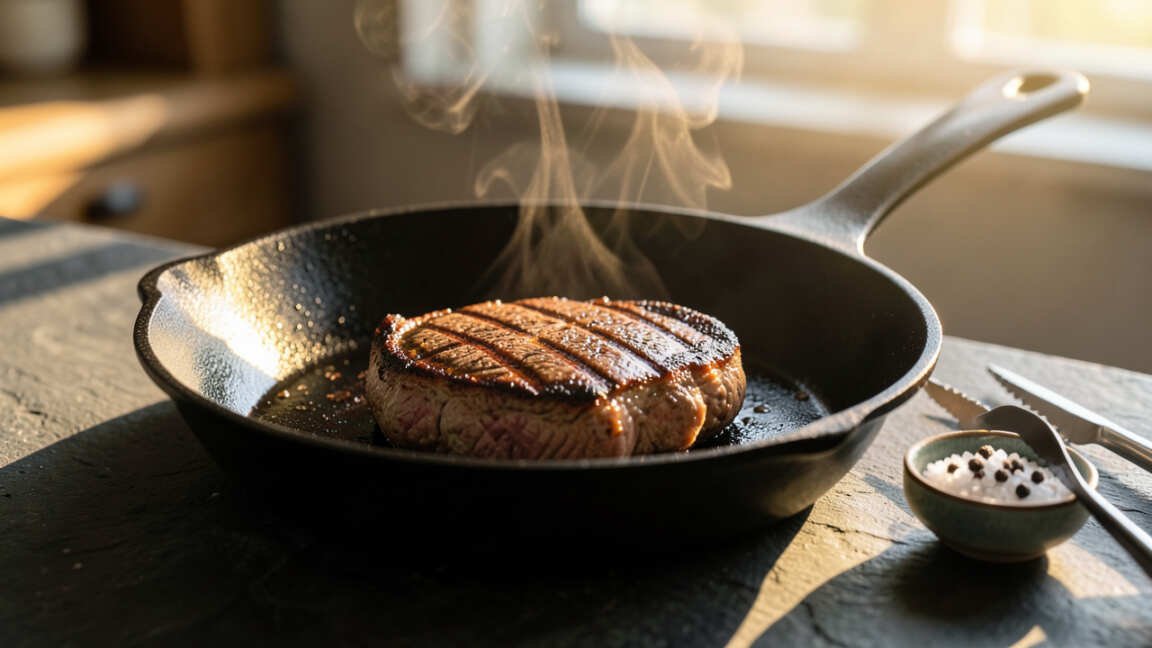
Pan weight is the real secret to a great sear. Ignore fancy brand names and focus on how heavy the pan feels. A three‑pound skillet will give you better crusts than any lightweight pan, even if it costs half the price. A cast iron skillet weight directly affects its ability to hold heat for searing.
Test the weight yourself next time you buy a pan. Your steak will thank you.

Leave a Reply