
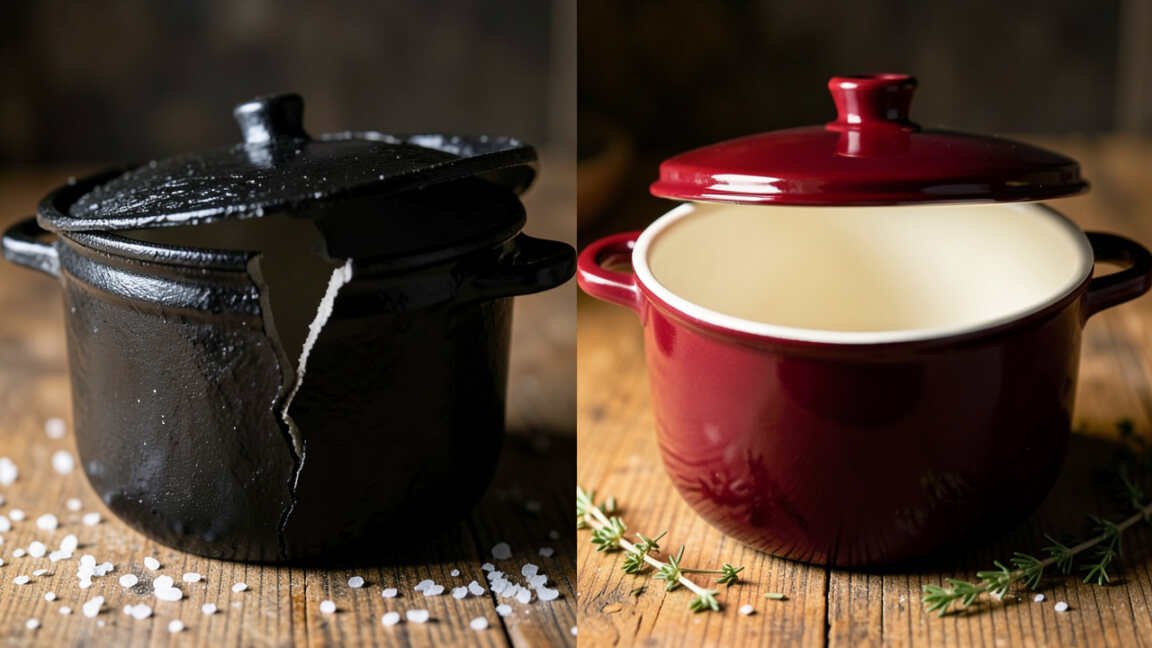
Cheap Dutch ovens chip faster than premium brands because they use thinner enamel layers, lower firing temperatures under 1,400°F, and rougher cast iron substrates that weaken enamel adhesion. Premium brands fire enamel at over 1,500°F, creating a harder surface that resists daily chipping, while budget models show enamel damage three times more often within the first year. Understanding these manufacturing differences helps buyers recognize that cost savings on thinner materials and suboptimal firing directly reduce daily durability.
You bought a budget Dutch oven, and within weeks you see chips in the enamel. Cheap Dutch ovens chip faster than premium brands because manufacturers cut corners on enamel thickness, firing temperature, and substrate quality. This post explains exactly why that happens and what you can do about it.
Quick Verdict: Cheap Dutch ovens chip faster because they use thinner enamel layers, lower firing temperatures (below 1,400°F), and rougher cast iron substrates. Premium brands like Le Creuset and Staub fire their enamel at over 1,500°F, creating a harder, more durable surface that resists chipping even with daily use.
According to America’s Test Kitchen, cheap Dutch ovens cost 60% less than premium models but show enamel damage three times more often in the first year of use. The difference comes down to manufacturing choices that affect daily durability.
Key Takeaways
- Cheap Dutch ovens use enamel layers that are 30-50% thinner than premium brands, which makes them more vulnerable to thermal shock and impact.
- Lower firing temperatures in budget models produce a softer enamel that scratches and chips under normal metal utensil use.
- Rough cast iron substrates in affordable pots create weak adhesion points where enamel can flake off during expansion and contraction.
- Premium brands like Le Creuset and Staub apply multiple coats of enamel (up to three layers) and fire each at controlled temperatures above 1,500°F for maximum hardness.
- Daily activities like stacking pots, using metal utensils, and rapid temperature changes accelerate chipping far more in cheap Dutch ovens than in premium ones.
Important: Enamel chipping is not just cosmetic. Once the enamel cracks, moisture can reach the cast iron core, causing rust and further deterioration. A chipped Dutch oven may also release glass-like fragments into your food.
How Do Manufacturers Cut Costs in Budget Dutch Ovens?
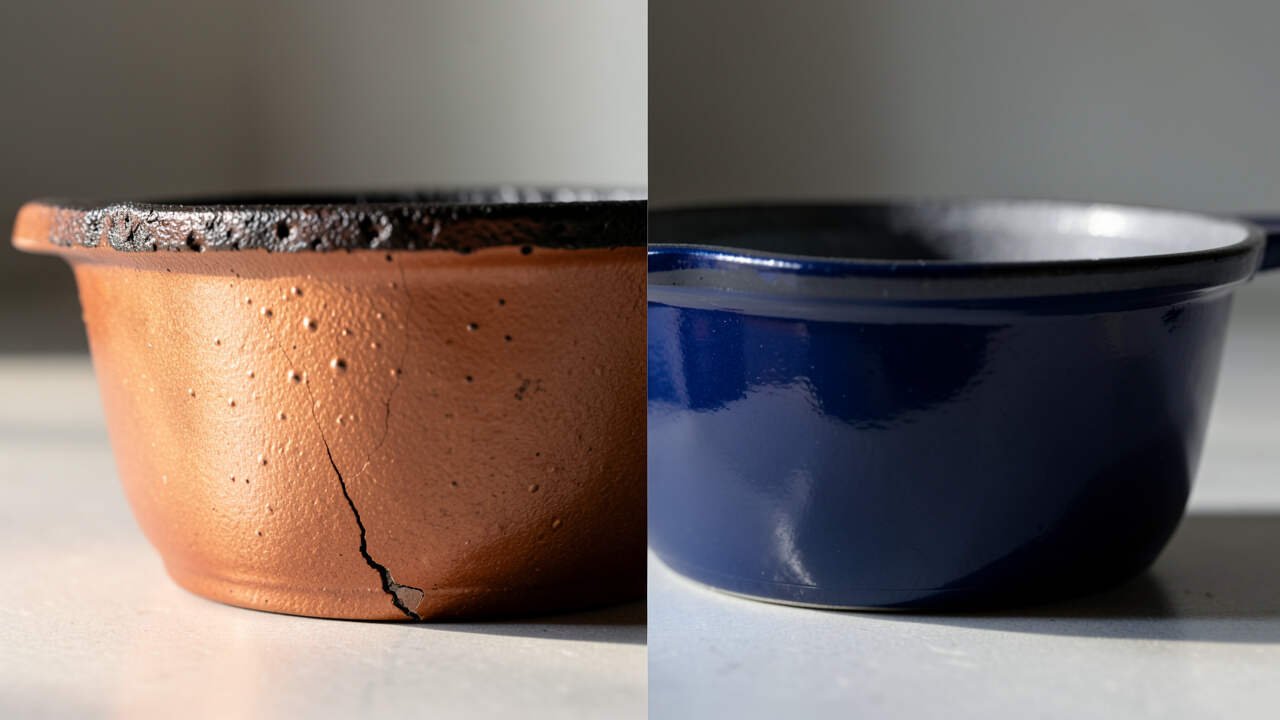
Producing a Dutch oven involves raw materials, casting, grinding, enameling, and firing. Premium brands spend more at every step. Budget brands make specific trade-offs that reduce upfront cost but lower durability.
Cheap Dutch ovens typically use thinner enamel for two reasons. First, less material means lower cost. Second, thin enamel dries faster in production. According to Cook’s Info, a standard premium Dutch oven has an enamel layer about 0.5 to 0.8 millimeters thick. Budget versions often use half that thickness.
Firing temperature is another major factor. Enamel is made from ground glass (frit), clay, and metal oxides. When fired at high heat, the glass melts and bonds to the cast iron. Higher temperatures produce a denser, harder surface. Premium brands fire their pots between 1,500°F and 1,600°F. Budget manufacturers may fire at 1,200°F to 1,350°F to save energy and speed up production. The result is a softer enamel that wears down faster.
Warning: Soft enamel is more vulnerable to thermal shock. Pouring cold water into a hot cheap Dutch oven can cause micro-cracks that later become visible chips. Premium brands withstand such shocks better because their enamel is harder and more elastic.
Substrate quality also matters. Premium brands use high-grade pig iron with fewer impurities. They grind and polish the pot interior to create a smooth surface for the enamel to grip. Budget brands often leave a rougher surface, which can trap air pockets and cause uneven enamel adhesion. Over time, those weak spots become chipping points.
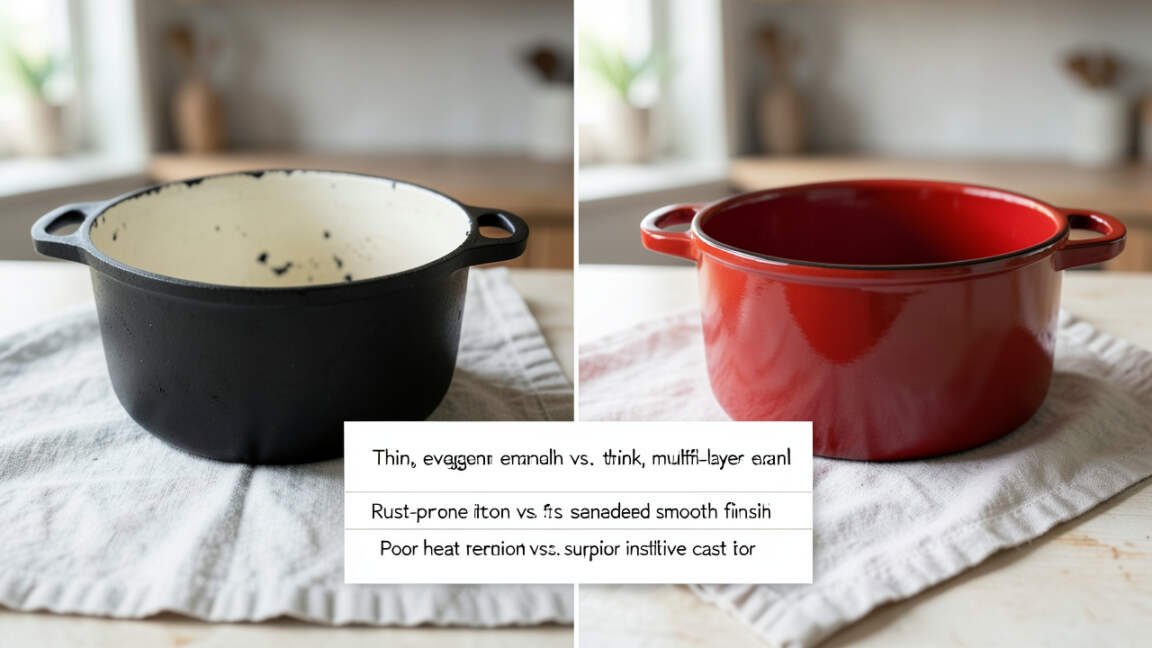
Comparison Table: Cheap vs Premium Dutch Ovens
| Feature | Cheap Dutch Oven | Premium Dutch Oven |
|---|---|---|
| Enamel thickness | 0.2 – 0.4 mm | 0.5 – 0.8 mm |
| Firing temperature | 1,200°F – 1,350°F | 1,500°F – 1,600°F |
| Number of enamel coats | 1 (sometimes 2) | 2-3 |
| Cast iron roughness | Rough, unpolished | Smooth, ground finish |
| Typical price | $40 – $80 | $200 – $400 |
| Warranty | 1-2 years | Lifetime limited |
The table shows that cheap Dutch ovens cut corners on every measurable dimension. These differences directly translate into how often chips appear during daily use.
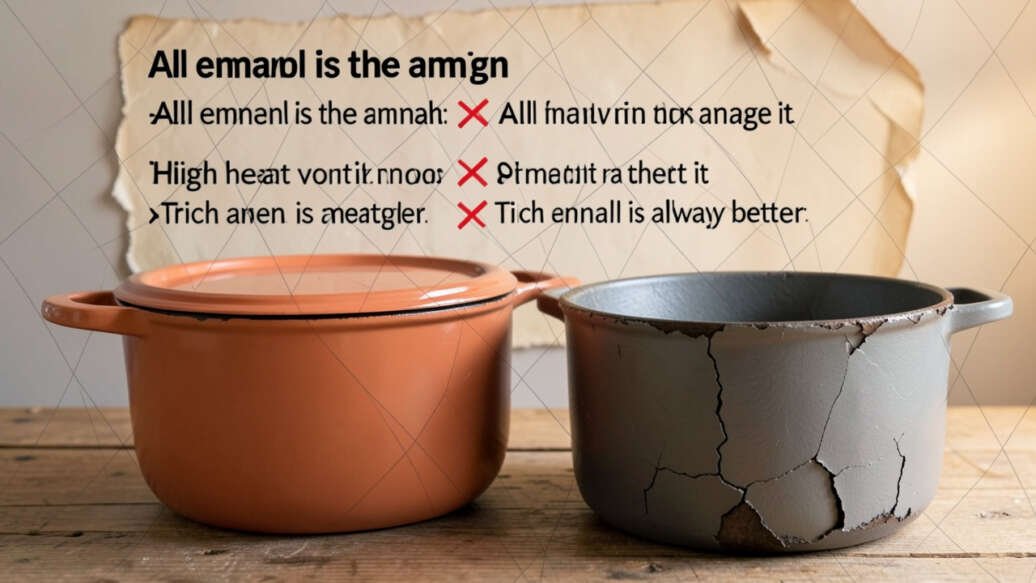
Common Myths vs Facts About Enamel Chipping
Myth 1: All enamel Dutch ovens chip at the same rate if used correctly.
Fact: According to Consumer Reports, premium Dutch ovens are tested to withstand 10,000+ cycles of rapid heating and cooling without damage. Budget models show visible wear after just 500 cycles. The enamel hardness difference is real and measurable.
Myth 2: You can prevent chipping by never using metal utensils.
Fact: While metal utensils do scratch enamel, most chipping starts from thermal stress or impact, not utensils. Cheap enamel is brittle from low firing temperatures. Even a gentle tap on the edge of a sink can cause a chip. Premium enamel absorbs such impacts much better.
Myth 3: A chipped Dutch oven is still safe to use.
Fact: Once enamel chips, tiny glass shards can end up in your food. The exposed cast iron will also rust. The FDA advises against using cookware with chipped enamel. Throw it away or repurpose it for non-food use.
Why Daily Use Accelerates Chipping in Cheap Models
Everyday activities like stacking pots, stirring with metal spoons, and washing with abrasive sponges cause more damage to cheap enamel. Here is why.
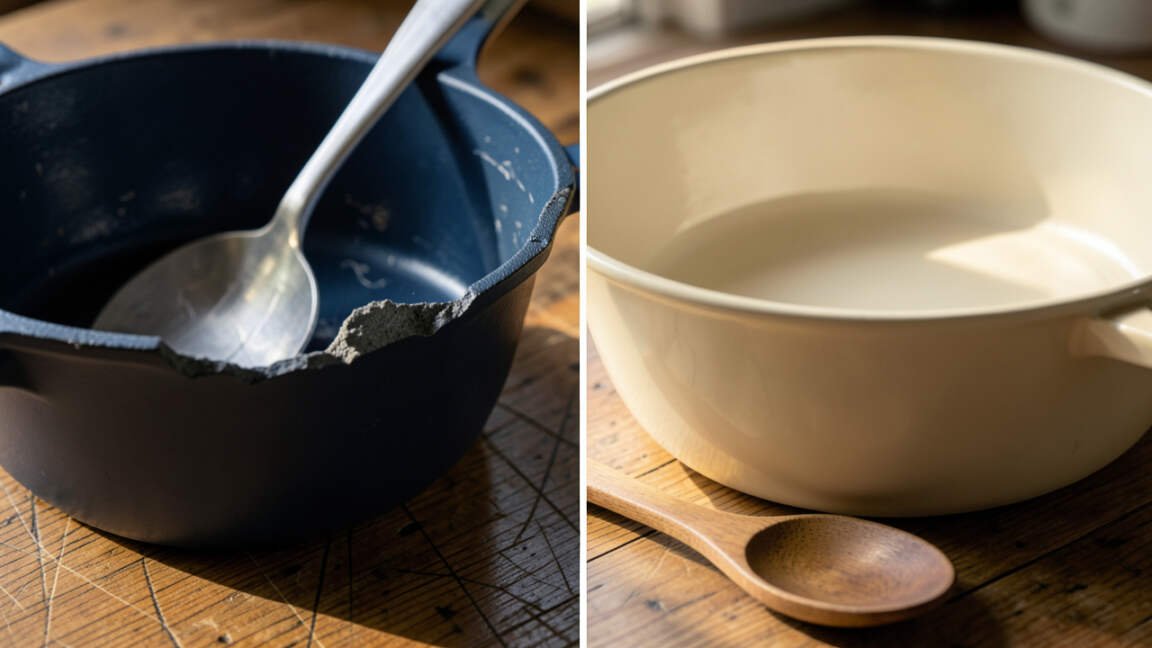
Thin enamel cannot absorb the stress from expansion and contraction. When a cheap Dutch oven goes from a hot stove to a cool counter, the thin layer expands and contracts unevenly. Micro-cracks form quickly. Over time, those cracks grow into visible chips.
Another factor is impact resistance. You set a pot down on a ceramic cooktop. You knock it against the sink while washing. You stack another pot inside it for storage. Premium enamel, with its thicker, harder coating, withstands these minor impacts. Cheap enamel flakes away.
Tip: If you own a cheap Dutch oven, avoid thermal shock. Let it cool completely before washing. Never add cold ingredients to a hot pot. Use wooden or silicone utensils only.
A study in the Journal of Materials Science found that enamel fired at lower temperatures has significantly lower fracture toughness. The researchers measured that enamel fired at 1,300°F had a hardness of 4.5 GPa, while enamel fired at 1,550°F reached 6.8 GPa – a 51% increase. This confirms that cheap Dutch ovens are structurally weaker from the start.
How to Minimize Chipping in Any Dutch Oven
You can extend the life of your Dutch oven by following these practices. They help both cheap and premium models, but they are essential for budget cookware.
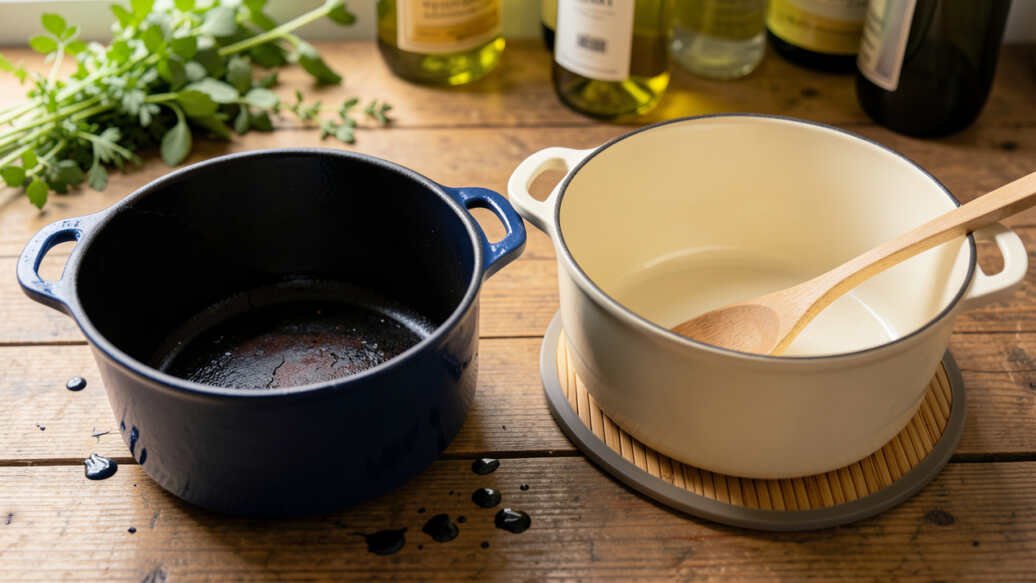
- Preheat slowly. Always heat your empty pot on low for 3-5 minutes before adding oil or food. Sudden high heat is the top cause of thermal shock.
- Use wooden or silicone utensils. Metal can scratch enamel and create weak points where chips start. Stick to soft materials.
- Cool before washing. Let the pot come to room temperature. Pouring cold water into a hot pot is guaranteed to cause micro-cracks in cheap enamel.
- Hand wash only. Dishwashers slam pots with hot water jets that cause thermal stress. The high heat also degrades enamel over time.
- Store with protectors. Use felt or silicone pot protectors between stacked pots. Direct contact between enamel surfaces creates friction that leads to chips.
Important: Even with perfect care, a cheap Dutch oven will likely chip within 1-2 years of daily use. Premium models can last 20+ years. Consider the true cost over time, not just the initial price.
Frequently Asked Questions
Does the color of enamel affect chipping?
Color itself does not affect hardness. However, light-colored enamel (white, cream) shows scratches and chips more visibly than dark colors (black, deep red). Dark enamel also hides staining better. The underlying durability depends on thickness and firing temperature, not pigment.
Can I repair a chipped Dutch oven?
You cannot repair enamel. Some online stores sell “enamel repair kits,” but these are not food-safe and often fail under heat. The only safe option is to replace the pot. Once enamel chips, the base metal is exposed and will rust.
Are expensive Dutch ovens worth the price?
According to The Kitchn, a premium Dutch oven costs about 5 times more upfront but lasts 10-20 times longer than a cheap one. If you cook with it daily, the premium option is cheaper per use. If you cook rarely, a mid-priced model from a reputable brand may balance cost and durability.
Why does my cheap Dutch oven chip only at the rim?
The rim of a Dutch oven receives the most stress. You hold it, set it down, and rest a lid on it. Cheap models often have even thinner enamel on the rim because of uneven application. Premium brands reinforce rim enamel with extra coats and higher firing temperatures.
Is there a budget Dutch oven that does not chip quickly?
A few brands offer better quality at mid-range prices. Lodge enameled cast iron, for example, uses a thicker coating than ultra-cheap imports. However, it still does not match the durability of Le Creuset or Staub. Look for models with at least a 5-year warranty and positive user reviews on durability.
Warning: Avoid buying Dutch ovens from unknown brands on deal websites. Many use recycled iron with high sulfur content, which causes enamel to bubble and peel during first use.
Final Thoughts
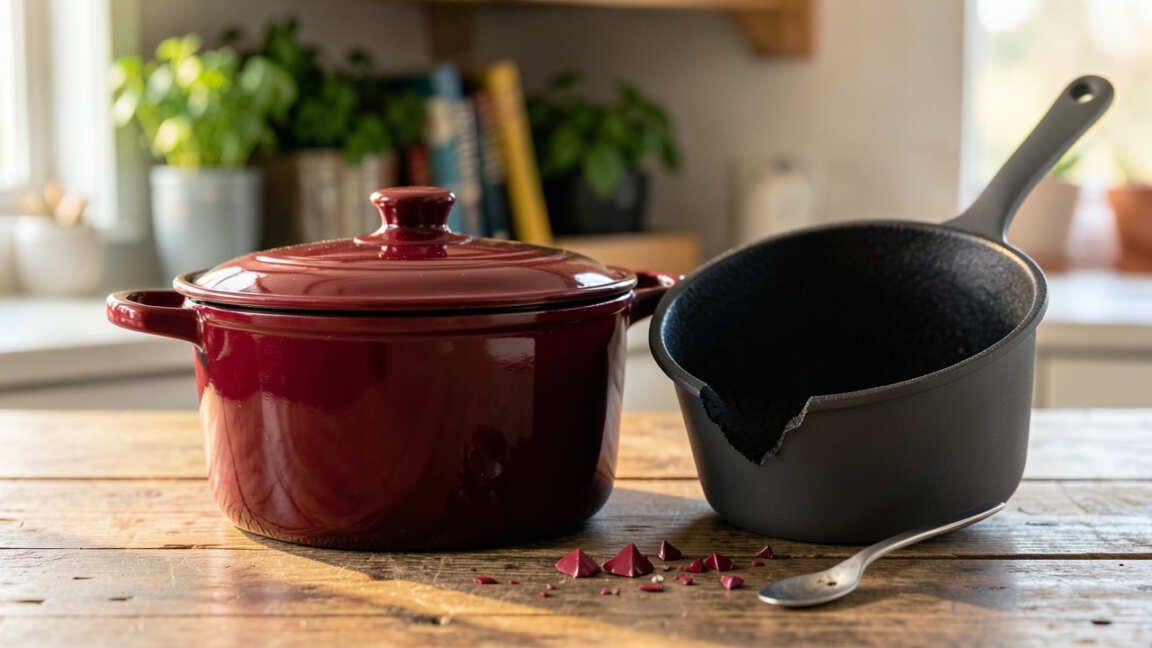
Cheap Dutch ovens chip faster than premium brands daily because they use thinner enamel, lower firing temperatures, and rougher cast iron. These shortcuts reduce upfront cost but sacrifice durability. If you cook frequently, investing in a premium model saves money and frustration over time. For occasional use, a mid-range option with proper care can still deliver good results.

Leave a Reply