
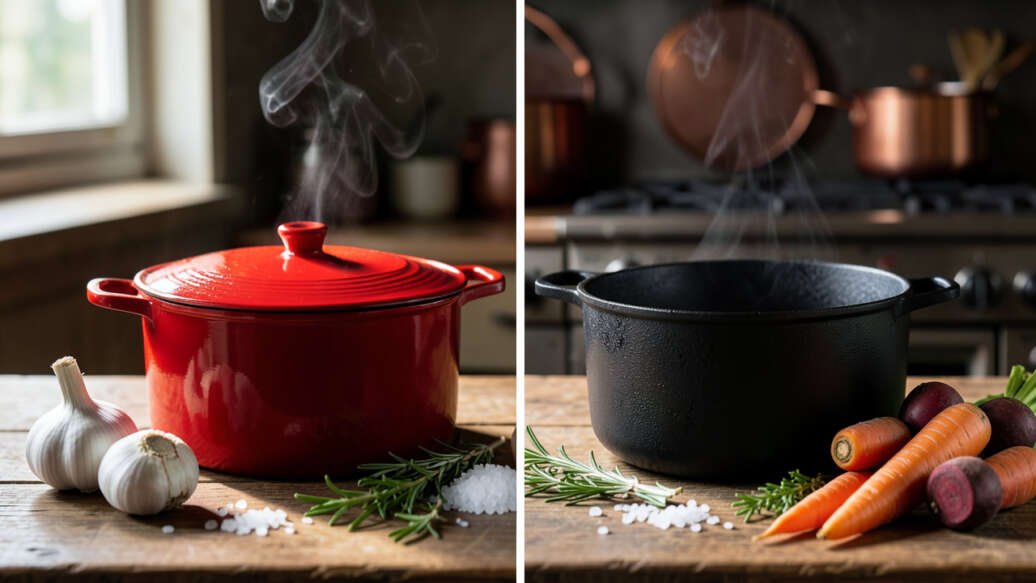
The real tradeoff between enameled and bare cast iron Dutch ovens is that enameled models resist acidic foods and need no maintenance, while bare cast iron tolerates higher heat but requires regular seasoning and reacts with acids. Enameled costs three to four times more, starting around 70 dollars, while bare cast iron is cheaper and can be used at temperatures above 500 degrees Fahrenheit for bread and outdoor cooking. Your choice depends on whether you value low-maintenance convenience for acidic dishes or extreme heat versatility and lower price.
Choosing between an enameled and a bare cast iron Dutch oven comes down to your cooking style and willingness to maintain the surface. Both options deliver superior heat retention and even cooking.
Quick Verdict: Enameled cast iron Dutch ovens are better for acidic foods, braising, and low-maintenance cooking. Bare cast iron Dutch ovens excel at high-heat searing, baking bread, and campfire cooking. Your choice depends on whether you value convenience (enameled) or versatility at extreme temperatures (bare).
Key Takeaways
- Enameled cast iron Dutch ovens resist acidic ingredients like tomatoes and wine, while bare cast iron reacts with acidic foods and can leach metallic flavors.
- Bare cast iron requires regular seasoning to maintain its non-stick surface and prevent rust, whereas enameled cast iron needs no seasoning and cleans up like regular cookware.
- Enameled Dutch ovens cost 3-4 times more than their bare cast iron counterparts, with prices ranging from $70 for budget models to over $400 for premium brands.
- Bare cast iron can withstand temperatures exceeding 500 degrees Fahrenheit, making it suitable for baking bread and outdoor cooking over open flames.
- According to America’s Test Kitchen, cast iron retains heat about 50 percent better than stainless steel, which is why both types excel at slow braising and deep frying.
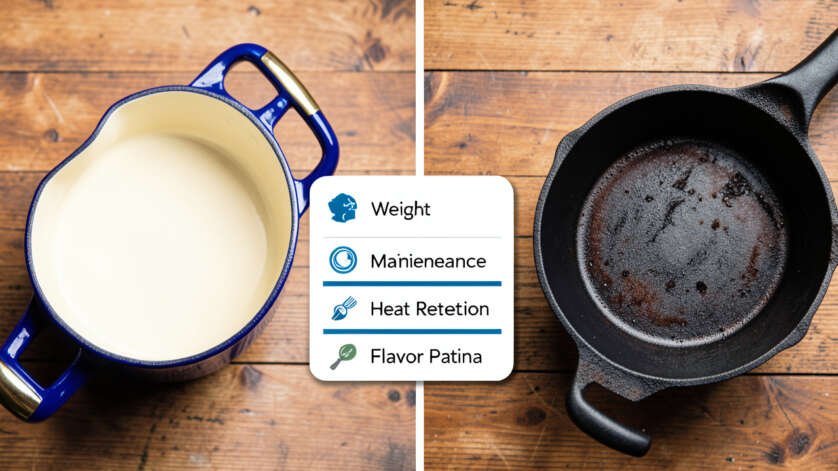
Quick Comparison Table
| Feature | Enameled Cast Iron | Bare Cast Iron |
|---|---|---|
| Surface Maintenance | No seasoning needed | Requires seasoning after each use |
| Acidic Foods | Safe for tomatoes, wine, citrus | Can react and leach metallic flavor |
| Maximum Temperature | 400-450 degrees Fahrenheit (lid safe) | 500+ degrees Fahrenheit |
| Non-Stick Ability | Good, but not as slick as seasoned bare iron | Excellent when properly seasoned |
| Average Price (5-7 quart) | $70 – $400+ | $30 – $80 |
| Cleaning | Dishwasher safe (hand wash recommended) | Hand wash only, no soap recommended |
| Outdoor/Campfire Use | Not recommended (damages enamel) | Excellent for open fires |
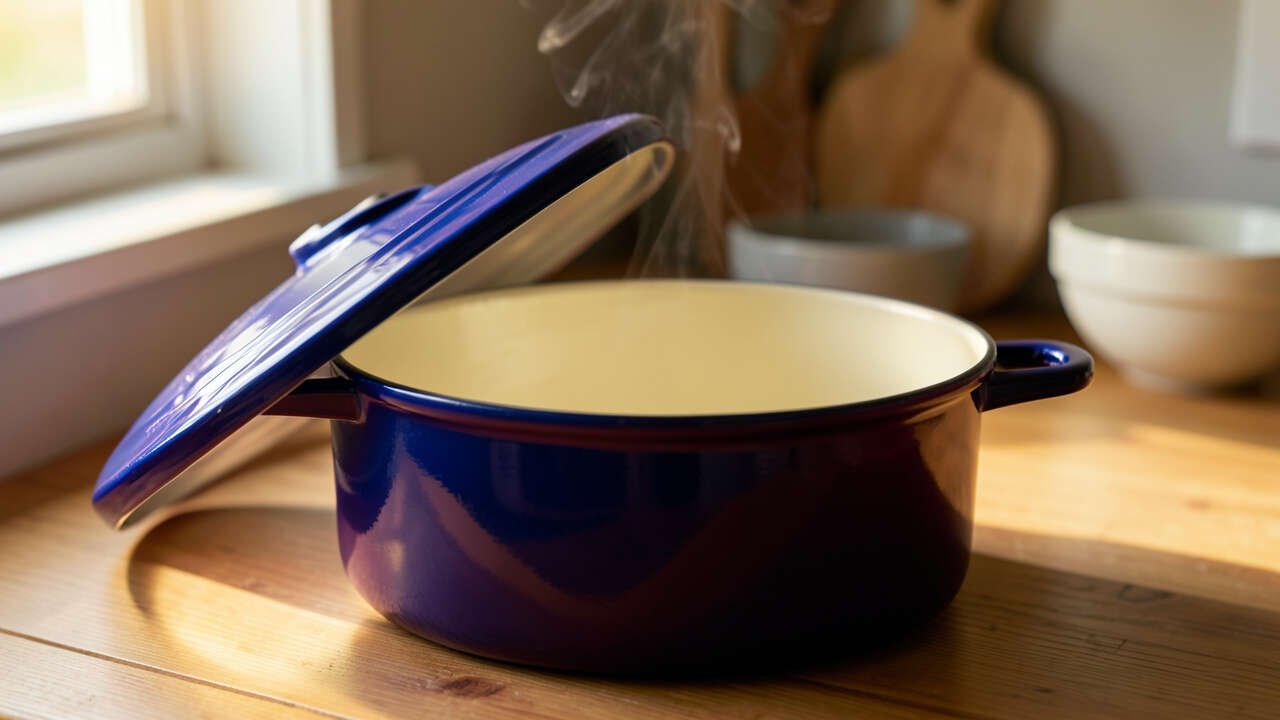
Enameled Cast Iron Dutch Oven Overview
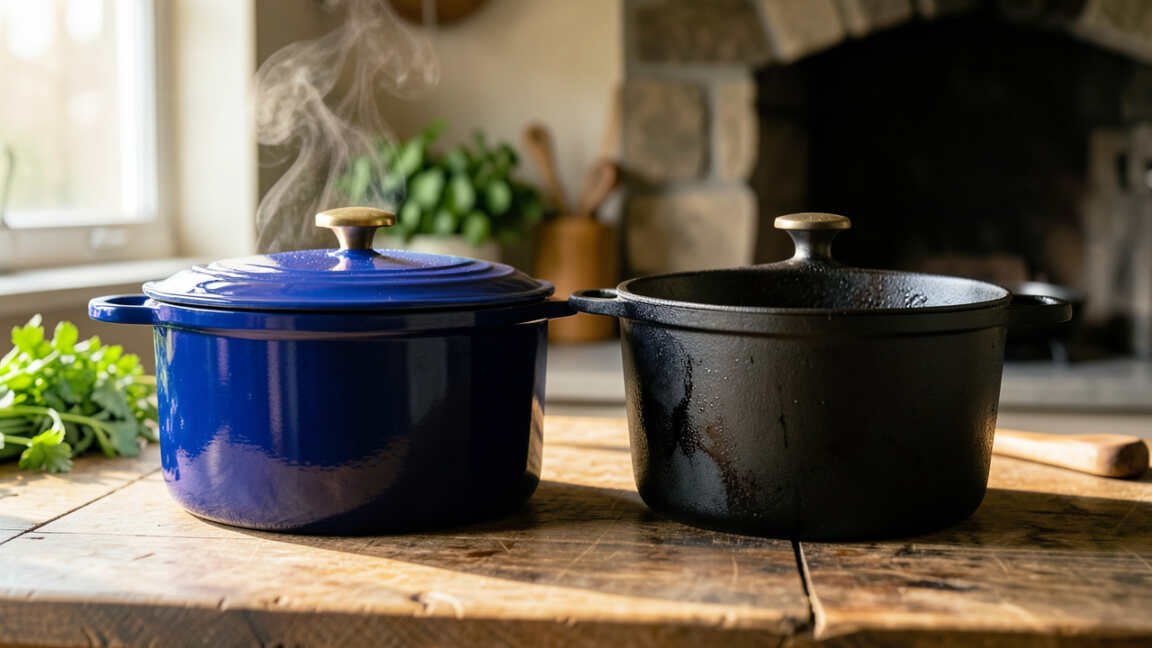
An enameled cast iron Dutch oven has a glass-like coating fused to the iron at high temperatures. This coating creates a smooth, non-porous surface that does not react with food. Brands like Le Creuset and Staub have popularized this style worldwide.
How It Works
The enamel layer seals the cast iron completely. No oil penetrates the surface. No rust forms. The coating is chemically inert, so it does not interact with acidic or alkaline ingredients. The cast iron core still provides excellent heat retention and even distribution.
Pros and Cons
- Pros: No seasoning required, safe for all foods including tomatoes and wine, easy to clean, available in many colors, dishwasher safe in most cases.
- Cons: Expensive compared to bare cast iron, enamel can chip if dropped or overheated, maximum temperature limit around 450 degrees Fahrenheit, not suitable for campfires.
Best For
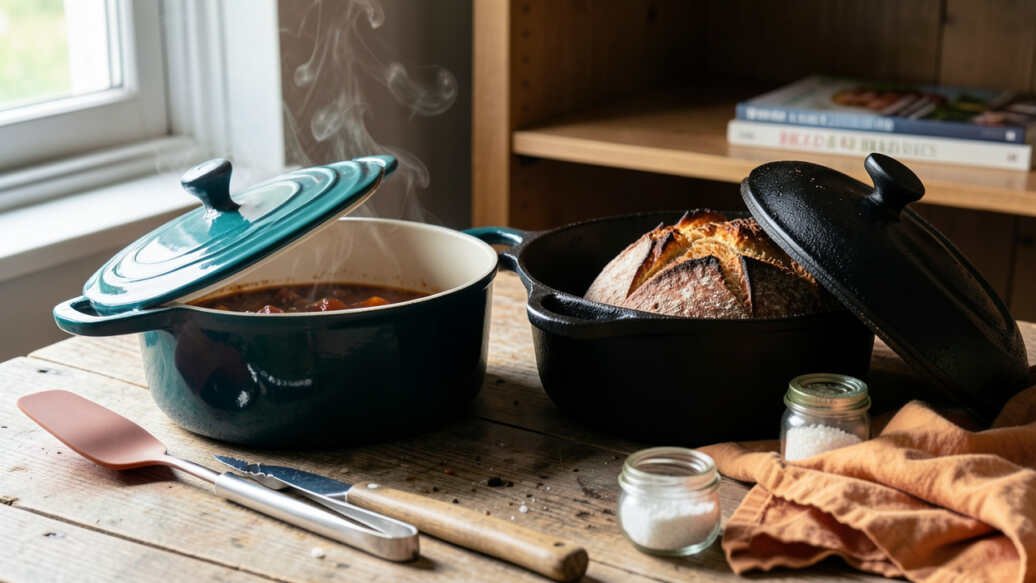
Enameled Dutch ovens work best for braising meats, making stews and soups, deep frying, and cooking acidic sauces. They are ideal for home cooks who want cast iron performance without the maintenance routine.
Important: According to Le Creuset, their enameled cast iron is fired at 1500 degrees Fahrenheit and the enamel coating contains no PFOA, PTFE, or other chemicals commonly found in non-stick pans.
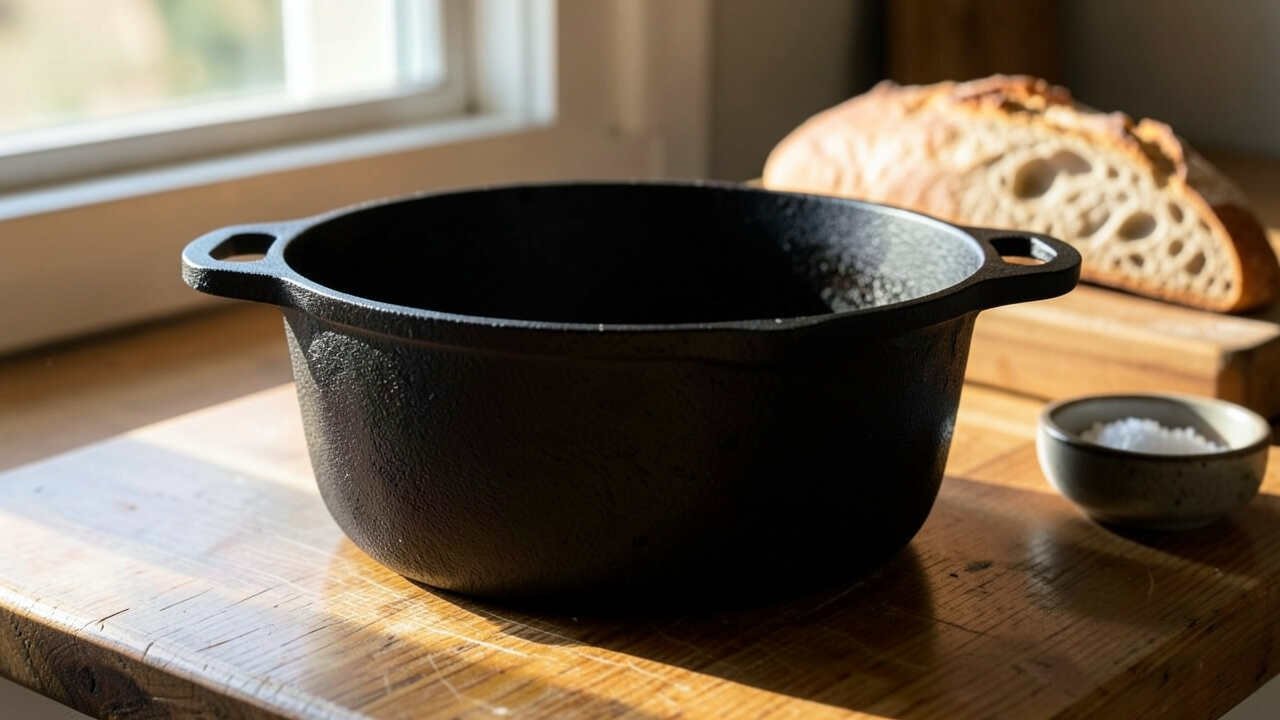
Bare Cast Iron Dutch Oven Overview
Bare cast iron Dutch ovens are the original design. They have a rough, matte black surface that requires seasoning to become non-stick and rust-resistant. Lodge Manufacturing has been the dominant producer of bare cast iron in the United States since 1896.
How It Works
The porous surface of bare cast iron absorbs oil during the seasoning process. When heated, the oil polymerizes into a hard, slick layer. This layer protects the iron and provides natural non-stick properties. Each time you cook with oil, you strengthen the seasoning.
Pros and Cons
- Pros: Affordable, nearly indestructible, excellent heat retention, works on campfires and grills, develops better non-stick properties over years of use.
- Cons: Requires regular seasoning, reacts with acidic foods, can rust if not dried properly, heavy to handle, no soap recommended for cleaning.
Best For
Bare cast iron Dutch ovens excel at high-heat searing, baking bread, frying chicken, and cooking over an open fire. They suit cooks who want a rugged, lifetime tool and are willing to invest time in maintenance.
Head-to-Head Comparison: Enameled vs Bare Cast Iron Dutch Oven
Cost
Price is the biggest difference between these two types. A high-quality enameled Dutch oven from Le Creuset or Staub costs between $300 and $450 for a 5.5-quart model. More affordable enameled options from Lodge or Cuisinart range from $70 to $120.
Bare cast iron costs significantly less. A 6-quart Lodge bare Dutch oven sells for around $50 to $70. Even premium bare cast iron from brands like Campo or Victoria stays under $100.
Warning: Cheap enameled Dutch ovens under $50 may have thin enamel coatings that chip or crack within the first year. Investing in a mid-range option from Lodge or Cuisinart typically provides better durability.
Ease of Use
Enameled cast iron is easier for everyday cooking. You do not need to season it. You can use soap to clean it. You can cook acidic foods without worry. You do not need to preheat it as carefully.
Bare cast iron requires more attention. You must dry it immediately after washing. You need to apply a thin layer of oil after each use. You cannot let food sit in it for long periods. You must avoid cooking highly acidic dishes for more than 30 minutes.
Heat Performance and Temperature Limits
Both types retain heat equally well because they share the same cast iron core. However, temperature limits differ. Bare cast iron can handle oven temperatures above 500 degrees Fahrenheit. This makes it ideal for baking bread at high heat.
Enameled cast iron has a lower maximum temperature. Most manufacturers recommend not exceeding 400 to 450 degrees Fahrenheit. Going higher can damage the enamel coating. The lid handles on enameled models also typically have a lower heat limit.
Durability and Longevity
Bare cast iron is nearly indestructible. Drop it, heat it empty, or leave it in the rain. You can restore it. Warping is extremely rare. A bare cast iron Dutch oven can last for generations with proper care.
Enameled cast iron is more fragile. Dropping it can chip the coating. Thermal shock from rapid temperature changes can crack the enamel. Once the enamel chips, the underlying iron can rust. Enameled Dutch ovens can last 20 years or more with careful handling.
Cleaning and Maintenance
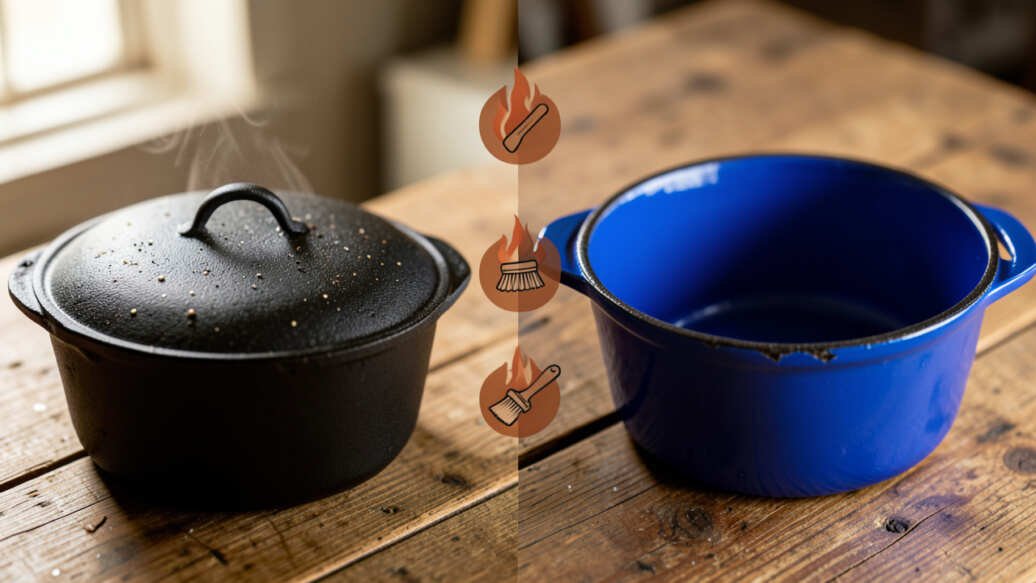
Enameled cast iron cleans easily. Most stains come off with a soft sponge and mild soap. Stubborn residue can be removed with baking soda paste. You can put enameled Dutch ovens in the dishwasher, though hand washing prolongs the life of the coating.
Bare cast iron requires a specific cleaning routine. Avoid soap because it strips seasoning. Use hot water and a stiff brush. For stuck-on food, boil water in the pot and scrape with a wooden spoon. After drying, rub a thin layer of oil on the surface.
Which One Should You Choose?
Your choice depends on your cooking habits and priorities. Use the questions below to decide.
Choose Enameled Cast Iron If:
- You cook with acidic ingredients like tomatoes, wine, or citrus regularly.
- You want a low-maintenance pot that requires no seasoning.
- You prefer to clean your cookware with soap without worry.
- You cook primarily on stovetops and in ovens, not over campfires.
- You are willing to spend more for convenience and aesthetics.
Choose Bare Cast Iron If:
- You bake bread at high temperatures regularly.
- You cook over campfires, grills, or use your pot outdoors.
- You want the most affordable option that lasts a lifetime.
- You enjoy the process of seasoning and maintaining your cookware.
- You want a surface that becomes more non-stick with years of use.
Tip: Many home cooks eventually own both types. A bare cast iron skillet for searing and frying combined with an enameled Dutch oven for braising and soups gives you the best of both worlds.
Common Myths vs Facts
Myth 1: Enameled Cast Iron Is Fully Non-Stick
Enameled surfaces are not completely non-stick. Food can stick, especially if you cook at high heat without enough fat. Bare cast iron actually provides better non-stick performance once properly seasoned. For eggs and delicate fish, a well-seasoned bare pan outperforms enameled surfaces.
Myth 2: You Cannot Use Soap on Bare Cast Iron
Modern dish soap is mild and will not ruin a well-seasoned cast iron surface. The old rule against soap came from harsh lye-based soaps used decades ago. A small amount of gentle soap is safe. However, abrasive scrubbing or soaking in soapy water can damage the seasoning over time.
Myth 3: Enameled Cast Iron Is Completely Indestructible
Enameled cast iron can chip, crack, and stain. Dropping a full pot can chip the enamel. Heating an empty pot on high can cause thermal shock. According to Consumer Reports testing, thin enamel coatings on budget models are more prone to chipping than thicker coatings on premium brands like Le Creuset.
Frequently Asked Questions
Can I use metal utensils on enameled cast iron?
Metal utensils can scratch and dull the enamel surface over time. Silicone, wood, or nylon utensils are safer choices. Occasional use of metal will not ruin the pot, but regular scraping can wear down the glossy coating.
Does bare cast iron rust if I do not season it?
Yes, bare cast iron rusts quickly without seasoning. Moisture triggers rust within hours if the pot is not dried and oiled. If rust appears, scrub it off with steel wool and reseason the pot immediately.
Can I bake bread in an enameled Dutch oven?
Yes, you can bake bread in an enameled Dutch oven. Keep the oven temperature at or below 450 degrees Fahrenheit. The enamel coating prevents sticking and makes cleanup easier than bare cast iron for bread baking.
Which brand makes the best enameled Dutch oven?
Le Creuset and Staub are considered the premium options with thick, durable enamel coatings. Lodge and Cuisinart offer reliable mid-range alternatives at a lower price point. According to America’s Test Kitchen testing, Le Creuset earned their top rating for durability and even heating.
How often should I season bare cast iron?
Season bare cast iron after each use. Wipe a thin layer of vegetable oil over the surface and heat it until it smokes. This maintains the non-stick layer. If food starts sticking frequently, apply a full seasoning in the oven at 400 degrees for one hour.
Resources and Tools
Here are helpful resources for choosing and caring for your Dutch oven.
- Lodge Manufacturing – Affordable bare and enameled cast iron options. Visit Site
- Le Creuset – Premium enameled cast iron Dutch ovens with lifetime warranty. Visit Site
- Staub – High-end enameled cast iron with black interior and self-basting lid. Visit Site
- America’s Test Kitchen – Independent reviews and ratings of Dutch ovens. Visit Site
- Camp Chef – Bare cast iron Dutch ovens designed for outdoor and campfire cooking. Visit Site
Final Thoughts
Enameled cast iron offers convenience and versatility for everyday cooking, while bare cast iron provides durability and heat tolerance without the high price tag. Both options deliver excellent heat retention that makes them superior to most other cookware materials. Think about your cooking habits and choose the one that matches your lifestyle. Either way, a good cast iron Dutch oven will serve you for many years.

Leave a Reply