
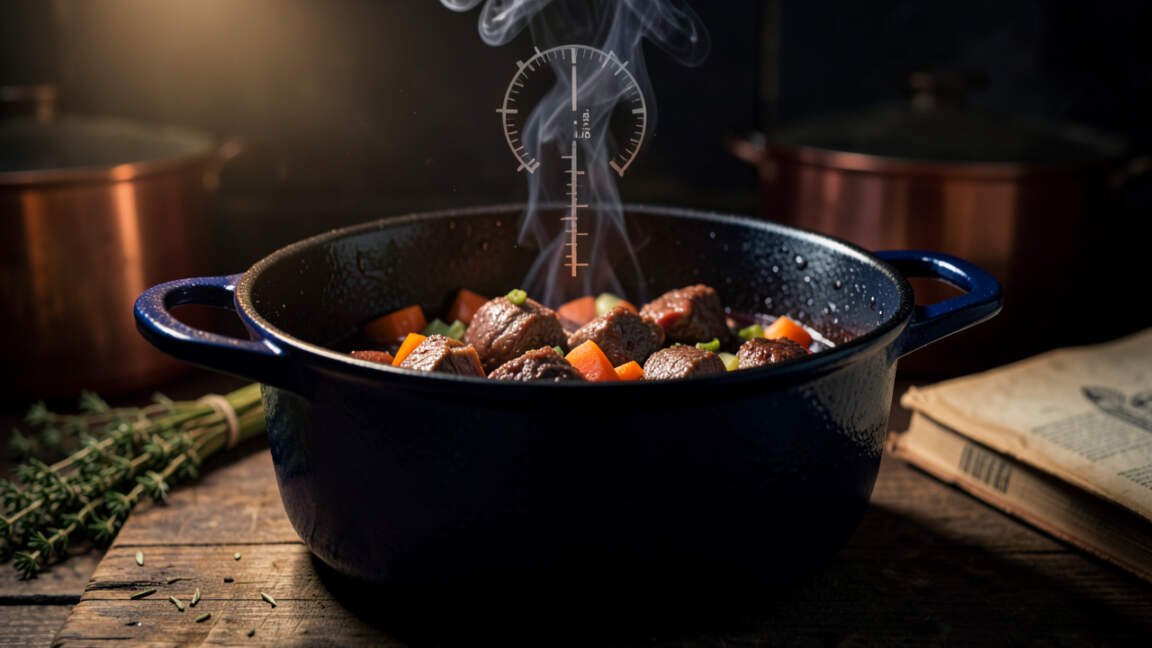
Dutch ovens excel at braising because their thick cast iron walls produce the thermal lag effect, a slow rate of heating and cooling that maintains steady low heat. This stable temperature environment breaks down tough collagen in meat without scorching or creating hot spots. The thermal lag effect removes the need for frequent burner adjustments, delivering consistent results with less active monitoring.
A heavy cast iron pot stays hot for a long time after you turn off the burner. This post explains why that thermal memory, called the thermal lag effect, makes Dutch ovens the perfect tool for braising meat.
Quick Verdict: Simply put, the thermal lag effect is the delay in temperature change experienced by a material with high thermal mass. Dutch ovens store immense heat energy in their thick cast iron walls and release it slowly. This creates the stable, gentle, and enveloping heat required to break down tough collagen in braised meats without scorching the exterior or creating hot spots.
Key Takeaways
- Thermal lag refers to the slow rate at which a dense material like cast iron heats up and cools down, providing a buffer against temperature spikes.
- Braising requires consistent low-to-medium heat over a long period, and the thermal lag effect in a Dutch oven naturally provides this stability without constant burner adjustments.
- Dutch ovens excel at braising because their high thermal mass prevents both hot spots and rapid temperature fluctuations that can ruin a delicate stew.
- The thermal lag effect allows for more efficient energy use, as the pot retains cooking heat even when the burner is briefly turned down or off.
- Mastering thermal lag means you can achieve more tender meat and richer sauces with less active effort and fewer variables to manage.
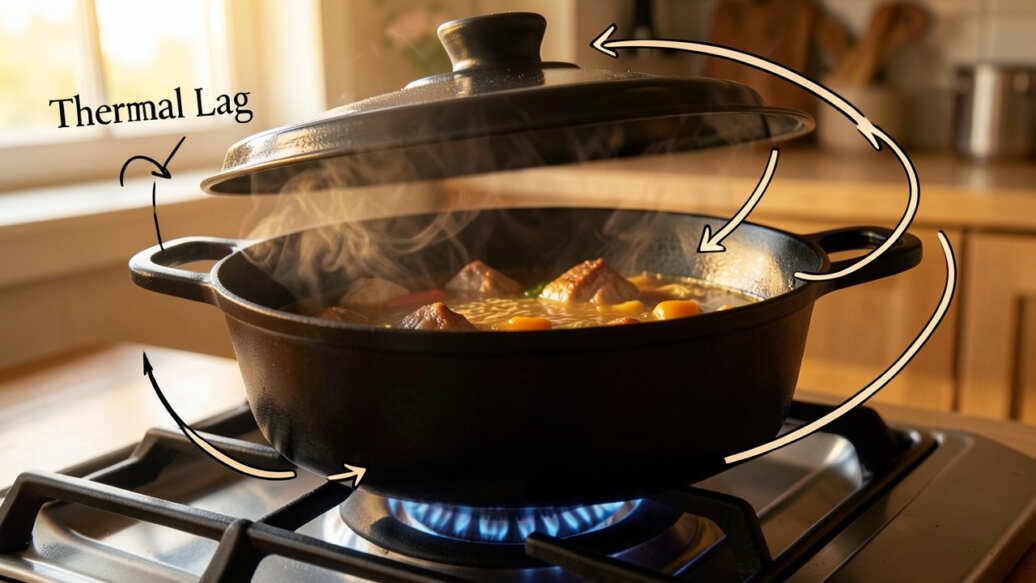
What Is the Thermal Lag Effect?
Thermal lag is a physics principle. It describes the time it takes for a material to change temperature after the surrounding environment changes. Materials with high thermal mass take longer to heat up and longer to cool down.
Cast iron has a specific heat capacity of approximately 450 J/kg·K. This number alone is not extreme. What makes Dutch ovens special is the total mass. A standard 5.5-quart Dutch oven weighs over 20 pounds.
Compare this to an aluminum pot. Aluminum heats up almost instantly. It also cools down just as fast. This quick response is useful for boiling water. It is terrible for braising.
According to tests by America’s Test Kitchen, a preheated Dutch oven retains enough heat to continue cooking for over 30 minutes after being removed from the burner. That is thermal lag in action.
Important: Thermal lag is not the same as heat capacity. Heat capacity is the total energy stored. Thermal lag is the speed of temperature change. A Dutch oven wins on both fronts because of its sheer mass and density.
The Science of Thermal Mass
Thermal mass is the ability of a material to store heat energy. Dense materials like cast iron and stone have high thermal mass. Light materials like aluminum foil have low thermal mass.
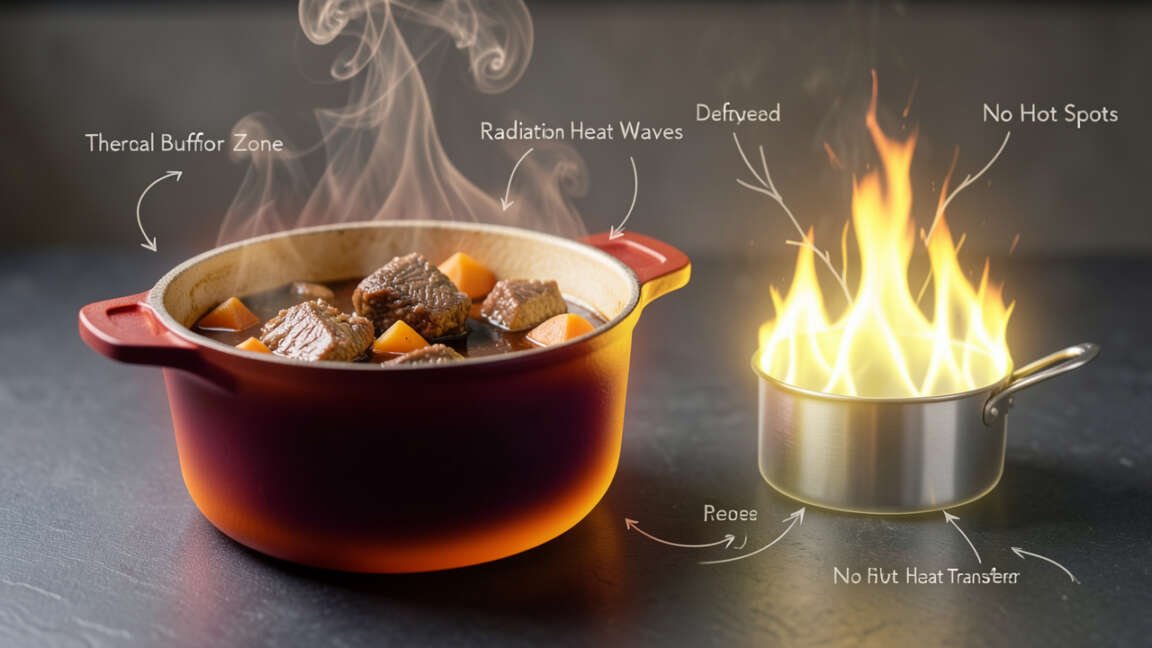
When you place a Dutch oven on a burner, the cast iron absorbs heat. It distributes this heat through its entire body. The thick walls act like a heat battery. They store energy and release it evenly.
This is why you preheat a Dutch oven slowly. Rushing the process with high heat can cause thermal shock. It can also create a false reading on your pan temperature. The center might be hot while the edges remain cool.
A proper preheat allows the thermal lag to work in your favor. The entire pot reaches a uniform temperature. This sets the stage for perfect braising.
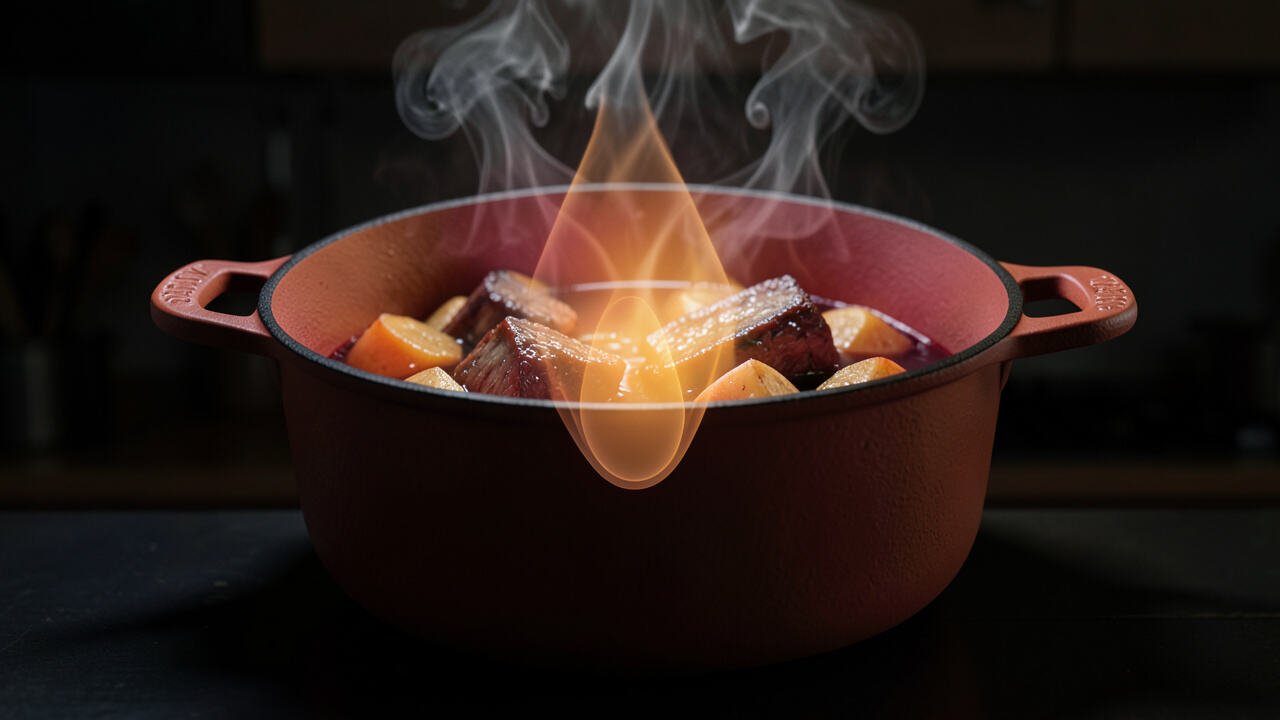
How Does Thermal Lag Improve Braising?
Braising is a moist-heat cooking method. You sear the meat first. Then you cook it slowly in a small amount of liquid. The goal is to break down tough connective tissue into rich gelatin.
This process requires stable temperatures between 180°F and 205°F. Fluctuations outside this range cause problems. High heat toughens meat protein. Low heat stops collagen breakdown.
J. Kenji López-Alt explains that consistent temperature is the single most important factor in converting collagen to gelatin. The thermal lag effect guarantees this consistency.
Here is how thermal lag helps during each phase of braising:
- Searing: The Dutch oven stays hot when you add cold meat. Thermal lag prevents the pan temperature from dropping too fast. You get a better crust.
- Adding Liquid: Cold broth or wine does not shock the system. The retained heat in the cast iron brings the liquid back to temperature quickly. This reduces cooking time.
- Slow Cooking: Once the pot is in the oven, the walls radiate heat evenly. There are no hot spots. The food cooks uniformly without you needing to stir constantly.
- Resting: When you remove the pot from the oven, thermal lag keeps the food hot for serving. Carryover cooking continues, further tenderizing the meat.
Why Temperature Stability Matters
Collagen breaks down into gelatin at around 160°F to 180°F. This process is slow. It takes hours, not minutes. If the temperature spikes above 212°F, the liquid boils. Boiling toughens meat fibers and causes them to shred.
Thin pots made of stainless steel or aluminum cannot maintain this narrow band. They cycle on and off. They create hot spots near the burner. The bottom of the stew can burn before the middle is done.
A Dutch oven with high thermal mass smooths out these cycles. The heat from the burner goes into the thick walls first. The walls release that heat to the food gently. This is the essence of why the thermal lag effect is so valuable for braising.
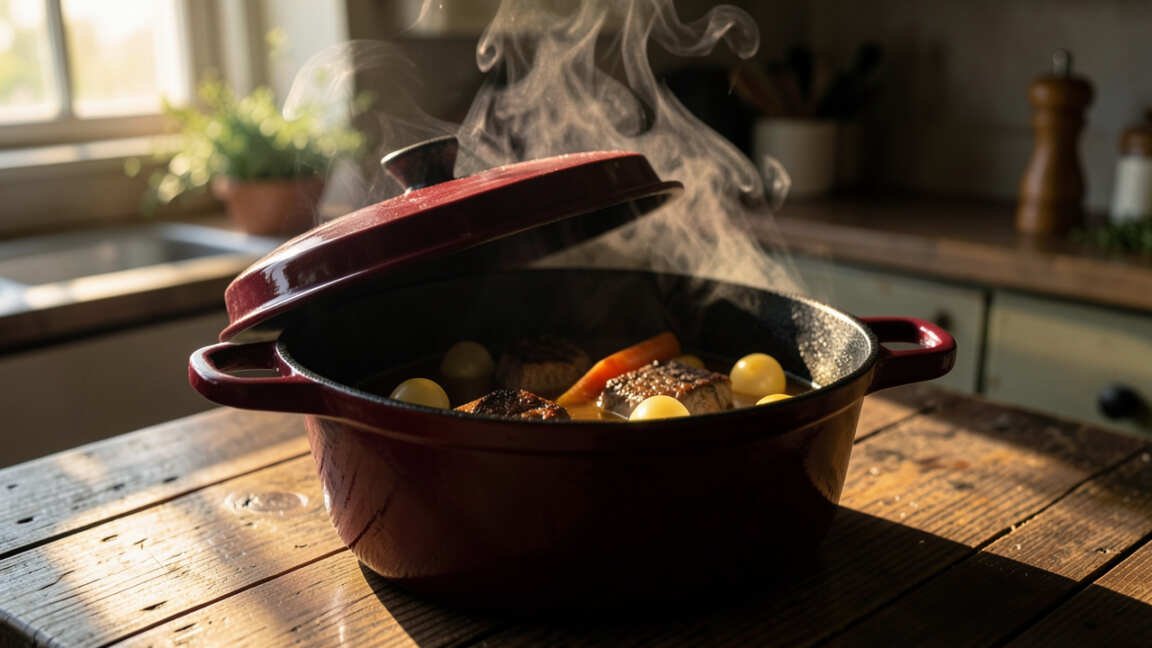
Why Do Dutch Ovens Excel at Braising?
Dutch ovens excel at braising because of their unique material properties. They combine high thermal mass with an airtight seal. This creates a perfect microenvironment for slow cooking.
Manufacturers like Le Creuset have been producing enameled cast iron since 1925. They have perfected the density and thickness required for optimal heat retention. Modern versions offer both raw cast iron and enameled interiors.
Here are the specific reasons Dutch ovens outperform other pots for braising:
- Material Density: Cast iron is much denser than aluminum or stainless steel. More density means more thermal mass per square inch of cookware.
- Wall Thickness: Dutch ovens have walls that are 3-5 mm thick. Stockpots have walls that are 0.5-1 mm thick. Thicker walls store more energy.
- Tight-Fitting Lid: The heavy lid traps steam and moisture. It also radiates heat down onto the food. This creates an oven within an oven.
- Low Thermal Conductivity (Spreading Speed): Cast iron spreads heat slower than aluminum. This slow spread combined with high mass prevents hot spots. The heat evens out across the entire surface.
- Enamel Coating (Optional): Enameled interiors prevent the cast iron from reacting with acidic foods like wine or tomatoes. This allows for long braises without metallic flavors.
Comparison of Cookware Materials for Braising
| Feature | Cast Iron Dutch Oven | Enameled Dutch Oven | Stainless Steel Pot |
|---|---|---|---|
| Thermal Lag | Excellent | Excellent | Poor |
| Hot Spots | High (Without Oil) | Low | Medium to High |
| Reactivity (Acidic Food) | High (Leaches Iron) | None | None (With Clad Base) |
| Weight | Very Heavy | Heavy | Light to Medium |
| Best Braising Use | Non-Acidic Stews | All Braises (Red Wine, Tomato) | Quick Braises (30-60 min) |
How to Braise Using the Thermal Lag Effect
You do not need to be a scientist to use thermal lag. You just need to understand how your pot behaves. Here is a step-by-step guide to braising with a Dutch oven.
- Preheat the Pot Slowly. Place the Dutch oven on the stove over medium-low heat. Let it warm up for 5 minutes. A drop of water should sizzle gently when it hits the surface. This ensures the thermal mass is fully charged.
- Sear the Meat in Batches. Add a thin layer of oil. Pat the meat dry and season it. Place it in the pot without crowding. The thermal lag keeps the oil temperature stable. You get a deep brown crust. Remove the meat and set it aside.
- Sweat the Aromatics. Reduce the heat slightly. Add onions, carrots, and celery. Cook them for 3-4 minutes. The residual heat in the pot continues to cook them evenly. Scrape up any browned bits from the bottom of the pan.
- Deglaze and Add Liquid. Pour in a cup of wine or stock. Use a wooden spoon to lift the fond. The liquid will bubble immediately because the pot is still hot. Add the meat back into the pot along with enough stock to come halfway up the sides.
- Bring to a Gentle Simmer. Increase the heat to medium-high until you see small bubbles. Then cover the pot and move it to a 300°F oven. The thermal lag will keep the temperature stable for hours.
- Let It Rest in the Pot. When the meat is fork-tender, remove the pot from the oven. Let it sit for 15 minutes before serving. The retained heat continues to break down the fibers without overcooking the exterior.
Warning: Do not place a cold Dutch oven directly onto high heat. The rapid expansion can crack the cast iron or damage the enamel. Always bring the pot to temperature gradually. This protects both your cookware and your food.
Common Myths About Thermal Lag and Dutch Ovens
There are several misconceptions about thermal lag and how Dutch ovens work. Clearing these up will make you a better cook.
Myth 1: A Thicker Dutch Oven Is Always Better
Fact: Thicker is generally better, but only up to a point. Extremely thick walls take too long to preheat. They also make the pot unusably heavy. Most quality Dutch ovens have walls that are 4-5 mm thick. This provides excellent thermal lag without being impractical.
Myth 2: Thermal Lag Means Food Cooks Faster
Fact: Thermal lag does not speed up cooking. It stabilizes cooking. The pot takes longer to reach the target temperature. But it also holds that temperature for longer. The result is more even cooking, not faster cooking. For braising, slower is often better anyway.
Myth 3: You Should Never Use High Heat With a Dutch Oven
Fact: You can use high heat for specific tasks like searing meat or boiling liquids. The key is that you should not use high heat to try to force a cold pot to heat up faster. Once the pot is hot, high heat is fine for short bursts. The thermal lag will prevent the pan from scorching the food if you pay attention.
Choosing the Right Dutch Oven for Braising
Not all Dutch ovens deliver the same thermal lag performance. The quality of the cast iron and the fit of the lid matter. Here are the factors to consider when buying a Dutch oven specifically for braising.
- Weight: Lift the pot before you buy it. A good braising pot should feel solid and substantial. Lightweight Dutch ovens have thinner walls and less thermal mass.
- Lid Fit: The lid should sit flush with the rim. A tight seal traps steam and prevents moisture loss. Some lids have a raised rim to hold ice or water for condensation cooking.
- Enamel Quality: Check for a smooth, even enamel coating. Bubbles or thin spots indicate poor quality. Premium brands like Staub and Le Creuset offer better thermal properties due to denser cast iron cores.
- Size: A 5.5-quart to 7.25-quart pot is ideal for most home braises. This size holds enough thermal mass to remain stable. Smaller pots lose heat faster when you add cold ingredients.
Frequently Asked Questions
What exactly is thermal lag in cooking?
Thermal lag is the time it takes for a cooking vessel to change temperature. Dense materials like cast iron have a long thermal lag. They heat up slowly and cool down slowly. This provides a steady cooking environment.
Does a heavier Dutch oven always braise better?
Yes, within reason. A heavier pot has more thermal mass. It stores more energy and resists temperature drops. This is ideal for braising because it prevents the liquid from boiling or cooling too fast during the long cooking process.
Can I braise in a stainless steel pot?
You can braise in stainless steel, but the results are different. Stainless steel has low thermal lag. It heats up fast but creates hot spots. You must stir more often and watch the temperature closely. A Dutch oven gives you a wider margin for error.
Do I need to preheat my Dutch oven for braising?
Yes. Preheating is essential to activate the thermal lag effect. If you add cold food to a cold pot, the thermal mass works against you. The food takes too long to come up to temperature. Always preheat the pot on the stove before adding oil or food.
How does thermal lag affect carryover cooking?
Carryover cooking is the rise in internal temperature after the food is removed from the heat source. The thermal lag effect increases carryover cooking. The food keeps cooking for a longer time. You should remove the pot from the oven a few minutes before the meat is fully tender to account for this.
Resources and Tools
Le Creuset Signature Enameled Dutch Oven – A premium option with excellent thermal mass and a tight seal. Ideal for all braising applications. Visit Site
Staub Round Cocotte – A French brand known for thick cast iron and a self-basting lid. Provides superior heat retention. Visit Site
Lodge Classic Cast Iron Dutch Oven – An affordable raw cast iron option. Requires seasoning. Excellent thermal lag and built to last a lifetime. Visit Site
ThermoWorks ChefAlarm Thermometer – A leave-in probe thermometer to monitor braising liquid temperature. Ensures you stay in the ideal collagen breakdown range. Visit Site
The Food Lab by J. Kenji López-Alt – A comprehensive cookbook that explains the science of braising and thermal properties in detail. Visit Site
Final Thoughts
The thermal lag effect is not just a physics concept. It is the defining reason why Dutch ovens turn tough cuts of meat into tender, flavorful meals. By understanding this property, you can cook with more confidence and less active effort. Let the pot’s steady heat do the work for you.

Leave a Reply