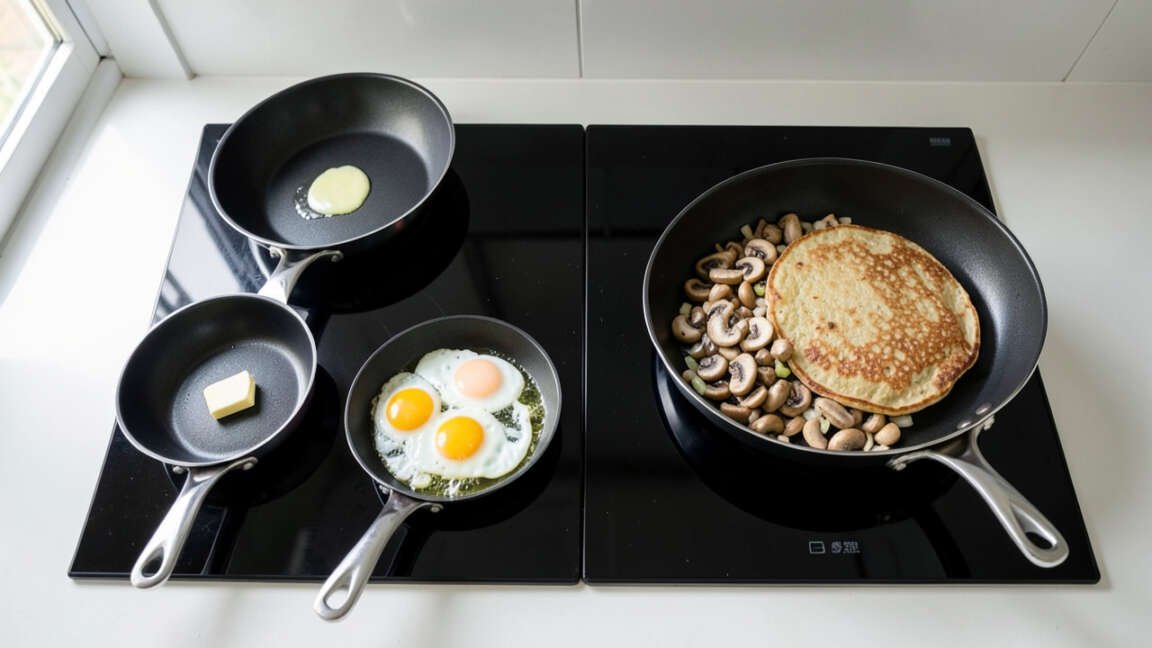
The right frying pan size matches the burner diameter to ensure even heat distribution and efficient cooking. A pan that is too small wastes energy and risks burning food, while one too large creates cold spots and slows cooking. Measuring your stovetop burners and considering your primary cooking tasks will guide you to the best pan size for your specific stovetop type, whether gas, electric, or induction.
Cooking a good meal starts with the right tools. One of the most common questions people ask is about How to Choose the Right Frying Pan Size for Your Stovetop. You want your pan to heat evenly and fit your burner well.
This guide helps you pick a pan that works with your stove, so your food cooks better and you avoid frustration. You will learn simple ways to match pan size to burner size, what happens when the fit is wrong, and how to pick the best pan for your everyday cooking. Let’s get started.
Key Takeaways
- Match your pan diameter to your burner size for even heat.
- A pan that is too small wastes energy and can burn food.
- A pan that is too large creates cold spots and slow cooking.
- Measure your stovetop burners before buying a new frying pan.
- The type of food you cook most often should guide your pan choice.
- Knowing your stovetop type (gas, electric, induction) affects which pan size works best.
Match Pan Size to Burner Size for Best Results
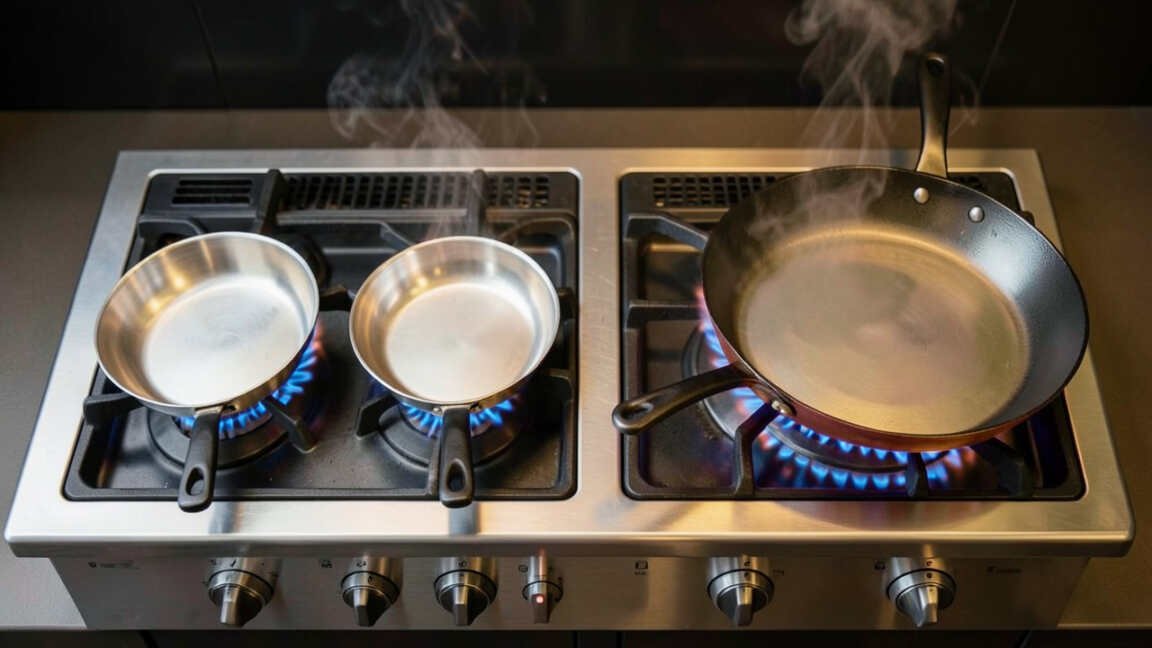
Your stovetop has burners of different sizes. The biggest mistake people make is using a pan that is much larger or much smaller than the burner. When you match them, heat spreads evenly across the pan bottom.
That helps you cook without hot spots or burnt edges.
First, look at the flame or coil on your stove. For a gas stove, the flame should not curl up the sides of the pan. For electric or induction, the pan should cover most of the heating element.
A good rule is to keep the pan diameter within 1 to 2 inches of the burner diameter.
Here is a handy table to help you match common pan sizes to burner sizes.
Use this table as a starting point. Your own stove might vary slightly. Always check your burner size before buying.
How Pan Size Affects Cooking Results
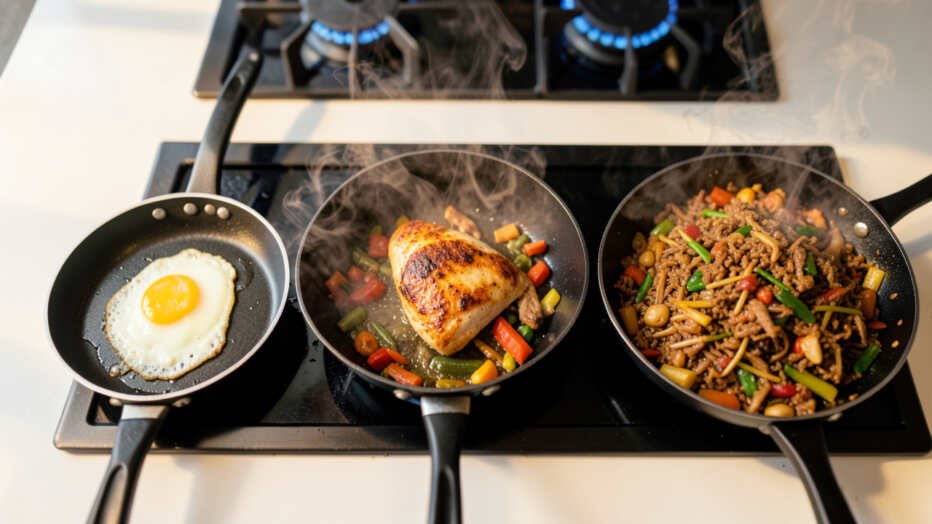
Choosing the wrong size changes how your food turns out. Here are the main effects.
Even Heat Distribution
When the pan fits the burner, heat travels evenly across the cooking surface. That means your eggs fry smoothly, and your pancakes brown uniformly. A mismatched pan creates uneven heat.
Cooking Time
A pan that is too small for a large burner heats very fast but can scorch food. A pan that is too large for a small burner takes a long time to heat up and may never reach the right temperature. How to Choose the Right Frying Pan Size for Your Stovetop helps you avoid wasted time and burnt meals.
Food Quality
Even heat keeps food moist and tender. Uneven heat leads to some parts overcooked and others undercooked. For example, a 12‑inch pan on a 6‑inch burner will give you a raw center and burnt edges.
Best Pan Sizes for Common Stovetops
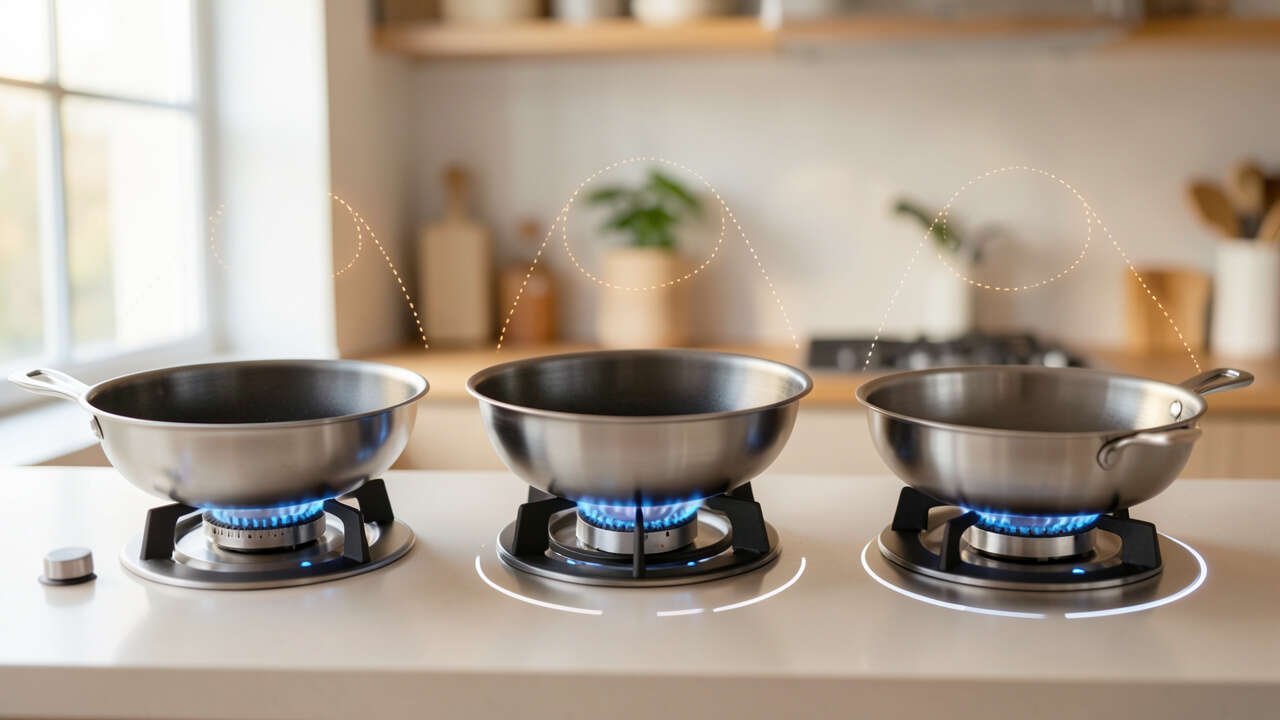
Different stovetops have different heat patterns. Here is what works best.
Gas Stoves
Gas burners produce a flame that spreads. You want the pan to sit fully on the flame without the fire licking up the sides. A 10‑inch pan works well on a standard gas burner.
For a bigger burner, a 12‑inch pan is fine.
Tip: Use a pan with a flat, thick bottom to avoid warping from the direct flame.
Electric Coil Stoves
Electric coils have a fixed size. The pan should be slightly larger than the coil but not more than 2 inches bigger. A 10‑inch pan on an 8‑inch coil is a common good fit.
Smooth Top Electric Stoves (Glass Ceramic)
These stoves work best with flat-bottomed pans. The pan must cover the marked circle. A pan that is too small will not heat the sensor properly.
A 9‑ or 10‑inch pan is a safe choice for most burners.
Induction Stoves
Induction cooktops only heat where the pan touches. The pan must be fully on the induction zone. If the pan is too small, the stove may not detect it.
Check the minimum pan size for your induction cooktop. Usually an 8‑inch or larger pan works.
What Happens When the Pan Is Too Small or Too Large
Understanding the problems helps you make better choices.
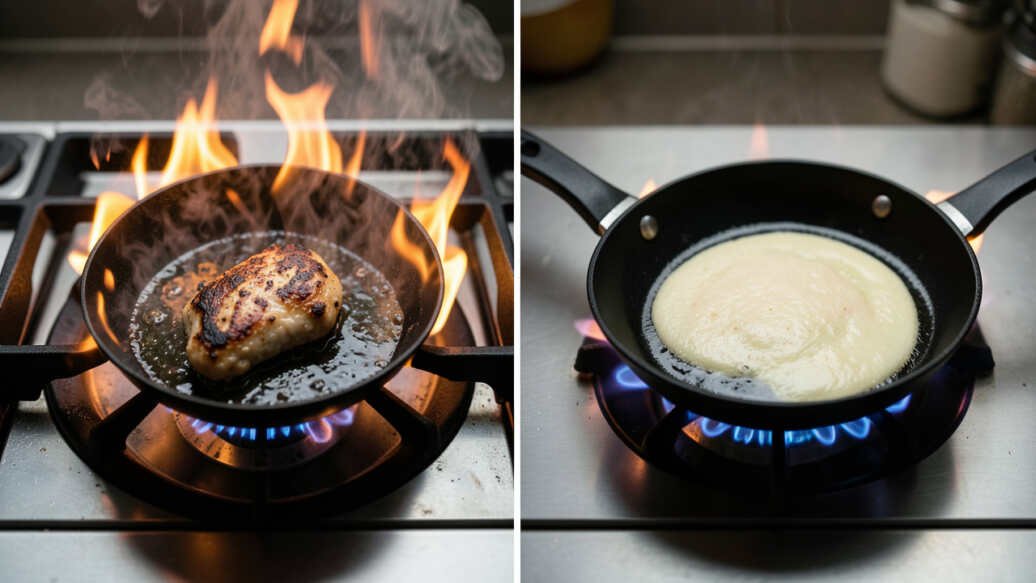
Pan Too Small for the Burner
- Heat loss: A lot of energy escapes around the pan, wasting electricity or gas.
- Burning: The concentrated heat scorches food quickly.
- Handle gets hot: The exposed flame or coil heats the pan handle dangerously.
Pan Too Large for the Burner
- Slow heating: The outer edges never get hot enough.
- Cold spots: Food cooks unevenly, especially in the center.
- Wobbling: A large pan on a small burner may tip or rock, causing spills.
To avoid these problems, always follow the How to Choose the Right Frying Pan Size for Your Stovetop guidelines in this article.
How to Measure Your Stovetop Burners
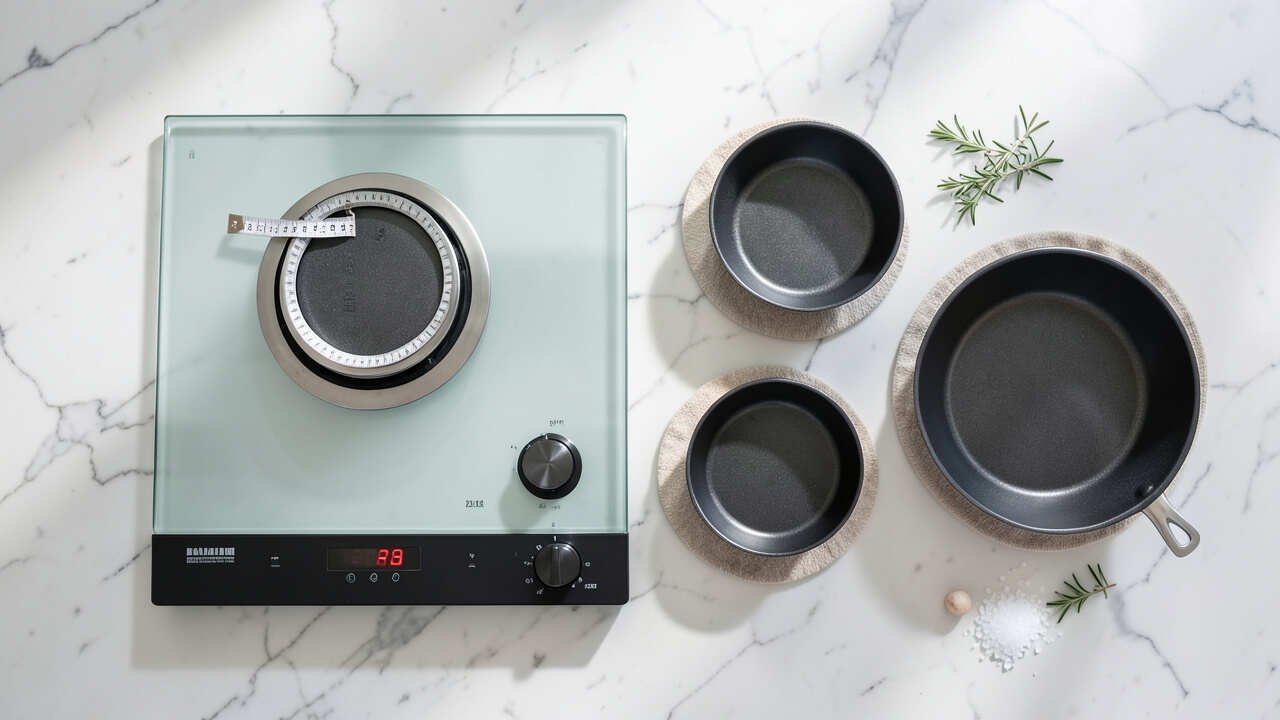
Measuring is easy. You only need a ruler or a tape measure.
- Turn off the stove and let it cool.
- For a gas burner: measure the diameter of the grate directly above the flame ring.
- For an electric coil: measure the diameter of the coil itself.
- For a smooth top: measure the circle marked on the glass.
- For induction: look at the outline of the cooking zone (usually a circle).
Write down the measurement. Then when you shop for a pan, look for a diameter that is about the same or up to 2 inches larger. How to Choose the Right Frying Pan Size for Your Stovetop becomes much simpler once you know your burner sizes.
Choosing Based on What You Cook
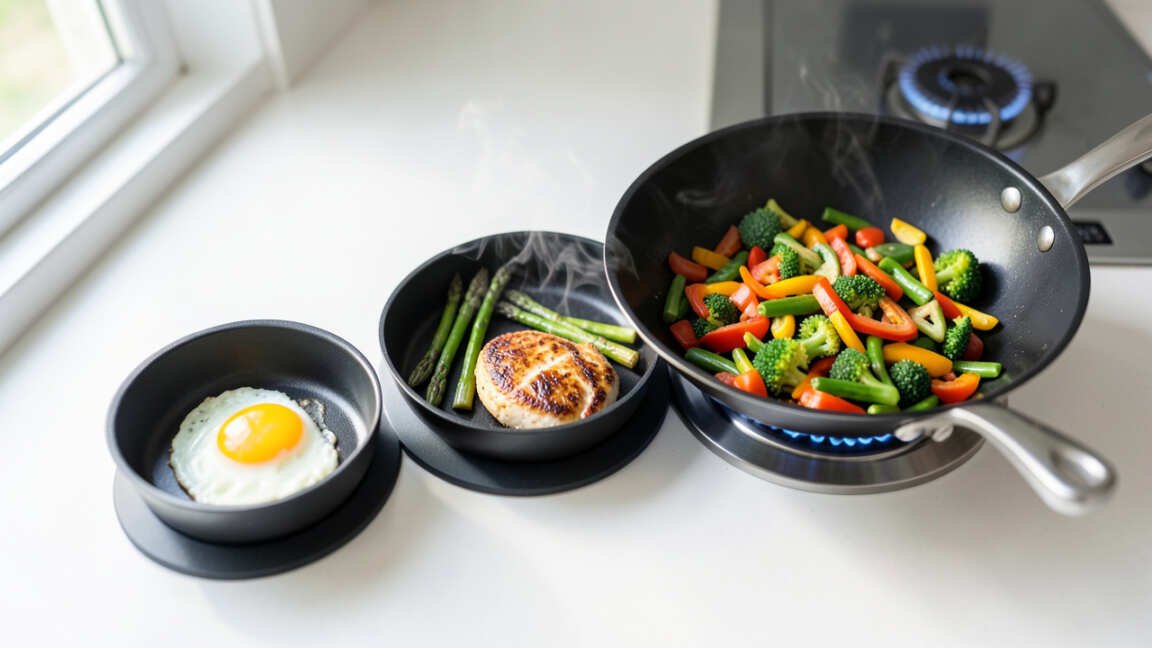
Think about your daily meals. That helps you decide which pan size to buy first.
Small Pans (6-8 inches)
- Best for: eggs, small omelets, single servings of vegetables, or toasting spices.
- Use on small burners only.
Medium Pans (8-10 inches)
- Best for: pancakes, grilled cheese, two servings of sautéed vegetables, or chicken breast.
- This size fits most standard burners.
Large Pans (10-12 inches)
- Best for: stir‑fries, large omelets, searing steaks, cooking for a family of four.
- Needs a large burner for even heat.
Extra Large Pans (12-14 inches)
- Best for: paella, large batches of fried rice, or cooking a whole fish.
- Requires the biggest burner on your stove or a bridge element.
If you cook a mix of meals, start with a 10‑inch pan. It covers most needs. Then add an 8‑inch and a 12‑inch later.
Frequently Asked Questions
What is the most common frying pan size for a home stovetop?
The 10‑inch frying pan is the most common. It fits standard burners on gas, electric, and induction cooktops and works for most everyday meals.
Can I use a 12‑inch pan on a small burner?
You can, but you will get slow heating and cold spots. The outer edges will not cook well. It is better to match the pan to the burner.
How does How to Choose the Right Frying Pan Size for Your Stovetop apply to induction cooktops?
Induction cooktops need the pan to cover the cooking zone. If the pan is too small, the stove will not heat it. Always check the minimum size for your induction zones.
Should I buy a frying pan with a smaller diameter than my burner?
No, that wastes heat and can burn food. The pan should be about the same size or slightly larger than the burner (up to 2 inches bigger).
Does pan material affect size choice?
Yes. Thick, heavy pans like cast iron or stainless steel hold heat better, so a slightly oversized pan works. Thin pans need a closer size match to avoid hot spots.
Final Thoughts
Picking the right frying pan size for your stovetop is simple when you measure your burners and think about what you cook. A good match gives you even heat, faster cooking, and better food. Start with a 10‑inch pan if you are unsure.
Measure first, buy later, and your cooking will improve right away.

Leave a Reply