
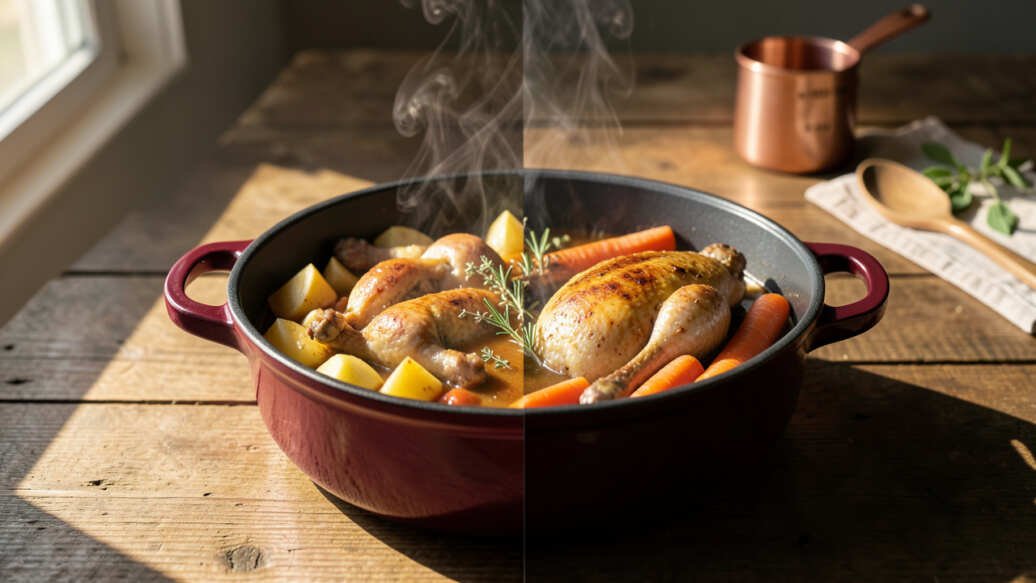
The shape of a Dutch oven matters most for bread baking and stovetop efficiency, with round models offering superior heat distribution for sourdough and oval models accommodating whole chickens or long roasts. Round Dutch ovens fit standard burners, heat evenly, and store more easily, while oval Dutch ovens provide a longer cooking surface for meat that cannot be cut. For most stews, soups, and braises, performance differences are minimal, making a round Dutch oven the best choice for most home cooks.
A Dutch oven is one of the most versatile tools in a modern kitchen. This guide breaks down the real differences between round and oval shapes so you can pick the right one for your cooking style.
Quick Verdict: Simply put, a round Dutch oven is the best choice for most home cooks. Its shape fits standard stovetop burners, promotes even heat distribution for bread baking, and stores easily. An oval Dutch oven is better for roasting larger cuts of meat, like whole chickens or long roasts, and fits odd-shaped foods better. The shape matters most for bread baking and stovetop efficiency.
Key Takeaways
- A round Dutch oven provides superior heat distribution for oven-baked bread, making it the preferred choice for sourdough enthusiasts.
- Oval Dutch ovens offer a longer cooking surface, so you can brown whole chickens and large roasts without cutting them into pieces.
- Round Dutch ovens heat up faster and more evenly on standard round stovetop burners compared to oval models.
- Oval Dutch ovens take up more shelf space and are generally more difficult to store in standard kitchen cabinets.
- For most stews, soups, and braises, the practical performance difference between a round and an oval Dutch oven is minimal.
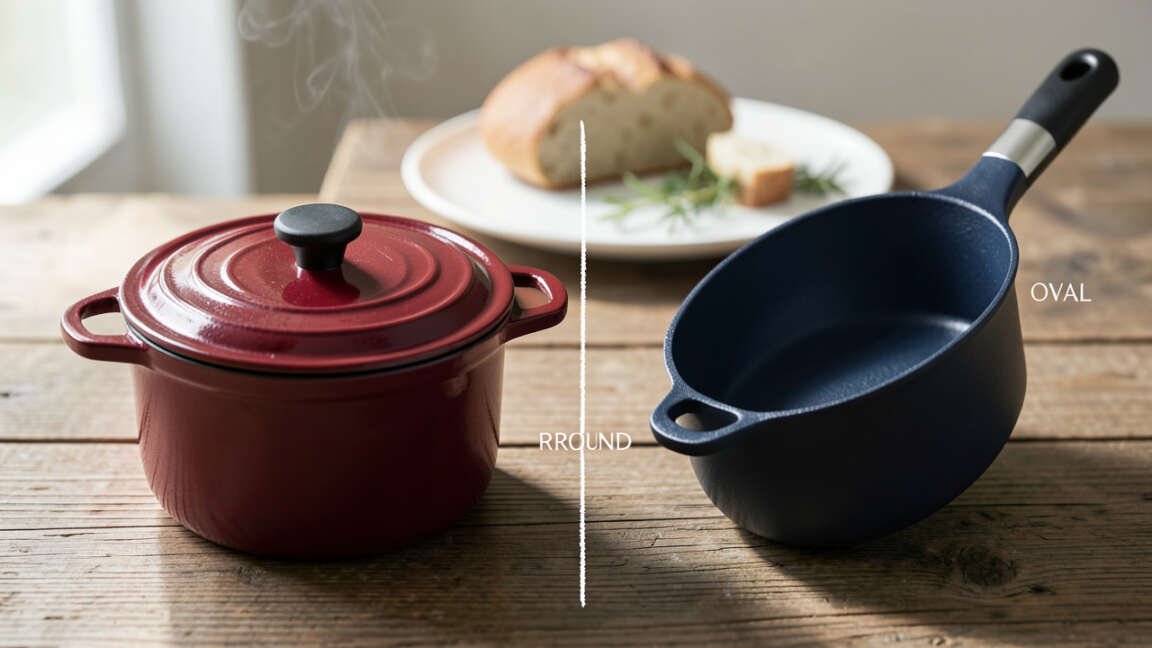
Quick Comparison Table
| Feature | Round Dutch Oven | Oval Dutch Oven |
|---|---|---|
| Best For | Bread, stews, soups, deep frying | Whole poultry, long roasts, braising |
| Heat Distribution | Excellent (even) | Good (hot spots at narrow ends) |
| Stovetop Fit | Perfect (matches burner shape) | Wastes burner space at ends |
| Storage | Compact, easy to store | Bulky, requires more space |
| Price | Generally lower | Generally higher (10-15% more) |
| Weight | Heavier for capacity | Lighter for capacity |
Warning: Do not assume that a larger oval Dutch oven is better for all types of cooking. Shape directly impacts how heat moves through your food. Buying the wrong shape can ruin a delicate recipe or damage your stovetop over time.
Round Dutch Oven Overview
A round Dutch oven is the standard shape that most cooks know. It has a circular base and tall, straight sides. This design makes it perfect for a wide range of cooking techniques.
Pros of a Round Dutch Oven
- Perfect heat distribution. The round shape matches the heat pattern of most stovetop burners. This reduces hot spots and helps food cook evenly.
- Excellent for bread baking. A round loaf of bread fits naturally inside the pot. The trapped steam creates a crispy crust and a soft interior.
- Easier to store. Round pots fit better on standard shelves and inside cabinets. They also stack well if you have multiple pieces.
- Better for deep frying. The round bottom requires less oil to submerge food. It also makes stirring easier.
Cons of a Round Dutch Oven
- Limited space for large meats. A whole chicken or a large pork shoulder may not fit inside a round pot. You may need to cut the meat into smaller pieces.
- Can be heavier. Round Dutch ovens tend to be denser for their size compared to oval models.
Oval Dutch Oven Overview
An oval Dutch oven has an elongated shape. It is wider from one end to the other and narrower from side to side. This shape is designed for specific types of food.
Pros of an Oval Dutch Oven
- Fits odd-shaped foods. A whole chicken, a turkey breast, or a long roast fits perfectly in an oval pot. You do not need to cut the meat into smaller pieces.
- More surface area for searing. The longer bottom gives you more space to brown meat before braising. You can sear a large roast in one batch instead of two.
- Good for braising. The shape works well for slow-cooking large cuts of meat in liquid. The meat stays submerged in the braising liquid more easily.
Cons of an Oval Dutch Oven
- Less efficient on stovetops. The narrow ends of the pot hang over the edges of a round burner. This wastes energy and creates hot spots.
- Harder to store. Oval pots take up more space on shelves and in cabinets. They also do not stack well with other pots.
- More expensive. Oval shapes are less common and often cost more than round models of the same brand and material.
- Not ideal for bread. A round loaf of bread will spread out into an oval shape inside the pot. This can lead to uneven browning and a flatter loaf.
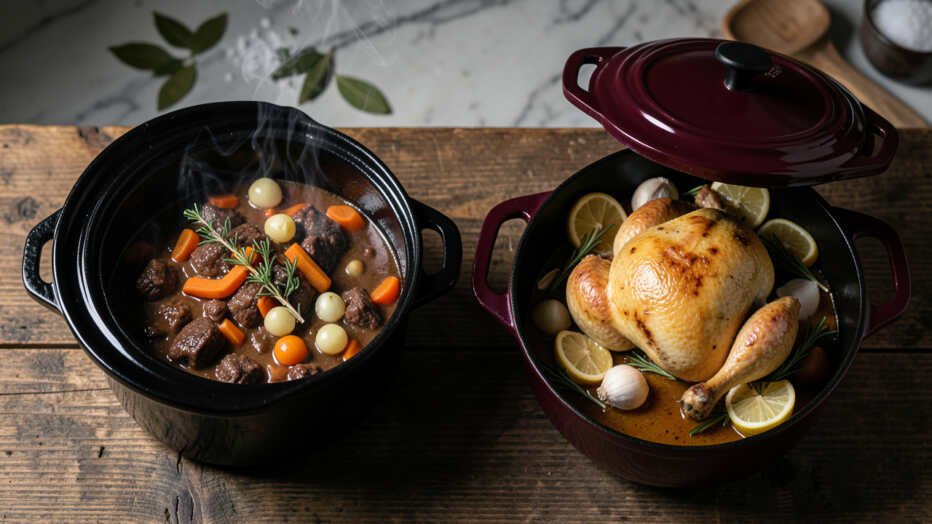
Head-to-Head Comparison: Round vs Oval Dutch Ovens
Heat Distribution
Round Dutch ovens win this category hands down. The circular shape allows heat to flow evenly across the entire bottom of the pot. Oval Dutch ovens struggle with heat distribution at the narrow ends. According to Serious Eats, the uneven shape of an oval pot can cause hot spots that burn food. If you plan to use your Dutch oven on a stovetop, a round shape is the safer choice.
Bread Baking Performance
Bread baking is where shape matters most. A round Dutch oven supports the dough as it rises. The result is a tall, evenly browned loaf with a crispy crust. An oval Dutch oven allows the dough to spread sideways. This creates a flatter, wider loaf that may brown unevenly. Home bakers who make sourdough almost always prefer round Dutch ovens.
Stovetop Efficiency
Standard stovetop burners are round. A round Dutch oven sits directly on the burner surface. This allows maximum heat transfer from the burner to the pot. An oval Dutch oven leaves gaps at the ends. These gaps waste heat and increase cooking time. Lodge Cast Iron reports that their round 6-quart Dutch oven is their best-selling product. This is partly because home cooks value stovetop efficiency.
Versatility for Different Recipes
A round Dutch oven is more versatile overall. You can use it for soups, stews, deep frying, braising, and bread. An oval Dutch oven is a specialized tool. It shines when you cook whole chickens, large roasts, or turkey breasts. If you only buy one Dutch oven, choose a round shape. It will handle more recipes with better results.
Storage and Weight
Round Dutch ovens are easier to store. They fit neatly on standard shelves and stack well with other cookware. Oval Dutch ovens are bulkier and harder to organize. The weight distribution in an oval pot also makes it harder to lift when full. This is an important factor for cooks with limited strength or mobility.
Tip: If you own a Le Creuset or Staub oval Dutch oven, use it primarily for roasting and braising whole cuts of meat. For bread, stews, and everyday meals, invest in a round model for better results.
When to Buy a Round Dutch Oven
A round Dutch oven is the right choice for most home cooks. You should buy a round shape if you plan to do the following cooking tasks:
- Bake bread regularly. The round shape gives you tall, airy loaves with crispy crusts.
- Cook soups and stews. The even heat distribution prevents burning and sticking.
- Deep fry food. The round bottom uses less oil and makes stirring easier.
- Use it on the stovetop often. The round shape matches burner patterns for maximum efficiency.
- Store it in a cabinet. Round pots are easier to stack and organize.
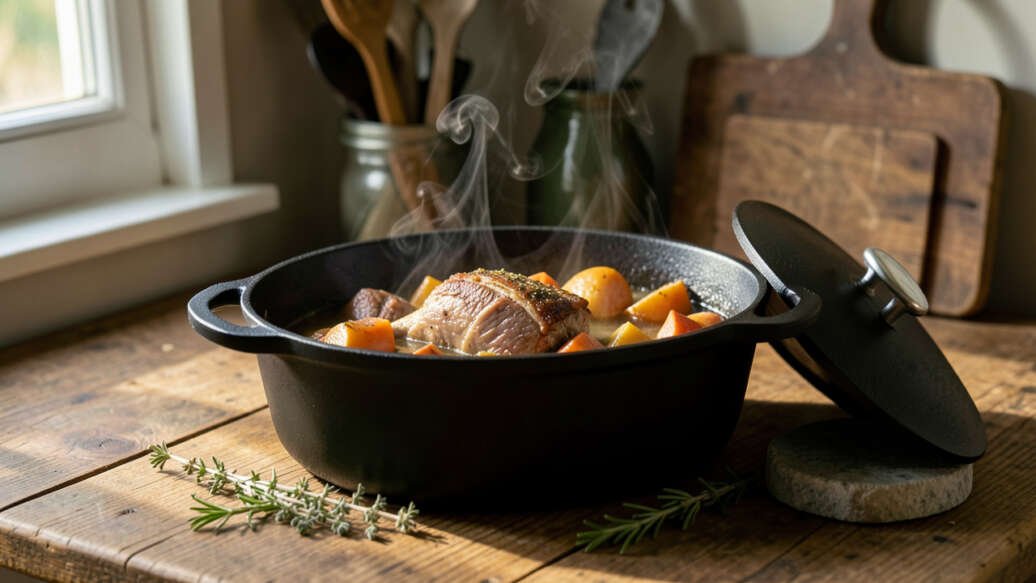
When to Buy an Oval Dutch Oven
An oval Dutch oven is a specialized tool. It is worth buying if you cook specific types of food on a regular basis. You should buy an oval shape if you plan to do the following:
- Roast whole poultry. A whole chicken or turkey breast fits perfectly in an oval pot.
- Braise large cuts of meat. A long pork shoulder or beef brisket fits flat in the bottom of an oval pot.
- Cook for a large family. The extra length gives you more surface area for browning multiple pieces of meat at once.
- Own multiple Dutch ovens. If you already have a round Dutch oven, an oval model adds specialized capability to your cookware collection.
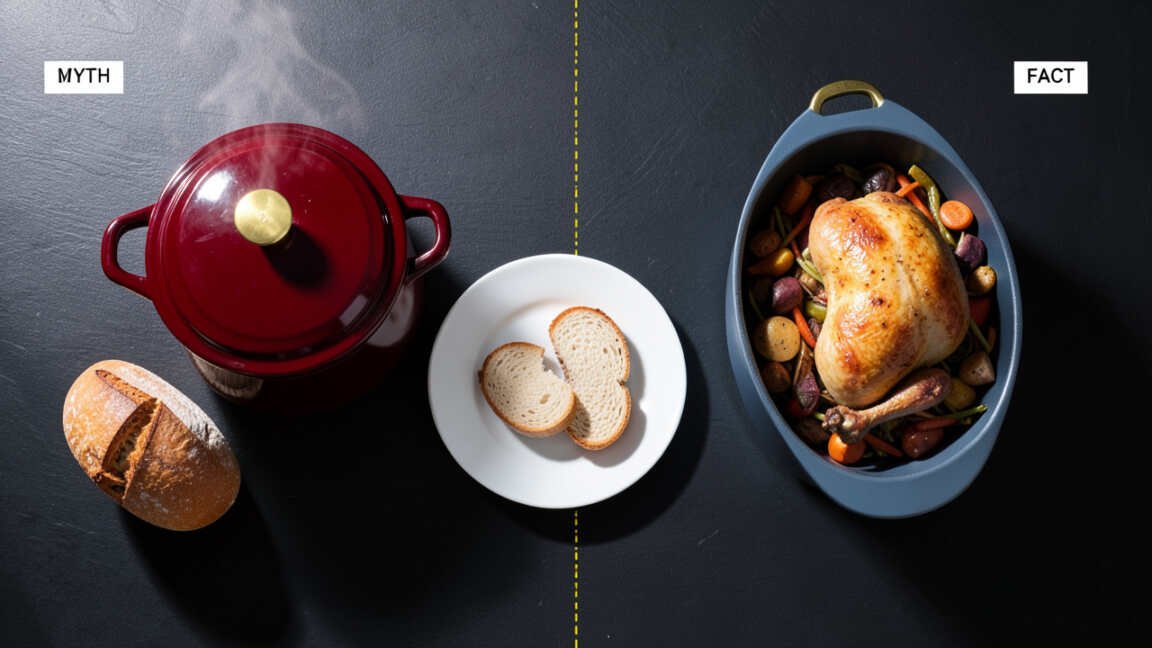
Common Myths vs Facts About Dutch Oven Shapes
Myth 1: An oval Dutch oven is better for braising than a round one.
Fact: Both shapes work well for braising, but the results depend on what you are cooking. A round Dutch oven is better for braising chicken legs, short ribs, or small cuts of meat. An oval Dutch oven is better for braising a whole chicken or a large roast that needs to fit flat in the pot.
Myth 2: Shape does not affect cooking performance.
Fact: Shape has a direct impact on heat distribution, evaporation, and cooking time. According to the America’s Test Kitchen, round Dutch ovens provide more even heat distribution than oval models. The oval shape can create hot spots at the narrow ends that lead to burning.
Myth 3: You can only use a Dutch oven for one type of dish (stew or bread).
Fact: A Dutch oven is one of the most versatile pieces of cookware you can own. You can use it for stews, soups, bread, deep frying, braising, roasting, and even baking desserts. The shape simply determines which tasks it performs best.
How Does Shape Affect Heat Distribution?
Heat distribution is the most important factor when choosing between round and oval Dutch ovens. A round Dutch oven has a uniform shape. Heat travels from the burner to the center of the pot and spreads evenly to the edges. This creates a stable cooking environment for delicate dishes like sauces and bread.
An oval Dutch oven has a non-uniform shape. Heat reaches the center of the pot first and takes longer to reach the narrow ends. The ends of the pot are also closer to the direct heat source on a stovetop burner. This can cause food at the ends to cook faster than food in the center. If you want precise control over your cooking, a round Dutch oven is the better choice.
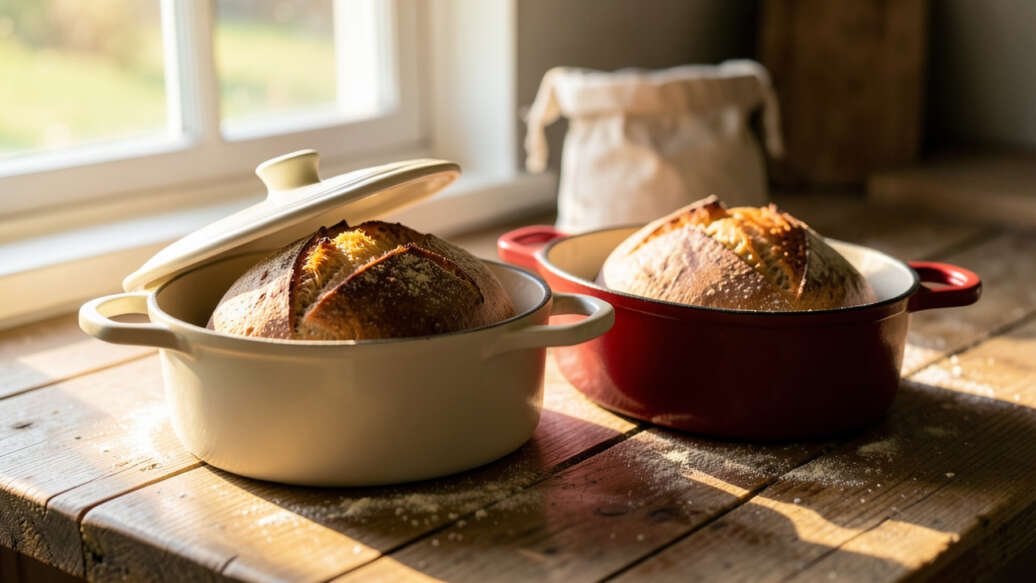
What Is the Best Shape for Baking Bread?
The best shape for baking bread is a round Dutch oven. The round shape supports the dough as it rises. This gives you a tall, airy loaf with a crispy, evenly browned crust. An oval Dutch oven can still produce good bread, but the loaf will be flatter and wider. The browning may also be less even on an oval loaf. Professional bakers and home sourdough enthusiasts almost always choose round Dutch ovens for bread baking.
Important: When baking bread in a Dutch oven, always preheat the pot inside the oven for at least 45 minutes. This ensures the pot is hot enough to create steam and give your bread a beautiful crust. The shape of the pot will affect how the bread rises and browns.
Frequently Asked Questions
Can I bake bread in an oval Dutch oven?
Yes, you can bake bread in an oval Dutch oven. The loaf will be more oval-shaped and flatter than a round loaf. The crust may also brown less evenly on an oval pot. If you only have an oval Dutch oven, it will still work for bread baking.
Is a round Dutch oven better for deep frying?
Yes, a round Dutch oven is better for deep frying. The round bottom requires less oil to submerge food completely. The shape also makes it easier to stir food and maintain a stable oil temperature.
What size Dutch oven should I buy?
A 5.5 to 6-quart Dutch oven is the most versatile size for most home cooks. This size fits a standard loaf of bread, a whole chicken, and enough stew for four to six people. Larger families may prefer a 7.5-quart model for bigger batches.
Do I need an enameled Dutch oven?
An enameled Dutch oven is easier to clean and does not require seasoning. It is a great choice for beginners and cooks who make acidic dishes like tomato sauce. A raw cast iron Dutch oven is better for high-heat searing and camping.
Can I use an oval Dutch oven on a round burner?
Yes, you can use an oval Dutch oven on a round burner. The pot will not sit flat on the burner surface, and the narrow ends may not heat up as effectively. This can lead to longer cooking times and uneven heat distribution.
Final Thoughts
Choosing between a round and oval Dutch oven mostly depends on what you cook most often. A round model is the smarter, more versatile choice for everyday meals and bread. An oval is a specialized tool that shines when you cook large, whole cuts of meat often. Focus on the size and material first, then let your cooking habits guide you to the right shape.

Leave a Reply