
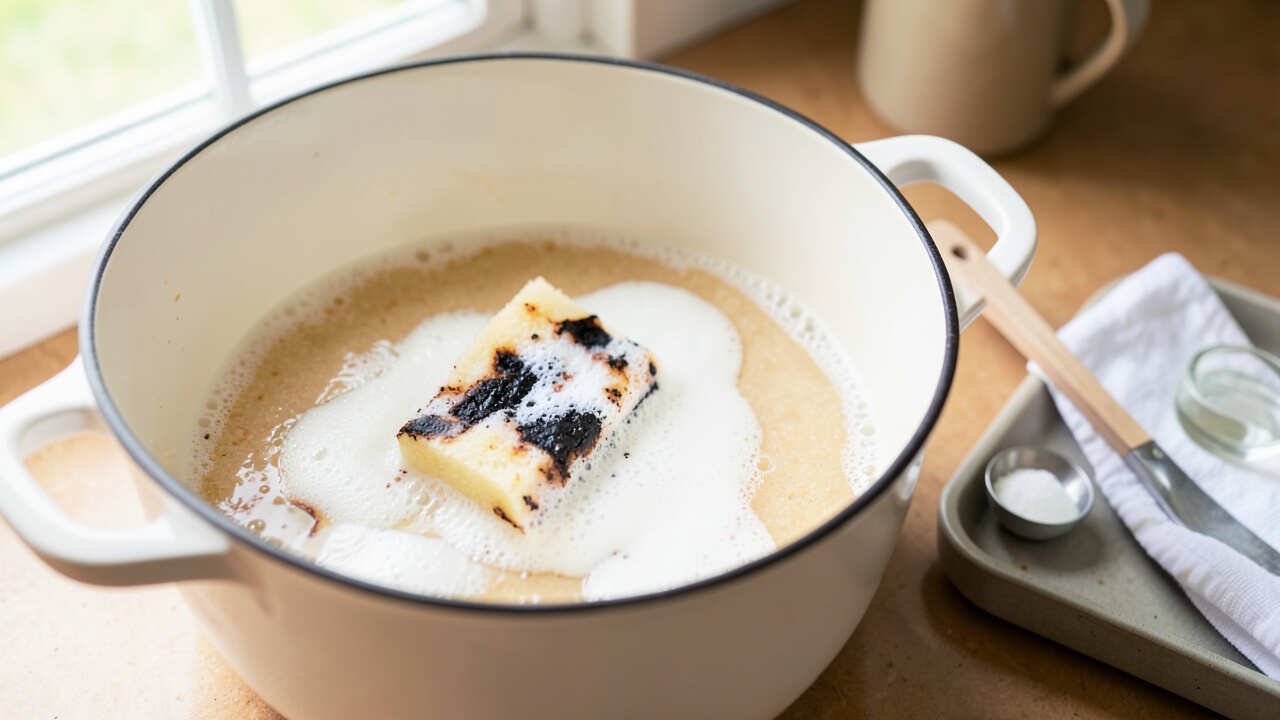
To clean a burnt-on Dutch oven without damaging the enamel, boil water with baking soda for 10 minutes and then scrape gently with a non-metallic tool. Always let the pot cool completely before washing to prevent thermal shock, which can crack or chip the enamel. For stubborn stains, a gentle cleaner like Bar Keepers Friend can remove the residue without harming the glossy finish.
That dark brown ring of burnt residue on your beautiful Dutch oven feels permanent. This guide covers proven methods to remove burnt-on food without scratching or cracking the delicate enamel coating.
Quick Verdict: Simply put, you can clean a burnt-on Dutch oven without damaging enamel by boiling water with baking soda for 10 minutes and scraping gently. For stubborn stains, a gentle cleaner like Bar Keepers Friend usually works. Always let the pot cool down completely before washing to avoid thermal shock.
Key Takeaways
- Baking soda is the safest and most effective first method for cleaning burnt-on food from enameled cast iron.
- Thermal shock, caused by running cold water on a hot pot, is a leading cause of enamel cracking and chipping.
- Bar Keepers Friend or Le Creuset cleaner can remove stubborn brown stains without damaging the glossy enamel finish.
- Metal tools like steel wool or metal spatulas can scratch and dull the enamel surface over time.
- Soaking the Dutch oven in hot, soapy water for 15 to 30 minutes loosens burnt food before you start scrubbing.
What to Gather Before You Start
Having the right tools on hand makes the process much easier. Using the wrong supplies can damage the enamel permanently.
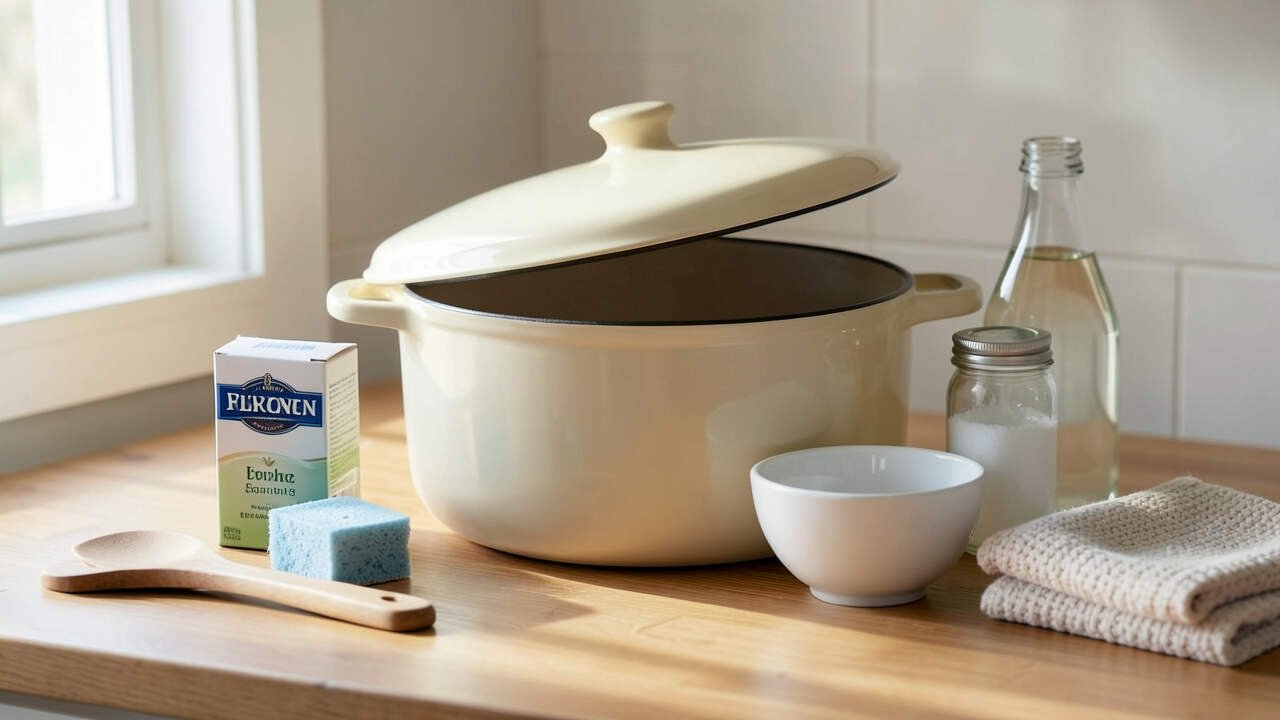
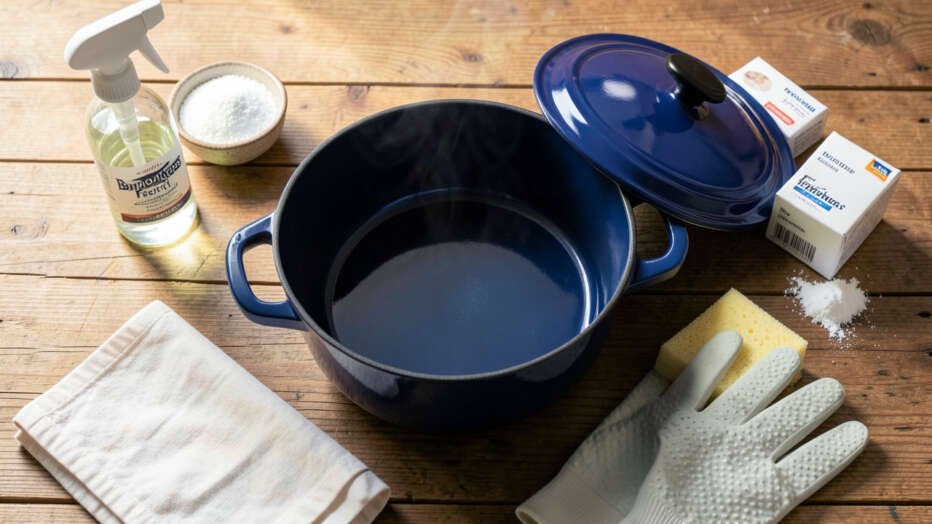
Gather these items before you start cleaning your burnt Dutch oven:
- Baking soda (the most important ingredient)
- A wooden spoon or silicone spatula for gentle scraping
- A nylon brush or non-stick safe scrubber pad
- Bar Keepers Friend or Le Creuset enamel cleaner
- Distilled white vinegar (for soaking tough residue)
- Dish soap and warm water
Important: Always avoid metal scrapers, steel wool, and abrasive cleaning powders. According to Le Creuset, the enamel coating is made of a glass compound that scratches easily under harsh abrasives.
How to Clean a Burnt-On Dutch Oven Using Baking Soda
Baking soda is a gentle alkaline compound that helps break down burnt proteins and food residue. This method from Cook’s Illustrated is the safest approach for delicate enamel.
Step 1: Let It Cool Completely
Never attempt to clean a hot Dutch oven with cold water. The sudden temperature change causes thermal shock, which can crack the enamel. Let the pot cool down fully on the stove or counter for at least one hour.
Step 2: Fill With Water and Baking Soda
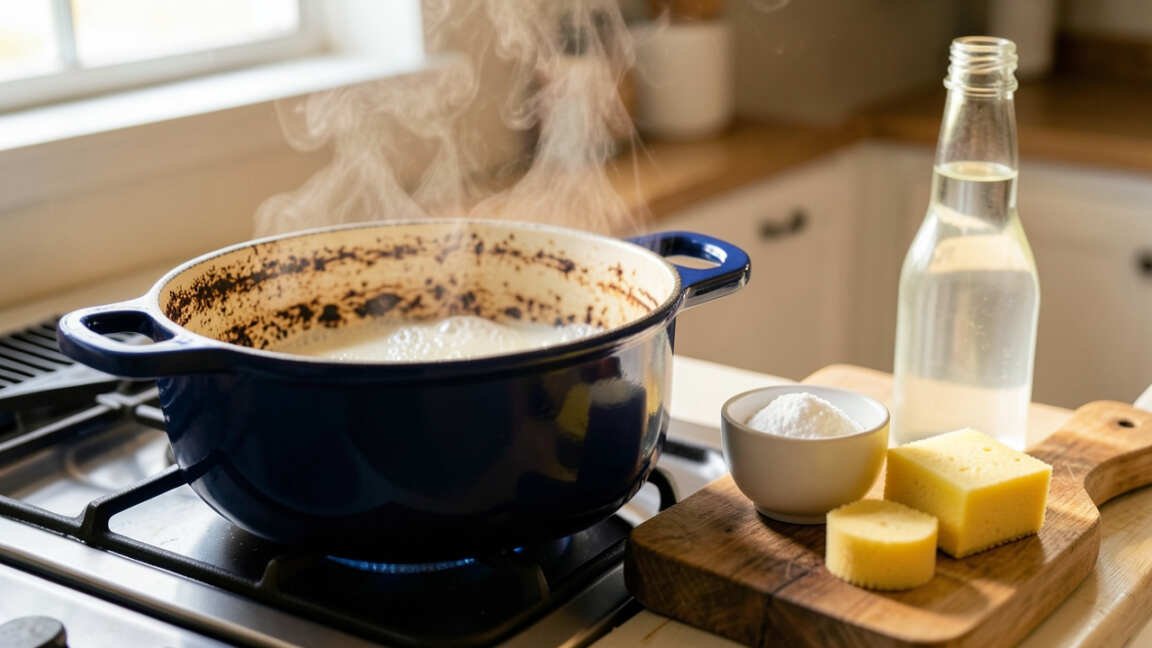
Fill the pot with warm water until it covers the burnt areas. Add about half a cup of baking soda to the water. Stir gently with a wooden spoon to dissolve the baking soda as much as possible.
Step 3: Boil for 10 Minutes
Place the pot on the stove and bring the water to a boil. Let it boil for 10 to 15 minutes. The bubbles and steam work to lift burnt particles from the enamel surface.
Step 4: Scrape Gently
Turn off the heat and let the water cool slightly. Use a wooden spoon or silicone spatula to scrape the bottom and sides of the pot. The burnt residue should come off easily at this stage.
Step 5: Repeat If Necessary
If some burnt spots remain, empty the pot and repeat the process. Adding an extra tablespoon of baking soda on the second attempt helps remove stubborn layers.
Warning: Do not use metal tools during this scraping step. A metal spatula can leave gray marks on the white enamel that are difficult to remove.
What to Do If Baking Soda Does Not Work
Some burnt-on stains are too stubborn for baking soda alone. In these cases, you can use a specialized enamel cleaner without worrying about damaging the surface.
| Cleaning Method | Best For | Time Required | Risk Level |
|---|---|---|---|
| Baking Soda Boil | Light to moderate burnt food | 15-30 minutes | Very low |
| Bar Keepers Friend | Stubborn brown stains and discoloration | 5-10 minutes | Very low |
| Vinegar and Water Soak | Lime scale and mineral deposits | 30-60 minutes | Low |
| Enzymatic Cleaner | Protein-based burnt residue | Overnight soak | Very low |
Using Bar Keepers Friend on Enamel
Bar Keepers Friend is a mild oxalic acid cleaner that works well on enamel without being abrasive. According to America’s Test Kitchen, it is one of the safest and most effective non-abrasive cleaners for removing baked-on stains from enameled surfaces.
To use it correctly, follow these steps:
- Sprinkle a small amount of the powder onto the wet enamel surface.
- Use a damp sponge or nylon brush to work it into a thin paste.
- Let it sit for 1 to 2 minutes. Do not let it dry completely.
- Rub gently in circular motions for about one minute.
- Rinse thoroughly with warm water and dry with a soft cloth.
Common Mistakes That Damage Enamel
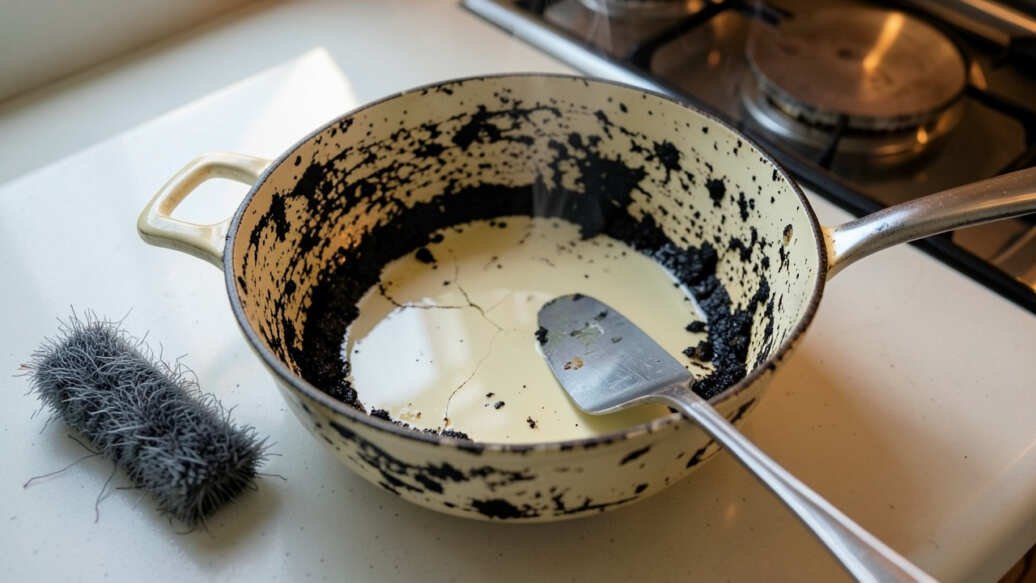
Many well-meaning home cooks accidentally damage their Dutch ovens by using the wrong techniques. Avoiding these mistakes will keep your enamel looking new for decades.
- Using metal scouring pads. Steel wool and metal scrubbers leave visible scratches on the sleek enamel glass coating.
- Pouring cold water into a hot pot. This causes thermal shock, which can crack the enamel base near the edge of the pot.
- Using bleach or harsh chemicals. Bleach can discolor the enamel and break down the glossy finish over time.
- Putting the pot in the dishwasher. High heat and harsh dishwasher detergents dull the enamel surface over repeated cycles.
- Heating the pot while empty. Enameled cast iron heats unevenly when empty, which can cause the enamel to crack.
Warning: If you see chips or cracks in your enamel, stop using the pot immediately. Ingesting pieces of glass-like enamel is dangerous. You cannot repair chipped enamel safely at home.
Why Thermal Shock Damages Your Dutch Oven
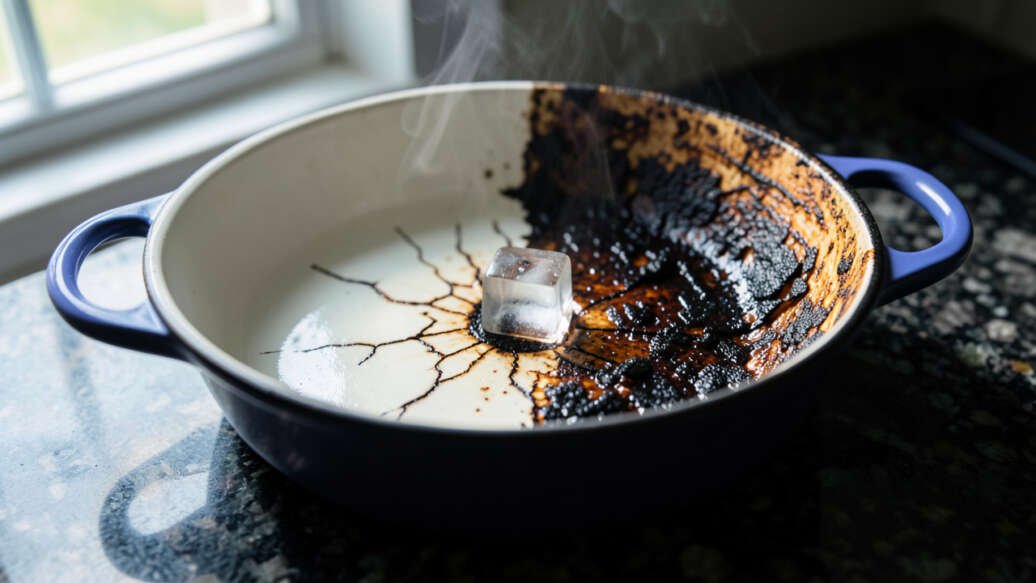
Enamel is a type of glass fused to cast iron at extremely high temperatures. According to Staub, the enamel expands and contracts at a different rate than the iron underneath. Rapid temperature changes create stress that causes the glass layer to crack or chip.
Common scenarios that cause thermal shock include:
- Pouring cold tap water into a hot pot right after cooking
- Placing a hot Dutch oven directly onto a cold stone countertop
- Running cold water on a warm pot to clean it quickly
- Putting a frozen or cold pot directly onto a hot burner
Always let your Dutch oven cool down naturally before you wash it. This single habit will extend the life of your cookware significantly.
Pro Tips for Keeping Enamel Pristine
These expert tips from home cooks and cookware manufacturers will help you maintain the beautiful glossy interior of your Dutch oven.
- Season the pot occasionally. Rubbing a thin layer of vegetable oil onto the inside surface before storing helps maintain the shine and prevents stains from setting.
- Use low to medium heat. Enameled cast iron retains heat extremely well. High heat is rarely necessary and causes food to burn and stick more easily.
- Deglaze after cooking. Add a splash of broth, wine, or water to the hot pot while stirring with a wooden spoon. This lifts stuck bits before they burn onto the surface.
- Avoid cooking sprays. Cooking sprays burn onto enamel at relatively low temperatures, leaving a sticky residue that is hard to remove.
- Dry immediately after washing. Water spots and mineral deposits can stain the enamel over time. Towel dry your pot completely before putting it away.
Tip: If you notice the enamel starting to discolor or look dull, a paste of baking soda and water applied with a soft cloth can restore the glossy finish. Rub gently in circular motions for about two minutes before rinsing.
What Enamel Cleaning Is Not
There are several common myths about cleaning enameled cast iron. Knowing the facts will help you avoid costly mistakes.
Myth 1: You Can Use Steel Wool on Enamel
Fact: Steel wool and other metal scrubbers scratch the glass-like enamel coating permanently. According to Le Creuset, once the enamel is scratched, it becomes more difficult to clean and can harbor bacteria. Always use nylon brushes or non-stick safe sponges.
Myth 2: Enamel Is Indestructible Because It Is Glass
Fact: While enamel is incredibly hard, it is still glass and can chip or crack if dropped or subjected to thermal shock. The cast iron base is heavy and can crack the enamel if you bang the pot against a hard surface.
Myth 3: You Should Soak Burnt Pots Overnight in Bleach
Fact: Bleach is too harsh for enamel and can break down the glossy finish over time. It also does not effectively remove burnt-on food. Baking soda and water or a specialized enamel cleaner work much better without damaging the coating.
Frequently Asked Questions
Can I clean a burnt Dutch oven with vinegar?
Yes, you can use vinegar to clean your Dutch oven, but it is best for mineral deposits and lime scale. For burnt-on food, baking soda is more effective. Vinegar mixed with baking soda creates a fizzy reaction that can help lift light residue.
How long does it take to remove burnt food from enamel?
Most burnt residue comes off within 15 to 30 minutes using the baking soda boiling method. Stubborn stains that have baked on multiple times may require a second attempt or an overnight soak with an enzymatic cleaner.
What is the best cleaner for white enamel Dutch ovens?
Bar Keepers Friend is widely considered the best cleaner for maintaining bright white enamel. It removes brown stains and discoloration without scratching the surface. Le Creuset also makes its own enamel cleaner that works very well on white interiors.
Can I use the self-cleaning cycle on my oven to clean a Dutch oven?
No. The high heat of an oven self-cleaning cycle will destroy the enamel coating and damage the cast iron base. Never put your enameled Dutch oven in a self-cleaning oven.
Is it safe to use the burnt Dutch oven if the enamel looks stained?
Yes, staining is usually cosmetic and does not affect the safety or performance of the pot. As long as there are no chips, cracks, or exposed cast iron, the pot is safe to use. Stains can be removed with Bar Keepers Friend if desired.
Resources and Tools
Bar Keepers Friend – A gentle, non-abrasive oxalic acid cleaner safe for enamel interiors. Visit Site
Le Creuset Enamel Cleaner – A specialized cleaning product designed specifically for Le Creuset enameled cookware. Visit Site
Lodge Nylon Scraper – A plastic scraper safe for cleaning enamel without leaving scratches. Visit Site
Cook’s Illustrated Cleaning Guide – A trusted resource for testing cleaning methods on enameled cast iron. Visit Site
Final Thoughts
Cleaning a burnt-on Dutch oven requires patience and the right technique, not harsh chemicals or abrasive tools. Start with baking soda and hot water before trying stronger cleaners like Bar Keepers Friend. Avoid thermal shock by letting the pot cool down naturally and you will keep your enamel pristine for years. These methods work safely on both glossy white and colored enamel interiors.

Leave a Reply