

Dutch oven weight, typically 12 to 15 pounds for a 5.5-quart enameled cast iron model, is a direct result of thick walls that deliver superior heat retention and distribution for consistent cooking results. That mass prevents hot spots, ensures even searing and braising, and maintains steady temperatures even when cold ingredients are added, making heavy Dutch ovens outperform lighter alternatives in performance. Over decades of use, the same heavy construction that concerns some cooks actually ensures the pot lasts 20 years or more with basic care, proving the weight is a long-term advantage rather than a flaw.
Many home cooks worry that a Dutch oven weight makes it hard to handle. That same weight is actually the reason your pot performs better year after year.
Quick Verdict: In short, Dutch oven weight comes from thick cast iron or enameled walls that hold heat steadily and evenly. That weight gives you better searing, braising, and baking results. It also means the pot lasts decades longer than lighter cookware. The heavy build is a long-term advantage, not a flaw.
Key Takeaways
- A heavy Dutch oven holds more thermal energy than thin cookware, which keeps food cooking at a steady temperature even after you add cold ingredients.
- The thickness of cast iron walls prevents hot spots that cause uneven cooking, burning, or scorching on stovetops and in ovens.
- Enameled cast iron Dutch ovens from brands like Le Creuset and Staub can last 20 years or more with basic care, while nonstick pots often wear out within 3 to 5 years.
- According to America’s Test Kitchen, a 5.5-quart enameled cast iron Dutch oven weighs 12 to 15 pounds, and that mass directly improves braising and bread baking results.
- You can handle the weight with simple techniques like using two hands, storing the pot on a lower shelf, and choosing the right size for your needs.
What Is Dutch Oven Weight
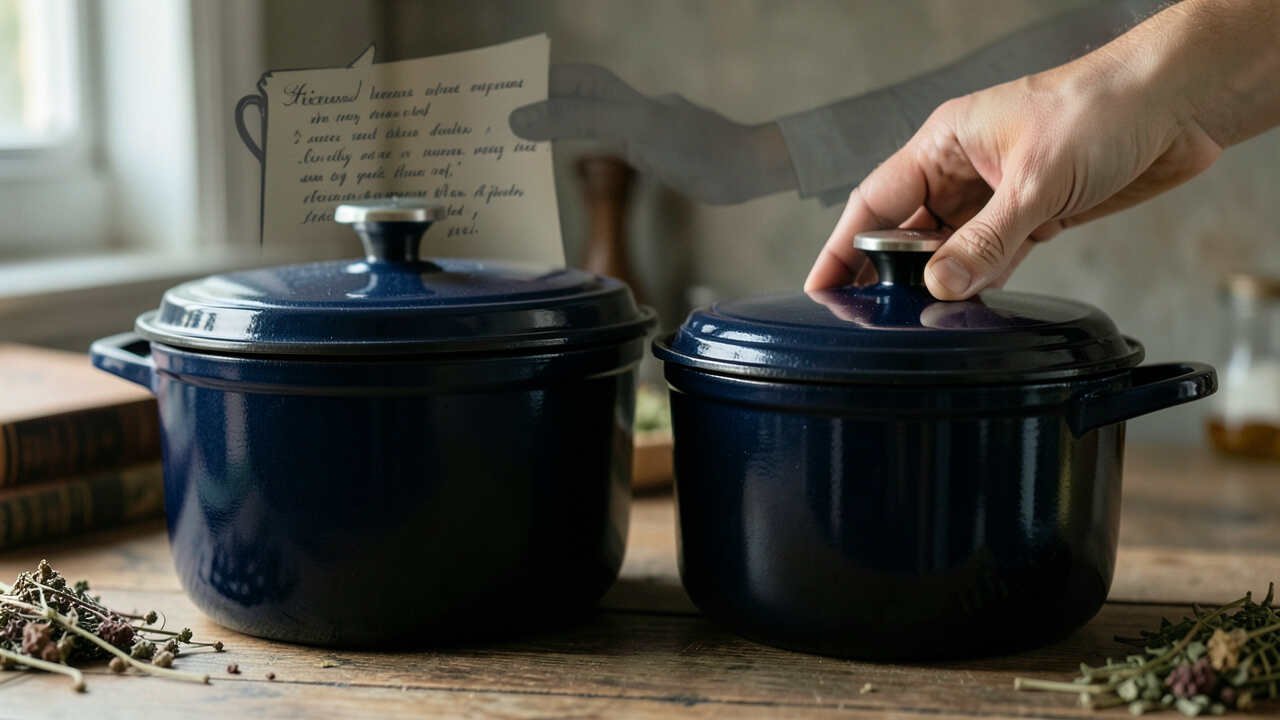
Dutch oven weight refers to the total weight of the pot, which comes from its construction material. Most traditional Dutch ovens use cast iron. Cast iron is dense and heavy. A typical 5.5-quart enameled cast iron Dutch oven weighs between 12 and 15 pounds.
Larger sizes go up to 18 pounds or more. Raw cast iron Dutch ovens, like those from Lodge, are slightly lighter than enameled versions because they lack the glass coating. But they still weigh significantly more than stainless steel stockpots or nonstick pans.
The weight is not random. Manufacturers design the walls to be thick and solid. That thickness creates a heavy pot. The pot’s mass directly affects how it cooks.
Why Weight Matters in Cookware
Weight in cookware relates directly to thermal mass. Thermal mass is the ability of a material to store heat. Cast iron has high thermal mass. According to Cook’s Illustrated, cast iron holds approximately 10 times more heat than the same weight of stainless steel.
When you preheat a heavy Dutch oven, the thick walls absorb a large amount of energy. That energy stays in the metal. When you add cold meat or vegetables, the pot temperature does not drop sharply. The heat stored in the walls flows back into the food, keeping the cooking temperature steady.
Lighter pots lose heat quickly when you add food. You then need to crank up the burner to recover the temperature. That leads to uneven cooking and more energy use. A heavy Dutch oven avoids those problems naturally.
How Does Weight Affect Performance
Weight improves three main areas of performance: heat retention, heat distribution, and cooking consistency.
Heat Retention
Heat retention is the most important benefit of Dutch oven weight. The thick cast iron walls store energy like a battery. Once the pot reaches the target temperature, it stays there for a long time.
According to a study published in the Journal of Food Engineering, cast iron maintains a more stable cooking temperature than aluminum or stainless steel. That stability is critical for braising, simmering, and slow cooking. Your food cooks evenly from edge to edge.
Heat Distribution
Cast iron distributes heat laterally across the bottom and up the sides. Thin pots create hot spots directly above the burner. Those spots cause food to burn or stick. A Dutch oven’s thick walls spread the heat across the entire surface.
America’s Test Kitchen tested four leading Dutch oven brands and found that all enameled cast iron models showed less than 10 degrees Fahrenheit variation across the cooking surface. Stainless steel pots in the same test showed variations up to 50 degrees.
Cooking Consistency
Consistent temperature means you can sear meat deeply, then add liquid and braise without the temperature dropping. You get a better crust on beef, chicken, and pork. Your stews simmer gently instead of boiling unevenly.
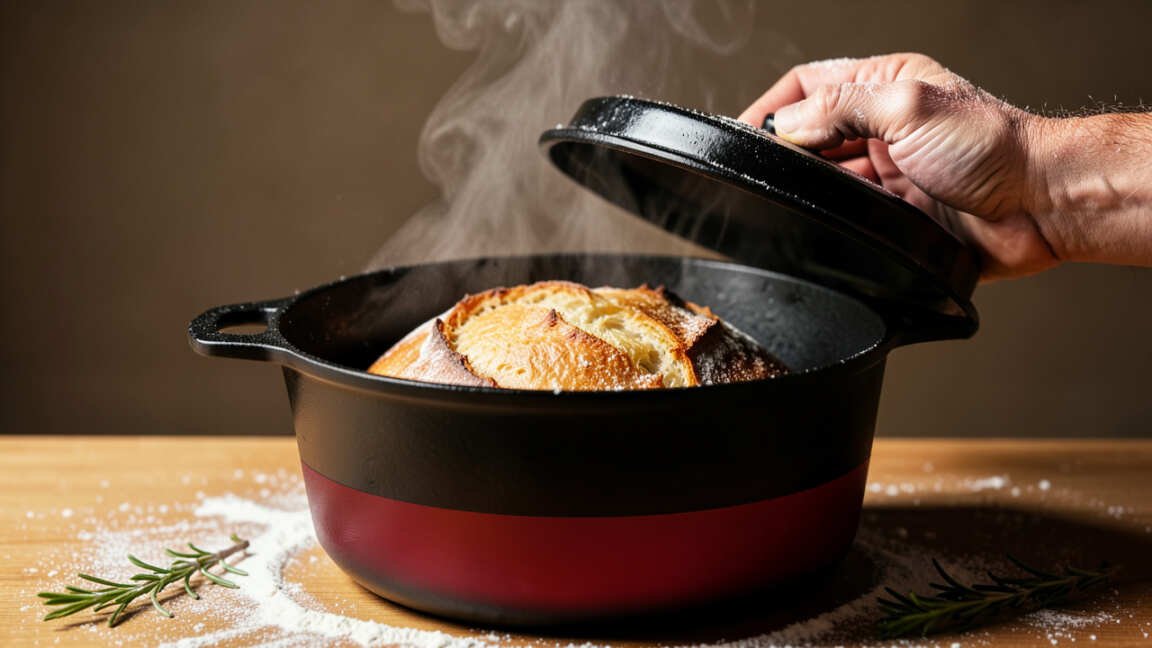
Baking bread in a Dutch oven also benefits from the weight. The heavy walls create a steam chamber. That steam gives you a crispy crust and airy crumb. Lighter covered baking dishes do not trap steam as effectively.
Types of Dutch Ovens by Weight Comparison
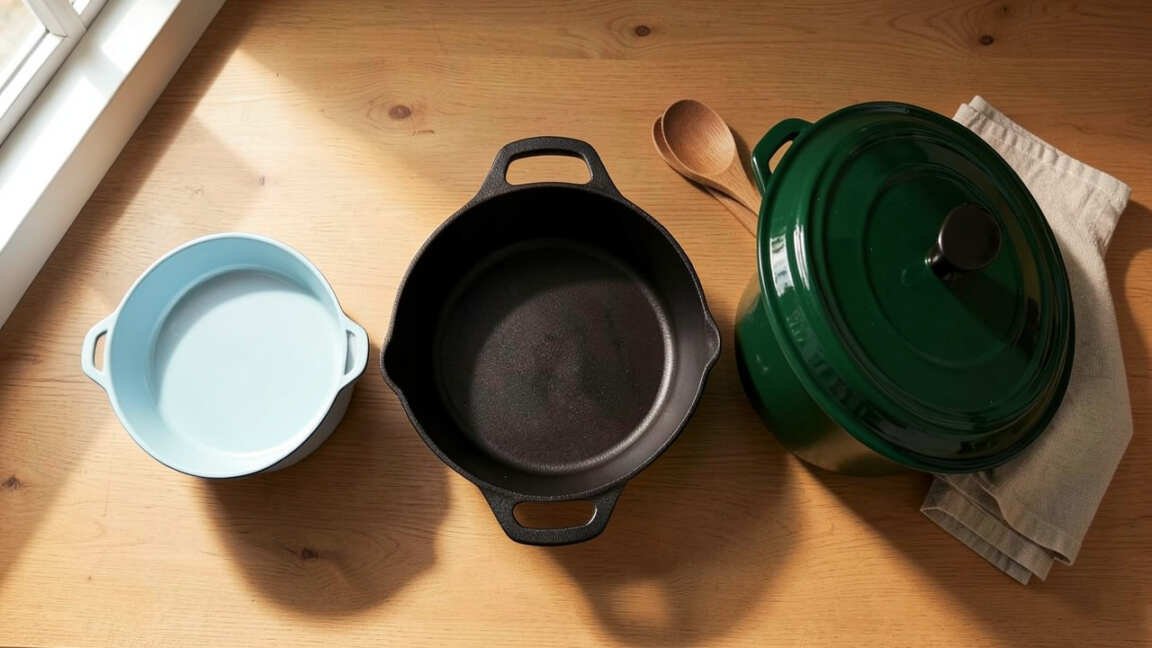
| Type | Typical Weight (5.5qt) | Heat Retention | Durability |
|---|---|---|---|
| Enameled Cast Iron | 12 – 15 lbs | Excellent | 20+ years |
| Raw Cast Iron | 10 – 13 lbs | Excellent | Lifetime with care |
| Stainless Steel with Aluminum Core | 6 – 9 lbs | Good | 15 – 20 years |
| Nonstick Aluminum | 3 – 5 lbs | Low | 3 – 5 years |
The table shows that heavier Dutch ovens last much longer and hold heat much better. The trade-off is the weight itself. But when you consider that a quality enameled cast iron pot can become a family heirloom, the extra pounds become a feature, not a flaw.
Why Weight Is a Feature Long-Term
The long-term value of Dutch oven weight shows up in four areas: durability, cooking performance, energy savings, and cost per use.
Durability Over Decades
A heavy cast iron Dutch oven resists warping, chipping, and cracking. Thin metal pots warp when you heat them on high or quench them with cold water. Cast iron walls are thick enough to handle temperature changes without bending.
According to Consumer Reports, cast iron cookware scores the highest of any material for long-term durability in home kitchens. Owners report using the same Dutch oven for 20, 30, or even 50 years.
Enameled cast iron adds a glass coating that stops rust and makes cleaning easier. That coating bonds tightly to the metal and lasts for decades with proper care. Lighter pots with nonstick coatings start flaking after a few years. You have to replace them. Your heavy Dutch oven keeps going.
Better Cooking Results Every Time
The weight improves your cooking immediately and keeps doing so over the long term. You get consistent sears, even braises, and perfectly baked bread. The pot does not degrade. Its heat retention stays the same year after year.
You never need to season cast iron again if you buy enameled versions. Raw cast iron needs occasional seasoning, but that process simply adds a protective oil layer. The metal itself lasts indefinitely.
Tip: To get the best long-term performance from your heavy Dutch oven, always preheat it slowly over medium heat for 5 to 10 minutes. This step prevents thermal shock and keeps the metal stable. Never heat an empty pot on high.
Energy Savings
You might think a heavy pot wastes energy because it takes longer to heat. But the opposite is true. Once hot, the pot retains heat so well that you can turn the burner down or off while cooking continues. The stored heat finishes the work.
The U.S. Department of Energy notes that cookware with high thermal mass can reduce stovetop energy use by 10 to 20 percent over thin pans. The heavy pot stays hot longer after you remove it from the heat source. That leftover heat can finish soups, stews, or sauces without extra energy.
Cost Per Use
A premium enameled cast iron Dutch oven from Le Creuset or Staub costs $250 to $400. A cheap nonstick stockpot costs $30 to $60. But the nonstick pot needs replacement every 3 to 5 years. Over 20 years, you spend $150 to $400 on replacements. The lifetime cost is about the same.
The cast iron pot still cooks better every time you use it. It never warps. It never loses its heat retention. The Dutch oven weight gives you that long-term reliability. You buy it once and pass it down.
Common Myths vs Facts
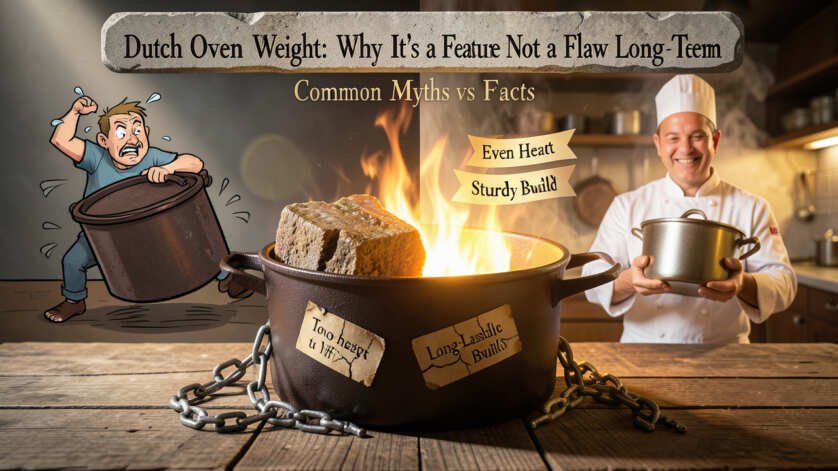
Myth 1: A Heavy Dutch Oven Is Too Difficult to Use
Many people worry they cannot lift or carry a 15-pound pot. But you do not need to hold it for long periods. You lift it to the stovetop, set it down, and cook. Use both hands. Store it on a lower shelf. If you have limited strength, choose a 4.5-quart size, which weighs about 10 pounds.
Myth 2: Lighter Cookware Cooks Just as Well
Thin pots cannot match the heat stability of cast iron. According to testing by Cook’s Illustrated, a lightweight pot loses 30 percent of its surface temperature when you add a cup of cold broth. A heavy Dutch oven loses less than 10 percent. That difference directly affects your food quality.
Myth 3: Weight Means the Pot Takes Forever to Heat Up
Cast iron does take longer to reach target temperature. But that time is typically 5 to 8 minutes for a Dutch oven. The pot then holds steady heat for the entire cooking process. You waste less time adjusting the burner and fixing hot spots. The overall cooking time is often shorter because the temperature stays consistent.

Pro Tips for Handling a Heavy Dutch Oven
You do not need to struggle with the weight. Use these practical techniques to manage your Dutch oven safely. The U.S. Department of Energy offers guidance on cooking appliance efficiency and cookware selection.
- Use two hands every time. Grip the side handles firmly with both hands. Never lift a heavy pot with one hand, especially if it contains food or liquid.
- Store it on a lower shelf or at waist height. Reaching up to pull a heavy pot from a high cabinet strains your shoulders and wrists. Keep it where you can lift it straight out without any awkward angle.
- Choose the right size for your needs. A 5.5-quart Dutch oven works for most households. If you cook for one or two people, a 3.5-quart pot weighs about 8 pounds and is easier to handle.
- Use a trivet or silicone mat. Heavy pots can scratch countertops and stovetops. A protective surface under the pot prevents damage and makes sliding the pot easier.
- Empty the pot before moving it. A full Dutch oven with braised meat and liquid can weigh 20 pounds or more. If you need to transfer it to the oven, remove the food first or use two hands with extreme care.
Warning: Never lift a hot Dutch oven with wet hands. The weight combined with a slippery grip can cause the pot to fall. Always dry your hands and use oven mitts that provide a secure hold. For more details on material properties, explore the Wikipedia entry on cast iron cookware.
Frequently Asked Questions
Does the weight of a Dutch oven affect the food taste?
No, the weight itself does not change flavor. But the steady heat retention that comes from the weight improves cooking results. You get better browning, which adds flavor through the Maillard reaction. The pot also reduces burning, so food tastes cleaner.
What is the average weight of a 5.5-quart enameled Dutch oven?
Most 5.5-quart enameled cast iron Dutch ovens weigh between 12 and 15 pounds. Le Creuset models are typically around 13.5 pounds. Staub models weigh slightly more at about 14.5 pounds due to thicker walls. Lodge cast iron pots weigh about 11 pounds for the same capacity.
Can a heavy Dutch oven damage my glass stovetop?
Yes, dropping or sliding a heavy cast iron pot can crack a glass cooktop. Always lift the pot straight up and place it down gently. Do not drag it across the surface. Use both hands to control the weight. Most glass stovetops can safely support the weight of a Dutch oven if you handle it carefully.
Is a heavier Dutch oven always better?
Not always. Extremely heavy pots above 18 pounds can be difficult to manage for smaller cooks. The ideal weight range for most home cooks is 10 to 15 pounds for a 5.5-quart pot. If the weight becomes a safety issue, choose a smaller size or a brand with slightly thinner walls, like Lodge.
How long does a heavy cast iron Dutch oven last?
With basic care, a cast iron Dutch oven lasts 20 to 50 years. Enameled models can also last that long if you avoid chipping the coating. Many cooks pass their Dutch ovens to their children and grandchildren. The weight and thickness protect the pot from damage over time.
Resources and Tools
- Le Creuset Official Site – Premium enameled cast iron Dutch ovens with a lifetime warranty. Visit Site
- Staub – French enameled cast iron cookware known for extra-thick walls and tight-fitting lids. Visit Site
- Lodge Cast Iron – Affordable American-made raw and enameled cast iron Dutch ovens. Visit Site
- America’s Test Kitchen – Independent cookware testing and reviews with detailed weight and performance data. Visit Site
- U.S. Department of Energy – Energy efficiency guidance for cooking appliances and cookware selection. Visit Site
Final Thoughts
A heavy Dutch oven delivers better cooking results and lasts longer than any lightweight alternative. The weight gives you steady heat, even cooking, and a pot that can serve your family for decades. Embrace the mass as a long-term investment. With simple handling techniques, you get all the benefits without the struggle. Understanding why Dutch oven weight matters helps you appreciate its cooking performance.

Leave a Reply