
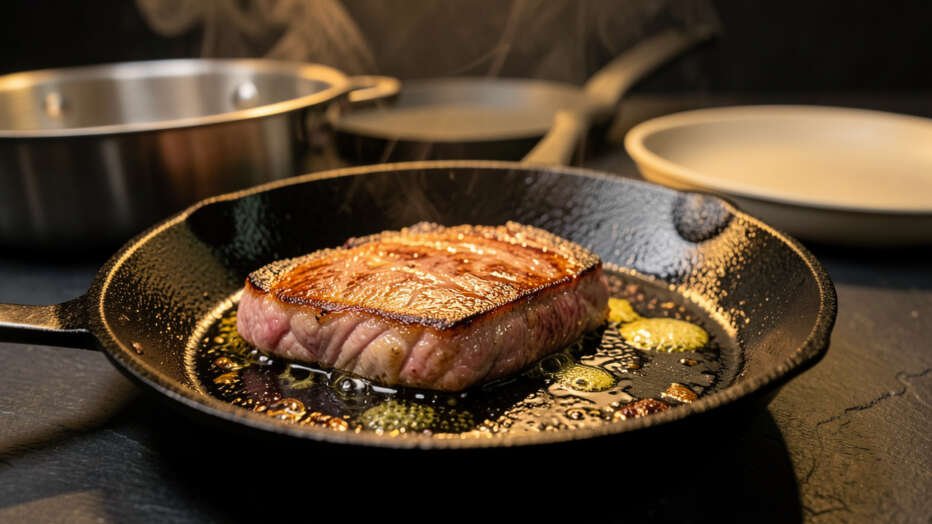
The pan material directly controls the rate and quality of Maillard reaction browning by influencing heat transfer and retention. Cast iron pans provide excellent heat retention for a deep, even crust, while stainless steel requires more oil to achieve similar browning and non-stick pans often limit crust formation at high temperatures. Choosing the right pan and managing pan size to control moisture release are essential for maximizing the Maillard reaction and achieving a perfect brown crust.
Getting a deep brown crust on your steak or bread is all about heat and surface. The pan you pick plays a big role in how fast and even that browning happens. In this post, we explain The Science of Maillard Reaction: Pan Choice for Brown Crust so you can get perfect results every time.
You will learn which pans work best and why.
Key Takeaways
- Pan material directly controls how fast the Maillard reaction starts.
- Heat retention in cast iron helps form a thick, even crust.
- Stainless steel gives good browning but needs more oil.
- Non-stick pans often limit crust formation at high heat.
- Pan size and shape affect moisture release and browning speed.
Why Maillard Reaction Depends on Your Pan
The Maillard reaction happens when amino acids and sugars meet high heat. This chemical process creates the brown crust and rich flavor on seared meats and baked goods. But the reaction only starts when the pan surface is hot enough – usually above 285°F (140°C).
Your pan controls how quickly that heat transfers to the food. A pan that heats unevenly or loses temperature when food touches it can delay the reaction. This leads to pale spots or less flavor.
Understanding The Science of Maillard Reaction: Pan Choice for Brown Crust means knowing which pan materials give steady, high heat.
Thin pans made of aluminum or cheap stainless steel cool down fast when you add cold meat. The Maillard reaction stops before it starts. Thick pans like cast iron or heavy stainless steel hold heat well.
They keep the surface temperature high even after the food hits the pan.
How Temperature Range Triggers Browning
The Maillard reaction needs a surface temperature between 285°F and 330°F. Below that range, water evaporates slowly and the food steams instead of browning. Above 350°F, the crust can burn before the inside cooks.
A good pan holds a steady temperature in that sweet spot. Cast iron and carbon steel are top choices because they store heat energy and release it slowly. This means the pan does not cool down when you add food.
Key Pan Materials for Better Browning
Different pan materials change how fast and evenly the Maillard reaction happens. Here is a direct comparison of the most common options.
Cast Iron Pans for Deep Crust
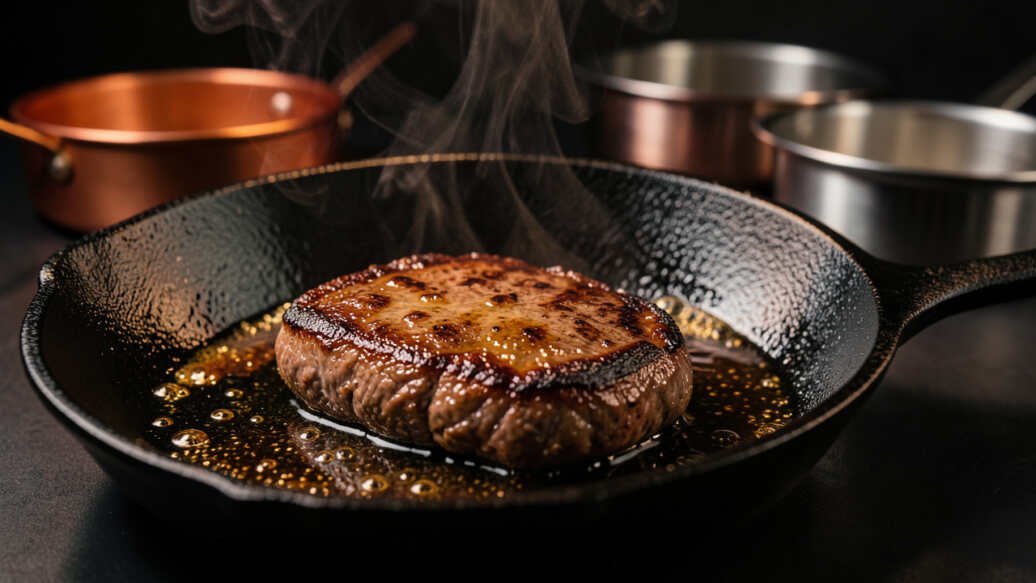
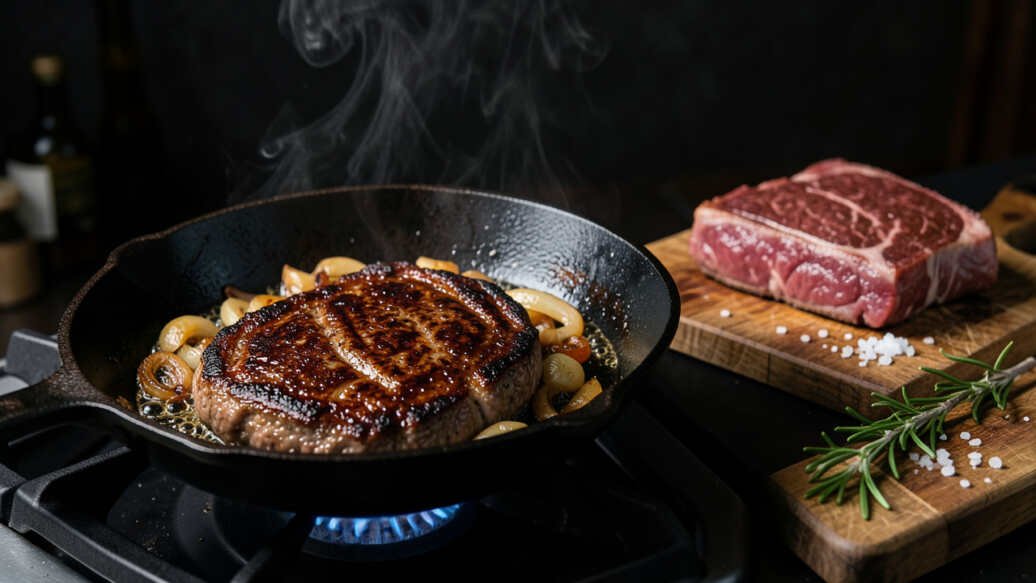
Cast iron pans are heavy and hold heat for a long time. When you preheat them fully, the surface stays hot even after adding cold steak. This steady heat is key for The Science of Maillard Reaction: Pan Choice for Brown Crust.
The iron also radiates heat back onto the food, helping form a thick, even crust.
A cast iron pan needs a few minutes to preheat. Place it over medium heat for 5 to 7 minutes. Then add a thin layer of oil.
This oil helps conduct heat evenly and prevents sticking.
Stainless Steel Pans for Even Browning
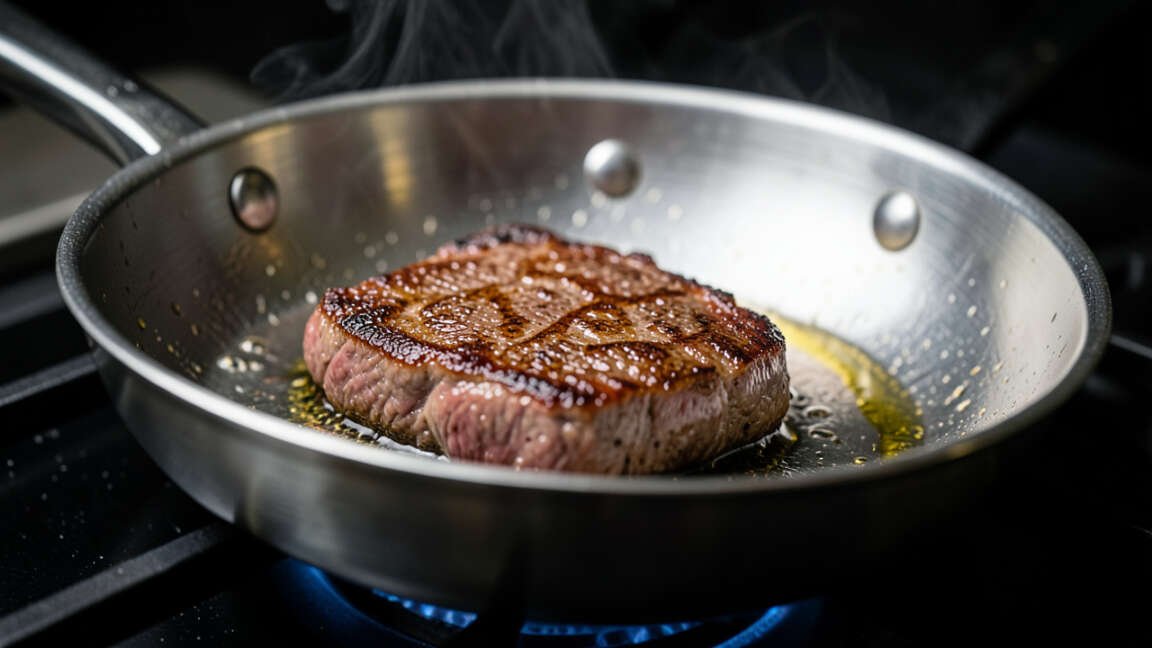
Stainless steel pans with a thick aluminum or copper core spread heat well. They do not hold heat as well as cast iron, but they give a uniform surface temperature. This makes them good for browning fish or chicken with a lighter crust.
To get a brown crust on stainless steel, use more oil. The food should sizzle when it touches the pan. If it sticks, let it cook longer – the crust will release when it is ready.
Non-Stick Pans and Crust Limits
Non-stick pans are coated to prevent food from sticking. But this coating often has a heat limit around 500°F. You cannot preheat them as high as cast iron or stainless steel.
The lower temperature slows the Maillard reaction and gives a lighter brown color.
Non-stick pans are best for foods that need gentle heat. They work fine for pancakes or eggs, but not for a deep crust on steak.
How Heat Conductivity Changes Crust Color
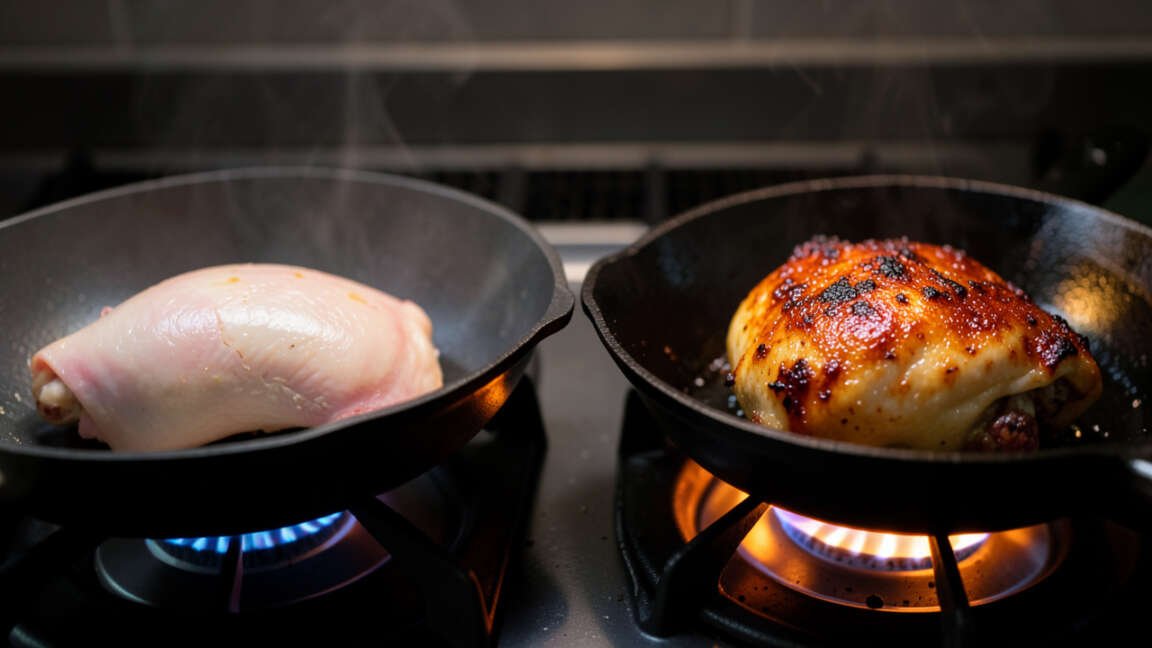
Heat conductivity is how fast a pan passes heat from the burner to the food. Copper and aluminum conduct heat very fast. But they also lose heat quickly when food touches them.
This can cause uneven browning if the pan is thin.
Thick pans with high thermal mass keep the temperature steady. Cast iron and carbon steel are dense. They store heat and release it slowly.
This gives you a consistent surface for the Maillard reaction to work through the entire cooking process.
For The Science of Maillard Reaction: Pan Choice for Brown Crust, the goal is a pan that holds heat well. This prevents the temperature drop that stops browning.
Pan Size and Moisture Management
A crowded pan lowers the surface temperature. When you add too much food, the pan cools down. Water from the food turns to steam, and the surface stays wet.
The Maillard reaction needs a dry surface to work.
Use a pan that gives each piece of food space. Leave at least a half-inch gap between items. This lets steam escape and heat stay high.
Quick Tips to Maximize Maillard Reaction at Home
Follow these steps to get the best brown crust with your pan.
- First, preheat your pan over medium heat for 5 to 7 minutes. Cast iron or stainless steel works best.
- Second, pat food dry with a paper towel. Moisture slows the Maillard reaction.
- Next, add oil with a high smoke point, like avocado or canola. Use enough to coat the pan bottom.
- Then, place food in the pan. Do not move it for 2 to 3 minutes. Let the crust form.
- Finally, flip the food when it releases easily from the pan. This shows a good crust is ready.
These steps use The Science of Maillard Reaction: Pan Choice for Brown Crust to give you consistent results.
Common Mistakes That Slow Browning
- Using a cold pan – always preheat fully.
- Adding wet food – pat it dry first.
- Flipping food too early – let the crust set.
- Using low heat – stay above 285°F.
- Crowding the pan – leave space between pieces.
Frequently Asked Questions
What pan gives the fastest Maillard reaction?
Cast iron gives the fastest browning because it holds high heat steadily. The Science of Maillard Reaction: Pan Choice for Brown Crust shows that cast iron keeps the surface temperature in the ideal range.
Can I use a non-stick pan for a brown crust?
Yes, but the crust will be lighter. Non-stick pans cannot handle the high heat needed for a deep crust without damage.
Does pan thickness matter for browning?
Yes, thicker pans hold heat better. They prevent temperature drops that stop the Maillard reaction. The Science of Maillard Reaction: Pan Choice for Brown Crust recommends pans at least 3 mm thick.
Why does my food steam instead of brown?
Two reasons – the pan is too cool, or the food is too wet. Preheat your pan fully and pat food dry before cooking.
Is stainless steel good for the Maillard reaction?
Yes, but it needs more oil than cast iron. The oil helps transfer heat and prevents sticking while the crust forms.
Final Thoughts
Your pan choice directly controls how well the Maillard reaction works. Cast iron and stainless steel give you the heat needed for a deep brown crust. Non-stick pans work for light browning but not for dark crusts. Pick a thick pan, preheat it well, and keep food dry. These simple steps get you the perfect color and flavor every time.

Leave a Reply