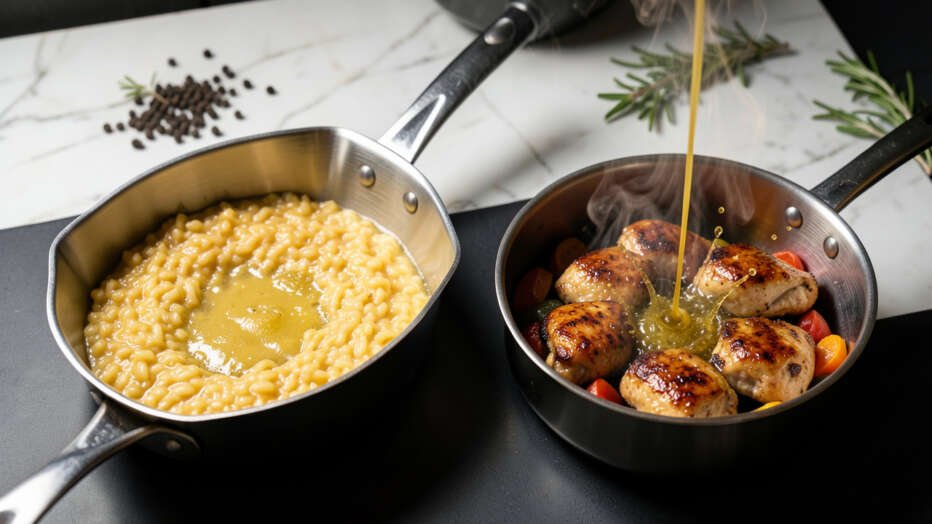
The pan wall angle directly determines whether a pan is better for searing or for simmering: sloped sides promote rapid steam release and crisp browning, while straight sides trap heat and moisture for even sauces and deep frying. Sloped walls like those in a skillet allow for quicker evaporation and easier flipping, making them ideal for stir-fries and sautéing. Straight-walled pans are superior for tasks requiring steady temperature and liquid retention, such as braising or boiling, so selecting the correct shape based on the cooking method improves both results and efficiency.
You are in the kitchen cooking dinner, and you notice your food cooks unevenly sometimes. The problem might not be your stove or your recipe – it could be the shape of your pan. How Pan Wall Angle Affects Cooking: Sloped vs Straight Sides is a simple idea that changes everything from browning to heat distribution.
Knowing this helps you pick the right pan for each dish. By the end, you will understand why a skillet works differently than a saucepan and how to use that knowledge for better meals every day.
Key Takeaways
- Sloped sides let steam escape quickly, giving you crispier sears and faster evaporation.
- Straight sides trap heat and moisture, making them better for sauces, soups, and deep frying.
- The pan wall angle changes how food browns and how much oil or liquid you need.
- Thicker straight walls hold heat longer, while sloped walls heat up and cool down faster.
- Matching the pan shape to the cooking method saves time and improves results.
- Both types have a place in your kitchen – it is about knowing when to use each one.
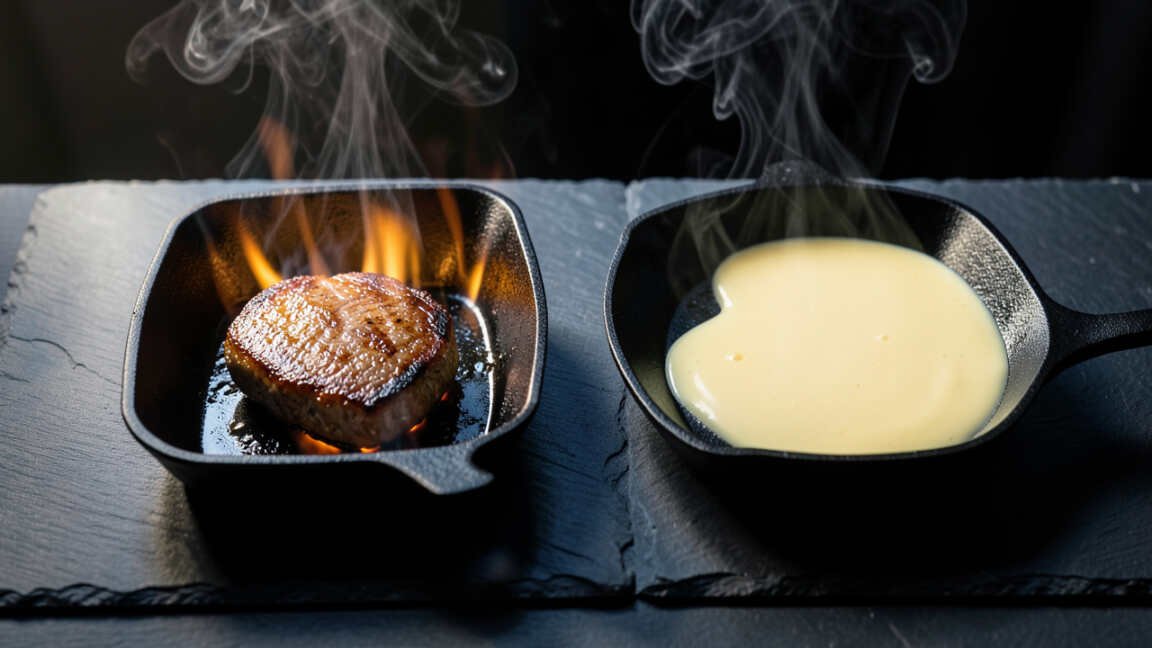
Why Pan Wall Angle Matters for Your Cooking
The angle of a pan’s wall is not just a design quirk. It directly controls how heat moves, how food releases steam, and how easy it is to stir or flip ingredients. Sloped sides, often found in fry pans and skillets, make a wide cooking surface with low sides.
Straight sides, common in saucepans and stockpots, create a deep, vertical chamber. How Pan Wall Angle Affects Cooking: Sloped vs Straight Sides becomes obvious the moment you start searing meat or simmering a sauce.
When you understand this, you stop guessing which pan to use. You pick the one that will brown a steak perfectly or let a stew reduce without scorching. It also affects how much fat or liquid you need.
A sloped pan spreads oil thinly, so you use less. A straight pan holds a deeper layer, which works for shallow frying. These small details add up to better control over your food.
Heat Distribution and Retention
Straight walls tend to be thicker because they are often made for longer cooking times. That thickness holds heat steady. Sloped walls are usually thinner and lighter.
They heat up fast but also lose heat quickly if you add cold food. This matters when you need a consistent temperature. First, understand that straight sides are better for slow simmering.
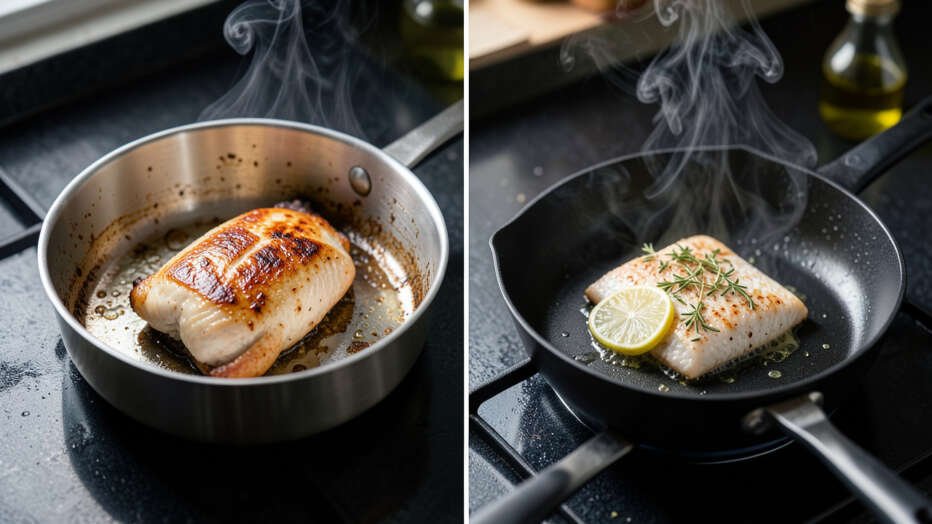
Second, sloped sides work best for quick, high-heat tasks like searing a chicken breast.
Many professional chefs choose sloped pans for sautéing because they can toss food easily. The wide opening lets you see everything and flip ingredients without a spatula. But if you need to reduce a sauce, a straight pan is safer because the surface area is smaller, so less liquid evaporates before you want it to.
That is where How Pan Wall Angle Affects Cooking: Sloped vs Straight Sides gives you a clear advantage.
How Sloped Pan Walls Work
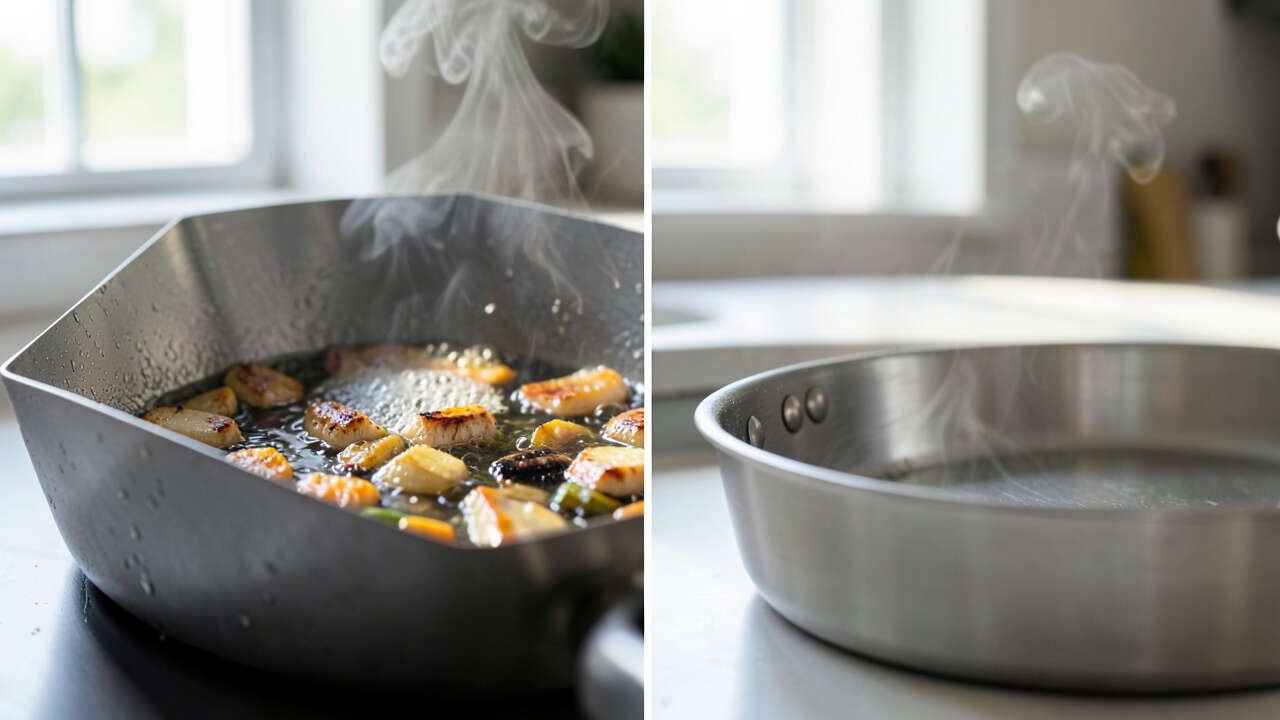
Sloped pans (also called frypans or skillets) have sides that angle out from the bottom. This creates a wide, shallow cooking area. The main benefits are faster evaporation, better browning, and easier access to food.
Because the sides are low, you can slide a spatula under anything without hitting a wall. That makes flipping pancakes or omelets simple.
But there are trade-offs. Sloped sides let steam escape quickly. That is great for crispy edges but bad for moist cooking.
If you try to braise a roast in a sloped pan, the liquid evaporates too fast, and you end up with dry meat. Also, the thin walls can scorch food if you are not careful. How Pan Wall Angle Affects Cooking: Sloped vs Straight Sides means you must watch your heat level more closely with a sloped pan.
Best Uses for Sloped Sides
- Searing meat – the wide surface gives direct heat contact.
- Sautéing vegetables – easy to toss and flip without spilling.
- Frying eggs – quick release and no sticking to high walls.
- Making crepes or pancakes – food slides out easily over the low edge.
When you use a sloped pan, you get more control over browning. The thinner metal responds quickly to heat changes. Turn the burner up, and the pan gets hotter fast.
Turn it down, and it cools quickly. That helps avoid burning delicate foods. Just remember to use a little extra oil or butter to prevent sticking because the surface can dry out faster.
How Straight Pan Walls Work
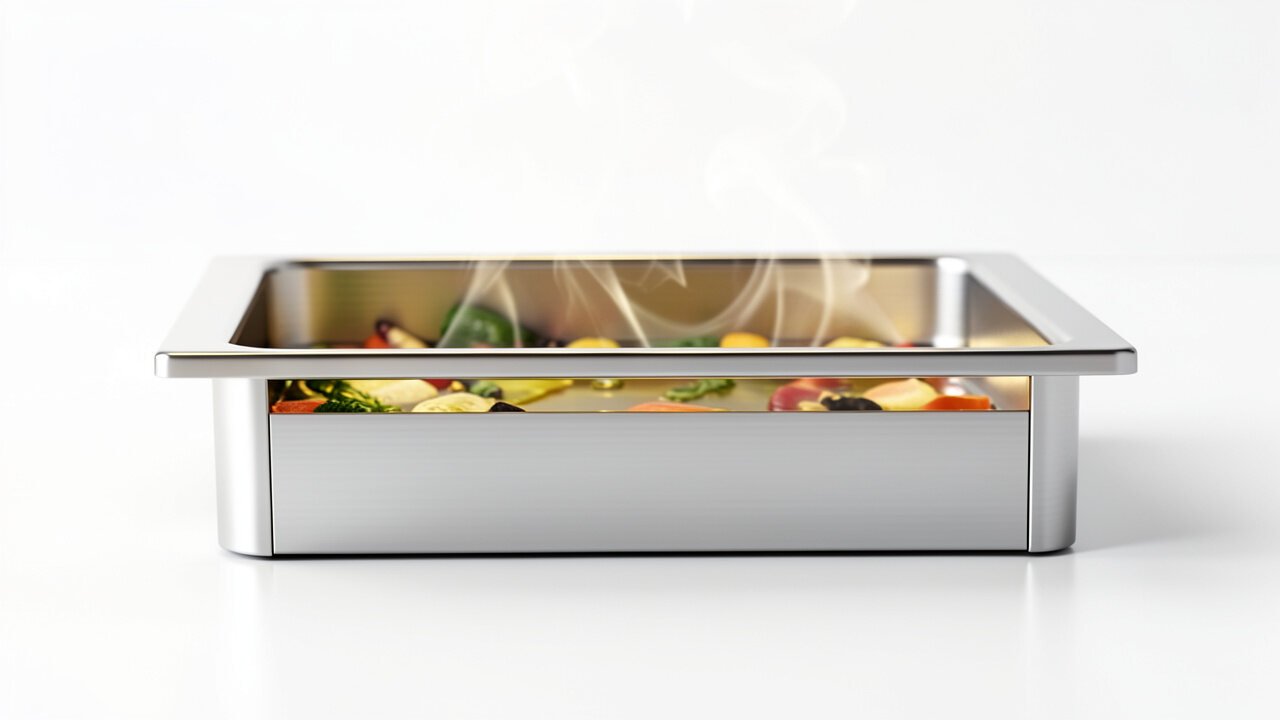
Straight-sided pans (saucepans, stockpots, and sauté pans with vertical sides) create a deep, even cooking chamber. The walls are usually thicker and taller. This design traps heat and moisture, which is perfect for simmering, boiling, and making sauces.
The straight sides also reduce evaporation, so you can cook rice or oatmeal without stirring constantly.
One big advantage is that straight sides protect food from sudden temperature drops. When you add cold ingredients, the thick walls keep the pan hot. That prevents scorching at the bottom.
Also, the tall sides reduce splatter. When you fry chicken or sauté onions, the oil stays inside the pan instead of jumping out onto your stove. How Pan Wall Angle Affects Cooking: Sloped vs Straight Sides becomes a matter of safety and cleanliness too.
Best Uses for Straight Sides
- Simmering sauces – little evaporation means richer, more concentrated flavor.
- Soups and stews – plenty of depth for large volumes.
- Deep frying – straight walls contain oil splashes better than sloped ones.
- Boiling pasta or potatoes – tall sides hold water without boiling over as easily.
Straight-sided pans are also better for braising. You can sear meat on the stovetop, then add liquid and cover it. The straight walls keep the liquid deep enough to partially submerge the meat.
With a sloped pan, the same amount of liquid would be too shallow. So if you love one-pot meals, reach for a straight-sided sauté pan or Dutch oven.
Sloped vs Straight Sides: A Side-by-Side Comparison
To make it easy to choose, here is a direct comparison of the key factors.
Look at the table and think about what you cook most. If you often make stir-fries or eggs, sloped sides help. If you do soups or pasta sauces, straight sides are better.
How Pan Wall Angle Affects Cooking: Sloped vs Straight Sides is not about one being superior – it is about matching the tool to the task.
Which Pan Angle Should You Choose?
The answer depends on your cooking style. If you only have room for one pan, a sloped skillet is more versatile for everyday meals like breakfast or quick dinners. But if you cook a lot of sauces, stews, or deep fry, add a straight-sided saucepan.
Many kitchens have both. A good rule: use sloped for high-heat, dry cooking and straight for moist, low-heat cooking.
Pay attention to the material too. Stainless steel with an aluminum core works well for both shapes. Nonstick coatings are common on sloped pans because you do not need much oil.
For straight sides, heavy stainless or enameled cast iron is great. The shape and material together determine how well your pan performs. How Pan Wall Angle Affects Cooking: Sloped vs Straight Sides also ties into how much oil splatter you can handle. Always check safe cooking temperatures to ensure food is properly cooked regardless of pan shape.
Tips for Cooking with Both Pan Shapes
- Do not overcrowd a sloped pan – too much food blocks steam escape and makes things soggy.
- Preheat straight‑sided pans – the thick walls need a couple minutes to get fully hot.
- Use a lid on sloped pans for dishes that need steam, but watch for boil‑over.
- Stir more often in straight pans to avoid sticking at the corners where the wall meets the bottom.
- Choose sloped for quick weeknight meals and straight for larger batches or weekend cooking.
If you ever wonder why your sautéed mushrooms turn out steamed, check your pan. A sloped pan lets water evaporate, giving you brown, concentrated flavor. A straight pan traps moisture and creates a wet environment.
That is the core difference. How Pan Wall Angle Affects Cooking: Sloped vs Straight Sides is about controlling moisture and heat exactly how you need.
Frequently Asked Questions
Does pan wall angle affect how much oil I need?
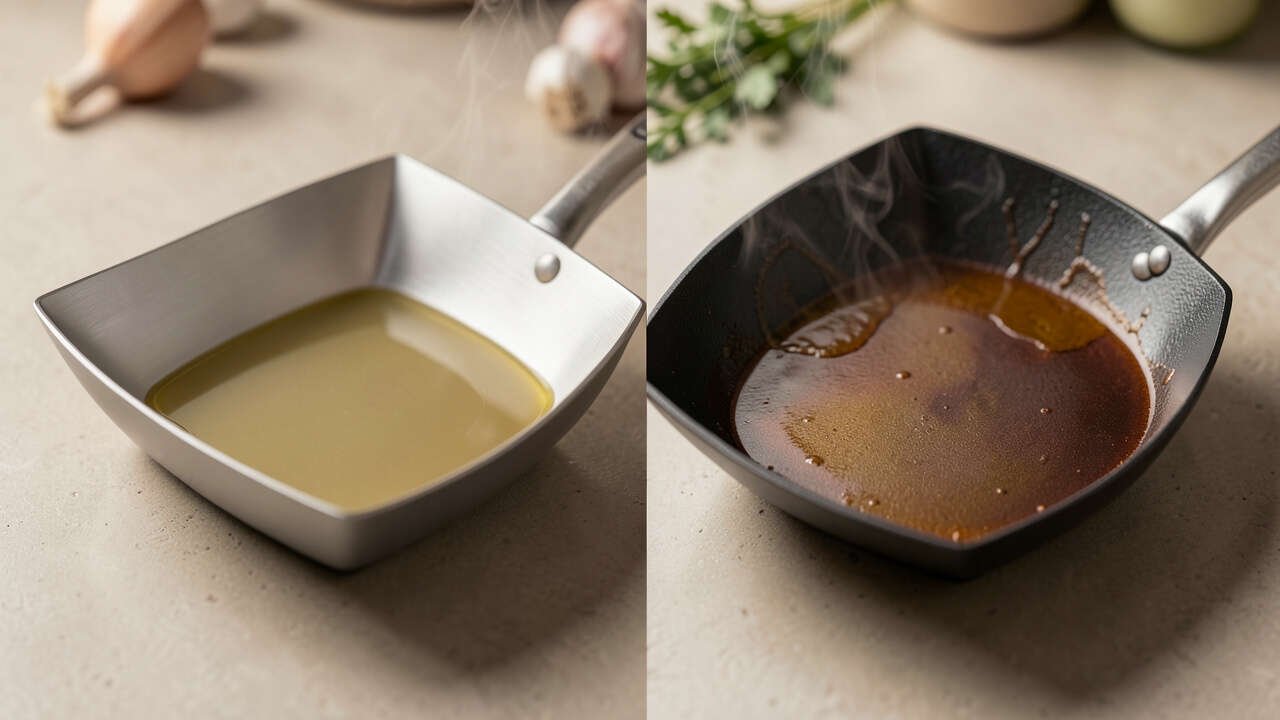
Yes. Sloped sides spread oil thin, so you use less. Straight sides require a deeper layer of oil to cover the bottom and prevent sticking.
What is the best pan shape for a perfect sear on steak?
A sloped skillet with a wide, flat bottom gives the best sear because the pan surface contacts the meat directly and allows steam to escape quickly.
How Pan Wall Angle Affects Cooking: Sloped vs Straight Sides for deep frying?
Straight sides are much safer for deep frying because the tall walls contain oil splatters and help maintain a steady temperature. Sloped sides increase the risk of hot oil spilling.
Can I use a sloped pan for simmering a sauce?
You can, but you will need to watch it closely. The wide opening causes faster evaporation, so you may need to add liquid more often or lower the heat to avoid burning.
Is one pan shape better for nonstick coating?
Sloped pans are more common with nonstick coatings because the low sides make it easy to slide food off. Straight nonstick pans exist, but the coating can wear faster at the corners where the wall meets the base.
Final Thoughts
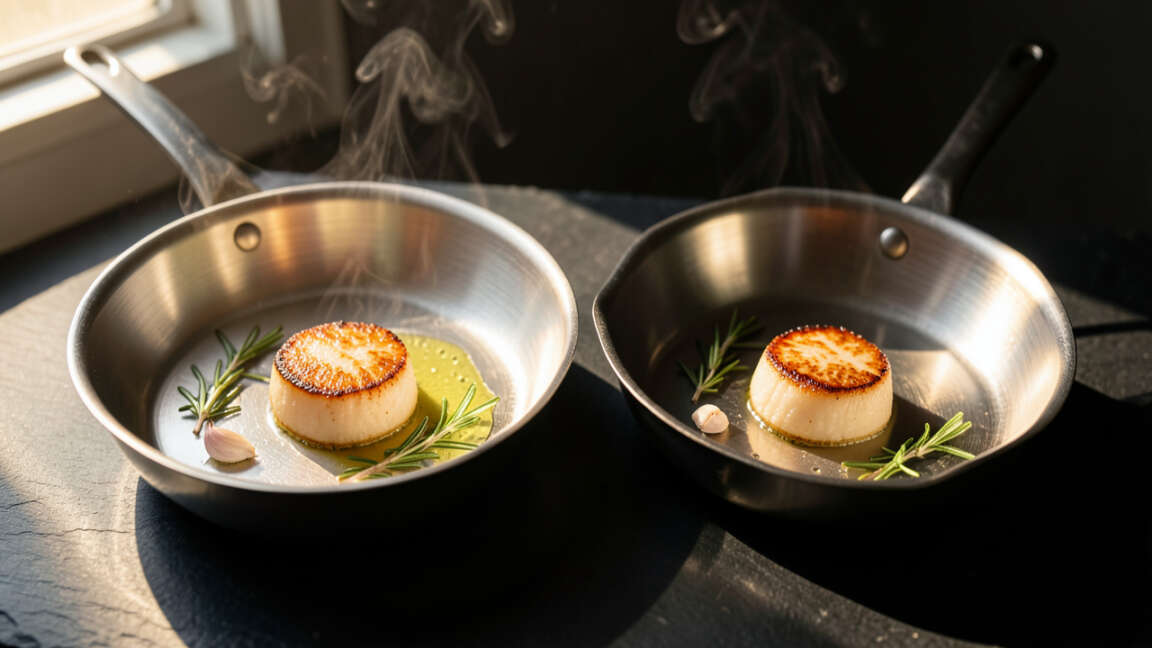
Sloped sides give you fast browning and easy tossing. Straight sides trap heat and moisture for gentle cooking. The best pan for your kitchen depends on what you cook most. A sloped skillet features gradually angled sides that make tossing and flipping food easier.
How Pan Wall Angle Affects Cooking: Sloped vs Straight Sides is a simple guide to choose wisely and cook better every day. Keep both shapes on hand, and you will always have the right tool. Understanding how cookware wall angles affect cooking helps you choose the right pan for each dish.

Leave a Reply