
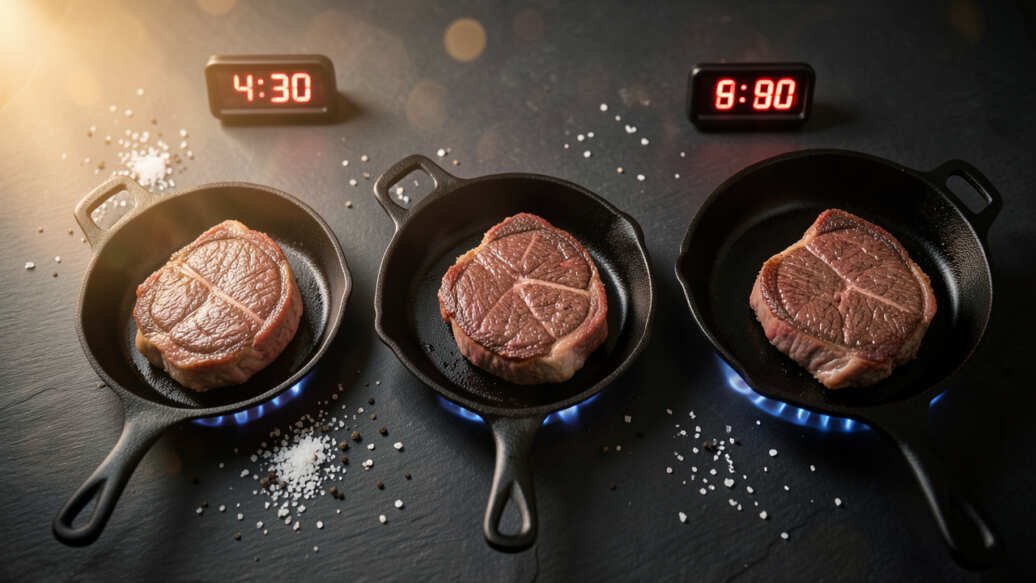
Pan diameter directly changes cooking time for pan-seared meat by controlling the surface area available for browning and heat distribution. A small pan crowds the meat, causing steam buildup that extends cooking time and produces an uneven, grey crust. A large pan provides ample space for even heat transfer, allowing faster, more consistent searing and reducing overall cook time.
When you sear meat in a pan that is too small, the meat steams instead of browning. This changes the whole cooking process. You end up with a grey, tough exterior and an unevenly cooked inside.
The real question is about How Pan Diameter Changes Cooking Time for Pan-Seared Meat. Understanding this simple factor helps you cook perfect steaks, chops, and chicken every time. You will learn exactly why pan size matters and how to adjust your cooking method for better results.
Key Takeaways
- Pan diameter controls surface area for browning, which directly affects cooking time.
- A small pan crowds the meat, causing steaming and longer, uneven cooking.
- A larger pan gives space for heat to distribute, leading to faster, even searing.
- Meat thickness and pan size work together to determine how long you cook each side.
- Adjusting heat level based on pan size helps you avoid burning or undercooking.
Why Pan Size Matters More Than You Think
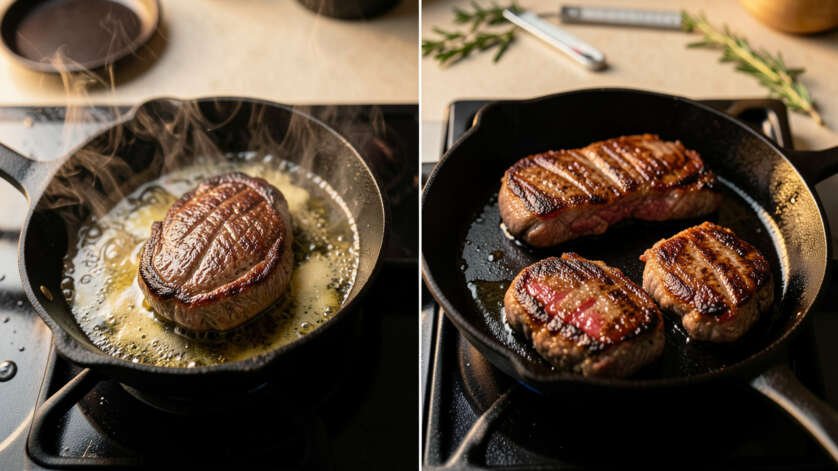
Most home cooks grab any pan from the cabinet and start cooking. That is a mistake. The diameter of your pan changes how heat moves from the burner to the meat.
A pan that is too small traps steam. A pan that is too large may not get hot enough in one spot. Both problems lead to longer cooking times and poor texture.
When you understand How Pan Diameter Changes Cooking Time for Pan-Seared Meat, you gain control over the whole process. You can predict browning speed. You can avoid overcooking.
You get consistent results without guessing.
Heat Distribution and Pan Diameter
First, consider how heat spreads across the pan bottom. A small pan, around 8 inches wide, concentrates heat in a tight circle. This means the center gets very hot, but the edges stay cooler.
If your meat is wider than the pan bottom, only the middle part sears. The rest of the meat sits in the cooler zone and cooks slower.
Second, a large pan, about 12 inches or more, spreads heat over a broader area. This gives you a more even cooking surface. The meat touches hot metal across its whole bottom.
Browning happens faster and more evenly. This reduces total cook time.
How a Small Pan Changes Your Searing Results
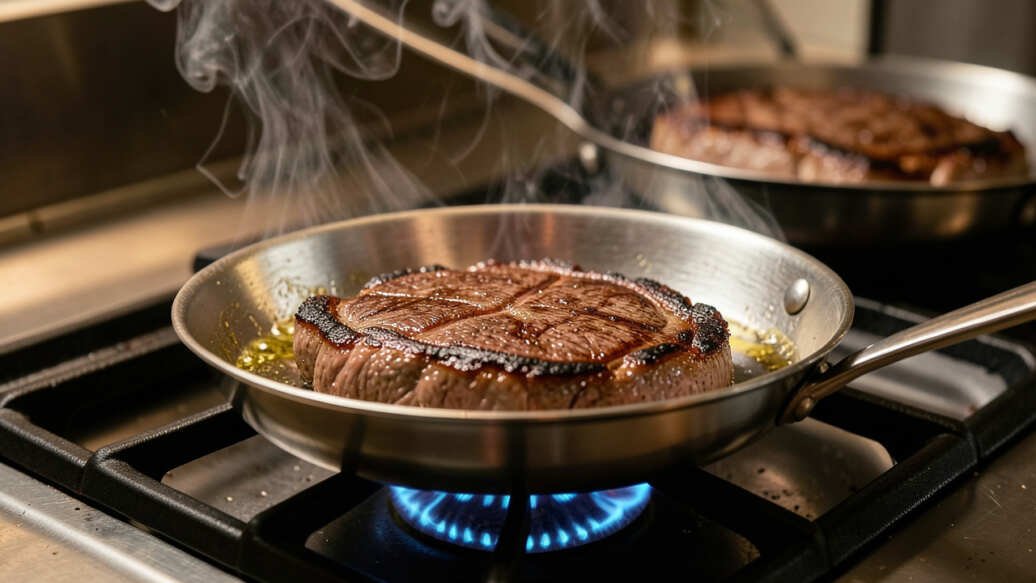
A small pan seems convenient, but it creates real problems for pan-seared meat. The biggest issue is crowding. When you place a steak or chicken breast in a pan that barely fits it, the meat releases moisture.
That moisture has nowhere to go. It builds up between the meat and the pan surface. This turns the searing process into steaming.
Steaming means the meat stays in contact with liquid, not hot dry metal. The surface temperature drops. The meat takes longer to brown.
You end up flipping it more, which dries out the interior. How Pan Diameter Changes Cooking Time for Pan-Seared Meat becomes clear when you see meat still raw in the center after the outside turns grey.
Steam Effect and Extended Cook Time
With a small pan, the meat does not get a proper crust until most of the moisture evaporates. That evaporation takes extra minutes. In a small 8-inch pan, a 1-inch thick steak may need 6 to 8 minutes per side for a good sear.
In a 10- or 12-inch pan, that same steak needs only 4 to 5 minutes per side. The difference is significant.
Next, consider the temperature drop. When you add cold meat to a small pan, the metal temperature drops fast. The pan cannot recover heat as quickly because there is less metal mass in the cooking area.
This means the meat cooks at a lower effective temperature for the first few minutes. You lose time and browning quality.
How a Large Pan Speeds Up Cooking Time
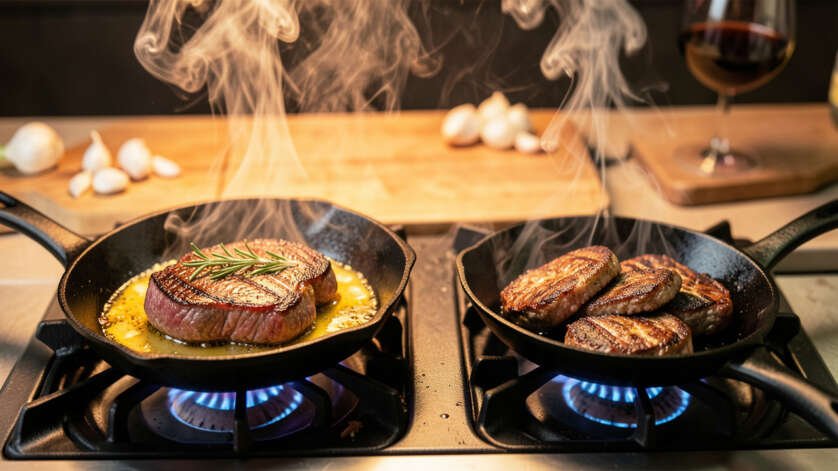
A larger pan offers more metal surface area. This means more heat is available to brown the meat quickly. When the meat touches the hot pan, the temperature stays high.
The crust forms fast. You can flip it sooner and finish cooking in less total time.
Then, look at the space around the meat. A large pan with extra room allows steam to escape. Dry heat stays on the meat surface.
This promotes the Maillard reaction, the chemical process that creates rich, brown flavor. With enough room, How Pan Diameter Changes Cooking Time for Pan-Seared Meat is not just about minutes – it is about quality of crust and internal temperature control.
Pan Size and Meat Thickness
The thickness of your meat also interacts with pan diameter. A thick cut of meat, like a 2-inch ribeye, needs a hot, large pan to sear the outside without cooking the inside too much. A small pan will cook the inside more because the meat spends extra time over the heat waiting for browning.
A large pan shortens that wait.
For thin cuts, like a ½-inch chicken breast, a large pan helps even more. The meat cooks in minutes. You get a golden crust before the inside dries out.
Crowding in a small pan would overcook the outer edges while the center still looks raw.
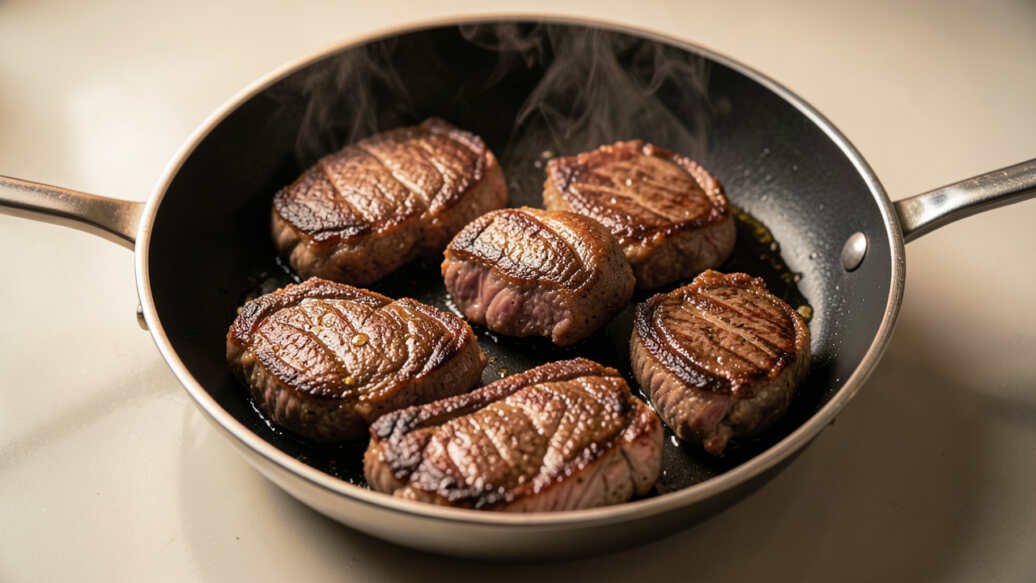
The Crowding Problem What Happens When Meat Overlaps
Crowding is not just about one piece of meat. It also happens when you cook multiple pieces at once. If your pan is too small for two steaks or four chicken thighs, they touch each other.
Their edges do not get direct heat. Steam gets trapped between them. The total cook time increases because each piece needs extra time to brown in the gaps.
To avoid this, you need enough room so no two pieces touch. This usually means using a pan that is at least 2 inches larger in diameter than the combined width of the meat. For example, two 4-inch wide steaks fit best in a 12- or 14-inch pan.
Using a 10-inch pan forces overlap. You then have to cook in batches, which adds even more time.
Batch Cooking vs One Pan
When you cannot fit all the meat in one large pan, you may choose to cook in batches. This is better than crowding. But it doubles your total cooking time.
The first batch heats the pan. The second batch cools it down again. How Pan Diameter Changes Cooking Time for Pan-Seared Meat becomes a practical decision: use one large pan to cook everything at once, or use a smaller pan and accept longer total time.
The best solution is to own a pan that matches your typical cooking batch. For two large steaks, a 12-inch pan works perfectly. For four chicken thighs, a 14-inch pan is ideal.
If your pan is too small, the cooking time grows and the quality drops.
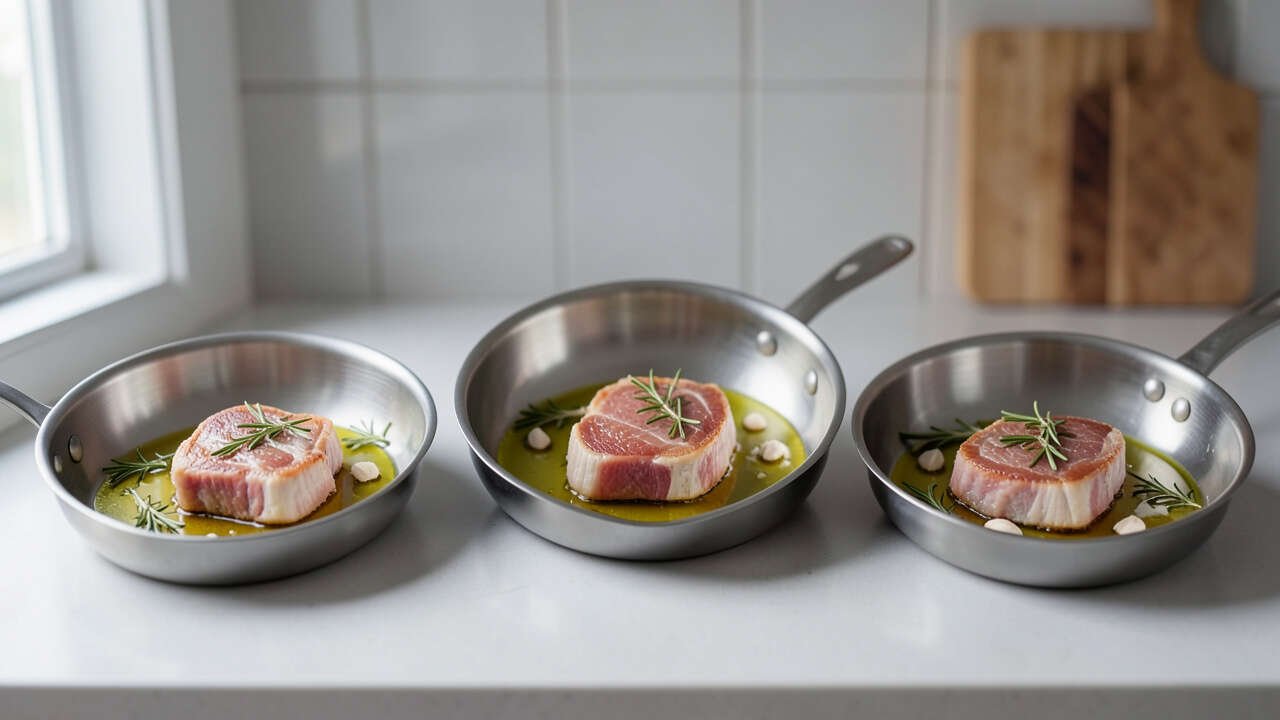
Comparing Pan Sizes for Common Meats
To make this more concrete, here is a quick comparison of how different pan sizes affect cooking time for a standard 1-inch thick boneless steak.
Notice the pattern. As pan size increases, cook time drops. The quality of browning also improves.
This is why professional chefs always reach for a larger pan when they want a good sear.
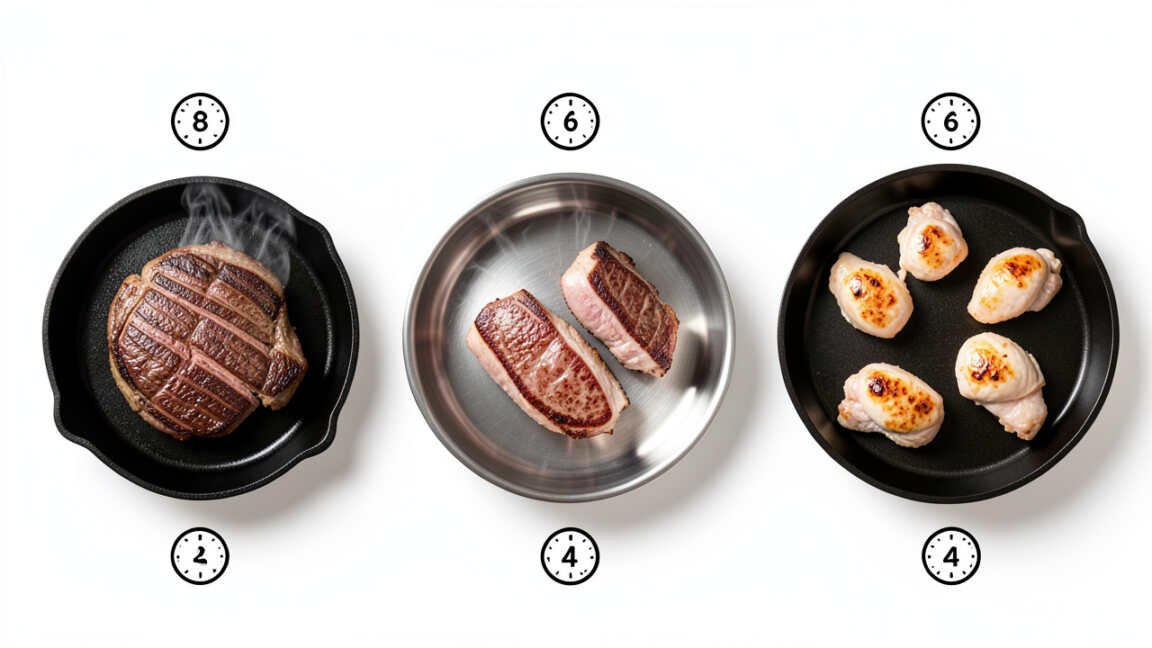
How to Choose the Right Pan Size for Each Cut
Picking the right pan depends on the size and number of meat pieces you plan to cook. Here is a simple guide. Following safe cooking temperatures ensures that your pan-seared meat is both delicious and safe to eat.
- Single thin cut (½ inch): Use a 10-inch pan. Cook time is 2-3 minutes per side.
- Single thick cut (1½ inches): Use a 12-inch pan. Cook time is 5-6 minutes per side.
- Two medium steaks: Use a 12- to 14-inch pan. Cook time is 4-5 minutes per side.
- Four chicken thighs: Use a 14-inch pan. Cook time is 5-7 minutes per side.
- Batch cooking multiple pieces: Use the largest pan you have, or cook in shifts.
Finally, remember that pan material also matters. Heavy pans like cast iron hold heat better than thin nonstick pans. This can compensate slightly for a too-small pan.
But the basic rule stays: bigger diameter means faster, better searing.
Frequently Asked Questions
Does pan diameter affect cooking time for all types of meat?
Yes, it affects any meat you pan sear, including steak, chicken, pork chops, and fish. The principle of surface area and heat distribution applies to all.
Can I use a smaller pan if I use higher heat?
High heat in a small pan can burn the outside before the inside cooks. It does not fix the steaming problem. A larger pan gives you better control.
How does How Pan Diameter Changes Cooking Time for Pan-Seared Meat relate to pan material?
Pan material affects heat retention, but diameter affects heat coverage. Cast iron and stainless steel work best in larger sizes. Thin pans lose heat faster regardless of diameter.
Should I always use the largest pan I own?
Not always. A very large pan on a small burner may not heat evenly. Match pan size to burner size and meat quantity for best results.
What is the best pan diameter for searing a single thick steak?
A 12-inch pan is the sweet spot. It gives enough room for the steak and for steam to escape, with good heat retention.
Can I compensate for a small pan by drying the meat more?
Drying the meat helps reduce steam, but it does not fix the lack of surface area. You will still get slower browning compared to a larger pan.
Does How Pan Diameter Changes Cooking Time for Pan-Seared Meat apply to electric stoves and induction cooktops?
Yes, the principle works for all cooktops. Induction and electric burners also have hot spots, so a larger pan helps even out the heat distribution.
Final Thoughts
Pan diameter directly controls how fast and how evenly your meat sears. A larger pan reduces cooking time, improves browning, and prevents steaming. Choose a pan that gives your meat space to breathe. The searing process benefits from a larger pan because it prevents moisture buildup.
Adjust heat based on pan size. This simple change will make your pan-seared meat turn out better every time. Understanding the pan frying method helps explain why larger pans create a better sear.

Leave a Reply