
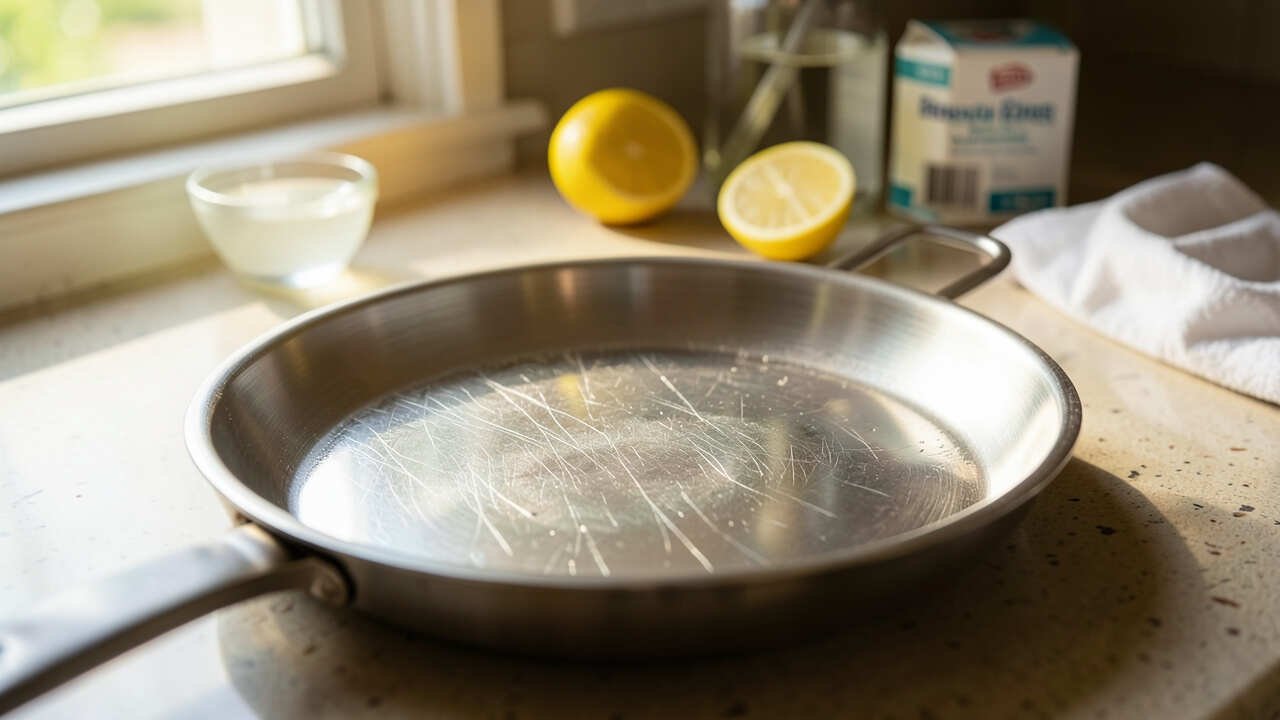
Restoring a scratched stainless skillet at home safely is achieved by using gentle abrasives like baking soda paste or Barkeepers Friend while scrubbing in the direction of the grain to minimize visible marks. Avoiding steel wool and harsh abrasive pads prevents further damage and preserves the pan’s finish. For light scratches, baking soda paste offers a safe first step, while deeper marks may require the stronger polishing action of Barkeepers Friend.
You love your stainless skillet, but over time it gets fine lines and scratches. Don’t worry – you can still make it look good again. How to Restore a Scratched Stainless Skillet at Home Safely is simpler than you think.
You don’t need expensive tools or chemicals. With common kitchen items, you can remove minor scratches and restore the shiny surface. This guide walks you through safe, step-by-step methods that really work.
You’ll learn which products to use, which to avoid, and how to keep your skillet scratch-free longer. No more hiding your favorite pan.
Key Takeaways
- Baking soda paste is a gentle, safe first step for light scratches.
- Barkeepers Friend works well on deeper marks when used correctly.
- Avoid steel wool and abrasive pads that make scratches worse.
- Always scrub in the direction of the grain to hide existing lines.
- Regular maintenance prevents new scratches from forming.
- Severe scratches may require professional resurfacing rather than DIY.
Why Scratches Happen and Why They Matter
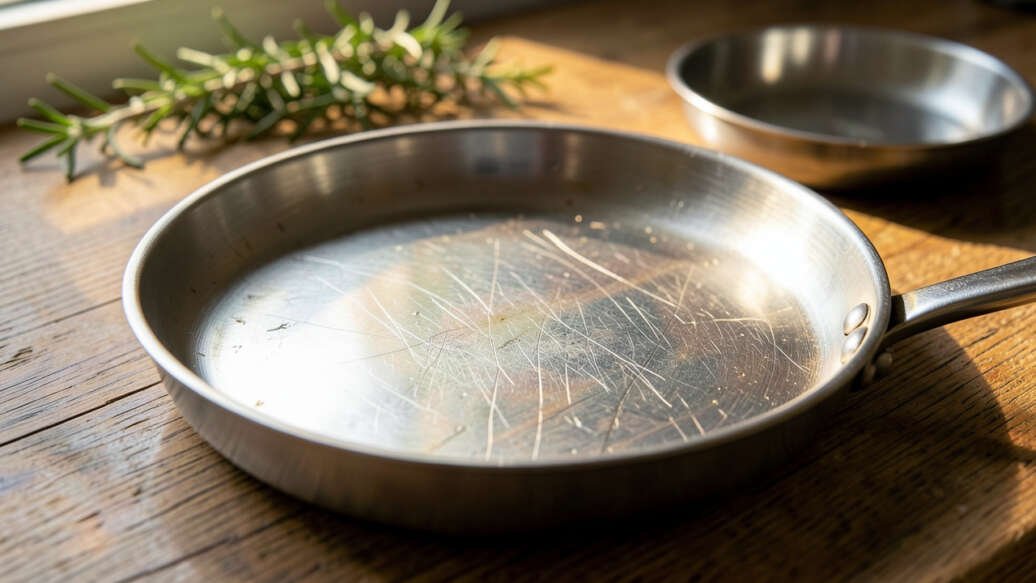
Stainless steel pans scratch easily. Metal utensils, stacking pans, and even sponges leave marks. These scratches are mostly cosmetic.
They don’t affect cooking performance or food safety. But they make the pan look old and worn. Plus, deep grooves can trap food particles and become harder to clean.
Learning How to Restore a Scratched Stainless Skillet at Home Safely saves you money. You don’t need to buy a new pan. You also avoid harsh chemicals that might damage the surface.
The methods here are safe for you and your cookware.
Common Causes of Scratches
- Metal spatulas and whisks sliding across the pan
- Stacking pans without a protective layer in between
- Abrasive scrub pads like steel wool or green Scotch-Brite
- Dishwasher washing where pans knock against each other
The Best Safe Methods for Removing Scratches
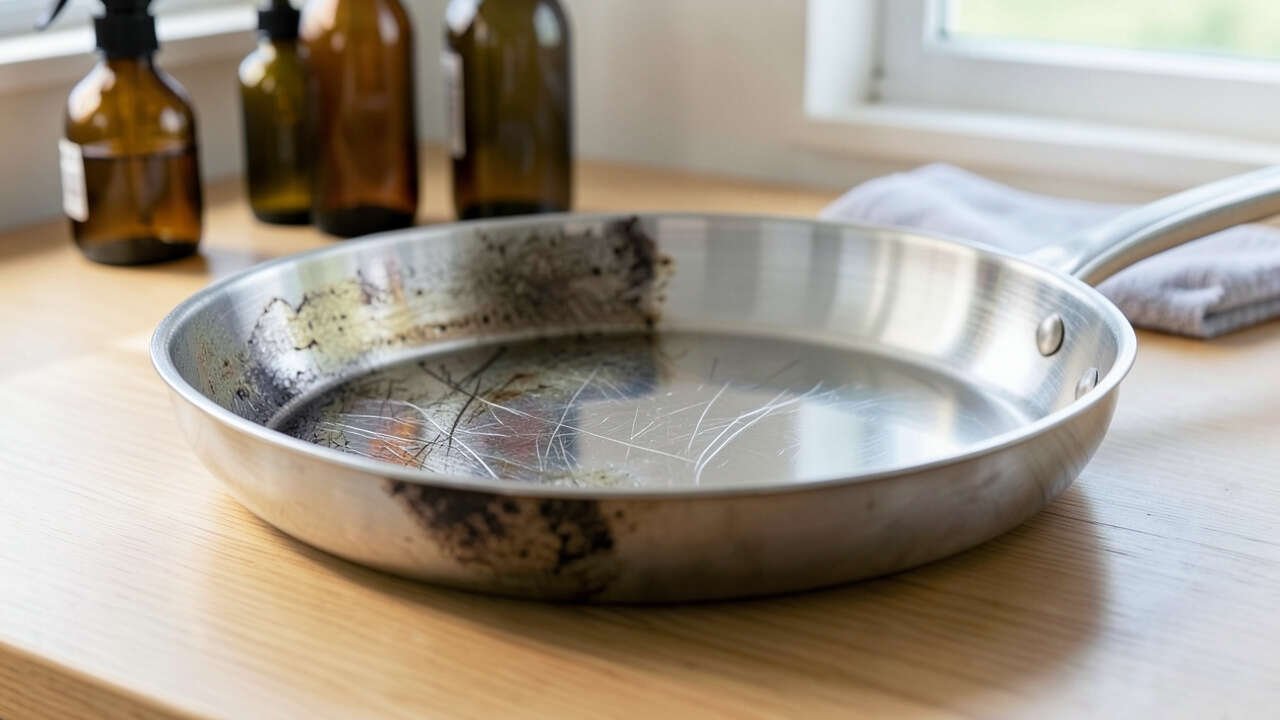
You have several options to restore your skillet. Each method works best for a certain scratch depth. First, check your pan’s finish.
Most stainless steel skillets have a brushed grain (fine lines running in one direction). You want to work with that grain, not against it.
Method 1: Baking Soda Paste
Baking soda is a fine abrasive. It polishes without cutting deep. Make a thick paste with water.
Apply it to the scratched area. Use a soft cloth or a sponge with a gentle scrub pad. Rub in the direction of the grain.
Rinse and check. Repeat if needed. This works well for light surface scratches.
Method 2: Barkeepers Friend (Powder or Liquid)
This cleaning product contains oxalic acid. It’s stronger than baking soda but safe for stainless steel. Second, dampen the skillet, sprinkle on the powder, and rub gently with a soft cloth.
Always follow the grain. Barkeepers Friend can remove medium scratches and restore shine. Rinse thoroughly after use.
Method 3: Commercial Stainless Steel Polish
Products like Weiman or Flitz are designed for stainless steel. They contain fine abrasives and oils. Next, apply a small amount to a microfiber cloth.
Rub in small circles, then wipe off. These polishes can hide fine scratches and leave a protective layer. They are safe when used as directed.
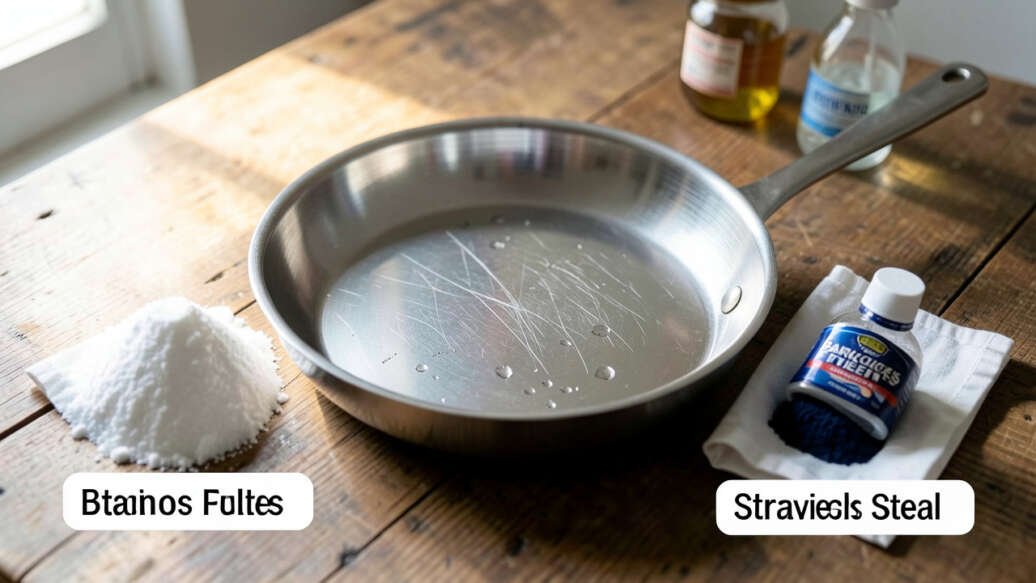
Comparison Table: Baking Soda vs Barkeepers Friend vs Commercial Polish
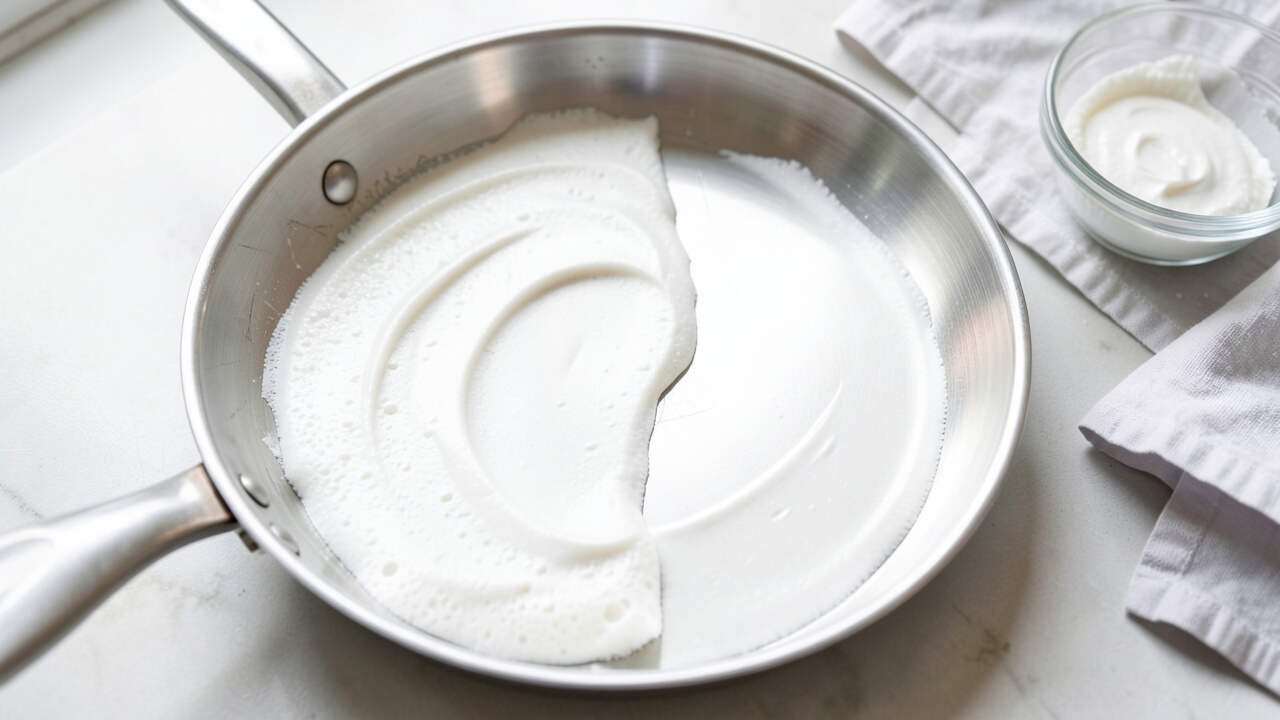
Step-by-Step: Using Baking Soda Paste Safely
First, clean the skillet with dish soap and water. Remove any grease or food residue. Dry it thoroughly.
Mix three parts baking soda with one part water to form a thick paste. Second, dip a soft cloth or non-abrasive sponge into the paste. Rub it over the scratched area using short strokes that go in the same direction as the grain.
Then, rinse the pan under warm water. Check the scratch. If it’s still visible, repeat the process.
Finally, dry the pan completely. Apply a thin layer of cooking oil to restore the shine.
When to Use Barkeepers Friend Instead
If baking soda doesn’t work, try Barkeepers Friend. First, wet the pan. Sprinkle a small amount of powder onto the scratched spots.
Second, add a little water to make a thin paste. Use a soft sponge or cloth. Rub gently in the direction of the grain for about two minutes.
Then, rinse thoroughly. Dry and inspect. You may need to repeat once or twice for deeper scratches.
What to Avoid When Cleaning Scratched Skillets
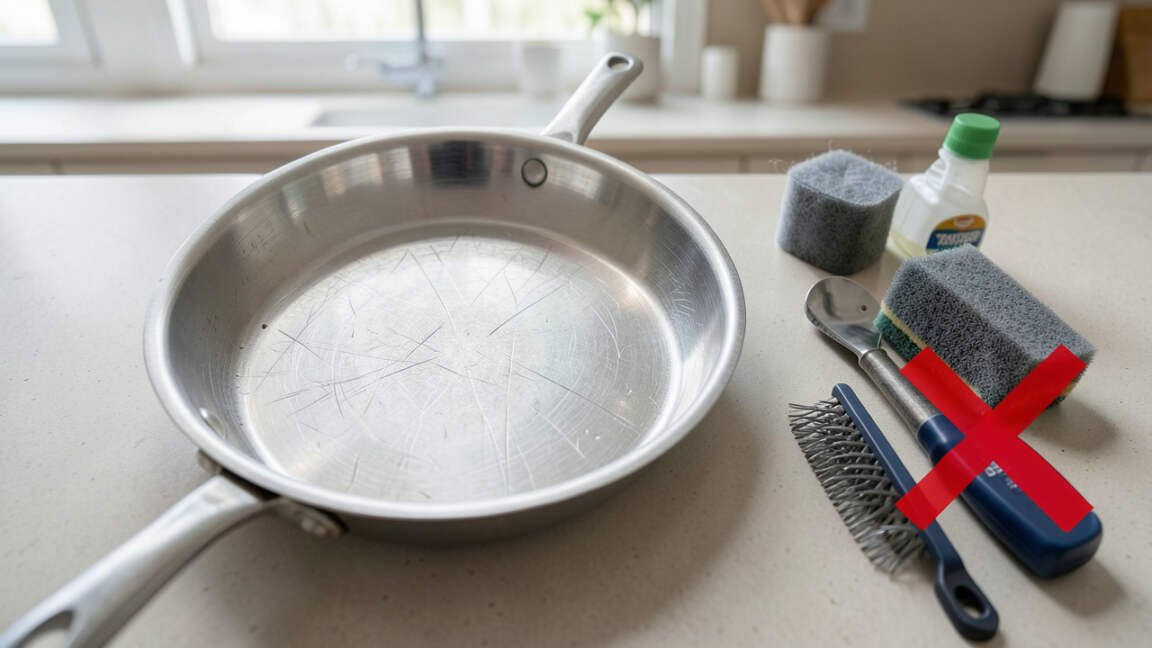
Many common cleaning items make scratches worse. Avoid steel wool – it contains very rough fibers that cut new grooves into the metal. Avoid green scrub pads (Scotch-Brite type) unless they are labeled “non-scratch.” Avoid bleach-based cleaners – they can pit stainless steel.
Avoid dishwashers for everyday cleaning; hand washing is gentler. Do not use metal scrapers or knives to pry off stuck food.
What to Use Instead
- Soft cloths (microfiber or cotton)
- Non-abrasive sponges (blue or white pad side)
- Nylon brushes with soft bristles
- Wooden or silicone utensils during cooking
How to Prevent Future Scratches
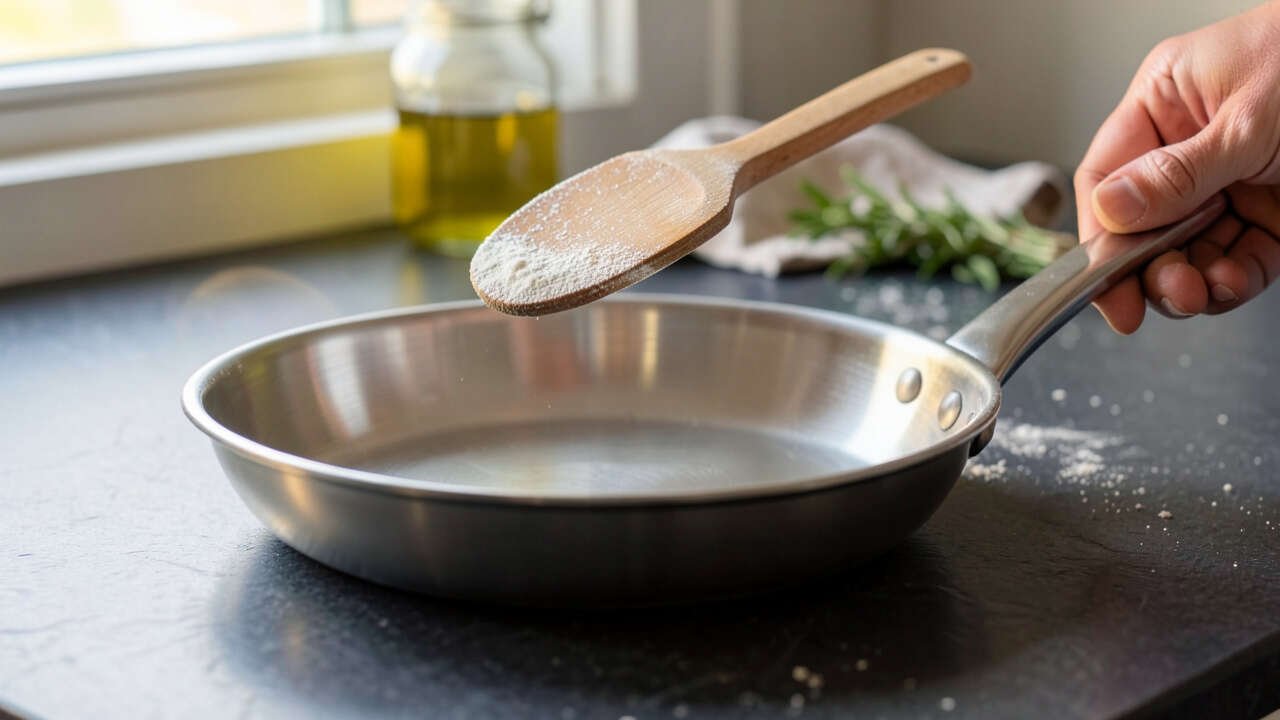
Once you restore your skillet, keep it looking new. Use wooden, silicone, or nylon utensils instead of metal. Hand wash with a soft sponge.
Stack pans with a paper towel or cloth between them. Avoid cooking at extremely high heat; overheating can discolor the pan and weaken its surface. Store your skillet in a drawer or on a rack where it won’t rub against other pans. Follow official kitchen safety guidelines from the Consumer Product Safety Commission for safe cleaning practices.
Quick Daily Care Tips
- Wipe the pan dry immediately after washing
- Use a dedicated soft scrub pad for stainless steel
- Apply a thin coat of oil after each cleaning to maintain shine
- Do not let sticky food burn onto the surface
Frequently Asked Questions
Can I use steel wool to remove scratches?
No. Steel wool adds more scratches and makes the surface rougher. It is too abrasive for stainless steel.
Does How to Restore a Scratched Stainless Skillet at Home Safely work on deep gouges?
No. Deep gouges need professional resurfacing or a new pan. The methods here fix light to medium surface scratches only.
Is Barkeepers Friend safe for food surfaces?
Yes. It is non-toxic when rinsed thoroughly. Just wash the pan with soap after using it.
Can I use toothpaste to polish scratches?
Yes, but only for very fine hairline scratches. White non-gel toothpaste works as a mild abrasive similar to baking soda.
How often should I polish to maintain the finish?
Once a month is enough if you hand wash and avoid metal utensils. More frequent polishing can wear down the surface.
Final Thoughts
Restoring a scratched stainless skillet at home is easy and safe with baking soda, Barkeepers Friend, or a gentle polish. Stick to soft tools, rub with the grain, and avoid abrasives. With these steps you can bring back the shine and keep your pan in great shape. For understanding the material, consult the stainless steel care information on Wikipedia.
No need to panic over scratches – just a little effort and your skillet will look good as new. Learn various cookware maintenance techniques from the Wikipedia article on cookware and bakeware.

Leave a Reply