

Kitchen sink basin depth directly influences lower back strain by dictating how much forward lean and lumbar compression occur during daily dishwashing and food prep. A basin depth of 7 to 9 inches, paired with a counter height of 34 to 36 inches, allows most people to maintain an upright posture and significantly reduces pressure on the lower spine. In contrast, basins deeper than 10 inches force a forward lean that compresses lumbar discs and aggravates lower back strain, especially for shorter individuals.
Kitchen sink basin depth plays a direct role in how much lower back strain you feel during daily dishwashing and food prep. Choosing the wrong depth forces you to hunch or reach, leading to chronic pain over time. This post breaks down the biomechanics behind sink depth, provides recommended measurements, and offers practical tips to protect your spine.
Simply put, deeper basins (over 10 inches) increase forward lean and compression on lumbar discs, while shallower basins (6–8 inches) allow a more upright posture. For most people, a depth of 7–9 inches combined with a counter height of 34–36 inches minimizes lower back strain significantly.
Key Takeaways
- Kitchen sink basin depth of 7–9 inches is ideal for reducing forward lean and lower back pressure.
- Standard sink depths (10–12 inches) are often too deep for shorter individuals and aggravate lower back strain.
- Counter height and sink depth must work together – a 36-inch counter with a 10-inch basin creates a 46-inch total reach.
- A simple test (simulating dishwashing posture at the store) can prevent costly ergonomic mistakes.

What Is the Link Between Sink Depth and Lower Back Strain?
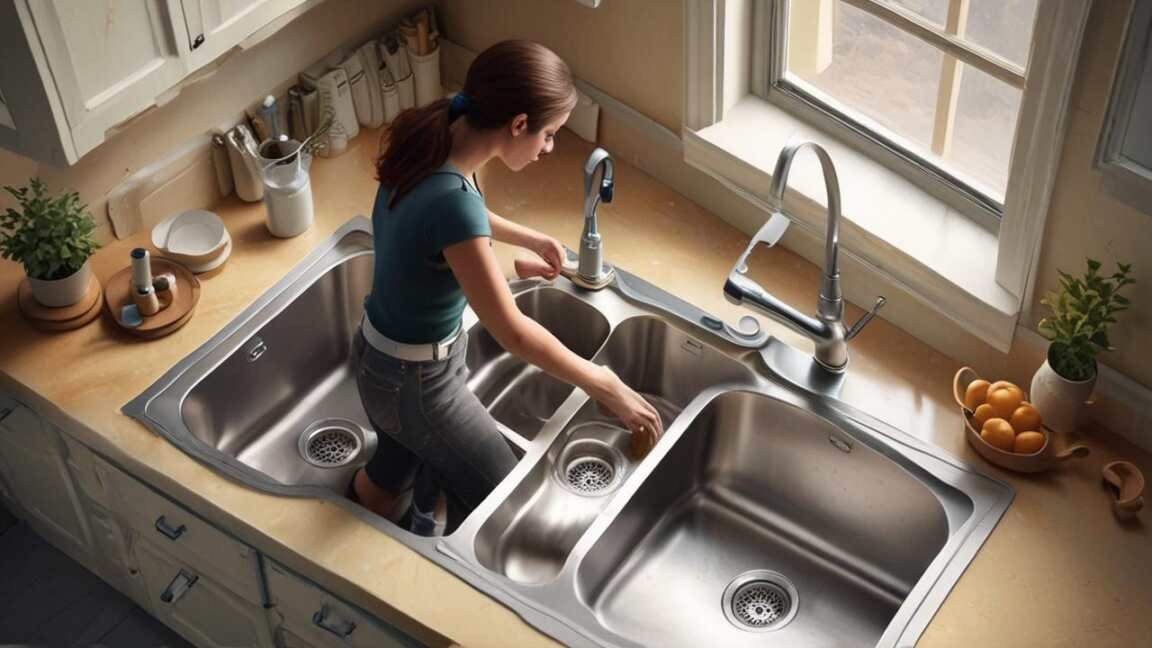
The connection is biomechanical: when you wash dishes, your hands need to be inside the basin. A deeper basin forces you to lean forward from the waist, stretching your arms further down. This forward bend shifts your center of gravity, increases torque on the lumbar spine, and puts extra stress on the lower back muscles and discs.
According to the American Chiropractic Association, poor posture during repetitive tasks like dishwashing is a leading cause of chronic lower back pain. The deeper the sink, the more you must flex at the hips and spine. Over time, this repeated flexion can lead to muscle fatigue, disc degeneration, and even herniated discs.
- Forward lean angle: Each extra inch of depth increases forward lean by roughly 5–7 degrees.
- Lumbar disc pressure: A 30-degree forward lean can increase disc pressure by 40% compared to an upright posture.
- Muscle fatigue: Lower back muscles work harder to hold the leaning position, leading to earlier exhaustion.
- Neck strain: Deeper sinks often cause users to tilt their heads down, compounding the problem.
- Joint impact: Hip flexors and knees also compensate, shifting strain away from the back but creating secondary issues.
A study in the journal Ergonomics found that reducing basin depth from 12 inches to 8 inches decreased lower back muscle activity by up to 25%. This simple change can make a dramatic difference for anyone who spends more than 30 minutes a day at the sink.
How Sink Depth Affects Your Posture and Spine
When you stand at a standard 36-inch counter with a 10-inch deep basin, your hands rest about 46 inches from the floor. For a person 5’6” tall, this means bending forward roughly 15–20 degrees at the waist. Each degree adds load to the spinal erectors and compresses the lumbar discs.
The issue worsens if you are shorter than average. A 5’2” individual using a 10-inch deep sink must lean further, increasing forward bend to 25–30 degrees. The table below shows estimated forward lean angles based on height and basin depth (assuming a 36-inch counter).
| User Height | 6-inch Basin | 8-inch Basin | 10-inch Basin |
|---|---|---|---|
| 5’0” | 12° forward lean | 18° forward lean | 25° forward lean |
| 5’4” | 8° forward lean | 13° forward lean | 19° forward lean |
| 5’8” | 5° forward lean | 9° forward lean | 14° forward lean |
| 6’0” | 3° forward lean | 6° forward lean | 10° forward lean |
As the table shows, even tall users benefit from shallower basins. A 10-inch basin still forces a 10-degree lean for a 6-foot person, which can accumulate over years of daily use. The key is to keep the forward lean below 10 degrees to minimize strain.
What Are the Recommended Sink Depths for Reducing Strain?
Industry standards and ergonomic research point to a sweet spot. Most kitchen sinks range from 6 to 12 inches deep. The National Kitchen and Bath Association (NKBA) recommends a basin depth of 7 to 9 inches for primary prep sinks.
However, individual factors like counter height and user height shift the ideal range.
For general guidance, follow these depth recommendations:
- Under-counter prep sinks: 5–6 inches – ideal for small tasks, reduce forward lean to near zero.
- Main kitchen sink: 7–9 inches – best balance of capacity and posture.
- Farmhouse/apron sinks: 9–10 inches – visually appealing but often too deep for shorter cooks.
- Bar or second sinks: 4–6 inches – low strain option for quick rinses.
Tip: If you are between 5’2” and 5’6”, stick with 7-inch depths. If you are over 5’10”, 9-inch depths can work without causing excessive lean.
Many manufacturers now offer adjustable sink bases or “ergo sinks” with stepped bottoms. These allow you to position a dish rack at a higher level inside the sink, effectively reducing the working depth. This innovation is especially useful for households with multiple users of different heights.
How to Measure the Right Sink Depth for Your Height
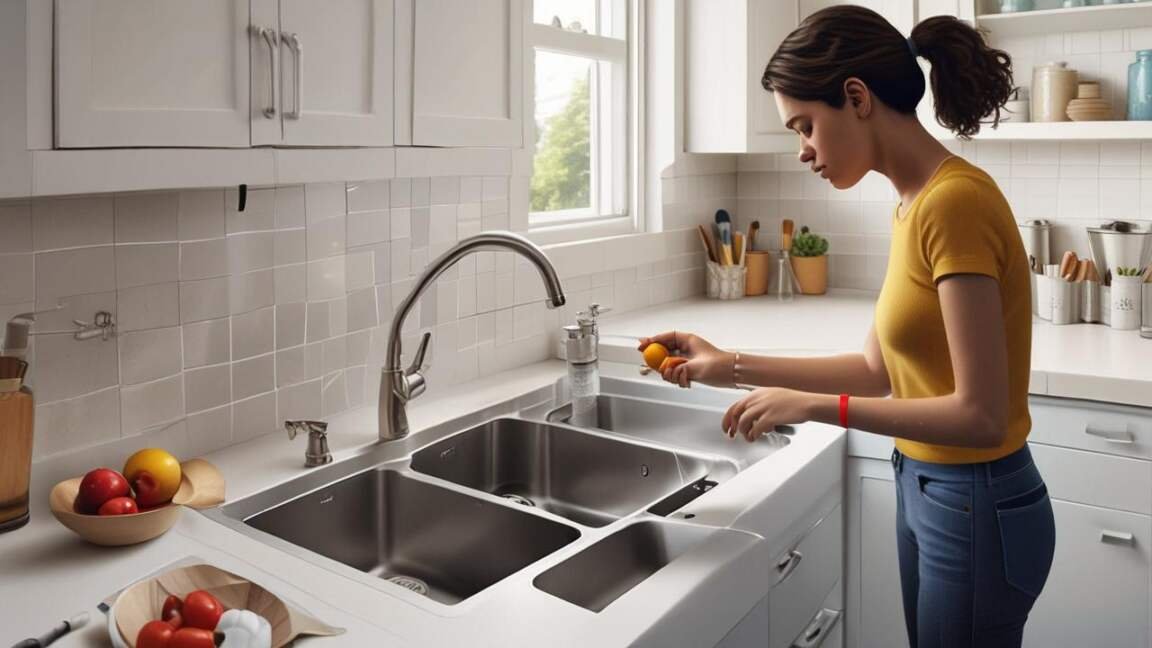
You don’t need a professional ergonomist to find your ideal depth. Follow this simple test at a showroom or using your current sink:
- Stand at the sink with a neutral, upright spine – ears aligned over shoulders, shoulders over hips.
- Let your arms hang naturally. Measure the vertical distance from the countertop rim to your knuckles (when your hands are relaxed).
- Subtract 2 inches from that measurement – this gives you the maximum basin depth that allows your hands to reach the bottom without leaning.
- Test with a container or box of the target depth. Place it in the sink and simulate dishwashing motions.
- If you feel any forward lean or neck tension, the depth is too great.
For example, if your knuckles are 11 inches below the counter rim, a 9-inch basin is ideal. If they are 9 inches below, aim for 7-inch depth. This personalized approach accounts for torso length and arm reach, which vary more than overall height.
Important: Always include the height of any dish rack or accessories you plan to place inside the sink. A 9-inch basin with a 3-inch rack gives an effective depth of 6 inches – much friendlier on your back.

What Are the Common Mistakes When Choosing Sink Depth?
Many homeowners prioritize aesthetics over ergonomics, leading to preventable back pain. The top mistakes include:
- Choosing a farmhouse sink purely for looks: These often exceed 10 inches and force severe forward lean for anyone under 5’8”.
- Ignoring counter height: A 34-inch counter with a 10-inch basin creates a total working surface at 44 inches – much lower than the 46–48 inch range recommended for tall users.
- Not accounting for multiple users: A depth that works for one family member may strain another. Compromise with a shallower depth and use high-rise dish racks.
- Overlooking apron front thickness: Some apron sinks add extra height to the front edge, effectively increasing the reach to the bottom.
- Buying standard depth without testing: Many big-box sinks are 10 inches by default. Always simulate the posture.
| Mistake | Consequence | Solution |
|---|---|---|
| Deep apron sink | Lumbar disc pressure increases 35% | Choose 8-inch max depth |
| Standard 10-inch basin on 36-inch counter | 5’4” user leans 19° – chronic pain over time | Raise counter to 38 inches or reduce basin to 8 inches |
| No consideration for dish rack height | Effective depth much deeper than basin | Account for rack height when measuring |
Types of Kitchen Sinks and Their Impact on Back Health
Not all sink styles have the same ergonomic profile. Here’s how common designs affect lower back strain:
- Undermount sinks: No rim to push against, so you can stand closer. Allows you to position your body nearer to the basin center, reducing forward lean.
- Top-mount (drop-in) sinks: The rim sits above the counter, often adding 0.5–1 inch to the working height. Slightly worse for posture but still manageable if depth is correct.
- Farmhouse/apron sinks: Deep (9–12 inches) and positioned slightly forward. Forces more lean because the front of the sink extends outward.
- Integrated sinks (e.g., solid surface): Custom depths possible; easy to match to user height.
- Double basin sinks: Often one side is deeper (10 in) and the other shallower (6–7 in). Use the shallow side for tasks that require bending.
The Occupational Safety and Health Administration (OSHA) suggests that workers (including home cooks) should maintain a hip angle of at least 90 degrees during tasks. Deeper basins reduce this angle, forcing the hips into flexion and increasing load. A farmhouse sink can cut the hip angle to 70 degrees or less for a petite user.
Why Counter Height Matters Alongside Basin Depth
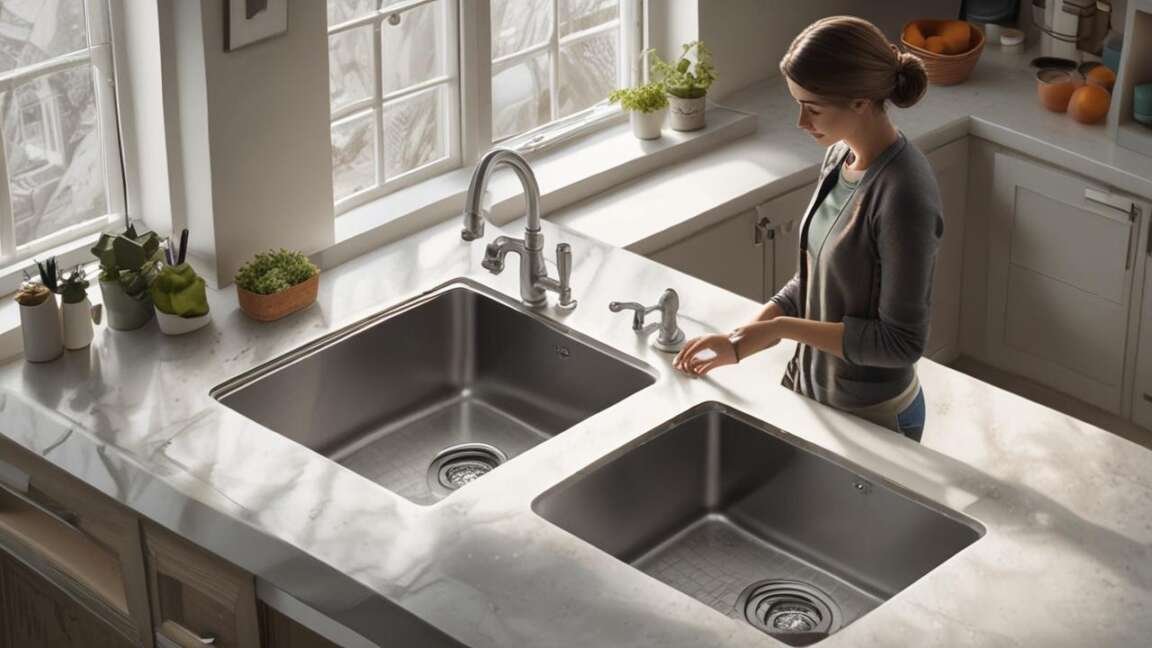
Counter height and basin depth are a system. If you have a standard 36-inch counter, a 10-inch basin creates a total working surface at 46 inches from the floor. But if you raise the counter to 38 inches (common in ergonomic kitchen designs), the same 10-inch basin results in a 48-inch working height, which might be better for tall users.
- Standard counter: 36 inches – pair with 7–9 inch basin for most users.
- Ergonomic counter: 38–40 inches – allows 9–10 inch basin for taller individuals.
- Additional adjustments: Use a raised dishwasher or adjustable sink base for personalized fit.
Warning: Do not raise the counter without also checking cabinet depth and sink cutout size. A 40-inch counter with a 12-inch basin can make the bottom unreachable even for tall users.
Research from Cornell University’s Ergonomics Web indicates that the optimal working height for food prep is 2 inches below the elbow. For a 5’6” person, that’s about 44 inches from the floor. If your sink basin bottom is significantly lower than that (e.g., 38 inches), you’ll lean.
Adjust both counter and basin depth to bring the bottom of the sink close to that optimal working height.
How to Test Sink Depth Before Buying
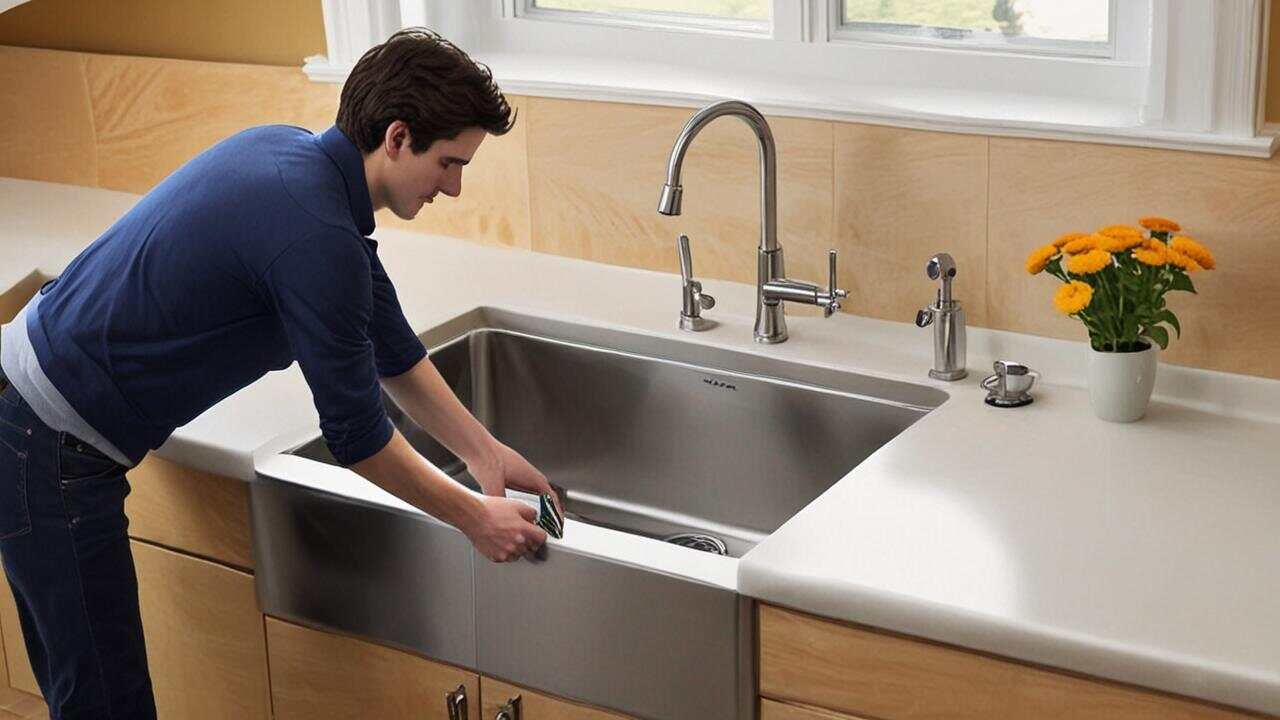
Testing depth in a showroom is easy but often overlooked. Follow this 4-step procedure:
- Place a measuring tape vertically inside the sink from the rim to the bottom.
- Stand at a comfortable distance (about 12 inches from the counter edge).
- Simulate a dishwashing motion with an empty bowl or sponge. Pay attention to any forward lean or neck bending.
- If possible, hold that position for 30 seconds. If your lower back starts to ache, the depth is too great for your body.
Alternatively, buy a removable sink grid or false bottom that raises the effective surface. This can turn a 10-inch basin into an 8-inch working depth instantly. Many kitchenware stores sell adjustable stainless steel grids for this purpose.
Frequently Asked Questions
Is a deeper sink always worse for lower back strain?
Not always. For very tall users (6’2” and above), a 10-inch basin may be acceptable because their arm length reduces the forward lean. However, for the average person, depths over 9 inches increase strain significantly.
Can I retrofit my existing sink to reduce depth?
Yes.
Adding a sink grid, a pull-out cutting board, or a raised dish rack can lower the effective depth by 2–3 inches. This is a cost-effective solution for renters or those not ready for a full renovation.
Does sink depth affect both upper and lower back?
Yes. Lower back compression is the primary issue, but a deep sink also forces you to round your shoulders forward, straining the upper back and neck. The problem propagates upward from the pelvis.
Should I consider a double sink with different depths?
Yes. Use the shallower basin for hand washing, rinsing, and food prep that requires bending. Reserve the deeper side for soaking large pots.
Labeling or marking the shallow side can help family members remember.
Are there any studies that directly link sink depth to back pain?
Direct studies are limited, but the ergonomic principles are well-established. An analysis of kitchen work by the University of Michigan found that reducing work surface height (similar to sink bottom height) by 2 inches decreased lumbar muscle activity by 20%.
Final Thoughts
Choosing the right kitchen sink basin depth is a simple but powerful way to protect your lower back from daily strain. Aim for 7–9 inches if you are of average height, and always test the depth with your own posture before buying. Pair it with an appropriate counter height and add accessories like grids to adjust as needed.
Your spine will thank you for years to come.

Leave a Reply