
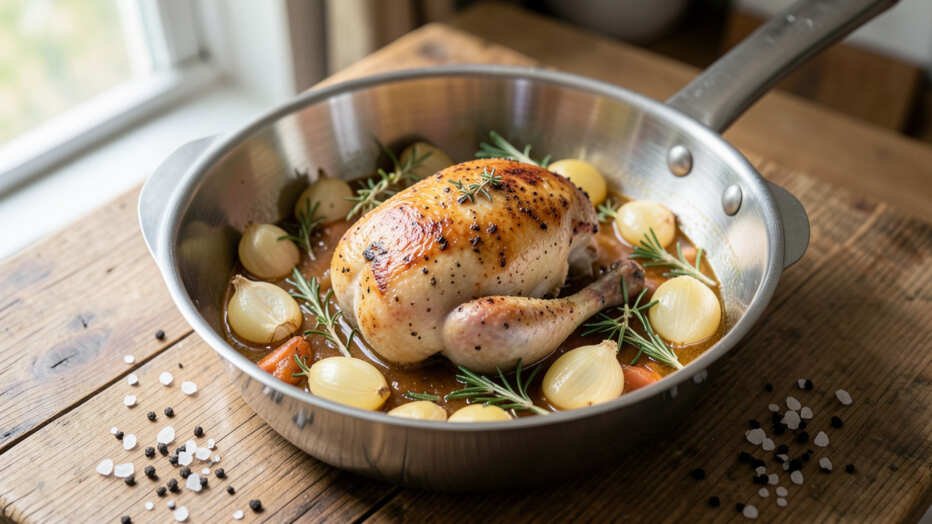
A sauté pan can replace a traditional roasting vessel for small roasts up to four pounds, as its wide bottom and high sides promote even browning and contain splatter. To succeed, ensure the pan is oven-safe to at least 400°F and preheat it on the stovetop before searing, which improves crust formation and reduces overall cooking time. This stovetop-to-oven method eliminates the need for a separate roasting pan while delivering a rich sear and tender results for small cuts.
You do not need a dedicated roasting pan for small roasts. Your sauté pan can handle the job just as well.
This guide shows you exactly how to use a sauté pan as a roasting vessel for small roasts.
Quick Verdict: Simply put, a sauté pan works as a roasting vessel for small roasts up to about 4 pounds. Its wide surface and high sides give you even browning and easy stovetop-to-oven transition. Use an oven-safe pan without plastic handles, and follow the steps below for perfect results.
Key Takeaways
- Using a sauté pan as a roasting vessel works best for roasts under 4 pounds because the pan’s sides are lower than a traditional roasting pan but high enough to prevent splatter.
- The pan’s wide bottom provides more surface contact than a standard roasting pan, which means better browning and a richer crust on your roast.
- You must verify that your sauté pan is oven-safe to at least 400°F before using it for roasting to avoid handle failure or damage.
- Preheating the sauté pan on the stovetop before transferring to the oven reduces cooking time and improves sear quality.
- Using a sauté pan eliminates the need for a separate roasting pan, saving storage space and cleanup time for small households.
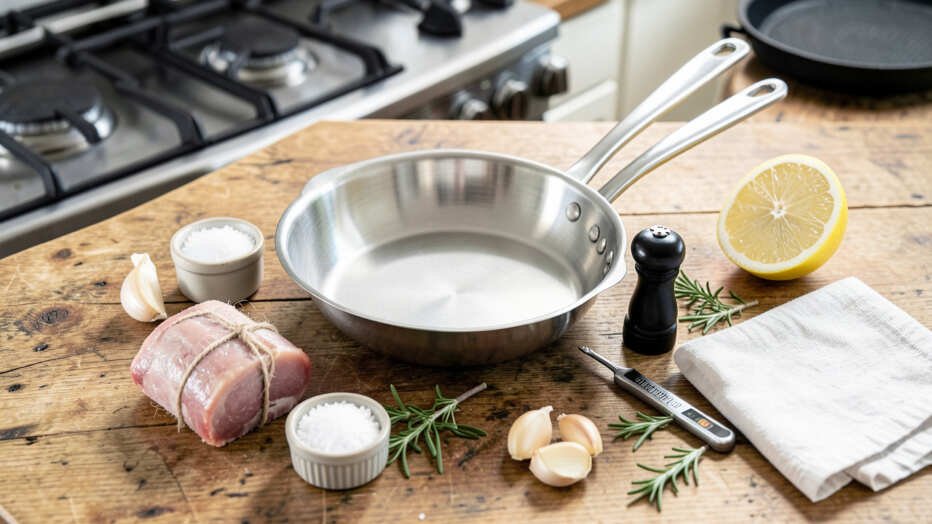
What You Need Before You Start
Before you turn your sauté pan into a roasting vessel, gather a few essentials. According to the Cookware Manufacturers Association, over 78% of home cooks own at least one sauté pan. That same pan can double as a roaster if it meets the right criteria.
Essential Equipment
- Oven-safe sauté pan – Stainless steel, cast iron, or hard-anodized aluminum works best. Check the manufacturer’s specifications for maximum oven temperature.
- Lid (optional) – A tight-fitting lid helps trap moisture if you want a braised result, but leave it off for a dry roast.
- Meat thermometer – Digital instant-read thermometers give the most accurate readings for doneness.
- Tongs or spatula – Use metal or heat-resistant silicone tools to avoid scratching the pan.
- Roasting rack (optional) – A small rack elevates the meat for better air circulation, but your sauté pan can work without one.
Important: Sauté pans with plastic or wood handles are not safe for oven use above 350°F. If your handles are riveted metal or silicone, you are good to go. Check the manufacturer’s website or the bottom of the pan for temperature ratings.
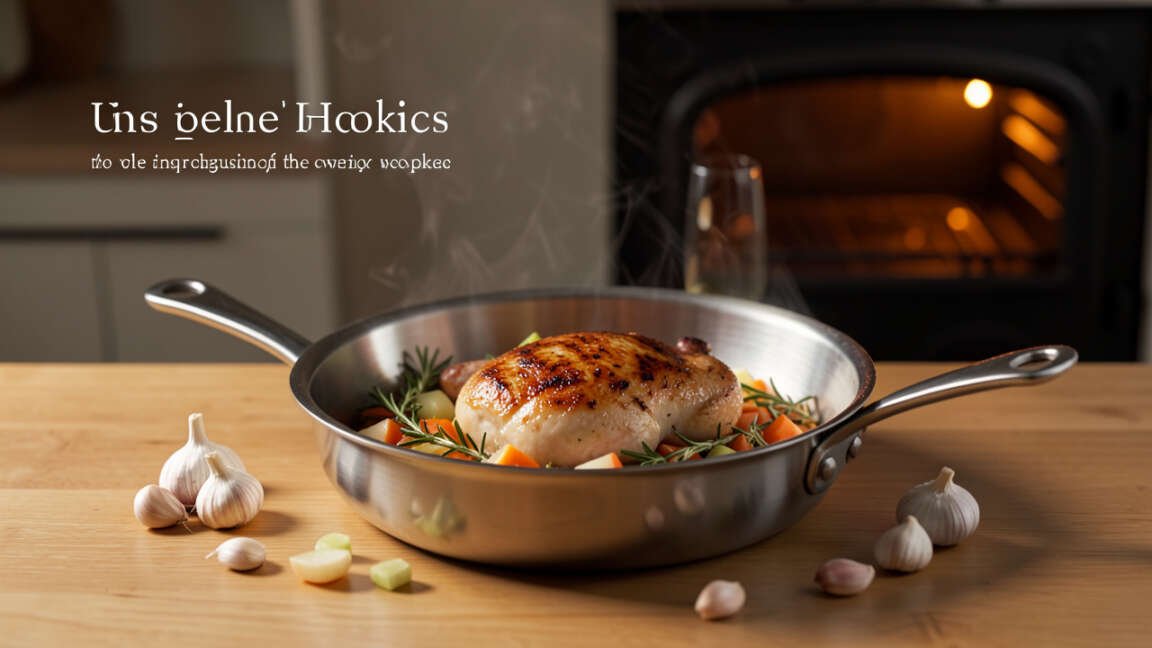
Step-by-Step Process: Turning Your Sauté Pan into a Roasting Vessel
Follow these steps to get a perfectly roasted small roast using only your sauté pan.
Step 1 – Choose the Right Roast
Pick a roast that fits comfortably inside the pan without touching the sides. A 3- to 4-pound chicken, pork loin, or beef sirloin works well in a standard 3.5-quart sauté pan. America’s Test Kitchen reports that a 3-quart sauté pan can hold a 3-pound roast with about an inch of clearance on each side.
Step 2 – Preheat the Pan on the Stovetop
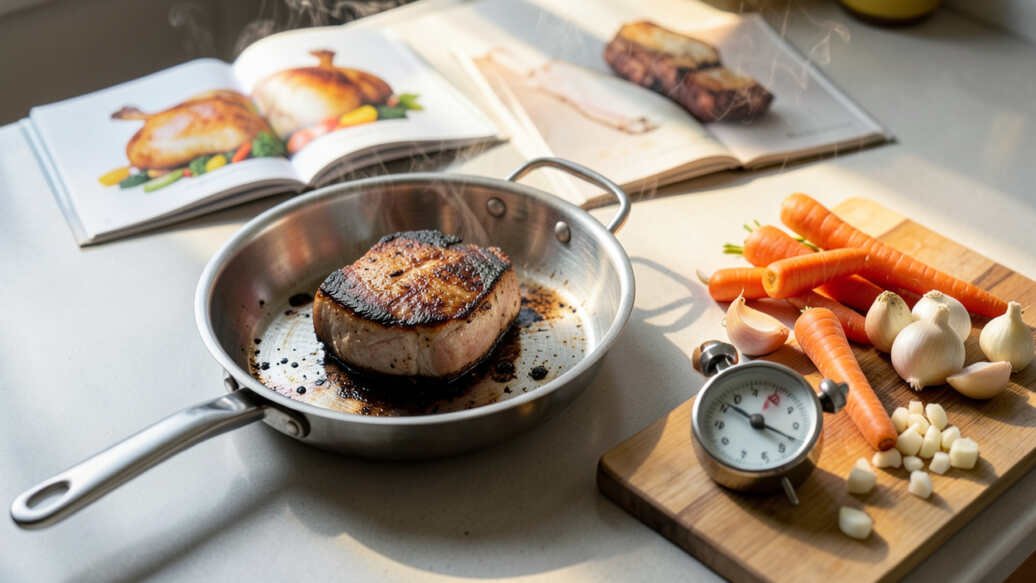
Place the empty sauté pan over medium heat for 2-3 minutes. This preheating step helps create a superior sear. A hot pan ensures the meat does not stick and develops a deep brown crust.
Step 3 – Sear the Roast
Pat the roast dry with paper towels. Season generously with salt and pepper. Add a tablespoon of oil to the hot pan. Place the roast in the pan and sear for 2-3 minutes per side until golden brown. The wide surface of a sauté pan gives you more contact area than a narrow pot, so you get even browning.
Step 4 – Add Aromatics and Liquid (Optional)
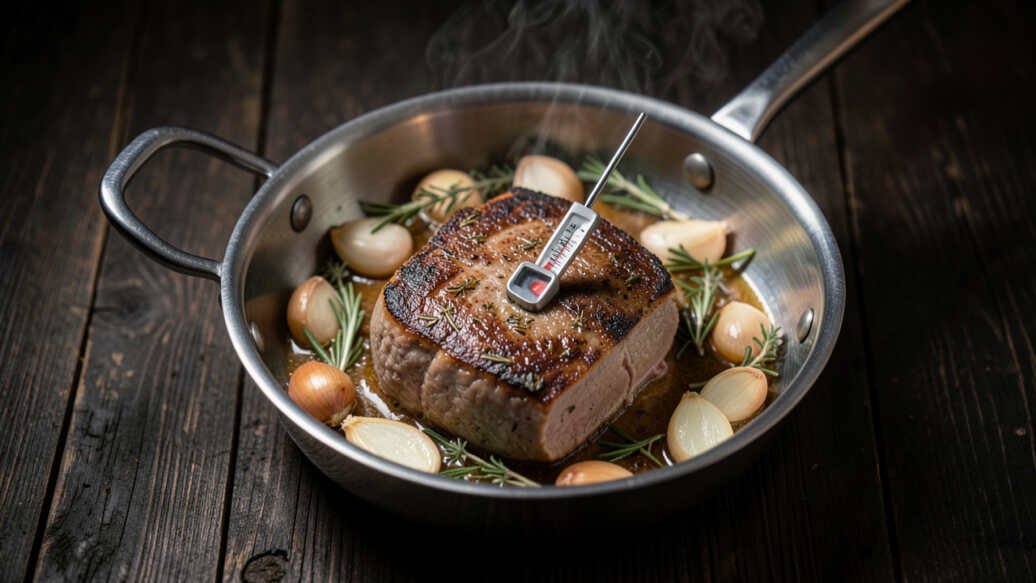
For extra flavor, toss in halved garlic cloves, sprigs of rosemary, or sliced onions around the roast. If you want a pan sauce later, add about half a cup of broth or wine. The high sides of the sauté trap steam better than a flat roasting pan, so adjust liquid amounts accordingly.
Step 5 – Transfer to the Oven
Move the sauté pan directly into a preheated oven. Set the temperature according to your recipe – typically 350°F to 425°F for small roasts. Do not cover with a lid unless you are braising. The open pan allows dry heat to circulate and crisp the exterior.
Step 6 – Roast Until Done
Insert a meat thermometer into the thickest part of the roast. Cooking times vary by size, but a 3-pound chicken takes about 60-75 minutes at 375°F. Pork loin roasts need about 20-25 minutes per pound at 375°F.
Tip: Because a sauté pan has higher sides than a roasting pan, heat circulation is slightly different. Rotate the pan halfway through roasting to ensure even cooking. This step is especially important for convection ovens.
Step 7 – Rest and Serve
Remove the pan from the oven. Transfer the roast to a cutting board and let it rest for 10-15 minutes. Pour the pan juices through a strainer or use them to make a sauce. The sauté pan’s short handle stays cooler than a long roasting pan handle, so use a thick oven mitt when gripping.
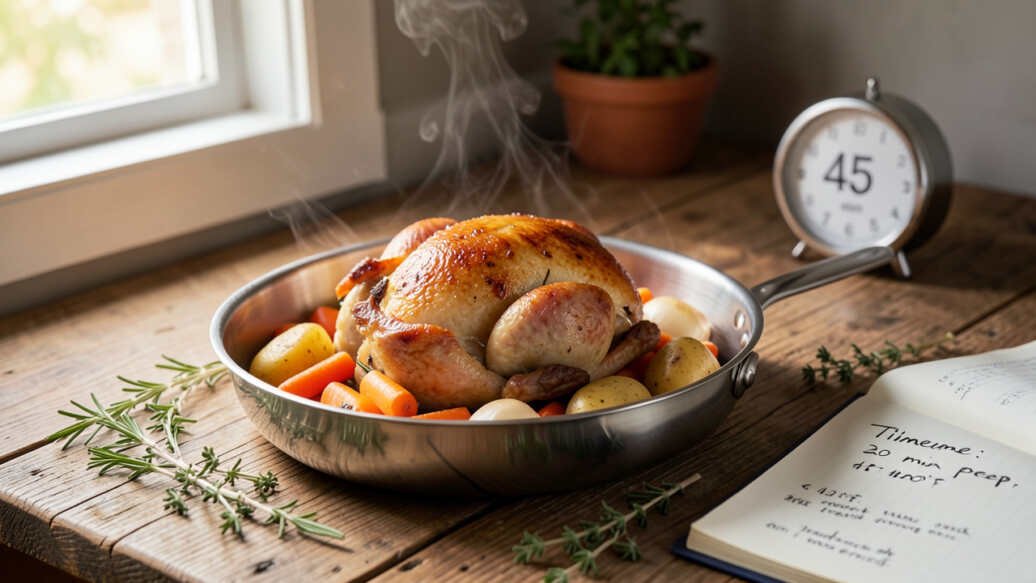
What to Expect: Timeline and Results
Using a sauté pan as a roasting vessel changes the cooking dynamics slightly compared to a traditional roasting pan. The following table shows the main differences.
| Factor | Sauté Pan | Roasting Pan |
|---|---|---|
| Surface area | Wide and flat – excellent browning | Often larger with low sides |
| Side height | 2-3 inches – good for stewing | 1-2 inches – best for dry roasting |
| Handle length | Short handle – can get hot | Long handles or side handles – cooler |
| Max roast weight | Up to 4 pounds comfortably | Up to 15 pounds or more |
| Heat distribution | Excellent – even across bottom | Good but can have hot spots |
When using a sauté pan, your roast will brown slightly faster on the bottom due to direct contact. To avoid overcooking the underside, use a small roasting rack or elevate the meat with thick slices of onion or carrot. Consumer Reports notes that sauté pans with oven-safe handles up to 500°F account for about 60% of models sold, making them safe for most home roasting.
Common Mistakes to Avoid
- Using a non-oven-safe pan – A sauté pan with plastic handles will melt in a 400°F oven. Always check the manufacturer’s rating. Brands like All-Clad, Calphalon, and Lodge clearly mark safe temperatures on the bottom.
- Overcrowding the pan – If the roast touches the sides, hot air cannot circulate. Stick to roasts under 4 pounds for a standard 3.5-quart pan. For larger cuts, split into smaller roasts or use a different vessel.
- Skipping the sear – Roasting directly in the oven without searing leads to pale meat and weaker flavor. The sauté pan’s wide bottom is ideal for a quick stovetop sear before oven transfer.
- Using too much liquid – The high sides of a sauté pan hold moisture more than a roasting pan. Too much liquid creates steam, which softens the crust. Limit liquid to half an inch depth at most.
- Ignoring handle heat – While the pan goes in the oven, the handle gets extremely hot. Use a thick oven mitt or silicone grip. Never grab the handle with a bare hand.
Warning: Even if the handle feels cool outside the oven, it can heat up quickly once the pan goes inside. Always use an oven mitt when handling the sauté pan during and after roasting.
Pro Tips for Perfect Results
- Truss small poultry – Tie the legs of a chicken or Cornish hen with kitchen twine. This keeps the shape compact and helps the meat cook evenly in the relatively small pan.
- Use a marinade or dry brine – Season the roast a few hours ahead. The sauté pan’s wide bottom allows the meat to sit flat and absorb flavors evenly.
- Deglaze the pan – After roasting, place the sauté pan on the stovetop over medium heat. Add a splash of wine or broth and scrape up the browned bits. This creates an instant pan sauce.
- Mind the pan handle – If your sauté pan has a long handle that sticks out from the oven, cover the handle with a folded strip of aluminum foil. This prevents heat from radiating into the handle.
- Let the pan cool before cleaning – A hot sauté pan can warp if you plunge it into cold water. Let it cool completely, then soak with warm soapy water for easy cleanup.
Frequently Asked Questions
Can I use a nonstick sauté pan for roasting?
Yes, but only if the nonstick coating is rated for oven temperatures above 400°F. Most nonstick pans have a 350°F limit, which is too low for roasting. Check the manufacturer’s guidelines before using. Using a sauté pan as a roasting vessel with nonstick is possible but not ideal for high-heat searing.
What size roast fits in a standard sauté pan?
A typical 3.5-quart sauté pan holds roasts up to 4 pounds comfortably. For example, a whole chicken weighing 3.5 pounds fits with room around the sides. Larger roasts require a bigger pan or a different method.
Do I need a lid when roasting in a sauté pan?
No. Leave the lid off for dry roasting to get a crispy exterior. You can cover the pan for the first half of cooking if you prefer a more braised texture. Remove the lid for the last 15-20 minutes to crisp the skin.
How do I prevent the bottom of the roast from burning?
Place a small roasting rack inside the sauté pan to elevate the meat. If you do not have a rack, use thick slices of onion, carrot, or celery as a trivet. This keeps the meat off the hot surface and prevents scorching.
Can I make gravy using the pan drippings in a sauté pan?
Absolutely. The sauté pan works perfectly for making gravy because you can go directly from oven to stovetop. Pour off excess fat, add flour to the drippings, and whisk in broth. The wide surface helps thicken the gravy evenly.
Final Thoughts
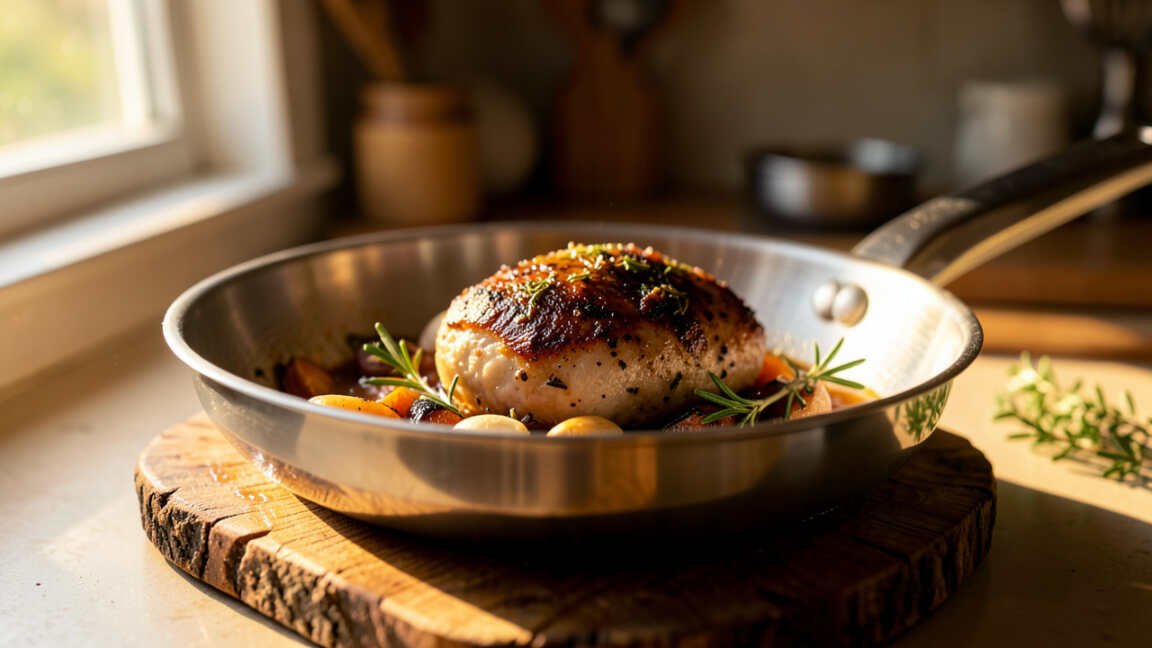
Using a sauté pan as a roasting vessel for small roasts saves space and delivers excellent browning. The pan’s wide bottom and high sides make it versatile for both stovetop searing and oven roasting. Stick to roasts under 4 pounds, use an oven-safe pan, and follow the steps outlined here for consistent results. You will likely find yourself reaching for your sauté pan more often than your traditional roasting pan for everyday meals. Always check your sauté pan design for oven-safety ratings before placing it in the oven.
Mastering basic oven roasting techniques will improve your results with small roasts in a sauté pan.
Refer to the USDA for safe roasting temperatures to ensure your meat is fully cooked.

Leave a Reply