
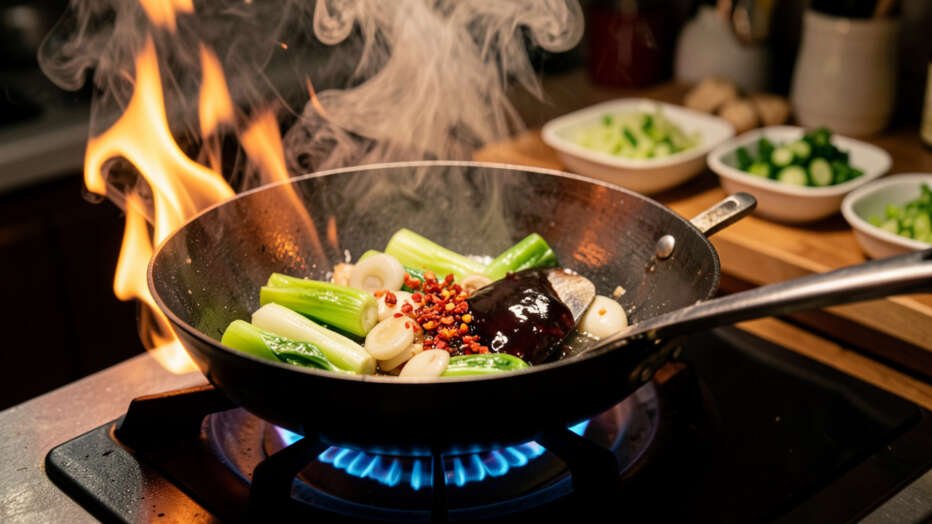
Wok hei is the smoky, charred flavor resulting from stir-frying at temperatures exceeding 500 degrees Fahrenheit, and home cooks can achieve it by using a carbon steel wok, a high-output gas burner or outdoor propane stove, and a metal spatula. The process involves preheating the wok until it smokes, adding oil in a swirling motion, and tossing ingredients constantly to trigger the Maillard reaction and caramelization. By avoiding common mistakes such as overcrowding the wok, using insufficient heat, or adding wet ingredients that lower the temperature, home cooks can consistently produce approximately 80 to 90 percent of restaurant-quality wok hei.
That smoky, charred flavor you get from restaurant stir-fries is called wok hei. This guide shows you how to create it at home without a commercial wok station.
Quick Verdict: Wok hei is the smoky, complex flavor created when food hits a blazing-hot wok at over 500 degrees Fahrenheit. You can achieve it at home by using the right wok, high heat, and proper technique. The process takes practice but requires no special professional equipment.
Key Takeaways
- Wok hei comes from the Maillard reaction and caramelization at extreme temperatures above 500 degrees Fahrenheit.
- You need a carbon steel wok, a high-output gas burner or outdoor propane stove, and a metal spatula to produce authentic wok hei at home.
- The key steps are preheating the wok until it smokes, adding oil in a swirling motion, and tossing ingredients constantly for even heat.
- Common mistakes include overcrowding the wok, using too low heat, and adding wet ingredients that drop the temperature.
- With practice, home cooks can achieve 80-90 percent of restaurant-quality wok hei using the methods described in this guide.
What You Need to Achieve Wok Hei at Home
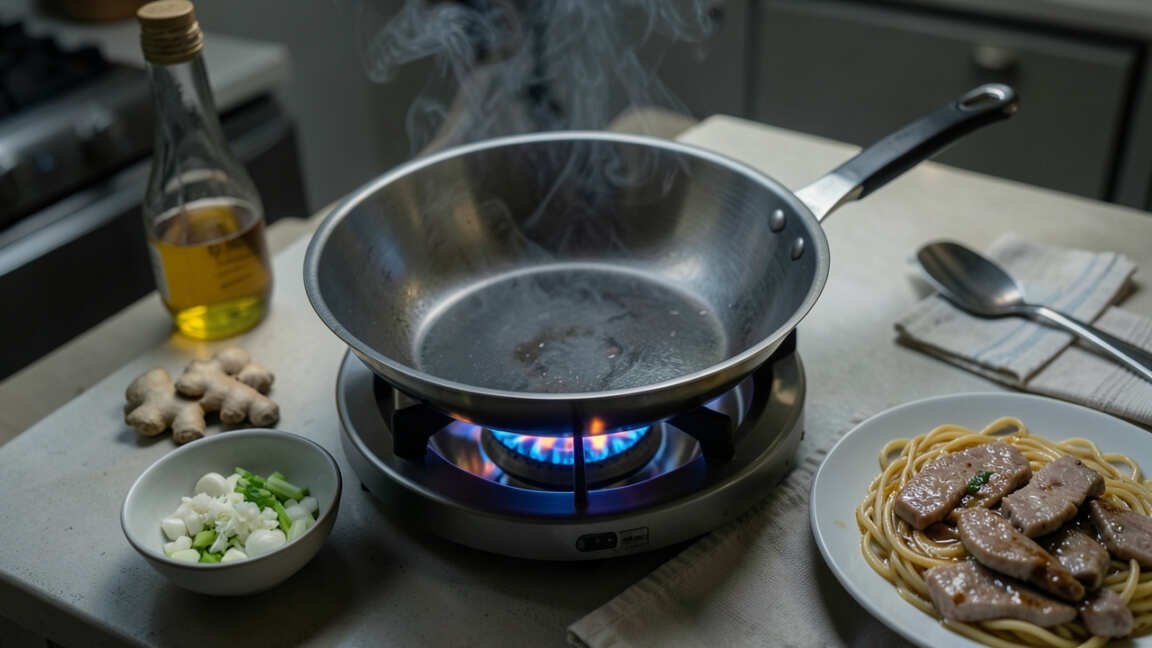
Creating wok hei starts with the right gear. Every piece matters for the heat and technique required.
Essential Equipment
- Carbon steel wok – A 14-inch round-bottom wok is ideal. Non-stick woks cannot reach the necessary temperatures safely.
- High-output gas burner – Home gas stoves often lack power. A portable outdoor propane burner (like those used for turkey frying) works best.
- Metal spatula – A long, thin metal spatula (wok chuan) helps you toss and scrape ingredients without breaking them.
- Long-handled ladle or bowl – For adding sauces and liquids without lowering heat.
- Wok ring – If using a round-bottom wok on a flat stove, a wok ring stabilizes it and directs heat upward.
Tip: A cast iron wok also works but is much heavier. Carbon steel heats up faster and is easier to toss, which is why most Chinese chefs prefer it.
Ingredients That Work Best
Wok hei pairs well with dry, high-protein ingredients. Vegetables with high water content cool the wok too quickly.
- Protein – Chicken, beef, pork, shrimp, and tofu work well when cut into small, even pieces.
- Vegetables – Broccoli, bell peppers, onions, snap peas, and scallions hold up to high heat.
- Aromatics – Ginger, garlic, and chili flakes add flavor that chars beautifully.
- Oil – Use oils with high smoke points like peanut, avocado, or grapeseed oil. Avoid olive oil.
- Sauce – A mix of soy sauce, oyster sauce, sesame oil, and sugar creates the glaze that caramelizes fast.
According to chef Kenji Lopez-Alt, the ideal temperature for wok hei is between 550 and 650 degrees Fahrenheit. Most home gas stoves only reach 350 to 400 degrees at the pan surface.
Step-by-Step Process to Get Wok Hei
Follow these steps in order. The entire stir-fry cooks in 2 to 4 minutes.
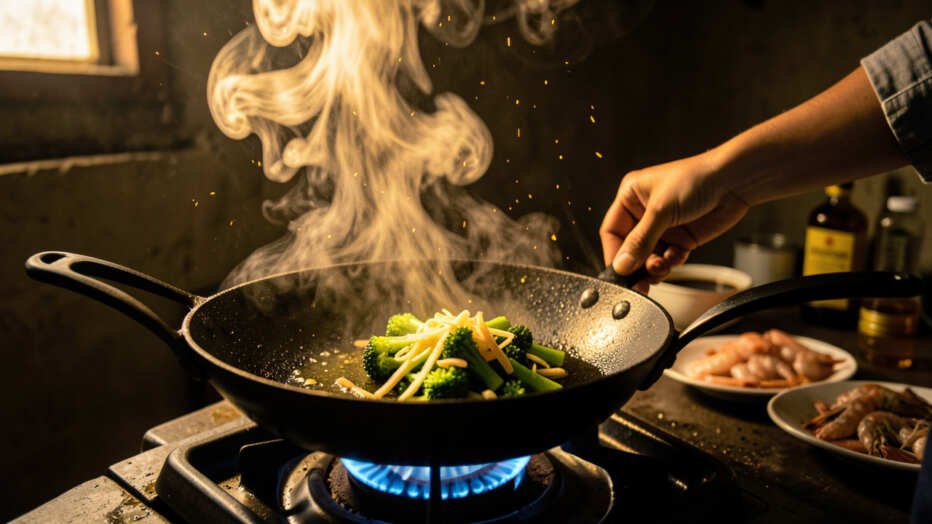
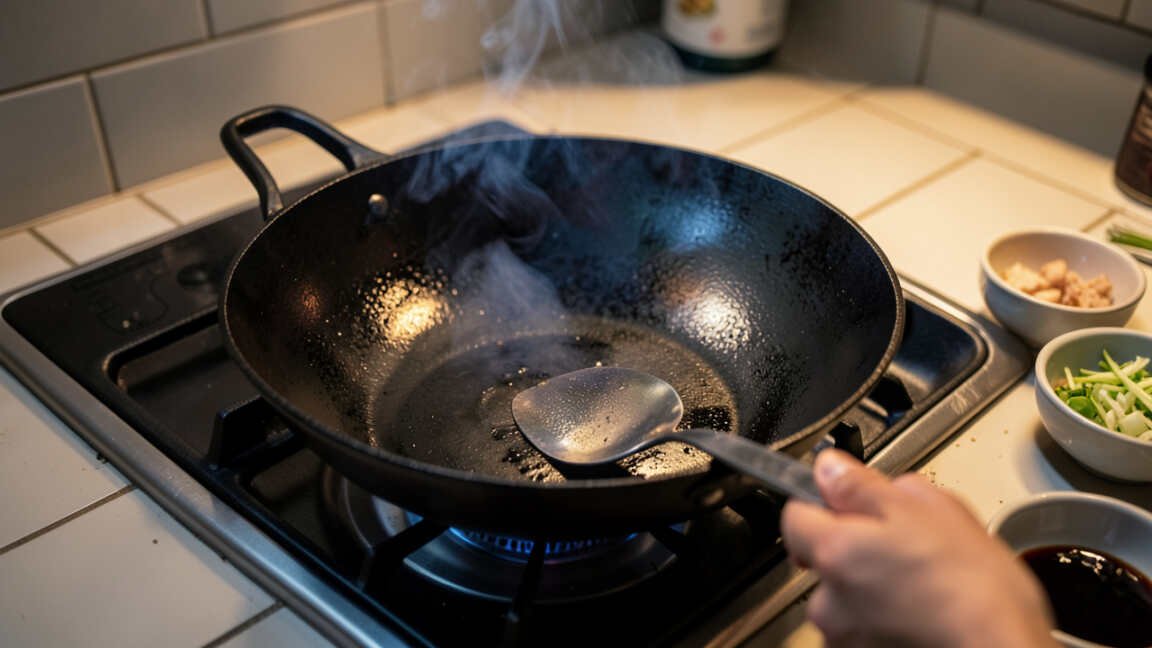
- Preheat the wok – Place the dry carbon steel wok over your highest flame. Wait until the wok starts smoking. This takes 2 to 3 minutes on a powerful burner.
- Add oil in a swirl – Pour in 2 to 3 tablespoons of high-smoke-point oil. Swirl the wok to coat the sides. The oil should shimmer instantly.
- Add aromatics – Toss in ginger, garlic, or chili. Keep them moving so they don’t burn. This takes about 10 seconds.
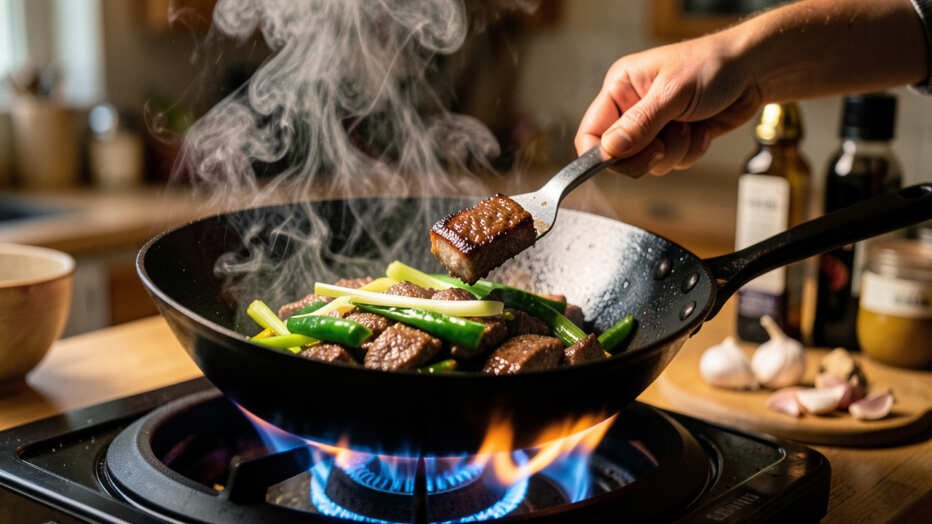
- Cook the protein – Add your meat or tofu in a single layer. Let it sear undisturbed for 15 seconds, then toss or stir-fry. Cook until nearly done.
- Add hard vegetables – Vegetables like broccoli or bell peppers go in next. Toss continuously for 30 to 60 seconds.
- Add sauce – Pour the sauce down the sides of the wok. This creates steam and lifts the browned bits. Toss to coat everything.
- Finish with soft vegetables and scallions – Add quick-cooking greens and scallions. Toss for another 15 seconds.
- Serve immediately – Wok hei fades fast. Transfer the stir-fry to a plate right away.
Important: Do not crowd the wok. Cook in small batches – no more than two servings at a time. Overcrowding drops the temperature and produces steamed, not smoky, food.
What to Expect: Results and Challenges
Your first tries may not produce the deep char you want. That is normal. Wok hei requires practice to master the timing and heat control.
The smoke point at home will likely be less intense than a restaurant wok station. Restaurants use burners that output 100,000 to 200,000 BTUs. Home gas stoves typically output 12,000 to 18,000 BTUs. An outdoor propane burner can reach 60,000 to 80,000 BTUs, which is much closer to restaurant power.
According to the Wok Shop, a leading supplier of wok equipment, temperatures above 500 degrees Fahrenheit are necessary to create the signature smoky flavor compounds like pyrazines and thiols.
| Heat Source | BTU Output | Max Wok Temperature | Wok Hei Potential |
|---|---|---|---|
| Home gas stove | 12,000-18,000 | 400-450°F | Low |
| Outdoor propane burner | 60,000-80,000 | 550-650°F | High |
| Induction cooktop | N/A (electric) | 500°F+ (only with flat-bottom wok) | Medium |
| Restaurant wok burner | 100,000-200,000 | 650-800°F | Very high |
Common Mistakes to Avoid
Even experienced home cooks struggle with wok hei at first. Here are the most frequent errors and how to fix them. Proper high-heat stir frying technique is essential for achieving wok hei.
- Using a non-stick wok – Non-stick coatings cannot handle the extreme heat required. The coating will degrade and release fumes. Always use carbon steel or cast iron.
- Adding sauce too early – If you pour sauce before the protein is seared, the liquid cools the wok and prevents browning. Always sear first, then add sauce.
- Overcrowding the wok – Too many ingredients drop the temperature immediately. Cook in small batches and combine at the end.
- Not preheating long enough – A wok needs 2 to 3 minutes of dry heating before oil goes in. If you add oil too soon, the wok will not reach the smoke point fast enough.
- Using too much oil – Excess oil creates a greasy result, not char. Use just enough to coat the ingredients lightly.
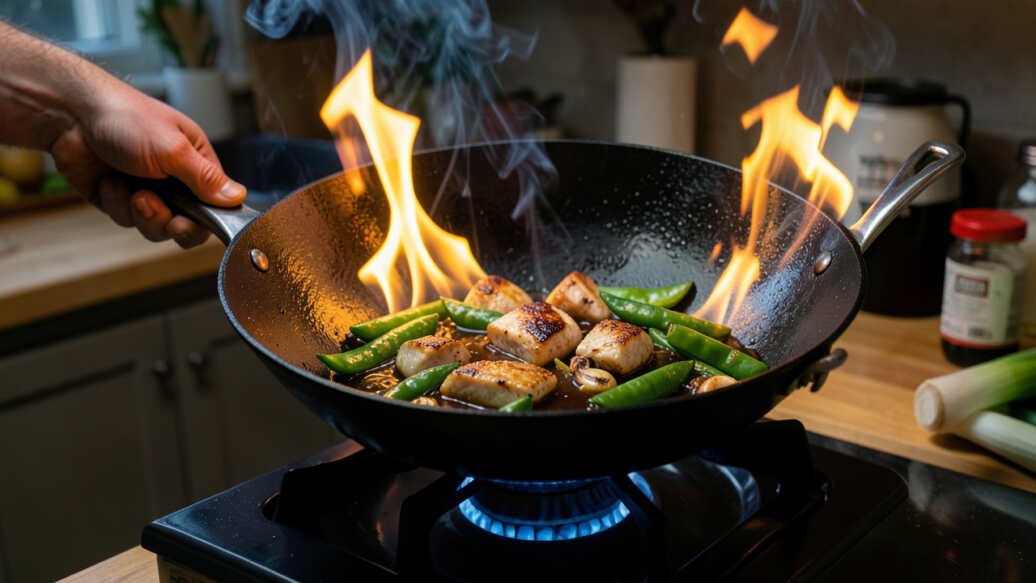
Warning: Never leave a hot wok unattended. Extreme heat can ignite oil splatters. Keep a lid nearby to smother any flare-ups.
Pro Tips for Better Wok Hei
These advanced techniques will elevate your stir-fry from good to restaurant-quality.
- Use the “flame kiss” technique – When tossing, tilt the wok so that the flame licks the edge of the food. This adds direct smoky char.
- Deglaze with wine or stock – After removing the cooked ingredients, add a tablespoon of Shaoxing wine or chicken stock to the hot wok. Stir the browned bits into the liquid and pour over the finished dish for extra flavor.
- Season the wok properly – A well-seasoned carbon steel wok develops a non-stick patina that also contributes to flavor. After each use, wash with hot water and a soft brush, then dry over heat and rub with a thin layer of oil.
- Prep everything before starting – Wok cooking is fast. Have all ingredients chopped, sauces mixed, and utensils ready at your stove before you turn on the heat.
- Use a wok ladle or spatula for tossing – A flat spatula lets you scoop and flip ingredients quickly. Practice the “rock and roll” motion – push ingredients up the side of the wok and let them fall back into the center.
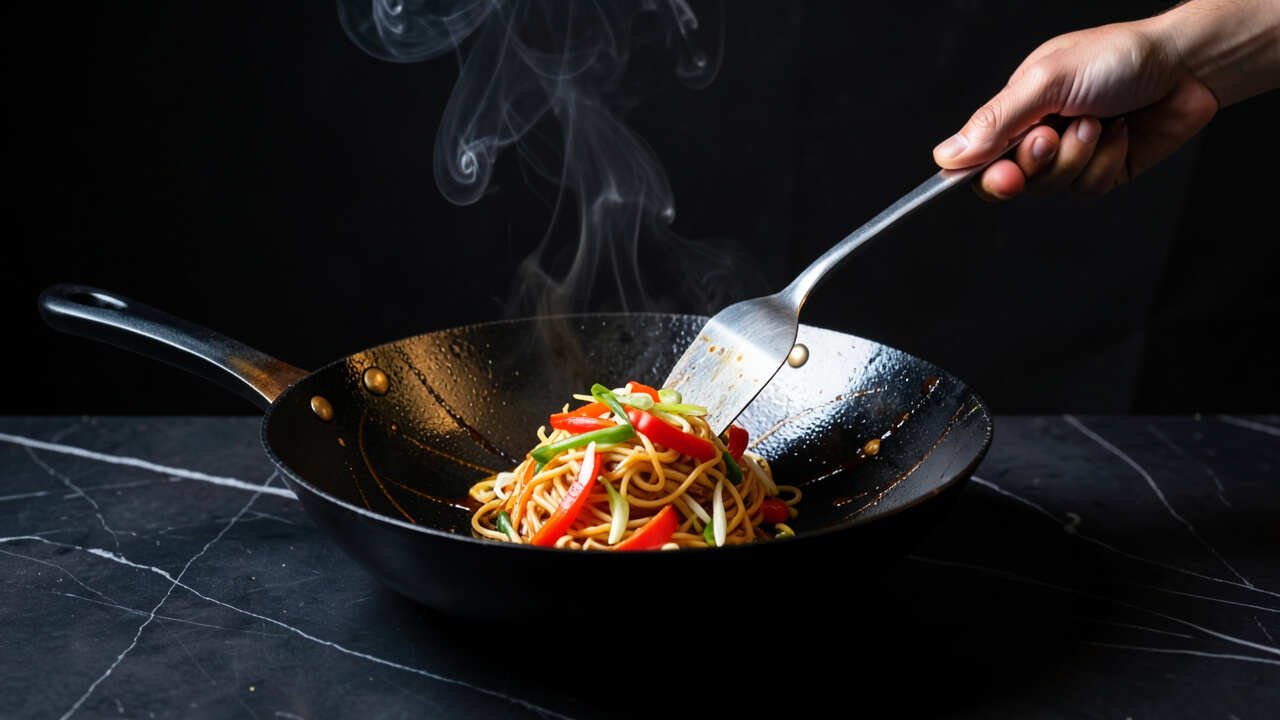
Chef Grace Young, a leading authority on wok cooking, recommends practicing with fried rice first. Fried rice is forgiving and still delivers satisfying char and aroma. Always practice kitchen fire safety when using extreme heat for wok hei.
Frequently Asked Questions
Can I get wok hei on an electric stove?
Yes, but it is harder. Use a flat-bottom carbon steel wok on the highest setting. Preheat the wok for 3 to 4 minutes. An induction cooktop works better than a coil electric stove because it heats the wok directly.
What is the best oil for wok hei?
Oils with high smoke points work best – peanut, avocado, grapeseed, or canola oil. Avoid extra-virgin olive oil, butter, or sesame oil as the main cooking oil because they burn at lower temperatures.
Why does my stir-fry taste steamed instead of smoky?
This usually happens because the wok is not hot enough or the pan is overcrowded. Check your heat source. If using a home gas stove, try an outdoor propane burner. Also cook in smaller batches and make sure ingredients are dry before adding them.
How do I season a new carbon steel wok?
Wash the wok with hot water and a soft sponge to remove factory coating. Dry it completely over low heat. Rub a thin layer of high-smoke-point oil over the entire surface, including the outside. Heat the wok over medium-high heat until it turns dark and stops smoking. Repeat this process 2 to 3 times for a durable patina.
Is wok hei unhealthy because of the smoke?
Occasional exposure to high-heat cooking smoke is safe. However, cooking with overheated oil at very high temperatures regularly can release harmful compounds. Work in a well-ventilated area. Use a range hood or open windows. Avoid using oil past its smoke point.
Final Thoughts
Wok hei is achievable at home with the right equipment and technique. Focus on preheating your wok thoroughly, using high heat, and cooking in small batches. Practice with simple stir-fries like fried rice or broccoli beef first. With time, you will produce the smoky, charred flavor that defines great Chinese takeout. Understanding the science behind wok hei flavor can help home cooks replicate it.

Leave a Reply