
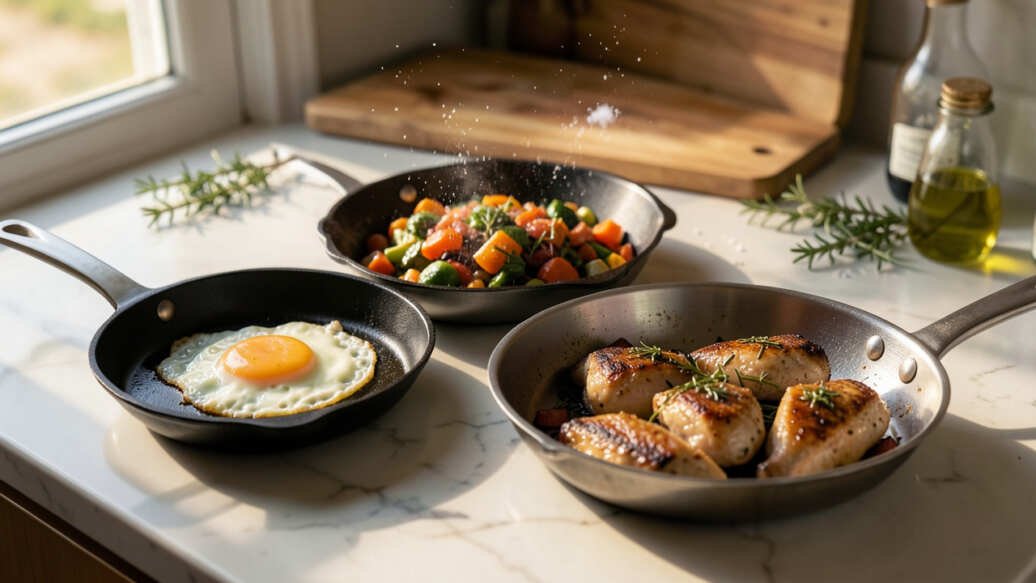
Most home cooks need three frying pan sizes—8-inch, 10-inch, and 12-inch—because a single pan cannot handle the range of cooking tasks that demand proper heat control and surface area. The small 8-inch pan excels for delicate items like omelets and single servings, the 10-inch workhorse handles everyday sautés and sears, and the large 12-inch powerhouse prevents overcrowding when cooking for a crowd. Using the correct pan size avoids uneven cooking and steaming, directly improving texture and flavor in dishes such as eggs, stir-fries, and steaks.
When you step into the kitchen, the frying pan is arguably the most versatile tool at your disposal. Yet, many home cooks make the critical mistake of owning just one. While a single, all-purpose skillet might seem sufficient, the reality is that most home cooks need three frying pan sizes to truly unlock efficiency, texture, and flavor in their cooking. From a delicate omelet to a seared steak for a crowd, using the wrong pan size can lead to overcrowding, uneven cooking, and frustration. In this comprehensive guide, we’ll explore why a trio of small, medium, and large frying pans is not a luxury but a necessity for any serious home cook. We’ll break down the specific roles each size plays, compare their performance side-by-side, and help you build a collection that will transform your everyday cooking experience. Prepare to rethink your cookware rack and discover the freedom that comes with having the right tool for every culinary task.
The Case for a Small Frying Pan (8-Inch)
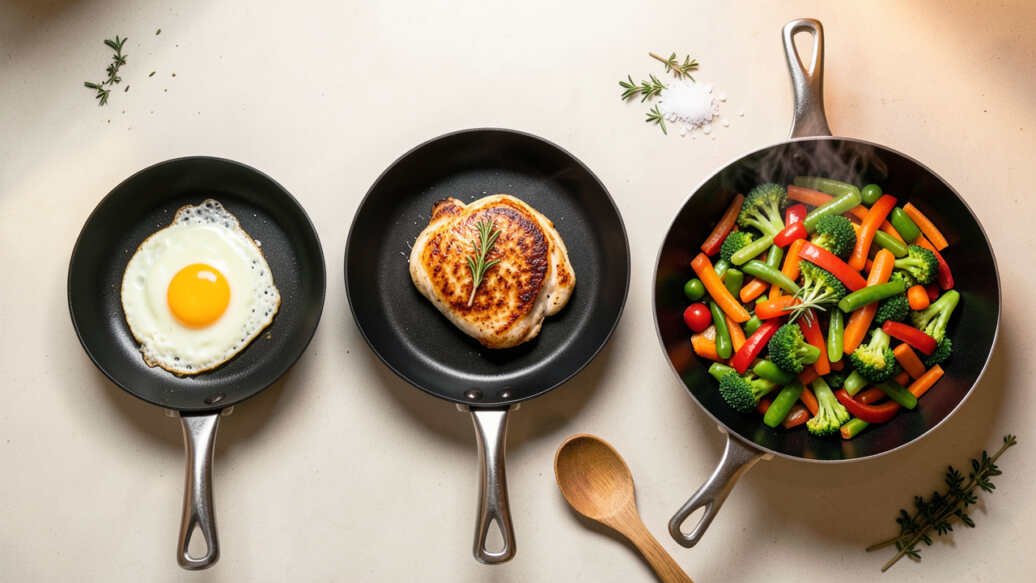
The smallest member of your frying pan trio-typically an 8-inch skillet-is often the most undervalued. Many home cooks overlook it, opting instead for a medium pan for everything. However, the 8-inch pan is indispensable for precision cooking. Its smaller surface area and lower sides make it ideal for tasks where control is paramount. Think about a single fried egg for a quick breakfast: in a large pan, the white spreads too thin and cooks unevenly. In an 8-inch pan, the egg retains a perfect, compact shape with a tender white and a runny yolk. The same principle applies to searing a single chicken breast, toasting spices, or melting butter for a sauce. The sidewalls are often slightly taller relative to the base, which helps contain splatter without interfering with flipping. This size also heats up faster than its larger counterparts, saving energy and time for small portions.
- Perfect for: Making a single omelet, cooking one serving of bacon, reheating leftovers, toasting nuts, and melting chocolate.
- Key benefit: Unmatched control for small, delicate dishes where even heat distribution is critical.
- Best material: Non-stick for eggs and fish; stainless steel or carbon steel for high-heat searing of small cuts.
- Storage tip: This pan often nestles inside a larger one, making storage efficient even in tight spaces.
Without an 8-inch pan, you force small jobs into large pans, leading to burnt edges, undercooked centers, and unnecessary cleaning. This size is not a compromise; it is a precision instrument for the solo cook or the parent making a single portion for a child. It also excels at making crêpes or small pancakes, where batter spread is easy to control. Many professional chefs keep an 8-inch non-stick pan dedicated solely to eggs, ensuring flawless results every time. For the home cook, it is the difference between a frustratingly runny egg white and a picture-perfect breakfast.
The Workhorse: The Medium Frying Pan (10-Inch)
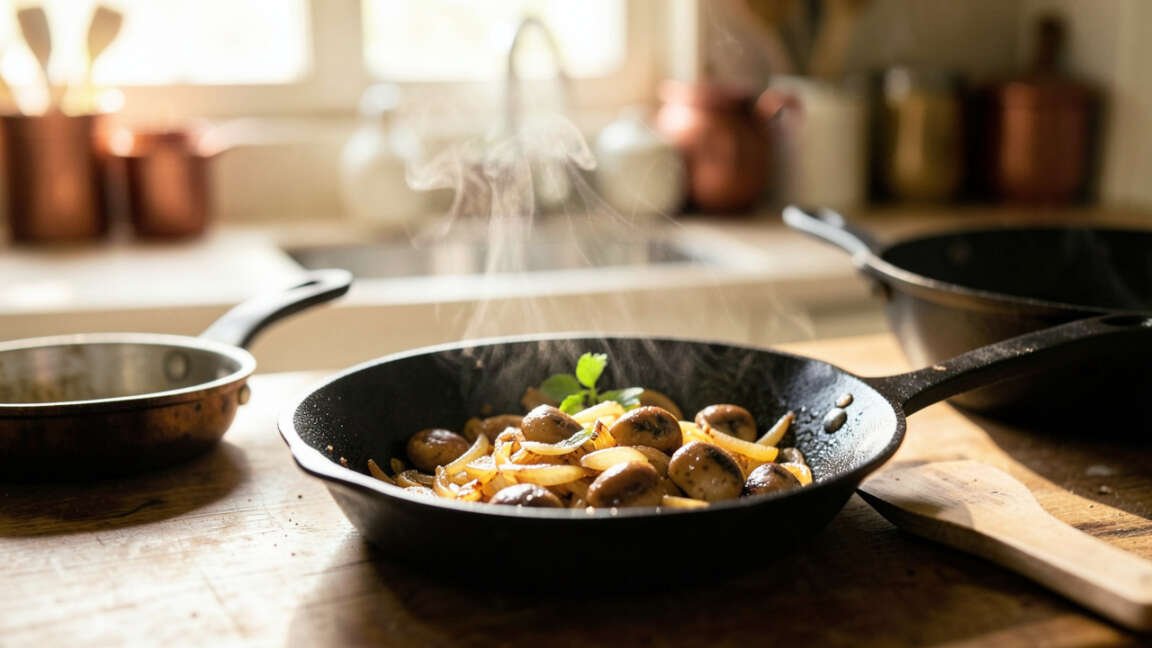
The 10-inch frying pan is the true workhorse of the kitchen. It is the size that most home cooks instinctively reach for, and for good reason. This pan offers the perfect balance between surface area and maneuverability. It is large enough to cook two chicken breasts, a batch of hash browns for two, or a full serving of stir-fried vegetables, yet small enough to still toss ingredients with one hand. The 10-inch pan excels in versatility: it can handle a two-egg omelet for a shared breakfast, a single large pork chop, or a modest amount of sautéed mushrooms. Its sidewalls are typically angled, making it easy to flip pancakes or slide food onto a plate. For most weeknight dinners serving two to three people, the 10-inch pan is the default choice. It also serves as an excellent pan for shallow frying, such as for crispy fish fillets or potato chiplets.
- Perfect for: Omelets for two, searing two steaks, making a small batch of fried rice, cooking one-pot pasta for two.
- Key benefit: The ultimate daily driver-versatile enough for 80% of your cooking tasks.
- Best material: Stainless steel or hard-anodized aluminum for even heat and durability; non-stick for low-fat cooking.
- Storage tip: This pan should live on your stovetop or in a front-facing cabinet for easy access.
However, the 10-inch pan has its limits. Overcrowding is a common issue: if you try to cook four chicken breasts or a full pound of ground beef, the food will steam rather than sear, leading to a loss of texture and flavor. This is precisely why a larger pan is necessary. The 10-inch pan also struggles with larger cuts of meat, such as a thick bone-in ribeye or a whole fish. Its surface area is just enough for two portions, not four. But as the backbone of your trio, it handles the vast majority of daily tasks with grace. When you learn to respect the 10-inch pan’s capacity-never exceeding two portions for searing-you will achieve consistently better browning and faster cooking times. It is the pan that teaches you the virtue of leaving space between ingredients.
The Powerhouse: The Large Frying Pan (12-Inch)
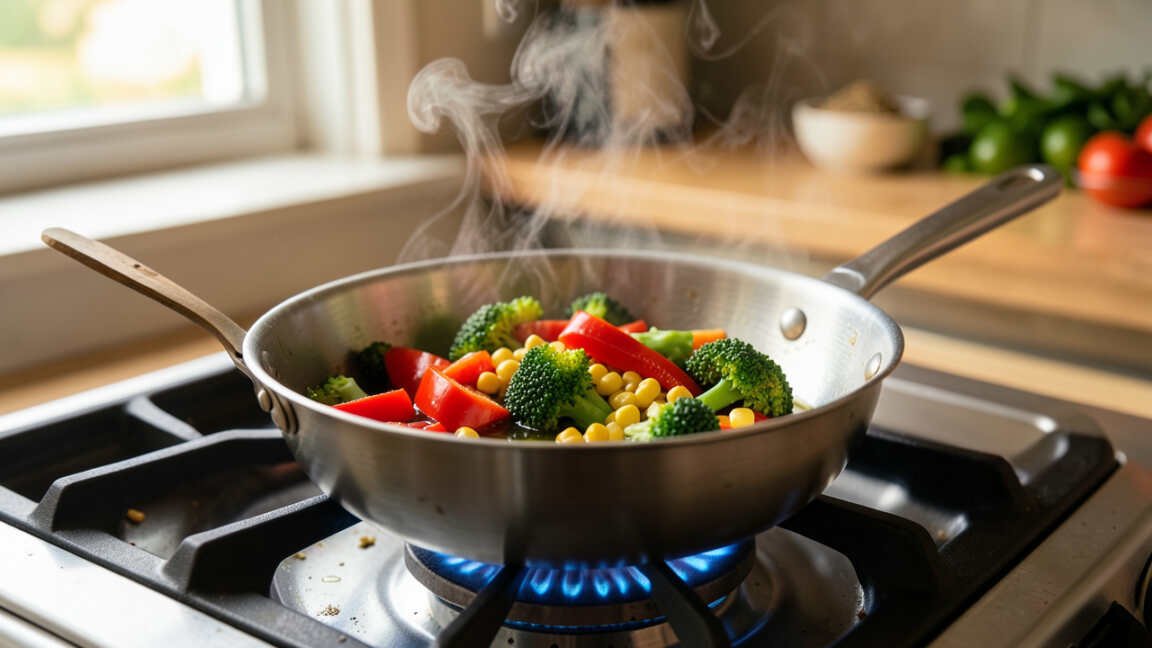
The 12-inch frying pan is the undisputed powerhouse of the trio. It is the pan you reach for when feeding a family, entertaining guests, or batch-cooking for the week. Its generous surface area-about 44% more than a 10-inch pan-allows you to sear multiple steaks without overcrowding, cook an entire pound of ground beef in one batch, or sauté a mountain of spinach down to a manageable serving. The 12-inch pan is also essential for one-pan pasta dishes, where you need room to toss pasta, sauce, and proteins together. For stir-fries, the large surface area ensures that vegetables stay crisp and colorful rather than steaming in their own juices. Additionally, this size is ideal for making large batches of pancakes, french toast, or grilled cheese sandwiches for a crowd.
- Perfect for: Four chicken breasts, a full pound of bacon, large stir-fries, paella, frittatas, and deep-dish omelets.
- Key benefit: Prevents overcrowding, ensuring proper searing and caramelization for large quantities.
- Best material: Stainless steel or carbon steel for high-heat searing; avoid flimsy non-stick that can overheat unevenly.
- Storage tip: This pan may not fit in standard cabinets; consider a hanging rack or deep drawer.
The 12-inch pan also excels at techniques that require space: deglazing large amounts of fond for a pan sauce, braising multiple pieces of meat, and even shallow-frying larger items like whole fish or chicken cutlets. The added diameter means you can actually toss ingredients without losing them over the edge, a common frustration with smaller pans. However, this size is not without its challenges. It is heavy, especially when filled with food, and requires a burner that can deliver even heat across its entire base. On a small burner, the 12-inch pan will have cold spots. But for the home cook who regularly prepares meals for four or more, this pan is a game-changer. It transforms batch cooking from a chore into a fluid, efficient process where every piece of protein gets a golden crust and every vegetable retains its bite.
Why One Pan Isn’t Enough: The Limitations of a Single Size
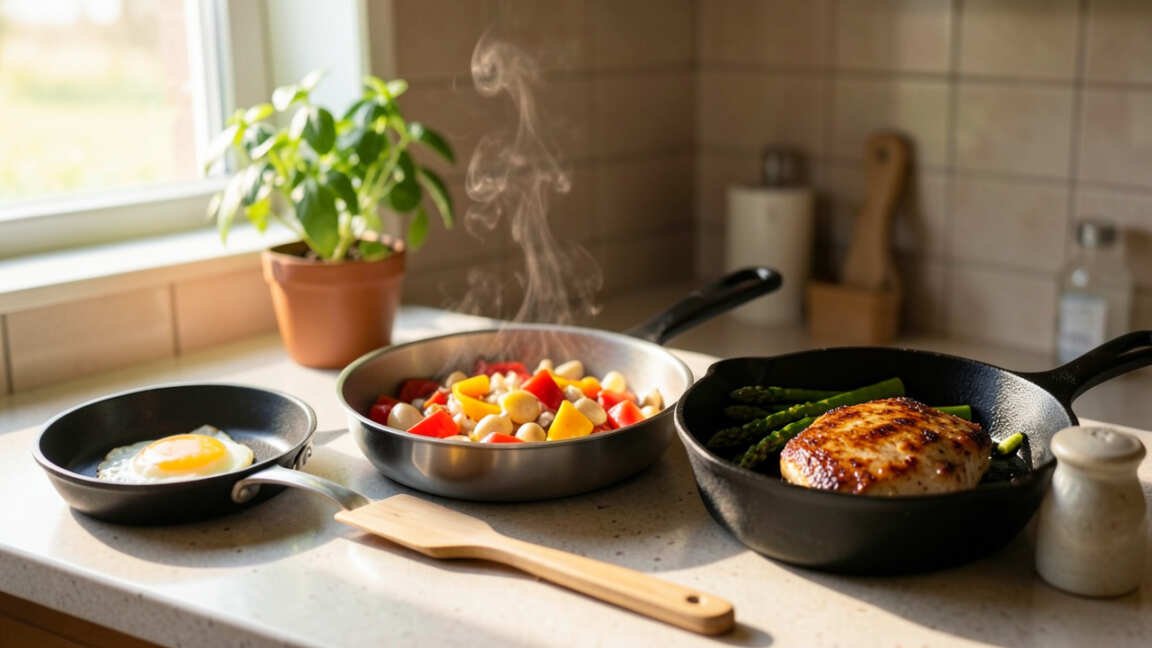
The allure of a single “do-it-all” frying pan is understandable: less clutter, lower cost, and simpler decisions. However, the limitations are profound. A single pan-typically a 10-inch-forces you to adapt your cooking to the tool rather than the other way around. When you try to cook a full meal for four in one 10-inch pan, you inevitably overcrowd it. This causes the food to release moisture, drop the pan’s temperature, and steam instead of sear. The result is gray, soggy food with a lack of depth. Conversely, using that same 10-inch pan for a single egg means the white spreads paper-thin and cooks into a brittle lace, lacking the tender, compact shape that a smaller pan provides. The single-pan approach also creates workflow bottlenecks: you must cook components sequentially, keeping items warm while others cook, which can lead to overcooked proteins or cooled vegetables. Food safety guidelines from the official government site emphasize proper use of cookware.
- Overcrowding: The single biggest enemy of good browning and texture. A single pan cannot handle large batches properly.
- Inefficiency: You spend more time cleaning between batches or juggling food storage, slowing down your entire cooking process.
- Limited techniques: Certain dishes-like a large frittata or a full batch of fried rice-simply cannot be executed properly in an undersized pan.
- Uneven wear: Using one pan for everything accelerates wear, especially for non-stick coatings that are damaged by high heat or metal utensils.
Furthermore, a single pan limits your ability to multitask. If you need to sear chicken while simultaneously making a pan sauce in a separate pan, you simply cannot do it. The three-pan system allows you to work efficiently: use the small pan for a sauce, the medium pan for a side, and the large pan for the main protein. This parallel workflow is the hallmark of efficient cooking. Finally, having only one pan creates a single point of failure. If you need to sear meat and then deglaze for a sauce, you have to transfer the meat and work in the same pan, which can be clumsy. With three pans, you can dedicate each to a specific task, maintaining temperature and texture across all components of a meal. The trio is not about having more stuff; it is about having the right stuff for every scenario.
A Practical Comparison: Which Pan for Which Dish?
To make the decision process clear, here is a side-by-side comparison of the three pan sizes across key factors. This table will help you visualize exactly which pan excels in which scenario, reinforcing why a single pan simply cannot cover all bases.
This comparison table makes clear that each pan size occupies a distinct role. The 8-inch pan is for precision and small tasks. The 10-inch pan is the daily workhorse for meals of 2-3. The 12-inch pan is the heavy lifter for batch cooking and family dinners. Owning all three means you never have to compromise on heat distribution, overcrowding, or technique. You can confidently choose the right tool for the job, every time. Cookware size recommendations are detailed in the Wikipedia article on cookware and bakeware.
Frequently Asked Questions
1. Can I get away with just a 10-inch and 12-inch pan?
You can, but you will miss the precision of the 8-inch for eggs, small sauces, and single portions. The 8-inch pan provides unmatched control for delicate tasks, and its absence forces you to use a larger pan inefficiently. For most home cooks, the 8-inch pan is the one you do not realize you need until you have it.
2. What material is best for each pan size?
For the 8-inch pan, a good non-stick surface is ideal for eggs and fish. For the 10-inch pan, stainless steel or hard-anodized aluminum offers versatility and durability. For the 12-inch pan, stainless steel or carbon steel is best for high-heat searing and batch cooking without worrying about coating degradation.
3. How do I store three frying pans without clutter?
Consider a hanging pot rack, a deep drawer with a divider, or stacking them with protective pads between the cooking surfaces. Many 8-inch and 10-inch pans are designed to nest inside 12-inch models. If storing in cabinets, use vertical dividers to allow easy access without stacking.
4. Is it worth investing in expensive pans for each size?
Yes, but prioritize quality on the pans you use most. Invest in a high-end stainless steel 10-inch and 12-inch pan for even heat distribution and longevity. For the 8-inch pan, a mid-range non-stick pan is sufficient since it handles lower-heat tasks. Never skimp on the 12-inch pan if you do a lot of high-heat searing.
5. Can I use a wok or saucier instead of a third pan?
A wok is excellent for stir-fries but does not replace the flat surface needed for searing steaks or pancakes. A saucier is better for sauces, not for dry-heat cooking. A dedicated flat-bottomed frying pan in each of the three sizes remains the most versatile combination for general cooking.
6. What about induction cooktops? Does pan size matter more?
Yes! Induction cooktops require the pan base to match the burner size closely for efficient heating. An 8-inch pan on a large burner may not heat evenly, and a 12-inch pan on a small burner will have cold spots. Matching pan size to burner size is even more critical on induction. The three-pan system allows you to choose the right burner match for each task.
7. How do I clean and maintain three pans properly?
Non-stick pans require gentle hand washing with soft sponges to preserve the coating. Stainless steel pans can go in the dishwasher but benefit from occasional hand cleaning with stainless steel cleaner to remove discoloration. Carbon steel pans need seasoning and should be dried immediately to prevent rust. Following the care instructions for each material will extend the life of all three pans significantly.
Final Thoughts
Owning three frying pan sizes-8-inch, 10-inch, and 12-inch-transforms your cooking from a series of compromises into a fluid, efficient, and enjoyable process. Each pan has a distinct role, from precision single servings to large family batches, and together they cover every possible scenario. Invest in quality, match the pan to the task, and you will never look back. The right pan for the right job is the secret to consistently great food. The Wikipedia article on frying pans discusses standard frying pan sizes and their uses.

Leave a Reply