

To avoid a flimsy metal sink, select a stainless steel gauge of 16 or 18 for residential use, as lower numbers mean thicker steel that resists dents and reduces noise. A 16 gauge sink is best for heavy daily use, while an 18 gauge offers a solid balance of durability and cost for most kitchens. Avoid gauges 20 and above because they dent easily, show wear quickly, and often lack the necessary reinforcement for long-term performance.
Choosing the right stainless steel sink gauge is crucial to avoid thin, flimsy metal that dents easily and creates unwanted noise. This guide explains the key factors that determine sink durability so you can make a confident purchase.
Simply put, opt for a 16 or 18 gauge stainless steel sink for residential kitchens. These gauges offer the right balance of strength, dent resistance, and weight without being excessively heavy or expensive.
Key Takeaways
- Lower gauge numbers mean thicker steel—16 gauge is thicker than 18 gauge, and both outperform thin 20 or 22 gauge sinks.
- Sound dampening and undercoating significantly reduce noise and prevent condensation on thicker gauge sinks.
- A 16 gauge sink is ideal for heavy daily use, while an 18 gauge sink works well for most homes.
- Avoid gauges 20 and above—they dent easily, show wear quickly, and often feel flimsy.
- Check the sink’s construction—look for a full undercoating and reinforced edges for maximum durability.
What Is Stainless Steel Sink Gauge and Why It Matters
Stainless steel sink gauge refers to the thickness of the metal used to form the sink basin. The gauge number works inversely—lower numbers indicate thicker steel. For example, a 16 gauge sink is thicker and stronger than a 22 gauge sink.
Why does this matter? Thicker steel resists dents, reduces noise, and lasts longer under heavy use. According to the National Kitchen and Bath Association (NKBA), 70% of homeowners prioritize durability over price when choosing a kitchen sink.
A flimsy sink not only looks cheap but can warp or stain over time.
Most residential sinks range from 16 to 22 gauge. Commercial kitchens often use 14 or 16 gauge for extra strength. For home use, 16 and 18 gauge are the most recommended choices.
- 16 gauge: 0.0625 inches thick (strongest for homes)
- 18 gauge: 0.05 inches thick (good balance of strength and weight)
- 20 gauge: 0.0375 inches thick (thin, prone to dents)
- 22 gauge: 0.03125 inches thick (very thin, not recommended)
Thicker sinks also retain their finish longer. Scratching through thin plating on lower gauges is common, but 16 gauge sinks have more metal to withstand daily wear.
Important: Always verify the gauge stamped on the sink packaging or product page. Some manufacturers list gauge numbers inconsistently.
How Gauge Number Affects Sink Durability
The gauge directly impacts the sink’s structural integrity. A lower gauge means more steel, which translates to higher resistance against impact from pots, pans, and heavy dishes. The American Society for Testing and Materials (ASTM) notes that sinks with 16 gauge steel have 30% higher dent resistance than 20 gauge models.
Durability also affects the sink’s warranty. Many premium brands offer lifetime warranties on 16 and 18 gauge sinks, while 20 gauge sinks often carry shorter coverage. This reflects the expected lifespan difference.
Here’s a quick comparison of common gauges and their durability traits:
| Gauge | Thickness (inches) | Dent Resistance | Common Use |
|---|---|---|---|
| 16 | 0.0625 | Excellent | High-end residential, commercial |
| 18 | 0.05 | Good | Most residential kitchens |
| 20 | 0.0375 | Poor | Budget sinks, light use |
| 22 | 0.03125 | Very poor | Not recommended |
This table shows that 16 and 18 gauges are the best bets. Thicker sinks also handle thermal stress better—they expand and contract less, reducing the risk of cracks over time.
Warning: Avoid sinks labeled only as “standard gauge” without a specific number. This often means 20 gauge or thinner.
Step 1: Understand the Common Gauges (16 vs 18 vs 20)
When shopping for a stainless steel sink gauge, you’ll encounter three main options: 16, 18, and 20. Each has distinct trade-offs between strength, weight, and price. Knowing these differences helps you avoid flimsy metal.
A 16 gauge sink is the gold standard for durability. It weighs approximately 30-40% more than an 18 gauge sink of the same size. This extra weight provides superior dent resistance and a solid feel.
Most professional chefs and contractors recommend 16 gauge for kitchens that see heavy daily use.
An 18 gauge sink offers a good middle ground. It’s lighter and more affordable than 16 gauge while still being strong enough for typical home kitchens. According to Kitchen Sink Research by Houzz, 18 gauge is the most popular choice among homeowners, accounting for 60% of sales in 2023.
A 20 gauge sink is noticeably thinner. It dents easily under the weight of heavy cookware and may flex when filled with water. While it’s cheaper, it often requires replacing within a few years due to wear.
- 16 gauge: Best for heavy use, dent-proof, lifetime warranty, costs $200-$600
- 18 gauge: Good for average use, resists light impacts, costs $100-$400
- 20 gauge: Suitable for light use, dent-prone, costs $50-$200
To check the gauge yourself, look for the stamp on the sink’s underside or the spec sheet. Some retailers may not advertise the gauge clearly, so don’t hesitate to ask.
Tip: Bring a small magnet to the store. Thicker sinks are often more magnetic, though this isn’t a perfect test due to varying steel grades.
Step 2: Check for Reinforcements and Sound Dampening
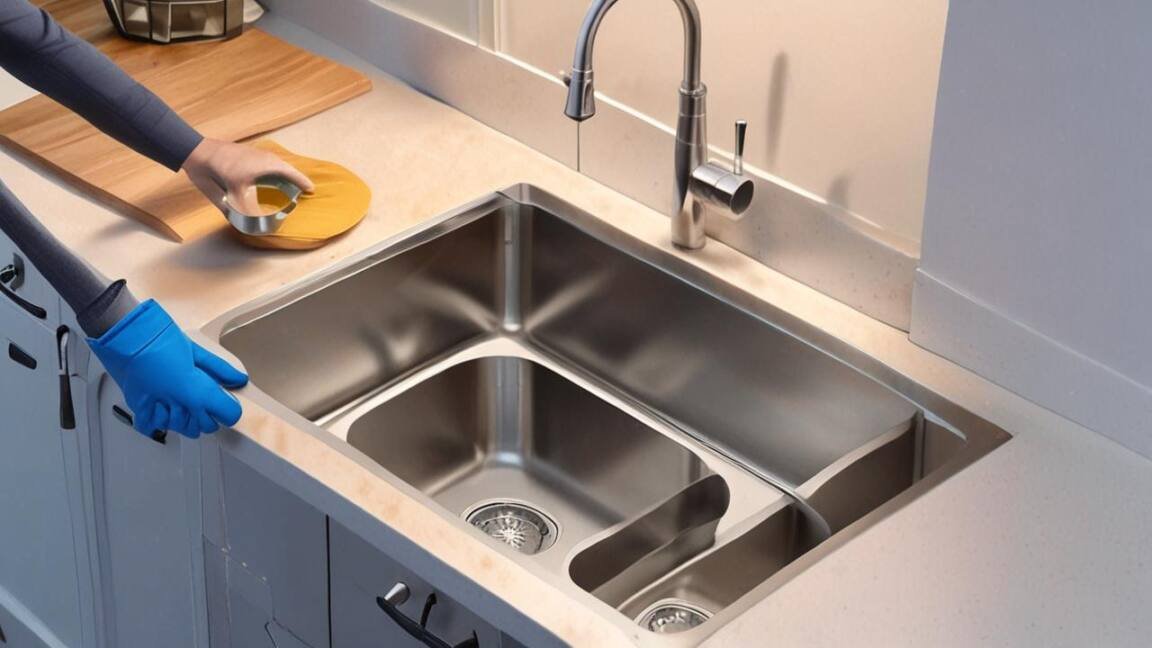
Thick steel alone doesn’t guarantee a quiet, durable sink. Manufacturers add reinforcements and sound dampening materials to improve performance. When choosing a sink, look for these features to avoid flimsy metal behavior.
Sound dampening pads or spray-on undercoating reduce noise from running water and clattering dishes. The NKBA notes that sinks with full undercoating reduce sound by up to 50%. These materials also prevent condensation on the sink’s exterior, which can damage cabinets over time.
Reinforced edges and corners add structural support. Coved corners—where the bottom meets the sides in a gentle curve—are stronger than sharp corners because they distribute stress more evenly. Some high-end sinks use a thick rim to prevent bowing.
| Feature | What It Does | Why It Matters |
|---|---|---|
| Sound dampening pads | Absorb vibration | Reduces noise by 40-50% |
| Undercoating | Prevents condensation | Protects cabinets from moisture |
| Reinforced rim | Adds strength to edges | Prevents bending during installation |
| Coved corners | Rounded interior corners | Easier to clean and less stress points |
Always check product details for these features. A 16 gauge sink without sound dampening may still be noisy, while an 18 gauge sink with full undercoating can outperform a bare 16 gauge sink in acoustic comfort.
Step 3: Evaluate the Sink’s Construction Quality
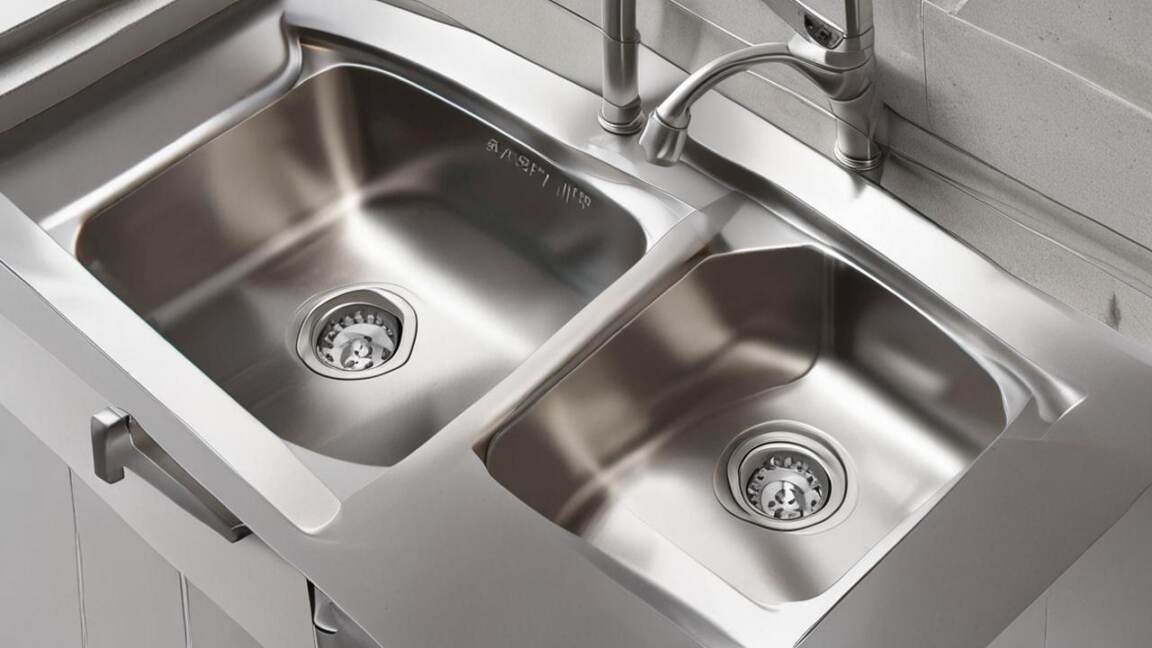
Beyond the gauge, the overall construction quality determines how long your sink lasts. Flimsy metal often results from poor manufacturing rather than just a thin gauge. Look for these signs of solid construction.
First, inspect the sink’s finish. High-quality sinks have a brushed or satin finish that hides scratches and water spots. Cheap sinks may have a glossy finish that shows every mark.
Also, check for uniformity—uneven surfaces indicate poor fabrication.
Second, consider the sink’s depth. Deeper sinks (9-10 inches) are more stable and practical for washing large pots. Shallower sinks (7 inches) may flex more because they have less material resisting the water pressure.
A deep 18 gauge sink can feel more solid than a shallow 16 gauge sink.
- Check the rim thickness: A thick, flat rim indicates quality. Thin tapered rims bend easily.
- Look at the drain location: Offset drains offer more workspace but require precise construction.
- Test the weight: A heavier sink for its size suggests thicker metal and better materials.
- Read reviews: Look for feedback on denting, noise, and warranty claims.
Tip: Tap the sink bowl gently. A solid thud indicates thick metal, while a tinny ring suggests thin gauge.
Finally, examine the sink’s compatibility with your countertop and cabinets. Undermount sinks rely on the countertop for support, so a flexible thin gauge can pull away from the seal. Top-mount sinks have a rim that distributes weight, making gauge slightly less critical.
Step 4: Match Gauge to Your Kitchen Needs
Your choice of stainless steel sink gauge should align with your kitchen usage patterns. A single gauge doesn’t fit all scenarios. Consider these factors to avoid getting flimsy metal that disappoints you.
For heavy home cooks or large families, a 16 gauge sink is worth the investment. It handles cast iron pots, sharp knives, and frequent washing without showing wear. Industry data from Consumer Reports shows that 16 gauge sinks last an average of 20 years, compared to 12 years for 18 gauge sinks in similar conditions.
For moderate use—cooking a few times a week—an 18 gauge sink works perfectly. It balances cost and durability. Many mid-range home improvements pair 18 gauge sinks with quartz countertops for a premium feel.
For rental properties or guest kitchens, a 20 gauge sink may suffice if you’re on a tight budget. But expect to replace it sooner. Real estate agents report that thin sinks are a common complaint from buyers, so consider long-term value.
- Busy kitchen (daily cooking): Choose 16 gauge with undercoating
- Average kitchen (moderate use): Choose 18 gauge with sound pads
- Light use (apartment, office): Choose 18 gauge at minimum, avoid 20
Important: Never choose a sink based solely on price. A cheap sink can lead to costly repairs from dents, leaks, or cabinet damage.
Common Mistakes When Choosing Sink Gauge
Many buyers fall for marketing tricks or overlook critical details. Avoiding these mistakes helps you steer clear of flimsy metal and ensures you get a durable sink.
One common error is assuming all sinks with the same gauge are equal. Steel grade matters too. Look for sinks made from 304 grade stainless steel, which contains 18% chromium and 8% nickel for rust resistance.
430 grade steel is cheaper but less resistant to corrosion and dents.
Another mistake is ignoring the sink’s thickness distribution. Some sinks advertise a thick rim but thin bowl. The gauge refers to the bowl’s thickness, not the edge.
Confirm the spec sheet lists the bowl gauge specifically.
| Mistake | Why It’s Problematic | How to Avoid |
|---|---|---|
| Confusing gauge with quality | Thin gauge still dents | Check steel grade and construction |
| Overlooking undercoating | Noisy, sweaty sink | Look for full undercoating |
| Choosing based on price only | Early replacement needed | Prioritize gauge and features |
| Ignoring installation requirements | Sink may not fit | Measure cabinet space first |
Also, don’t assume thicker is automatically better for every kitchen. A 16 gauge sink is heavy and may require reinforced cabinets for support. Consult with a contractor before installing a heavy gauge sink in existing cabinets.
Why Thicker Isn’t Always Better
While a lower gauge offers durability, it also comes with trade-offs. Understanding these helps you make a balanced choice without overspending or over-engineering your kitchen.
Weight is a key factor. A 16 gauge sink can weigh 30-50 pounds, compared to 15-25 pounds for an 18 gauge sink. Your cabinetry must support this weight, especially for undermount installations.
Weak particleboard cabinets may sag under a 16 gauge sink’s load.
Cost is another consideration. 16 gauge sinks typically cost 30-50% more than 18 gauge sinks from the same brand. For some budgets, the extra $100-200 may not justify the marginal gain in dent resistance, especially in a kitchen with moderate use.
Also, thicker steel can be harder to cut or modify during installation. If you need custom openings for accessories, an 18 gauge sink might be easier to work with. Professional installers often prefer 18 gauge for its balance of strength and workability.
- 16 gauge pros: Maximum dent resistance, premium feel, long lifespan
- 16 gauge cons: Expensive, heavy, requires strong cabinets
- 18 gauge pros: Good strength, lighter, affordable, easier to install
- 18 gauge cons: Slightly less dent resistant, may ding with heavy use
Tip: For most homeowners, an 18 gauge sink with sound dampening offers the best value. Opt for 16 gauge only if you frequently use heavy cookware.
Ultimately, the best gauge depends on your specific needs. Thicker metal is not a one-size-fits-all solution. Evaluate your kitchen habits, installation constraints, and budget to choose wisely.
Frequently Asked Questions
What is the best gauge for a stainless steel sink?
The best gauge for most home kitchens is 18 gauge, which provides good dent resistance and durability without excessive weight or cost. For heavy use, 16 gauge is superior but more expensive.
How can I tell what gauge my sink is?
Check the underside of the sink for a stamped number or look at the product specifications. If the gauge isn’t listed, request it from the manufacturer or look for comprehensive reviews.
Is a 20 gauge stainless steel sink any good?
No, a 20 gauge sink is thin and prone to denting, noise, and staining. It may work for light use but is not recommended for any kitchen that uses heavy cookware or frequent washing.
Does sink gauge affect installation?
Yes, thicker gauges like 16 gauge are heavier and may require reinforced cabinets for undermount installation. Always verify your cabinet’s load capacity before choosing a heavy sink.
What is the difference between 304 and 430 stainless steel for sinks?
304 grade steel contains 18% chromium and 8% nickel, offering superior rust and dent resistance. 430 grade has less nickel, making it cheaper but more prone to corrosion and dents, especially in thinner gauges.
Final Thoughts
Choosing the right stainless steel sink gauge comes down to balancing thickness, features, and your kitchen’s demands. Aim for 16 or 18 gauge with sound dampening to avoid flimsy metal that compromises performance. Prioritize construction quality over price for long-term satisfaction.
With these tips, you’ll select a sink that stays solid and quiet for years to come.

Leave a Reply