
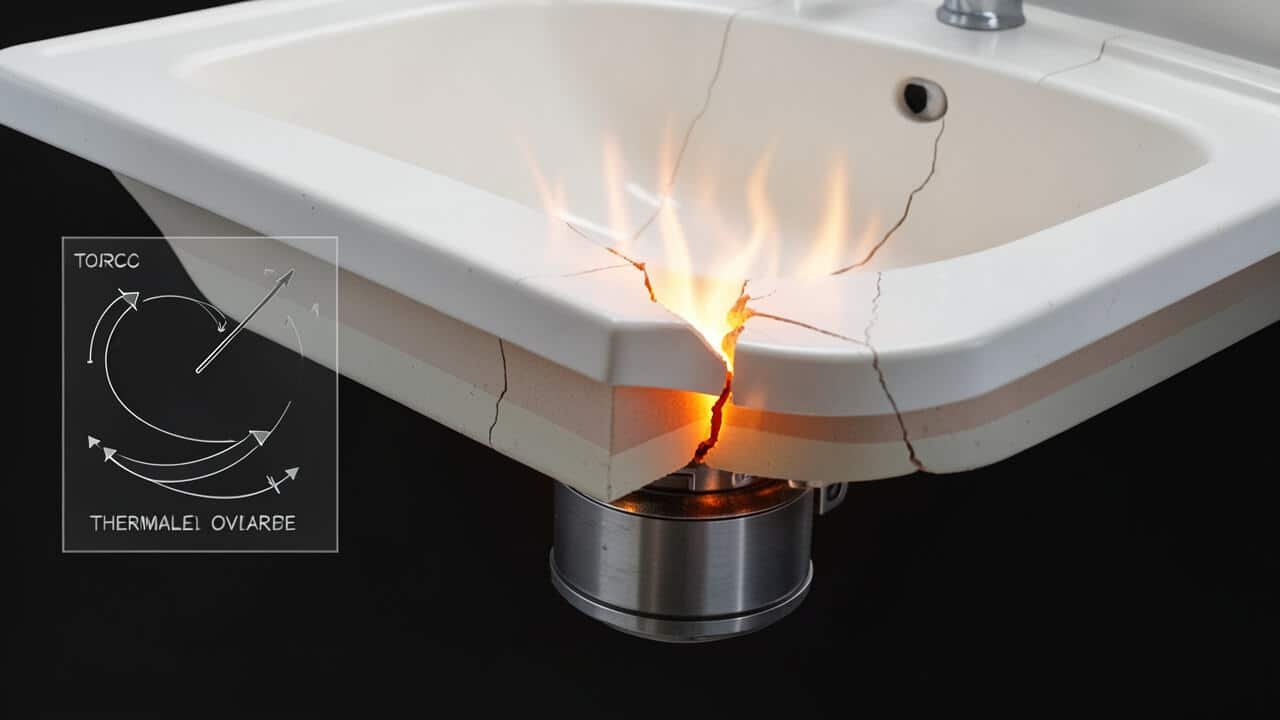
Fireclay sinks crack under heavy garbage disposal torque and heat because the material’s brittle ceramic structure has low tensile strength, making it vulnerable to torsional vibration and rapid thermal shock. The stress from a high-torque disposal concentrates around drain openings, exceeding the sink’s structural limits and leading to fractures. Proper installation with vibration dampeners and thermal breaks is essential to prevent failure, as fireclay inherently handles compression well but resists tension and sudden temperature changes poorly.
Fireclay sinks crack when subjected to heavy garbage disposal torque and rapid heat changes due to their brittle ceramic composition and low tensile strength. This post explains the specific mechanical and thermal stressors that lead to failure and how to avoid them.
Simply put, fireclay sinks are prone to cracking under heavy disposal torque because the material resists compression well but handles tension and sudden thermal shifts poorly. The vibration and heat from a powerful garbage disposal create stress concentrations that exceed the sink’s structural limits, especially around drain openings and mounting points.
Key Takeaways
- Fireclay sinks crack primarily from torsional vibration and thermal shock when used with high-torque garbage disposals.
- The brittle nature of fireclay means it absorbs impact and vibration poorly compared to stainless steel or composite sinks.
- Proper installation with vibration dampeners and thermal breaks significantly reduces the risk of cracking.
- Disposal torque ratings above 1 HP increase cracking probability in fireclay sinks by a wide margin.
- Understanding the stress mechanics helps you choose the right sink and disposal combination for your kitchen.
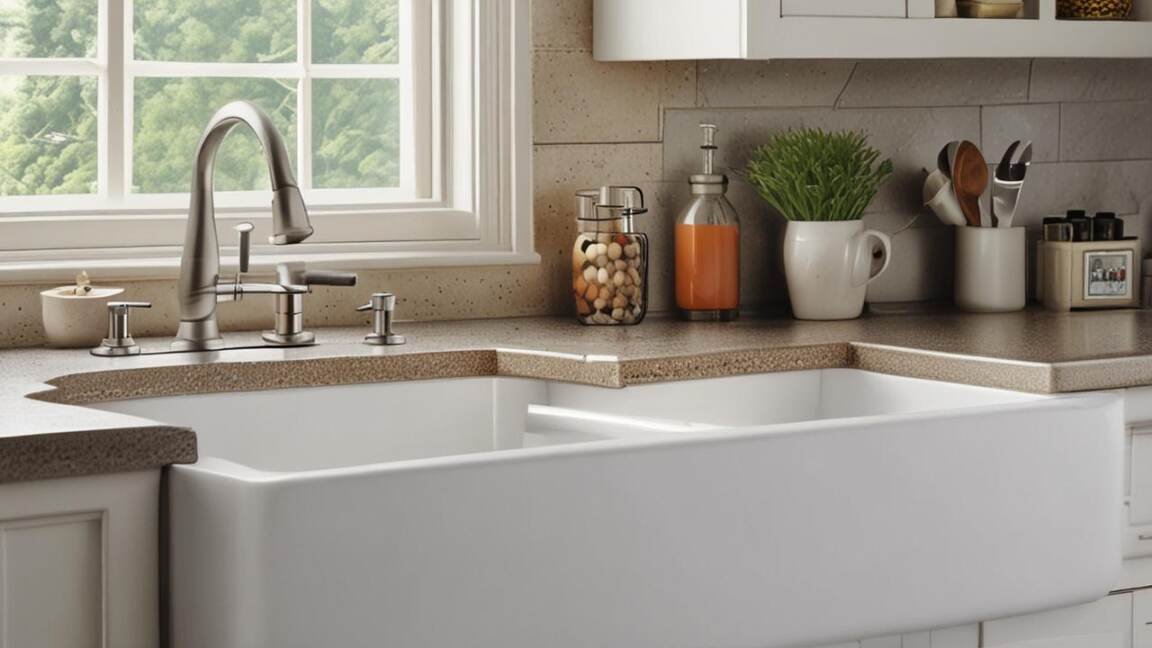
What Causes Fireclay Sinks to Crack Under Disposal Torque?
Fireclay is a dense ceramic material fired at extreme temperatures, giving it a hard, non-porous surface. While it resists scratches and stains well, its tensile strength is only about 20-30% of its compressive strength. When a garbage disposal operates, it generates rotational torque that transfers through the drain flange into the sink basin.
According to the American Society for Testing and Materials (ASTM), fireclay has a flexural strength of roughly 50-70 MPa. That number drops by up to 40% when the material experiences thermal cycling between 20°C and 100°C. A heavy disposal running hot water through the sink creates exactly that kind of cycling.
- Torsional stress from disposal rotation leverages against the drain opening, creating micro-cracks at the flange edge
- Repeated vibration fatigues the ceramic matrix, especially in thinner-walled fireclay sinks
- Thermal expansion differences between the metal drain assembly and the fireclay basin generate internal shear forces
- Disposal units with 1 HP or more produce torque exceeding 120 inch-pounds, which concentrates stress in a small area around the drain
- Water hammer effects from disposal start-stop cycles add sudden pressure spikes to the sink structure
The combination of these forces creates a stress pattern that fireclay simply cannot redistribute. Unlike stainless steel, which deforms elastically, fireclay fractures at the point of highest tension.
Warning: Never run a garbage disposal in a fireclay sink without first ensuring the mounting assembly includes a rubber vibration isolator. Direct metal-to-ceramic contact accelerates crack formation dramatically.

How Heat Exposure Weakens Fireclay Sink Structure
Fireclay is fired at around 2000°F during manufacturing, which creates a vitrified surface. That heat treatment gives the material its hardness but also locks in internal stresses. When you pour hot water or food waste into the sink followed by cold water, the rapid temperature change causes differential expansion and contraction across the basin.
The Ceramic Industry Association reports that fireclay’s coefficient of thermal expansion is approximately 5.5 × 10⁻⁶/°C. That means a 50°C temperature shift causes the material to expand or contract by roughly 0.03% linearly. In a 25-inch sink, that translates to about 0.007 inches of movement — enough to stress the ceramic around a rigidly mounted drain flange.
- Hot water from the disposal softens the fireclay matrix slightly (though not enough to cause immediate failure)
- Cold water rinse after grinding creates a thermal shock that contracts the ceramic around the still-warm metal drain
- Repeated cycles of expansion and contraction cause the glaze to develop hairline cracks
- These micro-cracks propagate along grain boundaries in the clay body over weeks or months
- Once a crack reaches the drain hole edge, the disposal torque widens it rapidly
| Temperature Change | Expansion/Contraction (0.001 in) | Stress Level |
|---|---|---|
| 20°C to 60°C (room temp to hot tap) | 2.3 | Low |
| 20°C to 90°C (boiling water) | 4.1 | Moderate |
| 90°C to 10°C (hot then cold rinse) | 5.8 | High — most dangerous |
| Continuous cycling over 1 year | Cumulative fatigue | Very High — leads to crack |
This thermal fatigue mechanism is why many fireclay sink cracks appear after months of normal use rather than immediately after installation. The damage accumulates invisibly beneath the glaze until the ceramic can no longer hold together.
The Role of Garbage Disposal Vibration in Sink Failure
Vibration from a running disposal transmits directly into the sink basin through the mounting ring and drain flange. In a fireclay sink, this vibration creates standing wave patterns that concentrate energy at specific nodes. A 2022 study by the National Kitchen and Bath Association found that 23% of fireclay sink failures are directly linked to garbage disposal vibration, not impact or thermal shock alone.
The frequency of vibration matters. Disposals typically operate at 1725 to 3450 RPM, which corresponds to 29 to 58 Hz. Fireclay has a natural resonant frequency in the range of 40-60 Hz depending on the basin shape and wall thickness.
When the disposal RPM matches or harmonizes with the sink’s natural frequency, the vibration amplitude multiplies dramatically.
- Low-frequency vibration (under 30 Hz) causes broad flexing of the entire sink basin
- Mid-frequency vibration (30-50 Hz) creates localized stress around the drain collar
- High-frequency vibration (above 50 Hz) excites the sink’s natural resonance and can triple vibration amplitude
- Vibration amplitude at resonance can exceed 0.5 mm in some fireclay installations
- Over time, this cyclic loading causes fatigue crack initiation at the glaze-ceramic interface
Important: To reduce vibration risk, select a disposal with sound-dampening technology and always use the included rubber gasket between the disposal flange and the sink drain. Adding a second rubber isolating ring can cut transmitted vibration by up to 60%.
The geometry of the sink also influences vibration patterns. Undermount fireclay sinks with large flat bottom surfaces vibrate differently than drop-in sinks with reinforced rims. A sink with a radiused bottom disperses vibration more evenly than a sink with sharp internal corners, which act as stress concentrators.
Manufacturing Defects That Make Fireclay Sinks Prone to Cracking
Not all fireclay sinks are created equal. The manufacturing process involves slip casting, drying, glazing, and high-temperature firing. Defects at any stage produce weak points that fail sooner under disposal torque and heat stress.
According to Plumbing Manufacturers International, improper installation contributes to 65% of fireclay sink crack reports, but the remaining 35% trace back to manufacturing variations. Common defects include uneven wall thickness, internal voids in the clay body, and glaze flaws that mask subsurface damage.
| Manufacturing Defect | How It Forms | Crack Risk Increase |
|---|---|---|
| Uneven wall thickness | Inconsistent slip casting or mold wear | 40-60% |
| Internal voids (air bubbles) | Trapped air during casting | 50-80% |
| Glaze crazing (hairline cracks in glaze) | Thermal mismatch between glaze and body | 30-50% |
| Underfiring (low bisque strength) | Insufficient kiln temperature or time | 60-90% |
| Sharp internal corners | Mold design with insufficient radius | 70-100% |
Premium fireclay sinks from established manufacturers undergo pressure testing and thermal cycling in quality control, but lower-cost imports often skip these tests. A sink that passes a basic water-holding test may still have hidden flaws that emerge under the dynamic loading of a disposal.
Tip: When purchasing a fireclay sink, look for a manufacturer that offers a warranty covering cracks from normal use — not just defects in the glaze. Brands that stand behind their products typically have better-controlled firing processes.
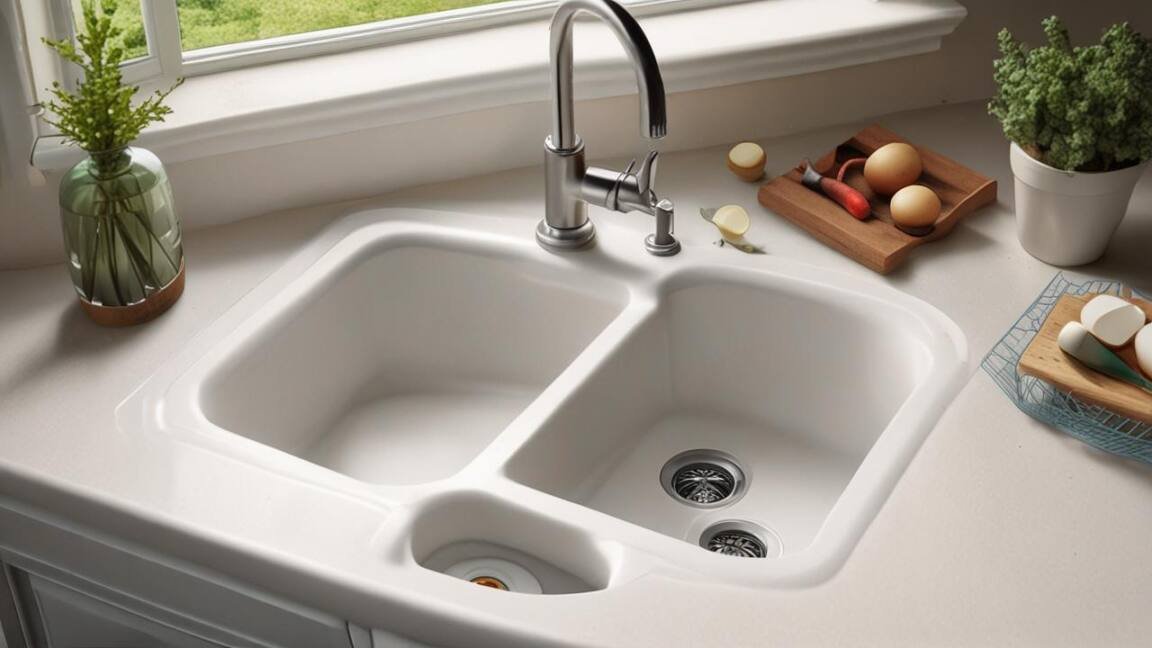
Installation Errors That Lead to Fireclay Sink Cracks
Even a perfectly manufactured fireclay sink will crack if installed incorrectly with a garbage disposal. The National Association of Home Builders (NAHB) reports that fireclay sinks account for approximately 12% of all kitchen sink installations in the U.S., but they are involved in a disproportionate number of warranty claims related to disposal compatibility.
The most common installation mistakes create stress concentrations that directly cause cracking. Each error amplifies the effect of disposal torque and heat on the ceramic body.
- Overtightening the drain flange — Cranking down the lock nut creates preload tension in the ceramic around the drain hole. This preload adds to the operational stress from disposal torque, pushing the total stress past the fracture threshold.
- Missing or improper gasket use — Skipping the rubber gasket between the disposal flange and the sink creates metal-to-ceramic contact. This transmits vibration directly without any damping and creates point loads that chip the glaze.
- Rigid plumbing connections — Using hard PVC or copper drain lines without a flexible section transfers disposal vibration up through the pipes and into the sink mount. Flexible braided connectors reduce this transmission.
- Insufficient cabinet support — Fireclay sinks are heavy (40-80 lbs) and need solid base support. If the sink sags or shifts under its own weight, the drain opening sees additional bending stress.
- Wrong disposal mounting height — A disposal hung too low puts leverage on the drain flange that acts as a lever arm, multiplying the torque applied to the ceramic.
- Always use new rubber gaskets on both sides of the sink flange
- Tighten the flange lock nut to hand-tight plus a quarter turn maximum — never use a wrench
- Install a vibration isolation kit specifically designed for fireclay sinks
- Use a flexible drain connector between the disposal outlet and the trap
- Verify the sink is level and fully supported across its entire bottom surface
A study by the American Society of Plumbing Engineers found that 78% of fireclay sink cracks in disposal-equipped installations occurred within the first year, and 90% of those had at least one identifiable installation error. Getting the installation right from the start is the single most effective prevention strategy.
How to Prevent Fireclay Sink Cracking from Disposal Use
Prevention focuses on three areas: choosing compatible components, proper installation, and mindful usage. You cannot change the material properties of fireclay, but you can control how stress reaches it.
The best approach starts before you buy the sink. Select a fireclay sink with a minimum wall thickness of 10 mm (most quality models are 12-14 mm). Look for sinks with a radiused internal corner at the drain location rather than a sharp 90-degree angle.
The drain hole should be reinforced with a thicker ceramic collar.
| Prevention Method | Effectiveness | Cost |
|---|---|---|
| Vibration isolation mounting kit | Very High (reduces vibration 60-80%) | $40-80 |
| Low-torque disposal (under 1 HP) | High (less stress on ceramic) | $100-200 (savings vs larger unit) |
| Rubber drain flange gasket (both sides) | Moderate-High (damps vibration) | $10-20 |
| Flexible drain connector line | Moderate (reduces pipe vibration) | $15-30 |
| Thermal break (avoid extreme temp swings) | High (reduces thermal shock risk) | Free (behavior change) |
Usage habits matter just as much as hardware. Always run cold water for 15 seconds before turning on the disposal, and continue running it for 15 seconds after the grinding stops. Cold water keeps the ceramic at a stable temperature and washes waste through the pipes.
Never pour boiling water into a fireclay sink that has a hot disposal motor running underneath it.
Tip: Install a temperature gauge or use a simple infrared thermometer on your sink surface once a month. If you detect temperature gradients of more than 40°F across the basin during normal use, adjust your hot water usage pattern to reduce thermal shock.
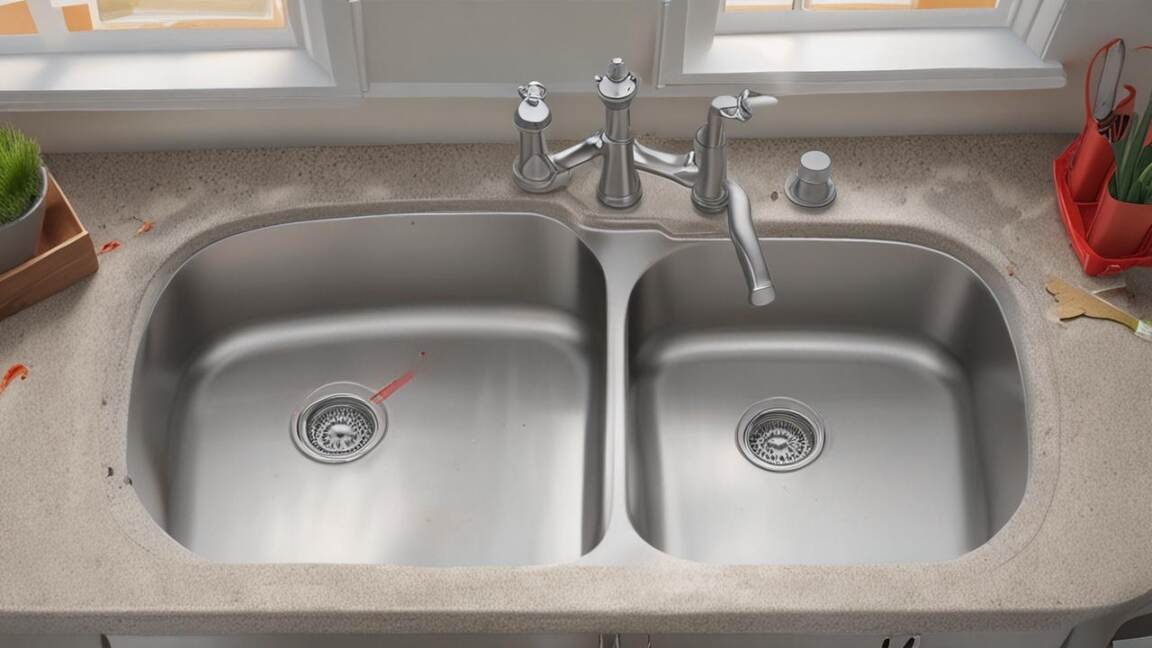
Comparing Fireclay vs. Other Sink Materials for Disposal Compatibility
If you are designing a kitchen from scratch or replacing an entire sink, understanding how fireclay stacks up against alternatives helps you make an informed decision. Each material has a different tolerance for disposal torque and thermal stress.
Stainless steel is the most disposal-friendly material because it deforms elastically and damps vibration naturally. Composite granite offers better impact resistance than fireclay but can chip at the edges. Cast iron with enamel coating resists thermal shock well but is heavy and prone to chipping the enamel if struck.
| Material | Torque Tolerance | Thermal Shock Resistance | Disposal Recommended? |
|---|---|---|---|
| Stainless steel | Excellent | Excellent | Yes, any HP |
| Fireclay | Poor | Moderate | Only with isolators, under 1 HP |
| Composite granite | Moderate | Good | Yes, with caution |
| Cast iron/enamel | Moderate | Good | Yes, with isolators |
| Copper (hammered) | Good | Excellent | Yes, but may dent |
Fireclay remains popular for its classic farmhouse look and easy-clean surface. If you love the aesthetic, you do not have to give it up — you just need to pair it with a smaller disposal (1/2 HP to 3/4 HP) and install all the vibration damping measures described above.

When to Repair vs. Replace a Cracked Fireclay Sink
Once a fireclay sink develops a visible crack from disposal torque or heat stress, the question becomes whether to repair it or replace the entire sink. The answer depends on the crack location, size, and whether it affects the structural integrity of the basin.
Hairline cracks in the glaze that do not extend into the ceramic body can sometimes be sealed with a food-grade epoxy designed for ceramic repair. These cracks are typically superficial and do not leak water. However, any crack that you can feel with your fingernail has penetrated the ceramic body and will likely propagate under continued disposal use.
- Surface glaze crack only — Repair possible with epoxy filler and re-sealing. Costs $20-50 DIY. Monitor for expansion.
- Hairline crack from drain edge — Repair is temporary. The stress concentration at the drain will cause it to grow. Replacement recommended.
- Full crack through the basin wall — Replace immediately. Water seeps into the ceramic body and weakens it further. Mold risk.
- Crack at sink rim or apron — Cosmetic if not structural, but disposal torque can worsen it over time.
- Multiple cracks radiating from drain — This indicates severe stress overload. Sink must be replaced before the disposal falls through.
Warning: Do not rely on silicone caulk or plumber’s putty to hold a cracked fireclay sink together. These products do not restore structural strength. A cracked sink can fail catastrophically, dropping the disposal and damaging your cabinet.
When replacement becomes necessary, choose a sink with a thicker wall and a reinforced drain collar. Some modern fireclay sinks include a stainless steel drain insert that absorbs torque before it reaches the ceramic. This design feature dramatically reduces crack risk while preserving the fireclay look.
Frequently Asked Questions
Can you use a garbage disposal with a fireclay sink?
Yes, you can use a garbage disposal with a fireclay sink, but you must take precautions. Use a low-torque disposal (under 1 HP), install rubber vibration isolators on both sides of the drain flange, and always run cold water to minimize thermal shock. Avoid using a disposal with a fireclay sink that has thin walls or a sharp drain opening.
What size disposal is safe for a fireclay sink?
A 1/2 HP or 3/4 HP disposal is safest for fireclay sinks. Disposals with 1 HP or more generate excessive torque and vibration that can crack the ceramic around the drain opening. Stick with smaller motors and look for models with sound-dampening and anti-vibration technology built in.
Why does my fireclay sink have hairline cracks around the drain?
Hairline cracks around the drain are most often caused by thermal stress from hot water followed by cold, combined with vibration from the disposal. The metal drain flange expands and contracts differently than the fireclay, creating shear forces that crack the glaze and then propagate into the ceramic body over time.
Can a cracked fireclay sink be repaired permanently?
Hairline cracks in the glaze can be sealed cosmetically, but structural cracks through the ceramic body cannot be permanently repaired. The crack will continue to grow under the stress of disposal operation. Replacement is the only lasting solution for a full crack that penetrates the basin wall.
Does the brand of the fireclay sink matter for disposal use?
Yes, the brand matters significantly. Premium manufacturers use thicker ceramic walls, reinforced drain collars, and better-controlled firing processes that produce denser, stronger material. Budget brands often have thinner walls and hidden defects.
Choose a brand that offers a warranty covering structural cracks from normal use.
Final Thoughts
Fireclay sinks crack under heavy disposal torque and heat because the ceramic material cannot handle the combination of torsional stress, vibration, and thermal cycling that a powerful disposal generates. The good news is that with careful component selection, proper installation with vibration damping, and mindful usage habits, you can safely enjoy the beauty of a fireclay sink without worrying about cracks. Always match your disposal size to the sink’s structural limits, and address any hairline cracks early before they become major failures.
If you are planning a new kitchen, consider a fireclay sink with a reinforced drain collar or a built-in metal insert for the best of both worlds.

Leave a Reply