
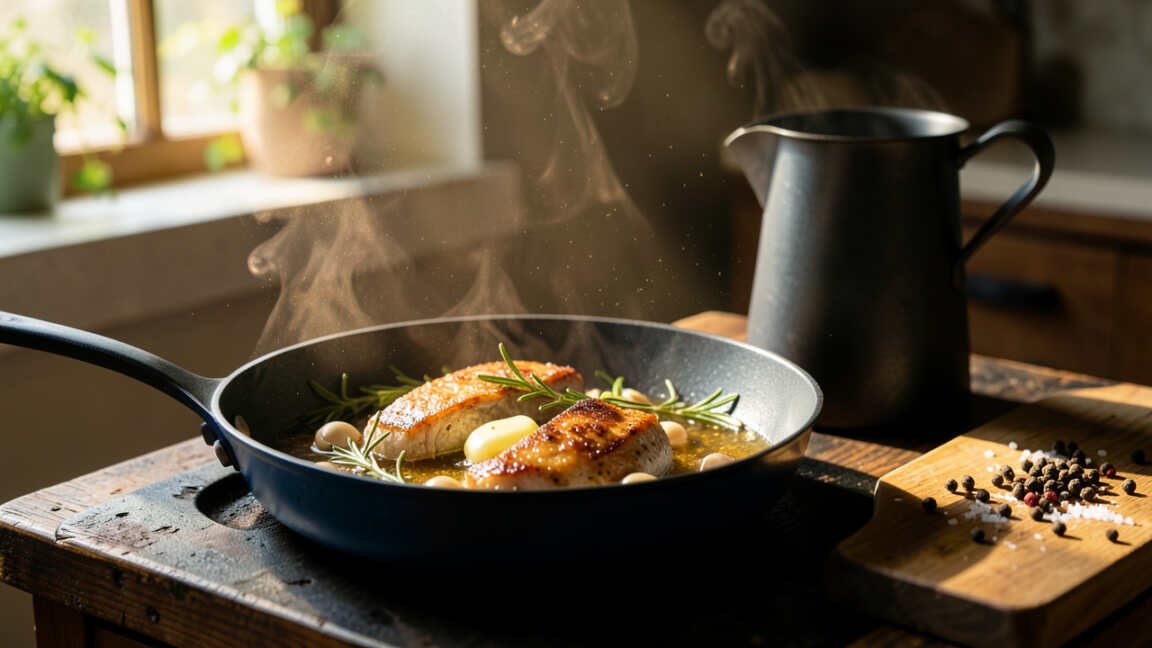
Wide sauté pans beat tall pots for pan-roasting meat because their larger surface area allows moisture to evaporate quickly, letting the meat reach the 285°F needed for the Maillard reaction and a proper crust. Tall sides trap steam, keeping the meat’s surface below 212°F until all liquid evaporates, which prevents browning and degrades fond development. For reliable searing and pan sauces, choose a wide pan to maximize evaporation and fond distribution.
Wide sauté pans beat tall ones for pan-roasting meat because of basic physics. Water evaporates at 212 degrees Fahrenheit. The Maillard reaction needs over 285 degrees. If your pan traps steam, your meat will never reach that temperature.
Quick Verdict: In short, wide sauté pans beat tall ones for pan-roasting meat because wide pans maximize surface area for moisture evaporation. Tall pots trap steam, which lowers the cooking temperature and prevents the Maillard reaction. A wide pan gets hotter, creates a better crust, and builds superior fond for pan sauces.
This article explains the science behind pan shape. You will learn why tall pots fail and how to choose the right pan for restaurant-quality results at home.
Key Takeaways
- Wide sauté pans beat tall ones for pan-roasting meat because they allow moisture to escape, letting the meat reach the 285 degrees Fahrenheit needed for browning.
- Tall pots create a steam chamber effect that keeps the surface of the meat below 212 degrees Fahrenheit until all liquid evaporates, which can ruin the crust.
- The fond left behind after searing spreads thin in a wide pan, making it easier to deglaze without burning compared to the deep, concentrated fond in a tall pot.
- Stainless steel and cast iron wide pans provide the best heat retention and distribution for consistent pan-roasting results.
- Choosing a pan with a 12-inch diameter and 3-quart capacity gives you the versatility to sear, sauté, and braise without sacrificing surface area.
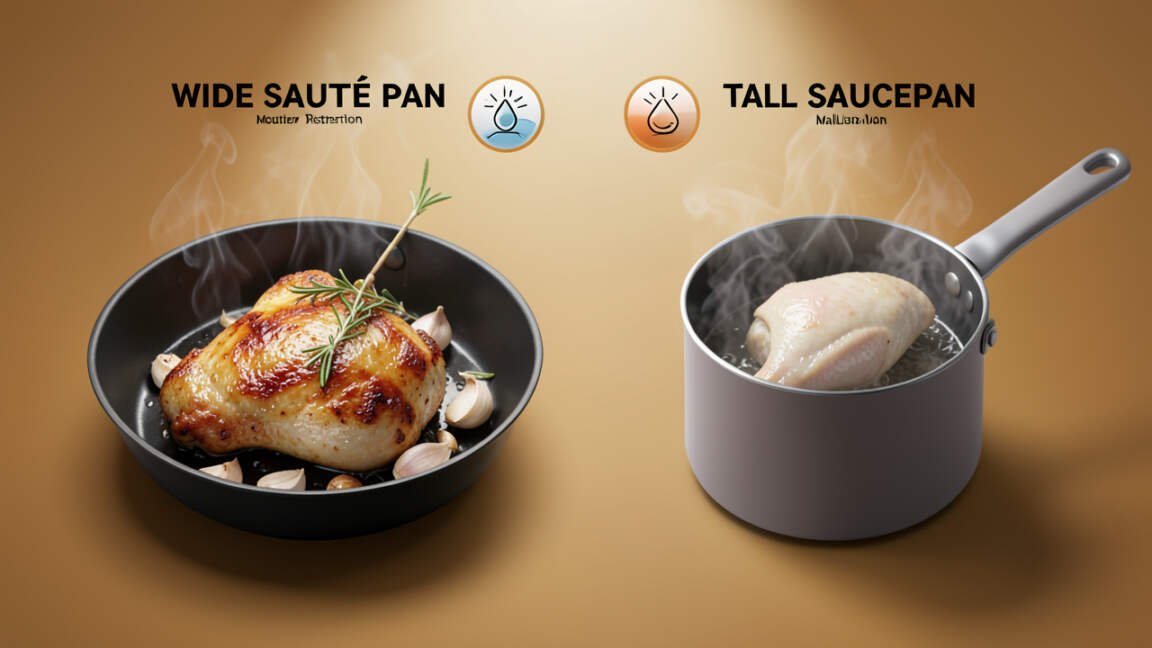
Quick Comparison Table
| Feature | Wide Sauté Pan | Tall Pot (Stockpot/Saucier) |
|---|---|---|
| Surface Area | High, promotes evaporation | Small, traps steam |
| Maillard Reaction | Excellent, reaches high heat | Poor, temps stay low |
| Searing Capability | Elite, gets screaming hot | Limited, burns before cooking through |
| Deglazing | Easy, fond spreads thin | Harder, fond burns quickly |
| Versatility | High (sear, sauté, braise) | Low (soups, stocks, boils) |
| Best For | Pan-roasting steaks, chicken, fish | Pasta, stews, steaming vegetables |
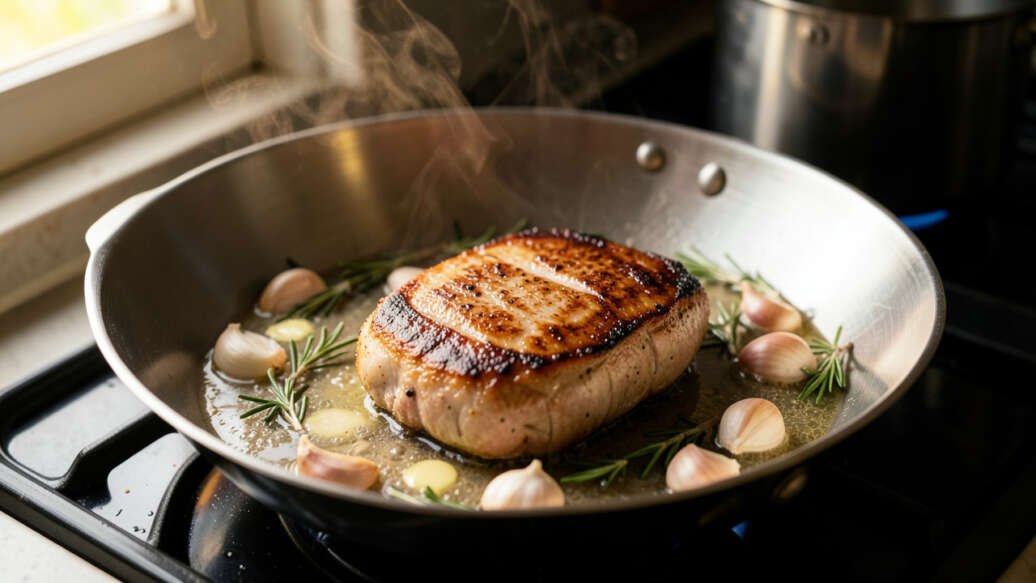
What Is Pan-Roasting
Pan-roasting is a hybrid cooking technique. You start by searing meat on the stovetop at high heat. Then you transfer the pan to the oven to finish cooking the interior evenly.
The goal is a golden-brown crust with a tender, juicy inside. This crust comes from the Maillard reaction. According to food scientist J. Kenji López-Alt, the Maillard reaction begins at around 285 degrees Fahrenheit.
The challenge is getting the pan hot enough to reach that temperature without burning the fond or the exterior of the meat. The shape of your pan determines whether you succeed or fail.
Why Surface Area Matters for Searing
Surface area is the most important factor in pan-roasting. A wide pan exposes more of the cooking surface to the meat. It also allows steam to escape instead of condensing on the sides and dripping back onto the food.
Water boils at 212 degrees Fahrenheit. As long as liquid water remains in the pan, the surface temperature of the meat cannot rise above 212 degrees. The crust only forms once all moisture has evaporated.
According to Serious Eats, a crowded pan or a deep pan with tall sides creates a steam chamber. The trapped moisture delays browning by several minutes. This often results in overcooked meat by the time you finally get a sear.
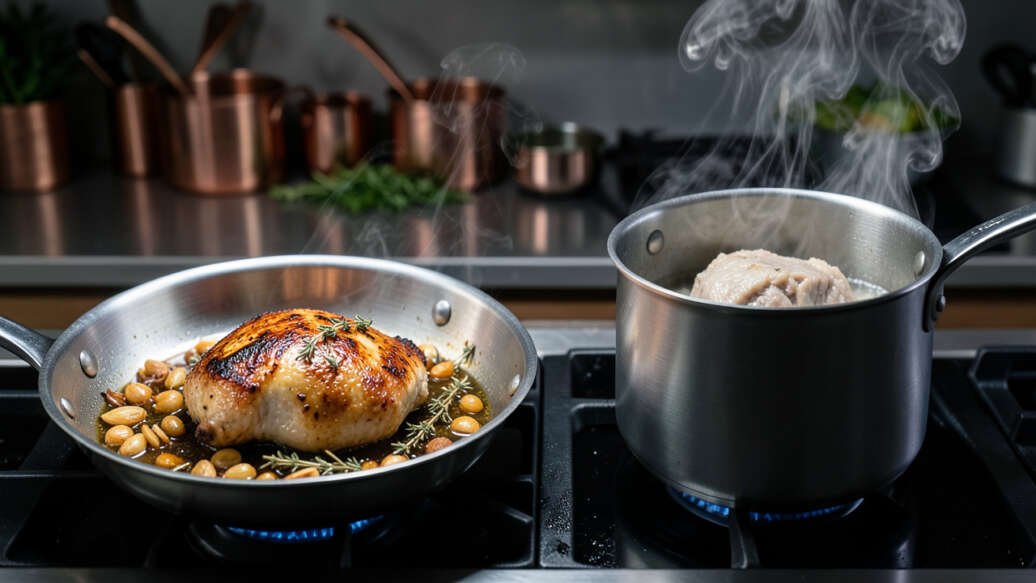
How Tall Pots Ruin Pan-Roasting
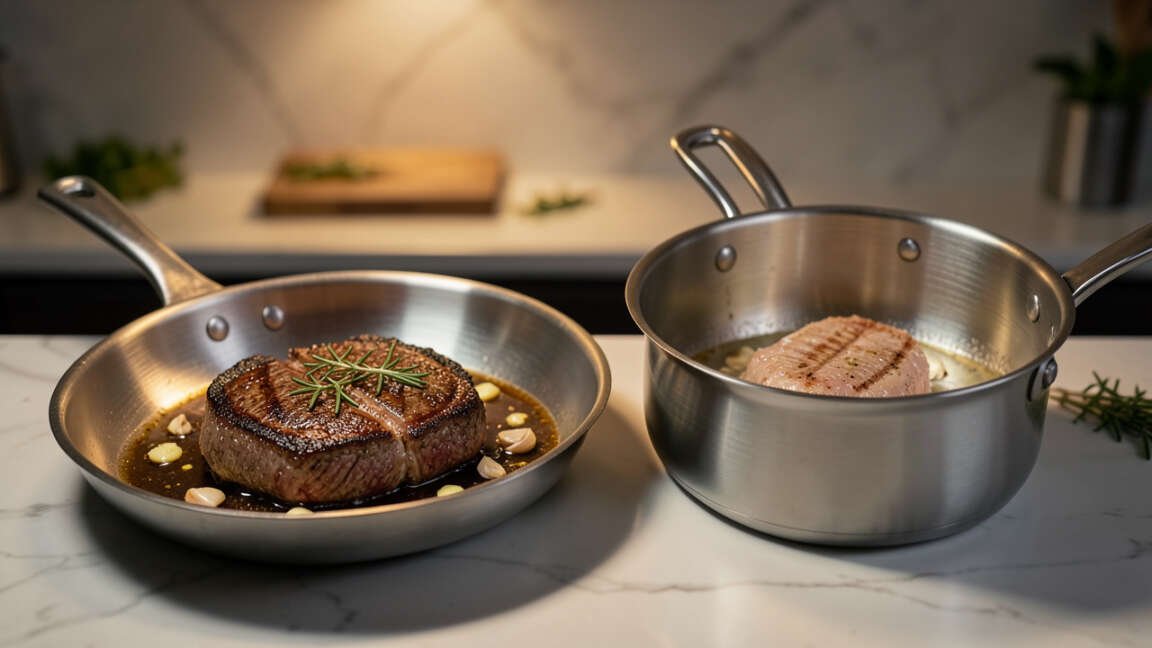
Tall pots, like stockpots and deep sauciers, are designed for liquids. They excel at holding soups, stocks, and pasta water. They fail at dry-heat cooking because of their geometry.
Tall pots beat wide pans for tasks involving large volumes of liquid. But for pan-roasting, the tall sides become a liability. Here is what happens inside a tall pot when you try to sear meat:
- The sides of the pot block radiant heat from the burner, creating a cooler zone above the meat.
- Steam rises from the meat, hits the tall cool sides, and condenses back into water droplets.
- These water droplets fall back onto the meat, keeping the surface wet and cool.
- The temperature stays below 212 degrees Fahrenheit until all the water evaporates.
- By the time the water is gone, the meat has already released too much internal moisture, making it dry and tough.
Warning: Never use a stockpot for pan-roasting. The shape traps steam and prevents the Maillard reaction. You will end up with gray, boiled meat and a burnt layer of fond at the bottom of the pot.
The Science of Moisture Evaporation
Getting a good sear is a battle against water. Meat is roughly 75 percent water. When you add meat to a hot pan, that water is released and begins to evaporate.
In a wide sauté pan, the water spreads out across the large surface area. It evaporates within seconds. The pan temperature recovers quickly, and the meat begins to brown.
In a tall pot, the water pools at the bottom. The tall sides trap the vapor, creating a humid microclimate. The USDA recommends leaving at least one-quarter inch of space between pieces of meat for proper browning. In a tall pot, even with space between pieces, the trapped steam prevents browning.
Evaporation Rate Comparison
The width of the pan directly impacts evaporation speed. A 12-inch wide pan has roughly 113 square inches of surface area. A 6-inch wide pot has only 28 square inches. The wide pan exposes four times more liquid to the heat source.
This means the wide pan evaporates moisture four times faster. Your meat starts browning in under two minutes instead of waiting over five minutes for the water to boil off.
Fond Development and Deglazing
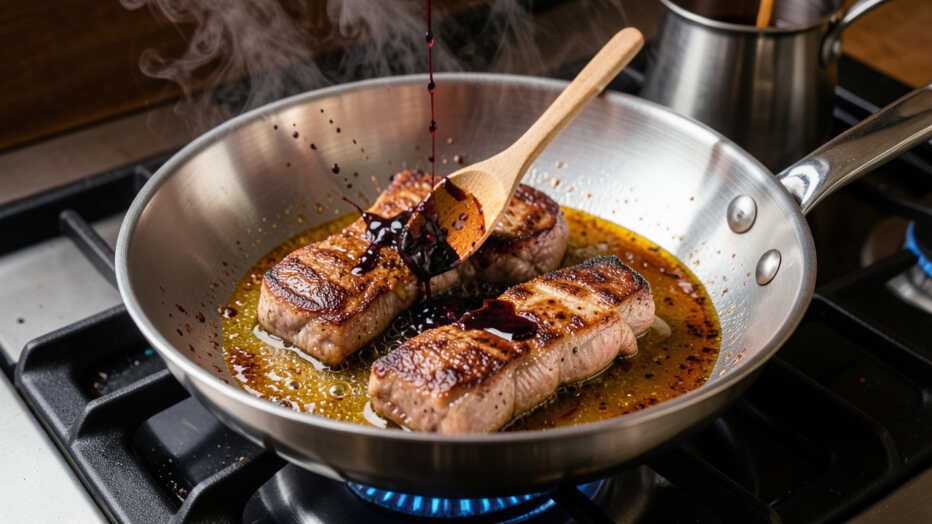
Fond is the layer of browned bits that sticks to the pan after searing. It is pure flavor. The best pan sauces start with a good fond.
In a wide sauté pan, the fond spreads across the entire flat bottom. When you add wine or stock to deglaze, the liquid coats the whole surface. The fond dissolves quickly and evenly.
In a tall pot, the fond is concentrated in a narrow area at the bottom. It is much thicker and harder to control. The high sides make it difficult to scrape with a wooden spoon. The concentrated fond often burns before the rest of the sauce is ready.
Common Myths vs Facts
Many home cooks believe tall pots are better for certain tasks. Here are the most common myths about pan-roasting and the facts that prove them wrong.
Myth 1: Tall sides prevent splattering, making them better for searing
Tall sides do reduce oil splatter. But they also trap steam, which softens the crust. The trade-off is not worth it for pan-roasting. Use a wide sauté pan with a splatter screen instead. You get the best of both worlds.
Myth 2: High heat in a tall pot works the same as a wide pan
High heat in a tall pot creates a different problem. The bottom of the pot gets extremely hot, but the sides remain cool. The meat burns on the bottom before the inside cooks through. Wide pans distribute heat more evenly across the cooking surface. According to Cook’s Illustrated, a wide pan with a 12-inch diameter allows for optimal evaporation and heat distribution.
Myth 3: You can crowd the meat into a tall pot and it will be fine
Crowding is the enemy of browning. When you crowd meat into a tall pot, the moisture from each piece combines. The pool of liquid deepens. The meat steams instead of sears. A wide sauté pan gives you the surface area to avoid crowding. Cook in batches if needed. The results will be far better.
How to Choose the Right Wide Sauté Pan
Not all wide pans are equal. The material, weight, and design matter. Here are the key factors to consider when buying a pan for pan-roasting.
Material
- Stainless steel with an aluminum core: This is the best choice for pan-roasting. Stainless steel resists corrosion and reacts well with acidic deglazing liquids. The aluminum core provides even heat distribution. Brands like All-Clad D3 and Made In are top options.
- Cast iron: Cast iron has excellent heat retention. It is great for searing but heavy to handle. Seasoning is required to prevent sticking. The rough surface can make deglazing harder.
- Nonstick: Nonstick pans prevent fond formation. You cannot deglaze properly or build a quality pan sauce. Avoid nonstick for pan-roasting.
Size and Dimensions
Look for a pan with at least 12 inches in diameter. This gives you enough surface area to sear two chicken thighs or a 12-ounce steak comfortably. The capacity should be between 3 and 5 quarts. This is large enough for pan sauces and braising but not so large that it becomes unwieldy.
Weight and Balance
The pan should feel heavy but manageable. A lightweight pan will cool down too quickly when you add meat. A very heavy pan may be difficult to move from stovetop to oven. Look for pans that weigh between 3 and 5 pounds for the best balance.
Lid Fit
A tight-fitting lid adds versatility. After searing meat in a wide sauté pan, you can add liquid, cover it, and finish cooking in the oven or on the stovetop. This is perfect for braised dishes like coq au vin or chicken cacciatore. Using a meat thermometer ensures your meat reaches a safe internal temperature without overcooking.
Pro Tips for Pan-Roasting in a Wide Pan
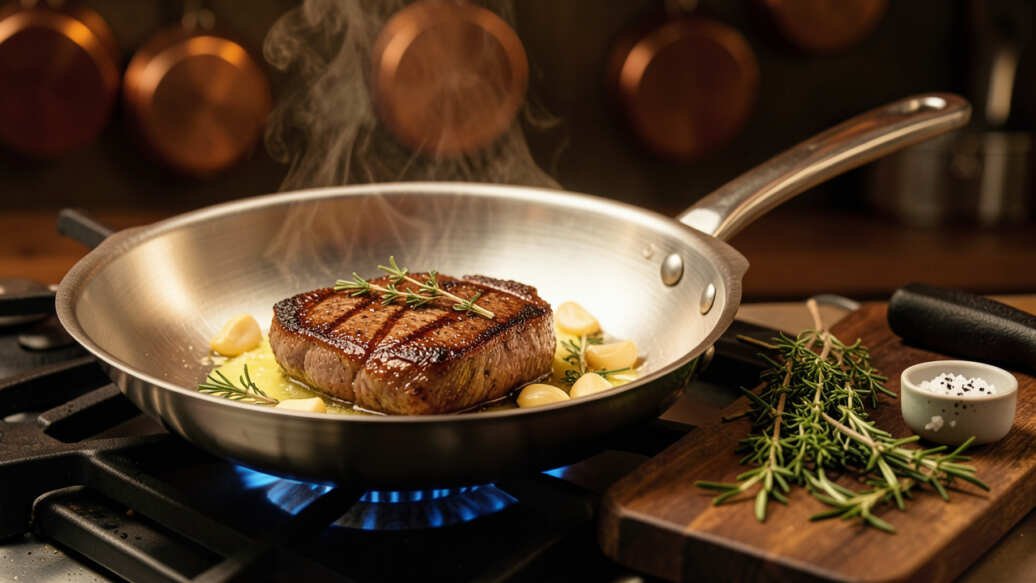
Mastering pan-roasting requires a few key techniques. Follow these tips to get the best results every time. The larger surface area allows water to evaporate quickly, enabling the Maillard reaction that creates deep flavor.
- Dry the meat thoroughly. Use paper towels to pat the meat dry before seasoning. Any surface moisture will delay browning. According to Serious Eats, a dry surface is the single most important factor for a good sear.
- Preheat the pan properly. Place the wide sauté pan over medium-high heat for 3 to 5 minutes. The pan should be smoking hot before you add oil. You can test the heat by sprinkling a drop of water onto the pan. It should ball up and skate across the surface.
- Use a high-smoke-point oil. Avocado oil, grapeseed oil, and refined light olive oil are good choices. They can handle temperatures above 400 degrees Fahrenheit without burning. Add the oil just before the meat, not while the pan is empty.
- Leave space between pieces. Do not crowd the pan. Cook in batches if necessary. Overcrowding drops the pan temperature and releases excess moisture. The result is steamed meat instead of seared meat.
- Use a meat thermometer. Do not rely on color or time alone. An instant-read thermometer gives you precise control. Remove the meat from the heat about 5 degrees below your target temperature. Carryover cooking will finish the job.
Tip: For the best pan sauce, after removing the meat, pour off excess fat from the pan. Add a splash of wine or stock and scrape up the fond with a wooden spoon. Let the liquid reduce by half, then swirl in a tablespoon of cold butter. Season with salt and pepper.
Frequently Asked Questions
Can I pan-roast in a nonstick pan?
Nonstick pans cannot produce fond. Fond is the browned bits that build the flavor of pan sauces. Without fond, your pan sauce will be thin and bland. Use a stainless steel or cast iron pan for pan-roasting.
Is a cast iron skillet better than a wide sauté pan for pan-roasting?
Both work well. Cast iron holds heat longer but is heavy and requires maintenance. Stainless steel responds faster to temperature changes and is easier to deglaze. A wide sauté pan with a lid is more versatile for switching between stovetop and oven.
What size wide sauté pan do I need for a family of four?
A 12-inch pan with a 4-quart capacity is ideal for a family of four. You can sear two chicken breasts or four pork chops in one batch. The large surface area also works well for sautéing vegetables and making pan sauces.
Can I use a deep saucepan if I cut the meat into smaller pieces?
Cutting meat into smaller pieces does not solve the steam problem. Tall sides still trap moisture. The smaller pieces will release more surface water relative to their size, making the situation worse. Stick with a wide sauté pan.
Why does my chicken always steam instead of sear in my pot?
The most likely cause is too much moisture in the pan. Pat the chicken dry before cooking. Do not crowd the pot. Make sure the pan is hot enough before adding the chicken. If you are using a tall pot, switch to a wide sauté pan to allow steam to escape.
Final Thoughts
Wide sauté pans beat tall ones for pan-roasting meat because they manage moisture better. The larger surface area allows water to evaporate quickly, which lets the meat reach the high temperatures needed for the Maillard reaction. Tall pots trap steam and prevent proper browning. Invest in a quality wide stainless steel pan, dry your meat thoroughly, and get the pan hot before you start cooking. Your pan-roasted meats will improve dramatically.

Leave a Reply