
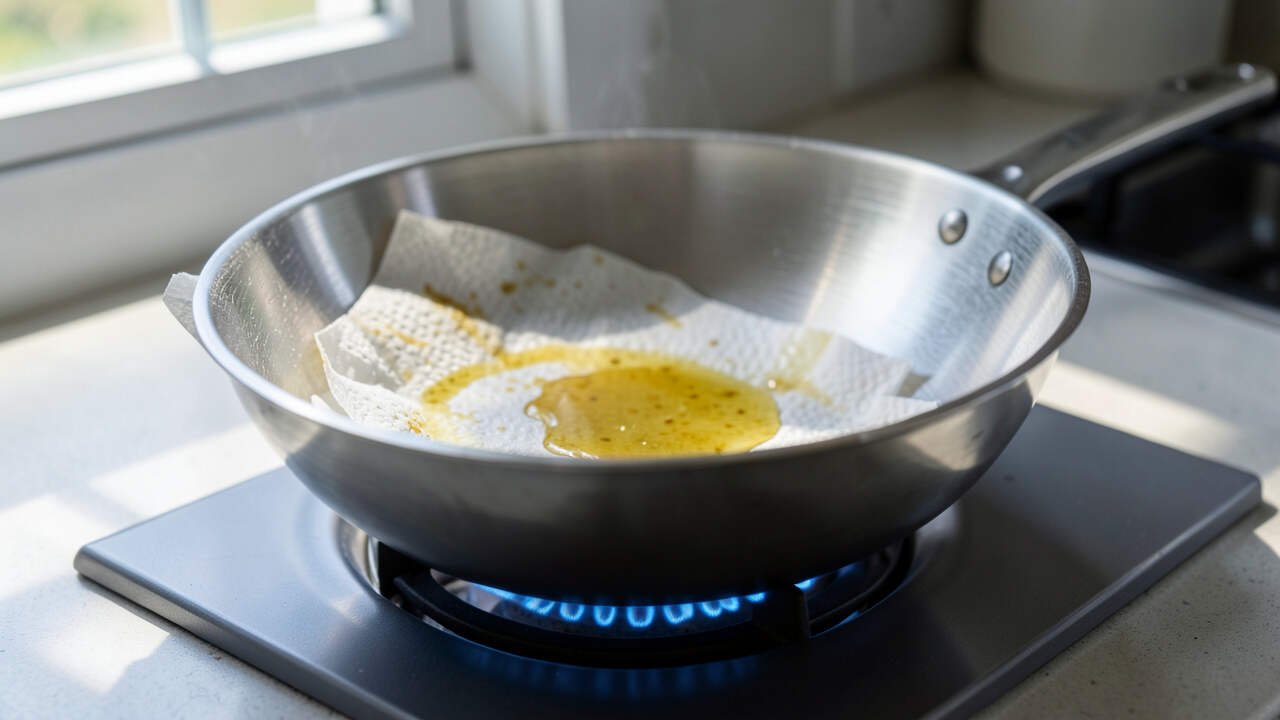
Seasoning a carbon steel wok involves heating thin layers of high-smoke-point oil onto the metal to polymerize them into a hard, nonstick coating. The process takes about 30 to 45 minutes and requires three to five rounds, each lasting eight to ten minutes, using oils like grapeseed, flaxseed, or avocado oil. Proper seasoning prevents rust and food sticking, ensuring the wok performs well for high-heat cooking.
You just bought your first carbon steel wok, and you want that nonstick patina everyone talks about. This guide walks you through the entire seasoning process from start to finish.
Quick Verdict: Seasoning a carbon steel wok means heating thin layers of oil onto the metal until they polymerize into a hard, nonstick coating. The process takes about 30-45 minutes and requires a high-smoke-point oil, a hot burner, and patience. Three to five rounds of seasoning give you a solid foundation for cooking.
Seasoning a carbon steel wok is the only way to make it nonstick. Without it, food sticks, rust appears, and your wok becomes useless. Most home cooks fail because they rush or use the wrong oil.
Key Takeaways
- Seasoning a carbon steel wok creates a polymerized oil layer through controlled heating, which is the only way to achieve nonstick performance.
- You need a high-smoke-point oil (above 400°F) such as grapeseed, flaxseed, or avocado oil – avoid butter or olive oil.
- Each seasoning round takes about 8-10 minutes, and you should repeat the process three to five times for best results.
- Proper seasoning prevents rust and makes the wok suitable for high-heat stir-frying without food sticking.
- After seasoning, you must maintain the patina by drying the wok immediately after washing and applying a thin coat of oil before storage.
What You Need Before You Start
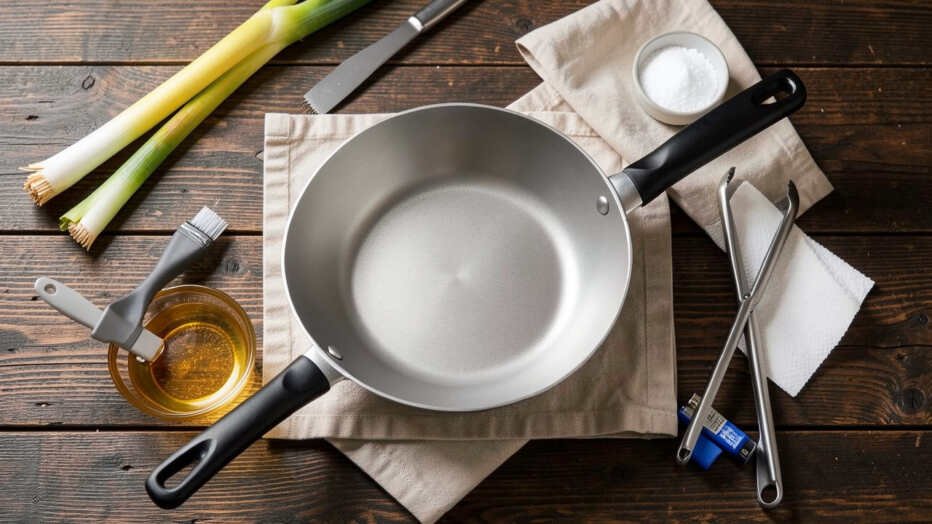
Gather your tools and materials before you begin. Missing one item can ruin the seasoning layer.
- Carbon steel wok – must be uncoated. Most woks come with a factory wax coating that you need to remove first.
- High-smoke-point oil – grapeseed, flaxseed, avocado, or vegetable oil work well. According to Serious Eats, flaxseed oil polymerizes best but is more expensive.
- Paper towels or clean cotton cloth – for applying and removing oil.
- Heat source – a gas burner is ideal, but an electric coil or induction burner works if you can adjust heat quickly.
- Tongs or metal spatula – to hold the paper towels while wiping hot oil.
- Kitchen gloves – the wok gets extremely hot during seasoning.
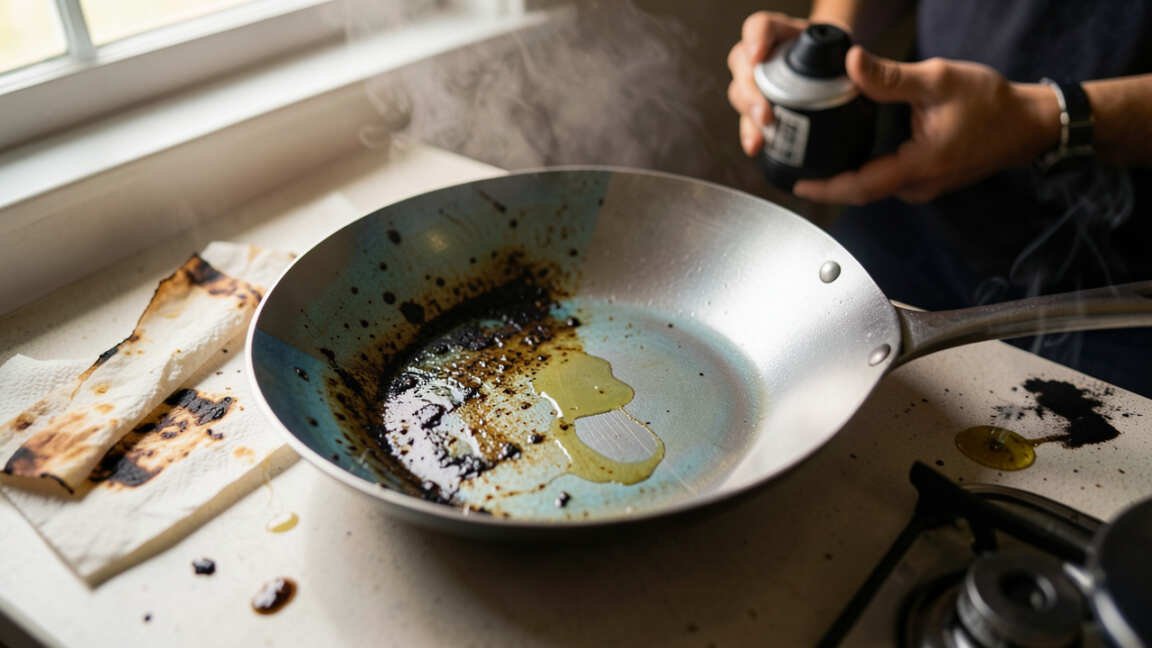
Warning: Do not use nonstick cookware spray or butter. They burn before polymerizing and create a sticky, uneven layer. Only use pure oils with a smoke point above 400°F.
How to Season a Carbon Steel Wok: Step-by-Step Process
Follow these steps in order. Rushing any part can cause patchy seasoning or rust spots.
Step 1: Remove the Factory Wax
Most new carbon steel woks come coated with a protective wax or oil film. Wash the wok with hot water and a stiff scrub brush. Use a mild dish soap and rinse thoroughly. According to Cook’s Illustrated, you must remove this layer completely or the seasoning will not bond.
Dry the wok immediately with a clean towel. Place it on the burner over medium heat for two minutes to evaporate any remaining moisture.
Step 2: Heat the Wok
Place the wok on your burner over high heat. Heat it until the metal starts to change color – typically a blue or bronze tint appears on the bottom. This takes about three to five minutes on a gas stove. The heat opens the pores in the metal, allowing oil to bond.
Step 3: Apply a Thin Layer of Oil
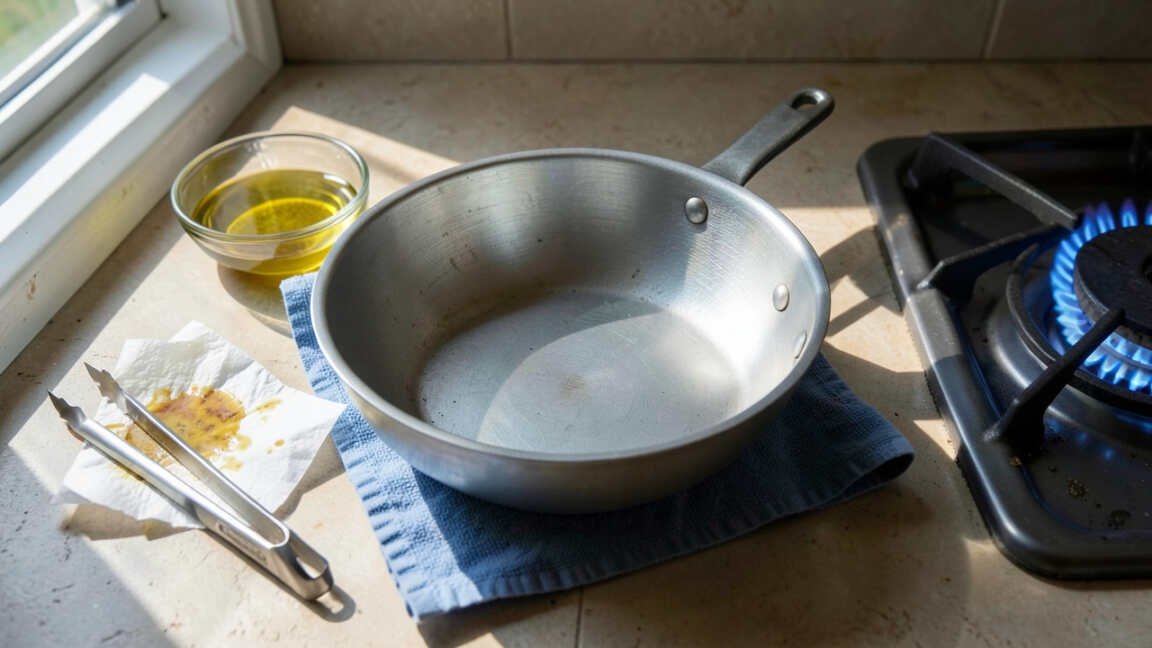
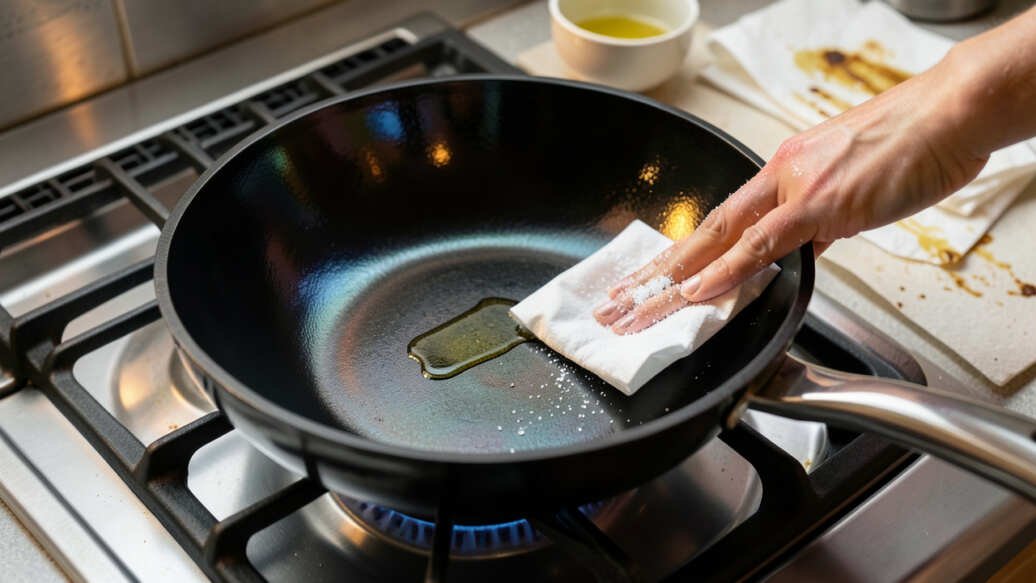
Turn off the heat. Pour about one teaspoon of your chosen oil into the wok. Use a paper towel folded into a thick pad (held with tongs) to spread the oil across the entire interior surface. Wipe until the layer is very thin – almost dry. Any excess oil creates sticky spots.
Important: The oil layer must be so thin you can barely see it. If you see pools of oil, wipe more. Thick layers never polymerize properly.
Step 4: Heat Until Smoking
Turn the burner back to high heat. Watch for the wok to start smoking. This means the oil is reaching its smoke point and starting to polymerize. Let it smoke for about 60-90 seconds, then turn off the heat. Allow the wok to cool for five minutes.
According to America’s Test Kitchen, the smoke point is the moment when the oil chemically bonds to the metal. Heating past that point does not add benefit.
Step 5: Repeat the Process
You need three to five total rounds of seasoning. For each round, repeat steps 2 through 4. The wok will darken gradually. After the final round, let the wok cool completely.
- First round – light golden-brown color.
- Second round – darker brown, some patchiness.
- Third round – even bronze patina, slight nonstick feel.
- Fourth and fifth rounds – deep mahogany, nonstick surface for eggs and rice.
What to Expect: Timeline and Costs
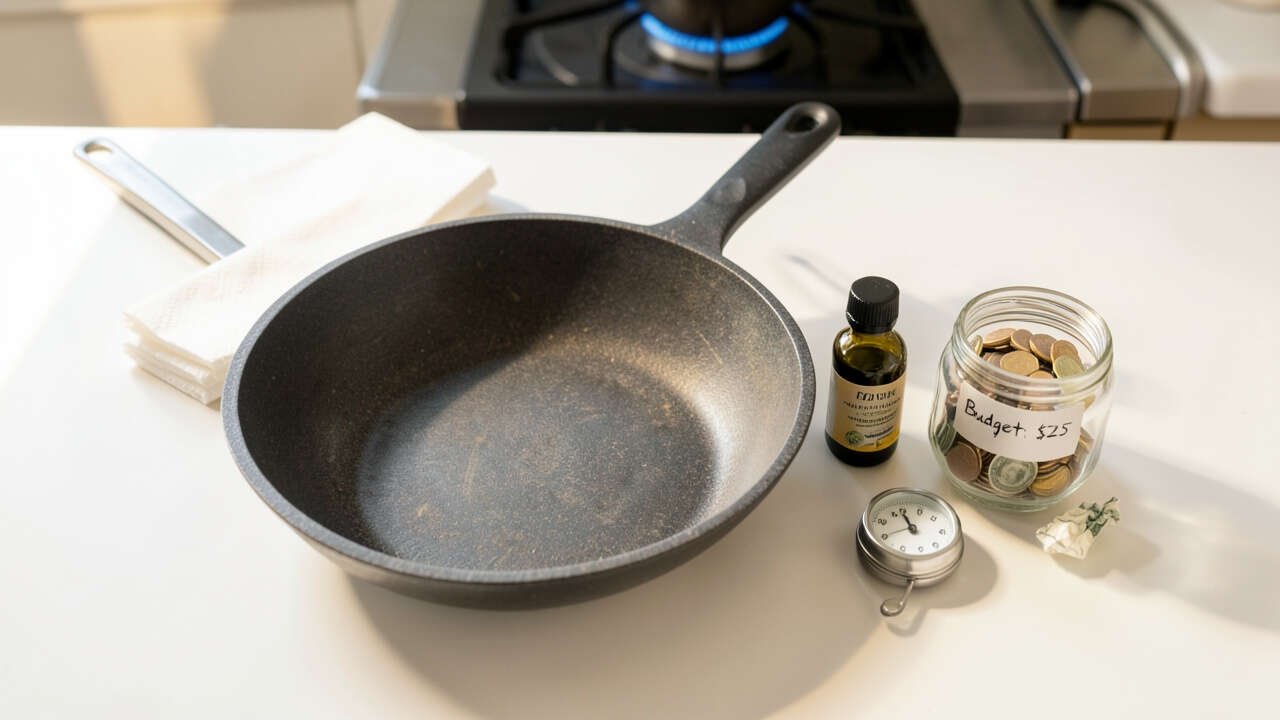
The entire seasoning process takes about 30-45 minutes for three rounds. Each round requires roughly 8-10 minutes of active time plus cooling time. Costs are low – you need only oil you likely already have in your kitchen.
| Factor | Details |
|---|---|
| Total time | 30-45 minutes (including cooling) |
| Oil cost | ~$0.10 per round (grapeseed oil) |
| Equipment needed | Wok, burner, tongs, paper towels |
| Number of rounds | 3-5 rounds recommended |
Common Mistakes to Avoid
Even experienced cooks make errors when seasoning a carbon steel wok. Here are the most frequent problems and how to avoid them.
- Using too much oil – thick oil layers never polymerize. They remain sticky and can peel off during cooking. Always wipe until the surface looks dry.
- Not removing the factory coating – many woks ship with a protective wax. If you do not scrub it off with hot water and soap, the seasoning will flake away.
- Rushing the heating step – you must let the wok reach a high temperature (smoking point) for each round. Low heat does not trigger polymerization.
- Using low-smoke-point oils – butter, olive oil, and coconut oil burn before polymerizing. Stick to oils with a smoke point above 400°F.
- Seasoning only once – one round creates a thin, fragile layer. Three to five rounds give you a durable patina that withstands frequent use.
Pro Tips for Perfect Seasoning
- Use a wok ring on electric stoves – carbon steel woks heat unevenly on flat electric burners. A wok ring focuses heat on the center. According to The Wok Shop, this is essential for proper seasoning on electric coils.
- Let each layer cool fully – applying the next oil layer while the wok is still hot can cause the oil to burn before it bonds. Wait until the wok is cool enough to touch (about 5 minutes).
- Turn off the burner before wiping – wiping oil onto a superheated surface creates smoke that irritates eyes and lungs. Turn off the heat for 10 seconds before you apply oil.
- Store the wok dry and oiled – after each use, wash with hot water (no soap), dry on the stove, and rub a thin film of oil inside. This prevents rust and maintains the patina.
- Cook fatty foods first – for the first few uses, cook bacon, fried rice, or stir-fries with plenty of oil. These dishes reinforce the seasoning layer.
Frequently Asked Questions
Do I need to season a carbon steel wok if it comes pre-seasoned?
Most pre-seasoned woks still benefit from an extra round or two of home seasoning. The factory layer is often thin. Applying your own oil ensures better adhesion and a stronger nonstick surface.
Can I season a wok in an oven?
Yes, but only if your wok has a removable handle (wood or plastic). Set the oven to 450°F, apply a thin oil layer, place the wok upside down on a baking sheet, and bake for one hour. Let it cool inside. This method works well for even heat distribution.
Why does my seasoned wok look patchy or brown?
Patchiness happens when oil layers are uneven or when the wok is not hot enough during seasoning. It is normal and does not affect cooking. Over time, consistent use will even out the patina.
What is the best oil for seasoning a carbon steel wok?
According to Serious Eats, flaxseed oil creates the hardest polymer layer, but it is expensive and can flake if applied too thick. Grapeseed oil gives a good balance of performance and cost. Avocado oil has the highest smoke point (520°F) but is also costly.
How do I fix a rusty carbon steel wok?
Scrub the rust with steel wool and hot water. Dry immediately, then re-season the wok from step 1. You may need two to three seasoning rounds to restore the surface. Prevention is better – always dry your wok after washing and oil it before storage.

Resources and Tools
- The Wok Shop – Supplies carbon steel woks and accessories. Visit Site
- Serious Eats Guide – Detailed wok seasoning article with science explanations. Visit Site
- Cook’s Illustrated – Provides tested methods for seasoning woks on different stoves. Visit Site
- Kenji Lopez-Alt’s Wok Book – Comprehensive guide to wok cooking. Visit Site
Final Thoughts
Seasoning a carbon steel wok requires patience and careful temperature control. Use thin oil layers, repeat three to five times, and let each round cool fully. Once seasoned, maintain the patina by drying and oiling after every use. A well-seasoned wok will last for decades and improve with age. For a comprehensive overview of the carbon steel wok seasoning method, consult the Wikipedia article on woks.
The chemistry behind seasoning cookware with oil is explained in the Wikipedia article on seasoning.
Always follow basic kitchen safety tips from CDC when working with hot oil and stoves.

Leave a Reply