
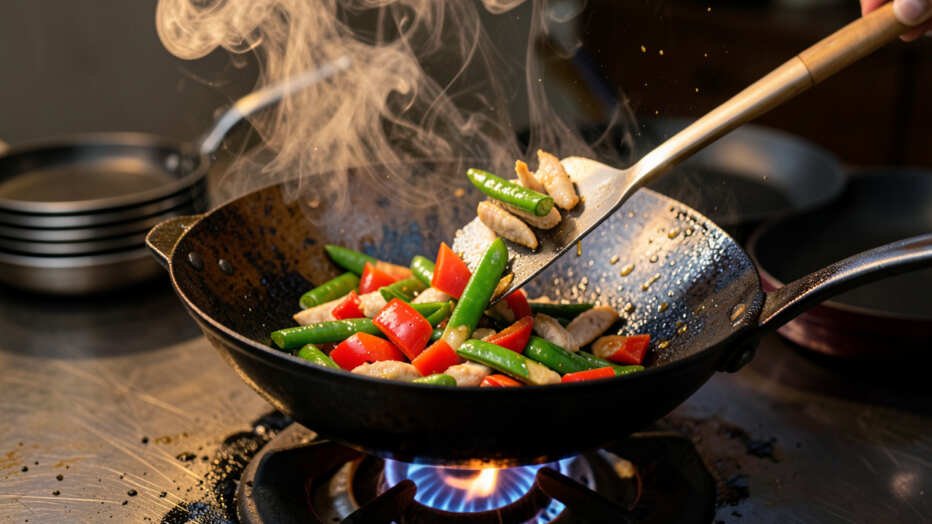
Carbon steel woks beat non-stick for stir-fry crisp because they reach and sustain temperatures above 500 degrees Fahrenheit, which is required for the Maillard reaction and wok hei, while non-stick coatings force lower heat that steams ingredients instead of searing them. This high-heat capability allows carbon steel to create the authentic crispy, smoky char essential for stir-fry, and the wok’s lightweight body enables easy tossing for even cooking. Over time, a well-seasoned carbon steel wok develops a durable natural non-stick layer that improves with use, offering a lasting alternative to disposable non-stick pans.
The quest for the perfect stir-fry often comes down to a battle between convenience and authentic results. This guide explains why carbon steel woks deliver the crispy, smoky char that non-stick pans simply cannot achieve.
Quick Verdict – Simply put, carbon steel woks beat non-stick for stir-fry crisp because they reach and hold the extreme temperatures needed for the Maillard reaction and Wok Hei. Non-stick coatings force you to cook below 500 degrees Fahrenheit, which steams your ingredients instead of searing them. Carbon steel is lighter than cast iron, heats fast, and builds a natural non-stick surface over time.
Key Takeaways
- Carbon steel woks withstand temperatures over 500 degrees Fahrenheit, which is required to get a proper sear on meat and vegetables.
- Non-stick woks are limited to lower heat levels to protect the coating, which prevents the formation of a crispy crust.
- A well-seasoned carbon steel wok develops a durable, natural non-stick layer that improves with regular use.
- The lightweight body of carbon steel allows you to toss food easily, ensuring even cooking and charring in seconds.
- Wok Hei, the signature smoky taste of restaurant stir-fry, only happens with bare metal woks like carbon steel or cast iron.
What Makes a Wok Shape So Effective for Frying?
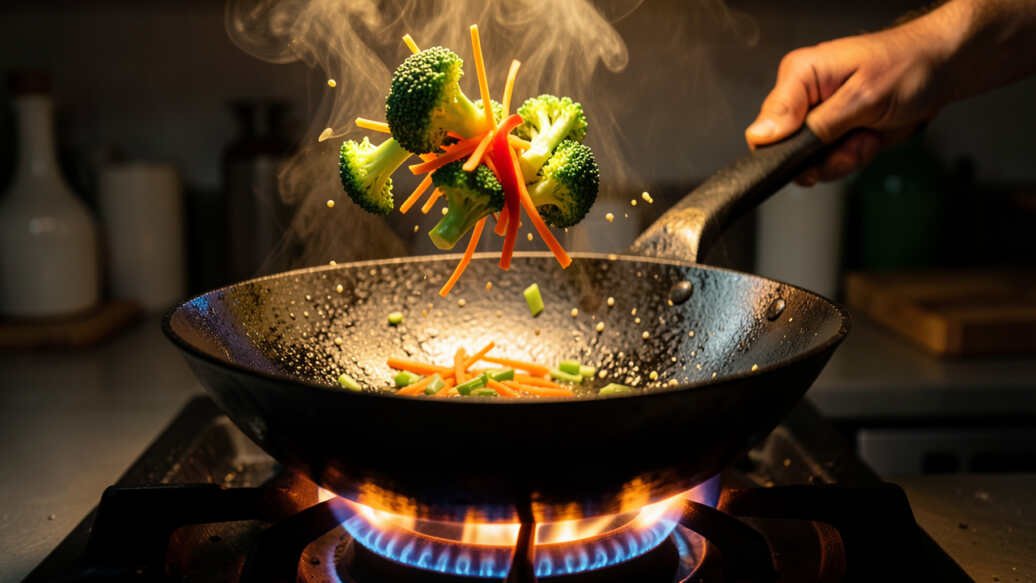
A wok is not just a deep pan. Its rounded shape creates distinct heat zones on a single burner. The bottom gets the hottest, while the sloping sides stay cooler.
This design lets you sear protein at the bottom and push it up the sides to keep warm. You can cook multiple ingredients in one pan without them overlapping.
According to Kenji Lopez-Alt, author of The Food Lab, the ideal wok is made from thin carbon steel. It heats up in under a minute and gives you direct control over the cooking temperature.
How Does a Carbon Steel Wok Handle High Temperatures?
Carbon steel is a material built for speed and heat. It has high thermal conductivity, which means it transfers heat from the burner to the food almost instantly.
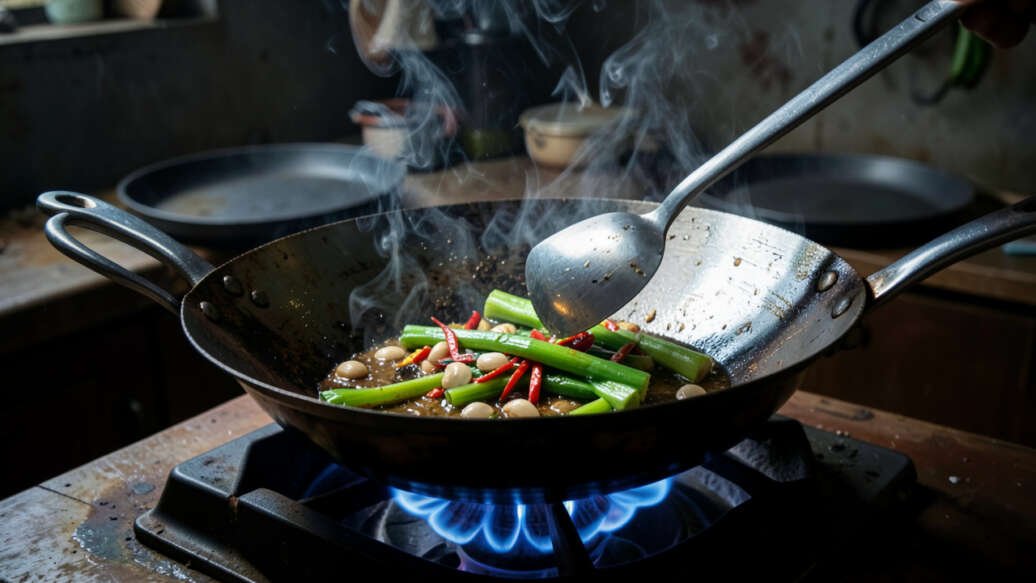
When you add vegetables to a hot carbon steel wok, they sizzle on contact. The rapid heat drives off moisture quickly, allowing browning to start right away.
Important: The Maillard reaction, which creates the brown crust and savory flavor in stir-fry, starts at about 285 degrees Fahrenheit according to the American Chemical Society. Carbon steel woks easily reach 500-600 degrees Fahrenheit, creating perfect conditions for this reaction.
Unlike cast iron, carbon steel is lighter and responds faster to heat changes. Turn the burner up, and the wok gets hot right away. Turn it down, and it cools quickly. This gives you precise control over your stir-fry.
Why Non-Stick Woks Fall Short for Crispy Stir-Fry
Non-stick woks have a clear limitation. The coating, usually made from PTFE or ceramic, starts to break down above 500 degrees Fahrenheit.
Consumer Reports warns that overheating a non-stick pan can release fumes that are harmful to pets and potentially to humans. To stay safe, manufacturers recommend keeping the heat at medium or medium-high.
This lower temperature is a problem for stir-fry. When you add moist ingredients like chicken or bell peppers to a pan that is not hot enough, the surface temperature drops rapidly. The food releases water and starts to steam instead of sear.
Steaming makes vegetables soggy and prevents the formation of a crispy, golden crust on proteins. You end up with a meal that tastes boiled, not wok-fried.
- Non-stick coating degrades above 450-500 degrees Fahrenheit.
- The pan cannot retain enough heat to evaporate moisture quickly.
- Ingredients release water and begin to steam rather than sear.
- The result is soft, pale food without the characteristic wok crisp.
Carbon Steel vs. Non-Stick vs. Cast Iron: A Quick Comparison
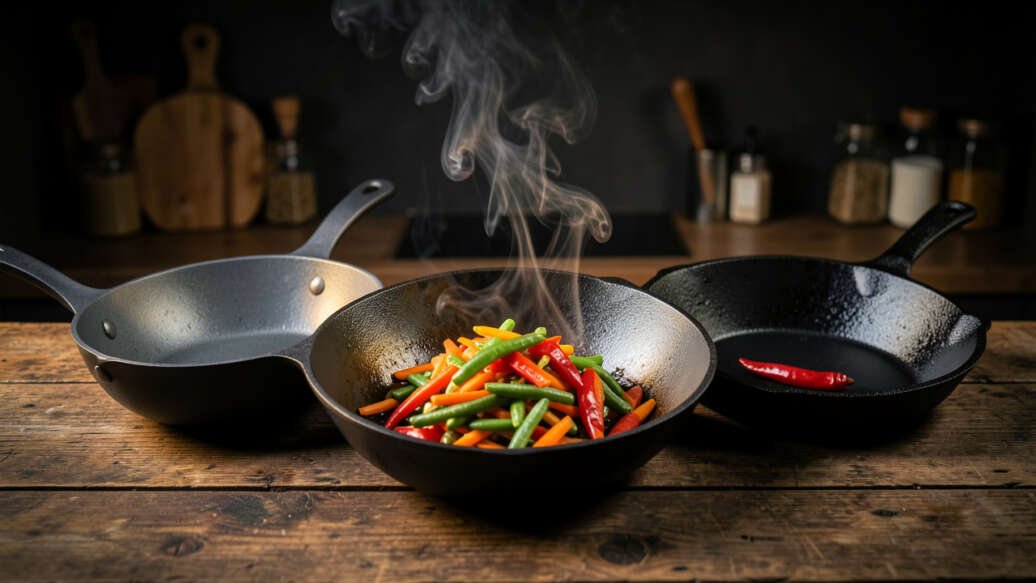
Each material has strengths and weaknesses. This table shows how they stack up for making crispy stir-fry at home.
| Feature | Carbon Steel | Non-Stick | Cast Iron |
|---|---|---|---|
| Maximum Temperature | 600 degrees F+ | 450-500 degrees F | 600 degrees F+ |
| Weight | Light to medium | Light | Heavy |
| Heat Responsiveness | Fast | Medium | Slow |
| Natural Non-Stick | Yes (after seasoning) | Yes (factory coating) | Yes (after seasoning) |
| Wok Hei Potential | Excellent | None | Good |
| Durability | Lifetime (with care) | 1-3 years | Lifetime (with care) |
The table makes it clear. Carbon steel woks offer the best balance of heat performance, weight, and durability for home cooks who want restaurant-quality crispiness.
How to Get Started with a Carbon Steel Wok
Getting excellent results from a carbon steel wok requires a few simple steps. The process is easy, even if you have never used one before.
Start by choosing the right shape. A flat-bottom wok works best on standard home gas and electric stoves. A round-bottom wok needs a wok ring to stay stable.
Step 1: Remove the Factory Coating
Most new carbon steel woks come with a protective coating to prevent rust. You need to wash this off with hot soapy water and a scrub brush.
Warning: Do not skip the initial wash. The factory coating is not food-safe and will ruin your first few dishes if you do not remove it completely.
Step 2: Dry the Wok Immediately
After washing, dry the wok over medium heat on the stove. This removes any water that could cause rust spots. You will see the metal turn a dark blue or brown color as it heats.
Step 3: Season the Wok
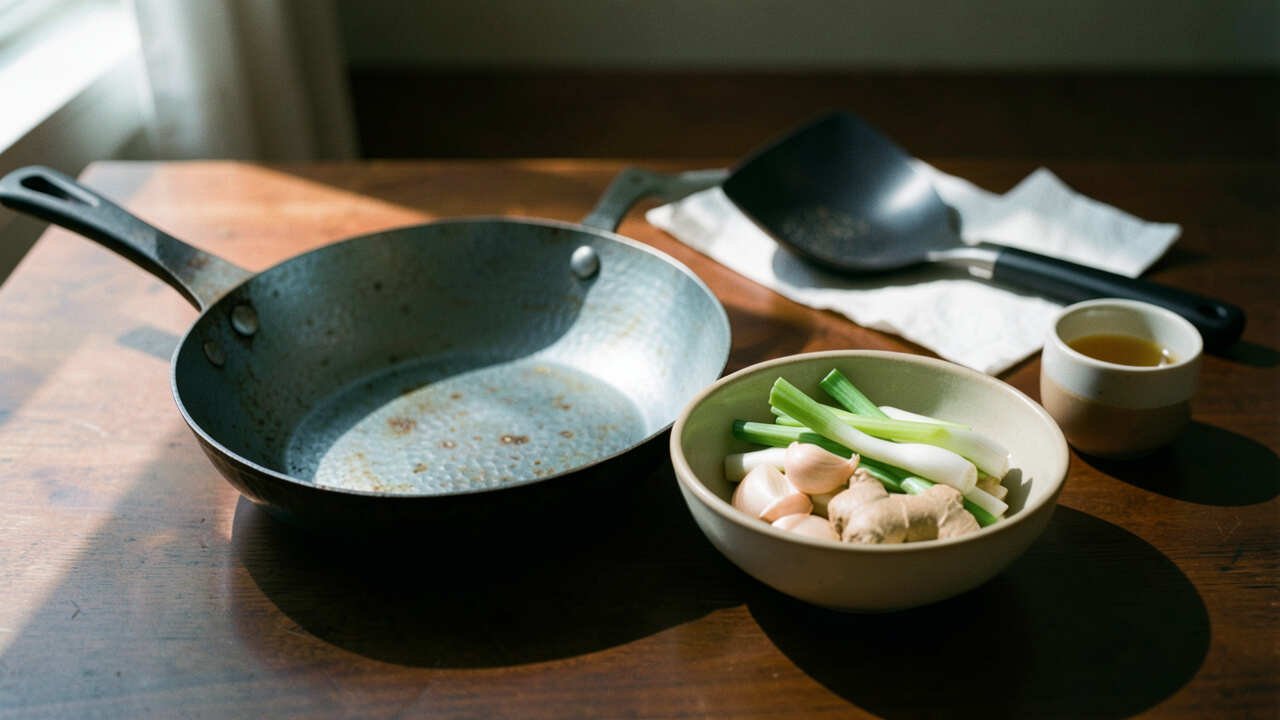
Seasoning creates the natural non-stick patina on a carbon steel wok. Apply a thin layer of oil with a high smoke point, like peanut oil or grapeseed oil. Heat the wok until the oil starts to smoke. Wipe it out with a paper towel.
Repeat this process three to four times. The wok will gradually turn dark brown or black. This layer protects the pan and makes it non-stick.
Step 4: Start Cooking
After seasoning, your wok is ready. Use it for stir-fry, fried rice, deep frying, and even steaming. Each time you cook, the seasoning layer grows stronger.
Common Myths and Facts About Carbon Steel Woks
Many home cooks avoid carbon steel because of rumors about high maintenance. Here are the most common myths and the facts behind them.
Myth 1: Carbon Steel Woks Rust the First Day You Own Them
Fact: Carbon steel can rust if you leave it wet, but basic care prevents this easily. After washing, dry the wok on the stove for 30 seconds. Then rub in a few drops of oil. This takes less than one minute.
Myth 2: You Cannot Use Soap on a Carbon Steel Wok
Fact: A small amount of mild soap is fine for cleaning a well-seasoned carbon steel wok. The seasoning layer is polymerized oil that is bonded to the metal. Soap will not strip it unless you scrub very hard with an abrasive pad.
Myth 3: Non-Stick Woks Are Just as Good for High-Heat Cooking
Fact: This is the most dangerous myth for your cooking results. A peer-reviewed study in the Journal of Culinary Science and Technology confirms that high-heat wok frying significantly enhances volatile flavor compounds. Non-stick pans physically prevent you from reaching these necessary temperatures.
Pro Tips for Achieving the Best Stir-Fry Crisp
Getting that perfect crispy texture at home takes more than just a good wok. Follow these tips to elevate your stir-fry game. Following food safety guidelines ensures proper handling and cooking of stir-fry ingredients.
- Pat your ingredients completely dry. Moisture is the biggest enemy of browning. Use paper towels to remove excess water from meat and vegetables before cooking.
- Use an oil with a high smoke point. Peanut oil, avocado oil, and grapeseed oil are the best choices. They can handle the extreme heat without burning.
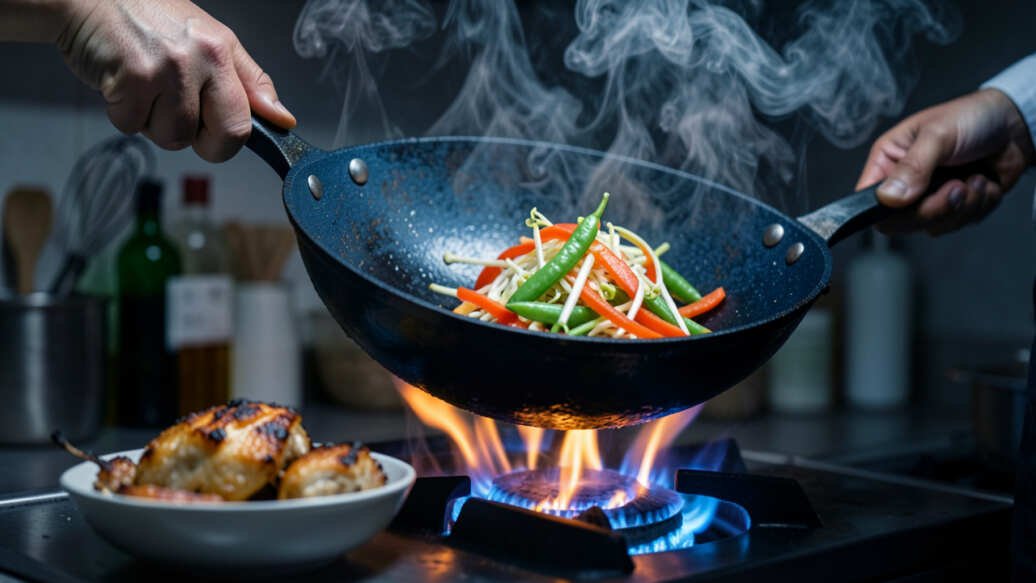
- Cook in small batches. Adding too much food at once drops the wok temperature. This leads to steaming instead of searing. Cook in batches and combine at the end.
- Do not stir constantly. Let your food sit in the wok for 30 to 60 seconds before tossing. This creates direct contact with the hot metal and develops a deep sear.
- Get a proper wok spatula. A metal wok spatula, or chan, is shaped to fit the curve of the wok. It helps you toss and flip food efficiently without scraping off the seasoning.
Tip: For the best results, use a high BTU gas burner if you have one. A standard home stove works well, but a portable outdoor wok burner can push temperatures high enough to achieve true Wok Hei in seconds.
Frequently Asked Questions
Can I use a carbon steel wok on an induction cooktop?
Yes, but only a flat-bottom carbon steel wok will work on induction. The base needs full contact with the glass surface. A round-bottom wok will not heat evenly or properly on induction.
How long does a carbon steel wok last?
A high-quality carbon steel wok can last for decades when you care for it properly. Many restaurant woks are used daily for 10 to 20 years before needing replacement.
Why does my stir-fry stick to my carbon steel wok?
Sticking usually happens for three reasons. Either the wok is not well seasoned, the heat is too low, or you are not using enough oil. Ensure the wok is hot before adding the oil and food.
Is seasoning a carbon steel wok difficult?
No, the process is simple and takes about 20 minutes. You just heat a thin layer of oil in the wok until it smokes, let it cool, and repeat a few times. The patina builds naturally over time.
Can I cook acidic foods like tomatoes in a carbon steel wok?
You can, but acidic foods may strip a small amount of the seasoning. This is not harmful. Just re-season the wok afterward by heating a thin layer of oil until it smokes.
Resources and Tools
Here are the best tools and references to help you master stir-fry crispness at home. Understanding wok design and history helps home cooks choose the right pan for stir-fry.
- The Food Lab – A science-based cookbook by Kenji Lopez-Alt that covers wok cooking techniques. Visit Kenji’s Site
- Wok Shop – A supplier of traditional carbon steel woks and accessories. Visit Wok Shop
- Serious Eats – A trusted food website with detailed guides on wok seasoning and stir-fry recipes. Visit Serious Eats
- American Chemical Society – Provides scientific resources on food chemistry and the Maillard reaction. Visit ACS
Final Thoughts
Carbon steel woks give you the heat and control required for real stir-fry crispness. They are more durable than non-stick and lighter than cast iron. Invest in a good carbon steel wok, learn to season it, and you will never go back to non-stick for stir-fry. Readers looking for reliable background can compare this guidance with authoritative information about carbon steel properties.

Leave a Reply