
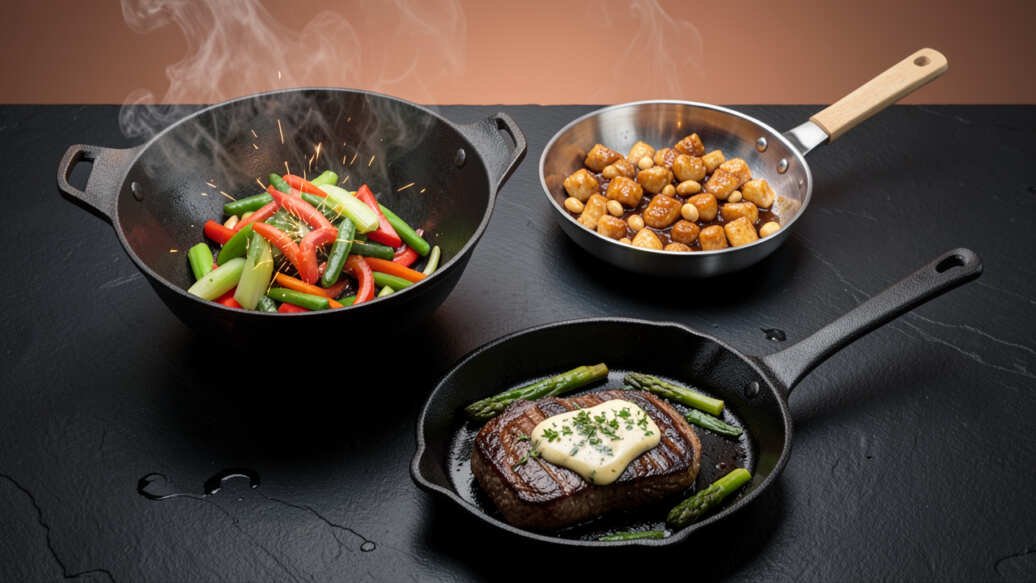
The wok wins daily for high-heat stir-fries by delivering authentic wok hei, the skillet excels at searing with even heat, and the stir-fry pan offers a hybrid compromise for electric or induction cooktops. A concave wok concentrates heat for fast cooking but needs a gas stove or ring, while a skillet’s flat surface provides superior Maillard reaction on meats. Choose based on your stove type and whether you want intense wok hei or deep searing in daily meals.
You stand in the cookware aisle staring at curved woks, flat-bottomed stir-fry pans, and classic skillets. This guide breaks down exactly which shape wins for specific daily cooking tasks.
Simply put, a wok excels at high-heat stir-frying with its concave shape, a skillet provides superior surface contact for searing, and a stir-fry pan offers a hybrid compromise. Your choice depends on your stove type, your primary cuisine, and the textures you want to achieve in your daily meals.
Key Takeaways
- A traditional round-bottom wok delivers the best “wok hei” flavor but requires a gas stove or a specialized wok ring for proper stability.
- A skillet’s wide, flat surface area provides the most even heat distribution for achieving a deep Maillard reaction on steaks and cutlets.
- Stir-fry pans are suitable for electric and induction cooktops but often lack the intense heat output needed for authentic stir-fried texture.
- Carbon steel woks and skillets are lightweight and heat up faster than cast iron, making them ideal for quick weeknight cooking sessions.
- The shape of the pan directly affects how ingredients interact with heat, oil, and vapor, which changes the final taste and texture of your food.
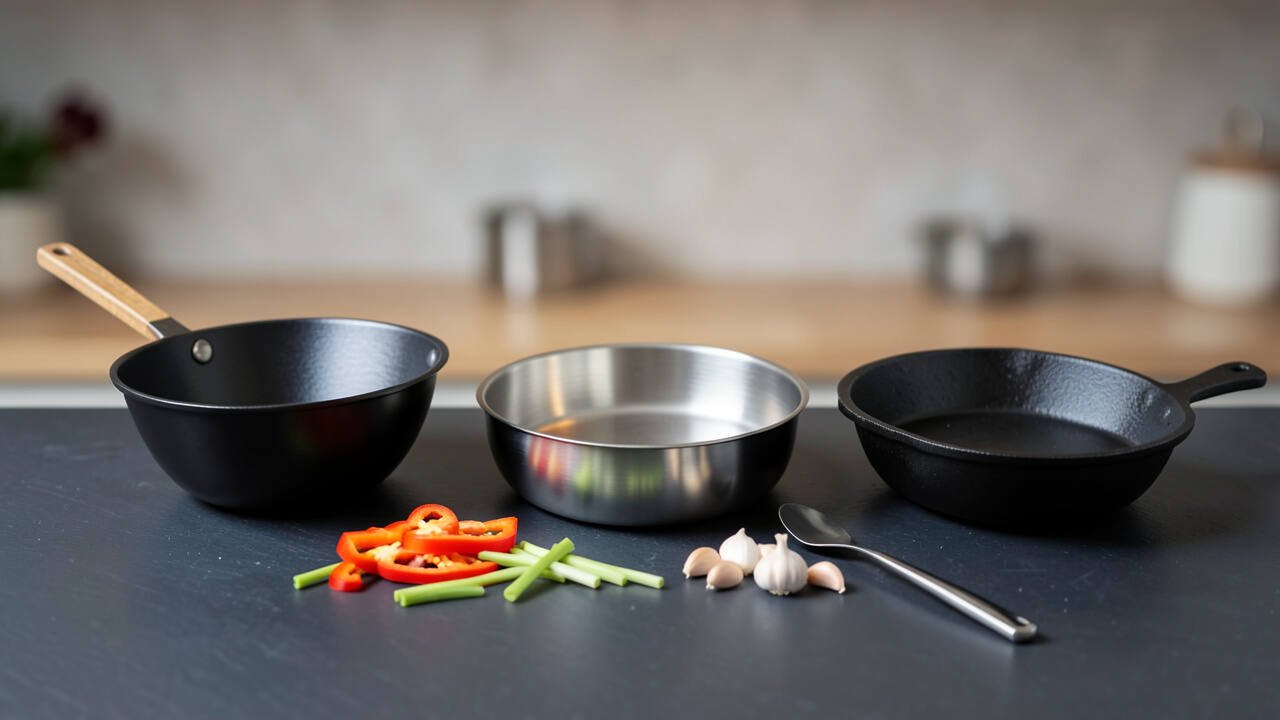
Quick Comparison Table
| Feature | Wok | Stir-Fry Pan | Skillet |
|---|---|---|---|
| Shape | Deep, sloping concave sides | Sloping sides with a flat bottom | Flat bottom with low angled sides |
| Primary Use | Stir-frying, deep-frying, steaming | Gentle stir-fries, sauces, braising | Searing, pan-frying, shallow frying, baking |
| Surface Contact | Small (round base) / Medium (flat base) | Medium | Large |
| Tossing Ability | Excellent | Good | Poor |
| Heat Retention | Low (carbon steel) / High (cast iron) | Medium (non-stick aluminum) | High (cast iron) / Medium (stainless) |
| Stove Compatibility | Gas best / Electric ok (flat) / Induction ok (flat) | All stovetops (induction if magnetic) | All stovetops (induction if magnetic) |
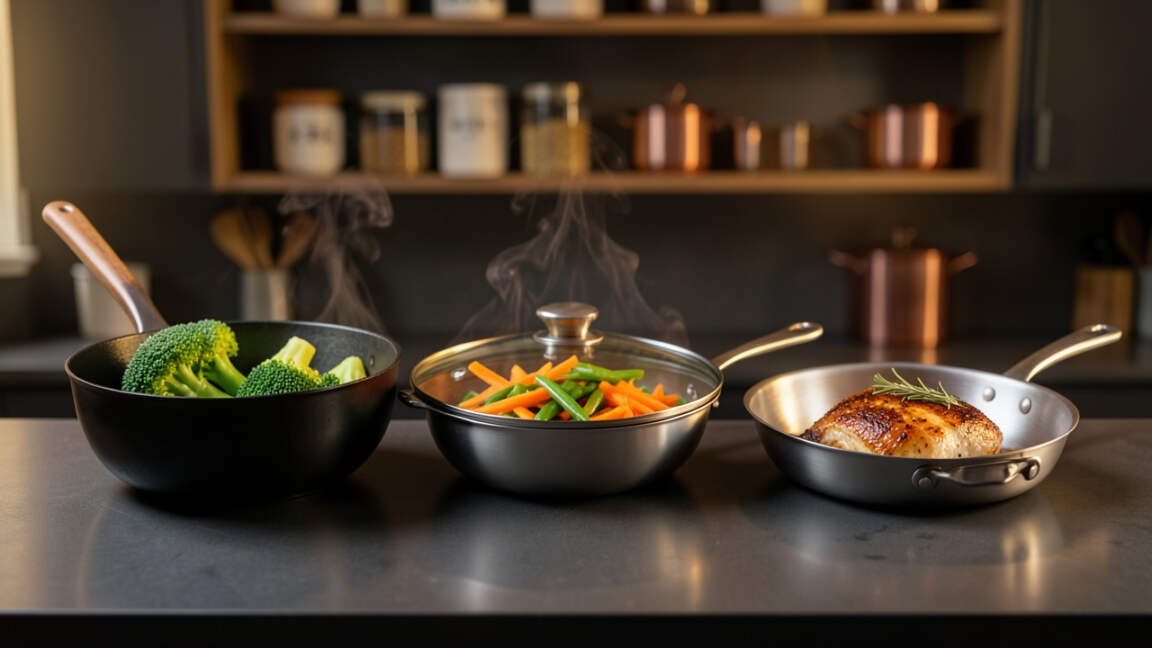
What Is a Wok, Stir-Fry Pan, and Skillet?
Understanding the fundamental design of each pan is the first step. Each shape exists for a specific reason and excels at certain cooking techniques.
The Wok
A wok is a deep, round-bottomed cooking vessel that originated in China. Its curved walls allow heat to concentrate at the bottom while the sides remain cooler, creating distinct temperature zones. This design is perfect for stir-frying, where you toss ingredients from the hot base to the cooler sides to control cooking speed.
Traditional woks are made from carbon steel. They are lightweight and heat up very quickly. According to America’s Test Kitchen, a carbon steel wok can reach searing temperatures in under two minutes on a gas burner. This rapid heat is essential for creating “wok hei,” the smoky flavor that defines restaurant-quality stir-fries.
The Stir-Fry Pan
A stir-fry pan is a modern Western adaptation of the traditional wok. It keeps the sloping sides for tossing but flattens the bottom completely. This flat base makes it stable on electric, ceramic, and induction cooktops.
Most stir-fry pans come with a non-stick coating. This makes them beginner-friendly and easy to clean. However, the non-stick surface limits how hot you can get the pan. High heat can damage the coating. Because of this, you cannot achieve the same wok hei that you get from a seasoned carbon steel wok.
The Skillet
A skillet, also called a frying pan, has a completely flat bottom with low, flared sides. The large, flat cooking surface is designed for maximum contact with the heat source. This makes it the best tool for searing meat, frying eggs, and making pancakes.
Skillets come in three main materials: cast iron, stainless steel, and non-stick aluminum. Cast iron skillets are incredibly durable and retain heat well. Stainless steel skillets are great for creating pan sauces. Non-stick skillets are best for delicate foods like fish and eggs. According to Statista, 67% of home cooks use a skillet for their daily meal preparation due to this material versatility.
Wok Overview: The Master of High-Heat Cooking
A wok is not just a tool for Asian food. It is a highly efficient cooking vessel for any cuisine that requires fast, high-heat cooking.
Pros and Cons of a Wok
Pros
- Delivers authentic “wok hei” smoky flavor to stir-fried dishes.
- The deep shape requires less oil for deep-frying than a standard pot.
- Lightweight carbon steel woks heat up fast and cool down quickly, giving you precise heat control.
- The sloping sides allow for easy tossing and flipping of ingredients without a spatula.
- Versatile enough for steaming, smoking, and braising in addition to stir-frying.
Cons
- Round-bottom woks are unstable on electric and induction cooktops without a wok ring.
- Carbon steel woks require seasoning to become non-stick and are prone to rust.
- Flat-bottom woks sacrifice the curved tossing space for stability.
- The handle can get very hot during prolonged cooking.
- May be intimidating for beginner cooks due to the high heat requirements.
Best Uses for a Wok
Use a wok when you want speed and high heat. It is the best choice for stir-fried noodles, fried rice, and flash-cooked vegetables. It also excels at shallow frying foods like spring rolls or chicken wings, using much less oil than a deep pot.
Important: Chef Kenji Lopez-Alt recommends a 14-inch flat-bottomed carbon steel wok for most home kitchens. It balances the stability needed for modern stoves with enough depth for tossing and stir-frying.
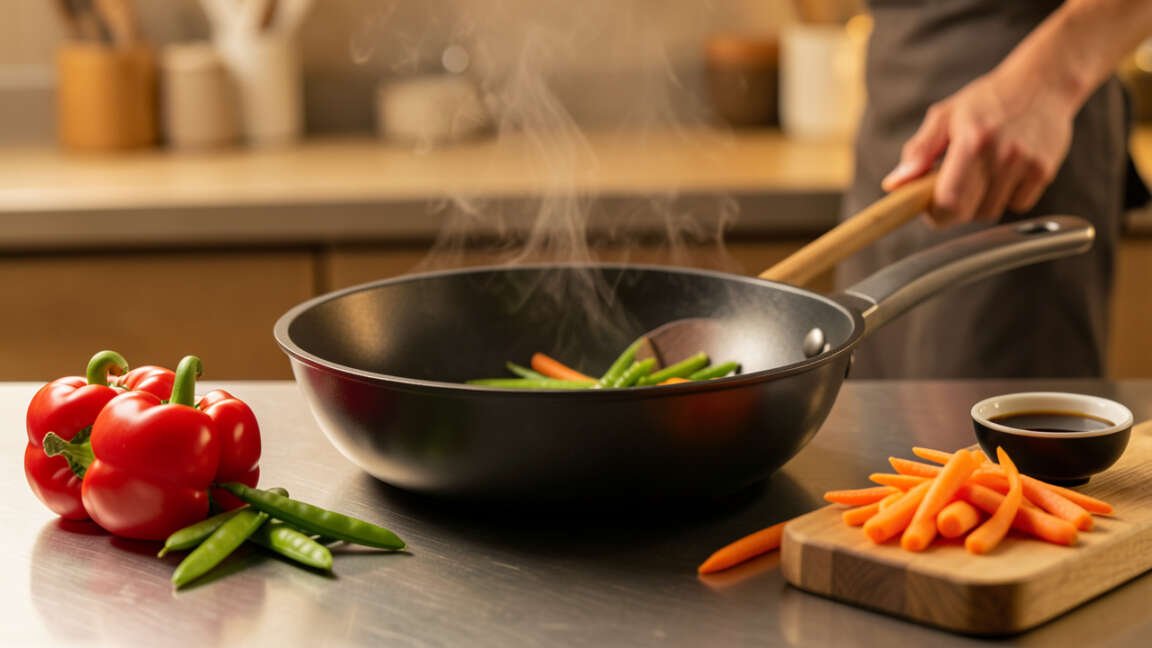
Stir-Fry Pan Overview: The Friendly Compromise
The stir-fry pan tries to solve the biggest problem with traditional woks: stove compatibility. It is a popular choice for home cooks who want the wok shape without the hassle.
Pros and Cons of a Stir-Fry Pan
Pros
- Works on all stove types including induction without any special rings or adapters.
- Non-stick surfaces make cleaning easy and require little oil for cooking.
- Lighter weight compared to cast iron skillets makes them easy to handle.
- Sloping sides still allow for decent tossing and stirring compared to a skillet.
- Usually comes with a lid, making it suitable for braising and simmering.
Cons
- Cannot reach the high temperatures needed for true wok hei due to non-stick coating limits.
- The non-stick coating will wear out after 1-3 years of regular use.
- Smaller cooking surface compared to a skillet of the same diameter.
- Not as durable as carbon steel or cast iron options.
- Usually cannot be used in the oven because of the handle and coating.
Best Uses for a Stir-Fry Pan
A stir-fry pan is perfect for weeknight dinners when you need speed and simplicity. It works well for making saucy stir-fries with vegetables and chicken. It is also good for cooking dishes with a lot of liquid, such as curry or braised tofu. If you have an electric stove and want a wok-like shape, this is your best option.
Warning: Never preheat an empty non-stick stir-fry pan on high heat. The coating can degrade and release toxic fumes at temperatures above 500°F. Always add oil or food before heating.
Skillet Overview: The Daily Workhorse
The skillet is the most versatile pan in the kitchen. It can do almost everything, from searing a steak to baking a cornbread. Its flat shape is optimized for direct heat transfer.
Pros and Cons of a Skillet
Pros
- Searing: The flat, wide surface gives you the best crust on meat through the Maillard reaction.
- Oven-Safe: Cast iron and stainless steel skillets can go from stovetop to oven without issue.
- Durability: A cast iron skillet can last for generations if cared for properly.
- Heat Retention: Cast iron holds heat exceptionally well, keeping food warm at the table.
- Versatility: You can sear, fry, bake, braise, and even grill in a single skillet.
Cons
- Heavy: Cast iron skillets are very heavy and can be difficult to lift and toss.
- Maintenance: Cast iron and carbon steel skillets need to be seasoned and dried immediately after washing to prevent rust.
- Low Sides: The low, flared sides do not contain splatter well, especially when frying.
- Less Capacity: The shallow design is not ideal for dishes with a lot of liquid or volume.
- Uneven Heat: Cheaper stainless steel skillets can develop hot spots without proper construction.
Best Uses for a Skillet
Use a skillet for tasks that demand surface contact and steady heat. It is the best tool for cooking steaks, chicken breasts, hash browns, eggs, and grilled cheese sandwiches. It is also the go-to pan for one-pan meals like skillet lasagna or frittatas. The Lodge Cast Iron brand produces some of the most popular and affordable skillets for these daily tasks.
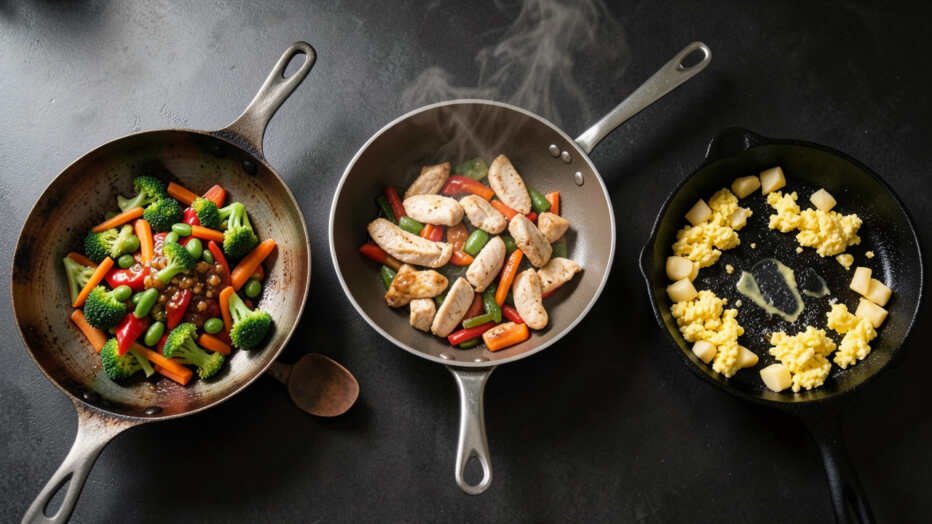
Head-to-Head Comparison: Wok vs Stir-Fry Pan vs Skillet
Let’s put these three pans directly against each other in key performance categories. This will help you decide which pan deserves a spot in your kitchen.
Heat Performance and Wok Hei
The wok wins this category without question. Its thin carbon steel body responds instantly to changes in flame. This allows you to build intense heat for a stir-fry and then cool it down quickly to prevent burning. According to food scientist J. Kenji Lopez-Alt, a wok’s ability to achieve and maintain high heat while tossing ingredients is what creates the complex smoky flavors in Asian cooking.
A skillet offers excellent steady heat but lacks the wok’s dynamic temperature range. It is best for consistent, even browning. The stir-fry pan falls somewhere in the middle. Its non-stick coating limits its maximum temperature, so it cannot produce the same char and smokiness as a wok or the deep crust of a skillet.
Versatility Across Cuisines
The skillet is the most versatile pan overall. You can use it for any cuisine: Italian (risotto), American (pancakes), Mexican (quesadillas), or French (pan sauces). It is the one pan you would keep if you could only have one.
The wok is specialized for high-heat Asian cooking but is also great for deep-frying and soups. The stir-fry pan is limited to gentle stir-fries and braises. It is the least versatile of the three because its non-stick coating prevents high-heat searing.
Ease of Cleaning and Maintenance
Non-stick stir-fry pans are the easiest to clean. Food slides right off. However, they are delicate. You cannot use metal utensils or abrasive scrubbers.
Carbon steel woks and cast iron skillets require more care. You need to wash them with mild soap (in small amounts) and dry them immediately. Then you must rub a thin layer of oil to maintain the seasoning. This sounds like work, but the seasoning builds over time and creates a natural non-stick surface. According to The Wok Shop, a well-seasoned wok is more non-stick than any chemical coating.
Stove Compatibility
This is where the stir-fry pan has a clear advantage. Its flat bottom works perfectly on gas, electric, ceramic, and induction cooktops. The skillet also works on all stoves. The traditional round-bottom wok only works well on gas stoves. If you have an electric or induction stove, you must buy a flat-bottomed wok.
Tip: If you cook on induction, check the packaging carefully. Not all flat-bottom woks or stir-fry pans are made with magnetic materials. You need a pan specifically labeled “induction compatible.”
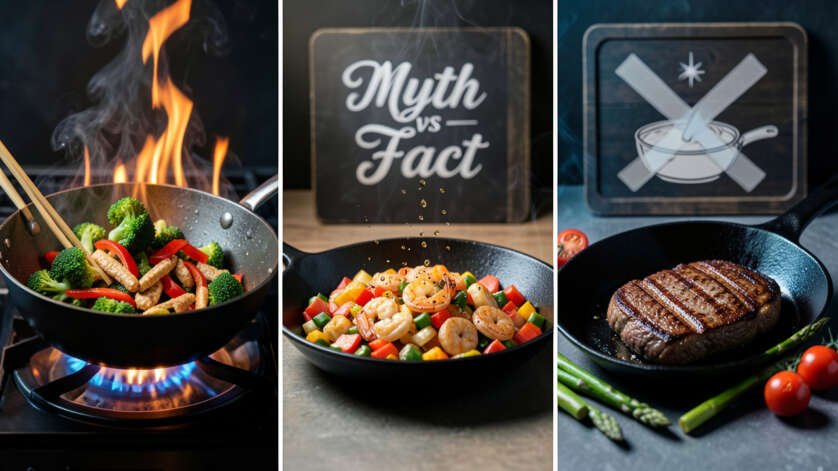
Common Myths vs Facts About Wok, Stir-Fry Pan, and Skillet
There is a lot of confusing advice about these pans. Let’s clear up the most common misunderstandings.
Myth 1: A wok is impossible to use on an electric stove
Fact: A traditional round-bottom wok is difficult to use on electric coils because it does not sit flat. However, a flat-bottomed wok is designed specifically for electric and induction cooktops. You sacrifice a small amount of tossing space but gain stability and direct contact with the heating element.
Myth 2: A skillet cannot be used for stir-fries
Fact: You can absolutely make a stir-fry in a skillet. The main limitation is surface area and heat distribution. A skillet heats evenly across its flat base, which is good for browning. However, the low sides make tossing difficult. You will need to use a spatula to move the ingredients around. The result will be a good stir-fry, but it will not have the smoky “wok hei” of a wok-cooked dish.
Myth 3: A non-stick stir-fry pan is the healthiest option
Fact: Non-stick pans allow you to cook with less oil, which reduces fat content. However, the chemical coatings can degrade at high temperatures. This releases fumes that are harmful to birds and potentially to humans. A properly seasoned carbon steel skillet or wok provides a natural non-stick surface without chemicals. You may need a bit more oil, but you avoid the risks of overheating a synthetic coating.
How to Choose the Right Pan for Your Kitchen
Choosing between a wok, stir-fry pan, and skillet does not have to be hard. Follow this simple step-by-step process to find your perfect match.
Step 1: Analyze Your Stove Type
- Gas Stove: You have complete freedom. A round-bottom wok will perform best. A skillet is also excellent.
- Induction Stove: Choose a flat-bottom wok or a skillet. Avoid round-bottom woks. Most stir-fry pans work here too.
- Electric Coil or Ceramic: A flat-bottom wok, a stir-fry pan, or a skillet all work well. The stir-fry pan is the most stable option.
Step 2: Identify Your Primary Cooking Style
- You love stir-fries, fried rice, and deep-frying: Get a carbon steel wok. It is the best tool for these jobs.
- You sear steaks, bake cornbread, and cook breakfast: Get a cast iron or stainless steel skillet. It is the daily workhorse.
- You want one pan for quick, low-fat meals: Get a non-stick stir-fry pan or skillet. It is easy and convenient.
Step 3: Consider Your Budget and Maintenance Tolerance
- High budget, low maintenance: A high-quality stainless steel skillet or a premium non-stick stir-fry pan.
- Low budget, high maintenance (willing to learn): A carbon steel wok or cast iron skillet. These are cheap and durable.
- Low budget, low maintenance: A basic aluminum non-stick stir-fry pan or skillet. Expect to replace it every 2-3 years.
Step 4: Decide How Many Pans to Buy
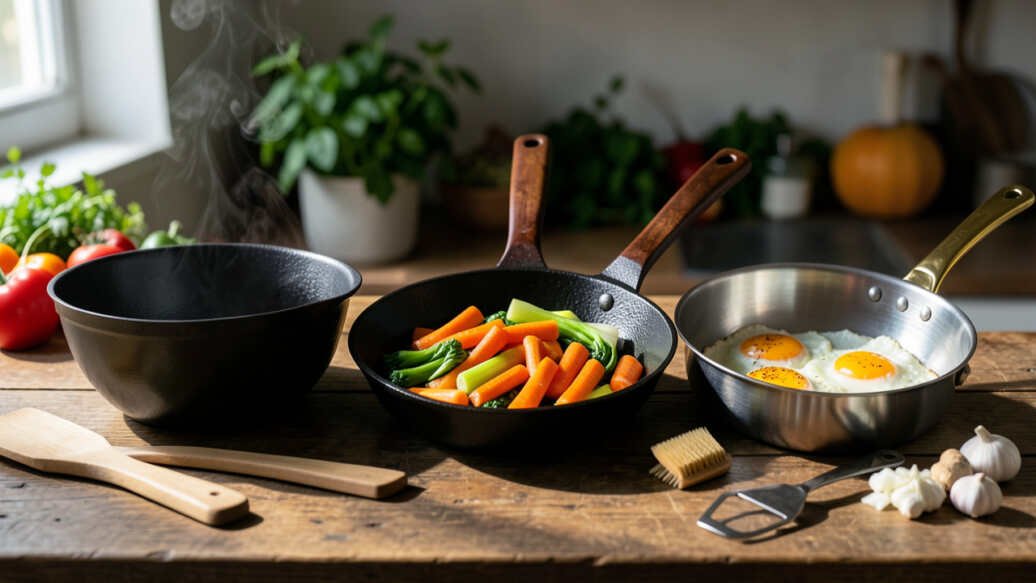
Most home kitchens need at least two pans. The best combination for versatility is a 12-inch skillet and a 14-inch flat-bottom wok. The skillet handles your daily eggs, meats, and one-pan meals. The wok handles your stir-fries, deep-frying, and quick vegetable dishes. You will rarely use a dedicated stir-fry pan if you own both.
Resources and Tools
These are trusted sources and brands for buying and learning about woks, stir-fry pans, and skillets.
- The Wok Shop – A reliable source for authentic carbon steel woks, spatulas, and wok rings. Visit The Wok Shop
- America’s Test Kitchen – Provides rigorous, science-based equipment testing for skillets and stir-fry pans. Visit America’s Test Kitchen
- Serious Eats – Offers in-depth guides on cooking techniques, seasoning woks, and using cast iron skillets. Visit Serious Eats
- Lodge Cast Iron – A leading American manufacturer of affordable, high-quality cast iron skillets. Visit Lodge Cast Iron
- Joyce Chen – A popular brand that produces high-quality flat-bottom carbon steel woks for Western stoves. Visit Joyce Chen
Frequently Asked Questions
What is the primary difference between a wok and a skillet?
The primary difference is the shape. A wok has deep, sloping sides that concentrate heat for tossing and stir-frying. A skillet has a flat bottom and low sides that maximize surface contact for searing and even browning.
Can you use a wok on an induction cooktop?
Yes, but only a flat-bottomed wok made from magnetic materials like carbon steel or cast iron. Traditional round-bottom woks will not work on induction cooktops because they do not make full contact with the surface.
Is a stir-fry pan worth buying for a beginner?
A stir-fry pan can be a good starter pan because it is stable, easy to clean, and works on any stove. However, it is a compromise. You will likely want to upgrade to a skillet or a wok as your cooking skills improve.
What size skillet should I get for a family of four?
A 12-inch skillet is the standard size for cooking meals for a family of four. It provides enough surface area to sear four chicken breasts or cook a large batch of vegetables without overcrowding the pan.
How do I clean a carbon steel wok without ruining the seasoning?
Use hot water and a soft sponge or brush. Avoid soap if possible, or use a very small amount. Dry the wok immediately on the stove over low heat. Then rub a very thin layer of cooking oil into the surface to protect the seasoning.
Final Thoughts
Choosing between a wok, stir-fry pan, and skillet comes down to your everyday cooking habits. A carbon steel wok is unbeatable for fast, high-heat stir-fries and deep-frying. A good quality kitchen skillet offers unmatched versatility for searing, baking, and one-pan meals. For most home cooks, owning a 12-inch skillet and a 14-inch flat-bottom wok covers all the essential cooking techniques without compromise.

Leave a Reply