
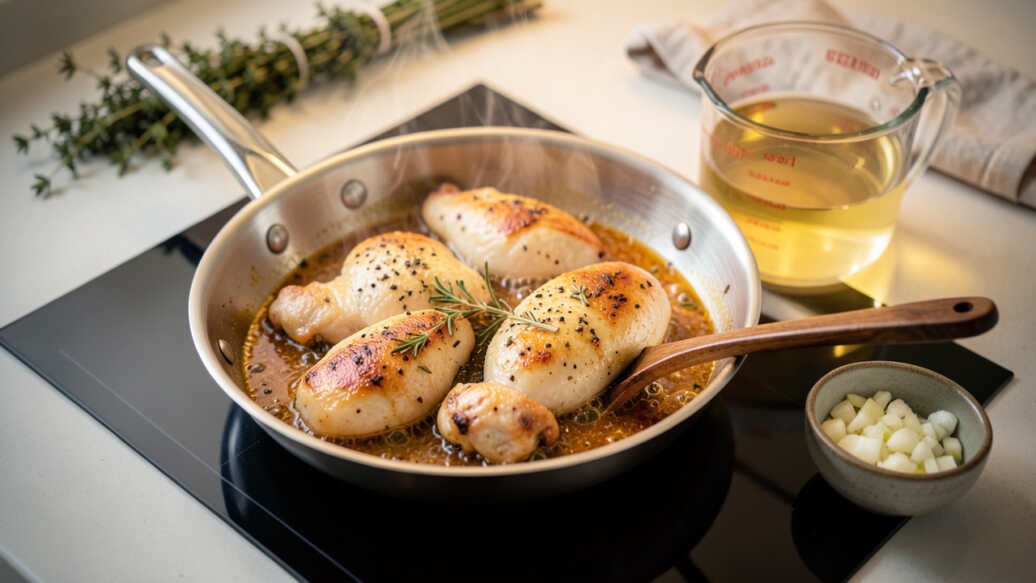
A 3.5-quart sauté pan with a depth of 2.5 to 3 inches is the correct capacity for cooking four bone-in chicken thighs in sauce, while six or more thighs require a 5-quart pan. Matching this size prevents overcrowding that hinders browning and ensures the sauce reduces properly instead of evaporating too quickly. Measuring the pan’s true capacity with water takes under a minute and directly affects both the golden skin and consistent sauce thickness.
Choosing the right sauté pan capacity directly affects how your chicken thighs brown and how the sauce reduces. This guide explains exactly how to match pan size to your recipe for consistent results.
Simply put, a 3.5-quart sauté pan handles 4 bone-in chicken thighs with sauce without overcrowding. For 6 or more thighs, you need a 5-quart pan or larger. The right capacity lets heat circulate properly, which gives you golden-brown skin and a thick, flavorful sauce.
- Overcrowding a pan drops the surface temperature and prevents proper browning on chicken thighs.
- A pan that is too large causes the sauce to evaporate too quickly, leaving the chicken dry.
- Matching pan capacity to portion size ensures even cooking and consistent sauce thickness every time.
- Measuring your pan’s true capacity takes less than one minute with water and a measuring cup.
- The ideal pan depth for chicken thighs in sauce is 2.5 to 3 inches to allow for liquid simmering.
What You Need to Measure Sauté Pan Capacity
Before you pick a pan, you need to know its actual volume. Most manufacturers print capacity on the bottom or packaging, but you should verify it yourself.
- Measuring cup – A standard liquid measuring cup with ounce and cup markings.
- Water – Tap water is fine for testing volume.
- Kitchen scale – Optional but helpful for weighing the pan when full of water.
- Digital thermometer – Useful later for checking chicken doneness, not for measuring capacity.
Important: Pan capacity is measured to the brim, but you only want to fill it to about 80 percent of the total volume. This leaves room for stirring, flipping chicken, and sauce bubbling without overflowing.
| Diameter | Common Capacity | Usable Capacity (80% Fill) | Best For (Chicken Thighs + Sauce) |
|---|---|---|---|
| 10 inches | 2.5 – 3 quarts | 2 – 2.4 quarts | 2 chicken thighs with sauce |
| 12 inches | 3.5 – 4.5 quarts | 2.8 – 3.6 quarts | 4 chicken thighs with sauce |
| 14 inches | 5 – 6 quarts | 4 – 4.8 quarts | 6 – 8 chicken thighs with sauce |
How to Calculate the Right Capacity for Your Recipe
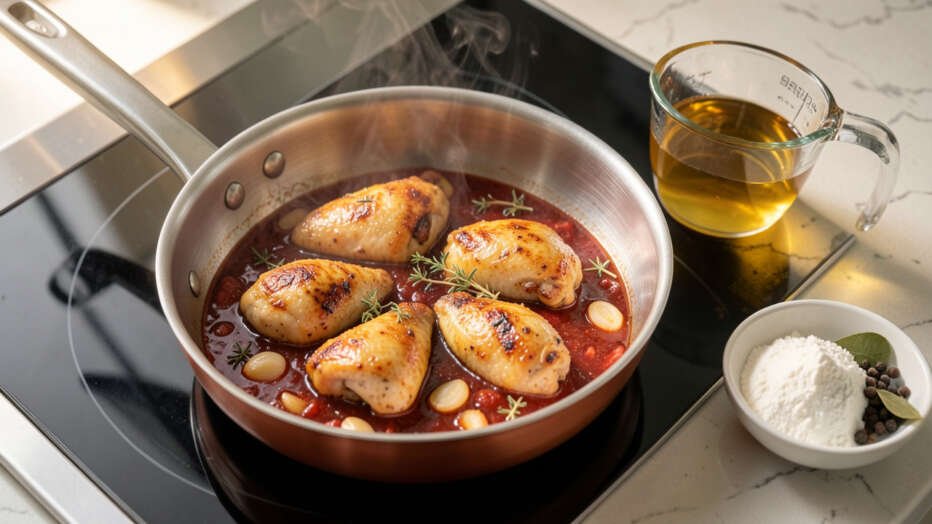
You can find the correct sauté pan capacity for your chicken thigh recipe in three simple steps. Each step accounts for the chicken, the sauce, and the space needed for proper cooking.
- Weigh your chicken thighs. According to the USDA, a single bone-in chicken thigh weighs between 5 and 7 ounces on average. Boneless thighs weigh 3 to 5 ounces each. Multiply the number of thighs by their average weight. For 4 bone-in thighs, you have roughly 24 ounces of chicken.
- Measure your sauce volume. Most recipes for chicken thighs in sauce call for 1 to 2 cups of liquid per 4 thighs. That includes broth, wine, tomatoes, or cream. Add this to your chicken volume. For 4 thighs with 1.5 cups of sauce, your total food volume is about 36 ounces.
- Add 30 percent headspace. The pan needs room for stirring, flipping, and bubbling. Multiply your total food volume by 1.3. For 36 ounces of food and sauce, you need about 47 ounces of usable capacity, which is roughly 1.5 quarts. A 12-inch sauté pan with 3.5 quarts total capacity gives you plenty of room.
Tip: If you plan to sear the chicken in batches and then add all the sauce at once, choose a pan that fits all the liquid and all the chicken at the same time. Cooking in batches is fine, but the final simmer should happen in one layer.
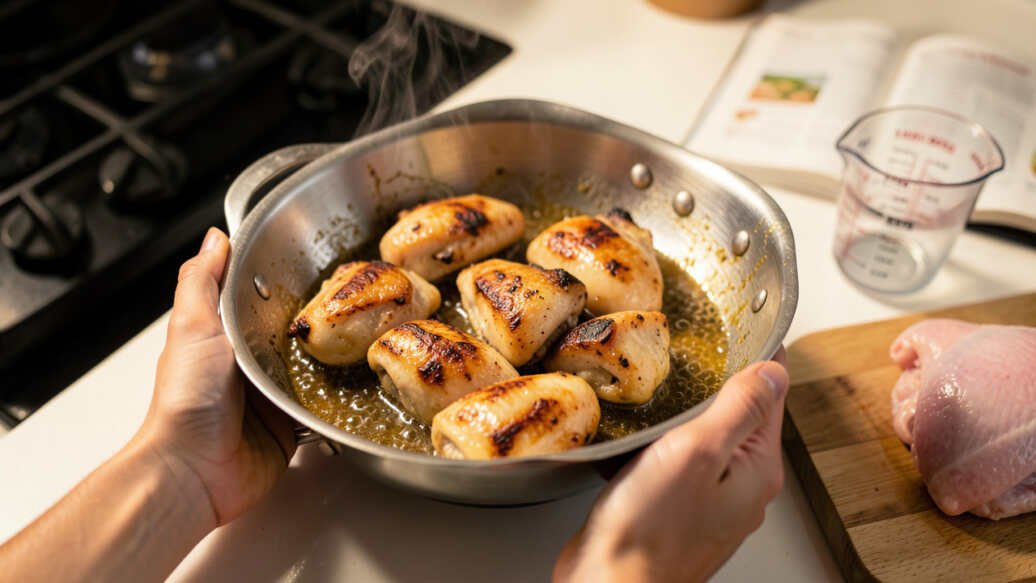
America’s Test Kitchen recommends using a 12-inch sauté pan with at least 3-quart capacity for cooking 4 chicken thighs with sauce. This size allows you to brown the thighs in a single batch without touching. Overlapping chicken thighs steam instead of browning, which ruins the texture of the skin.
The depth of the pan also matters. A sauté pan with 2.5 to 3-inch sides holds the sauce without splashing. Deeper pans like a Dutch oven work too, but they reduce surface area for evaporation, making the sauce thinner at the end.
Sauté Pan Capacity Guide by Portion Size
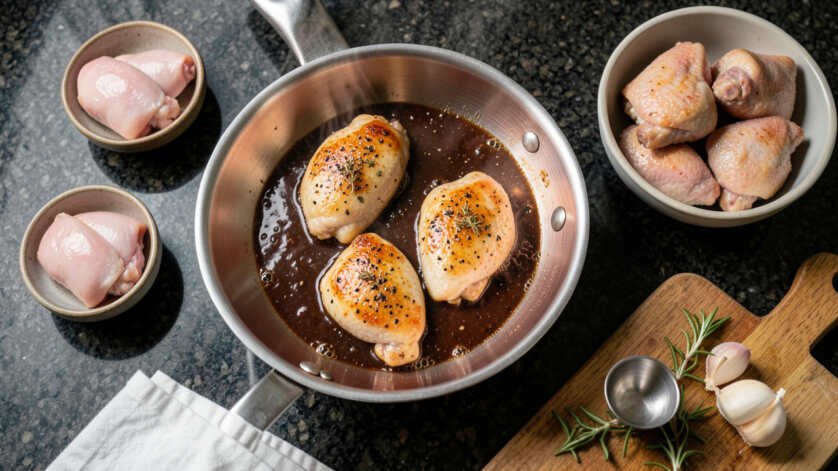
Use this table to match the number of chicken thighs to the correct pan capacity. The recommendations assume a moderate amount of sauce, about 1.5 cups per 4 thighs.
| Number of Thighs | Thigh Type | Minimum Pan Capacity | Recommended Pan Diameter |
|---|---|---|---|
| 2 | Bone-in or boneless | 2.5 quarts | 10 inches |
| 4 | Bone-in | 3.5 quarts | 12 inches |
| 4 | Boneless | 3 quarts | 12 inches |
| 6 | Bone-in | 5 quarts | 14 inches |
| 8 | Boneless | 5.5 quarts | 14 inches |
Warning: Do not use a pan that is smaller than the minimum capacity listed for your portion size. Cooking 4 bone-in thighs in a 2.5-quart pan causes the chicken to steam, the sauce to overflow, and the final dish to be watery.
If you often cook for different numbers of people, consider buying a 12-inch stainless steel sauté pan with a 4-quart capacity. This size covers most home cooking needs from 2 to 6 chicken thighs. Brands like All-Clad and Calphalon produce this size as a standard option.
What Happens When You Use the Wrong Size Pan
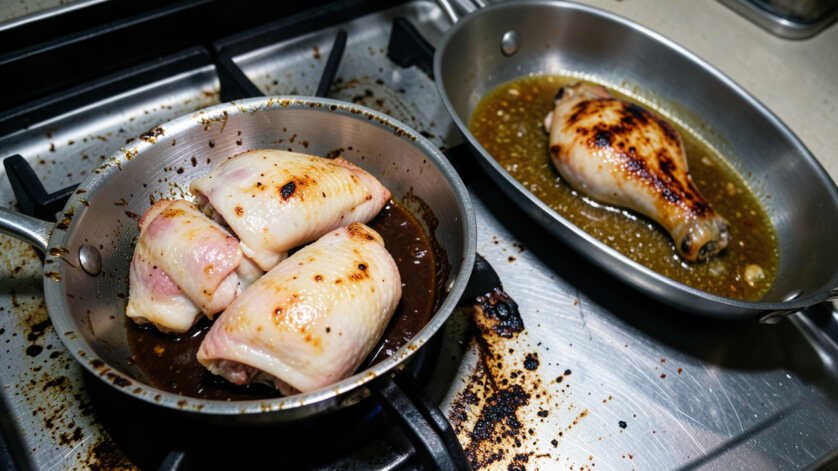
Using the wrong sauté pan capacity creates specific problems that ruin both the chicken and the sauce. Here are the most common issues.
- Overcrowding causes steaming. When chicken thighs touch each other in the pan, they release moisture that cannot escape. The skin turns rubbery instead of crispy. The pan temperature drops below the Maillard reaction threshold, which is around 300°F. According to Cook’s Illustrated, overcrowding a pan can drop the cooking surface temperature by over 50°F.
- Too much space burns the sauce. A pan that is too large spreads the sauce into a thin layer. The liquid evaporates too fast, leaving a scorched coating on the pan bottom before the chicken finishes cooking. You end up with dry chicken and a burnt pan.
- Shallow pans cause splatter. Some sauté pans have sides that are only 2 inches high. When you add sauce to hot oil, the liquid bubbles and splashes everywhere. A pan with at least 2.5-inch sides contains the splatter and keeps your stovetop clean.
- Heavy pans make stirring harder. A large cast iron sauté pan filled with 6 chicken thighs and sauce can weigh over 12 pounds. If you need to swirl the pan to distribute sauce, a heavy pan is difficult to control. Lighter stainless steel options work better for this task.
Common Mistakes to Avoid When Choosing a Pan
Home cooks often make the same errors when selecting a sauté pan for chicken thighs in sauce. Avoid these five pitfalls.
- Buying a nonstick pan for browning. Nonstick coatings prevent the fond from forming on the pan bottom. Fond is the browned bits that stick to the pan after searing. This fond is the base of a rich sauce. Use stainless steel or cast iron for the best browning.
- Using a pan with a thin bottom. Thin pans create hot spots that burn the sauce in one area while leaving another area cold. Look for a pan with a thick, multi-clad base made of aluminum and stainless steel. This distributes heat evenly.
- Choosing a pan with a small cooking surface. A pan that flares out at the top may have a small flat bottom. Check the bottom diameter, not just the top rim. A 12-inch pan should have a bottom cooking surface of at least 9 inches.
- Ignoring the lid. For chicken thighs in sauce, you often start with browning then finish with a covered simmer. Make sure your pan comes with a tight-fitting lid. A glass lid lets you monitor the liquid level without lifting it.
- Forgetting about storage. Large sauté pans take up space. Measure your cabinet or pot rack before buying a 14-inch pan. If storage is tight, choose a 12-inch pan with 4-quart capacity, which fits most standard cabinets.
Pro Tips for Cooking Chicken Thighs in a Sauté Pan
These tips come from professional chefs and test kitchens. They help you get the most out of your sauté pan.
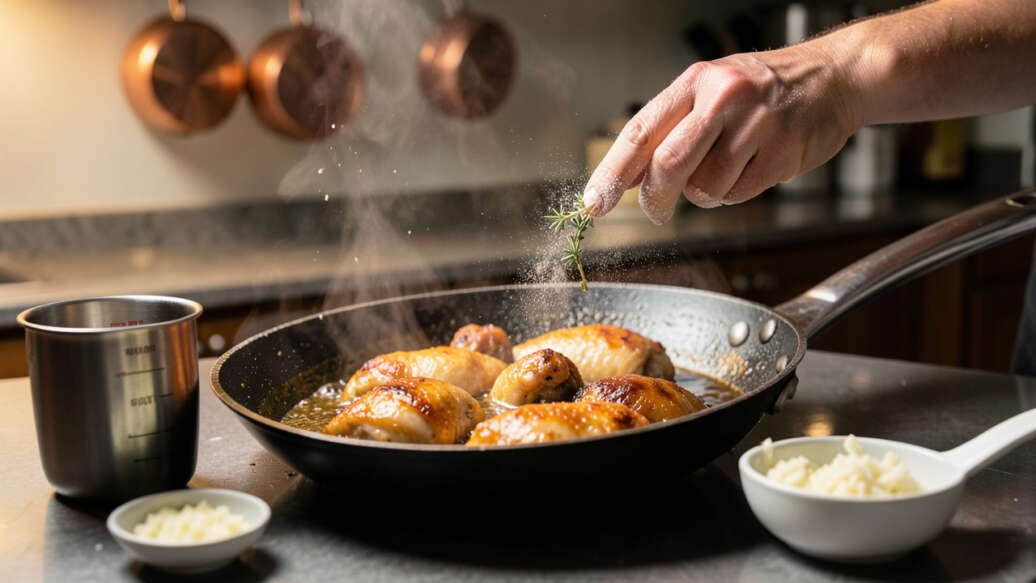
- Dry the chicken thoroughly. Pat each thigh dry with paper towels before seasoning. Wet skin produces steam, not browning. This single step makes a bigger difference than pan choice.
- Preheat the pan properly. Heat the empty pan over medium-high heat for 2 to 3 minutes before adding oil. The pan is ready when a drop of water dances on the surface. This ensures immediate browning when the chicken hits the pan.
- Leave space between pieces. Each chicken thigh needs its own spot in the pan. If the thighs touch, they steam. Cook in batches if needed, then deglaze the pan between batches with a splash of broth.
- Deglaze after browning. After removing the browned chicken, pour a little wine or broth into the hot pan. Scrape up the fond with a wooden spoon. This releases all the flavor into your sauce.
- Simmer with the lid slightly ajar. For the final cooking, leave the lid cracked open by about half an inch. This lets steam escape and thickens the sauce naturally without reducing the heat too much.
- Use an instant-read thermometer. According to the USDA Food Safety and Inspection Service, chicken thighs are safe to eat when they reach an internal temperature of 165°F. But thighs taste better at 175°F to 185°F because the connective tissue breaks down and makes the meat tender.
Tip: If you only have a pan that is slightly too small, cut each chicken thigh in half crosswise. The smaller pieces fit in a single layer and cook faster. This is a practical workaround for smaller pans.
Common Myths About Sauté Pan Size
Many misconceptions exist about pan capacity and cooking chicken thighs. Here are three myths and the real facts.
Myth 1: A bigger pan is always better. Many people think a large pan gives you more room, so it must be safer. The truth is that a pan too large for your recipe makes the sauce evaporate too quickly. You end up adding more liquid, which dilutes the flavor. Pick a pan that matches your portion size. Always follow the USDA chicken thigh temperature recommendations for food safety.
Myth 2: You only need one sauté pan for everything. A single 12-inch pan works for many recipes, but cooking 2 chicken thighs in it is inefficient. The sauce spreads thin and burns. For small portions, a 10-inch pan gives better results. Refer to the chicken thigh internal temperature guidelines to ensure perfect doneness.
Myth 3: Depth does not matter for chicken thighs. Some cooks choose shallow fry pans instead of deeper sauté pans. A shallow pan with 1.5-inch sides cannot hold enough sauce to simmer 4 chicken thighs. The liquid bubbles over the rim. A sauté pan with 2.5 to 3-inch sides is the correct choice for saucy dishes. For more details on selecting the right tool, consult the article on sauté pan capacity.
Frequently Asked Questions
What size sauté pan do I need for 4 chicken thighs with sauce?
You need a 12-inch sauté pan with at least 3.5 quarts of capacity. This size holds 4 bone-in chicken thighs and about 1.5 cups of sauce without overcrowding. America’s Test Kitchen recommends this as the standard size for a family meal.
Can I use a skillet instead of a sauté pan for chicken thighs in sauce?
An 11 to 12-inch skillet with 2-inch sides works but requires caution. Skillets have sloped sides, which reduce the usable cooking surface. You may only fit 3 thighs instead of 4. A sauté pan has straight sides, which gives you more room for liquid and easier stirring.
How do I measure the capacity of my current sauté pan?
Fill the pan with water one quart at a time using a measuring cup. Count how many quarts it takes to reach the brim. For cooking chicken thighs in sauce, use only 80 percent of that total capacity. For example, if the pan holds 4 quarts to the brim, your usable capacity is 3.2 quarts.
What is the best material for a sauté pan used for chicken thighs in sauce?
Stainless steel with an aluminum core is the best option. It browns chicken well, creates fond for the sauce, and cleans easily. Cast iron works but is heavy and slower to heat. Nonstick pans prevent fond formation and should be avoided for this specific cooking method.
Can I cook frozen chicken thighs in a sauté pan?
Yes, but you need a larger pan. Frozen thighs release more moisture as they thaw, increasing the liquid volume. Use a 5-quart pan for 4 frozen bone-in thighs. Cook them covered over medium-low heat until thawed, then remove the lid and increase heat to brown them.
Final Thoughts
Matching your sauté pan capacity to the number of chicken thighs and the sauce volume is the single most important factor for a successful dish. A 12-inch pan with 3.5 quarts handles most home recipes, while a larger 5-quart pan works for bigger gatherings. Take the time to measure your pan and adjust your cooking method accordingly. The difference between a good meal and a great one often comes down to a few inches of pan size.

Leave a Reply