
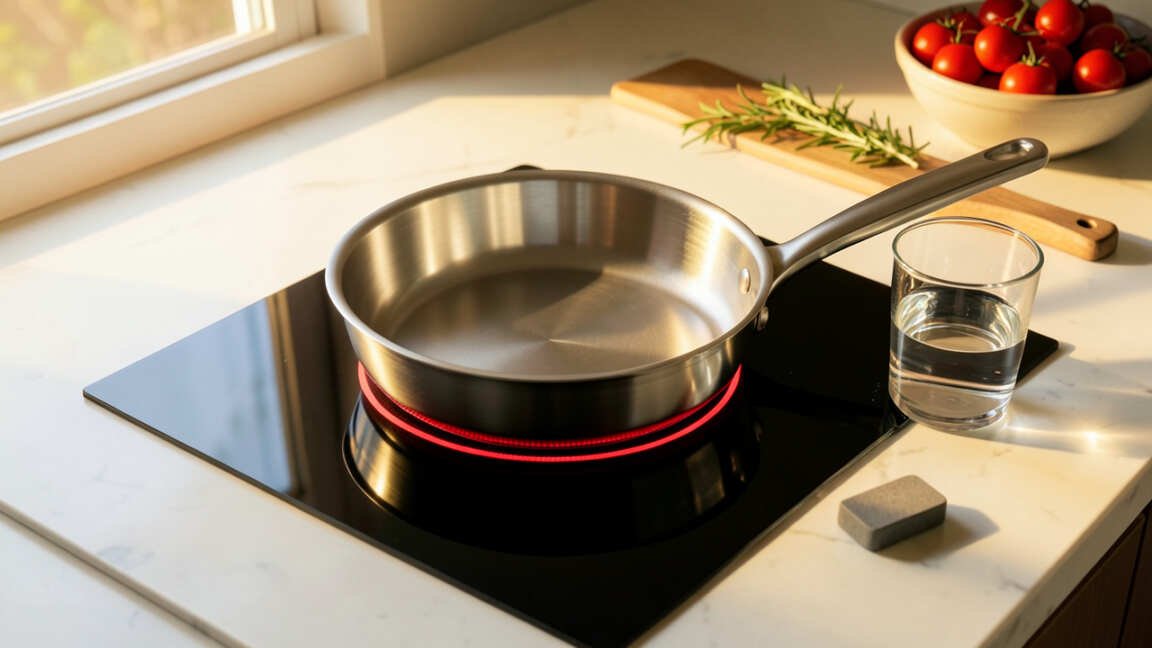
To check if a skillet is induction-compatible, perform a simple magnet test—if the magnet sticks firmly, the pan will work on an induction cooktop. Cast iron and magnetic stainless steel are always safe choices, while aluminum, copper, glass, and ceramic require a special magnetic layer or will not heat at all. Confirming compatibility before purchasing prevents wasted money and ensures your cookware heats efficiently.
If you just bought an induction cooktop, you might wonder if your old skillets will work. Not all pans work with induction. The secret is magnetism.
This post covers Induction-Compatible Skillets: How to Check Before You Buy so you never waste money on the wrong pan. You will learn simple tests, what materials work, and which pans to skip. Save time and cook with confidence.
Key Takeaways
- A simple magnet test tells you if a skillet works on induction.
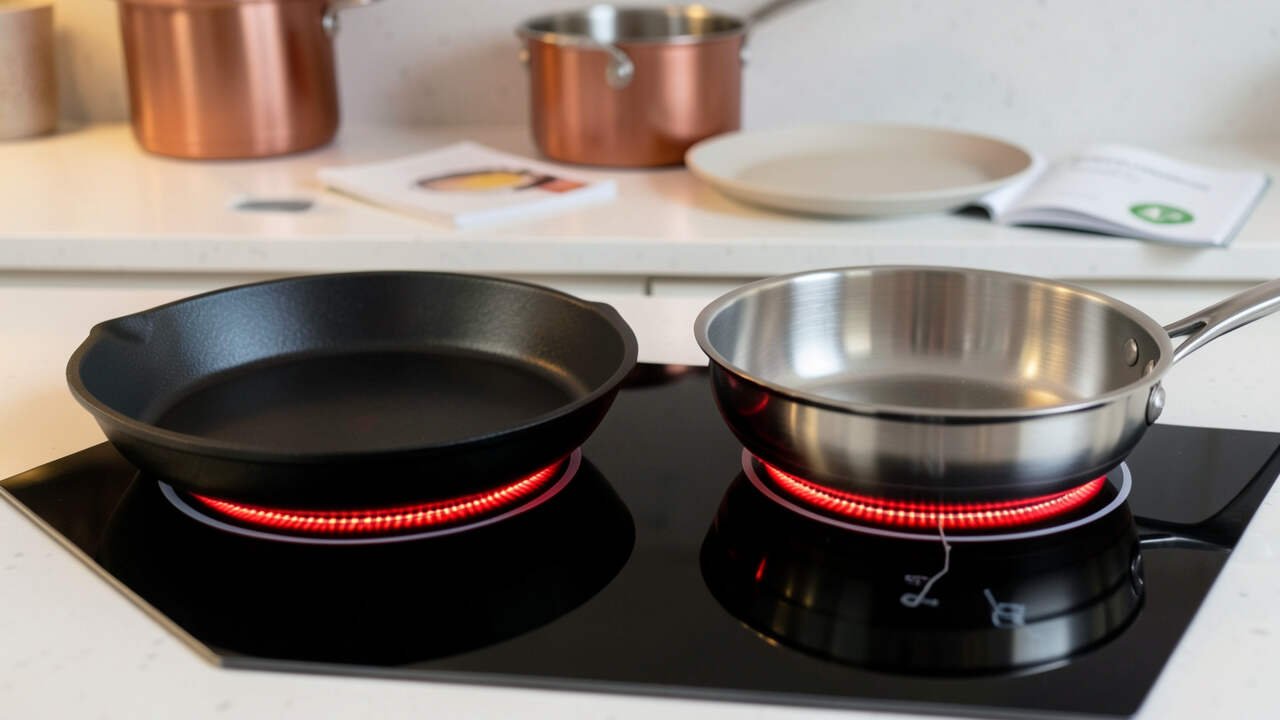
- Cast iron and magnetic stainless steel are always safe choices.
- Aluminum and copper skillets need a special magnetic layer to work.
- Checking the label or product specs is the fastest way to confirm compatibility.
- Avoid non‑magnetic materials like glass, ceramic, and most pure aluminum pans.
- Induction‑ready skillets often cost a bit more but last much longer.
Why Induction Compatibility Matters
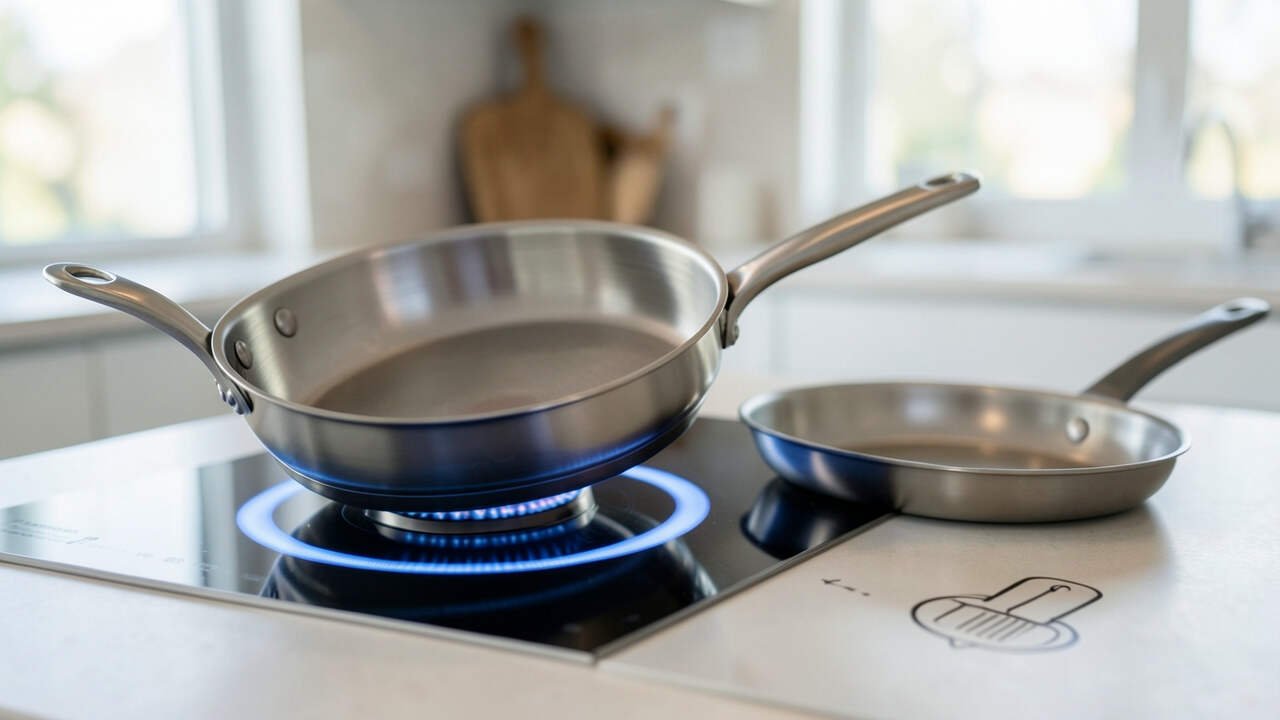
Induction cooktops use magnetic fields to heat the pan directly. If your skillet does not attract a magnet, it will not heat at all. Many people buy pretty pans without checking first.
That is a waste of money and time.
When you understand how to test for compatibility, you can shop smarter. You can also use your current cookware if it passes the test. Knowing this saves you from frustration and returns to the store.
It also helps you pick pans that heat evenly. Induction cooking is fast and energy‑efficient, but only with the right pots and pans.
How To Test a Skillet With a Magnet
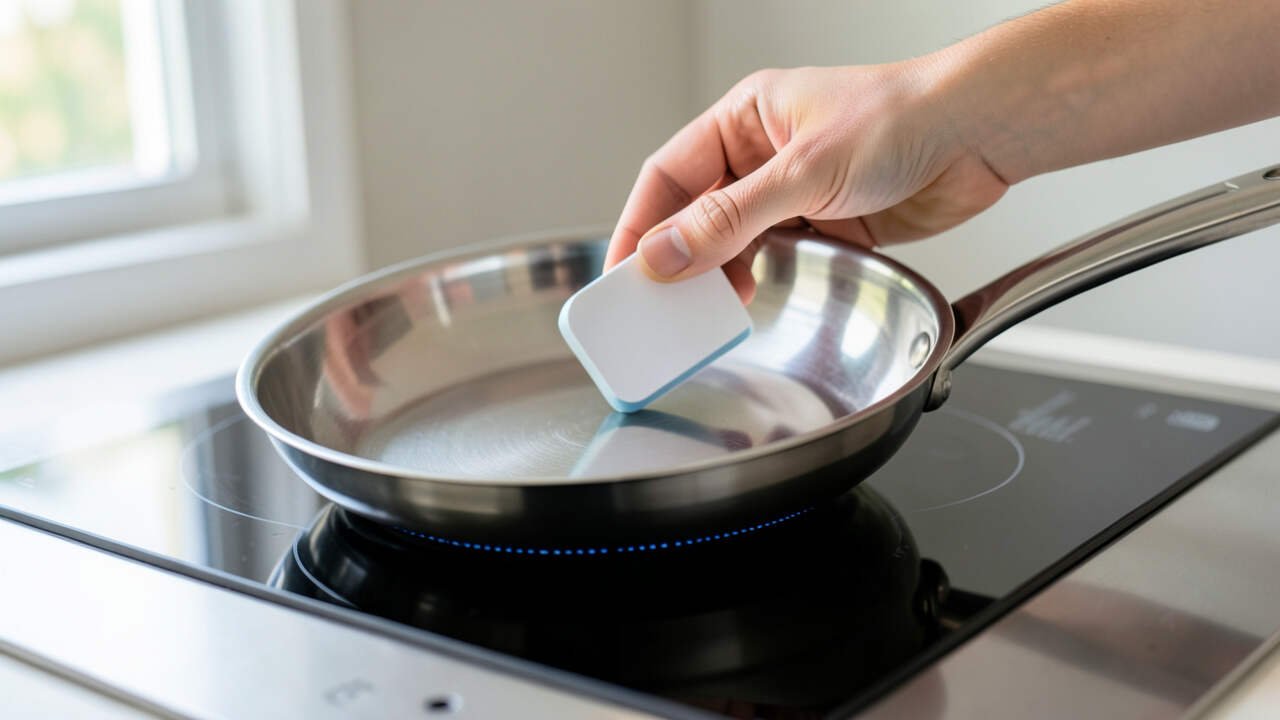
The magnet test is the easiest way to check. First, get a small refrigerator magnet. Then, hold it against the bottom of the skillet.
If it sticks firmly, the pan is induction‑compatible. If it sticks slightly or slides off, it may work poorly or not at all. If it falls off, do not use that pan on induction.
Some skillets have a magnetic layer only on the bottom. Test the center and edges of the pan. If the magnet sticks only in one spot, the pan may still work but heat unevenly.
Next, try flipping the pan and testing the cooking surface. If the magnet sticks there too, the whole pan is magnetic.
Do not just rely on the magnet test for very thin pans. Some stainless steel pans have a magnetic cladding that is only a few millimeters thick. They still work fine for everyday cooking.
What If the Magnet Sticks Only Partially?
Some pans have a magnetic disc attached to the bottom. That disc can heat up, but the rest of the pan stays cold. This often leads to hot spots and scorched food.
It is better to choose a fully magnetic skillet.
Manufacturers sometimes use induction‑ready bases on non‑magnetic aluminum bodies. These are fine if the magnet sticks to the bottom disc. Just keep in mind that the sides of the pan will not heat directly.
Food may cook slower in the middle of the pan.
Check the Label or Product Specs
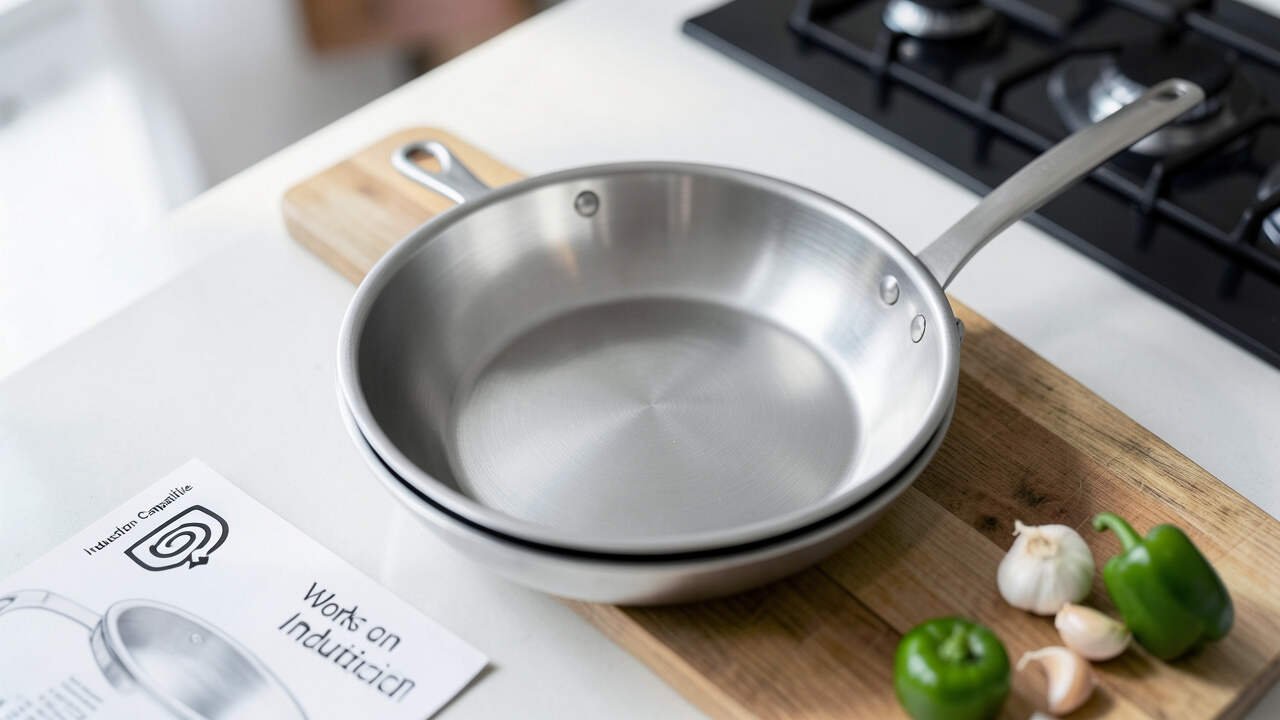
If you are shopping online or in a store, look for the induction symbol. It looks like a coil or a small wavy line. Many brands print it right on the box or on the bottom of the pan.
Some also include the words “induction compatible” or “induction ready.”
Even if you see the symbol, do a quick magnet test when you get the pan home. Sometimes the printing is wrong or misleading. I have seen pans labeled “induction compatible” that barely hold a magnet.
Trusting only the label can lead to disappointment.
When shopping online, read the product description carefully. Look for specific materials like “magnetic stainless steel” or “cast iron.” If the description only says “stainless steel,” it might not be magnetic. Check the Q&A section or reviews for confirmation.
What Skillet Materials Work Best
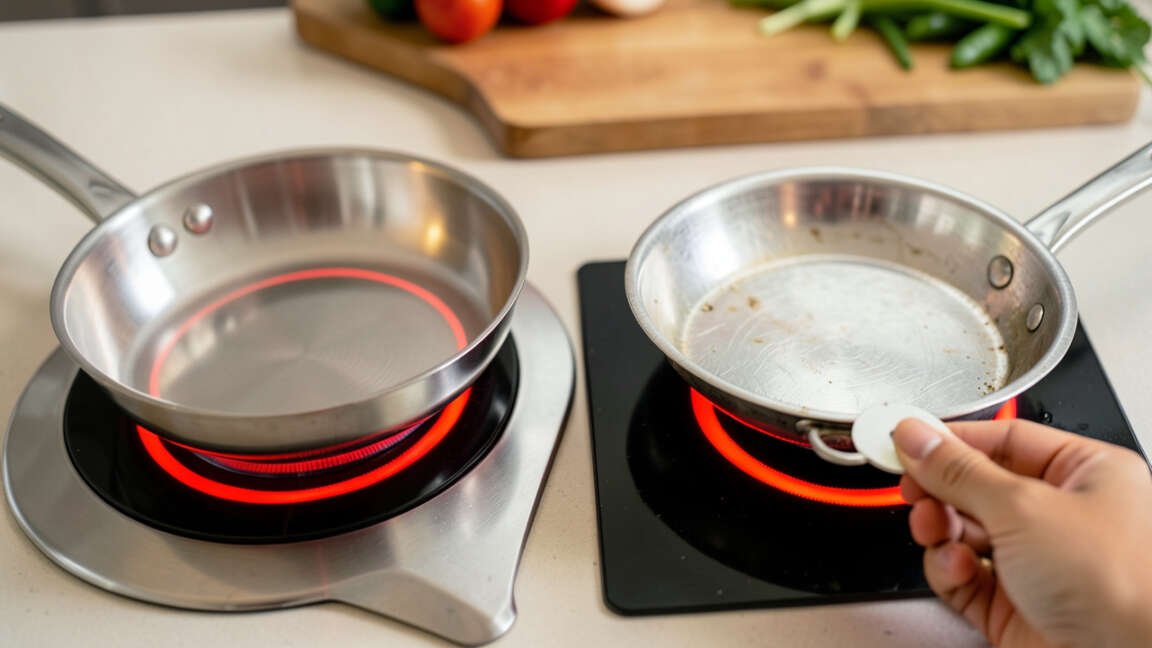
If you love aluminum or copper pans, look for models with a stainless steel or magnetic disc bonded to the bottom. These are sometimes called “induction‑ready” or “induction‑compatible.” They cost more but still let you use your preferred materials.
What To Avoid When Buying Induction Skillets
Avoid pans made entirely of aluminum, copper, glass, or ceramic. They do not contain enough iron to react with the magnetic field. Also avoid pans with very thin bottoms.
They can warp under the high heat of induction cooking.
Stay away from pans with loose handles or rivets. Induction heat is intense, and weak attachments can break. Also skip skillets that are too large for your burner.
Induction cooktops only heat the area covered by the pan. An oversized pan will not heat the outer parts evenly.
Watch out for non‑stick coatings on cheap induction pans. The coating may peel off faster because induction heats the pan more quickly. Spend a little extra on a durable coating like ceramic or hard‑anodized aluminum with a magnetic bottom.
Common Mistakes People Make
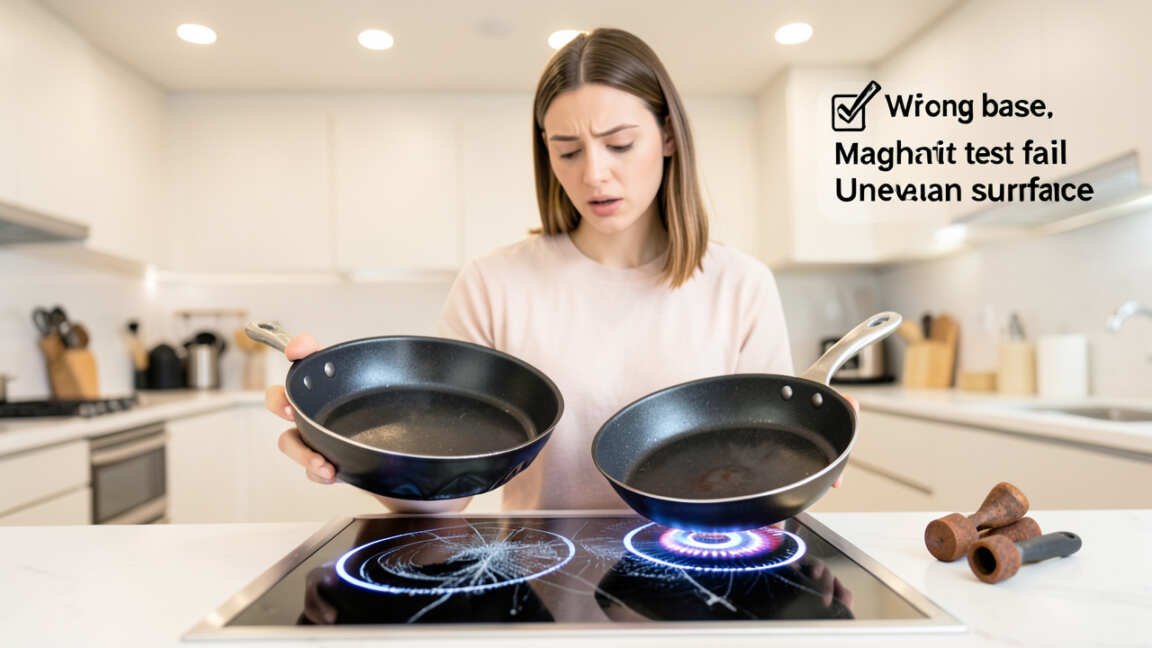
One big mistake is assuming all stainless steel works. Some stainless steel contains nickel and chromium but no iron. That type is non‑magnetic and will not work.
Always test with a magnet before cooking.
Another mistake is using a very heavy pan on a glass induction range. Cast iron skillets can scratch or crack the cooktop if you slide them. Lift them instead.
Some people also put cold pans straight onto a hot induction burner. That sudden temperature change can warp the pan. Let the pan warm up slowly if it is very cold.
Finally, do not trust the price alone. Expensive cookware is not always induction‑compatible. A cheap cast iron pan works better on induction than an expensive aluminum set.
Frequently Asked Questions
How can I tell if my old skillet works on induction without a magnet?
You can try placing it on the induction burner and turning it on. If nothing heats after 10 seconds, it is not compatible. But a magnet is quick and does not risk burning the pan.
Can I use a skillet with a small magnetic disc on the bottom?
Yes, but the heat may be uneven. The disc only heats the center, so food can burn in the middle while the edges stay cool.
What type of skillet is best for induction cooking?
Cast iron or magnetic stainless steel with a thick, flat base. They heat evenly and last a long time.
Does the size of the skillet matter for induction?
Yes. The pan should match the size of the burner. If the pan is too big, the outer parts will not heat.
Most induction cooktops have a minimum pan diameter, often 4-6 inches.
My skillet is labeled “induction compatible” but the magnet barely sticks. What should I do?
Return it if you can. Slight magnetism often means weak performance. Look for a pan where the magnet sticks strongly to the whole base.
Are there any induction skillets that work on all cooktops?
Yes. Many stainless steel and cast iron pans work on gas, electric, and induction. Look for “all‑cooktop compatible” on the label.
Can I use a skillet with a warped bottom on induction?
No. A warped bottom will not make full contact with the burner. It will heat slowly and unevenly, and it may damage the cooktop.
Final Thoughts
Now you know how to test any skillet with a simple magnet. Check the label, look for the right materials, and avoid non‑magnetic pans. This saves time and money.
Induction-Compatible Skillets: How to Check Before You Buy is a skill that makes cooking easier and more enjoyable. Stick with cast iron or magnetic stainless steel, and you will never have a cold pan on your induction cooktop again.

Leave a Reply