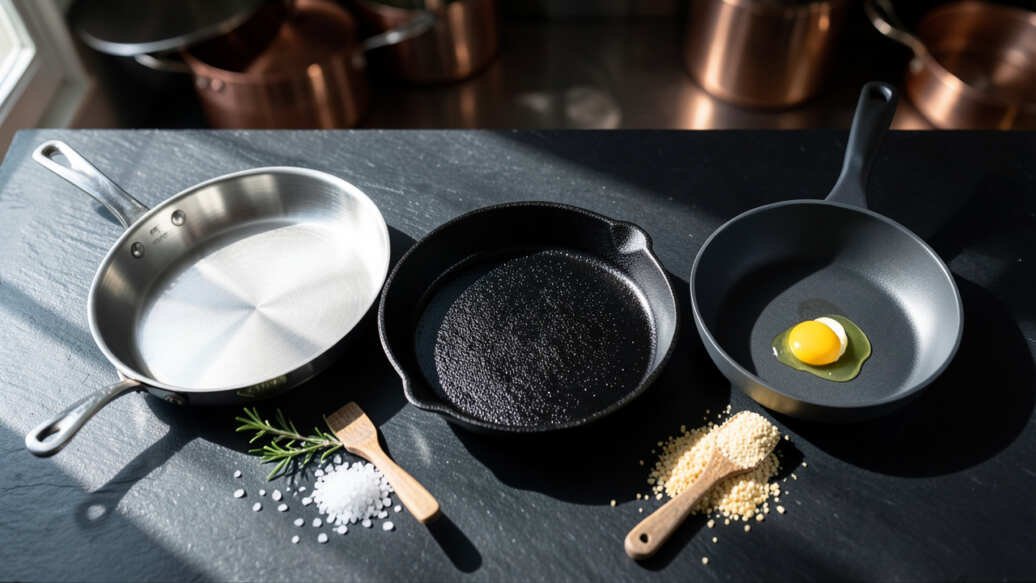
Stainless steel, cast iron, and non-stick frying pans each excel in different cooking tasks, with stainless steel best for searing and sauces, cast iron for high heat and oven use, and non-stick for eggs and low-fat cooking. Selecting the right material depends on what you cook most and how much maintenance you prefer, as stainless requires technique, cast iron needs seasoning, and non-stick offers easy release but shorter lifespan. Matching pan material to your primary cooking methods saves money and improves results without the need for a single all-purpose pan.
Choosing the right pan can feel tricky when you see so many options. You want something that cooks well and lasts a long time. This post makes Frying Pan Materials Compared: Stainless, Cast Iron, Non-Stick simple and clear.
You will learn what each material does best, where it falls short, and which one fits your cooking needs. By the end, you will know exactly which pan to pick for eggs, steaks, sauces, and more. No more guessing or wasted money on the wrong cookware.
Key Takeaways
- Stainless steel gives you the best heat control and searing for meats and sauces.
- Cast iron holds heat longer and works great for high-heat cooking and oven use.
- Non-stick pans make low-fat cooking and delicate foods like eggs super easy to release.
- Each material has a clear best use – no single pan does everything perfectly.
- Your choice depends on what you cook most and how much maintenance you want to do.
- Matching the pan to the task saves you time, money, and frustration in the kitchen.
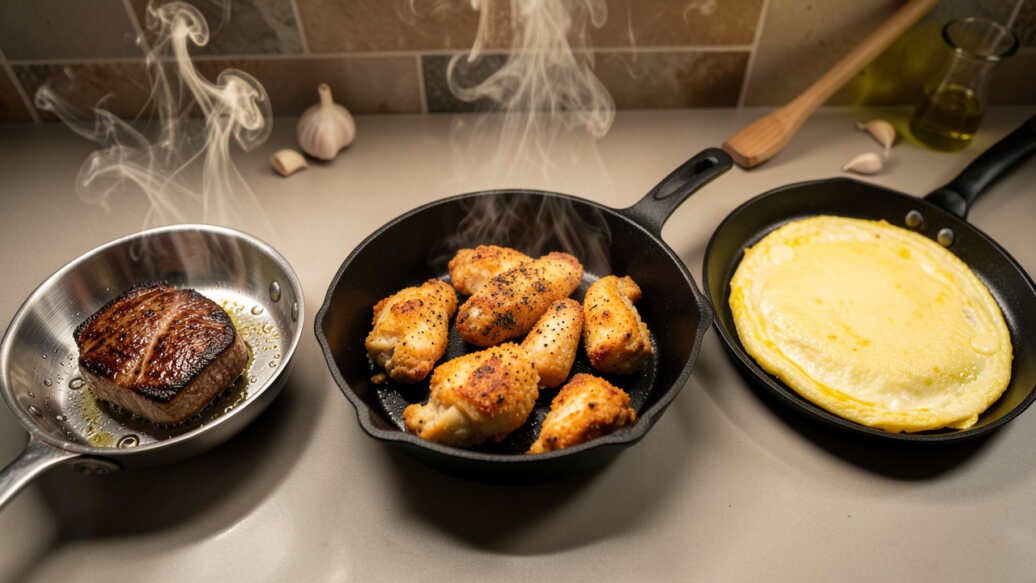
How Each Pan Material Changes Your Cooking Results
Every pan material heats, reacts, and feels different when you cook. Knowing these differences helps you pick the right tool for each meal. Let’s look at each one closely.
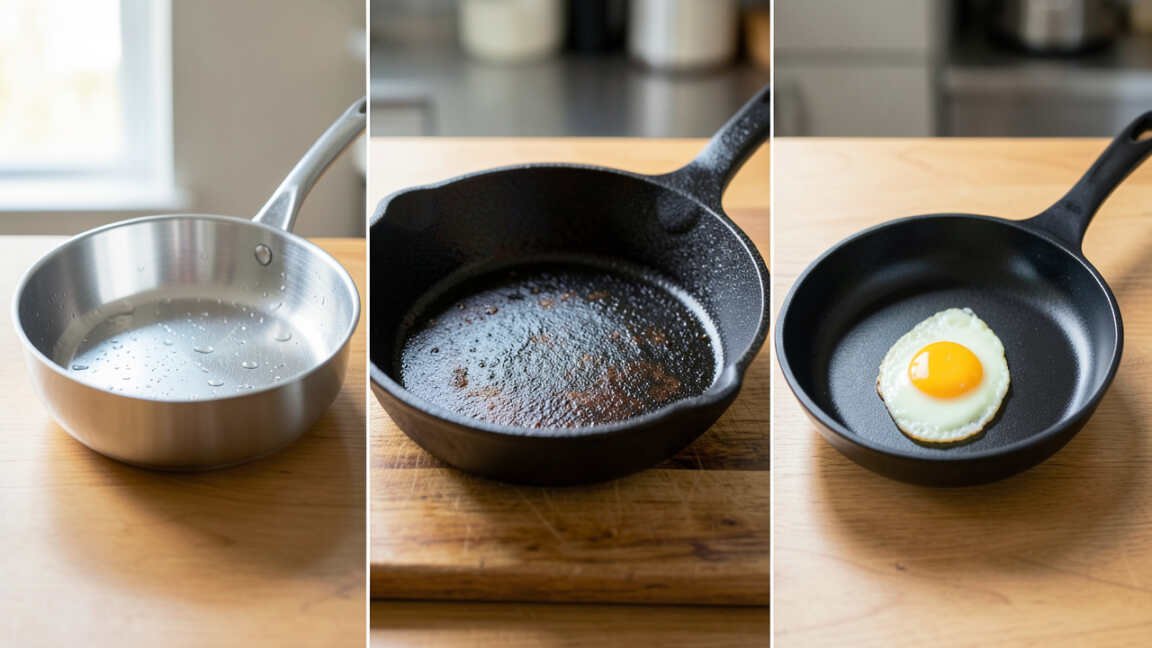
Stainless Steel – Best for Searing and Sauces
Stainless steel pans have an aluminum or copper core inside. This core spreads heat evenly across the pan. The outer stainless layer does not react with acidic foods like tomatoes or vinegar.
That means you can deglaze the pan and make a pan sauce right after searing meat.
First, stainless steel gets very hot and stays hot. This makes it perfect for getting a deep brown crust on steak or chicken. Second, it does not have any coating that can scratch or peel.
You can use metal utensils without worry. Third, it cleans up well with a little scrubbing or a quick soak.
But stainless steel has one big downside. Food sticks to it easily if you do not use enough oil or heat. Eggs and fish can be a real challenge.
You need to preheat the pan properly and add fat before adding food. Once you learn the technique, sticking becomes much less of a problem.
Frying Pan Materials Compared: Stainless, Cast Iron, Non-Stick shows that stainless steel wins for browning and sauce-making. It does not need special care like cast iron, but it does need some cooking skill.
Cast Iron – Best for High Heat and Oven Cooking
Cast iron is one of the oldest pan materials still in common use. It is made from a single piece of iron, so it is heavy and very durable. A good cast iron pan can last for generations if you take care of it.
Cast iron holds heat better than any other pan material. Once it gets hot, it stays hot even when you add cold food. This makes it excellent for searing steaks, frying chicken, or baking cornbread.
You can also put it directly in the oven at high temperatures.
The main drawback is weight and maintenance. Cast iron pans are heavy to lift and move around. They also need seasoning – a thin layer of oil baked onto the surface – to stay non-stick.
You cannot wash them with soap and water the same way you clean other pans. Acidic foods can also damage the seasoning if left too long.
For people who cook a lot of meat or like one-pan meals that go from stovetop to oven, cast iron is a great choice. It offers heat retention that no other material can match.
Non-Stick – Best for Eggs and Low-Fat Cooking
Non-stick pans have a coating that stops food from sticking. The most common coating is PTFE (often called Teflon). Some newer pans use ceramic coatings instead.
These pans let you cook with very little oil, which is good for low-fat meals.
Non-stick pans are the easiest to use for delicate foods. Eggs slide right off. Fish fillets stay whole.
Pancakes flip without tearing. Cleaning is also very easy – just a quick wipe with a sponge and some mild soap.
The big downside is that non-stick coatings wear out over time. They can scratch, peel, or lose their non-stick properties. You cannot use metal utensils on them.
High heat (above 500°F or 260°C) can also damage the coating and release fumes. Most non-stick pans last only a few years before you need to replace them.
Non-stick pans are perfect for beginners or anyone who cooks eggs, fish, and pancakes often. Just be gentle with them and avoid high heat.
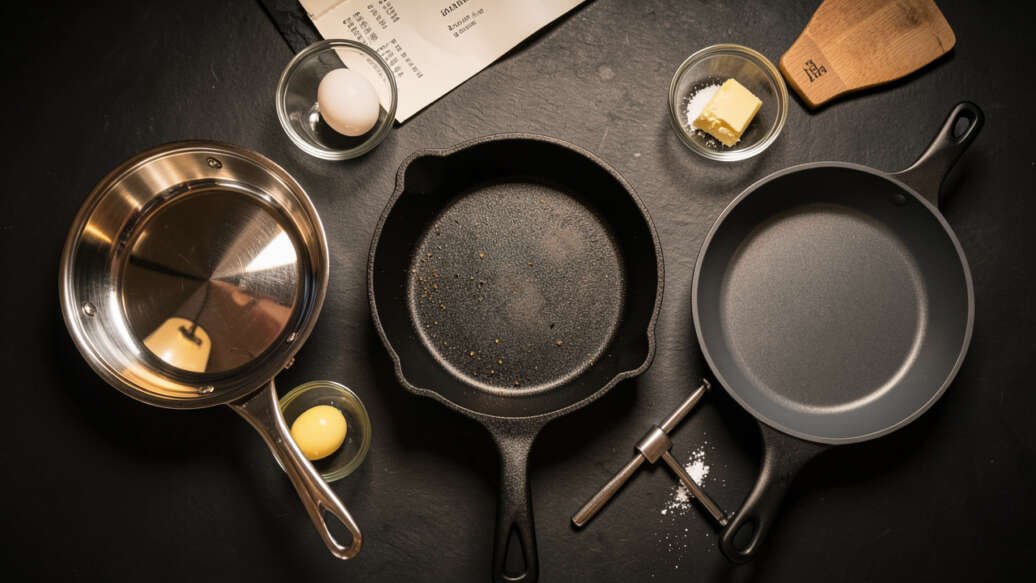
Side-by-Side Comparison of the Three Pan Materials
Seeing the differences in a table makes it easy to compare at a glance. Here is a clear breakdown of the key factors for each material.
This Frying Pan Materials Compared: Stainless, Cast Iron, Non-Stick table gives you a fast way to see which pan fits your cooking style. Match the factor that matters most to you with the material that scores best.
Which Pan Material Should You Buy First?
If you can only buy one pan right now, your choice depends on what you cook most. Let’s break it down by cooking style.
For Meat Lovers and Sauce Makers
Choose stainless steel. It gives you the best control for browning meat and making pan sauces. You can sear a steak, then add wine or broth to lift the browned bits off the pan bottom.
That is called deglazing, and it builds deep flavor fast. Stainless steel also handles acidic ingredients like tomatoes and lemon juice without any reaction.
For High-Heat Cooking and Oven Meals
Pick cast iron. It handles high heat better than any other pan. You can use it to fry chicken, sear steak, or bake cornbread.
Cast iron also goes from stovetop to oven easily, which is great for recipes that start on the burner and finish in the oven. The heat retention means your food stays hot longer at the table.
For Quick Meals and Delicate Foods
Go with non-stick. If you cook eggs, fish, or pancakes often, non-stick saves you time and frustration. You use less oil, food releases easily, and cleanup is fast.
Non-stick is also lighter than the other options, which makes it easier to handle for everyday cooking.
How to Choose Between Coated and Uncoated Pans
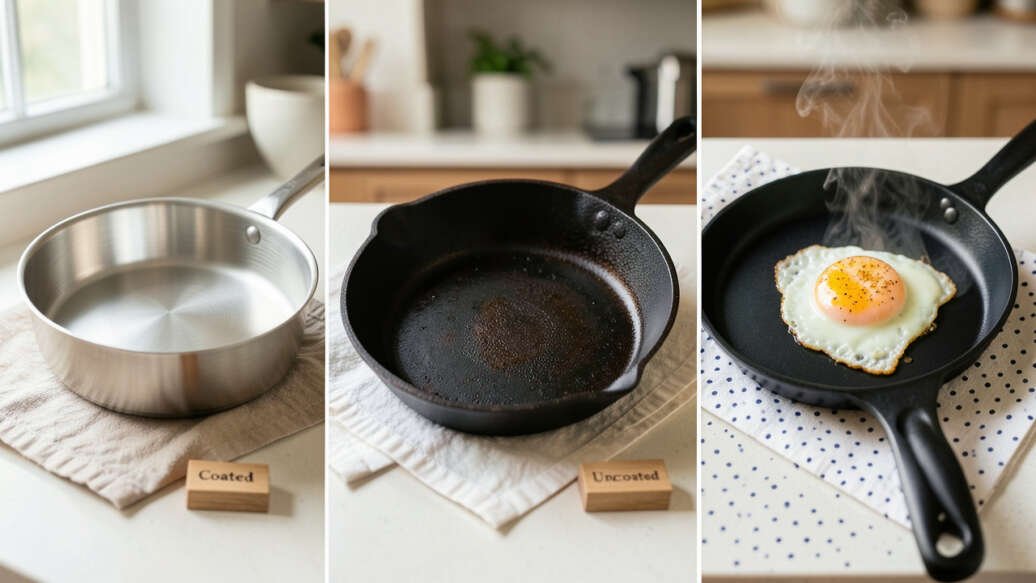
The biggest split in frying pans is between coated and uncoated surfaces. Non-stick pans have a coating. Stainless steel and cast iron do not.
Each type has trade-offs.
Uncoated pans (stainless and cast iron) last much longer. They do not lose their cooking surface over time. You can use metal utensils on stainless steel.
You can heat them as high as you want without damaging them. The trade-off is that you need to learn how to use them properly to avoid sticking.
Coated pans (non-stick) are easier to use but wear out faster. They are great for low-fat cooking and delicate foods. But you must treat them gently – no metal utensils, no high heat, and no abrasive cleaners.
Plan to replace a non-stick pan every few years.
When comparing Frying Pan Materials Compared: Stainless, Cast Iron, Non-Stick, think about how much time you want to spend on learning and maintenance. Uncoated pans require more skill but last longer. Coated pans are simpler but have a shorter life.
Common Mistakes People Make With Each Pan Type
Avoid these errors to get the best results from your pan.
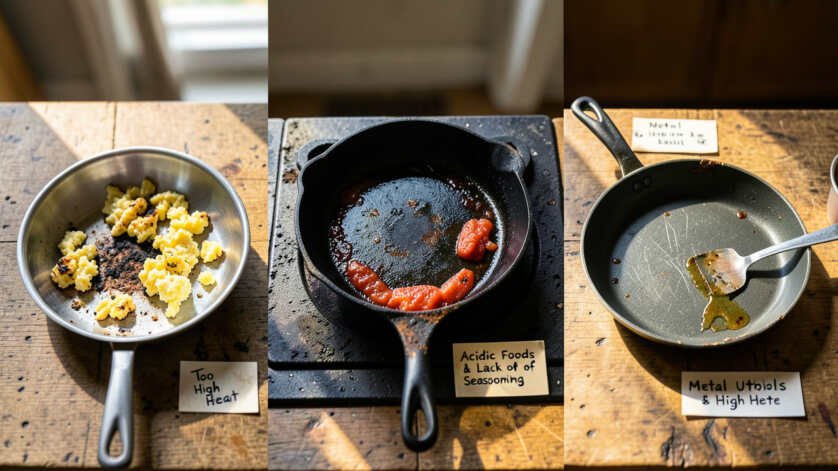
- Stainless steel: Heating the pan too slowly or not preheating enough causes food to stick. Always preheat on medium heat for 2-3 minutes before adding oil. Then wait another 30 seconds before adding food.
- Cast iron: Soaking in water or using soap strips the seasoning. Wipe it clean with a paper towel or scrub with salt and a little oil. Dry it fully and rub a thin layer of oil on the surface after each use.
- Non-stick: Using high heat damages the coating. Keep the heat on low or medium. Never use metal utensils. Stacking pans without a protective layer can also scratch the coating.
Fixing these small habits makes a big difference in how well your pan performs and how long it lasts.
Frequently Asked Questions
Which is better for everyday cooking, stainless steel or non-stick?
It depends on what you cook. Non-stick is easier for eggs and fish. Stainless steel is better for searing meat and making sauces.
Many cooks keep one of each on hand.
Can I use metal utensils on cast iron?
Yes, cast iron is very tough. Metal spatulas and spoons will not damage it. That is one of the benefits of uncoated pans like cast iron and stainless steel.
Is cast iron safe for cooking acidic foods like tomatoes?
Yes, but only for short periods. Acidic foods can react with the iron and give the food a metallic taste. It also wears down the seasoning.
Use stainless steel for long-simmered tomato sauces instead.
How do I clean a stainless steel pan without scratching it?
Use a soft sponge and mild dish soap. For stuck-on food, soak the pan in warm water for 10-15 minutes. You can also use a paste of baking soda and water to lift stubborn bits without scratching.
Does Frying Pan Materials Compared: Stainless, Cast Iron, Non-Stick include any other popular materials?
This comparison covers the three most common materials. Other options like carbon steel or copper exist, but stainless steel, cast iron, and non-stick are the top choices for home cooks because they balance cost, performance, and ease of use.
Can non-stick pans go in the oven?
Some can, but only at low temperatures. Check the manufacturer label. Most non-stick pans are safe up to 350°F or 400°F.
Exceeding that can damage the coating. Cast iron and stainless steel are much better for oven use.
What is the best pan for a beginner cook?
A non-stick pan is the easiest to start with because food does not stick and cleanup is simple. Once you feel more confident, add a stainless steel or cast iron pan to your kitchen for better searing and longer durability.
Final Thoughts
Each pan material has a clear strength. Stainless steel is best for searing and sauces. Cast iron holds heat and shines in the oven.
Non-stick makes eggs and fish effortless. Pick the one that matches what you cook most. Owning one of each gives you the most flexibility in the kitchen.

Leave a Reply