
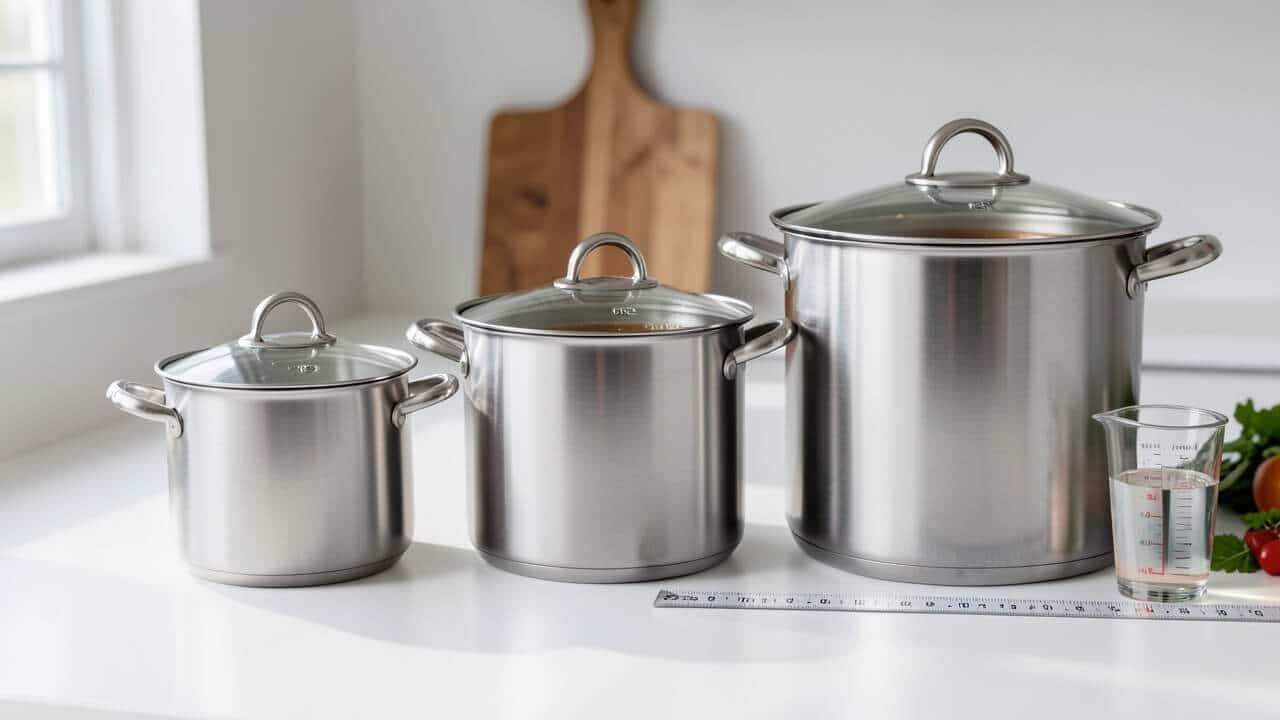
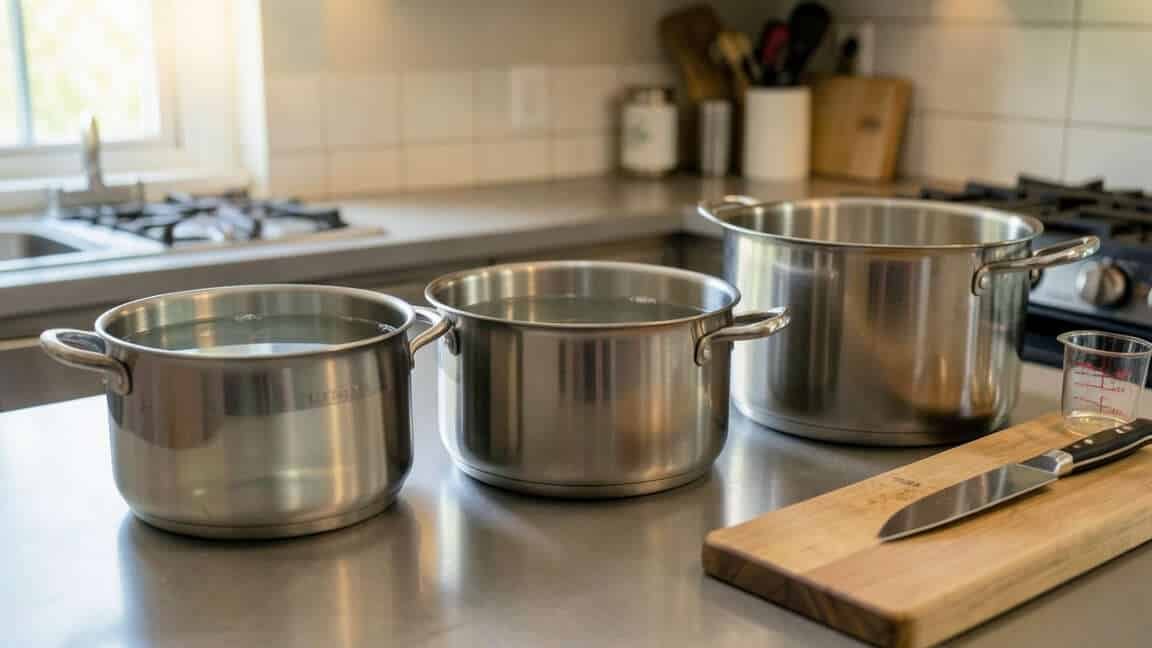
The 8-quart stockpot is the most practical size for typical home cooking, handling tasks like simmering a whole chicken for soup or preparing chili for a family of four. The 6-quart stockpot is compact and best suited for small households of one to two people, or for cooking side dishes, sauces, and smaller portions. The 12-quart stockpot is a large-capacity workhorse intended for serious batch cooking, canning, or feeding a crowd at holidays and large gatherings.
Choosing the right stockpot size is a common struggle for home cooks. Whether you are making soup for the week or a quick sauce for dinner, the 6qt, 8qt, and 12qt options serve very different needs.
This guide breaks down exactly what each size does best so you never end up with a pot that is too small or too large for your cooking reality.
Simply put, the 8-quart stockpot is the most versatile and realistic size for most home kitchens. It handles everything from a whole chicken soup to a batch of chili for a family of four. The 6-quart is better for sides and small meals, while the 12-quart is best saved for serious batch cooking or large gatherings.
Key Takeaways
- 6-quart stockpots are compact and best for small households (1-2 people) or cooking side dishes.
- 8-quart stockpots are the ideal “goldilocks” size for most families (3-5 people) and everyday cooking tasks.
- 12-quart stockpots are large capacity workhorses designed for batch cooking, canning, or feeding a crowd.
- Your choice depends on your household size, cooking frequency, and storage space.
- Always consider usable capacity (two-thirds full) rather than total volume to the brim.
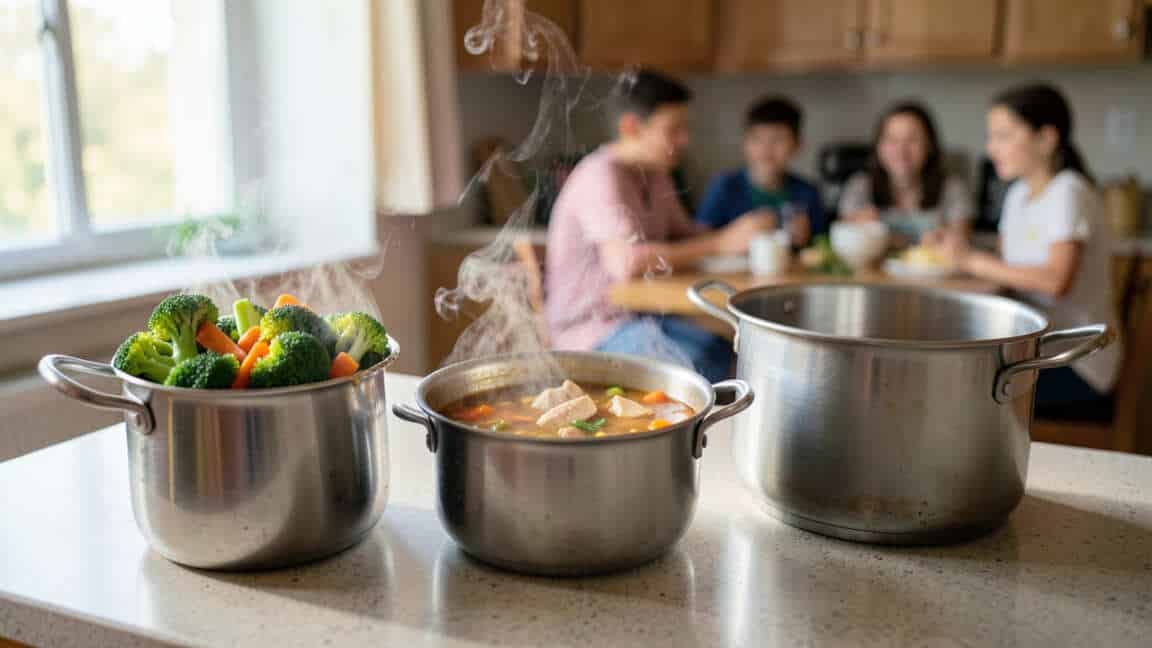
1. Why the Size of Your Stockpot Matters
When you shop for a stockpot, the quart size determines what you can realistically cook. A 6-quart pot holds about 5.7 liters, which sounds decent until you try to fit a whole chicken with vegetables.
The physical size also matters. A 12-quart pot is heavy and tall, often too tall to fit under standard kitchen cabinets. A 6-quart pot is nimble and easy to store but limits your batch size.
Many home cooks jump to a 12-quart pot thinking bigger is better, only to find it sits unused in the garage. The right size saves space, money, and effort.
Here is a quick breakdown of the physical dimensions and typical weight of each size:
- 6-Quart: ~9-10 inches wide, 6-7 inches tall. Lightweight, easy to handle.
- 8-Quart: ~10-11 inches wide, 8-9 inches tall. Moderate weight, manageable for most cooks.
- 12-Quart: ~12-13 inches wide, 10-12 inches tall. Heavy and bulky, requires effort to lift full.
Storage is a huge factor. Many kitchens have cabinets that are 12-14 inches tall. A 12-quart pot often needs to be stored on a lower shelf or in a garage.
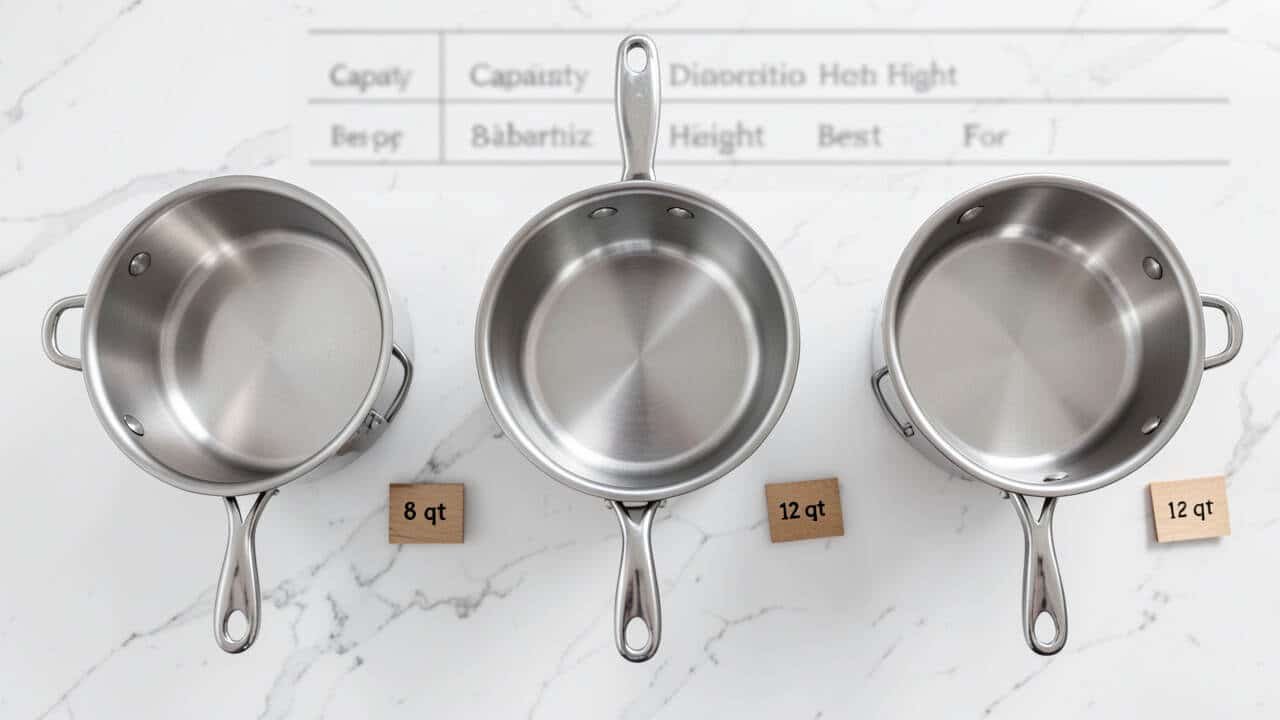
2. Quick Comparison Table: 6qt vs 8qt vs 12qt Stockpots
| Feature | 6-Quart | 8-Quart | 12-Quart |
|---|---|---|---|
| Best Household Size | 1-2 people | 3-5 people | 5+ people |
| Typical Uses | Sauces, sides, small soups | Whole chicken soup, chili, pasta | Batch cooking, canning, stock |
| Storage Difficulty | Easy | Moderate | Hard |
| Weight (Empty) | 3-4 lbs | 4-6 lbs | 7-10 lbs |
| Price Range | $20 – $60 | $30 – $80 | $50 – $120 |
This table shows the clear trade-off between capacity and practicality. The 8-quart hits the sweet spot for most users. It is large enough for family meals but light enough for everyday handling.
3. The 6-Quart Stockpot – Best for Small Households
The 6-quart stockpot is often the smallest true stockpot you can buy. It is perfect for singles, couples, or anyone who cooks small portions. You can easily boil pasta for two or make a small batch of tomato sauce.
However, the 6-quart size has significant limitations. Trying to cook a whole chicken for broth is nearly impossible without cutting it up. You also cannot double recipes in this pot without risk of boil-overs.
Tip: If you live alone, a 6-quart stockpot paired with a 3-quart saucepan covers almost all your cooking needs without wasting cabinet space.
Pros and Cons of a 6-Quart Stockpot
- Pros: Lightweight, easy to store, heats up quickly, ideal for sides and small meals, affordable.
- Cons: Too small for whole chicken soups, limited batch cooking capacity, not great for large families, narrow diameter can make searing difficult.
Best For: Small households (1-2 people), making rice, cooking quinoa, small pasta batches, and vegetable soups.
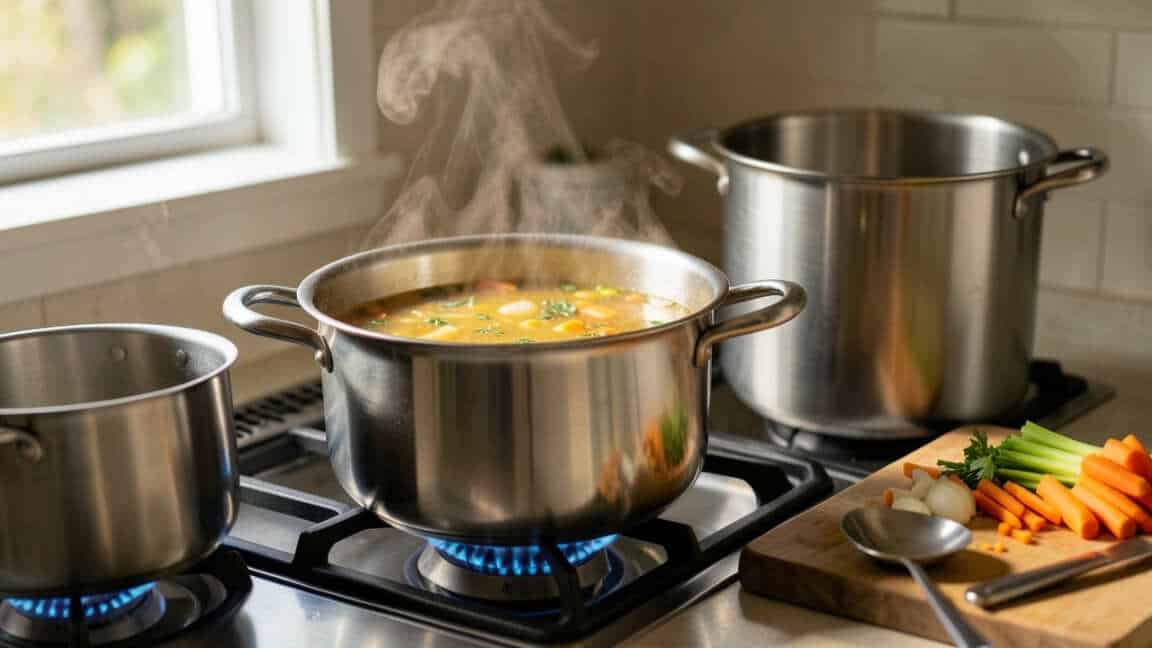
4. The 8-Quart Stockpot – The All-Rounder Reality
This is where the “goldilocks” zone lives. An 8-quart stockpot is the most recommended size for a reason. It fits a whole chicken with room for vegetables and broth.
It is also large enough to cook a full pound of pasta comfortably. For most families of 4, this is the only stockpot you will ever need. It is a manageable size and fits under most standard kitchen cabinets.
Here is what you can cook in an 8-quart pot:
- A whole chicken soup (3-4 lbs bird)
- A large batch of chili (serves 6-8)
- Boiling corn on the cob (10-12 ears)
- Cooking a whole lobster or crab
- Making several quarts of bone broth
- Preparing a full batch of spaghetti sauce
Important: Look for an 8-quart pot with a tight-fitting lid and sturdy handles. These features make a huge difference when draining heavy loads.
Best For: Families of 3-5, everyday cooking, whole chicken dishes, large pasta meals.
5. The 12-Quart Stockpot – For Batch Cooking & Entertaining
The 12-quart stockpot is a serious piece of kitchen equipment. It is large, heavy, and designed for volume. If you love meal prepping for the month or hosting large parties, this is your tool.
The main downside is practicality. When full, a 12-quart pot can weigh 25-30 pounds. That is heavy to lift, drain, and clean.
It also takes up a lot of storage space.
When You Actually Need a 12-Quart Pot
- Canning tomatoes or vegetables (standard water bath canning)
- Making huge batches of stock or bone broth for freezing
- Cooking large cuts of meat like a whole brisket or corned beef
- Prepping for parties or holiday dinners (feeding 12+ people)
- Making large quantities of soup for the week (freezer meals)
Warning: A 12-quart pot may not fit in your sink for cleaning. You may need to wash it in sections. Measure your sink depth and cabinet height before buying.
Best For: Canning, serious meal preppers, large families (6+), and entertaining.
6. What Size Stockpot Do You Really Need?
The reality is that most home cooks overestimate their needs. You probably do not need a 12-quart pot unless you are canning or feeding a small army. The 6-quart is too limiting for a family.
The 8-quart stockpot is the answer for 90% of readers. It offers the best balance of capacity, weight, storage, and versatility. It is the size most professional chefs recommend for home kitchens.
Use this quick guide to match your lifestyle to the right size:
| Your Household | Recommended Size | Why |
|---|---|---|
| 1-2 people | 6-Quart | Handles small meals without taking up too much space. |
| 3-5 people | 8-Quart | Enough for whole chickens and large family meals. |
| 6+ people / Canning | 12-Quart | Necessary for volume cooking and water bath canning. |
If you have storage space and frequently cook for crowds, having both an 8qt and a 12qt is a powerful combo.
7. Common Mistakes When Choosing a Stockpot Size
Many people buy a stockpot without considering how they actually cook. This leads to frustration or wasted money. Here are the most common mistakes:
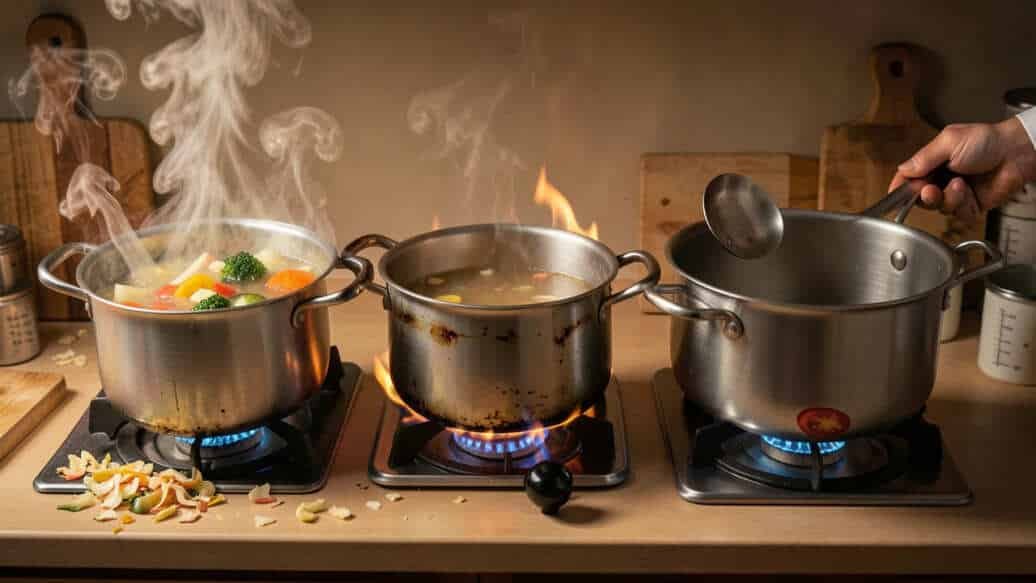
- Buying too small: A 6-quart pot cannot fit a whole chicken. You will end up buying a second pot later.
- Buying too large: A 12-quart pot is heavy and hard to clean. Many people stop using it altogether.
- Ignoring storage space: Always measure your cabinet height before buying. A 12qt pot is often too tall.
- Forgetting the weight: A full stockpot is very heavy. Make sure you can comfortably lift it.
- Buying cheap materials: Thin stockpots cause hot spots and burning. Invest in tri-ply stainless steel.
Avoiding these mistakes will save you money and cabinet space. The right size makes cooking easier and more enjoyable.
8. How Material Affects Your Stockpot Choice
The size is not the only factor. The material deeply affects how the pot performs. Most stockpots are made of stainless steel with an aluminum core.
Here is how common materials compare:
| Material | Heat Distribution | Weight | Price | Durability |
|---|---|---|---|---|
| Stainless Steel (Tri-Ply) | Excellent | Medium | $$$ | Very High |
| Aluminum Core (Standard) | Good | Light | $ | Medium |
| Enameled Cast Iron | Excellent | Very Heavy | $$$$ | High (glass-like) |
Stainless steel is the standard for a reason. It does not react with acidic foods like tomatoes. It works on all cooktops, including induction.
Expect to pay more for a fully clad tri-ply pot, but the even heating is worth it.
9. How to Measure the True Capacity of Your Stockpot
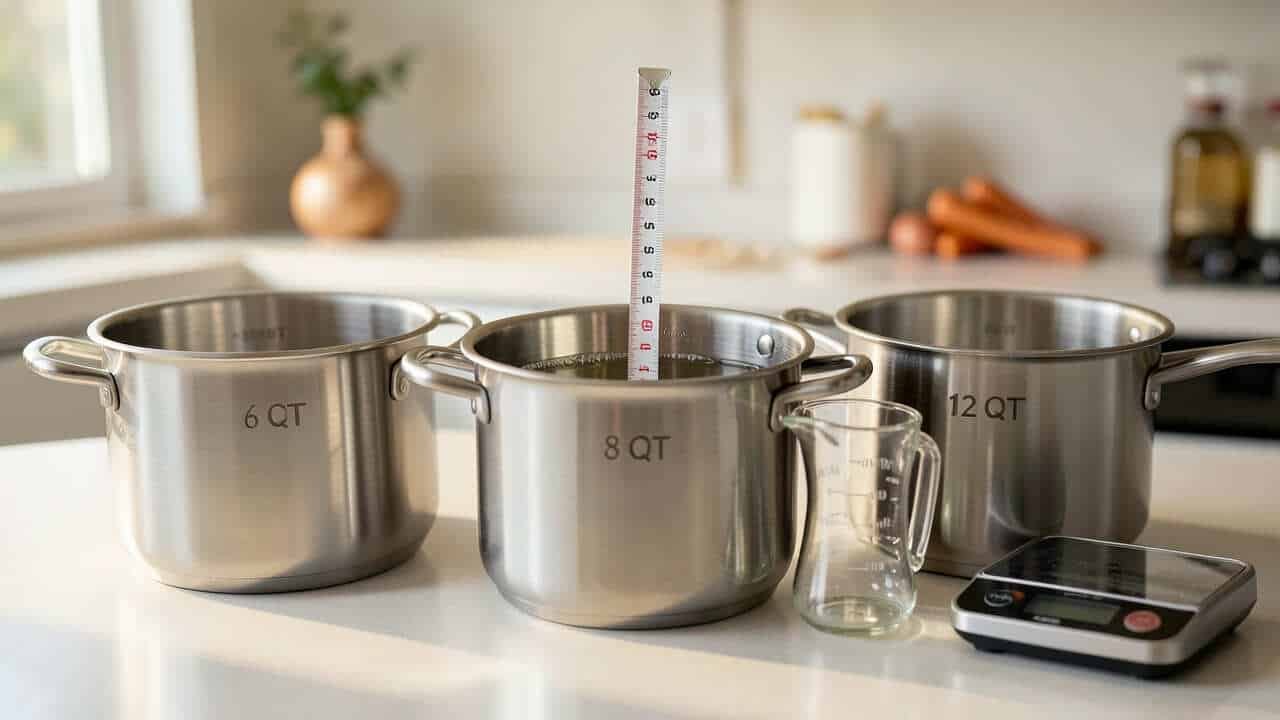
Manufacturers list the total volume to the brim. However, you should never fill a stockpot more than two-thirds full. This prevents boiling over and allows proper stirring.
Here is the real usable capacity for each size:
- 6-Quart: Usable capacity is about 4 quarts.
- 8-Quart: Usable capacity is about 5.5 quarts.
- 12-Quart: Usable capacity is about 8-9 quarts.
Warning: Ignoring the two-thirds rule is the number one cause of messy stove spills. Always account for the space needed to add ingredients without overflowing.
This is why an 8-quart pot is actually perfect for a whole chicken soup. The 5.5 quarts of usable space is exactly what you need for the chicken, vegetables, and broth without risk of spillover.
Frequently Asked Questions
What is the most versatile stockpot size?
The 8-quart stockpot is the most versatile size for most households. It handles everything from whole chicken soups to large pasta batches and fits well in standard kitchens.
Can I cook a whole chicken in a 6-quart pot?
No, not comfortably. A standard 4-5 lb whole chicken with vegetables and broth requires at least an 8-quart pot to simmer properly without spilling.
Is a 12-quart stockpot too big for a home cook?
It can be. A 12-quart pot is best for canning, batch cooking, or large gatherings. For everyday cooking, it is often too large and heavy for most home cooks.
What material is best for a stockpot?
Stainless steel is the best material for stockpots. It is durable, non-reactive, and can withstand high heat. Tri-ply or multi-ply construction ensures even heating.
How do I store a large stockpot?
Store large stockpots on a lower shelf or in a deep cabinet. Use a lid organizer to keep the lid accessible. Measure your cabinet height before buying a 12-quart pot.
Final Thoughts
Choosing between a 6qt, 8qt, and 12qt stockpot comes down to your household size and cooking style. The 8-quart stockpot is the realistic choice for most people. It offers the best balance of capacity and practicality.
If you are building a kitchen set from scratch, aim for an 8-quart pot first. Add a 12-quart only if you batch cook regularly. Your cooking reality will thank you.

Leave a Reply