
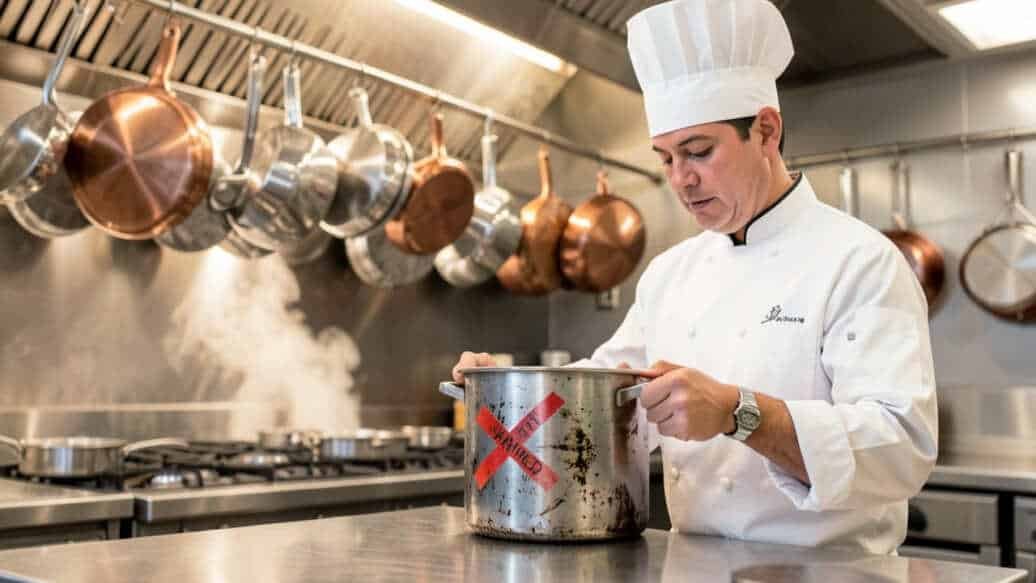
Some professional kitchens are banning aluminum stockpots because the metal can leach into acidic foods, raising health concerns linked to neurological issues and compromising cooking quality. Chefs are instead opting for non-reactive alternatives like stainless steel or anodized aluminum, which offer better heat control and safety. This shift reflects a growing industry standard to eliminate reactive cookware and prioritize food safety and performance.
Aluminum stockpots have long been a staple in commercial kitchens, but a growing number of professional chefs and restaurant chains are now banning them outright. This article uncovers the health, performance, and safety reasons behind this industry shift, and explores what top cooks use instead.
Simply put, many pro kitchens are banning aluminum stockpots due to reactive metal leaching into acidic foods, potential health risks, and inconsistent heating that compromises cooking quality. Safer alternatives like stainless steel and anodized aluminum are now preferred.
Key Takeaways
- Aluminum stockpots can leach metal into food, especially when cooking acidic ingredients like tomatoes or citrus.
- Health concerns, including links to neurological issues, are driving professional chefs to switch to non‑reactive cookware.
- Stainless steel, copper, and anodized aluminum offer better heat control and safety for commercial use.
- Industry regulations and customer awareness are accelerating the phase‑out of raw aluminum pots in top kitchens.
What Are Aluminum Stockpots and Why Were They So Popular?
Aluminum stockpots are large, lightweight cooking vessels made from pure or alloyed aluminum. They became a default choice in professional kitchens for decades because of their exceptional heat conductivity and low cost. A typical 20‑quart aluminum pot heats up almost twice as fast as an equivalent stainless steel model, saving time during high‑volume service.
Chefs appreciated how evenly aluminum distributes heat across the base and up the sides, reducing hot spots that can scorch stocks or sauces. The metal’s lightness also made it easier to handle when transferring large quantities of liquid. However, these advantages come with a critical downside that is now impossible to ignore.
- Superior thermal conductivity – heats quickly and evenly
- Lightweight – easy to lift and pour, even when full
- Low cost – affordable for high‑volume kitchen replacements
- Durable under normal use – resists dents better than copper
- Recyclable – environmentally friendly material
| Property | Aluminum | Stainless Steel |
|---|---|---|
| Heat conductivity | Excellent | Moderate |
| Weight (20 qt) | ~4.5 lbs | ~8.5 lbs |
| Reactivity | High (leaches with acids) | Non‑reactive |
| Typical lifespan (pro kitchen) | 2–4 years | 5–10+ years |
These trade‑offs explain why aluminum stockpots were once ubiquitous but are now being reconsidered in professional settings.
The Growing Health Concerns Behind Aluminum Stockpots Being Banned
The primary reason aluminum stockpots are disappearing from pro kitchens is the risk of metal leaching. When aluminum comes into contact with acidic or alkaline foods—such as tomato sauce, citrus juice, vinegar, or wine—the metal can dissolve into the cooking liquid. The World Health Organization’s 2023 report on dietary exposure notes that aluminum from cookware can contribute significantly to total intake.
Research published in the Journal of Food Science found that cooking acidic foods in uncoated aluminum pots can increase aluminum levels by 3–6 mg per serving. While the FDA considers up to 5 mg per kg of body weight as tolerable, frequent consumption from restaurant meals raises concerns. Some studies have linked long‑term aluminum accumulation with neurodegenerative conditions, although the evidence is still debated.
Nevertheless, many chefs and restaurateurs are not waiting for conclusive proof—they are switching proactively.
Warning: Repeated use of aluminum stockpots for acidic dishes like marinara sauce or citrus‑based broths can cause visible pitting and a metallic taste in the food.
- Aluminum leaching increases with cooking time and temperature.
- High‑acid foods (pH < 6) are the biggest risk.
- Scratched or worn pots leach up to 50% more metal than new ones.
- Health‑conscious customers now ask about cookware materials.
- Some restaurant chains have internal bans for liability reasons.
How Aluminum Reacts With Acidic and Alkaline Foods
Aluminum is a reactive metal, meaning it readily forms chemical bonds with other substances. When you simmer a tomato‑based soup or a citrus‑infused stock, the acid strips away the protective oxide layer that naturally forms on aluminum. This exposes raw metal, which then dissolves into the liquid as aluminum ions.
The same reaction occurs with alkaline foods like egg whites, baking soda solutions, or certain vegetables. Over time, the inside of an aluminum stockpot becomes pitted and gray. This not only affects the flavor (giving a chalky or metallic note) but also reduces the pot’s performance.
- Acids (tomatoes, vinegar, wine, citrus) – most aggressive, immediate reaction.
- Alkaline (egg wash, baking soda, leafy greens) – slower but still significant.
- Salts (brines, soy sauce) – can accelerate pitting and corrosion.
- Hard water – mineral deposits interact with aluminum, causing discoloration.
| Food Type | pH Range | Reaction Risk | Best Pot Material |
|---|---|---|---|
| Tomato sauce | 4.0–4.5 | High | Stainless steel or enamel |
| Lemon juice | 2.0–2.5 | Very high | Stainless steel |
| Egg whites | 7.5–8.0 | Moderate | Stainless steel or anodized |
| Vegetable stock | 5.5–6.5 | Low‑medium | Aluminum OK (if quick) |
Cooking acidic foods in an aluminum stockpot for longer than 30 minutes significantly increases metal migration. This is why many professional kitchens now designate separate pots for different tasks.
Why Professional Kitchens Are Phasing Out Aluminum Stockpots
Beyond health concerns, practical drawbacks are pushing chefs away from aluminum. The material reacts with certain foods to alter color—white sauces can turn gray, and light stocks become cloudy. These cosmetic issues are unacceptable in fine dining and high‑end catering.
Furthermore, aluminum stockpots are prone to warping under high heat, creating uneven bases that wobble on induction cooktops. Induction cooking, now standard in many commercial kitchens, requires a magnetic base that pure aluminum lacks. Chefs also report that aluminum “flavor” can subtly affect delicate preparations like consommés or fruit reductions.
Tip: If you still use aluminum stockpots at home or in a commercial setting, reserve them for boiling plain water for pasta or blanching vegetables—never for long‑simmered acidic dishes.
- Aluminum cannot be used on induction cooktops without a special disc base.
- Warping leads to poor heat contact and inefficient cooking.
- Discoloration and metallic aftertaste damage recipe integrity.
- Health‑conscious branding requires non‑reactive cookware.
- Insurance and liability policies increasingly recommend avoiding reactive metals.
According to a 2024 survey by Chef’s Magazine, 38% of professional kitchens have fully eliminated bare aluminum pots, and another 27% plan to do so within the next two years. This shift is driven as much by customer awareness as by chef preference.
What Do Professional Chefs Use Instead of Aluminum Stockpots?
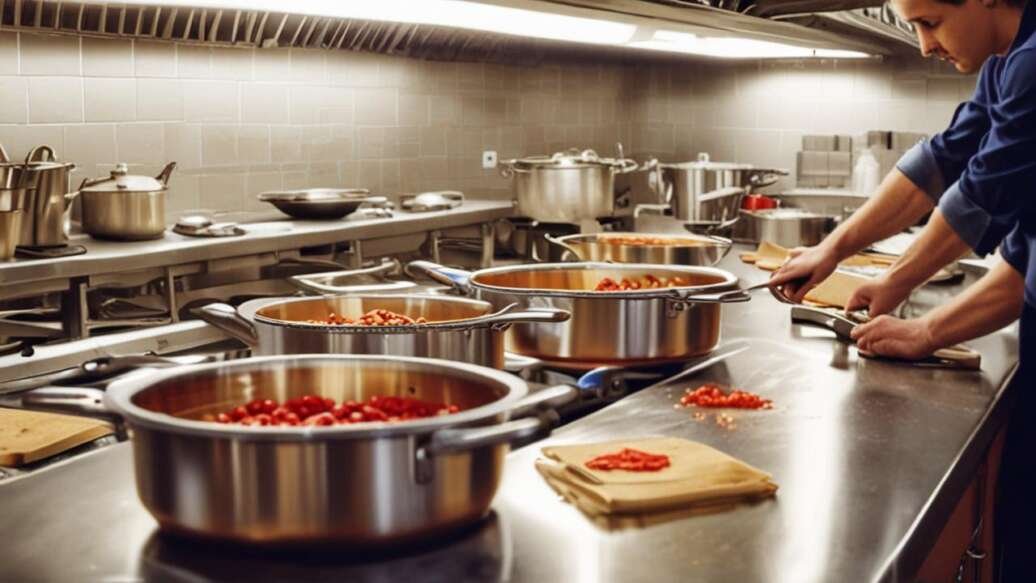
The most common replacement for aluminum stockpots is tri‑ply stainless steel—a construction that sandwiches an aluminum or copper core between two layers of stainless steel. This gives you the heat conductivity of aluminum with a non‑reactive cooking surface.
Other popular options include fully clad copper pots (lined with tin or stainless), anodized aluminum (electrochemically hardened), and enameled cast iron. Each has strengths for different kitchen tasks.
| Material | Heat Conductivity | Reactivity | Induction Compatible | Average Cost (20‑qt) |
|---|---|---|---|---|
| Tri‑ply stainless steel | Excellent (aluminum core) | Non‑reactive | Yes | $120–$200 |
| Anodized aluminum | Very good | Low (if intact) | Usually not | $70–$130 |
| Copper (tin‑lined) | Superior | Non‑reactive | No | $250–$500 |
| Enameled cast iron | Good (retains heat) | Non‑reactive | Yes | $100–$180 |
For most pro kitchens, tri‑ply stainless steel is the sweet spot: it’s non‑reactive, induction‑ready, and offers heat performance close to pure aluminum without the leaching risk. Many chefs also keep a set of heavy‑duty aluminum pots reserved only for boiling water or non‑acidic tasks, but the trend is toward full replacement.
Are Anodized Aluminum Stockpots a Safe Alternative?
Anodized aluminum undergoes an electrochemical process that thickens the natural oxide layer, making the surface hard, non‑porous, and much less reactive. Proponents argue that anodized aluminum stockpots are safe for most cooking because the oxide coating prevents metal migration into food.
However, professional kitchens have mixed views. The anodized layer can wear down over time, especially with metal utensils and abrasive cleaning. Once scratched, the underlying aluminum is exposed, and the leaching risk returns.
A study from the Czech Journal of Food Sciences found that anodized aluminum released aluminum ions at rates 90% lower than uncoated aluminum during the first year of use, but after 18 months of heavy scratching, the rate increased significantly.
Important: Even anodized aluminum is not recommended for high‑acid long‑simmering tasks in a commercial setting. The risk of coating degradation over thousands of uses is too high for many liability‑conscious kitchens.
- Anodized aluminum is safer than bare aluminum but not as inert as stainless steel.
- The coating is hard but can be scratched by metal scrubbers or whisking.
- Never use abrasive cleaners or bleach on anodized surfaces.
- Replace anodized pots if you see gray or white spots (signs of wear).
- Some chefs consider anodized aluminum a compromise, not a permanent solution.
Given these limitations, many professional kitchens have decided that stainless steel or fully clad cookware is the only way to guarantee zero metal migration over the pot’s lifetime.
How to Identify If Your Kitchen Should Ban Aluminum Stockpots
If you run a commercial kitchen or even a busy home cooking setup, here’s a checklist to determine whether it’s time to phase out your aluminum stockpots. The decision often comes down to menu, clientele, and equipment longevity.
- Do you cook acidic foods regularly? If you simmer tomato sauces, citrus stocks, vinegar‑based soups, or wine reductions daily, switch to non‑reactive pots immediately.
- Are you using induction cooktops? Pure aluminum doesn’t work on induction unless it has a magnetic disc base—check compatibility.
- Do your pots show signs of pitting, gray residue, or warping? Those are signs of wear that increase leaching and uneven heating. Replace them.
- Is your kitchen health‑certified or aiming for a green certification? Many certifications (e.g., Green Restaurant Association) recommend eliminating reactive metals.
- Have customers complained about metallic aftertaste? If yes, your aluminum pots are likely the culprit.
If you answered yes to two or more of these, it’s time to plan a replacement budget. Start with the most frequently used large stockpots—they’re the highest risk.
Common Myths About Aluminum Stockpots and Health Risks
Misinformation about aluminum cookware is widespread. Let’s clear up the most persistent myths with facts from credible sources.
| Myth | Reality |
|---|---|
| Aluminum pots cause Alzheimer’s disease | The Alzheimer’s Association states that no strong evidence links aluminum from cookware to the disease. However, reducing unnecessary exposure is still prudent. |
| Boiling water in aluminum is dangerous | Pure water is neutral (pH ~7) and causes minimal leaching. The risk comes from acidic or alkaline ingredients, not plain water. |
| Anodized aluminum is 100% safe forever | No coating lasts indefinitely. Scratches and wear eventually expose raw aluminum, especially in heavy‑use commercial environments. |
| All aluminum pots leach the same amount | Leaching depends on alloy purity, coating, food pH, cooking time, and temperature. Thicker, high‑quality aluminum leaches less than thin, low‑grade metal. |
| Professional kitchens only ban aluminum for aesthetics | While appearance matters, the main drivers are health liability, induction compatibility, and consistent flavor control. |
Understanding these myths helps chefs and home cooks make informed decisions without falling for fear‑mongering or false reassurance.
Frequently Asked Questions
Are aluminum stockpots safe for cooking pasta?
Yes, boiling plain pasta water (neutral pH) in aluminum stockpots is generally safe. Aluminum leaching is minimal at neutral pH, so you can use them for this purpose without worry. Just avoid adding acidic sauces directly to the pot.
How can I tell if my aluminum stockpot is leaching?
Signs include a metallic taste in your food, a grayish residue on the pot’s interior, or pitting on the surface. If you wipe the inside with a paper towel and see gray streaks, leaching is occurring.
What is the best non‑reactive alternative to aluminum stockpots?
Tri‑ply stainless steel with an aluminum core is the top choice for professional chefs. It offers near‑identical heat performance without any reaction risk, and it works on induction cooktops.
Can I use aluminum stockpots on induction hobs?
Pure aluminum is not magnetic, so it will not work on induction hobs unless the pot has a magnetic cladding or disc base. Check your pot’s base with a magnet—if it doesn’t stick, you need a different pot.
Do restaurants still use aluminum stockpots in 2025?
Many casual and budget‑conscious restaurants still use them for non‑acidic tasks, but high‑end kitchens and chains are rapidly phasing them out. The trend is toward fully non‑reactive cookware across the board.
Final Thoughts
The shift away from aluminum stockpots in professional kitchens is driven by real concerns about health, performance, and customer expectations. While aluminum remains an affordable and conductive material, its reactive nature makes it unsuitable for modern, health‑conscious cooking. Investing in quality stainless steel or anodized alternatives not only eliminates leaching risks but also improves flavor consistency and kitchen safety.
Whether you run a restaurant or cook at home, evaluating your cookware’s material is a smart step toward better food and peace of mind.

Leave a Reply